
Inspiration
AI coding agents are powerful, but using several of them creates three recurring problems: rising token costs, risky tool calls, and lost context between sessions.
We built Surfil to provide one local control layer for AI coding agents, making them cheaper, safer, and remembered without requiring developers to replace their existing tools.
What it does
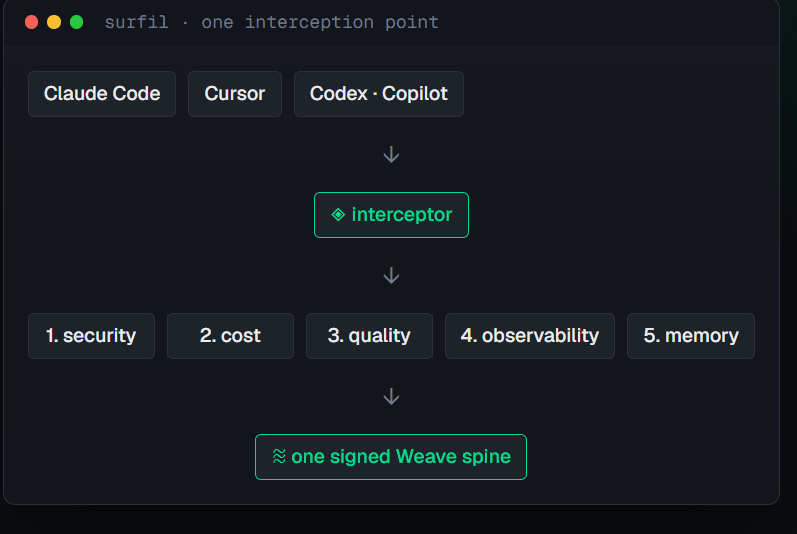
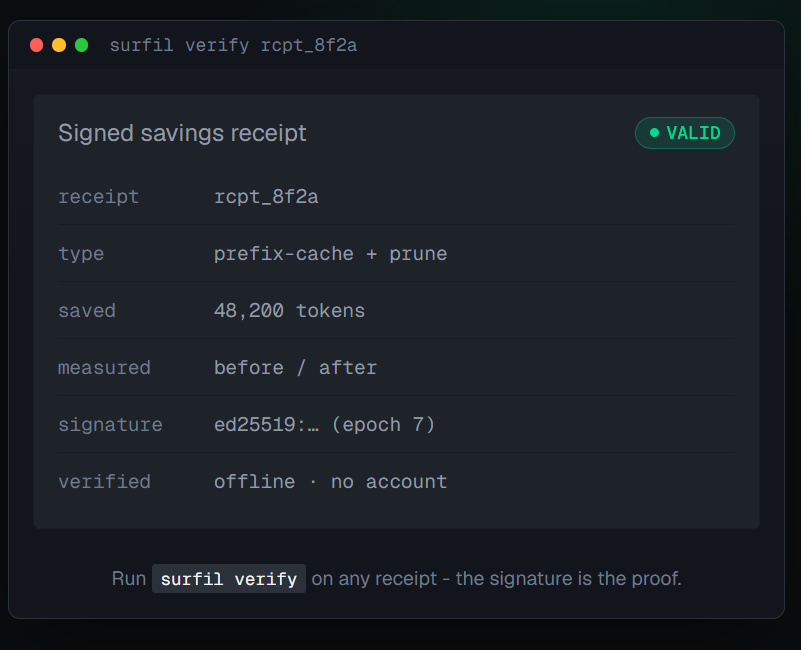
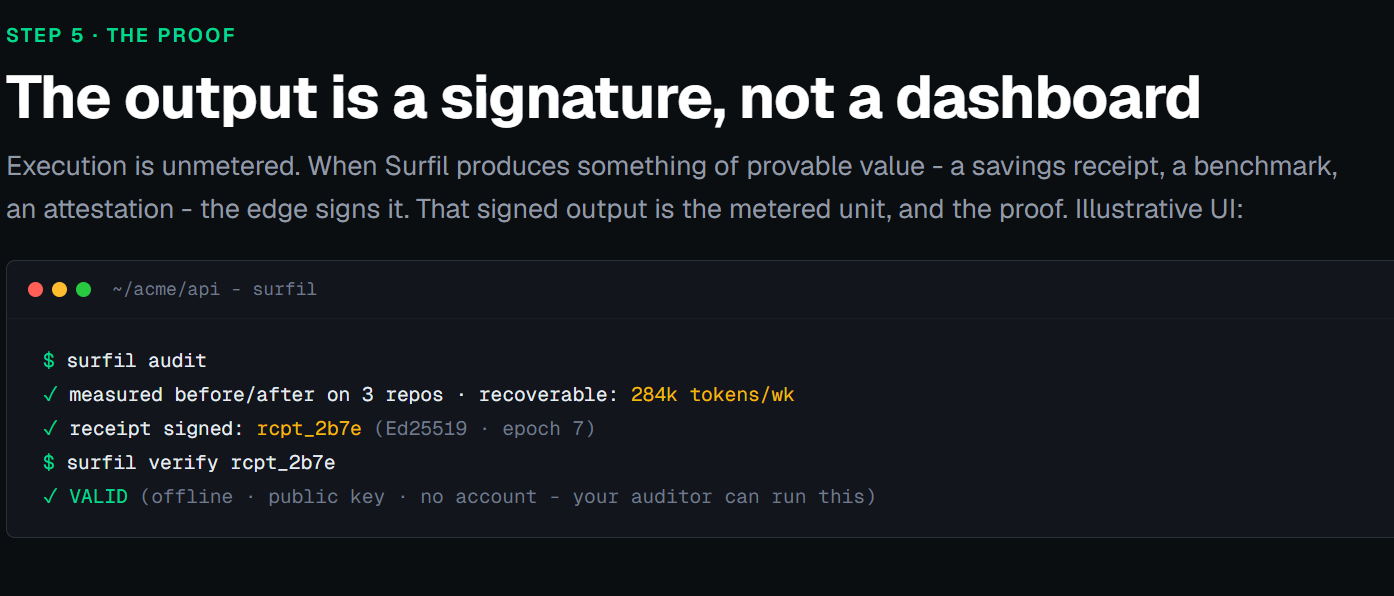
Surfil is an on-device control plane that works alongside Claude Code, Cursor, Codex, Copilot, and other coding agents. It provides three core outcomes: Cheaper: Reduces repeated context and unnecessary token usage. Safer: Detects secrets, prompt injection, and risky actions before execution. Remembered: Preserves reusable knowledge and memory across different agents. Surfil also produces signed outputs that users can verify offline rather than relying only on dashboard claims.
How I built it
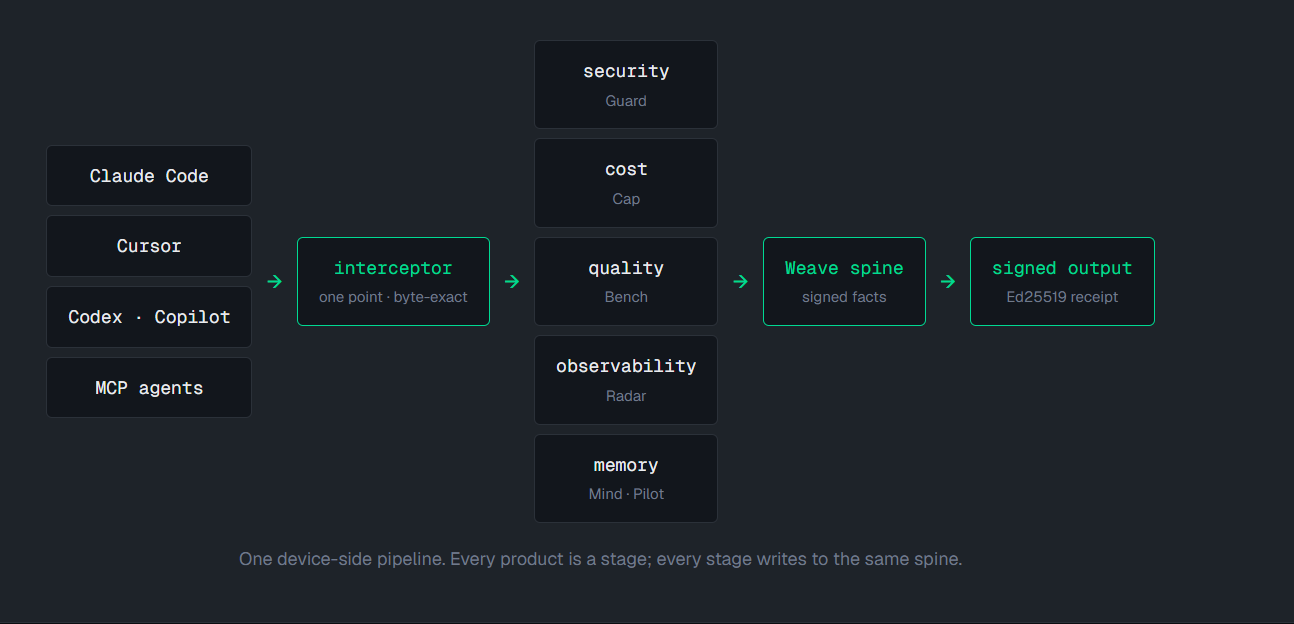
We designed Surfil around a single on-device interception point. Agent activity flows through one local pipeline for cost optimization, security checks, observability, and memory. The system uses local processing to keep source code on the developer’s machine. It also uses Ed25519 signatures to create verifiable receipts for measured outputs.
Challenges I ran into
The biggest challenge was adding control without disrupting the developer experience. We needed to:
- Support agents with different connection methods.
- Preserve prompt-cache behavior while optimizing context.
- Detect dangerous actions without creating excessive false positives.
- Share memory while tracking its source and freshness.
- Keep sensitive source code on the device.
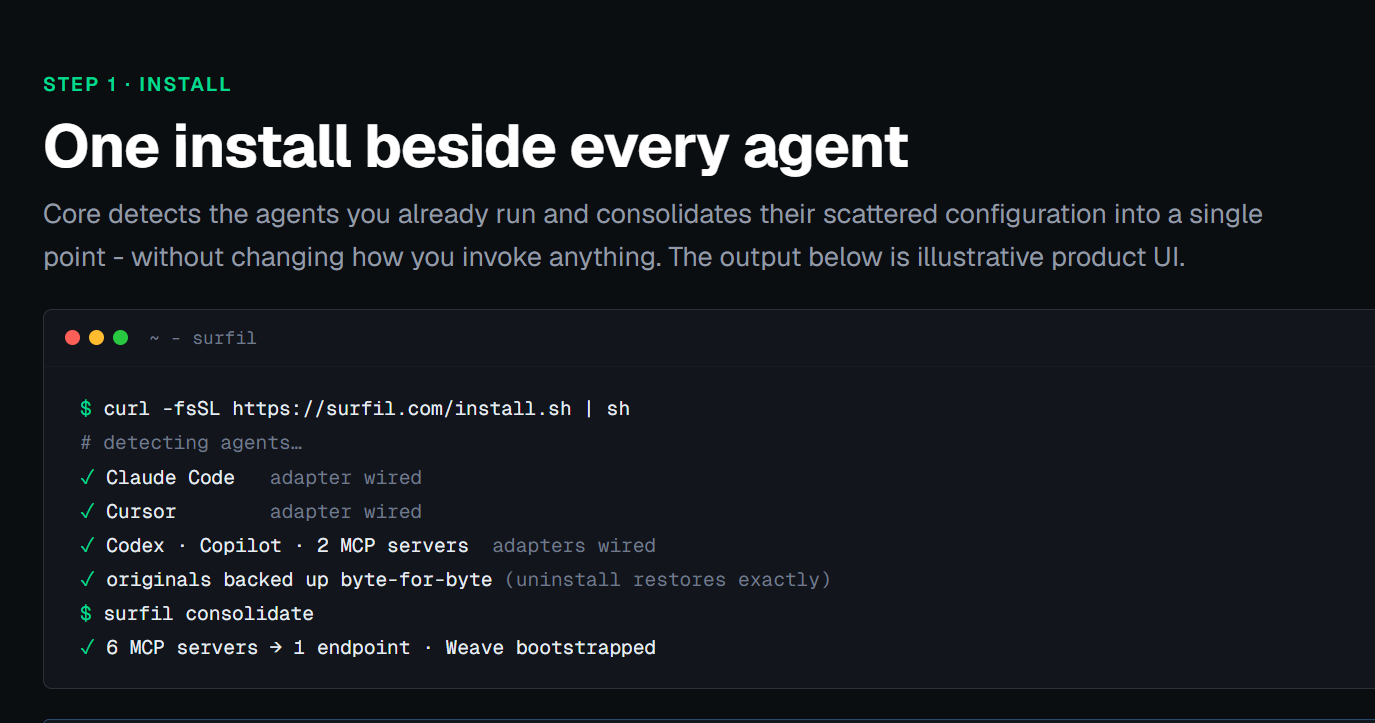
- Make installation and removal clean and predictable. ## Accomplishments that I'm proud of Building one on-device control layer for multiple AI coding agents. Keeping source code on the developer’s machine. Combining cost optimization, security, memory, and observability in one pipeline. Blocking risky actions before they execute. Creating portable memory that works across different agents. Producing signed results that can be verified offline. Supporting tools such as Claude Code, Cursor, Codex, and Copilot. Designing a clean installation and removal experience. ## What I learned We learned that developers do not need another coding agent. They need a reliable layer that helps their existing agents work together safely and efficiently. We also learned that trust requires more than a dashboard. Important claims should be measurable and independently verifiable. ## What's next for Surfil We plan to expand agent compatibility, improve cost and security controls, and make portable cross-agent memory more useful for both individual developers and engineering teams.
Built With
- agent
- agents
- claude
- code
- codex
- coding
- cursor
- defense
- developer
- devsecops
- github
- injection
- local-first
- mcp
- memory
- observability
- on-device
- openai
- optimization
- prompt
- security
- token
- tools
