-
-
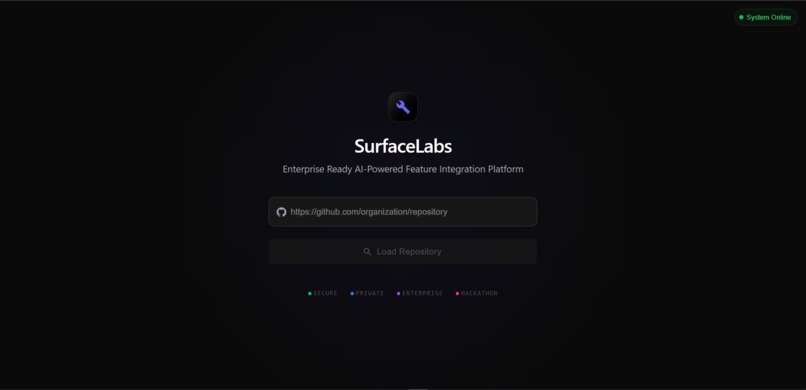
Landing Page
-
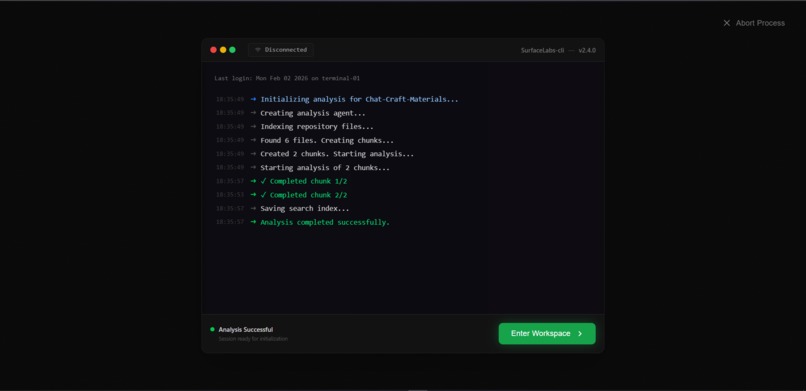
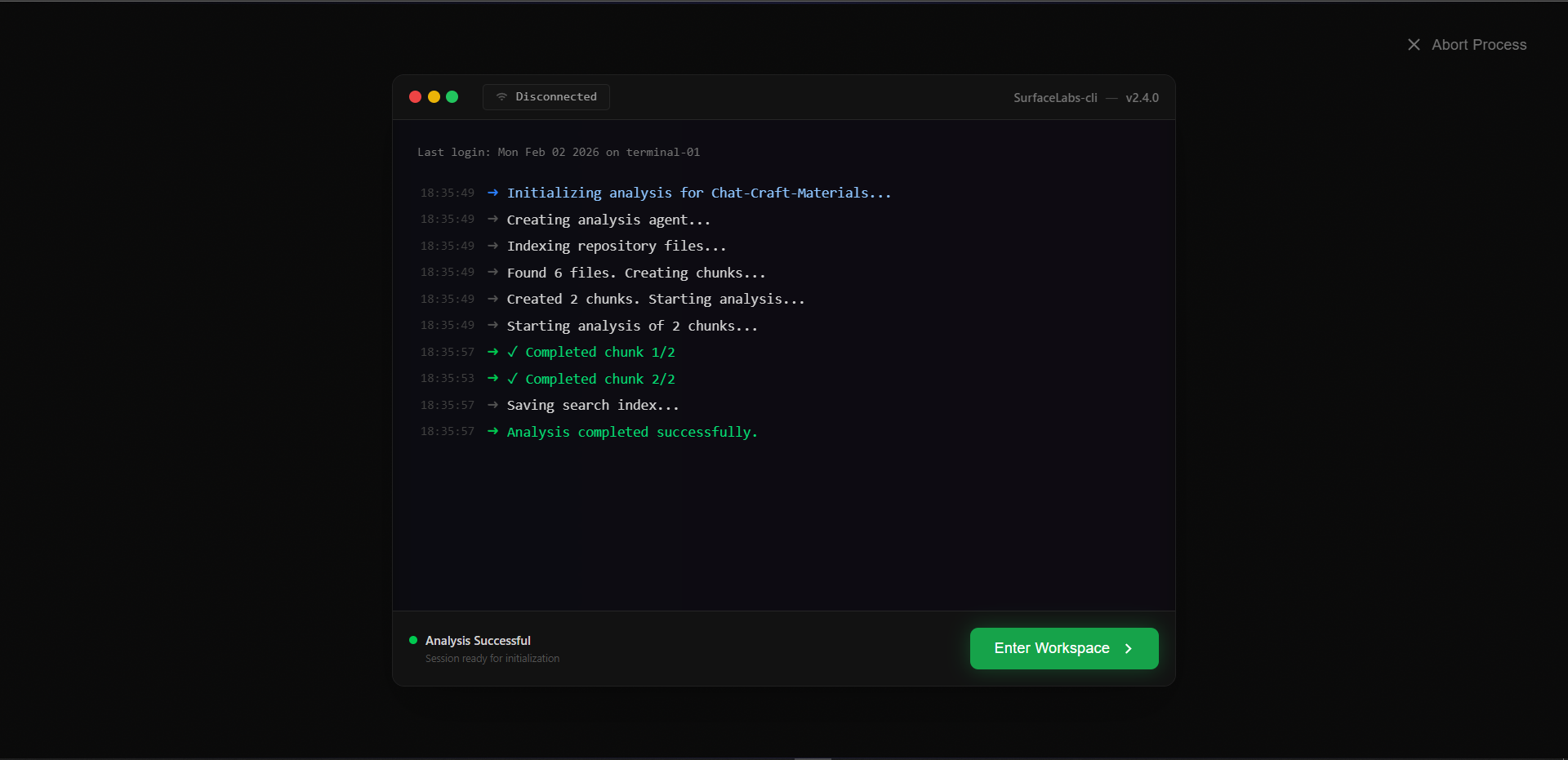
Analysis
-
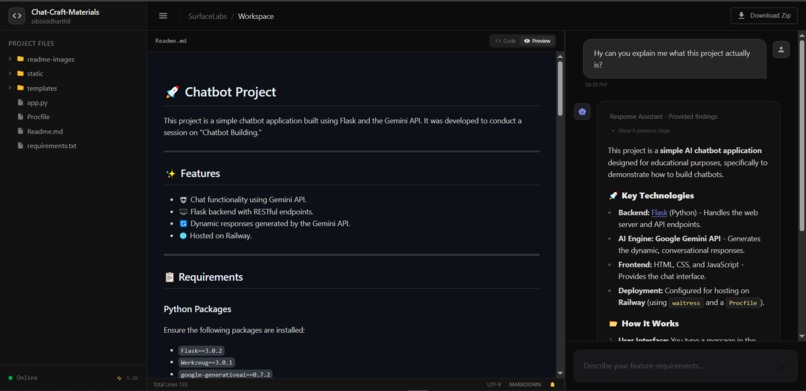
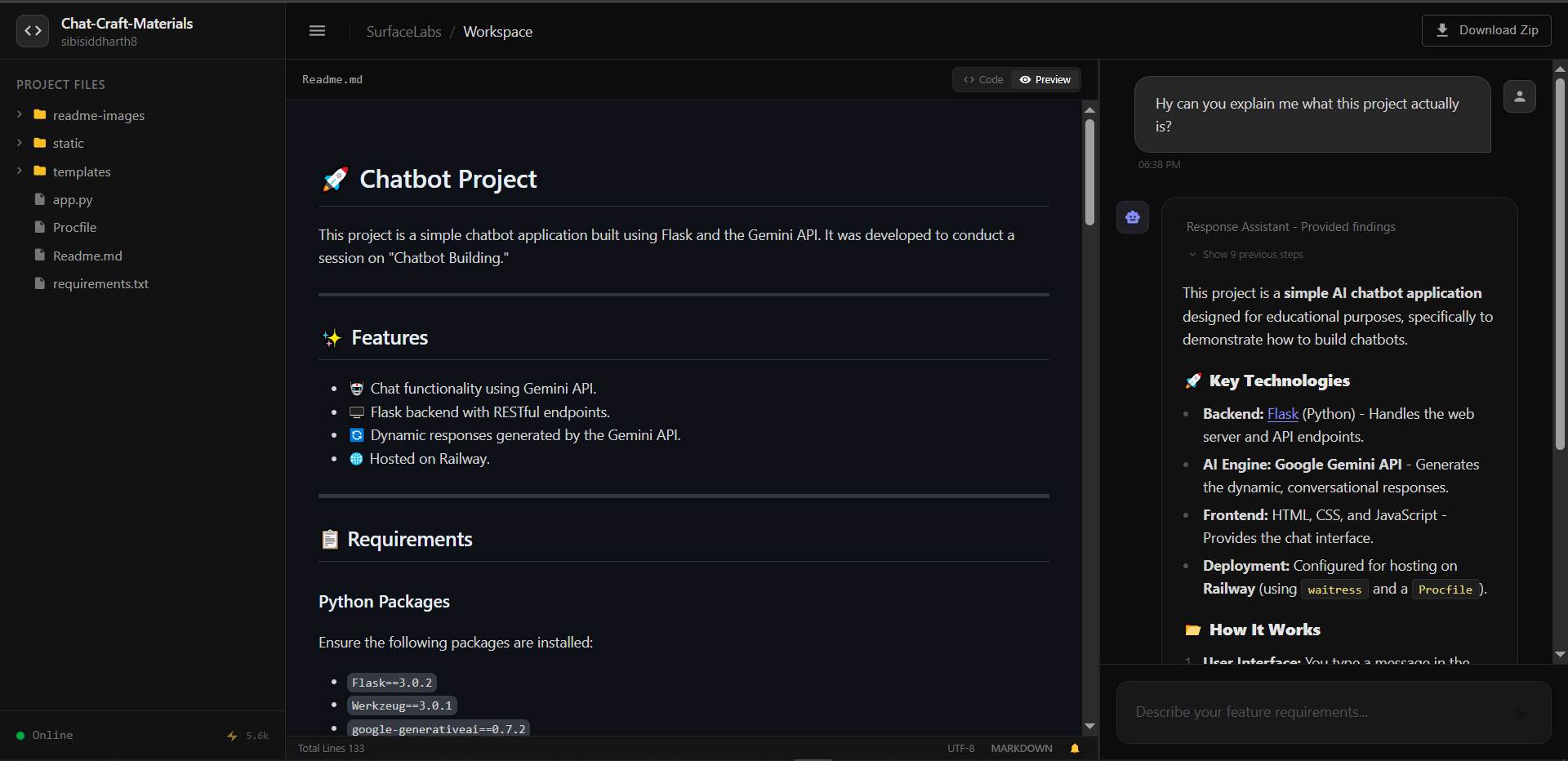
Workspace
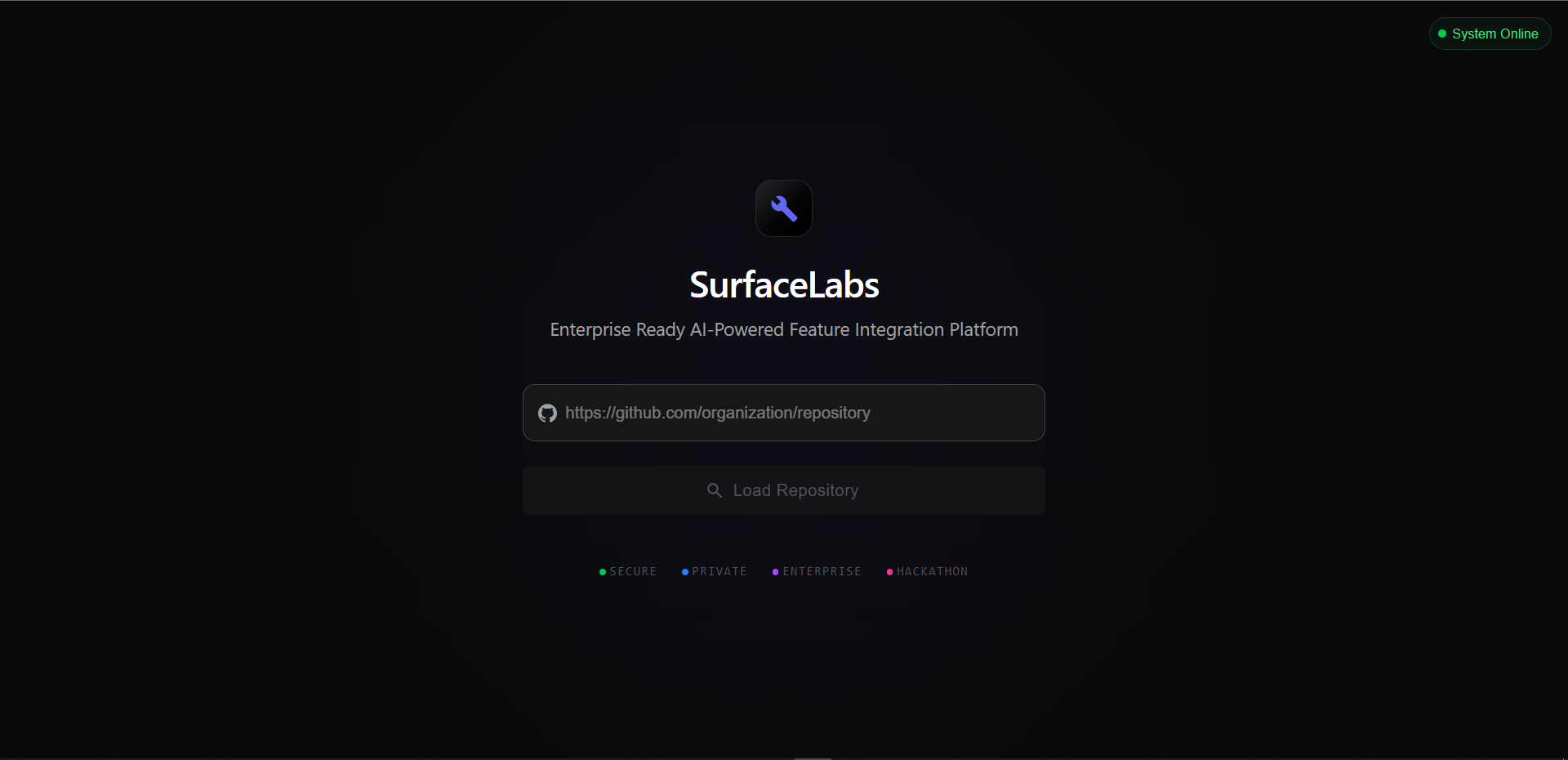
SurfaceLabs — Secure, Enterprise-Owned AI for Production Codebases
Inspiration
Modern AI developer tools are impressive, but they come with a hard trade-off: security.
Most popular AI coding assistants require sending proprietary source code to third-party services. In real enterprise environments, this alone is enough to block adoption—regardless of how powerful the tool is.
At the same time, large production codebases create another challenge. Tasks such as understanding system architecture, tracing dependencies, performing impact analysis, or safely planning a change often take days and require senior engineers with deep system knowledge.
SurfaceLabs was inspired by a simple but critical question:
What if organizations could leverage powerful AI for software development without sacrificing ownership, control, or security—while still moving significantly faster?
- This question became the foundation of the project.
What it does
SurfaceLabs is a secure, enterprise-owned AI feature integration platform designed to operate entirely within an organization’s controlled environment.
Instead of acting as a basic chatbot or code autocomplete tool, SurfaceLabs is built as a multi-agent system that can:
- understand entire repositories,
- reason about architecture and dependencies,
- plan safe changes,
- and assist developers in real, production-grade workflows.
Most importantly, the organization owns and manages the service, ensuring that sensitive code never leaves its security perimeter.
How we built it
SurfaceLabs decomposes complex software understanding into specialized agents:
Analysis Agent
Scans the full repository to build a deep internal understanding of the system’s architecture, dependencies, and design intent across services and modules.Orchestrator Agent
Coordinates and manages all other agents, routes tasks to the appropriate agent, maintains shared context, and ensures the overall workflow executes coherently and safely.Feature Agent
Reasons about requested changes or new features, performs impact analysis, identifies risk areas, and generates a structured, step-by-step execution plan before any code changes are made.Answering Agent
Responds to developer questions using the accumulated repository context, providing accurate, architecture-aware explanations instead of isolated or surface-level answers.Web Search Agent
Performs controlled external searches for documentation, standards, best practices, or framework-specific details, and feeds only relevant, verified information back into the system without exposing internal code.
This mirrors how experienced engineering teams operate: understand first, plan second, act last. SurfaceLabs optimizes for correctness and safety under strict security constraints, rather than optimizing only for speed.
Why Gemini-3-Pro Preview
SurfaceLabs is powered by Gemini-3-Pro Preview because the core challenge is not short code generation—it is deep reasoning over long context.
Gemini-3-Pro Preview is well-suited for this use case because it:
- supports very large context windows, enabling ingestion of full production repositories,
- excels at multi-step reasoning, required for dependency analysis and safe planning,
- performs well in agentic workflows, where multiple reasoning steps must be coordinated.
This allows SurfaceLabs to compress tasks that traditionally take days—such as architectural impact analysis or safe feature planning—into minutes, while maintaining production-level reliability.
What I Learned
Building SurfaceLabs led to several key learnings from the core of system design, agent orchestration, and real-world development workflows:
- Structured workflows outperform ad-hoc prompting in complex systems.
- Agent specialization leads to more controllable and reliable outcomes.
- Orchestration and context management are as critical as model capability.
- Trust, transparency, and safety are prerequisites for real adoption.
- AI systems must adapt to real engineering practices, not idealized code.
Challenges Faced
Large-Scale Context Handling
Managing entire repositories without losing coherence required careful design of how context is extracted, summarized, and shared across agents without overwhelming the reasoning model.
Agent Coordination and Control
Ensuring multiple agents worked together reliably—without conflicting decisions or duplicated effort—required a strong orchestration layer and well-defined agent responsibilities.
Preventing Unsafe Automation
Balancing automation with safety was challenging. The system had to move fast while still enforcing human approvals and guardrails for production-critical changes.
Production-Grade Expectations
Unlike demo environments, real-world codebases are messy, incomplete, and constantly evolving, which required the system to handle ambiguity gracefully.
Accomplishments We’re Proud Of
- Built a fully multi-agent AI system capable of understanding and reasoning over large production repositories.
- Enabled day-long engineering tasks—such as impact analysis and feature planning—to be completed in minutes.
- Designed the platform to be enterprise-owned and security-first, with no external code exposure.
- Implemented human-in-the-loop workflows that balance speed with safety.
- Successfully integrated Gemini-3-Pro Preview for long-context, reasoning-heavy tasks.
What’s Next for SurfaceLabs
- Expanding agent capabilities for testing, refactoring, and migration workflows.
- Deeper integration with CI/CD pipelines and developer tooling.
- Improved visualization of architecture and dependency graphs.
- Fine-grained policy controls for different teams and environments.
- Continued refinement of reasoning accuracy for large, evolving codebases.


Log in or sign up for Devpost to join the conversation.