-
-
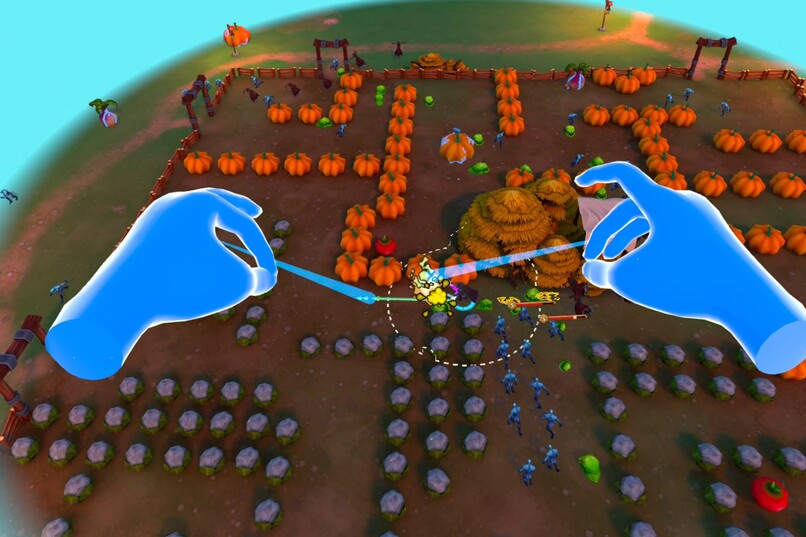
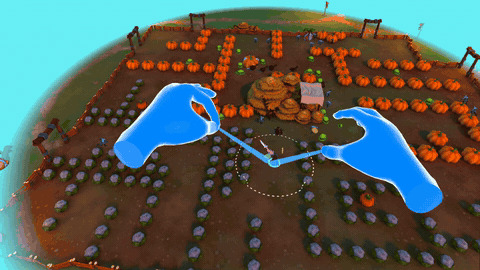
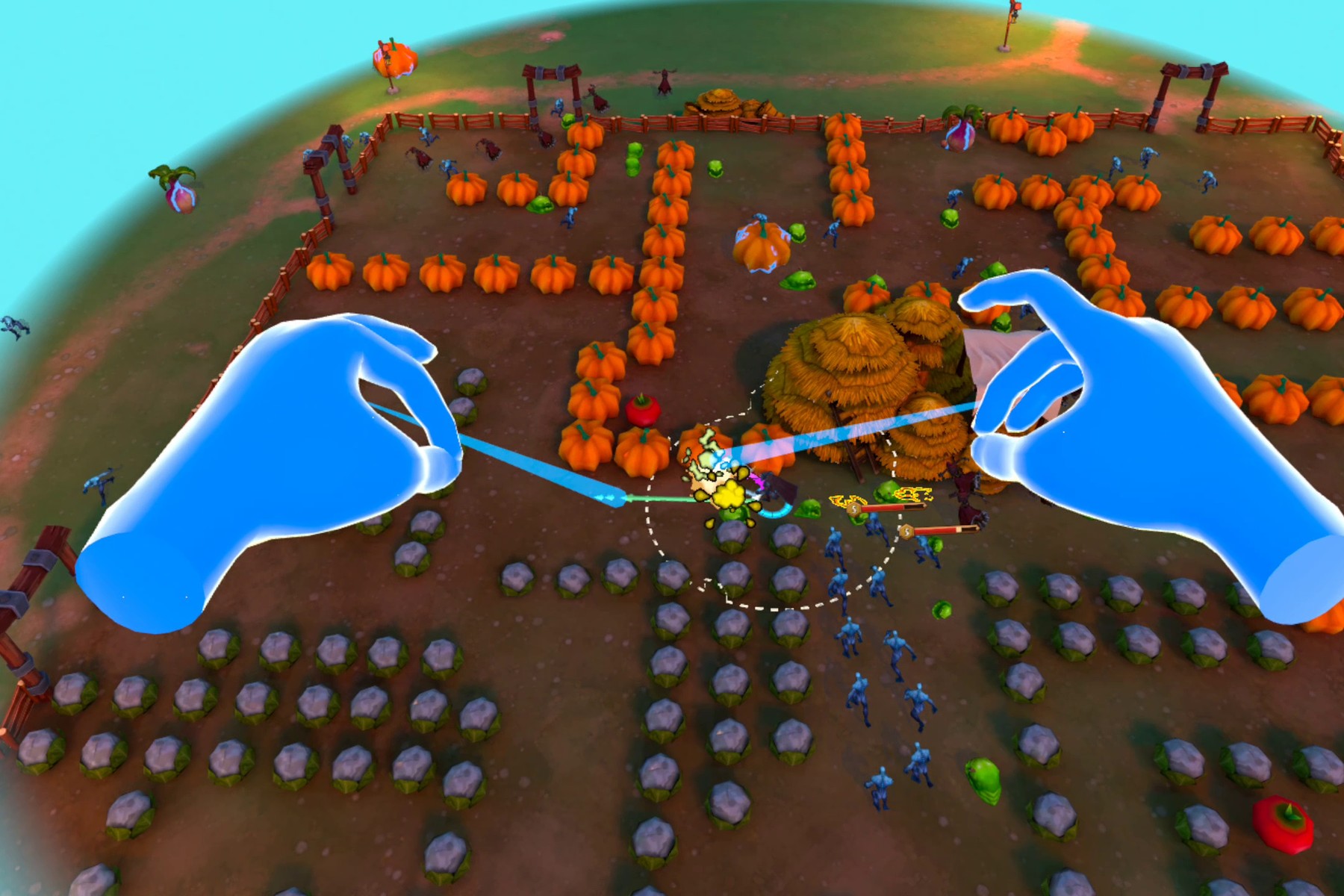
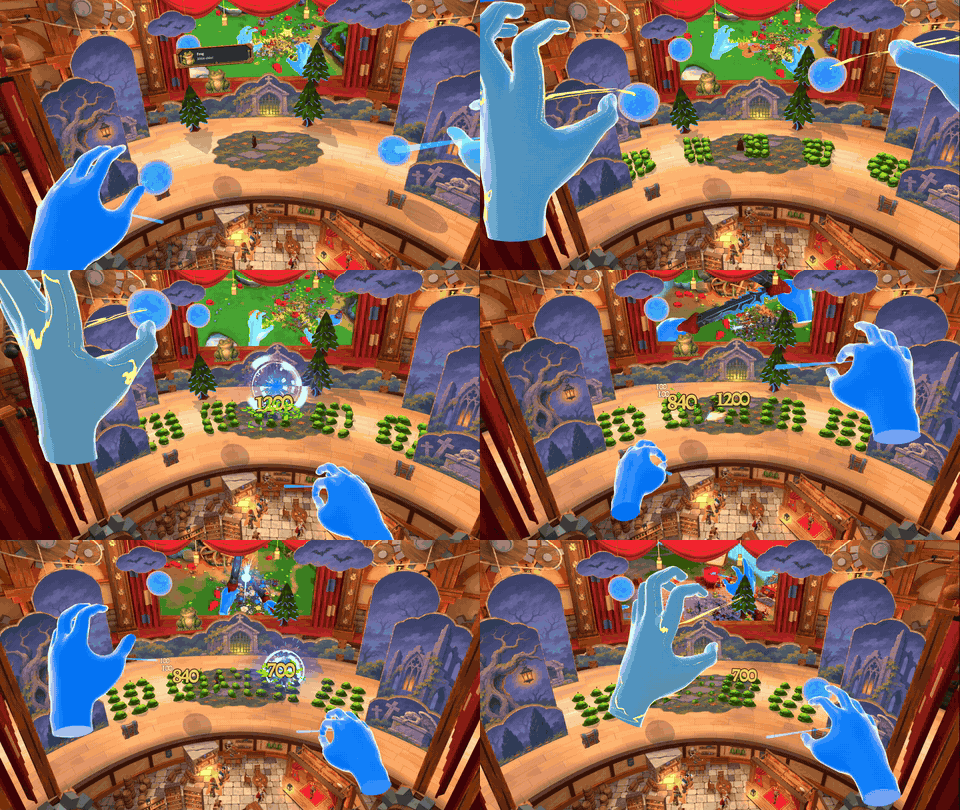
Steering the hero through the pumpkin maze with both hands.
-
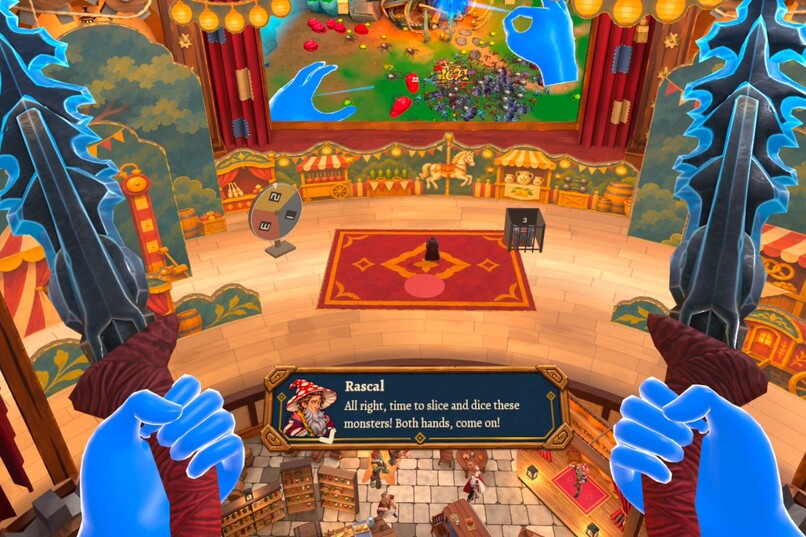
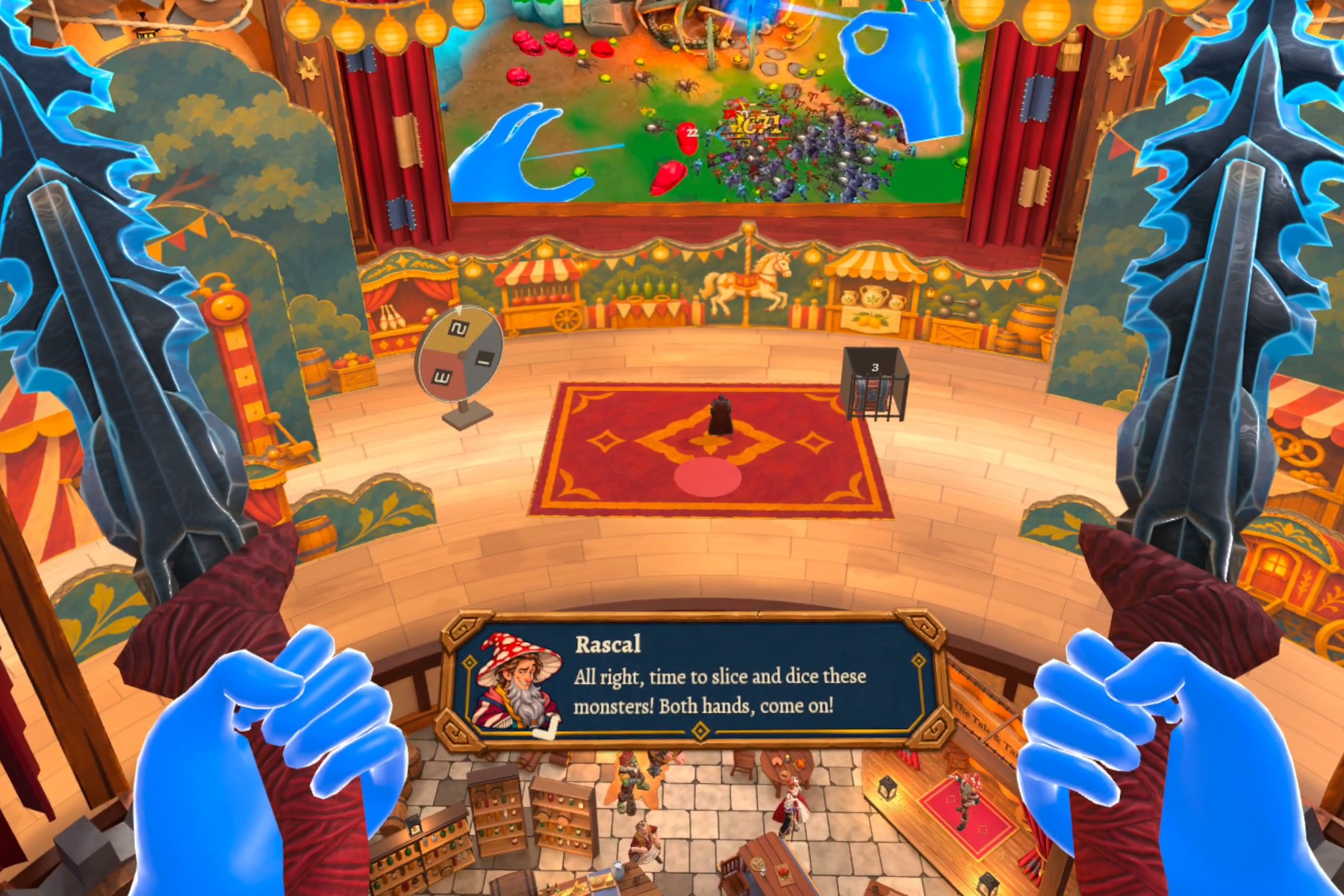
The tavern stage, where Rascal makes up the legend you play.
-
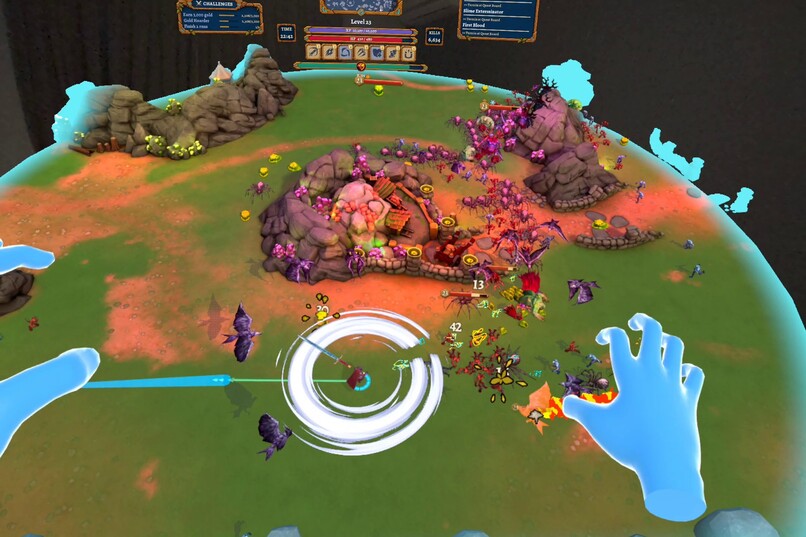
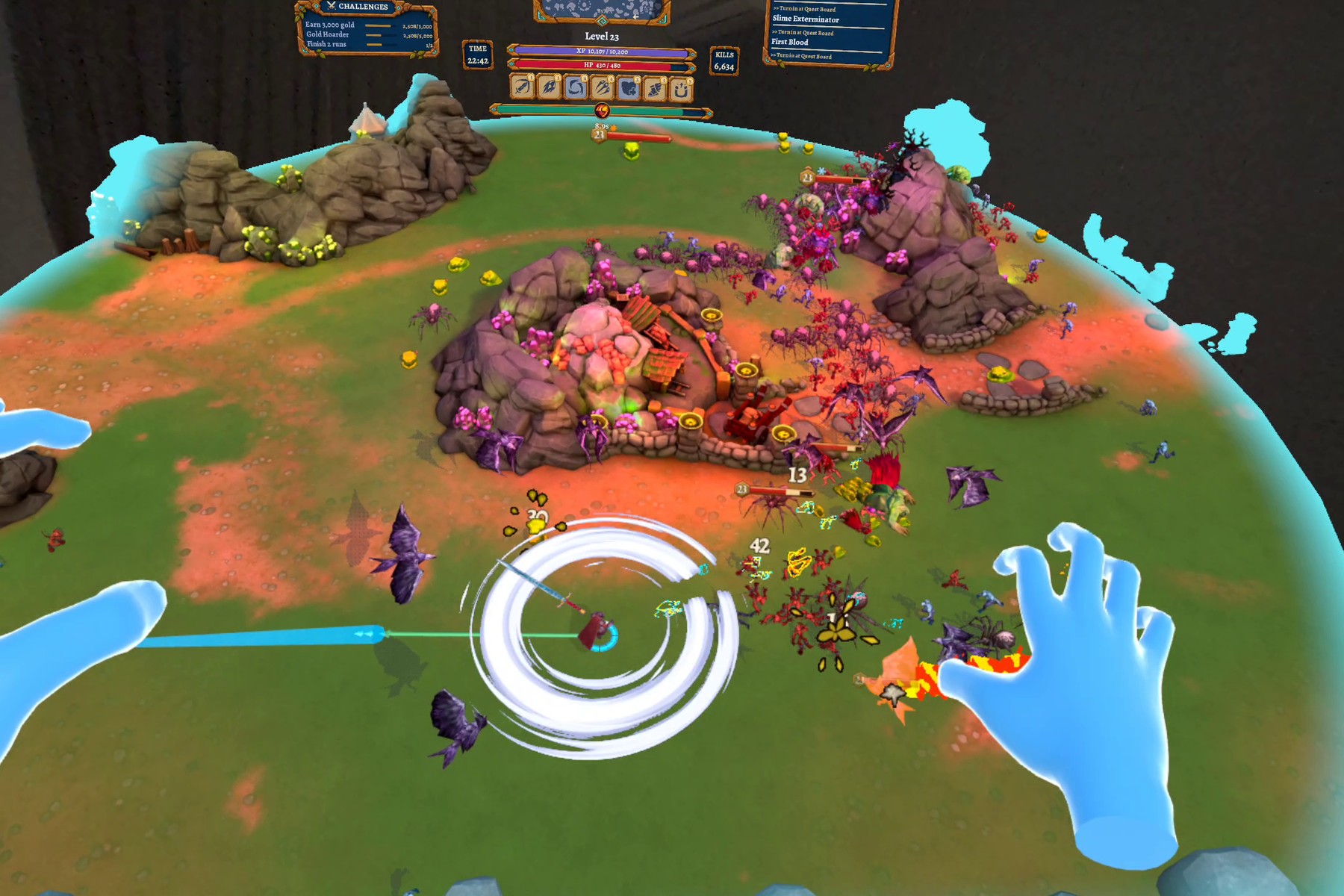
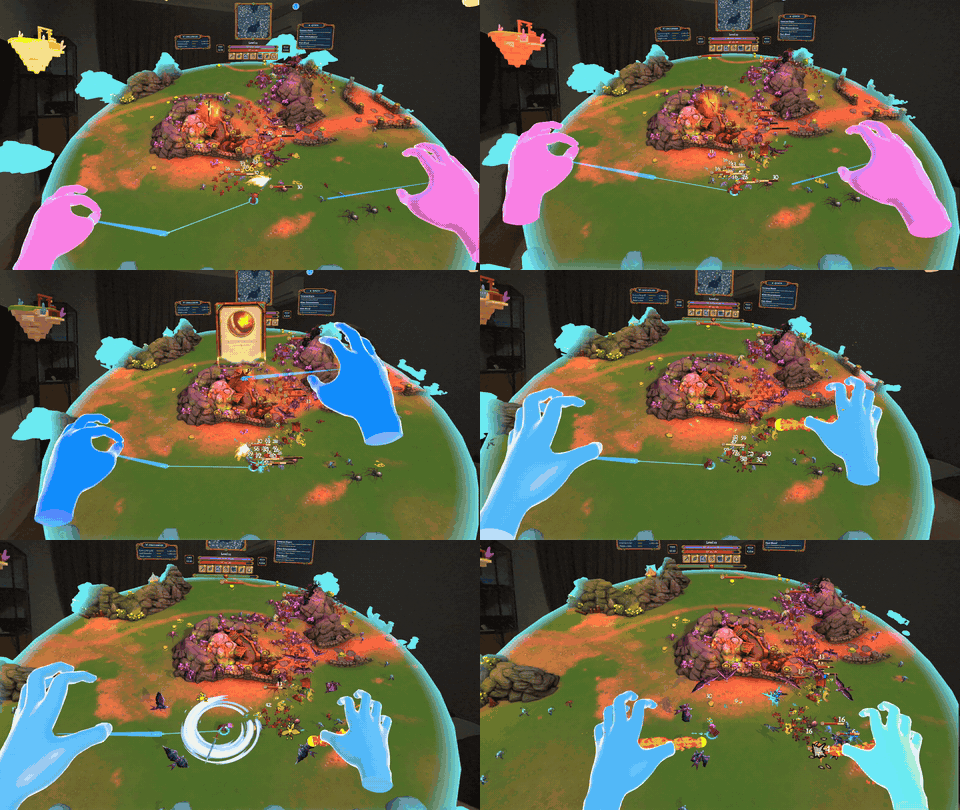
A whole horde on an island in your room, steered with bare hands.
-
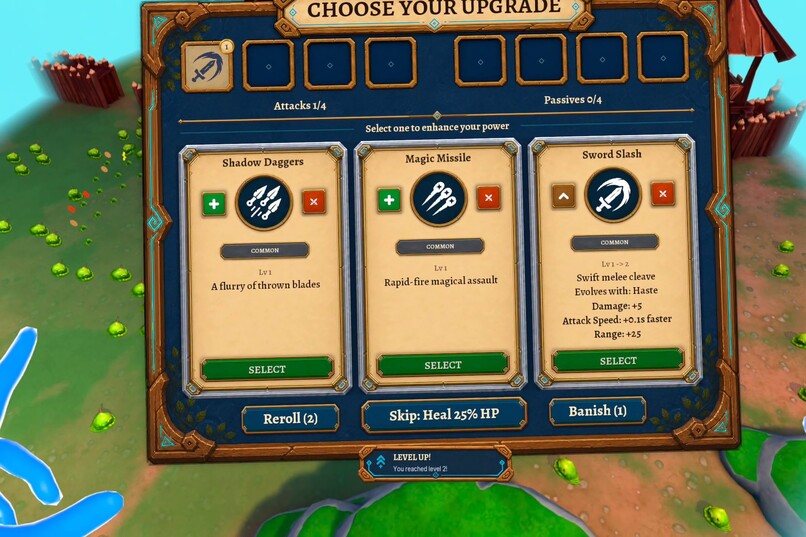
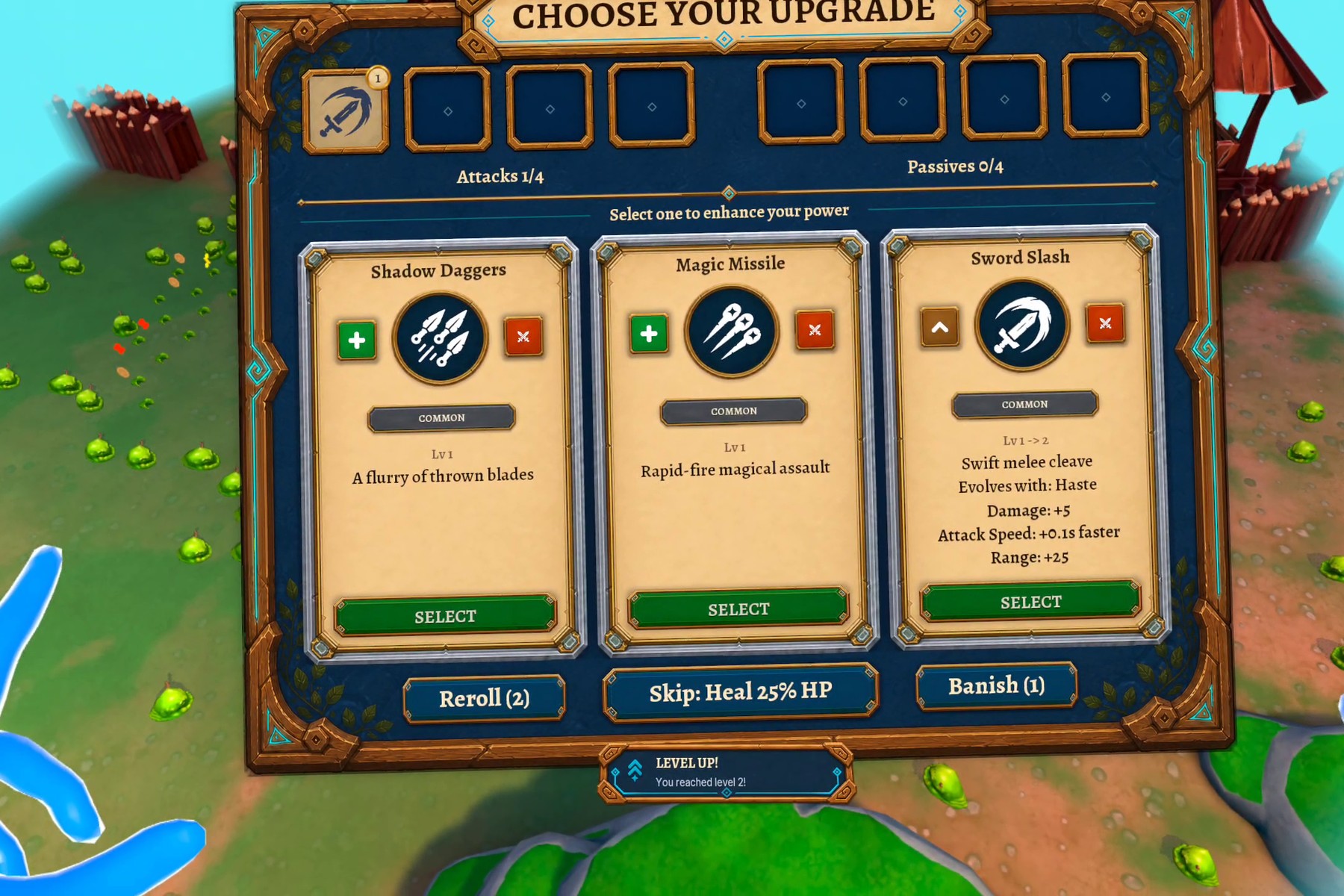
Level-up: time nearly stops. Point at a card and pinch to pick.
-
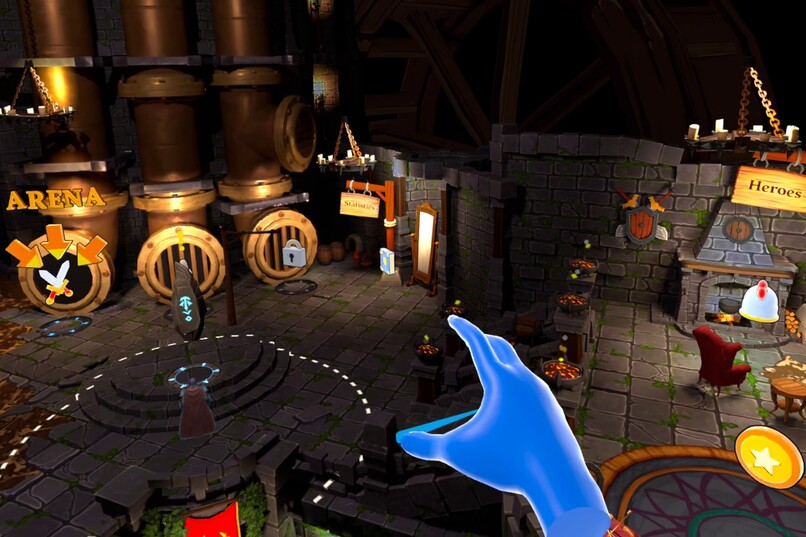
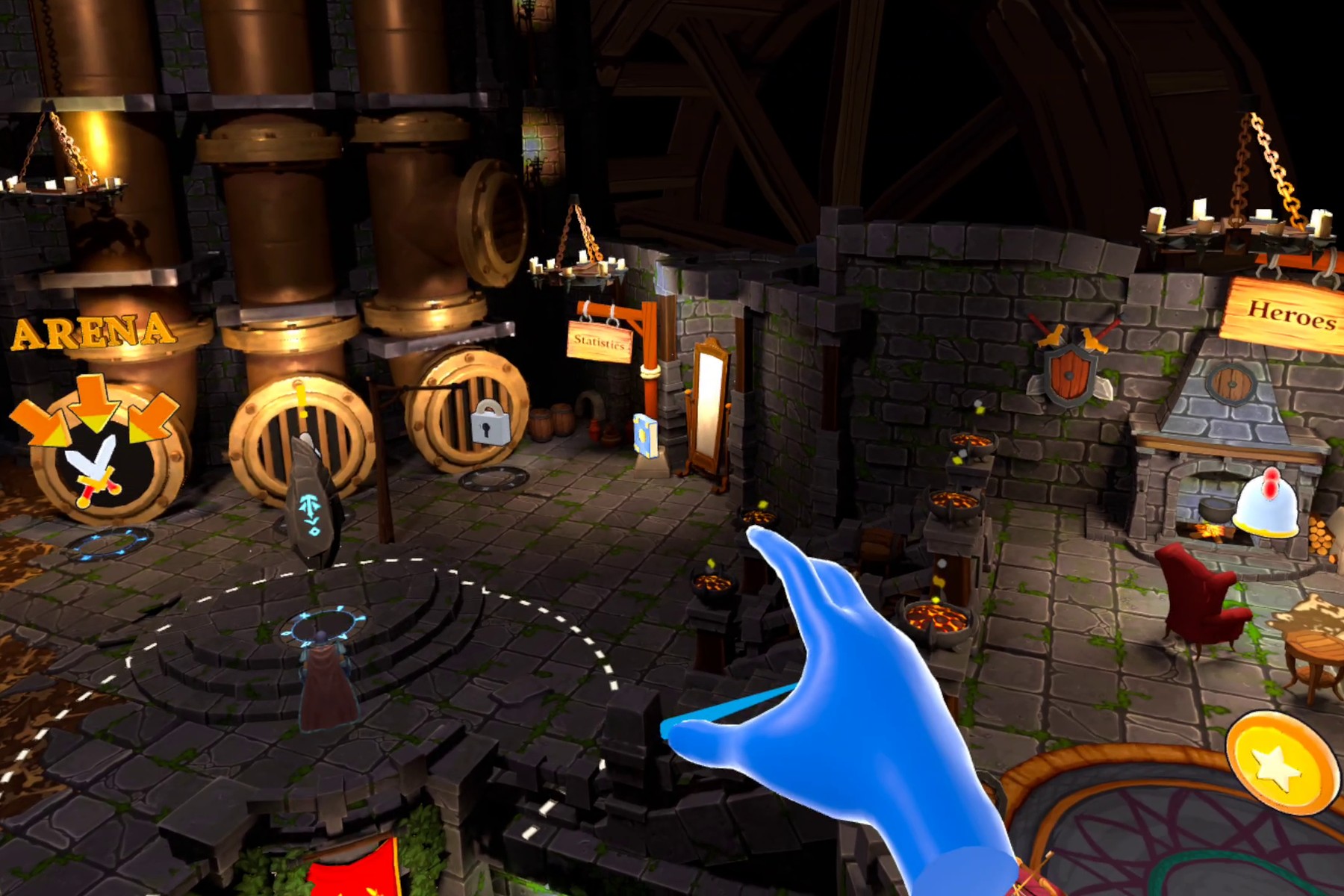
The safehouse, your home between runs.
-
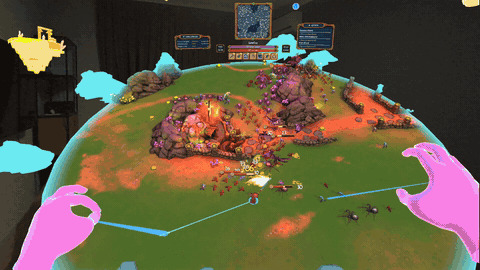 GIF
Mixed reality: grab loot by the rocks, right in your room.
-
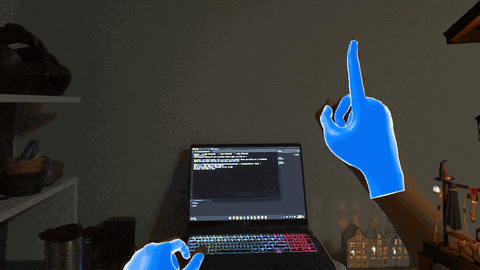 GIF
Mixed reality: from a real desk into the tavern.
-
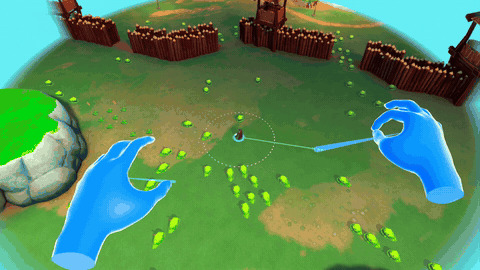 GIF
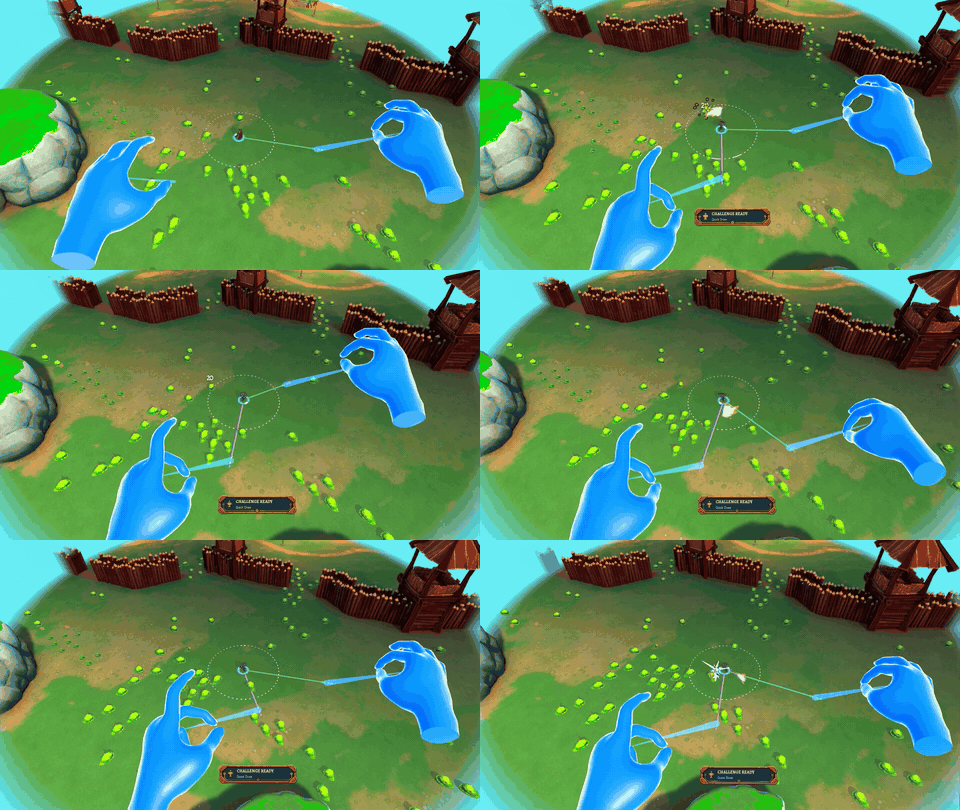
Hero Leash: pinch the hero and pull to run.
-
 GIF
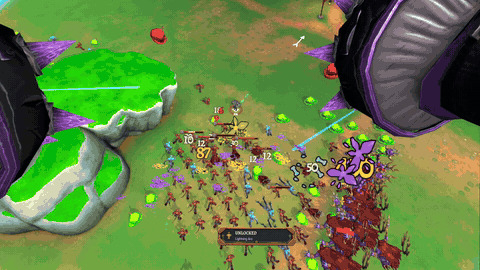
Gauntlets: grab them, then smash the horde.
-
 GIF
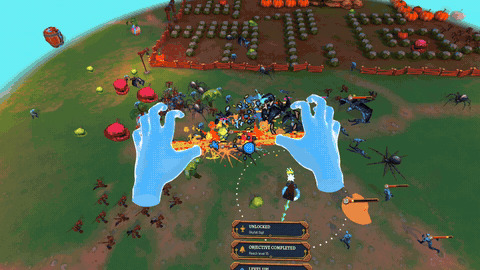
Hand powers: fire from both palms.
-
 GIF
Leading the hero through the pumpkin maze.
-
 GIF
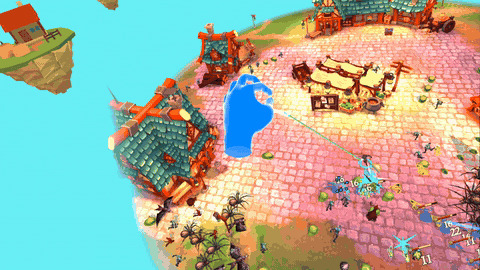
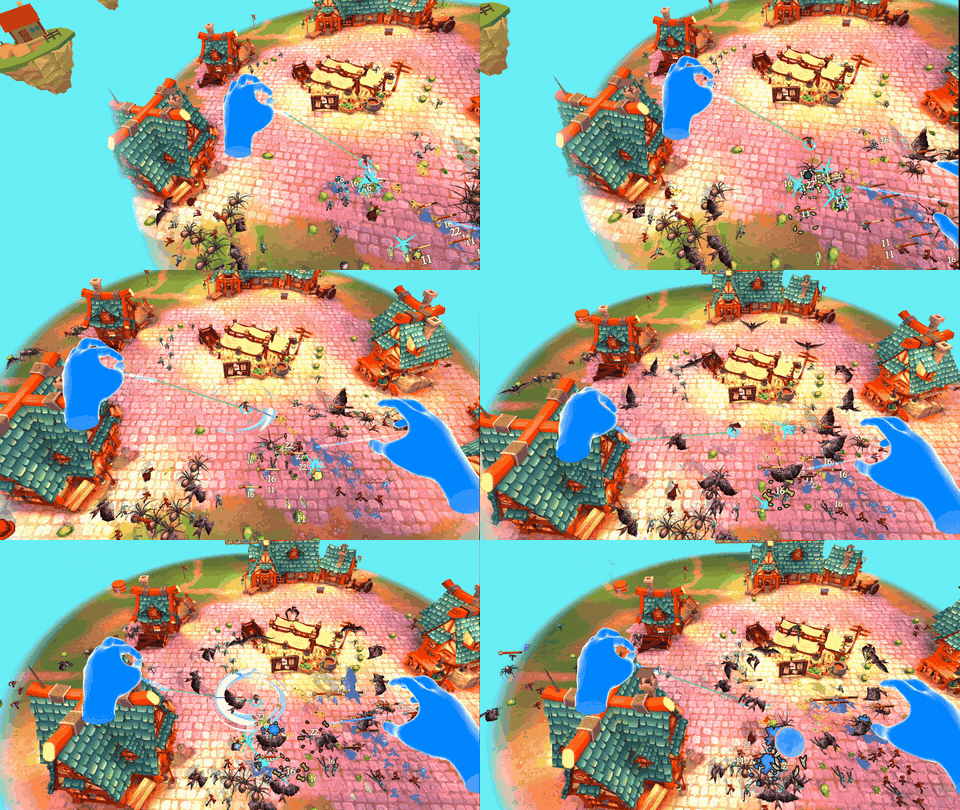
The horde storms the village.
-
 GIF
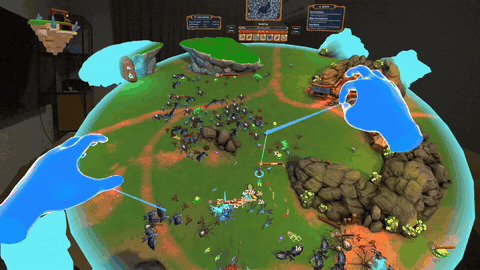
Mixed reality: hundreds of monsters around the hero.
-
 GIF
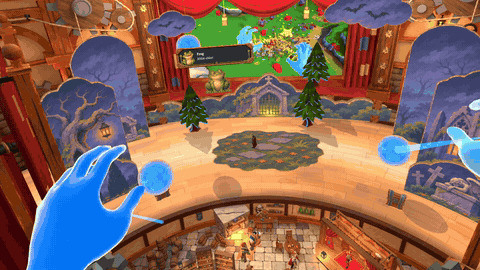
Tutorial: aim, grab and throw on the paper-theatre stage.
-
 GIF
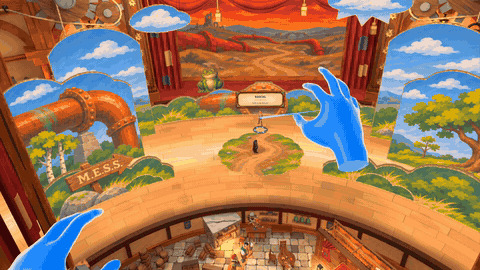
Tutorial: meet Rascal on the last scene.
Our main features
 |
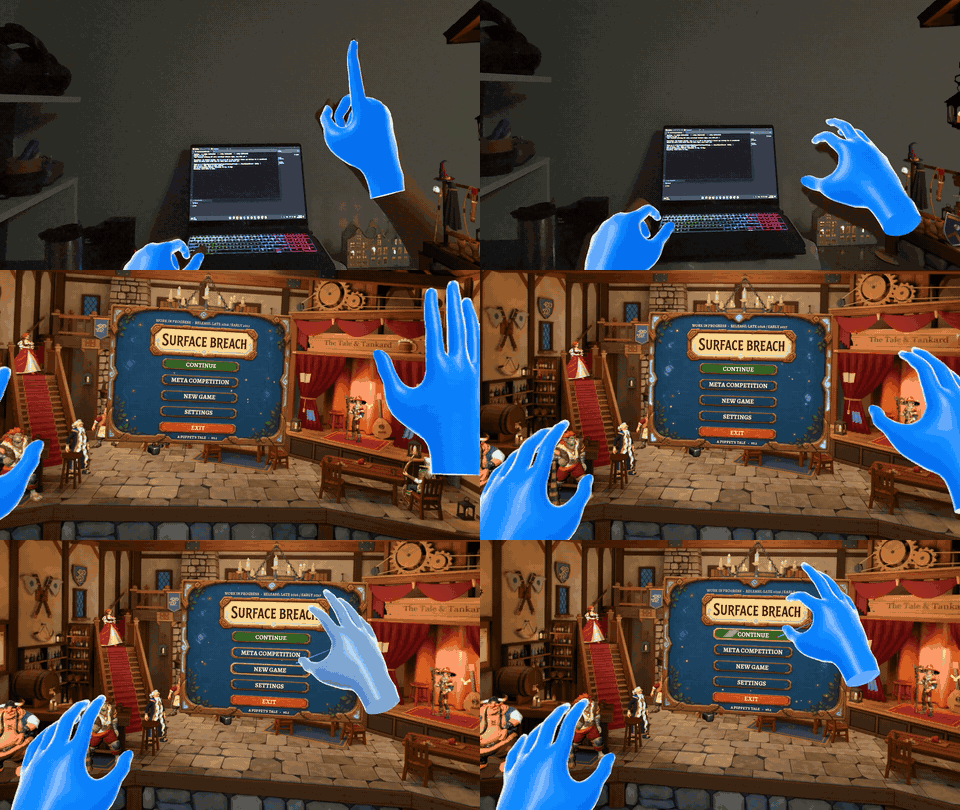 |
| Mixed reality. Battles in your room. | Desk to tavern. One pinch, you're in. |
- A bullet heaven built for VR, in full 3D. A whole open world spreads out below you: one big map full of places to explore, with no loading screens in between. And it's only the first: more maps are on the way, opening up as you progress. The view follows your tiny hero across it as monsters run and fly at them. You're the giant above it all: lean in, reach down, grab weapons and monsters straight out of the world and throw them back into the horde.
- Hands-free. No controller needed, from the main menu to Game Over. Pinch the hero and pull to lead them, and grab weapons and monsters however feels natural.
- Mixed reality. Turn on passthrough and the battlefield sits on your floor.
- Hundreds of monsters at once on a standalone Quest 3, with light and shadow on every one of them.
- Built for "one more run". Short runs, a new build every time, attack evolutions, a perk shop, a hand-ability shop and unlocks that keep coming.
- A story told by a liar. Rascal, a broke trickster, makes up the legend as you play, and the tutorial is a paper-theatre stage play.
- An RPG in disguise. Anyone can pick it up and play, but there's room to go deep. Talk to quest-givers, choose your answers in dialogues, take on quests and dig into the lore of the world.
- Comfort first. You stay put above the fight like a giant, and the world moves beneath you. Sit back and play for hours, even if it's your first time in VR.
- A camera that fits you. Pick how close you want to be: Up Close puts you right over the fight, while Strategist and Overview let you command the whole battlefield from further back. Want more? Fine-tune the world scale, camera height, distance and tilt yourself. A narrow field of view? Just bring the world closer. Ready for whatever you wear on your face next 😉
 |
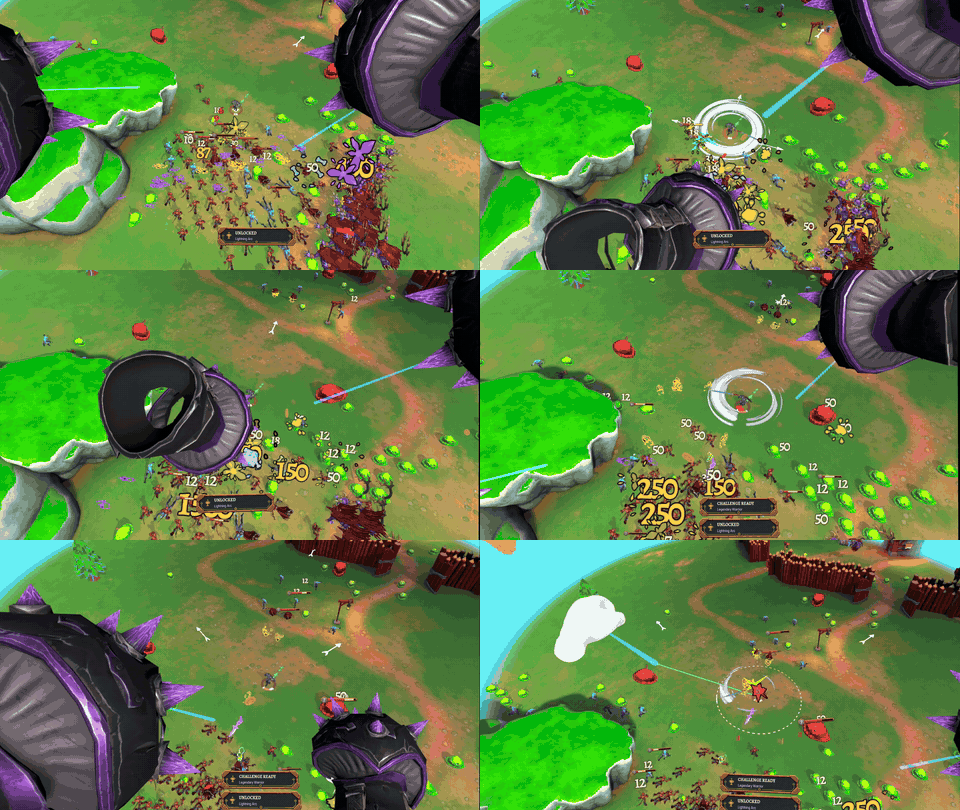 |
| Hero Leash. Pinch and pull to run. | Gauntlets. Grab them and smash. |
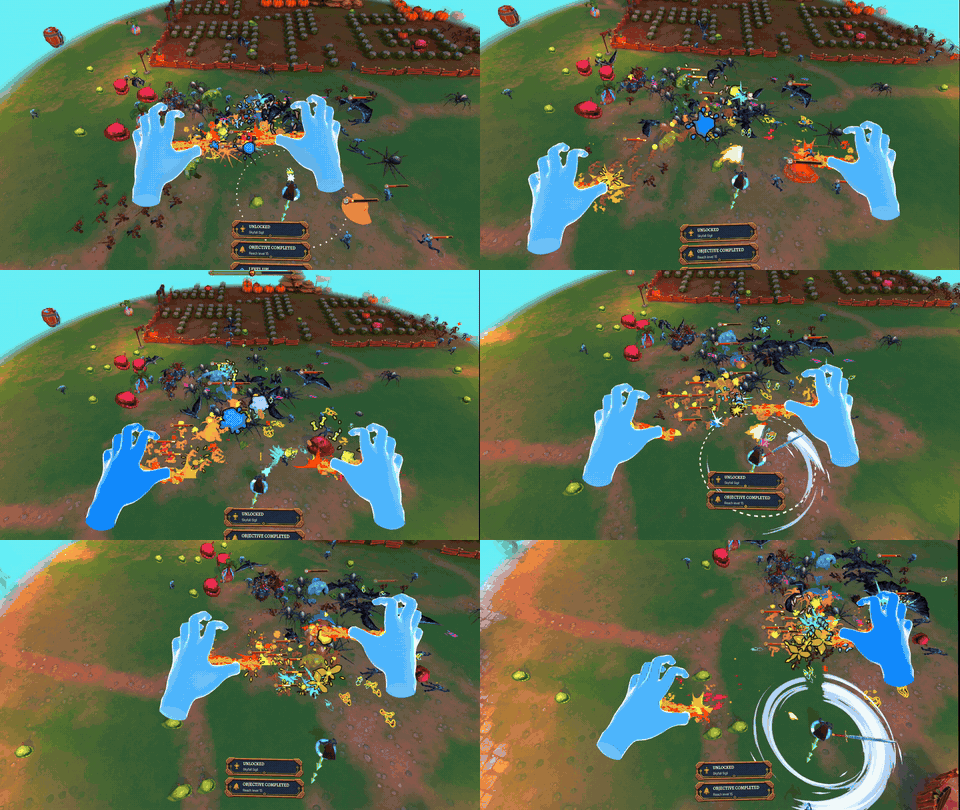 |
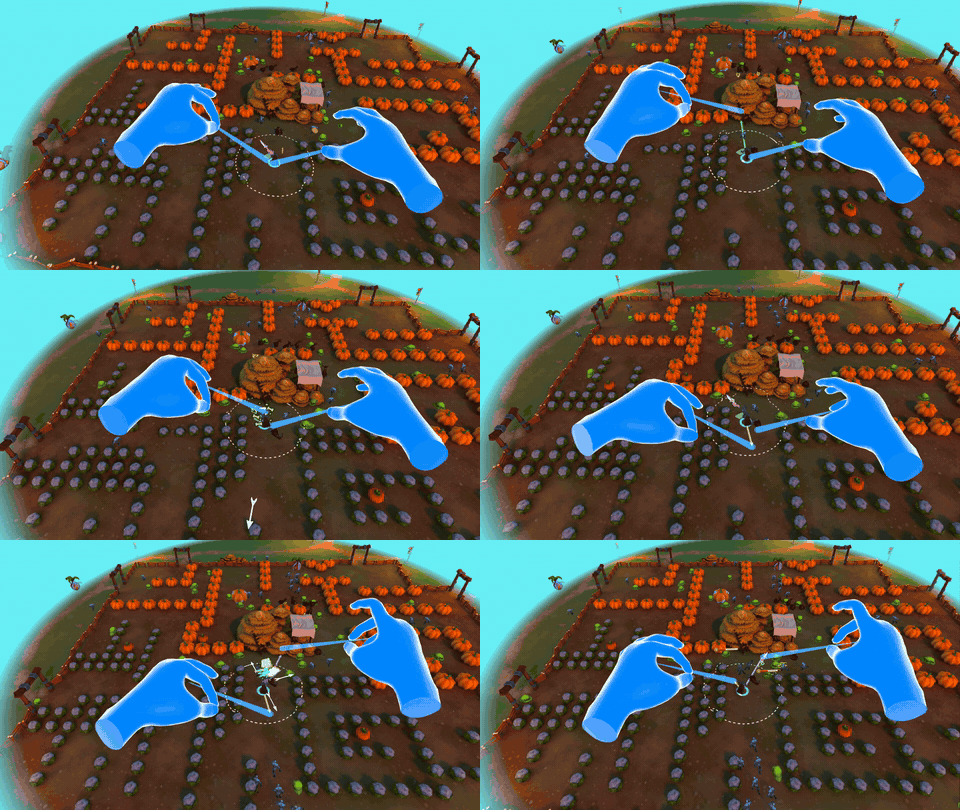 |
| Hand powers. Fire from your palms. | The pumpkin maze. Steer through it. |
Inspiration
Surface Breach was born a year ago, at last year's edition of this very competition. We couldn't let it go. It was a long road from there, and this competition is its homecoming.
We built its first version in about a month for Meta Horizon Start in December 2025. We packed a lot into that month, but not enough. The game ran on controllers only, with no hand tracking and no mixed reality, the very things that competition was about. We didn't win, and fair enough. We learned the lesson, but we didn't take it as a reason to stop.
We love this game, and we believe in it. It's the game we always wanted to play ourselves: being a giant who guides a tiny hero through a horde is fast, fun and spectacular, both to play and to look at. So we kept building it all year, and it changed beyond recognition: a new look, new characters, a story and a whole world to explore. When this competition was announced, it felt like the right moment to bring it home. We gave its window to two things: going hands-first, and finishing and polishing the game. In those weeks, Surface Breach became fully playable with bare hands, from the main menu to Game Over. Launch on Meta Quest is planned for Q1 2027.
Curious how far it came? December 2025 demo → Summer 2026 build → Today's trailer
We're Petro and Olena, a two-person team from Ukraine, and comfort comes first. Back when the game still used controllers, we tested it on people new to VR, and even they felt right at home. Hands finish the job: put the headset on, sit down, play.
What it does
Below you, a tiny courier fights hundreds of monsters, swinging and casting on their own. Your hands do the rest.
It's built to feel natural from the very first run. There's no list of gestures to learn: reach for a weapon or a monster the way that feels right to you, near or far, and it just works. We want even someone who has never worn a headset to feel at home within minutes. Easy to learn, hard to master: the more you play, the more ways you find to help your hero.
Each run, your hero grows stronger with new attacks and perks, and the people you meet on the surface have quests of their own. Between runs, you come home to the safehouse to spend your gold, level up your own hand powers and pick up more quests.
New since September 24:
- Full hand tracking, from the main menu to Game Over: the Hero Leash, hand powers and a hands-only How to Play.
- A story intro that sets up the tale.
- A playable tutorial that's also the story's opening act: one big interactive level where Rascal tells the tale from the stage and you learn every mechanic inside it.
- Deeper meta-progression: a Perk Shop for the hero and a hand-ability shop where you buy and level up your hand powers.
- A major visual and performance upgrade: the final cast of characters and baked lighting, with light and shadow that reach the whole horde. Every monster casts a shadow and lights up as it runs into a sunlit patch, even with hundreds on screen. Plus a whole pile of new visual effects that make every fight look punchy and stylish, and the game runs smoother than before.
Touch controllers still work for everything.
How we built it
Our own engine branch. Unreal Engine 5.8 on our own fork of Meta's engine branch, with engine improvements that let the game do things neither stock Unreal nor Meta's branch can do out of the box.
A horde built as data, run in parallel. Enemies, projectiles and ground strikes live in Mass Entity, Unreal's ECS: lightweight data instead of full game objects. On top of it we wrote our own simulation layer, 36 systems for pathing, chasing, flying, damage, death and loot. The horde is spread across the Quest's worker threads instead of piling onto one, and heavy work like pathfinding runs in the background.
 |
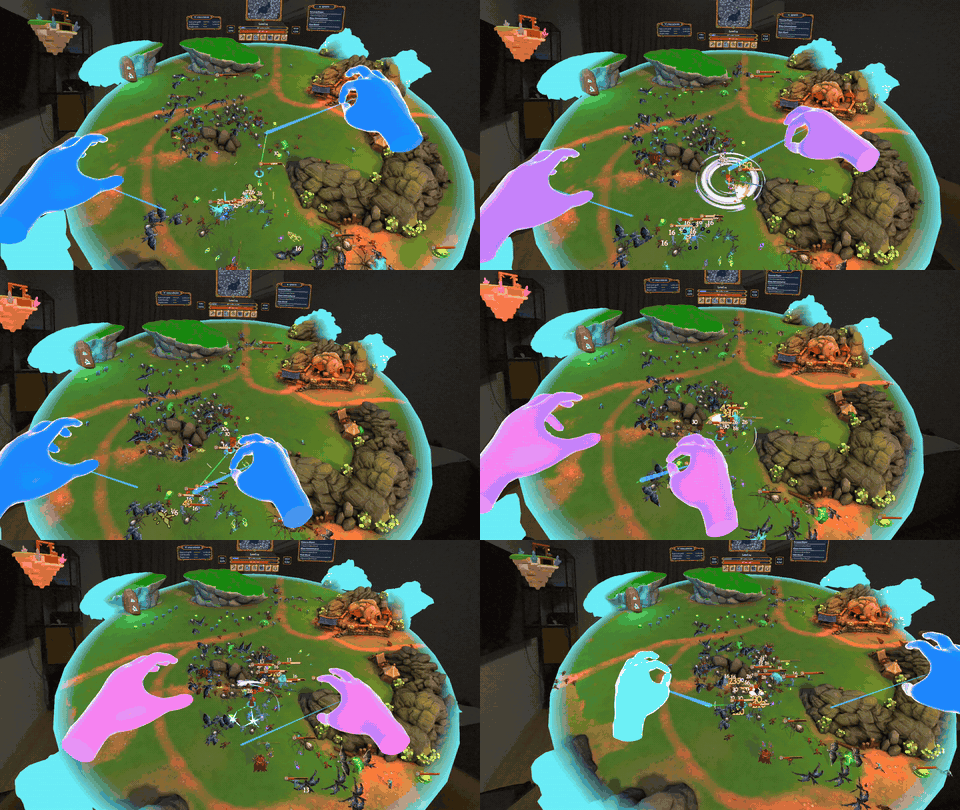 |
| The horde storms the village. | Hundreds at once. Lit and shadowed. |
Our own crowd rendering. Hundreds of animated monsters, their projectiles and their hit effects go through our own animation and effects pipeline on top of Niagara, built so a bigger crowd costs as little extra as possible.
An open world on a mobile chip. The arena isn't one small field. It's one continuous open map of almost 250,000 square metres, with a village, ruins and more, and no loading screens as you cross it. Keeping a world this size inside a standalone headset's frame budget, with hundreds of monsters on it, took its own share of engineering.
Light and shadow on a budget. Every place you visit is richly lit, and so is everyone in it: the hero and every monster in the horde pick up the light around them and cast their own shadows. Our own lighting system does this at almost no cost, so the picture stays beautiful even with hundreds of monsters on screen.
Hands. The 26 OpenXR joints of each hand become pinch, fist, point and palm-up, mapped to the same input actions a controller presses, so every ability works with both.
Our own tools. Quest profiling tools and repeatable test scenes that replay the same fight on the headset with nobody wearing it. Plus custom editor tooling, so two people can move like a bigger team.
Challenges we ran into
Steering without a thumbstick. The hardest problem of the whole project, and we solved it by building and playing, not guessing. Over thirteen playtest rounds we tried ten ways to move the hero:
- touch pads and virtual sticks floating by your hip
- thumb sticks driven by your thumb
- tilting your hand like a tray
- leaning your body
- pointing at the floor so the hero runs there
- a tiny tabletop copy of the arena to tap
Each looked good on paper. In the headset, none of them felt like steering. Hero Leash did, so it's the one we kept. We're still polishing every pinch and pull, so by launch the hand controls should feel effortless.
A crowd on a phone chip, in stereo. Quest 3 runs on a mobile chip and draws every frame twice, once per eye. Hundreds of monsters, projectiles, damage numbers and effects all fight for that budget, and in VR a dropped frame is something you feel, not just see. So we treated performance as a feature: we measured what each system really cost on the headset and rebuilt the expensive ones. Along the way we got rid of the freezes that used to hit the first time a new monster appeared.
Looking better while getting faster. The new characters, light and effects went in during the same weeks we were cutting the cost of a frame. Every visual upgrade had to pay for itself.
Accomplishments that we're proud of
- A way to play we haven't seen anywhere else. A giant steering a tiny hero through a horde with bare hands. And it's built to grow: new heroes, events and mechanics slot right in, so there's always something fresh to come back to.
- A whole world around the fights. Easy to pick up and relaxed to play, yet there's a story, quest-givers with their own characters, dialogues where you choose what to say, a safehouse to come home to, skill trees, heroes to unlock and places worth exploring.
- A tutorial that's a stage play. You learn every gesture inside a hand-painted paper theatre. Rascal tells the tale from the stage, the scenery turns around you scene by scene, and he keeps breaking the fourth wall to talk to you behind the crowd's back. Then the story carries you off the stage and into the world it was describing.
 |
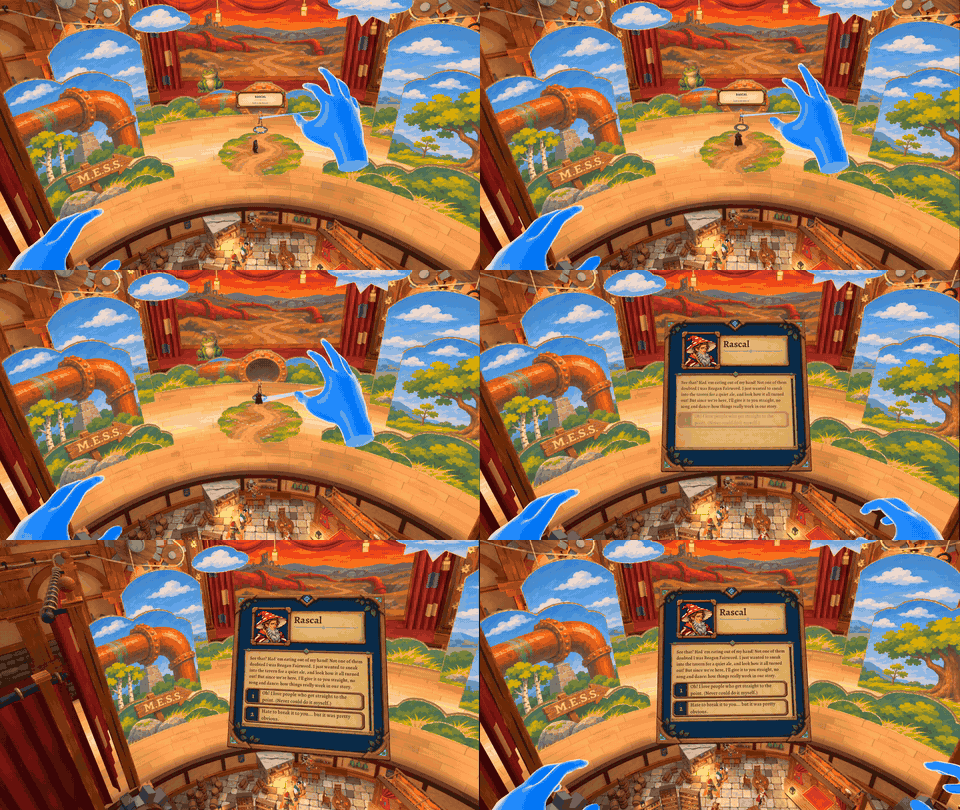 |
| Learning by doing. Aim, grab, throw. | Meet Rascal. Pinch him to talk. |
- An open world on your floor. One big open map with no loading screens and hundreds of monsters on it. In mixed reality, all of it sits in your room.
- A horde with no actors, lit and shadowed. Hundreds of monsters are pure data, yet every one of them picks up the baked light where it stands and casts a shadow, with no real-time lights and no shadow maps.
- Effects that don't grow with the fight. Hit effects cost the same at level 1 as at level 7, even with far more monsters on screen.
- Smooth play. We hunted down freezes and hitches, so the action keeps flowing even when a fresh wave of monsters floods in.
What we learned
Hands aren't controllers without buttons. Every verb needs its own gesture, and the game has to forgive a wobbly hand: a lost hand fades instead of jumping.
Performance is design. On a standalone headset, how many monsters you can throw at the player is a gameplay decision as much as a technical one.
What's next for Surface Breach
Before the Q1 2027 launch, we're chasing a locked 72 fps in the heaviest late-run fights, without trading away the look. However big the horde gets, the world around it should stay just as beautiful as in the first quiet minute of a run. After it: more heroes, scene-aware mixed reality, and multiplayer, the feature players ask for most. We're planning several modes, from co-op to competitive. Multiplayer is already further along than a plan: our netcode keeps heroes and the whole horde in sync between players.
We've put our hearts into Surface Breach, and we can't wait for you to play it.
Built With
- c++
- gameplay-ability-system
- hand-tracking
- mass-entity
- meta-quest
- mixed-reality
- niagara
- openxr
- passthrough
- unreal-engine
- vertex-animation


