-
-
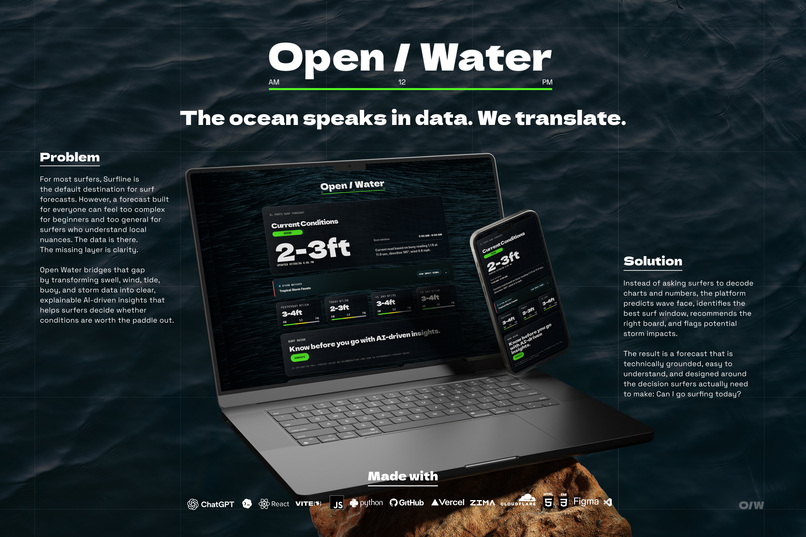
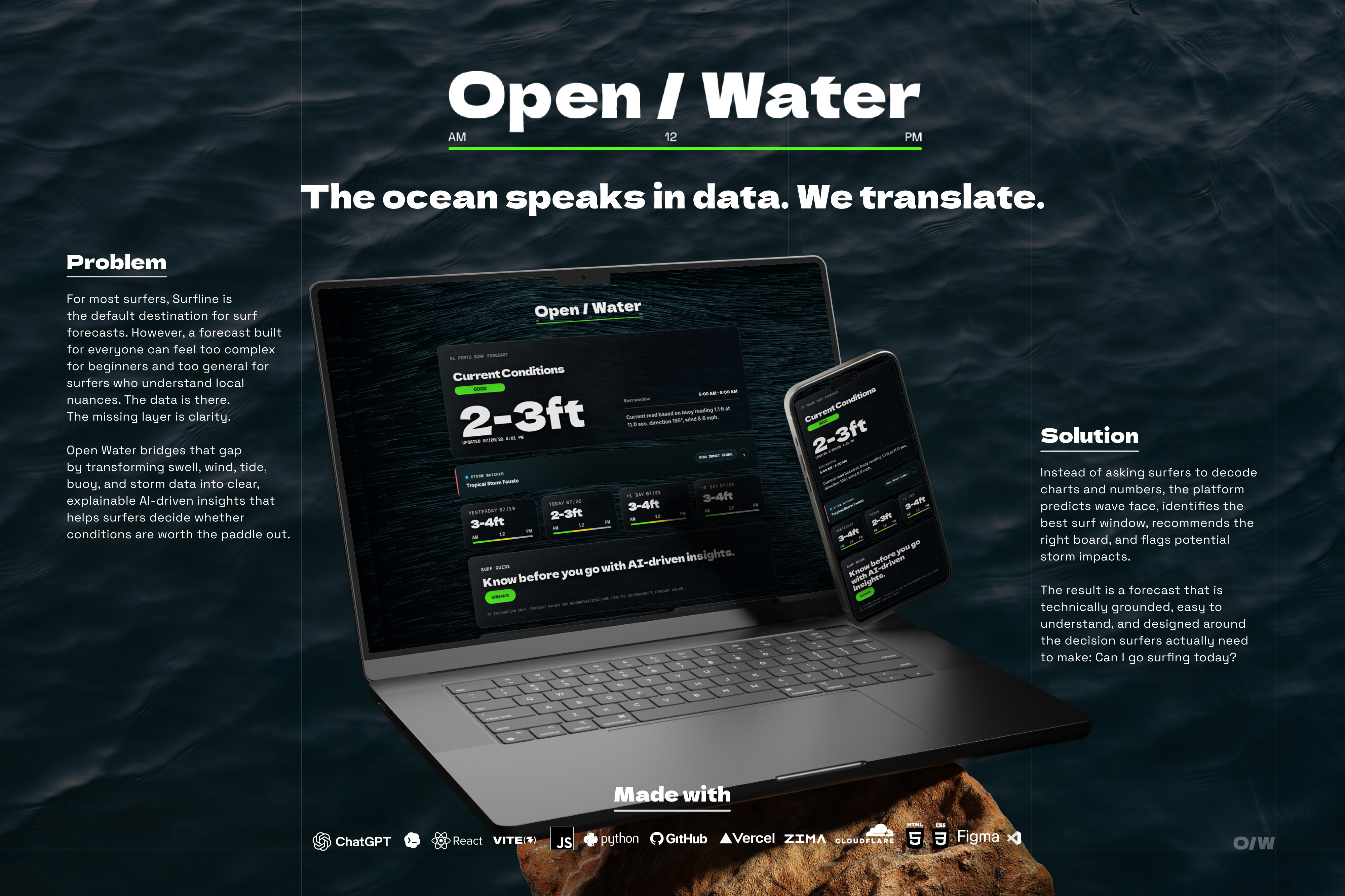
Problem & Solution
-
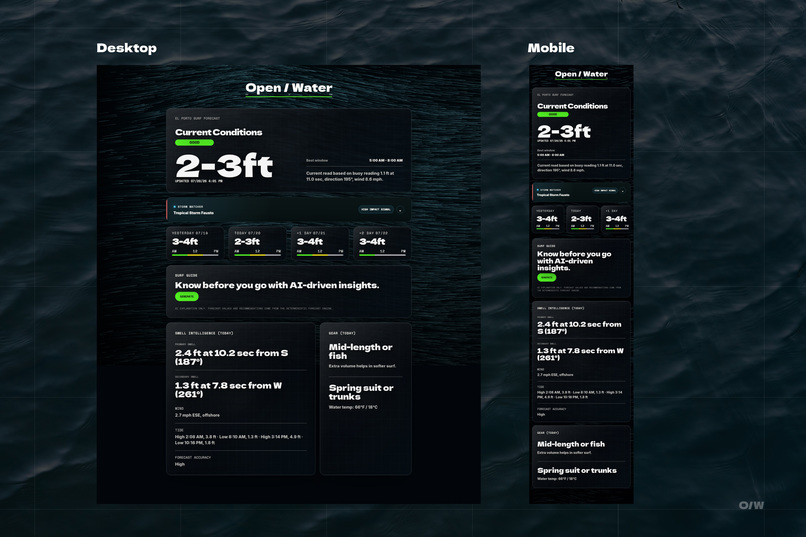
Full images
Inspiration
For most surfers, a forecast is only the starting point. Reading through and deciphering swell, wind, tide, buoy data and translating that into a confident understanding of surf conditions requires experience and local knowledge.
We built Open Water to answer one simple question: Should I go surfing today?
What it does
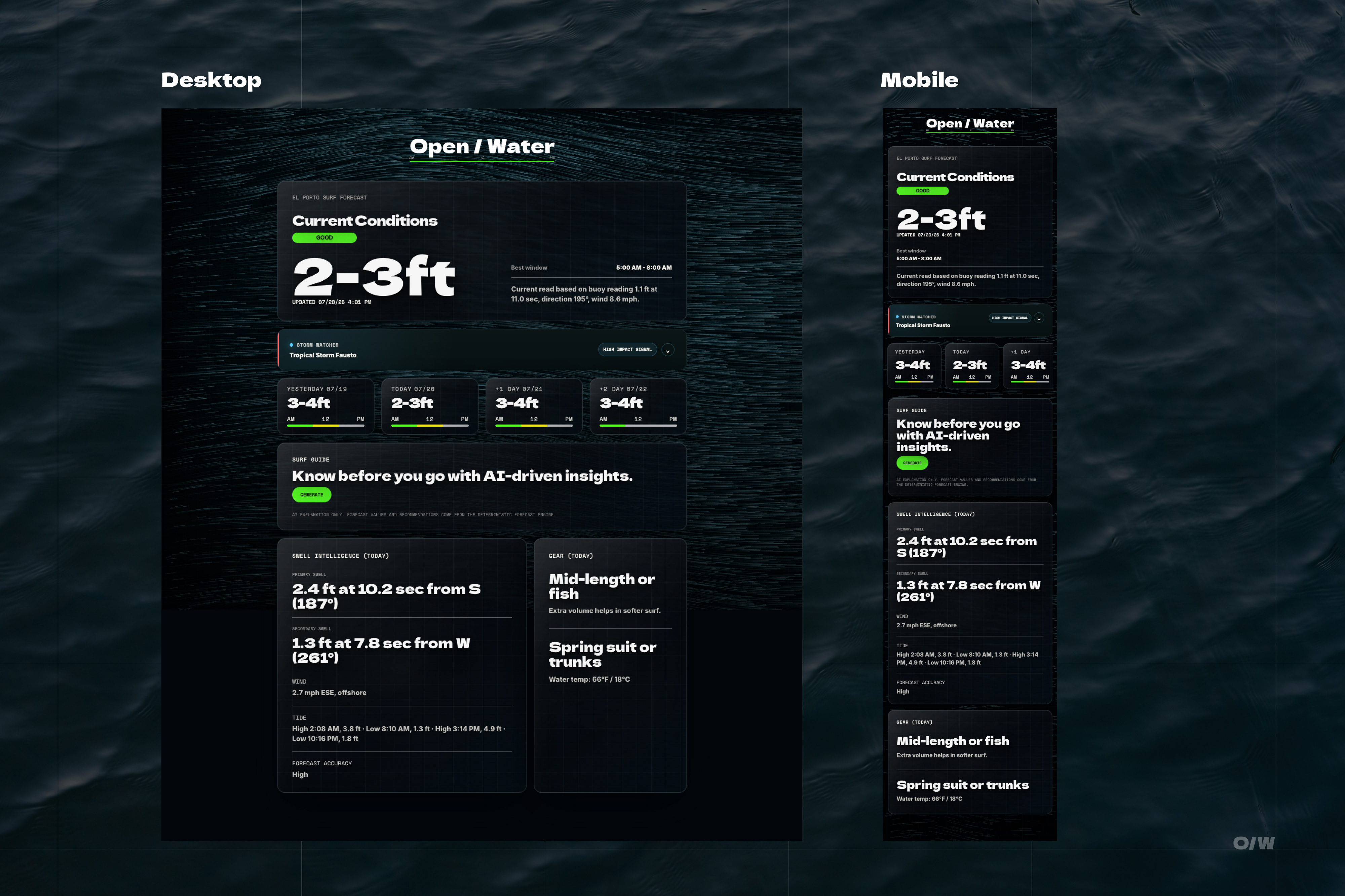
Open Water transforms live marine and weather data into a clear surf score. It predicts wave face height, identifies the best surf window, recommends appropriate gear, monitors incoming storms for their potential trajectory and impact, and provides an AI generated summary that ties everything together.
Instead of leaving surfers to interpret charts and raw data, Open Water provides the information needed to make a confident decisions that maximizes every surf session.
How we built it
Open Water began as a deterministic surf-forecasting system built around live ocean, tide, and wind data for El Porto. During OpenAI Build Week, we used Codex as an implementation and review partner to extend the existing application with the GPT-5.6-powered Surf Guide.
Codex helped us inspect the existing React and serverless architecture, build the /api/forecast-brief endpoint, integrate the OpenAI Responses API and Structured Outputs, add server-side grounding and validation, create automated tests, diagnose deployment issues, and review the implementation for regressions.
GPT-5.6 translates the selected day’s forecast into a concise headline, outlook, session plan, and practical condition to watch. It does not calculate wave height, change the forecast score, or interpret safety-critical storm data. Storm Watcher remains a separate deterministic layer.
We remained responsible for the product strategy, forecasting logic, data-source decisions, feature scope, surfer-facing language, visual design, branding, and final implementation approval.
Challenges we ran into
Our biggest challenge was deciding what information deserved to be shown.
Marine forecasts can quickly overwhelm users with charts, measurements, and technical details. The goal was not to display more data, but to identify the information that leads to a clear decision while preserving enough detail to earn the user’s trust.
Accomplishments that we're proud of
-Built a live, end-to-end surf forecasting platform -Combined multiple marine data sources into one surf score -Created wave face, surf window, gear, and storm-impact recommendations -Designed a clean, mobile-friendly experience centered on quick decisions -Implemented generative AI to bring together all the data to give insights that would otherwise go unseen.
What we learned
We learned that the value of a forecasting product is not measured by how much data it displays, but by how clearly it helps people act on that data.
Codex and GPT-5.6 significantly lowered the technical barrier to building the product, allowing us to spend more time on human-centered design, product decisions, and creating an experience users can understand and trust.
What's next for Surf Forecaster
Next, we plan to expand to more surf breaks, personalize forecasts based on skill level and board preference, improve forecast confidence through historical validation, and expand AI capabilities to allow for prompts.
Built With
- api
- cloudflare
- codex
- cron
- css3
- docker
- github
- gpt-5.6
- html5
- javascript
- json
- python
- react
- rest
- vercel
- vite
- zimaos


Log in or sign up for Devpost to join the conversation.