-
-
SureSafe Intro #1
-
What happens today? #2
-
Where SureSafe comes in #3
-
How does a customer report a claim?
-
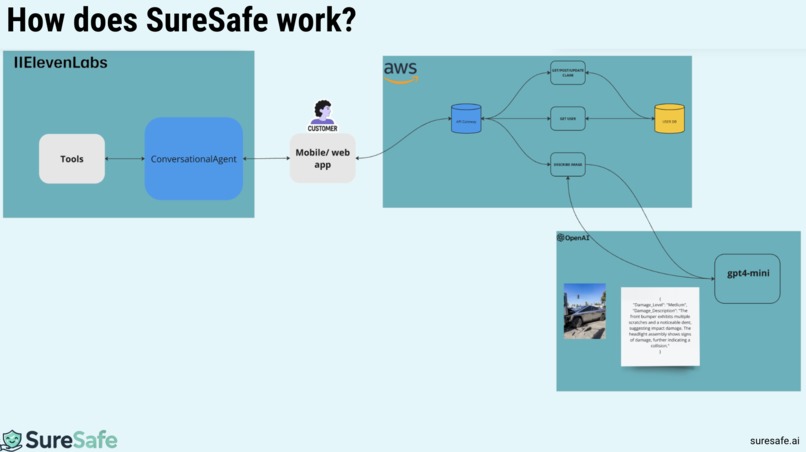
How does SureSafe work?
-
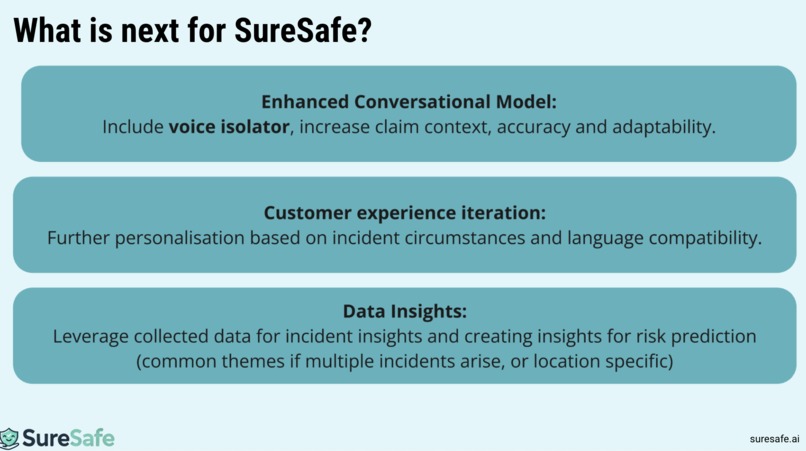
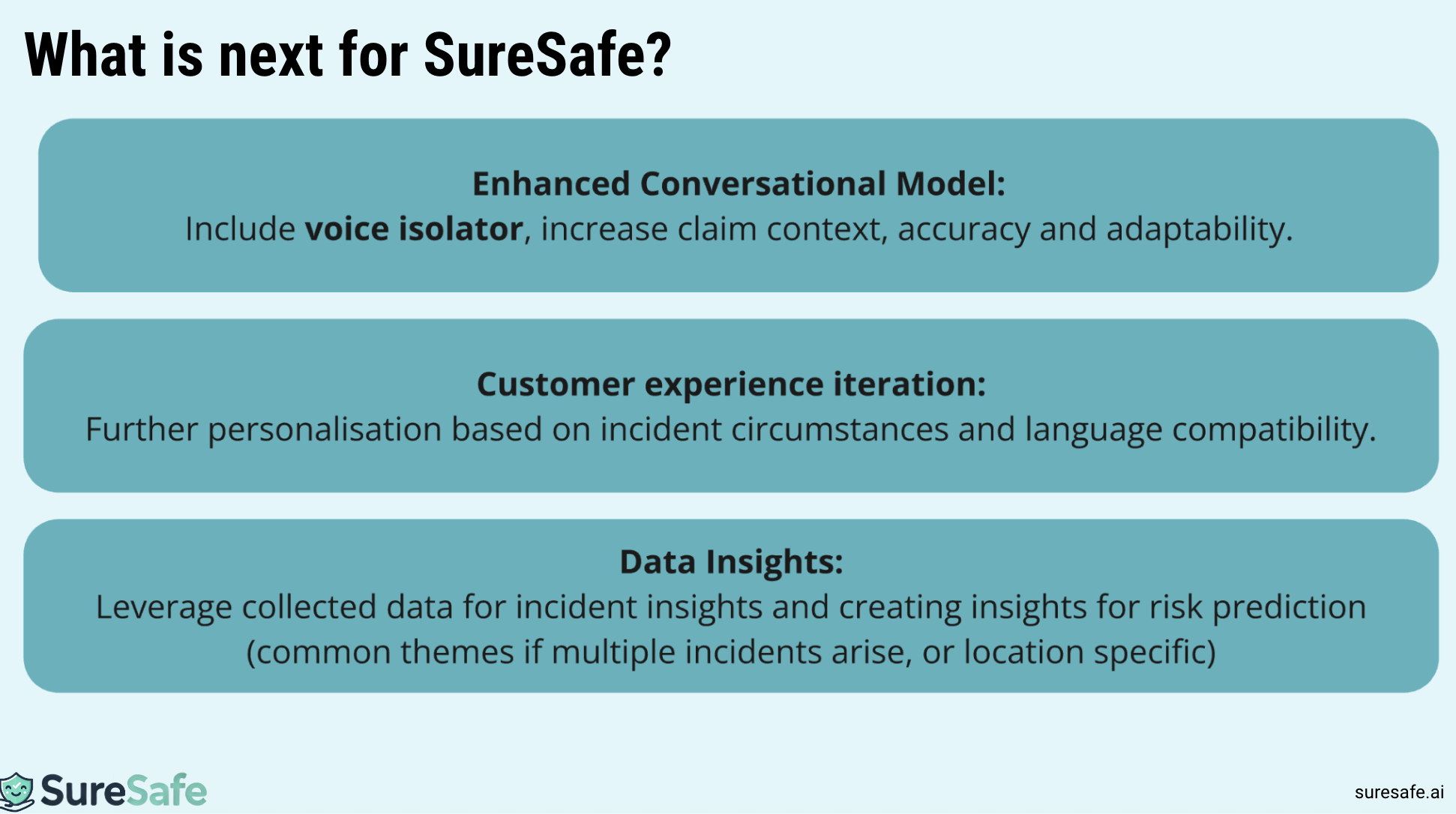
What is next for Suresafe?
-
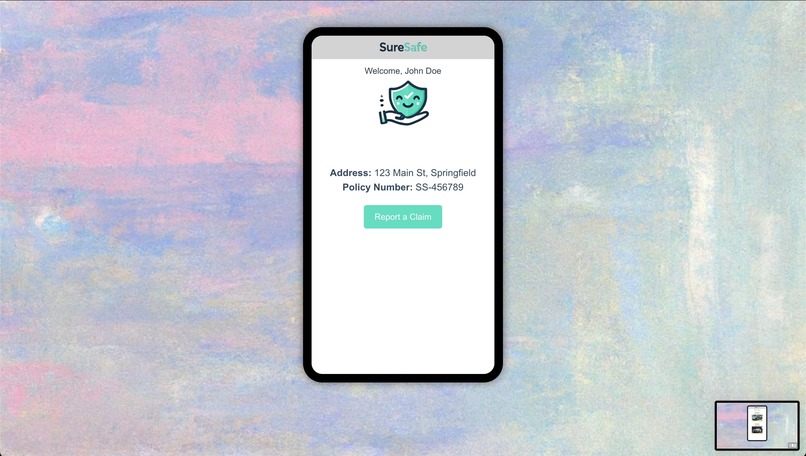
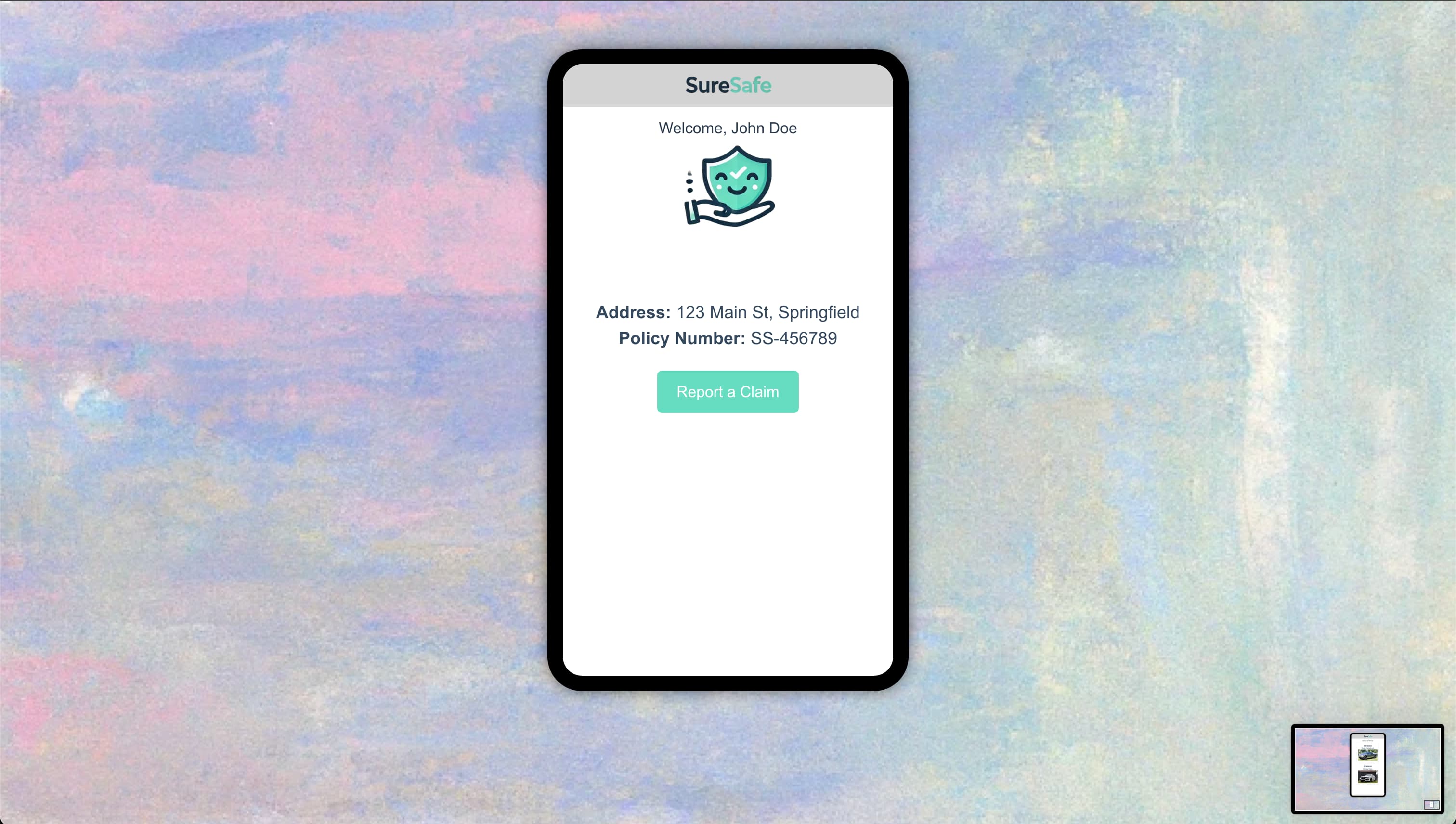
SureSafe App - Report a Claim
-
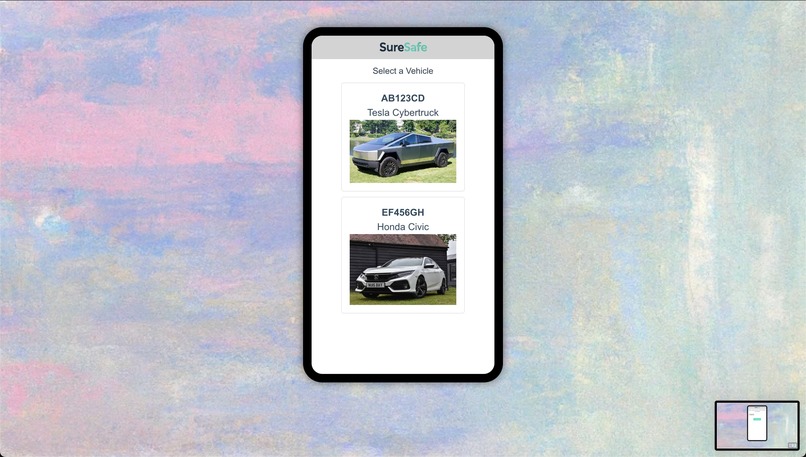
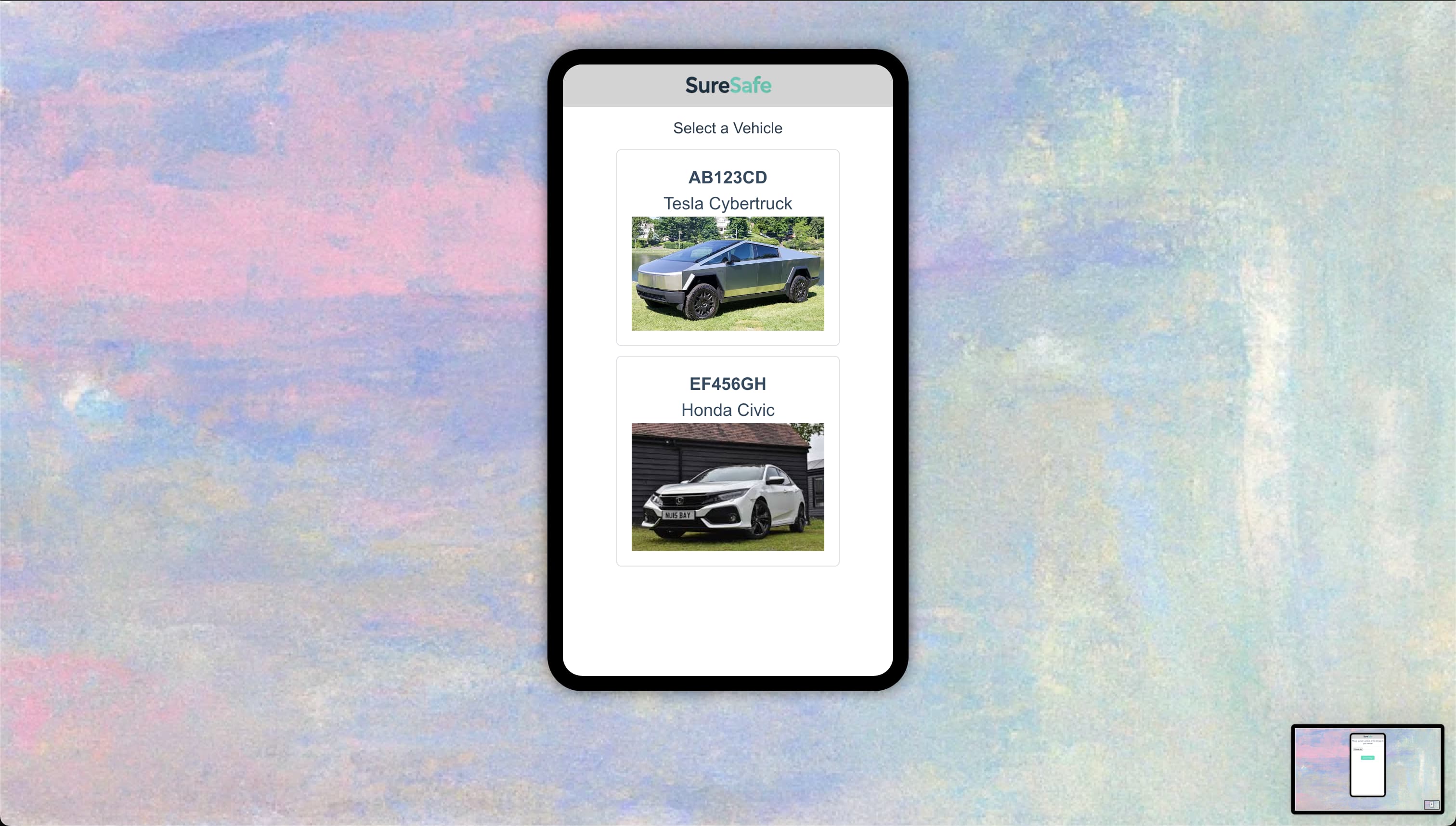
SureSafe App - Vehicle Selection
-
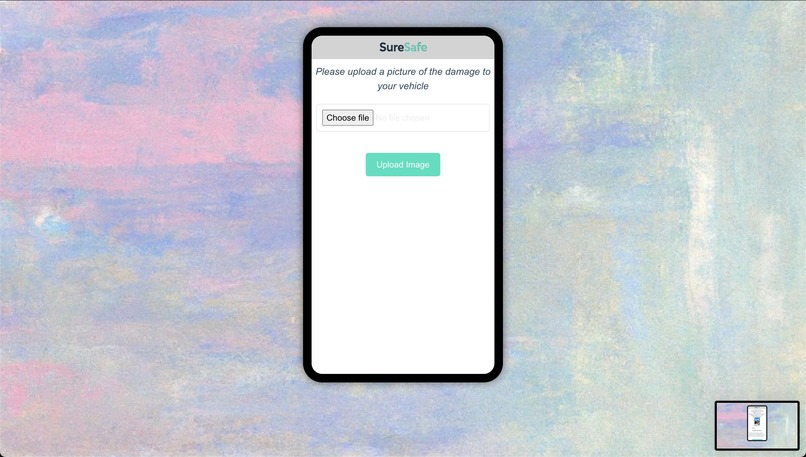
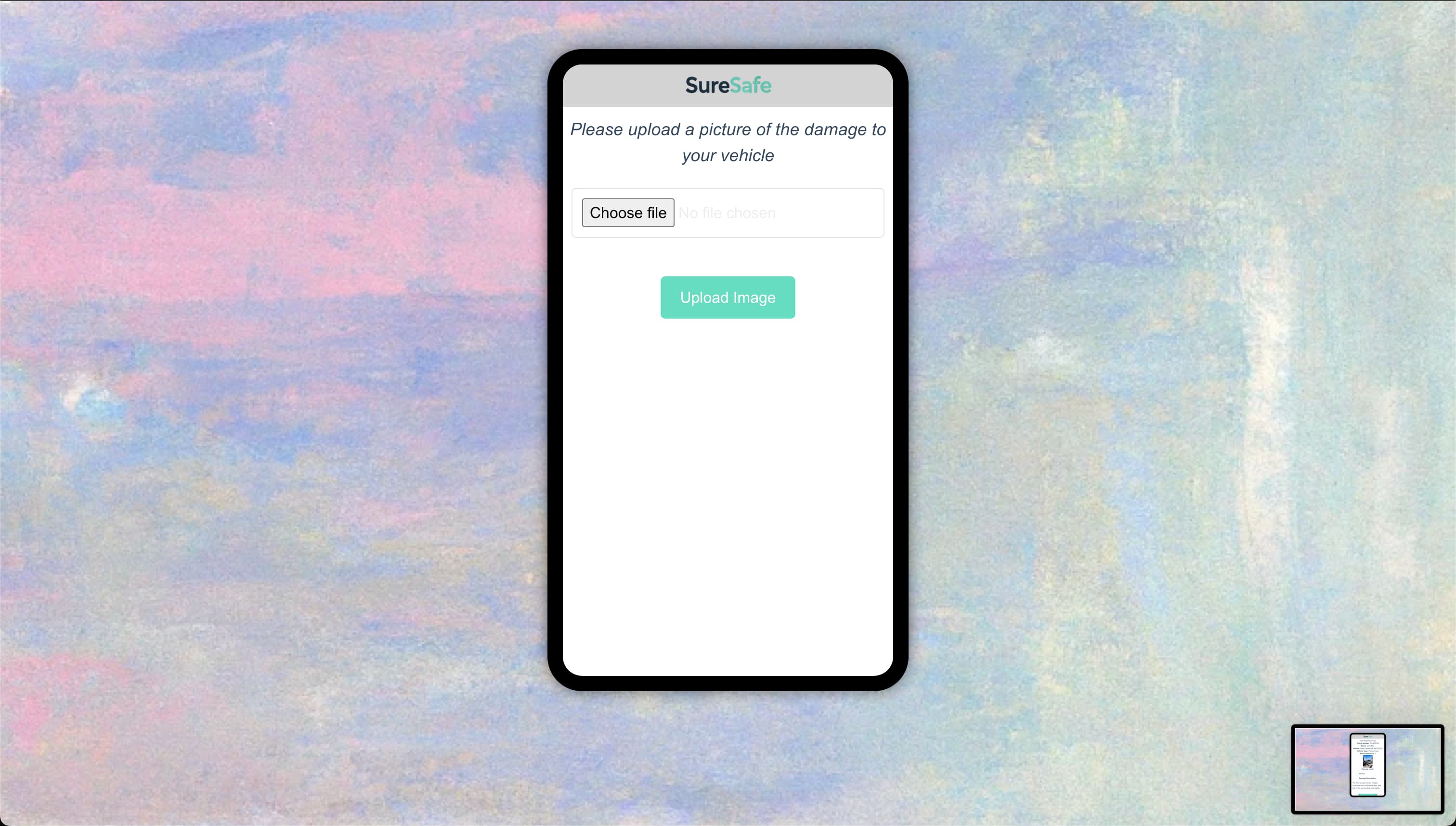
SureSafe App - Add Media to Claim
-
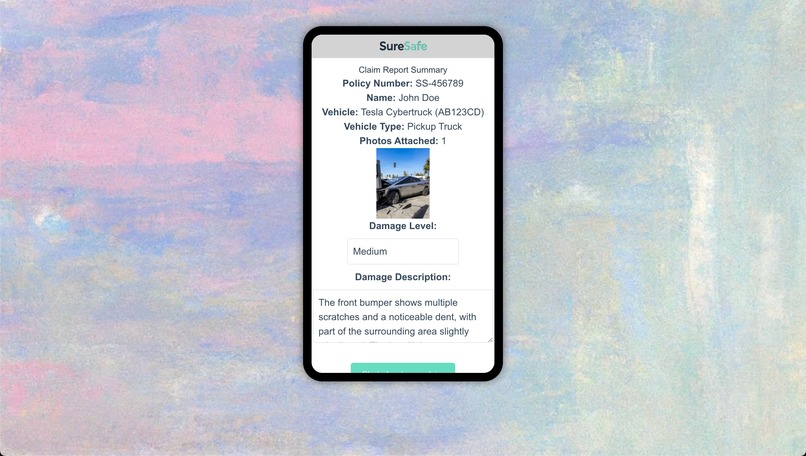
SureSafe App - Vehicle Damage Assessment with OpenAI
-
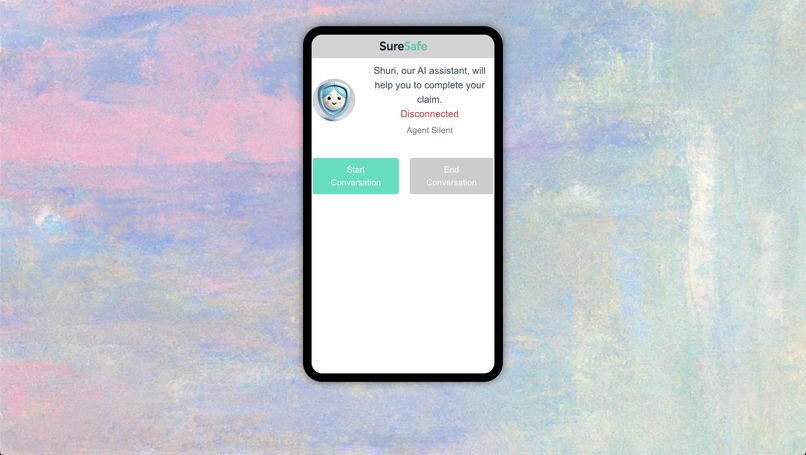
SureSafe App - Claims Agent with ElevenLabs
What inspired us
In the world of insurance, when an accident happens, reporting a claim is one of the most stressful experiences for customers and could be a costly process for insurers.
Current Challenges in Claims Reporting
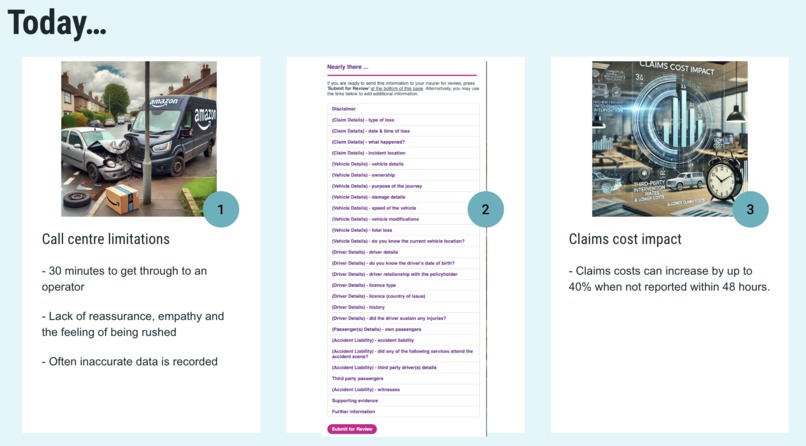
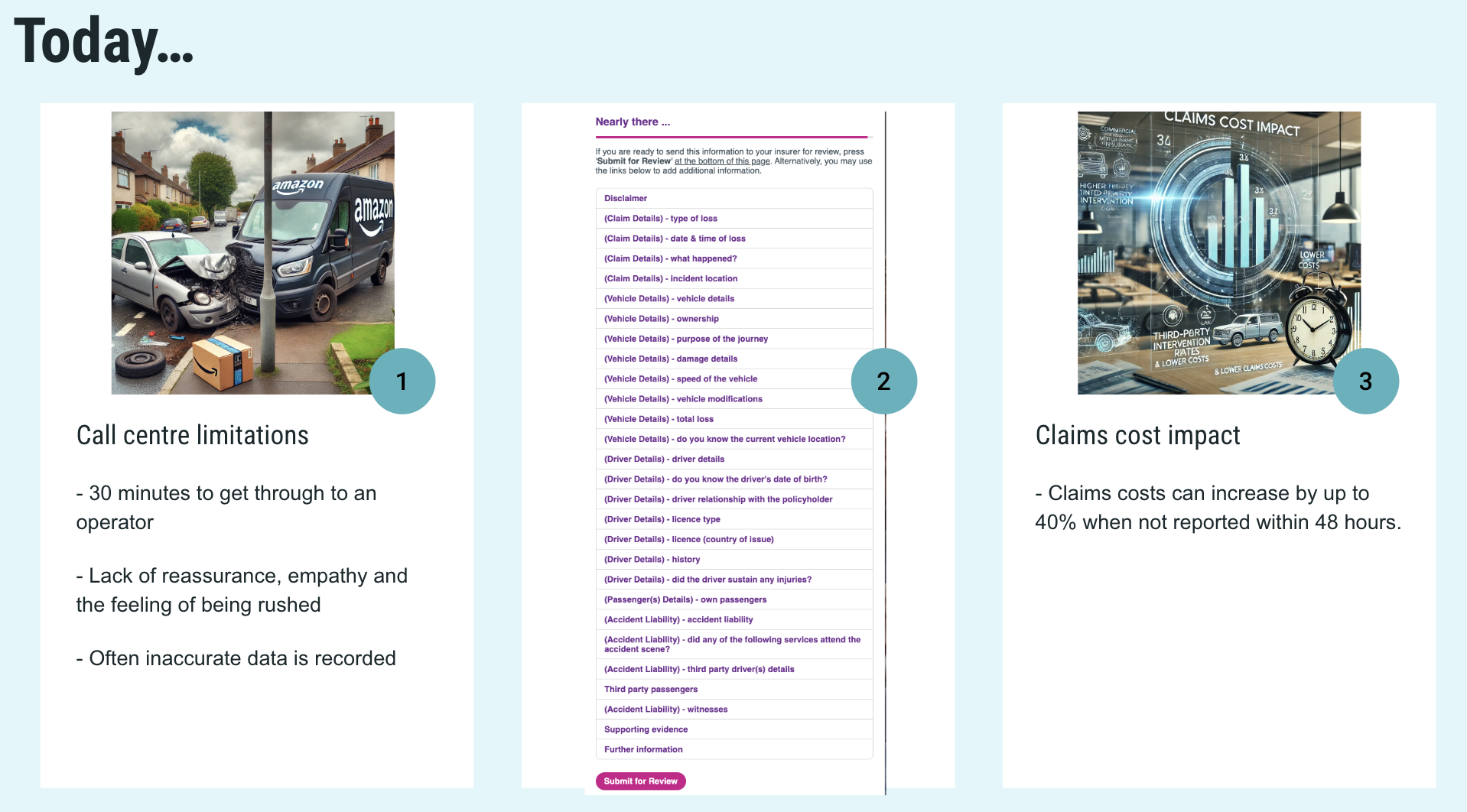
Lengthy Hold Times and Lack of Empathy: Customers face long hold times to reach an agent, only to experience an impersonal, rushed interaction with little empathy during a stressful time.
Rigid, Excessive Questioning: The process involves over 100 static questions, asked in a repetitive, non-dynamic way that doesn’t adapt to previous responses, leaving users feeling overwhelmed and frustrated.
Escalating Costs Due to Delayed Reporting: Claims reported more than 48 hours after an incident can increase costs by up to 40%, as delayed action leads to higher expenses and impacts customer renewal prices. Early, accurate data capture is essential for cost management and swift resolutions.
Our Solution
These challenges inspired us to create a solution that addresses the needs of both users and insurers by:
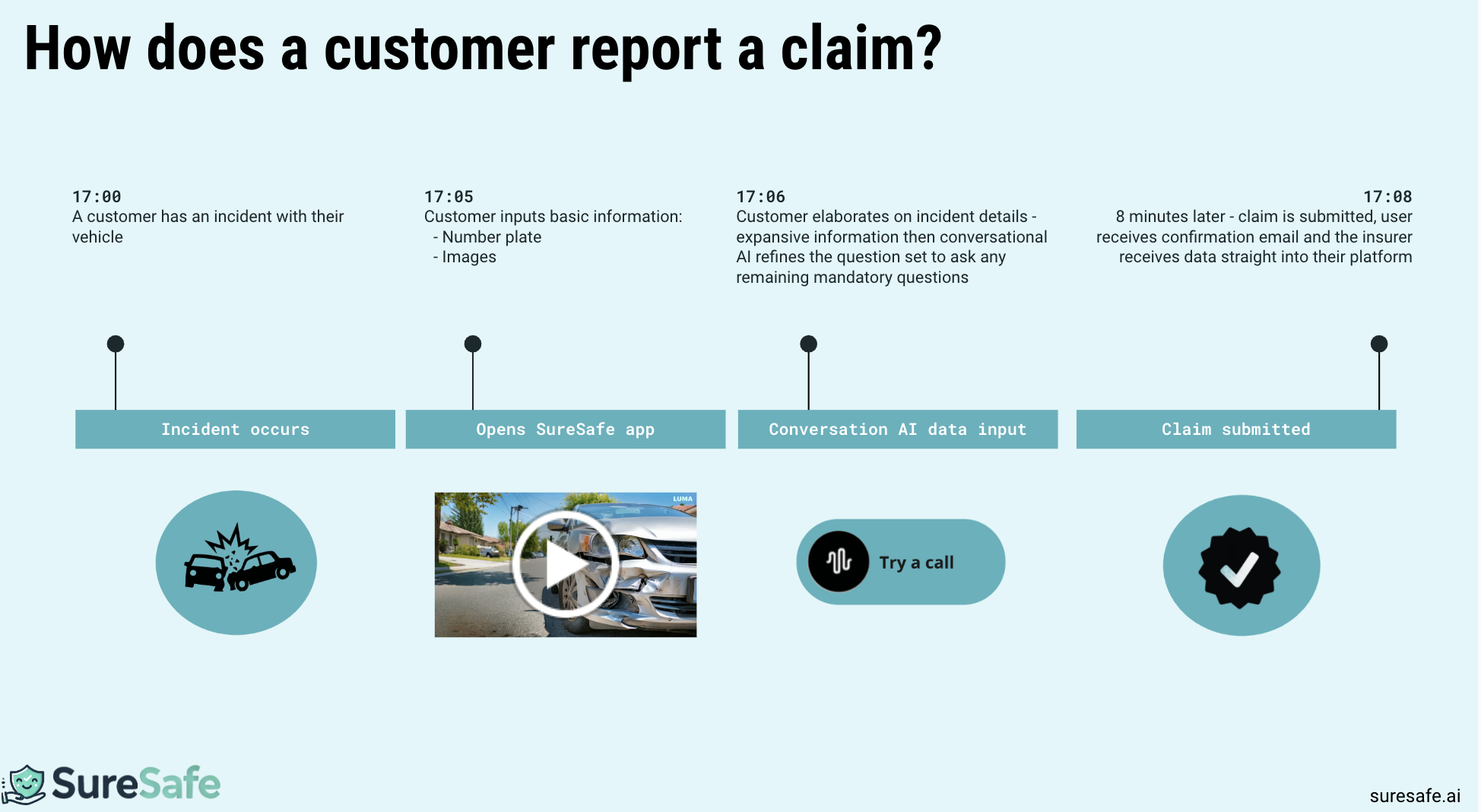
Enabling Instant Claims Reporting: Providing users with immediate access to report incidents, eliminating long hold times and reducing the stress of filing a claim.
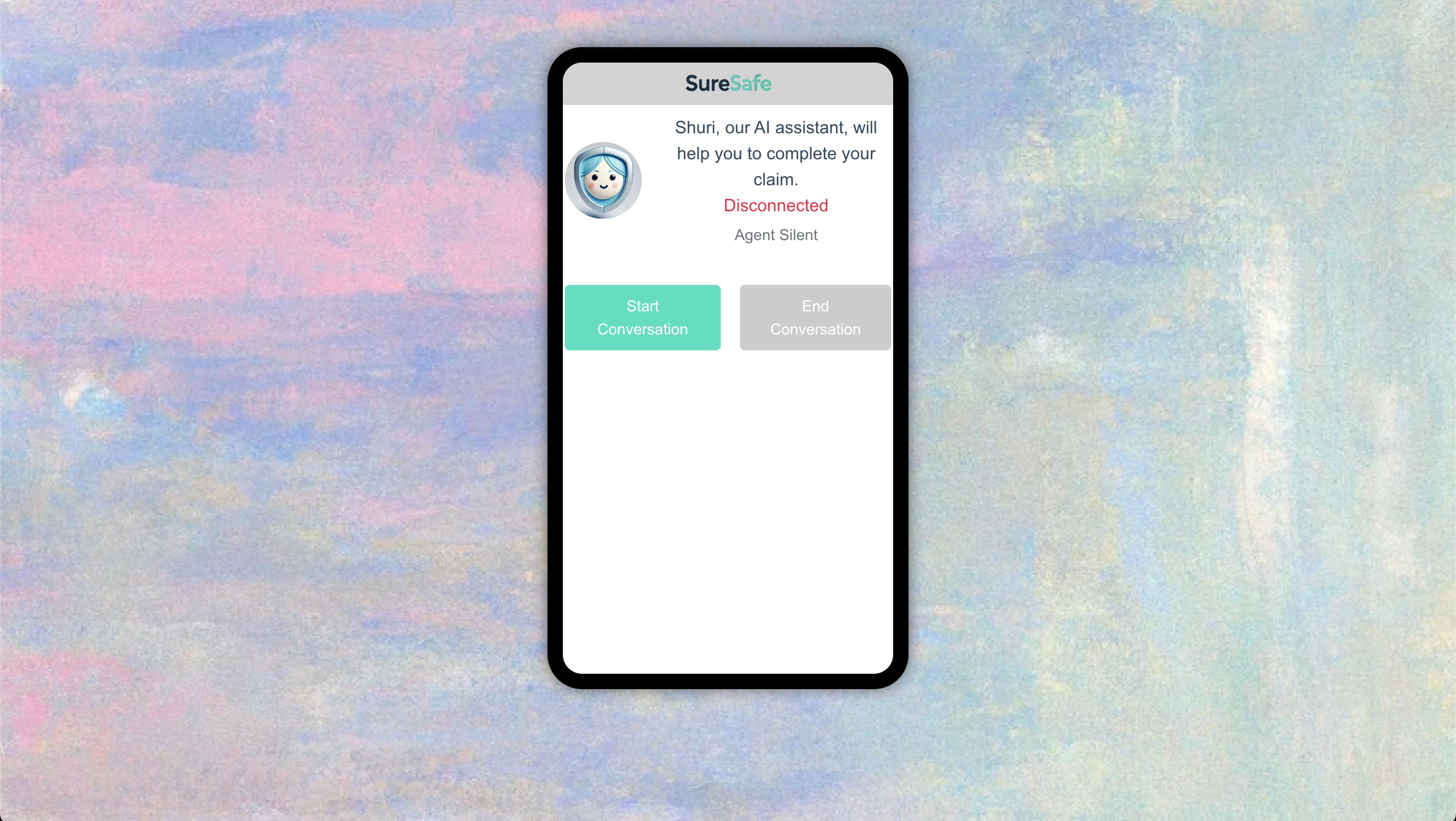
Creating a Reassuring, Empathetic Experience: Users interact with a supportive claims assistant that answers questions, offers guidance, and adapts to their unique situation, making the process feel personalised and compassionate.
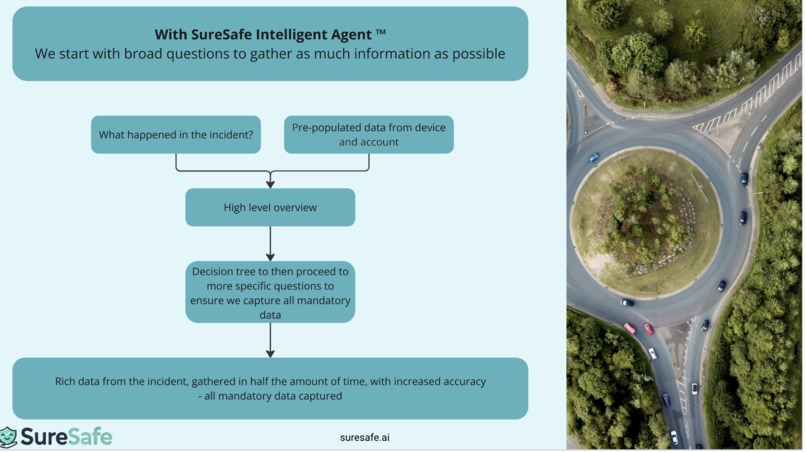
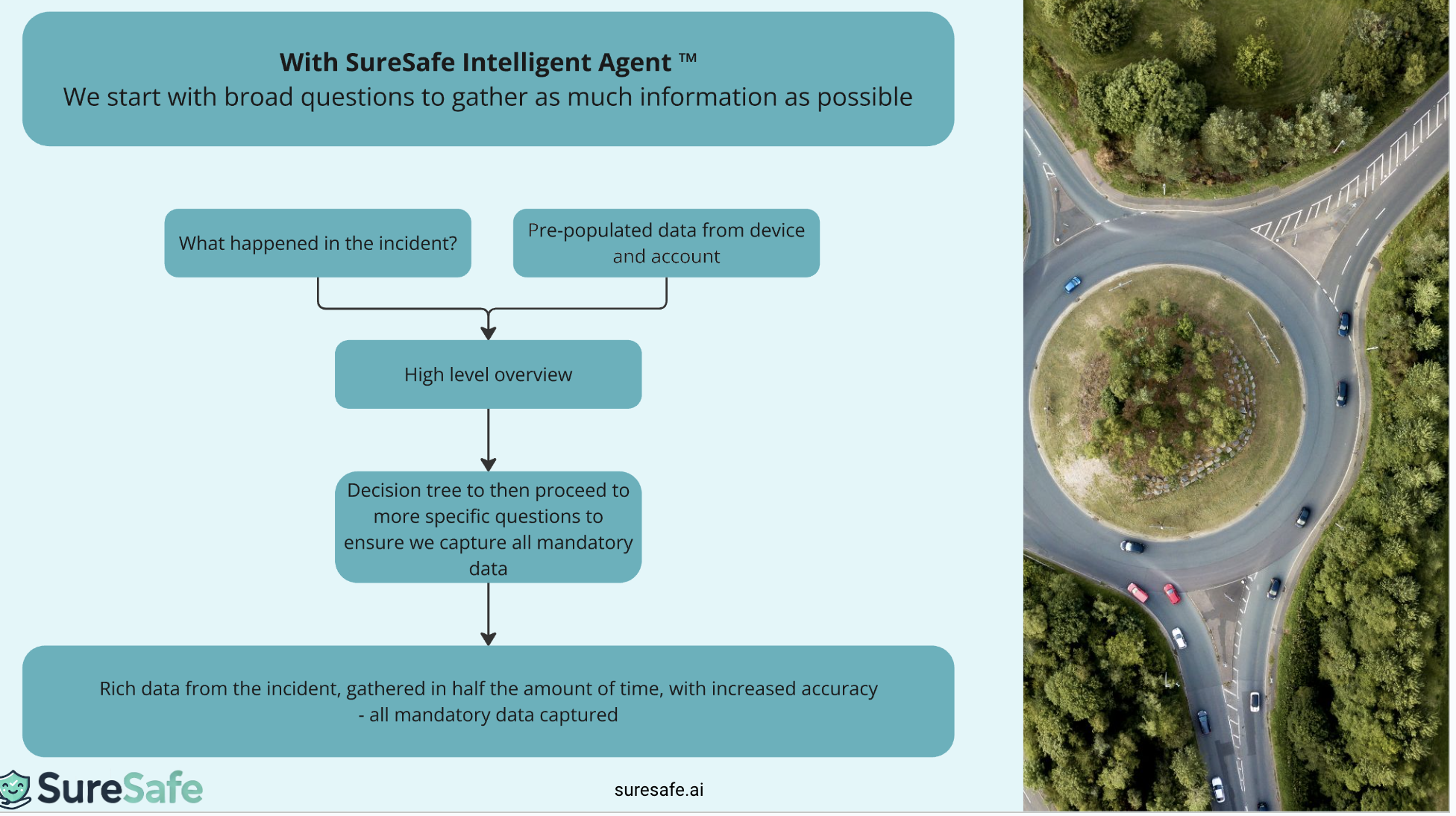
Dynamic, Efficient Questioning: Starting with high-level questions, the assistant dynamically refines the questions based on initial responses, streamlining the process to capture only the essential information quickly and accurately.
Our goal is to transform claim reporting from a stressful ordeal into a seamless, empathetic experience that benefits both users and insurers through faster resolutions and reduced costs.
What we learnt?
Our hackathon journey with ElevenLabs’ conversational AI tool was both challenging and rewarding. We delved into using audio AI, connecting to APIs, customising the agent, and enabling it to interact with external APIs and tools seamlessly. We gained experience and insight into working with voice-based AI, which was something none of us had done before, learning how to work together to overcome some of the limitations, and we shared constructive feedback with the ElevenLabs team, who were supportive and receptive.
How we built this solution
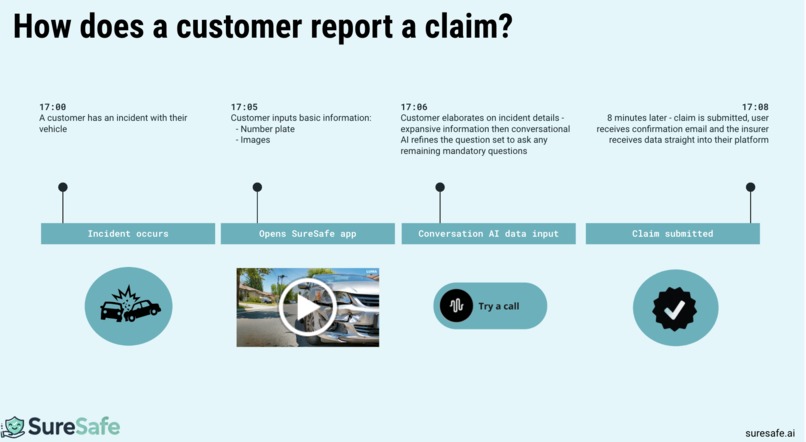
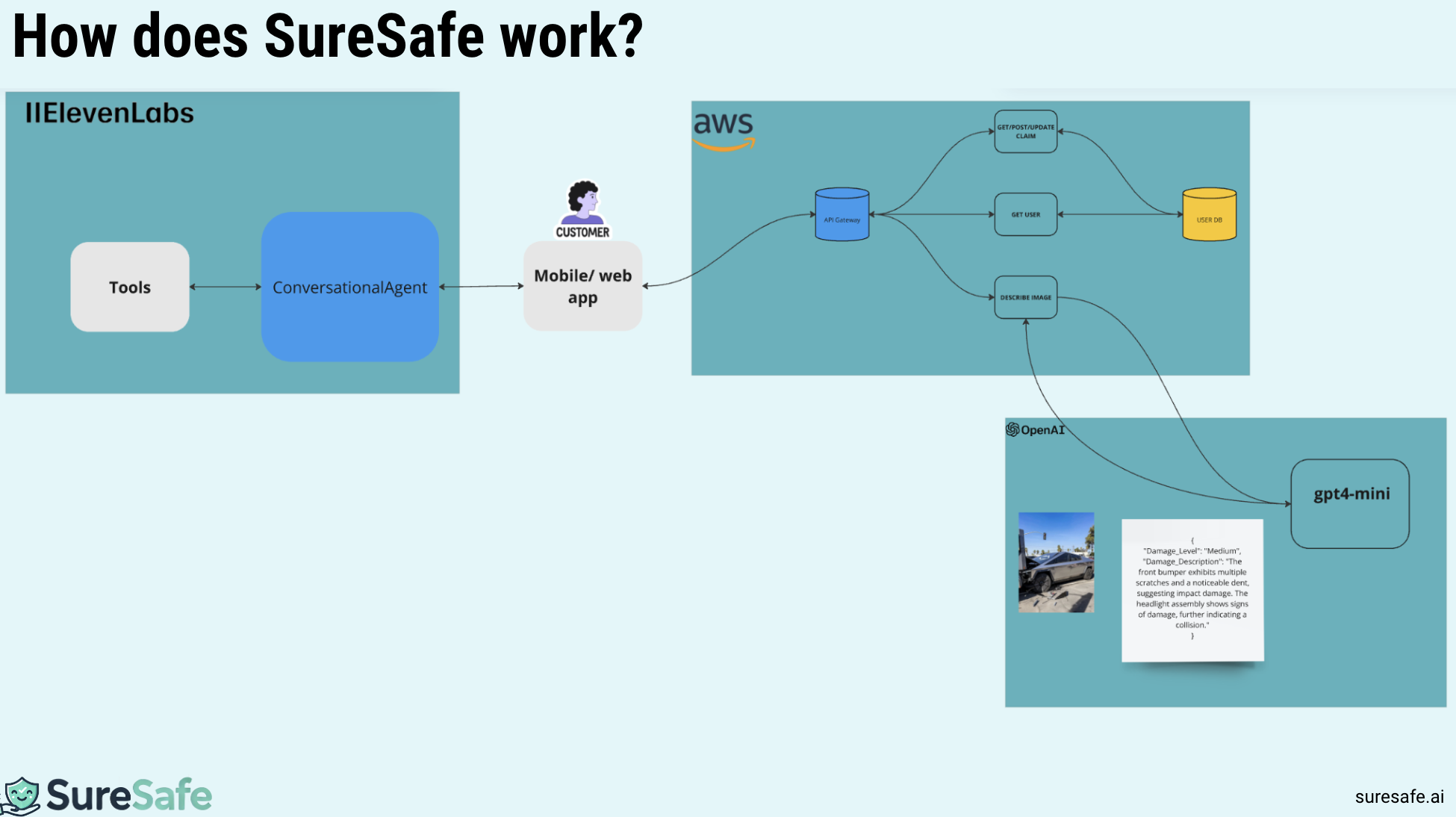
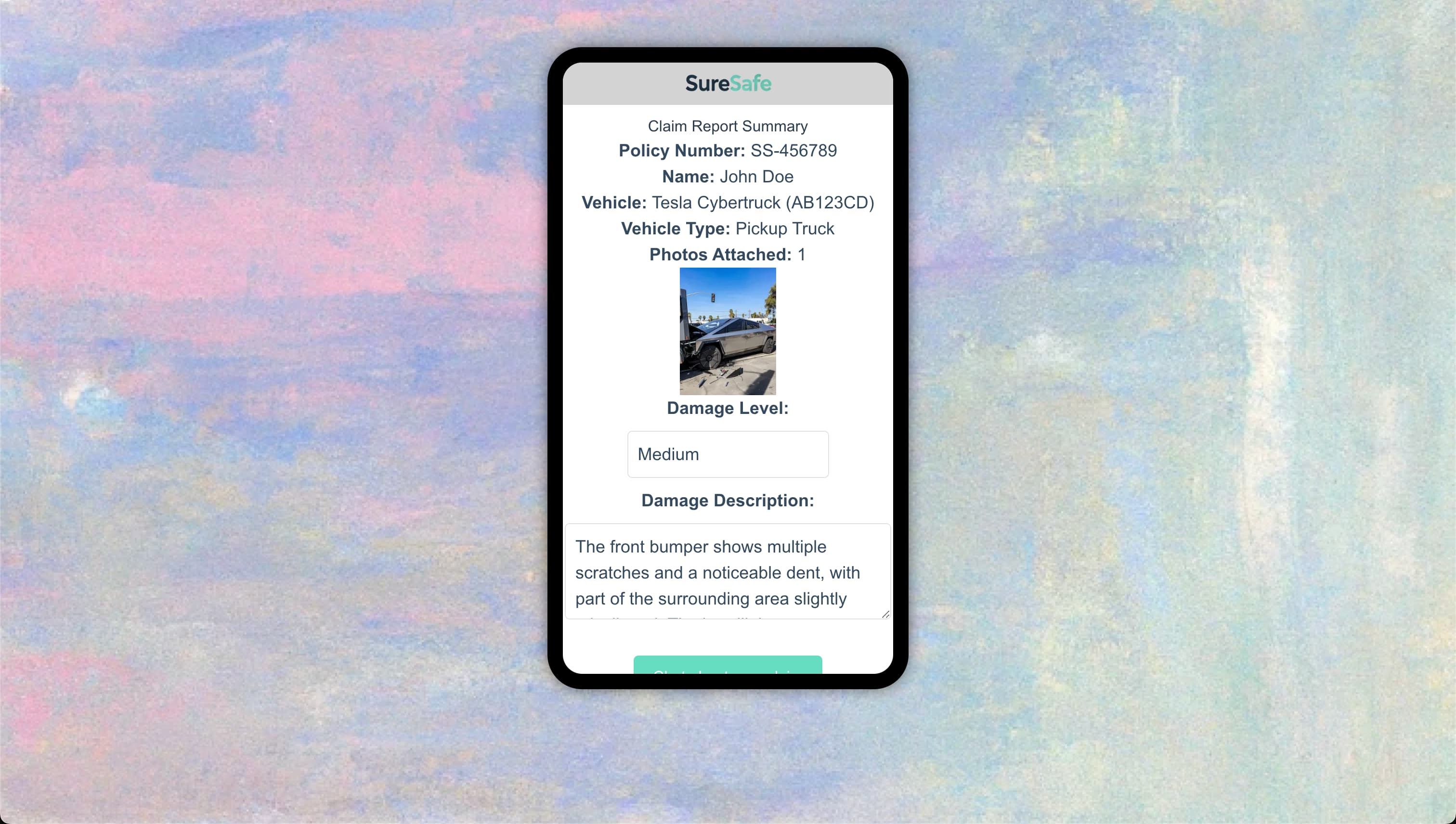
We combined elevenLabs' conversational AI with several external tools, like AWS lambda, the OpenAI API, our own hosted Next.js project in Vercel with a Postgres DB, and other development tools like JSONBin. Starting with the ElevenLabs API, we configured the Agent using Tools and a custom Knowledge base to make sure it could extract claim data from a free conversation and send it to our own API. We focused on creating a seamless flow from user input to response, ensuring the agent could dynamically adapt based on the context of each conversation. We developed a usable frontend application that allows users to easily process their claim and make the AI feel as human-like and supportive as possible, where the user uploads an image, it's processed by OpenAI's API to extract some details, then we provide this information and the customer's information to the ElevenLabs agent, who asks questions to the user to extract the remaining required information to submit a claim, and then the user can see a report with all the data for the claim.
The challenges we faced
- Agent Limitations: the agent calls an endpoint, but the lack of ability to add the prompt into the back end, this is all controlled through the ElevenLabs UI - developer tools might help with this.
- Integration Complexity: even though these tools are relatively simple to use, adding more integrations adds complexity and bugs that need to be fixed. In particular, we had to solve the challenges of uploading and encoding an image to extract structured information from the OpenAI API, and how to configure the ElevenLabs agent to extract structured data from the conversation with the customer and store everything into a report
- Time Constraints: as with any hackathon, time was our greatest challenge. Balancing creativity with technical execution under a strict deadline pushed us to prioritise core functionalities while maintaining quality in our solution. We had to make a lot of sacrifices and hard decisions to focus only on the core features we felt would add value to the demo, and discard many ones that we felt were needed for an actual product implementation
Built With
- amazon-web-services
- elevenlabs
- openai

Log in or sign up for Devpost to join the conversation.