-
-

Welcome and Guide
-
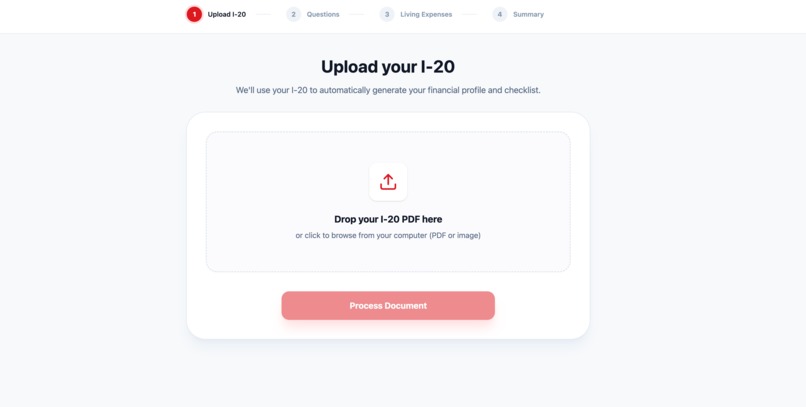
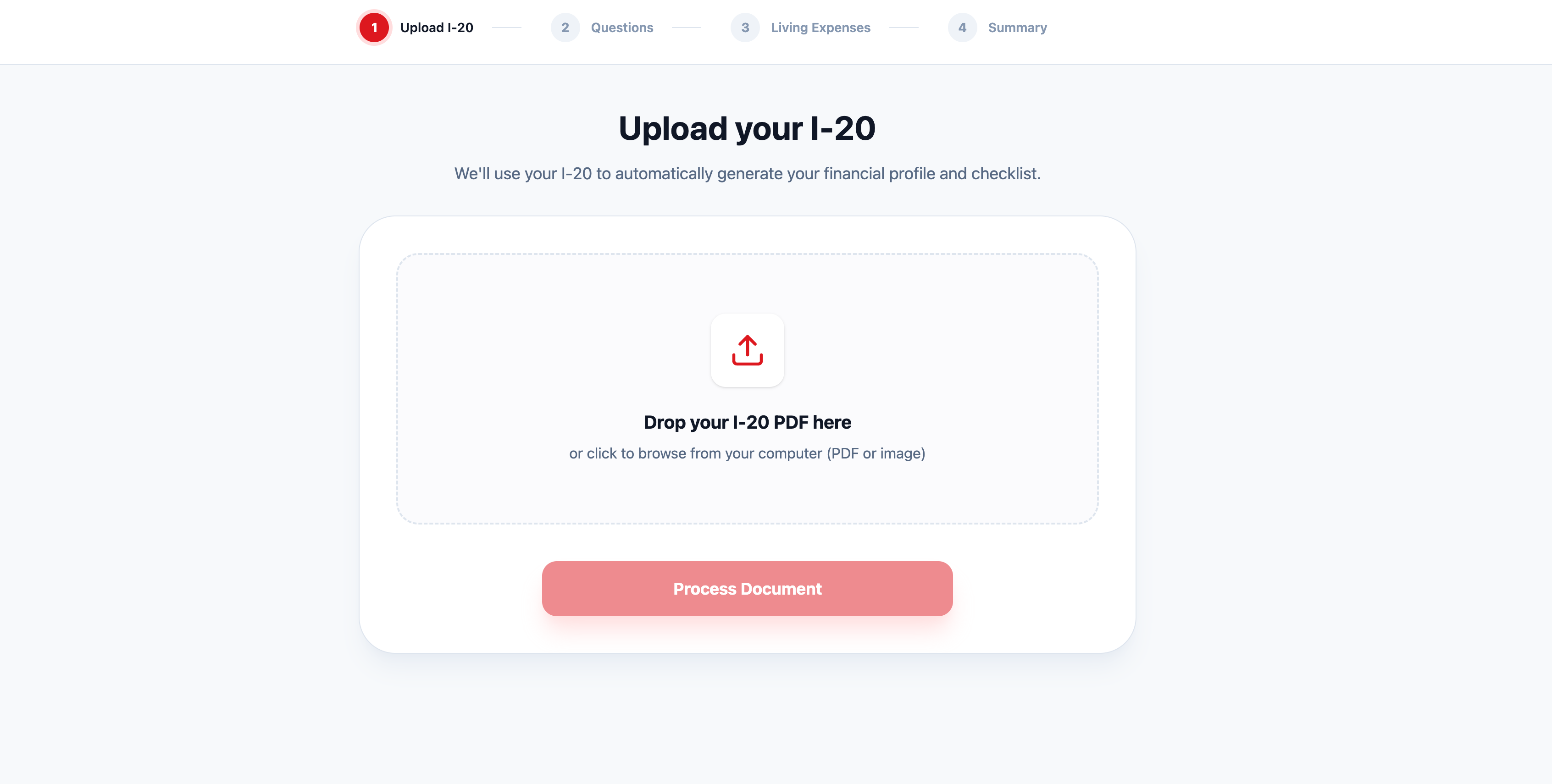
Upload I20
-
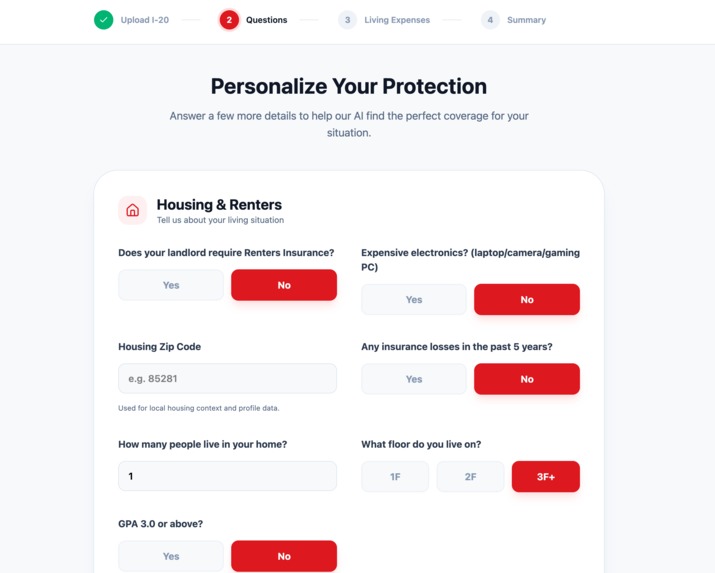
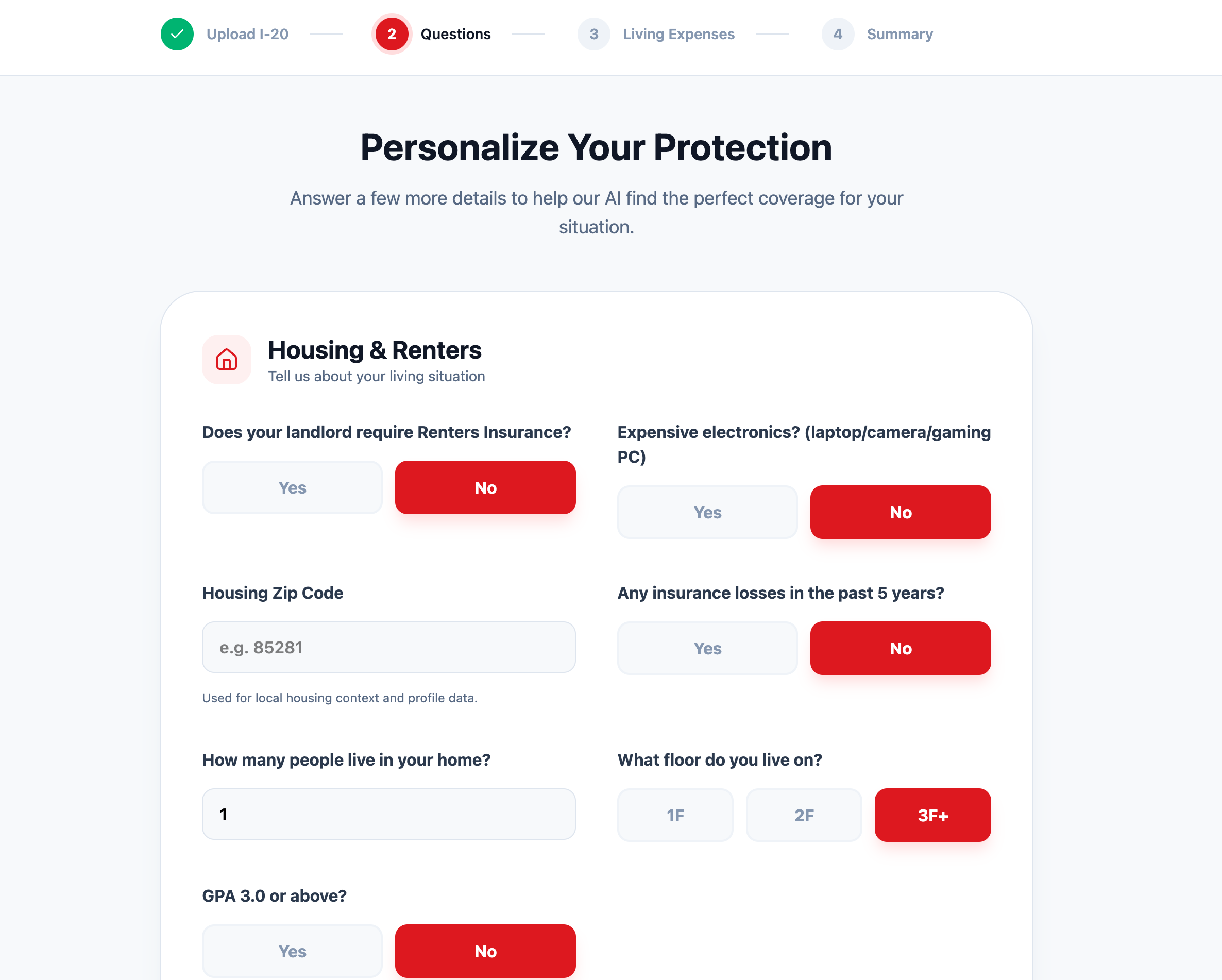
Personalize your information
-
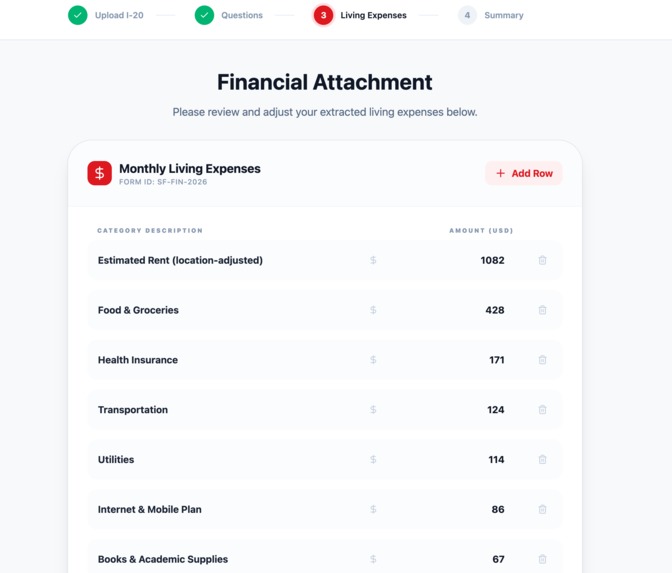
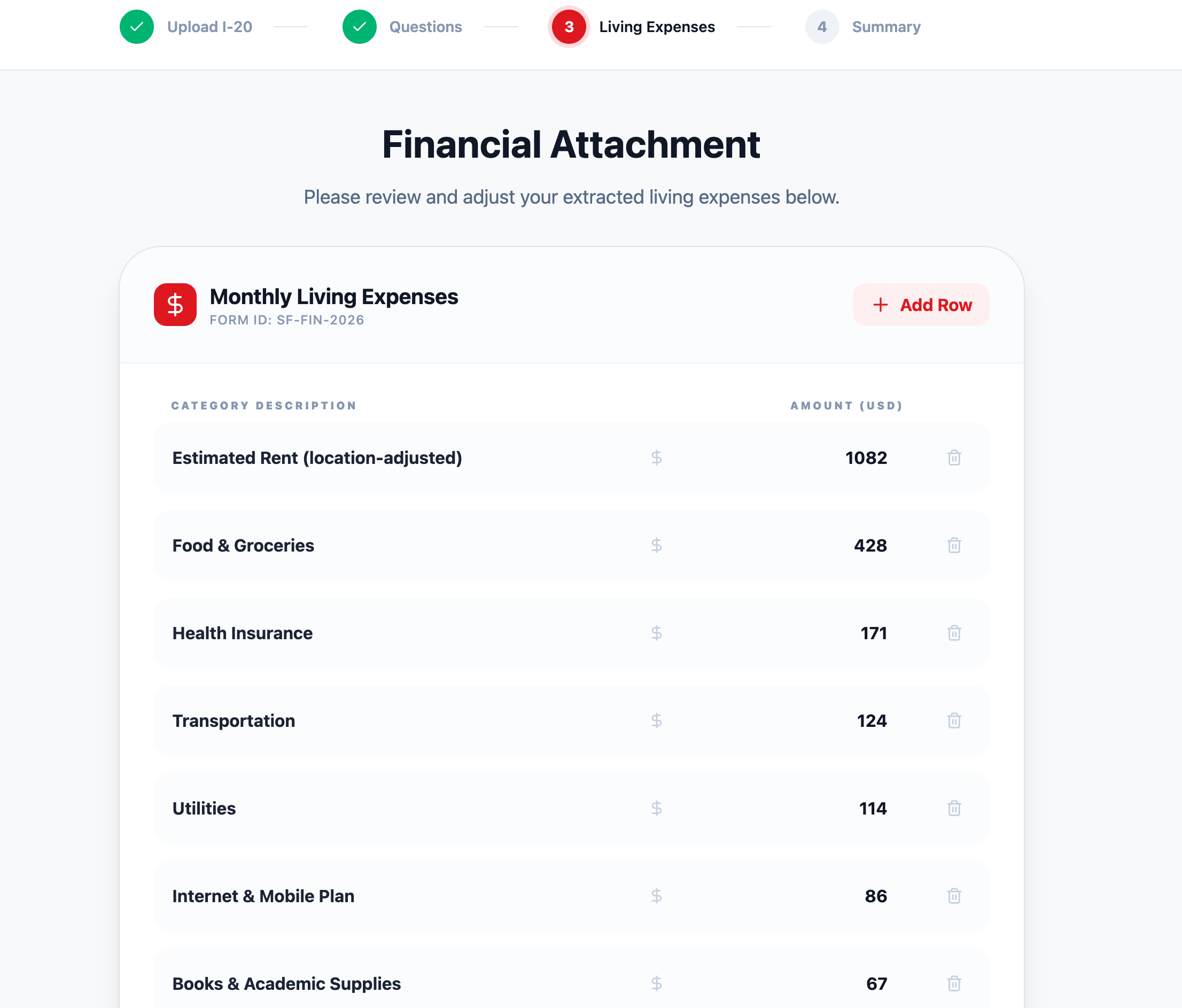
Budget setting
-
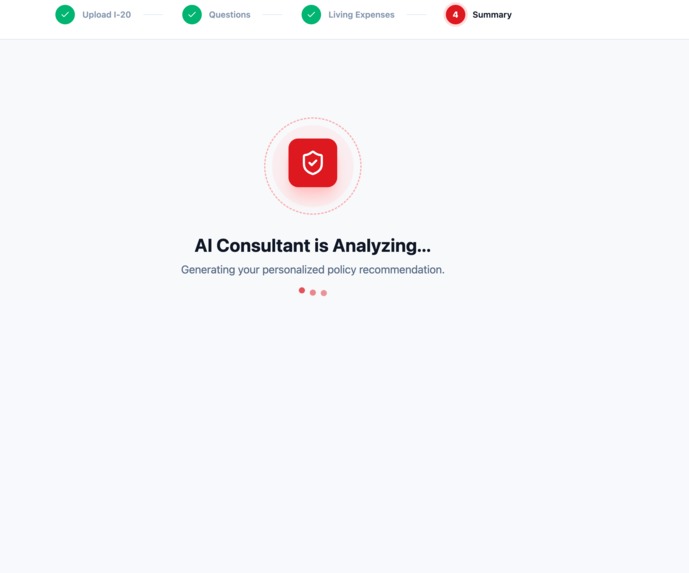
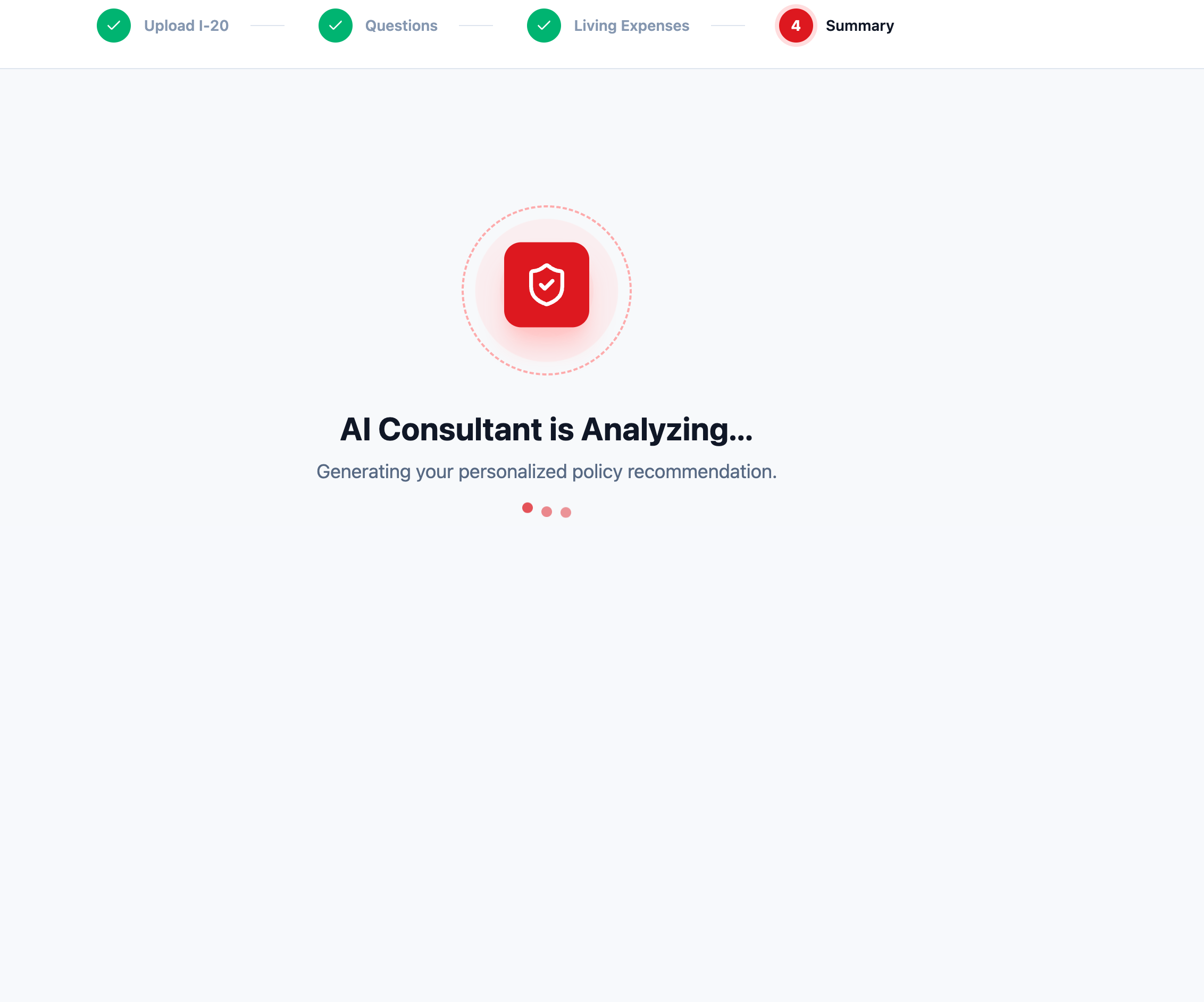
Agent thinking
-
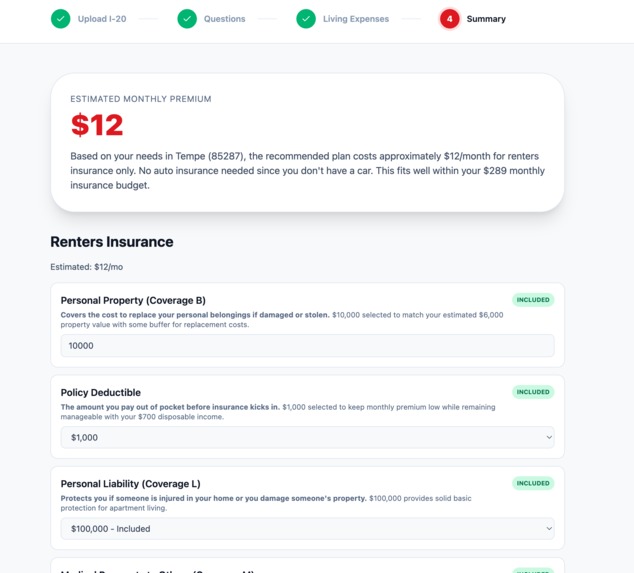
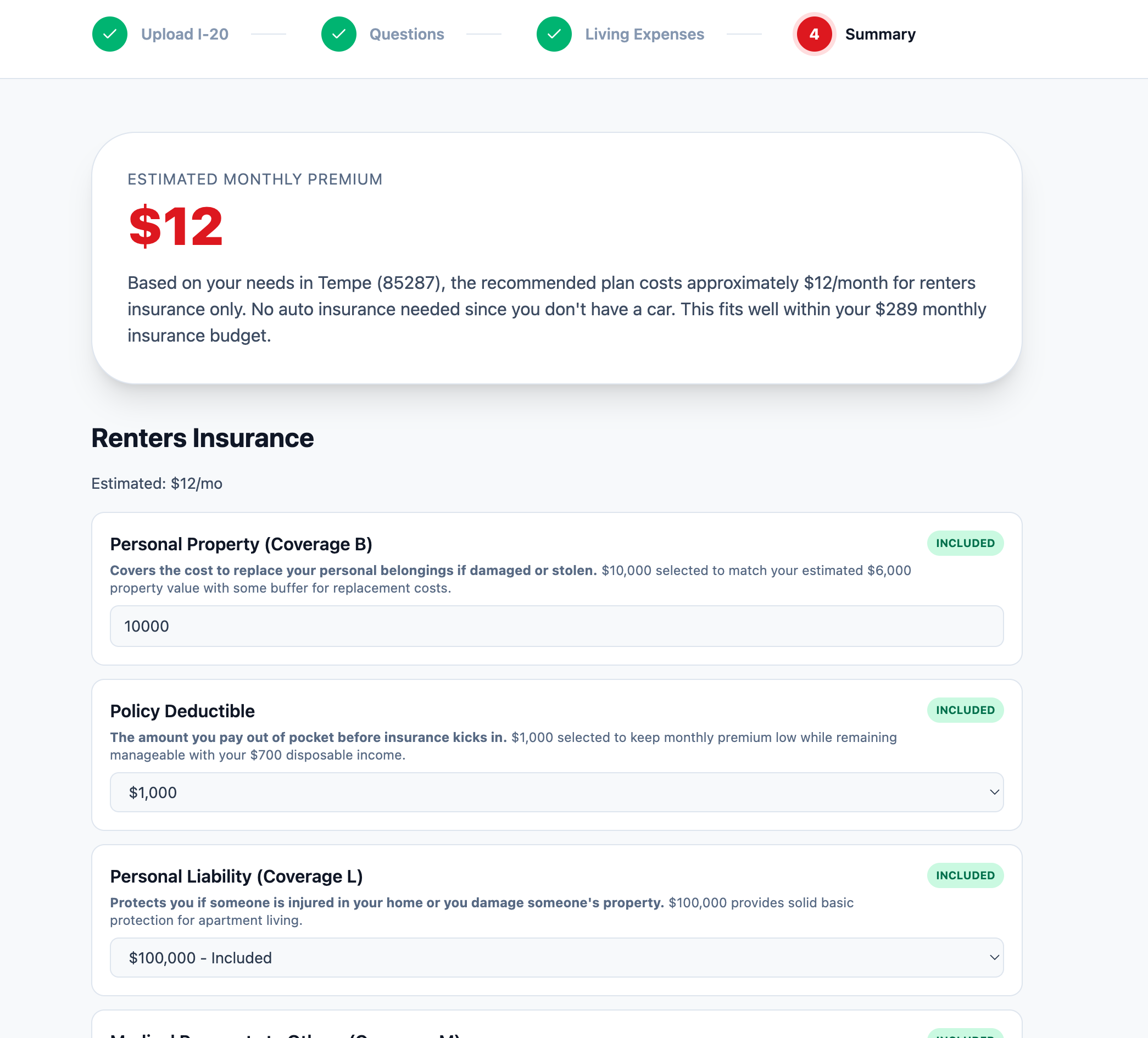
Initial Insurance coverage
-
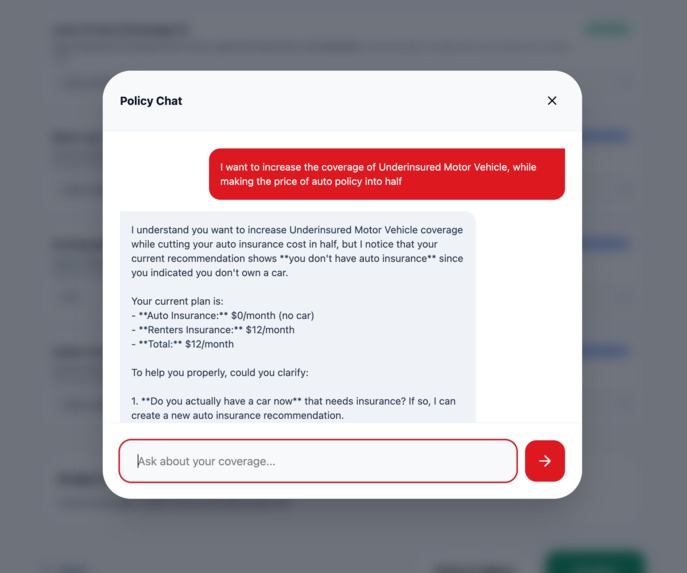
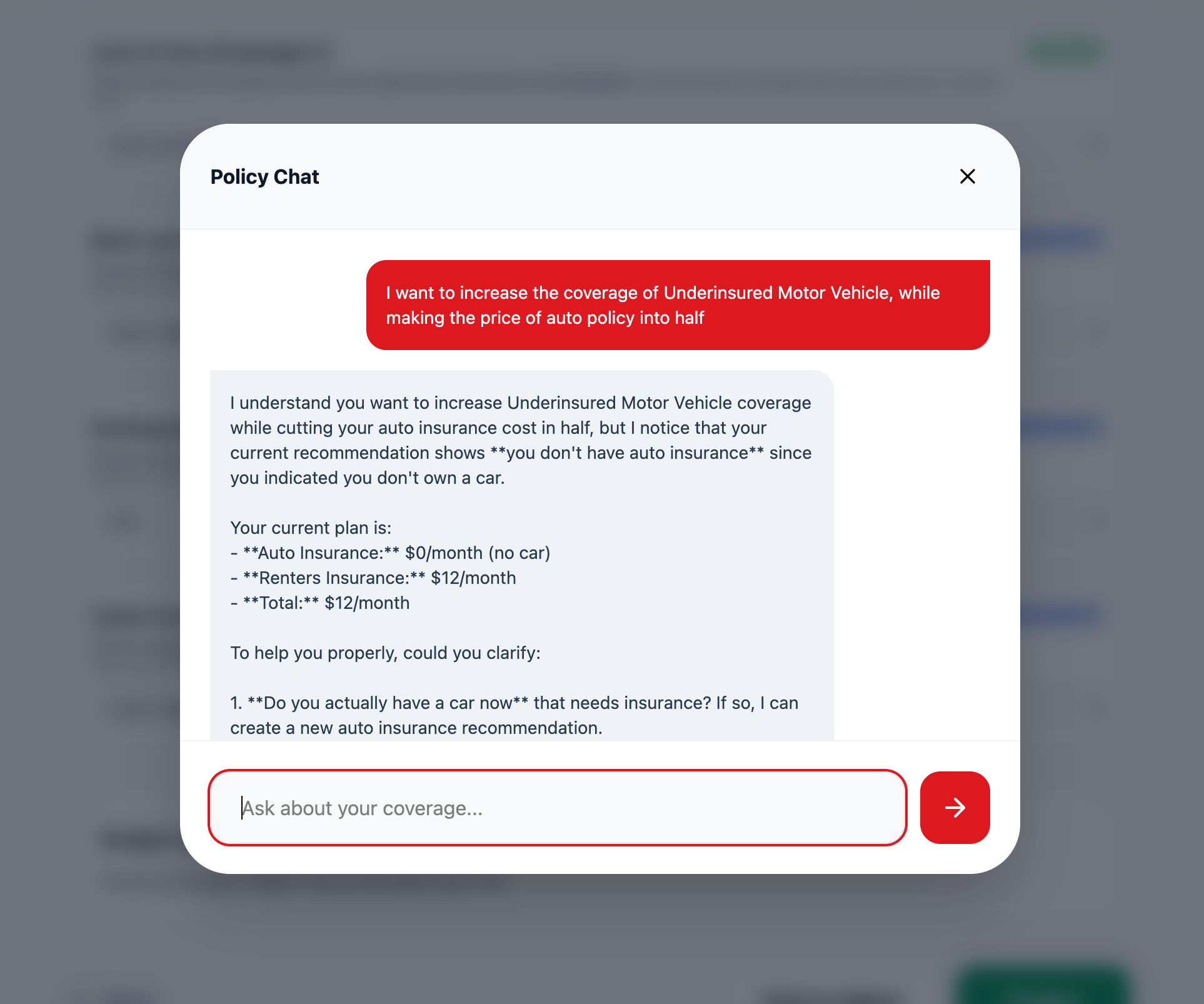
chat to adjust the coverage
-
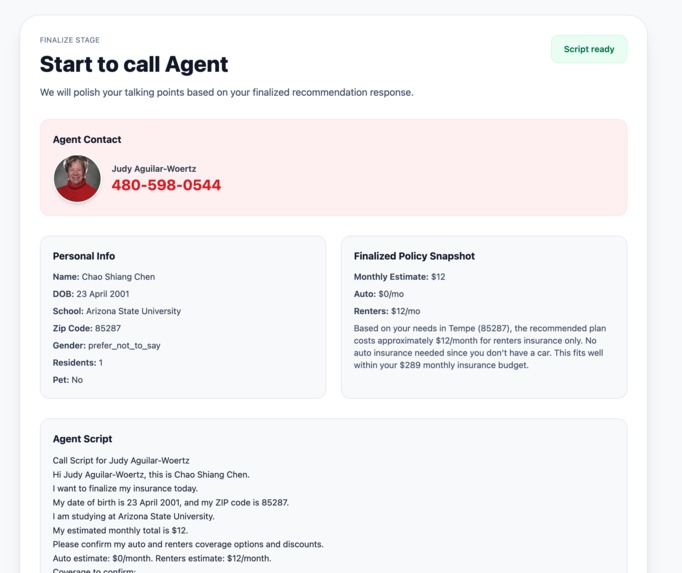
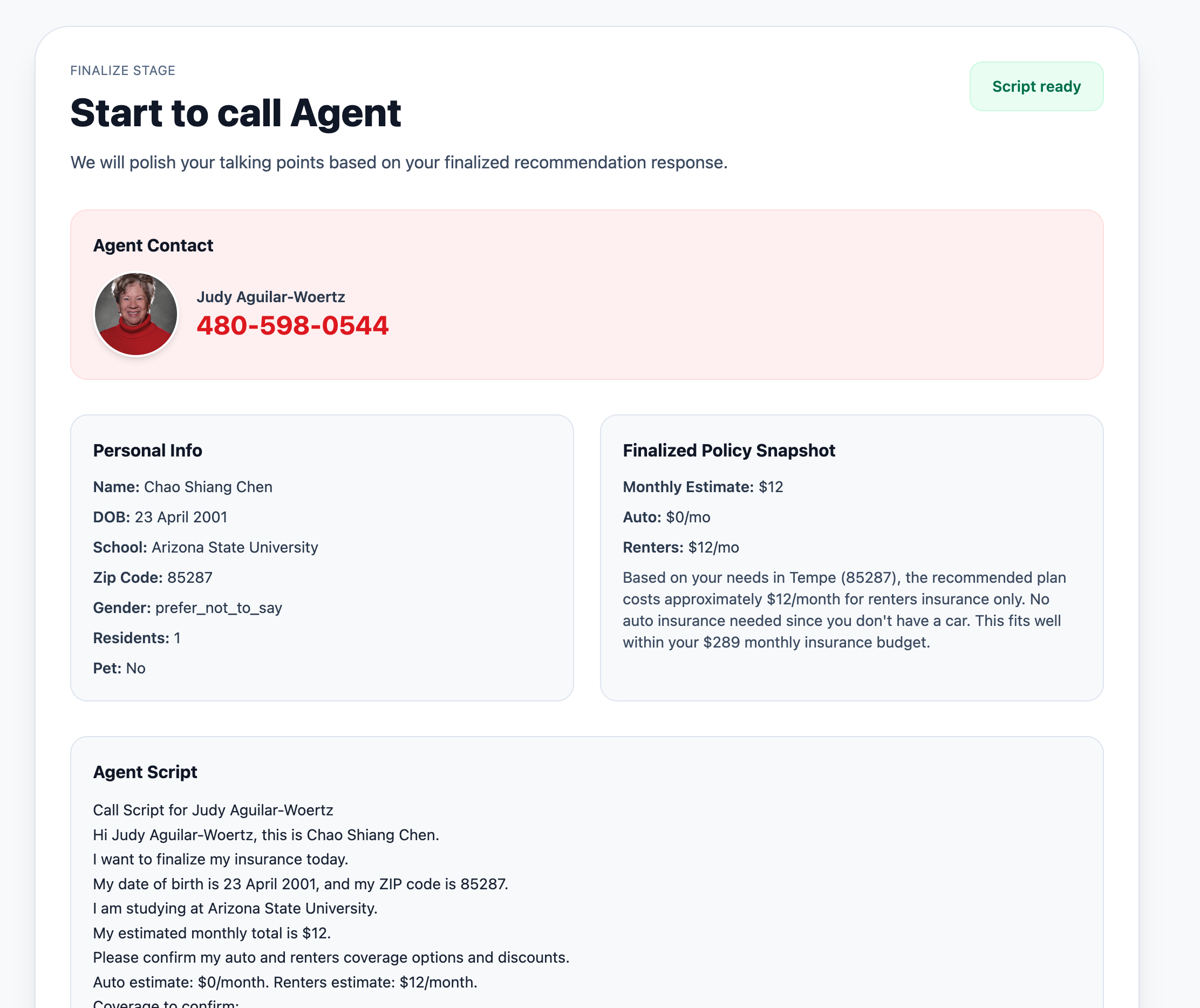
bridge to StateFarm agent

Inspiration
International students are one of the most underserved customer groups in personal insurance because they are often required to make high-stakes decisions in an unfamiliar legal and financial system with limited local guidance. In practice, they face three compounding barriers: first, U.S. insurance terminology is complex and often explained with assumptions about prior knowledge; second, policy selection is tightly constrained by budget, visa status, and life-stage uncertainty; and third, the traditional quote journey is optimized for customers who already know what coverage tradeoffs they want. We built SureAboard to close that gap by creating a guided onboarding experience that translates insurance into clear, actionable decisions for first-time buyers while still preserving the rigor needed for real policy conversations with agents.
What it does
SureAbroad provides an end-to-end journey from intake to agent handoff instead of a one-step recommendation. The user starts with profile and context capture, including I-20-derived information, school/location context, budget constraints, transportation status, and insurance preferences. The system then converts those inputs into structured risk and affordability signals, estimates living-cost pressure, and generates a coverage configuration for auto and renters insurance that is understandable to users but operationally useful for agents. Beyond static recommendations, the app supports iterative refinement through chat-based adjustment, allowing users to ask “what if” questions and see how changes affect pricing and protection levels. Finally, it produces an agent-ready script that summarizes user context, selected coverages, and confirmation points, reducing friction in the final conversion step from digital onboarding to human-assisted policy completion.
How we built it
We implemented SureAboard as a modular architecture with a React and Vite frontend and an AI-enabled backend stack designed for structured outputs and conversational iteration. On the frontend, we built a guided onboarding wizard that captures personal, budget, and product-specific inputs, renders recommendation blocks with explicit coverage rationale, and supports a final “contact agent” workflow. On the backend branch, we used FastAPI with LangChain and Claude to handle recommendation generation and multi-turn adjustments with session memory. To improve reliability in a domain where output shape matters, we enforce JSON-centric response contracts so recommendation objects can be directly consumed by the UI without brittle parsing logic. To improve grounding quality, we created a structured domain layer from State Farm policy PDFs by extracting and normalizing policy sections, transforming them into coverage-relevant knowledge cards, and combining them with Arizona-specific rate references. This lets the model generate responses that are not only conversationally fluent but also constrained by policy structure and state context. We also implemented endpoint-level workflows for health checks, recommendation generation, chat adjustments, and session management, enabling repeatable testing and clearer separation of concerns across product surfaces.
Challenges we ran into
Our largest technical challenge was consistency: a recommendation system can feel impressive in demos yet still fail in product if output structure drifts across edge cases. We had to continuously harden schema discipline, response cleaning, and frontend safety handling so the UI remained stable even when model outputs varied. A second challenge was team integration complexity across branches and environments. Because the project evolved in parallel frontend/backend tracks, we encountered API contract drift, base URL mismatches, and route-level confusion during cross-machine testing. Issues such as endpoint 404s were often not model failures but environment and routing failures, which required stricter local runbooks and clearer service-boundary ownership. A third and especially important challenge was data readiness. There was no complete, ready-to-use structured dataset for our exact target segment and use case. We had to build a domain dataset ourselves from State Farm policy PDFs by extracting relevant clauses, normalizing terminology, mapping options/limits into machine-usable forms, and validating that transformations preserved meaning. This process was time-intensive but critical, because recommendation quality depends as much on knowledge structuring as on model capability.
Accomplishments that we're proud of
We are proud that SureAboard demonstrates product completeness rather than isolated feature novelty. The system connects onboarding inputs, policy-aware recommendation generation, conversational adjustment, and agent handoff into a cohesive journey aligned with how real insurance decisions happen. We also created a grounded knowledge layer from unstructured policy material, which is difficult but essential for trust in regulated or high-stakes domains. From an execution standpoint, we are proud of how quickly we translated ambiguity into a functioning architecture that supports both user-facing clarity and backend extensibility. The result is not just a chatbot interface; it is a workflow engine that helps users understand tradeoffs, helps agents start from better-qualified context, and helps organizations move from generic digital intake to decision-ready customer interactions.
What we learned
We learned that dependable AI products in financial protection contexts require strong systems engineering, not just prompt craftsmanship. Structured contracts, robust fallbacks, and environment discipline are foundational to user trust. We also learned that domain grounding must be treated as a first-class product capability: converting policy PDFs into structured, explainable knowledge dramatically improves both recommendation quality and user confidence. On the product side, we learned that explainability is a conversion lever, not just a compliance checkbox. Users engage more confidently when they can see why a coverage is recommended, what tradeoff they are accepting, and what they need to confirm with an agent. Finally, we learned that the handoff moment is where value is often won or lost; generating an actionable, context-rich script bridges the common gap between digital guidance and real-world policy activation.
What's next for SureAbroad
The next phase is to operationalize SureAboard as a measurable business system that improves conversion efficiency and recommendation consistency at scale. We plan to integrate CRM and quote workflows so every completed onboarding produces a pre-qualified customer packet, recommended coverage bundle, rationale summary, and agent call script delivered directly into agent tooling. This can reduce first-call discovery time, increase lead-to-bind conversion, and improve the consistency of guidance across distributed agent teams. We also plan to add production-grade governance features, including recommendation traceability, source-linked rationale, model/version logging, and adjustment history for auditability and quality assurance. On the data side, we will build a repeatable policy-ingestion pipeline that supports versioned updates, state expansion, and human-in-the-loop validation. On the customer experience side, we will expand multilingual support and personalization so first-time buyers can navigate complex decisions with lower cognitive load. Most importantly, we will validate real-world impact through pilot metrics, including reduction in agent handling time, onboarding drop-off, and rework rates, alongside gains in quote readiness and bind conversion. This moves SureAboard from a promising prototype to a deployable platform for solving concrete operational problems in insurance onboarding.
Built With
- agent
- fastapi
- knowledge-graph
- langchain
- llm
- python
- railway
- react
- typescript
- vite

Log in or sign up for Devpost to join the conversation.