Executive Summary
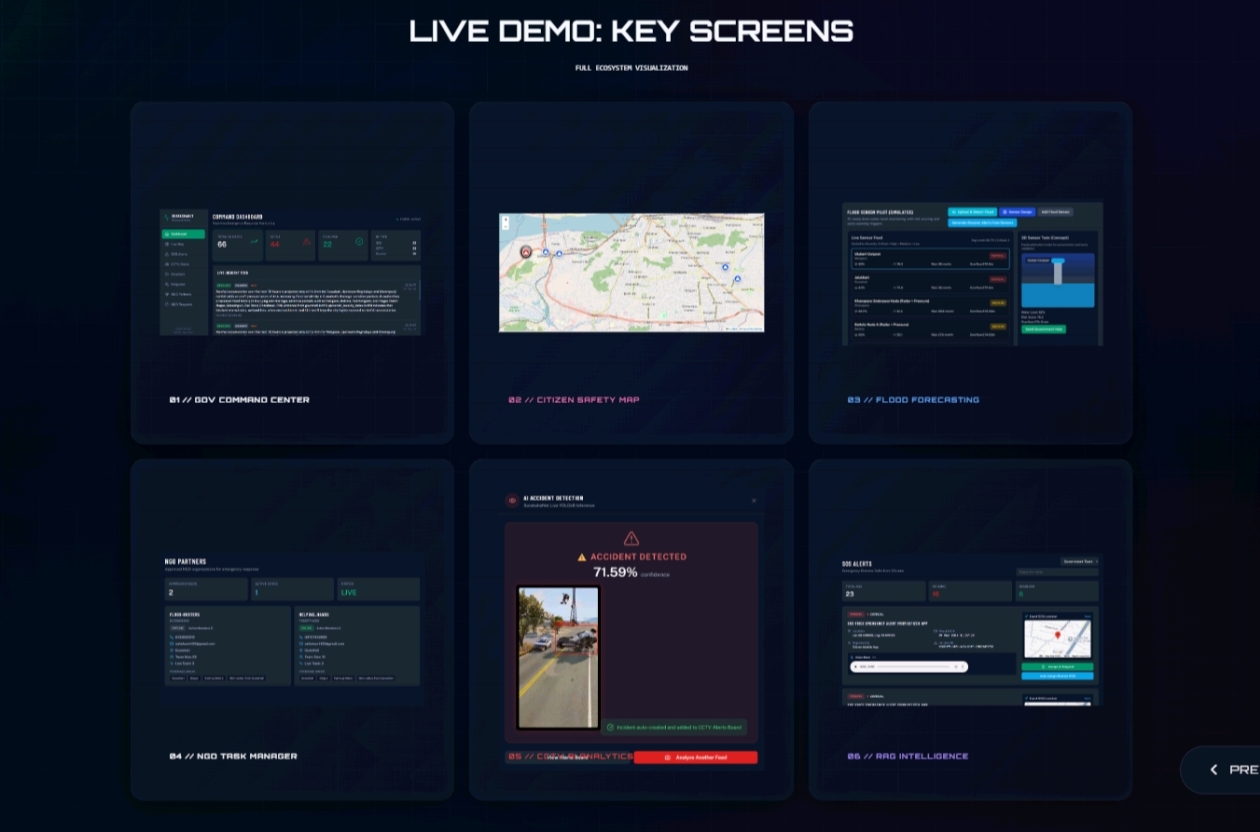
SurakshaNet combines AI, IoT sensors, and satellite data to predict and monitor floods in real-time. It enables instant alerts, interactive danger zone mapping, and coordinates emergency response between government agencies, NGOs, rescue teams, and communities.
Problem Statement
Floods in India's Northeast region claim hundreds of lives annually. Traditional systems are slow, lack coordination between agencies, and don't integrate real-time data. SurakshaNet solves this by providing early predictions, unified coordination, and community empowerment.
Core Features
- Real-Time Flood Monitoring - Weather APIs, IoT sensors, satellite data, and live dashboards
- AI-Powered Predictions - YOLOv8 model with >92% accuracy for 24-48 hour forecasting
- Intelligent Alerts - Automated tiered alerts (Green/Yellow/Orange/Red) via push, SMS, email
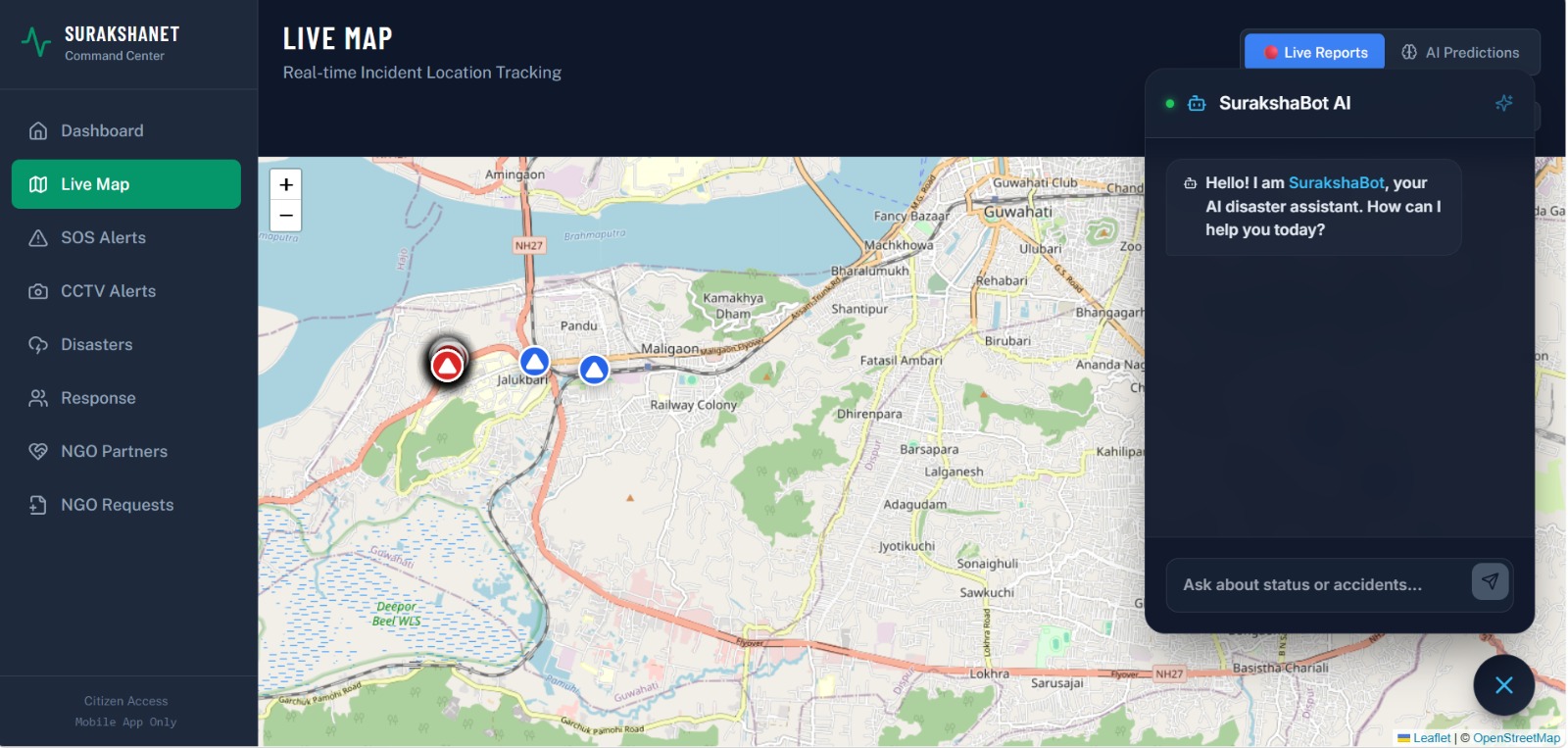
- Interactive Danger Maps - Real-time risk visualization with evacuation routes and safe zones
- NGO & Rescue Coordination - Unified dashboard for resource tracking and team communication
Tech Stack
Frontend: React, React Native, Tailwind CSS, Leaflet Maps Backend: Node.js, Express.js, MongoDB AI/ML: YOLOv8 (>92% accuracy), Python Real-Time: WebSocket, Socket.io Infrastructure: Docker, Kubernetes, GitHub Actions
How We Built It
Phase 1: YOLOv8 model training with flood detection datasets
Phase 2: Node.js/Express backend with MongoDB and WebSocket integration
Phase 3: React web app + React Native mobile app with Leaflet mapping
Phase 4: Multi-source data integration (weather APIs, IoT, satellite)
Phase 5: Testing with NGOs and government agencies, production deployment
Key Accomplishments
✅ Unified platform integrating 5+ data sources in real-time
✅ AI model predicting floods with >92% accuracy
✅ Alert system reducing warning time from hours to minutes
✅ Real-time coordination between government, NGOs, and communities
✅ Scalable architecture handling thousands of concurrent users
✅ Mobile-first design for disaster-prone communities
What We Learned
- Real-time data handling at massive scale with WebSocket architecture
- Emergency response workflows and stakeholder coordination
- IoT integration challenges (connectivity, data quality, redundancy)
- Building AI systems that augment rather than replace human decision-making
- Community engagement requires transparency, trust, and local language support
- System reliability is paramount in high-stress disaster situations
What's Next
Immediate (3-6 months): Multilingual voice alerts, drone/satellite integration, offline functionality
Medium-term (6-12 months): Expand to earthquakes, landslides, wildfires; advanced analytics dashboard
Long-term: Global expansion, behavioral science integration, autonomous sensor networks
Impact
- Lives: Early warnings enable evacuations, potentially saving hundreds in major flood events
- Economy: Reduced property damage, optimized response costs, faster recovery
- Society: Empowered communities, improved government-NGO coordination, educational value
- Scale: 10,000+ users in Northeast India pilots; scalable to millions globally
Current Status
- Deployment: Active with NGOs and government agencies in 5 flood-prone districts
- Users: 10,000+ registered emergency responders and community members
- Uptime: 99.5% availability during monsoon season
- Accuracy: >92% flood detection accuracy
Conclusion
SurakshaNet demonstrates how AI, IoT, and real-time coordination can save lives during disasters. By breaking down silos between government agencies, NGOs, rescue teams, and communities, we've created a platform that responds to emergencies intelligently and compassionately. With proven results in Northeast India, we're scaling globally to make disaster management smarter and safer for everyone.
Get Involved
Organizations: Deploy SurakshaNet in your region
Developers: Contribute to open-source components
Investors: Help expand to more disaster types
Communities: Download the mobile app and help your community stay safe
SurakshaNet: Building Smarter, Safer Communities Through Technology
Built With
- css
- express.js
- fastapi
- geminiapi
- javascript
- langchain
- mongodbatlas
- nextjs
- node.js
- openweatherapi
- pinecone
- python
- pytorch
- rag
- reactnative
- tailwindcss
- yolov8


Log in or sign up for Devpost to join the conversation.