-
-
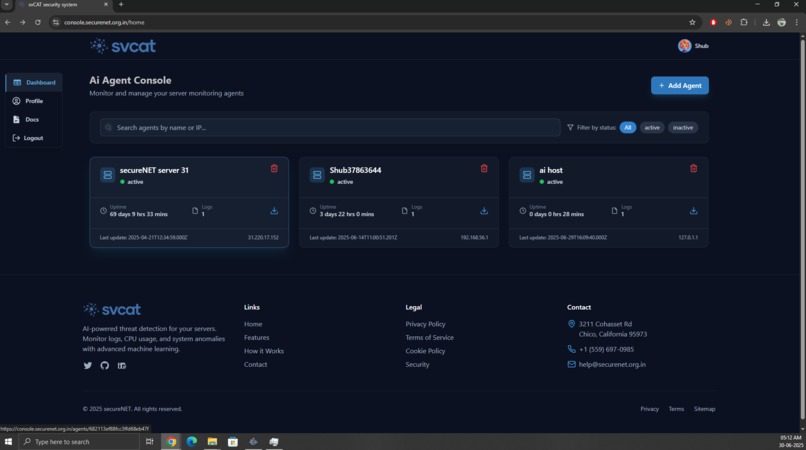
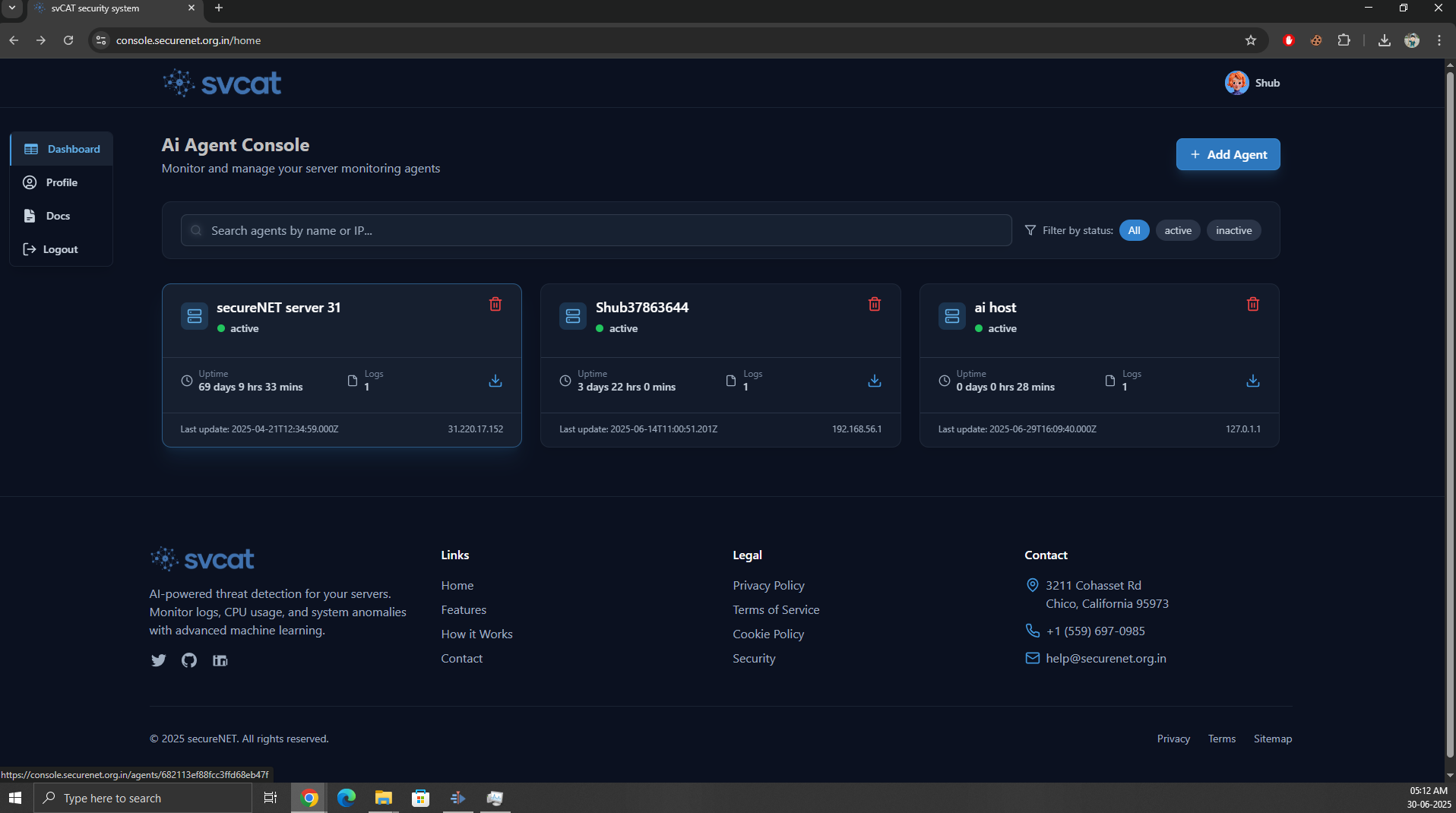
agent list
-
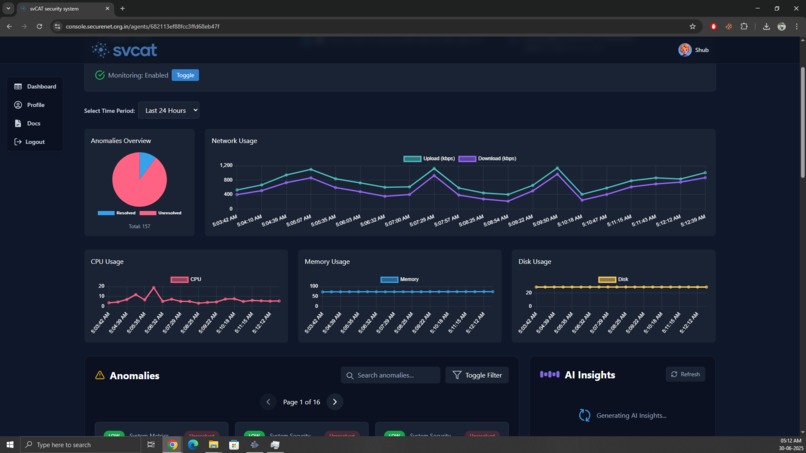
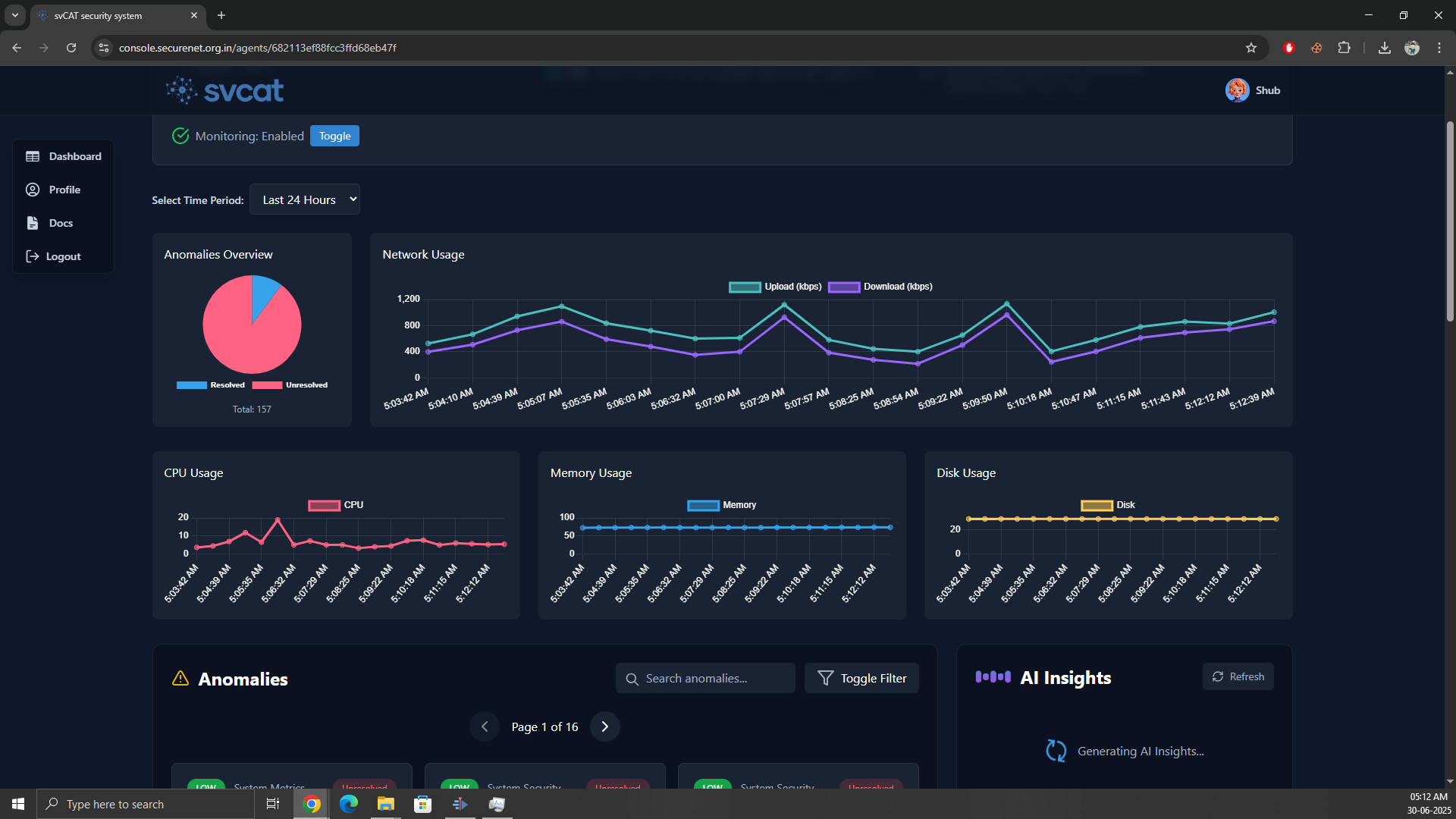
dashboard
Inspiration
Traditional server monitoring tools often fall short when it comes to identifying subtle or evolving threats especially those caused by unusual user behavior, IP misuse, or a combination of system metrics. We wanted to create something smarter: an AI-driven solution that could detect issues before they escalate.
What svCAT Does
- Continuously monitors system metrics like CPU, memory, disk, and network usage across distributed servers
- Analyzes server logs in real-time to detect suspicious patterns or unexpected behaviors
- Tracks user and IP behavior to identify anomalies such as brute-force attempts, unusual access times, rare endpoints or something that's out of the pattern
- Uses an ML model to detect both known and unknown anomalies without manual rules
- Provides real-time alerts and a clean dashboard to help users act quickly
- Offers AI-powered insights to explain anomalies and assist in root cause analysis
How We Built It
- Frontend: React + TailwindCSS
- Backend: Node.js with Socket.IO for real-time communication
- AI Layer: Python-based anomaly detection models
- Database: MongoDB for persistent storage
- Agents: Lightweight python based monitoring script installed on User servers
- LLM: Hosted our own LLM to analyze the anomalies and detect potential cause
Challenges We Faced
- Managing and deduplicating thousands of anomalies in real-time
- Ensuring last seen timestamps update accurately
- Balancing sensitivity and specificity in anomaly detection
- Designing AI insights that are both actionable and explainable to users
Accomplishments That We're Proud Of
- Successfully built an end-to-end real-time monitoring platform in just a few weeks
- Developed a custom machine learning tool to detect anomalies across metrics, logs, and user/IP behavior
- Integrated an LLM for users to get detailed information about the threats
- Enabled a scalable socket-based architecture to handle high-throughput telemetry data
- Created a user-friendly dashboard that visualizes complex insights clearly
What We Learned
- How to stream and analyze real-time server data using WebSockets
- Applying AI to detect anomalies across metrics, logs, and user/IP patterns
- Building an efficient and responsive UI for real-time monitoring
- Structuring modular agents for data collection from remote servers
What’s Next for svCAT – AI Powered Watchdog
- Implementing root cause analysis using LLMs and graph-based correlation
- Improving anomaly explanation using natural language prompts
- Adding alert integrations with Slack, PagerDuty and email
- Deploying to production environments and onboarding early adopters
Built With
- apache
- chart.js
- cloudflare
- isolation-forest
- llm
- mongodb
- nginx
- node.js
- phi3.1
- python
- react
- scikit-learn
- socket.io
- tailwindcss
- websockets


Log in or sign up for Devpost to join the conversation.