Inspiration
Suraksha OS was born from a very practical problem we kept noticing across India’s insurance distribution ecosystem. Insurance agents, Insurance Marketing Firms (IMFs), brokers, and corporate agents handle thousands of leads, renewals, commissions, client relationships, and follow-ups manually — mostly through Excel sheets, WhatsApp chats, scattered notebooks, and fragmented CRMs that are not designed for Indian insurance workflows. The more we explored the market, the more we realized that most existing CRM tools are either:
- Too generic for insurance distribution
- Too expensive for small and medium intermediaries
- Not localized for Indian workflows
- Not built around IRDAI compliance realities
- Missing finance reconciliation and commission leakage tracking
- Overwhelming for non-technical agents At the same time, India’s insurance distribution market is undergoing a massive transformation. Thousands of agents and intermediaries are digitizing, but they still lack a lightweight operating system that feels modern, simple, and Bharat-first. We wanted to create something that feels like: “If a modern AI-first SaaS platform was designed specifically for Indian insurance distributors from day one.” That became the vision for Suraksha OS. The project is designed as a multi-tenant InsurTech CRM platform specifically for:
- Insurance Marketing Firms (IMFs)
- Insurance Brokers
- Corporate Agents
- POSPs and insurance agents The goal is simple: Help insurance distributors manage leads, renewals, commissions, compliance, relationships, and growth from one intelligent dashboard.
What it does
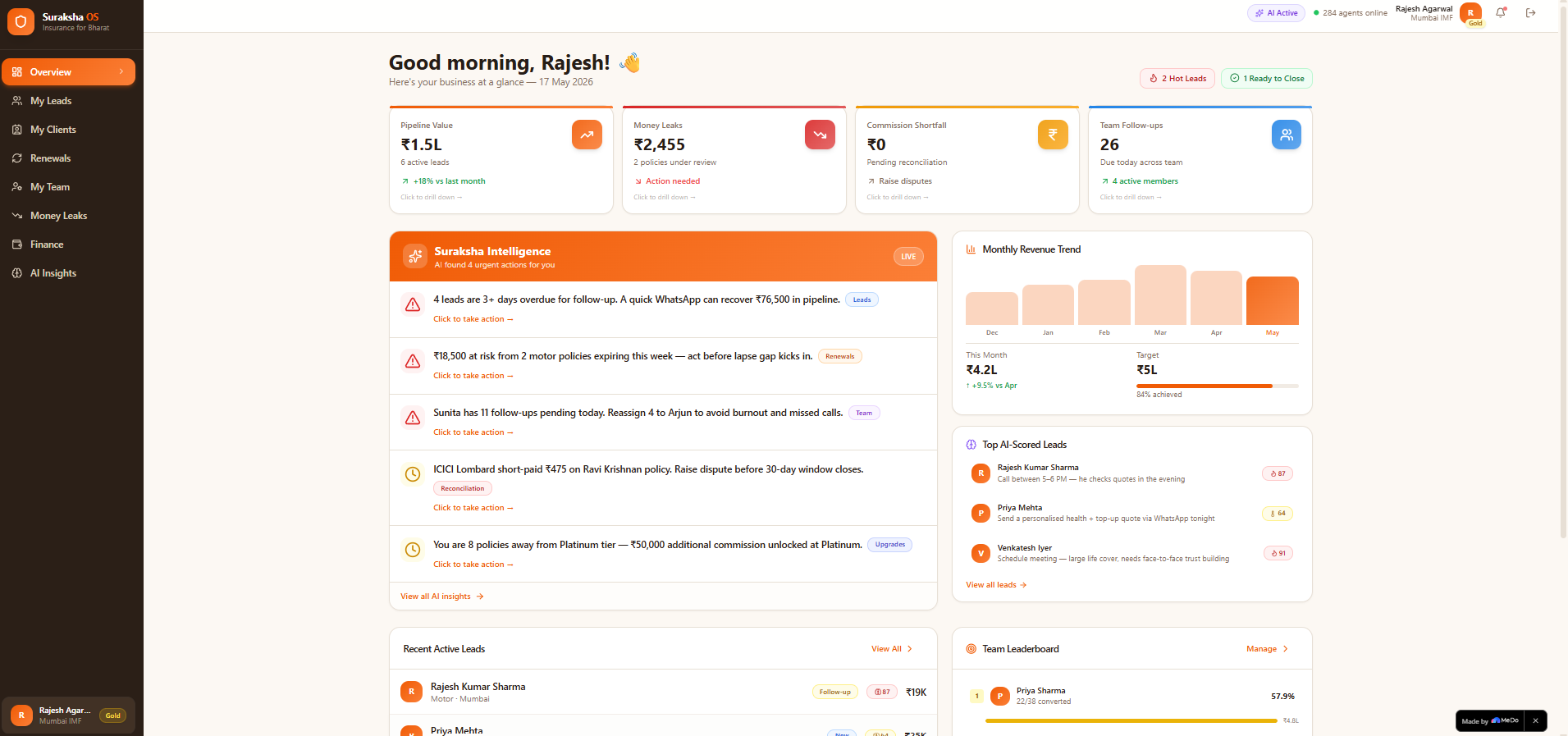
Suraksha OS is a full-stack SaaS-style CRM operating system for the Indian insurance ecosystem. The platform includes:
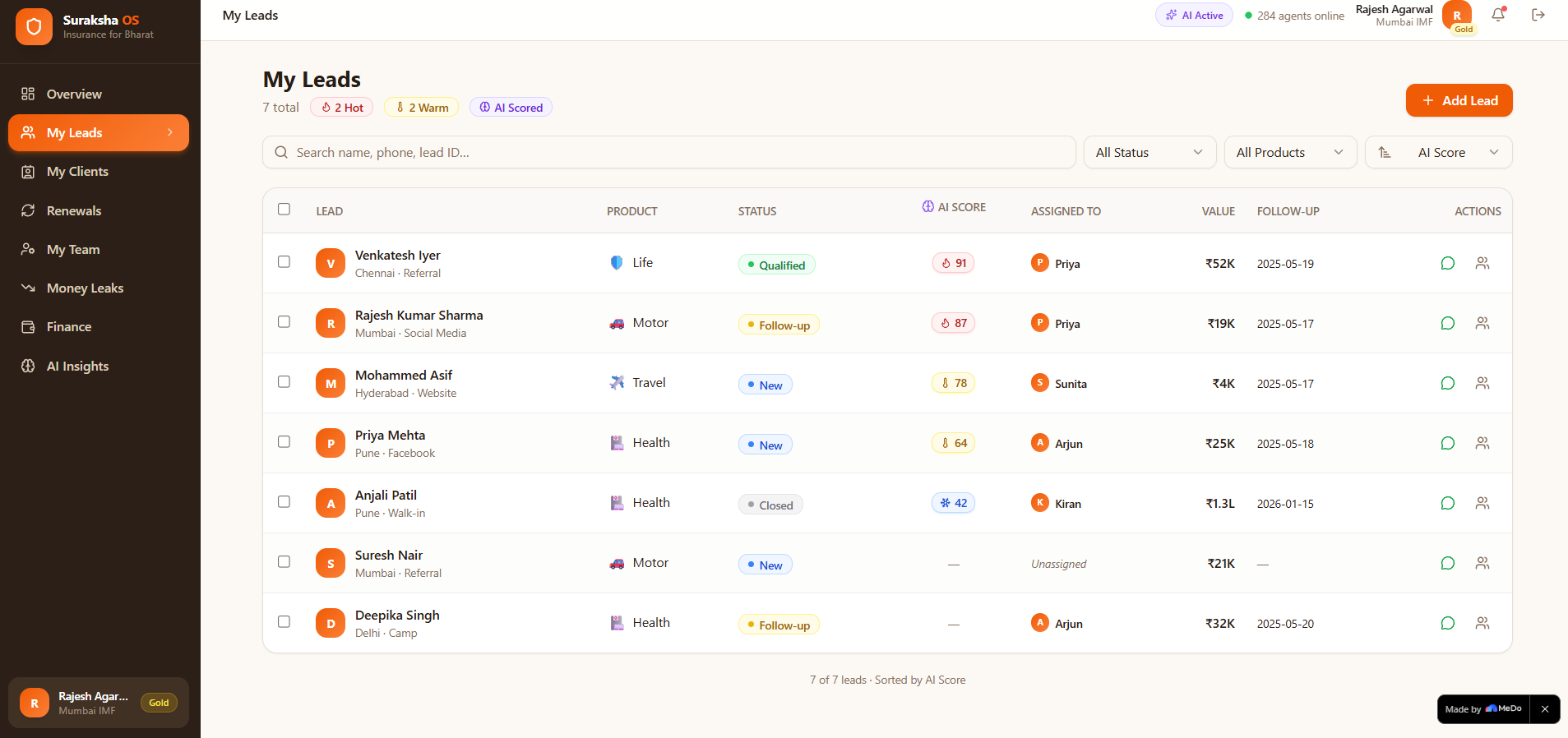
- AI-Powered Lead Management
- Lead tracking across Health, Motor, and Life insurance
- Lead qualification workflows
- Smart lead insights
- WhatsApp-based follow-up workflows
- Cross-sell opportunity recommendations
- Renewal Management
- Renewal tracking for upcoming policy expiries
- Automated reminder workflows
- Premium-at-risk tracking
- Renewal conversion visibility
- Commission & Finance Reconciliation
One of the most unique parts of the platform. We built workflows for:
- Commission tracking
- Shortfall detection
- TDS management
- GST reporting
- Leakage detection
- Payout reconciliation
- Audit-risk alerts
Most small insurance intermediaries struggle heavily in this area.
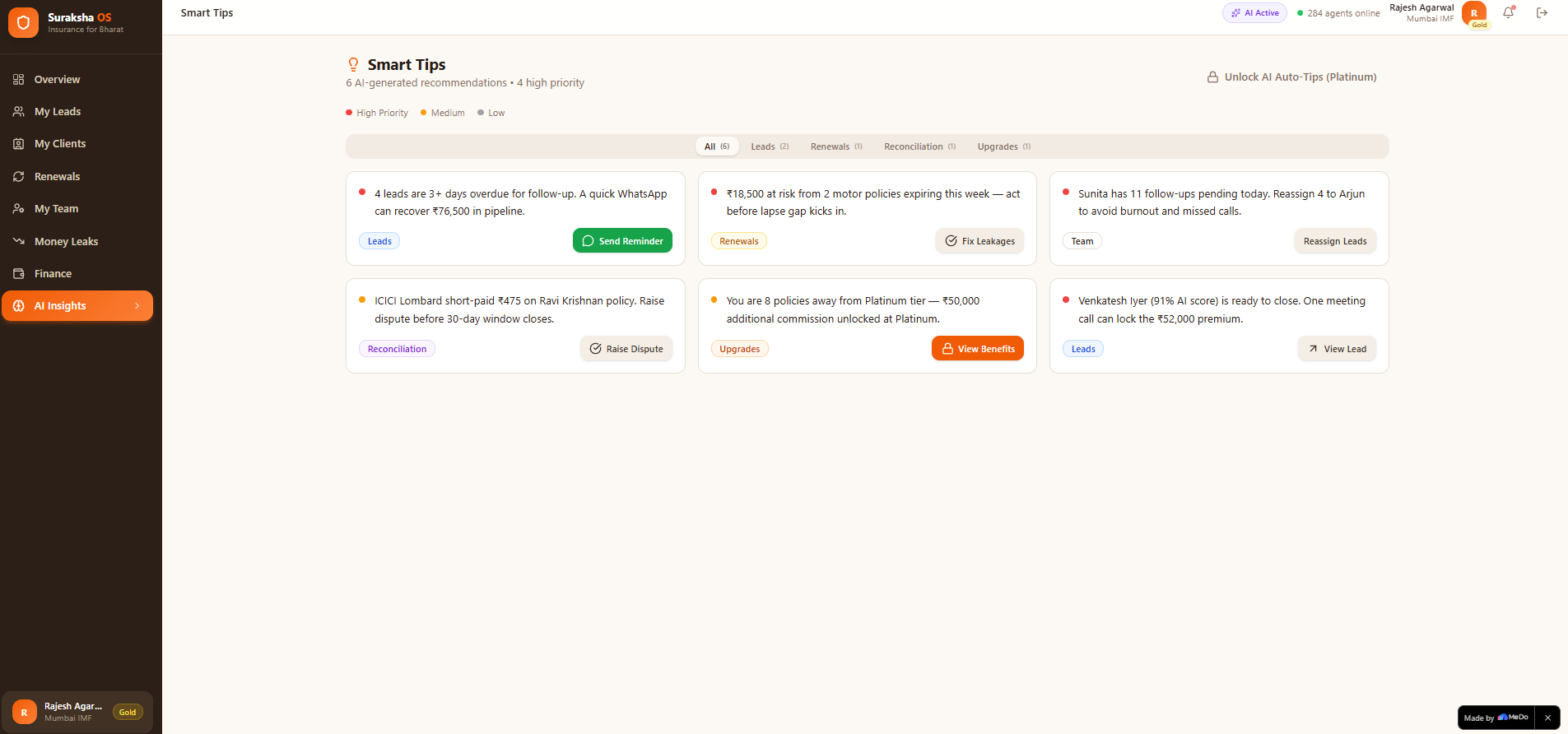
- AI Smart Tips
The system continuously surfaces business insights such as:
- Leads that need follow-up
- Policies likely to lapse
- Recoverable commission leakages
- Cross-sell opportunities
- Renewal reminders
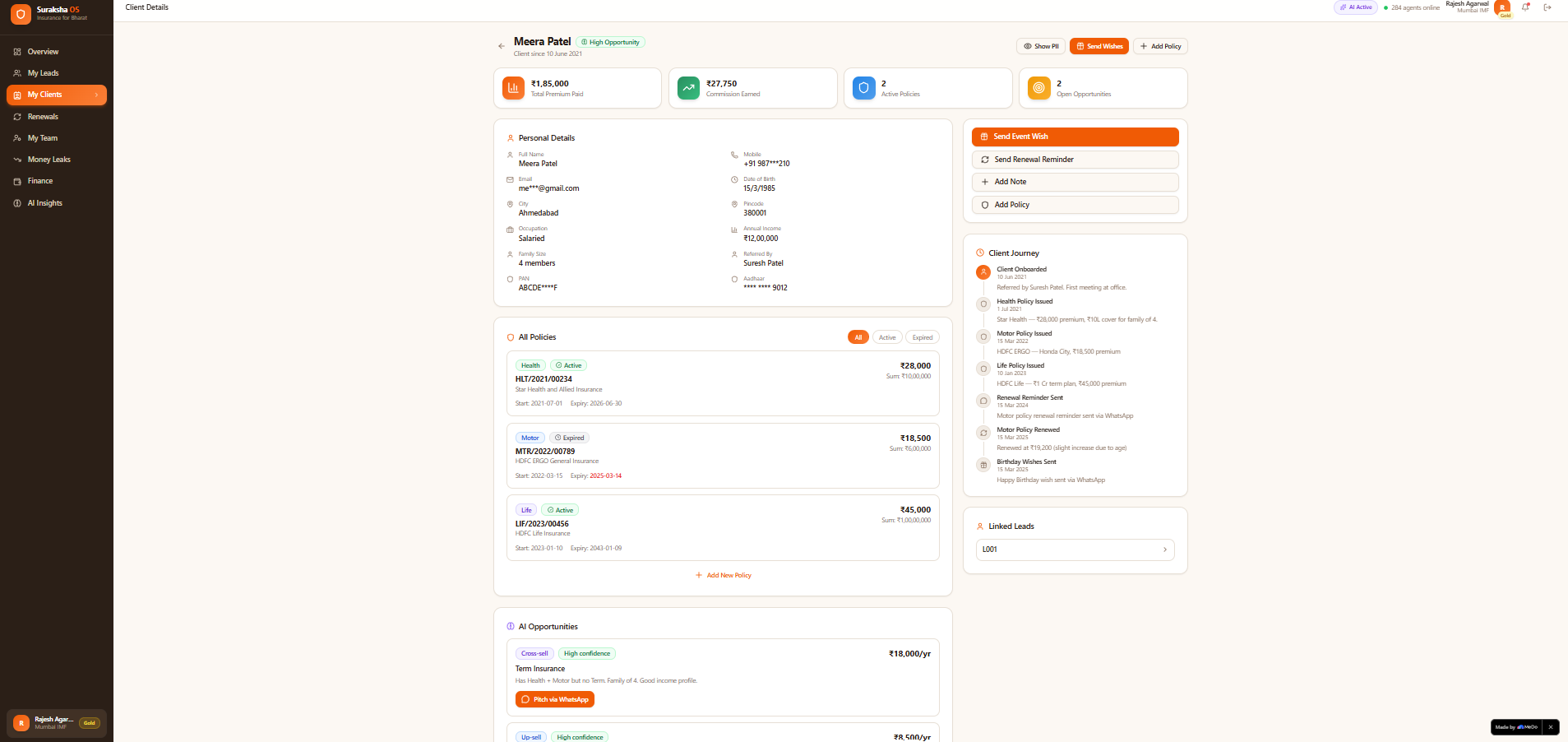
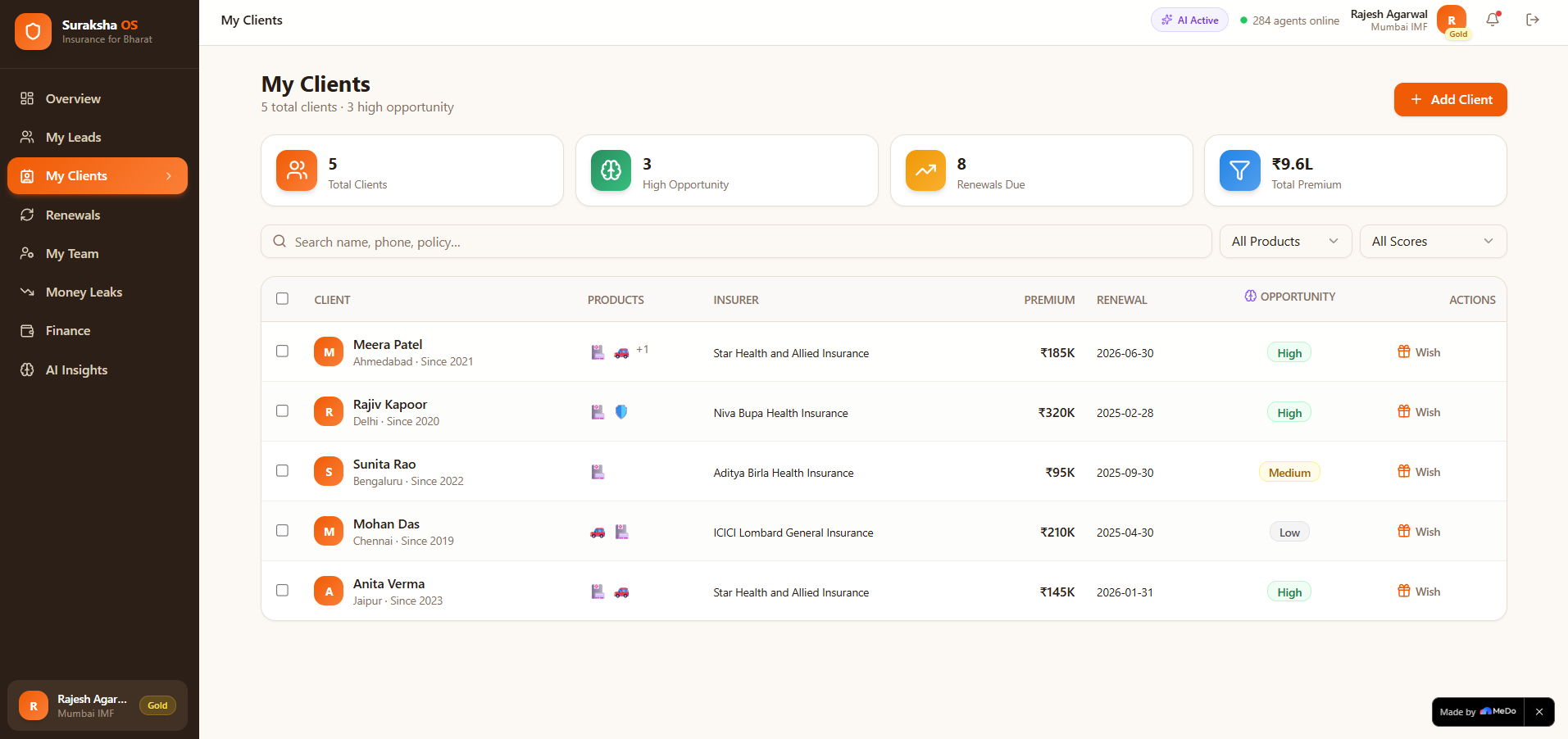
- Client Relationship Management
- Full client lifecycle tracking
- Policy history management
- Communication logs
- Event-based engagement
- Birthday / festival / policy anniversary wishes
- Multi-Tenant SaaS Architecture
The platform supports:
- Organization-level isolation
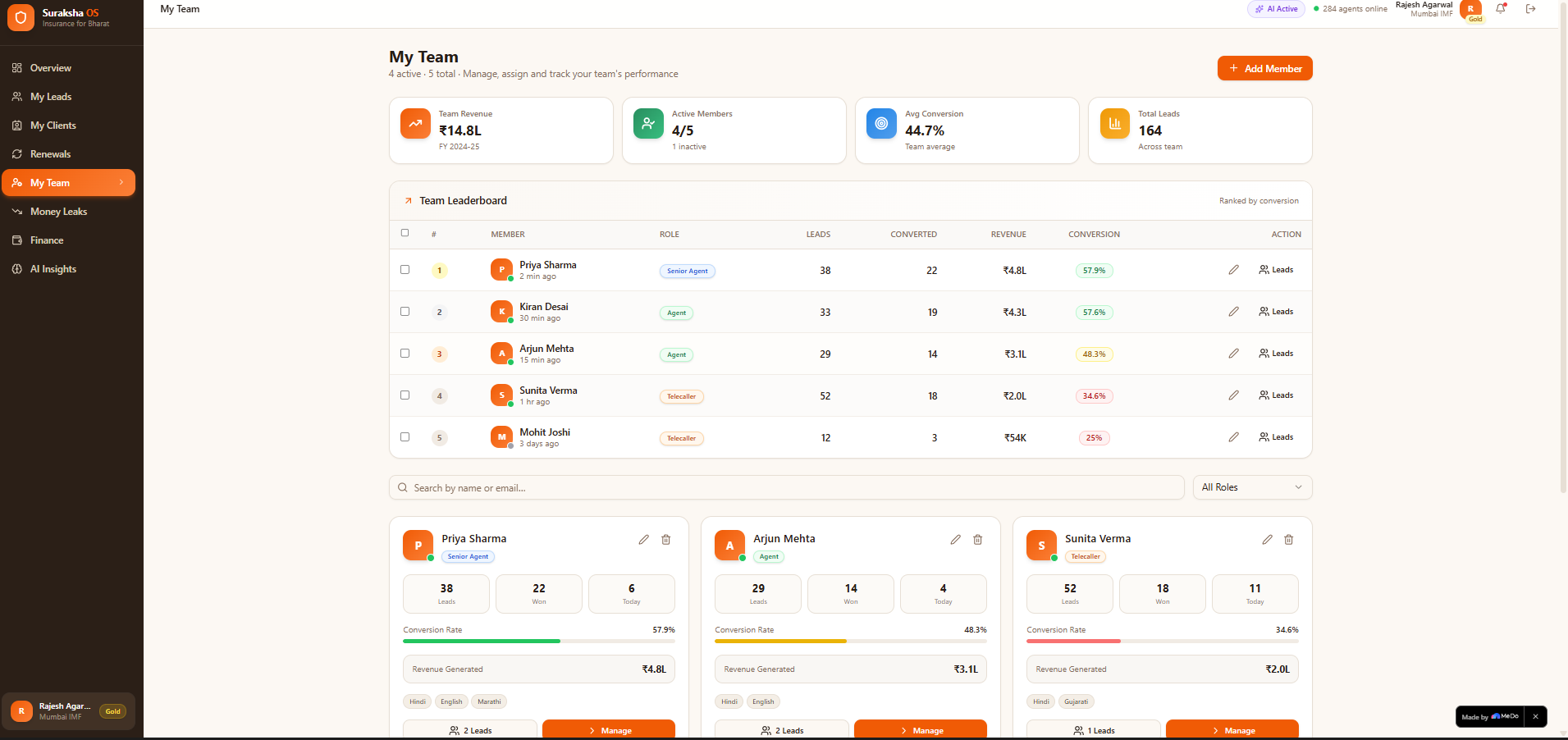
- Role-based access
- IMF owners
- Agents
- Super admins
This makes the product scalable for real-world deployment.
How we built it
This project was heavily “vibe coded” during the hackathon.
Instead of following traditional long engineering cycles, we combined:
AI-assisted rapid prototyping Product-first thinking UX-driven workflow design Modular frontend architecture Deep domain understanding of insurance distribution
We first started by mapping real operational workflows used by Indian insurance intermediaries.
From there, we designed:
Multi-page user journeys Dashboard interactions KPI logic Renewal workflows Financial reconciliation systems Role-based access structures Insurance-specific business rules
A large amount of effort went into designing realistic workflows instead of just making a visually attractive UI.
We documented:
User personas Product logic Compliance flows Data validation rules Boundary conditions Exception handling Multi-role permissions Product-specific insurance workflows
The final PRD became extremely detailed because we wanted the platform to feel deployable and production-oriented rather than just a superficial demo.
The application includes:
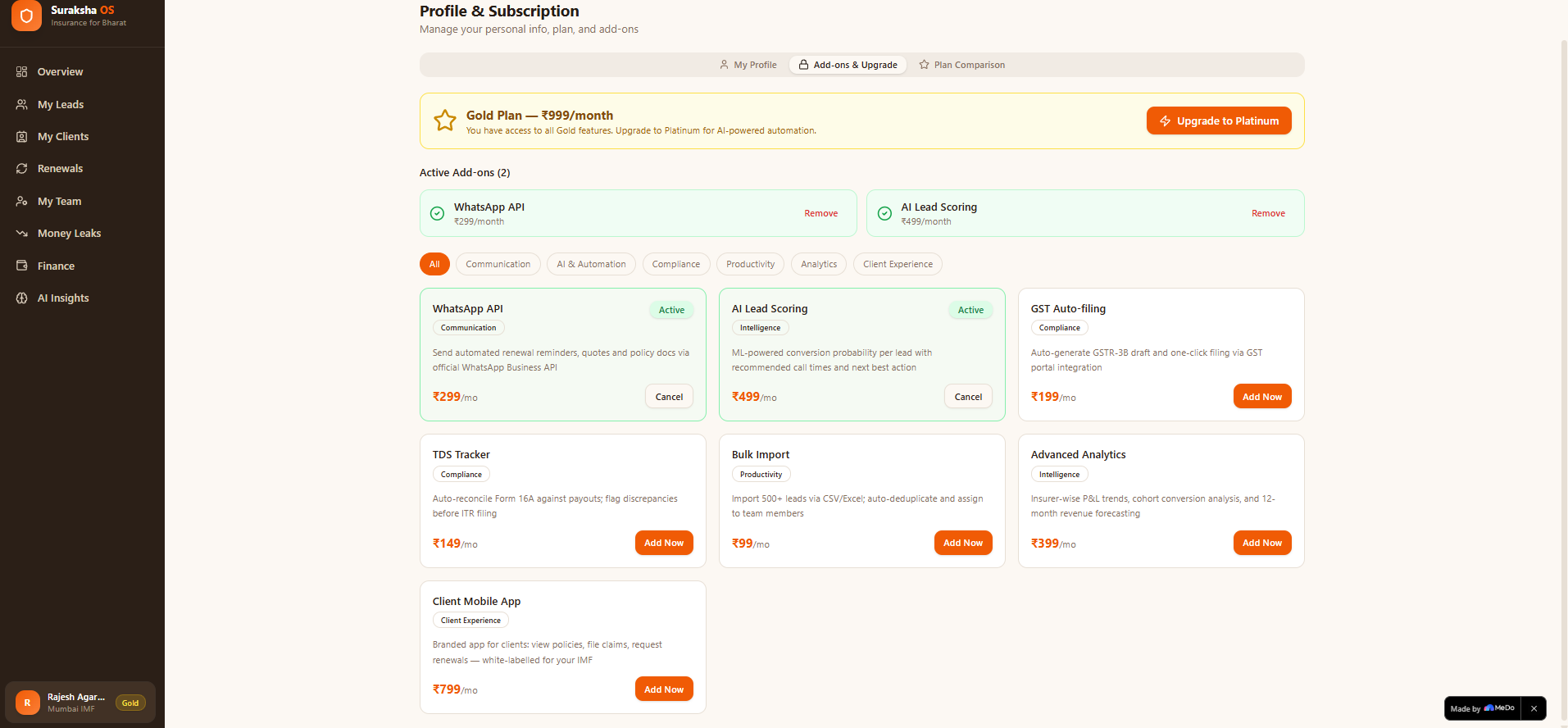
Dashboard system Lead management module Client lifecycle management Finance and reconciliation module Smart AI recommendation engine Renewal management workflows Tier-based subscription architecture Compliance-aware data masking Interactive KPI systems
We also intentionally designed the UI around a “Bharat-first” experience:
Conversational Hinglish interactions Indian numbering system (₹2.6L, ₹28K) WhatsApp-native workflows Localized insurance terminology IRDAI-aware compliance structure
Challenges we ran into
- Designing for a Highly Fragmented Industry Insurance distribution in India is extremely fragmented. Different intermediaries operate differently:
- IMFs
- Brokers
- Corporate agents
- POSPs
- Independent agents
Creating one system that could support all of them while keeping the workflows intuitive was a major challenge.
- Balancing Simplicity with Enterprise Complexity We wanted Suraksha OS to feel modern and lightweight, but the underlying insurance workflows are operationally complex.
For example:
- Commission reconciliation
- TDS calculations
- GST handling
- Renewal management
- Leakage detection
- Role-based permissions Simplifying these into usable UI experiences required multiple redesign iterations.
- Building India-Specific Logic Most global CRM patterns do not naturally fit Indian insurance operations. We had to build custom logic for:
- Indian insurer structures
- IRDAI compliance workflows
- Commission caps
- GST and TDS handling
- Renewal cycles
- Indian number formatting
- WhatsApp-first engagement
- Designing Production-Like Workflows in Hackathon Time A big challenge was maintaining depth while moving fast. Rather than creating a shallow MVP, we focused on:
- Realistic business logic
- Complete user journeys
- Edge-case handling
- Permission structures
- Scalable architecture
This made the product feel closer to a deployable SaaS system.
- AI + Human Workflow Integration Another challenge was ensuring AI features actually felt useful. Instead of generic “AI assistant” ideas, we focused on actionable insights such as:
- Which lead to follow up today
- Which policy is about to lapse
- Which commissions may have leakages
- Which clients are suitable for cross-sell
The idea was to make AI operationally meaningful.
Accomplishments that we're proud of
Built a highly detailed Bharat-first InsurTech CRM specifically for Indian insurance intermediaries instead of creating a generic CRM clone. Successfully designed a multi-tenant SaaS architecture capable of supporting IMFs, insurance brokers, corporate agents, and individual insurance agents within a single platform. Created deep insurance-specific workflows covering:
- Lead management
- Renewals
- Commission reconciliation
- Leakage detection
- TDS management
- GST workflows
- Cross-sell intelligence Designed a system that feels operationally realistic and production-oriented rather than just a hackathon mockup. Integrated AI-driven business insights into practical workflows such as:
- Renewal reminders
- Lead prioritization
- Recoverable commission leakages
- Cross-sell opportunities
- Actionable smart tips Built a Bharat-centric UX approach using:
- Hinglish-friendly workflows
- WhatsApp-first engagement
- Indian currency formatting
- IRDAI-aware logic
- Local insurance terminology Created detailed role-based access systems for:
- Super admins
- IMF owners
- Agents Developed realistic financial and compliance modules that most CRMs ignore, including:
- Commission shortfall detection
- Audit-risk alerts
- TDS calculations
- GST reporting
- Payout reconciliation Documented extensive edge cases, exception handling, validation logic, and acceptance criteria to make the platform scalable and implementation-ready. Managed to rapidly prototype and structure a complex enterprise SaaS product using AI-assisted “vibe coding” workflows during the hackathon. Designed the platform with scalability in mind so it can eventually evolve into a complete operating system for insurance distribution in India. Most importantly, we proved that AI-assisted development can dramatically accelerate the creation of meaningful vertical SaaS products with real-world utility - not just experimental demos.
What we learned
This hackathon reinforced several important lessons: Domain Understanding Matters
A strong understanding of real operational pain points creates much more meaningful products than simply adding AI for the sake of AI. AI Greatly Accelerates Product Development Using AI-assisted development dramatically reduced the time required for:
- Workflow ideation
- Product architecture
- UI planning
- Documentation
- Logic structuring
- Edge-case simulation
UX is Critical in Enterprise Software Even highly operational platforms need consumer-grade usability. Insurance professionals may spend 8 - 10 hours daily on such systems. Simplicity becomes a competitive advantage. Bharat Needs Vertical SaaS
India still has huge opportunities for localized vertical SaaS platforms built specifically for Indian industries instead of adapting Western software patterns.
What's next for Suraksha OS - Insurance CRM
Some of the features we want to build next include:
- Real insurer API integrations
- Real-time WhatsApp integrations
- AI-driven predictive renewals
- Mobile apps for agents and clients
- Automated policy parsing
- Advanced analytics
- AI-driven lead scoring
- Payment integrations
- Compliance automation
- Client self-service portals
- Voice and vernacular AI support
We see Suraksha OS evolving into a complete operating layer for insurance intermediaries across India.
Built With
- react.js
- tailwind
- typescript

Log in or sign up for Devpost to join the conversation.