-
-
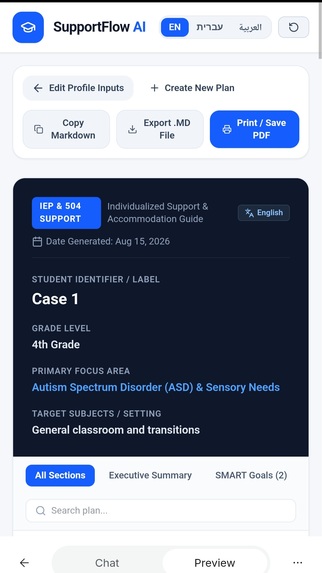
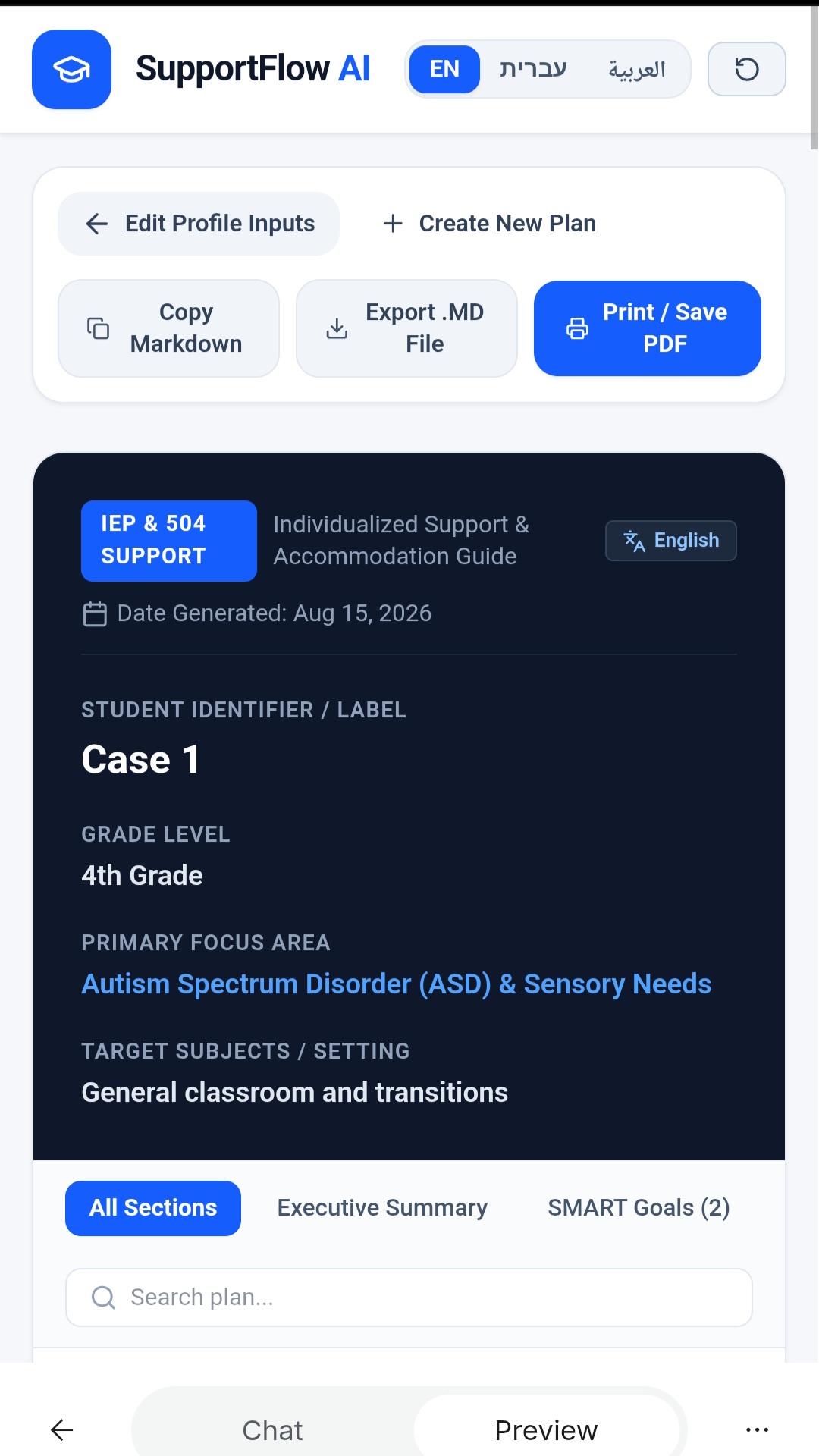
SupportFlow AI personalized support plan dashboard.
-
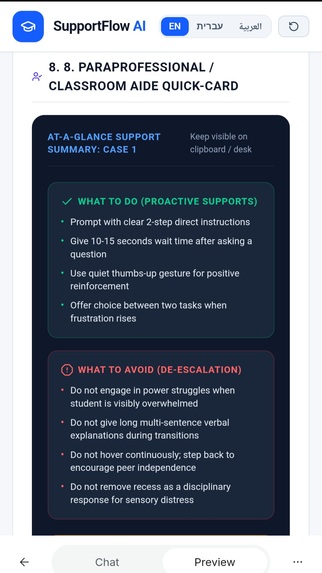
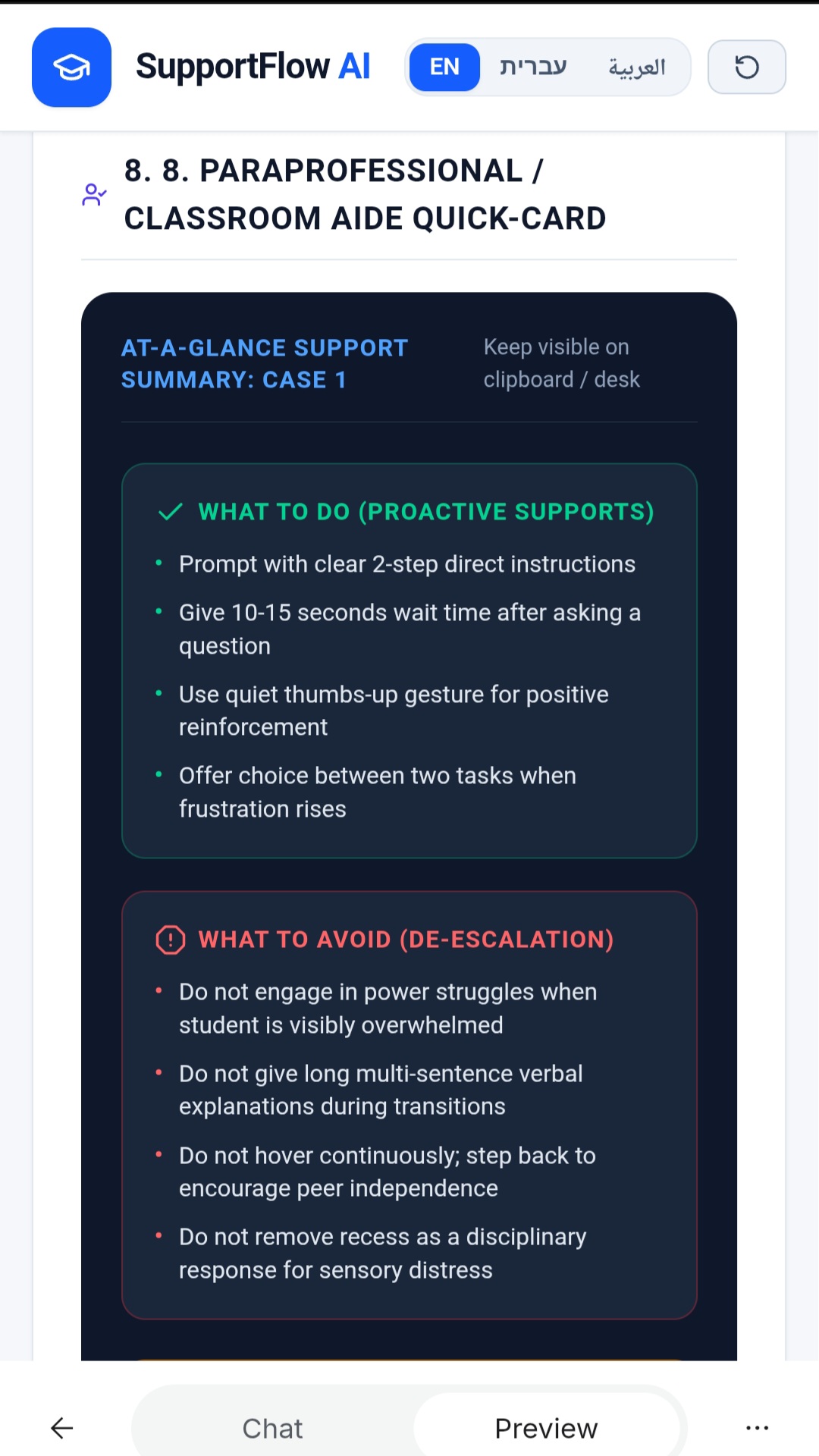
At-a-glance guidance for paraprofessionals with clear do, avoid, and de-escalation strategies.
-
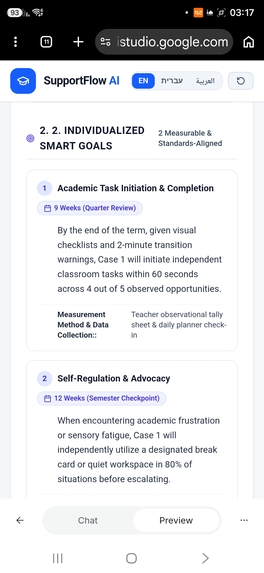
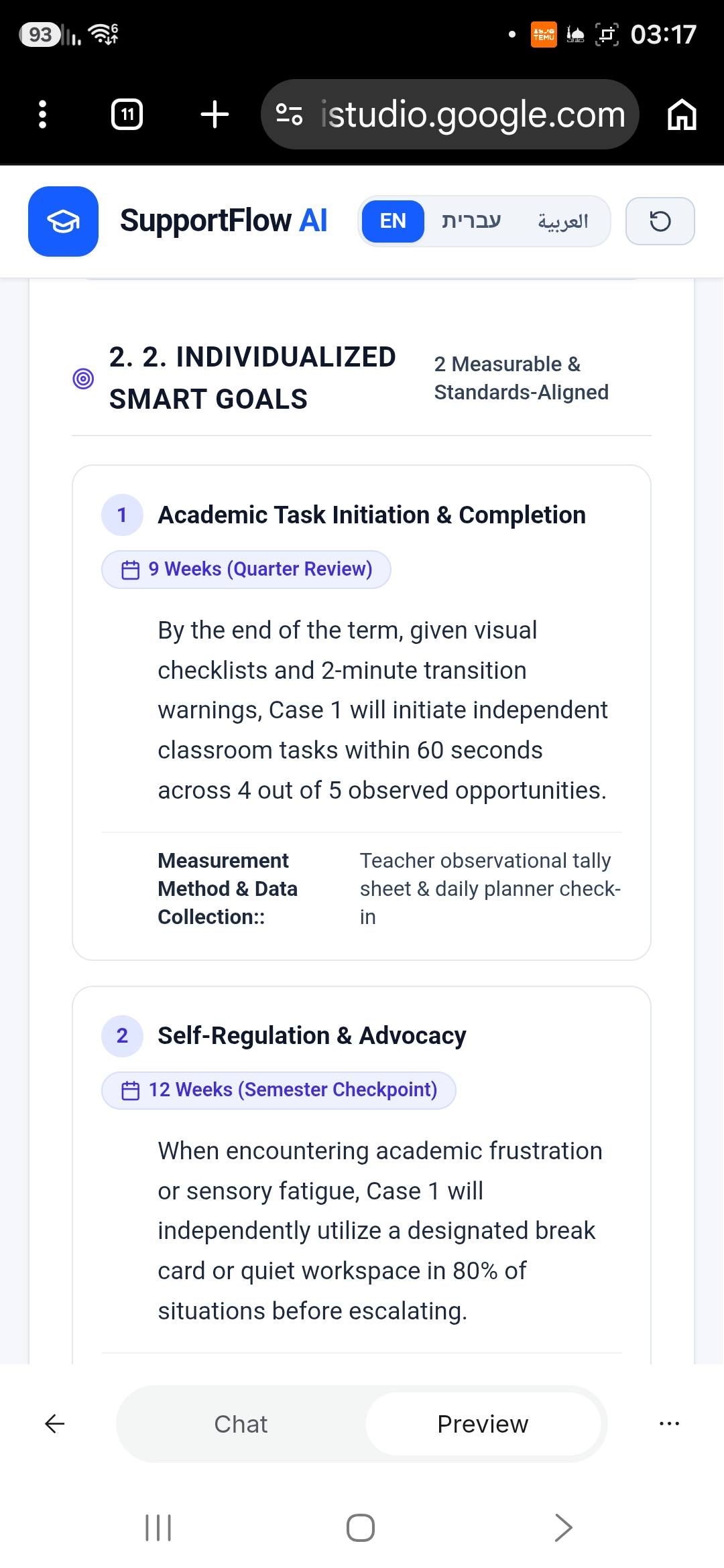
Personalized SMART goals with measurable outcomes, review timelines, and progress-tracking methods tailored to the student’s needs.
-
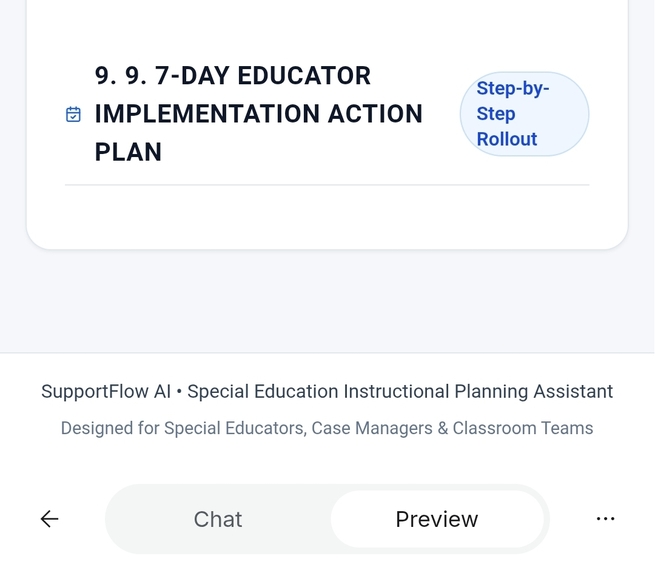
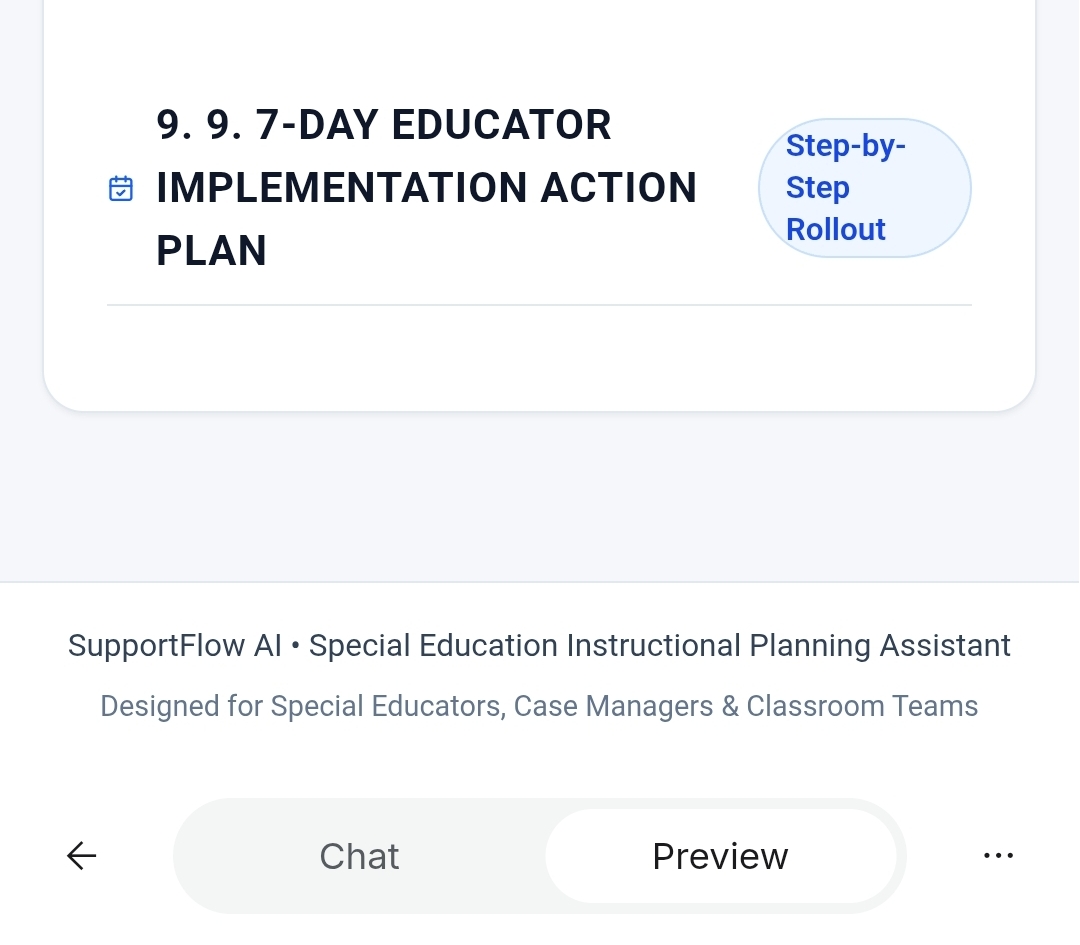
A practical 7-day implementation plan with simple daily steps to help educators put the support plan into action.
SupportFlow AI was inspired by a real challenge in special education: educators often spend significant time turning observations, strengths, triggers, classroom needs, and accommodations into a clear individualized support plan.
I wanted to create a practical tool that helps educators move from scattered information to a structured, usable plan in minutes.
What it does
SupportFlow AI generates individualized special education support plans based on an anonymous student profile.
The educator enters the student’s grade level, strengths, challenges, triggers, primary support need, and classroom context. Gemini then generates:
SMART learning and behavioral goals
differentiated instructional strategies
classroom accommodations
sensory and behavioral supports
assistive technology recommendations
progress monitoring tools
a paraprofessional quick-card
a 7-day educator action plan
The tool is designed with privacy in mind and does not require real student names or identifying information.
How I built it
I built SupportFlow AI using Google AI Studio and Gemini. The application includes a structured intake form, a Gemini-powered generation pipeline, and a mobile-friendly results interface.
The generated plan can also be copied, exported, printed, or saved as PDF.
Challenges
One of the main challenges was making the generated recommendations truly individualized rather than generic. I refined the generation logic so recommendations connect directly to the student’s strengths, challenges, triggers, grade level, and classroom setting.
Another challenge was multilingual support and RTL layout for Hebrew and Arabic. The interface localization was implemented, while full multilingual generation is still being refined.
What I learned
Building SupportFlow AI showed me how generative AI can become more useful when it is grounded in a clear professional workflow. The goal is not simply to generate text, but to turn educator observations into practical actions that can be used in the classroom.
What's next
Next, I plan to continue improving multilingual generation, expand personalization, gather feedback from educators, and develop SupportFlow AI into a practical everyday planning tool for special education teams. Built with.
Built With
- accessibility
- ai
- assistive
- education
- gemini
- generative
- learning
- personalized
- react
- special
- studio
- technology
- typescript

Log in or sign up for Devpost to join the conversation.