-
-
home
-
analysis
-
response
Inspiration
You know how small suppliers get flooded with emails every single day? Purchase orders, invoices, compliance stuff, payment updates – it never ends. I've seen small business owners manually tracking all this, and honestly, it's a mess. They miss payment deadlines, forget to follow up, and lose money because they're too busy copying and pasting. I built SupplySync because I thought, "Why can't an email just tell you what you need to know and even write the reply for you?"
What it does
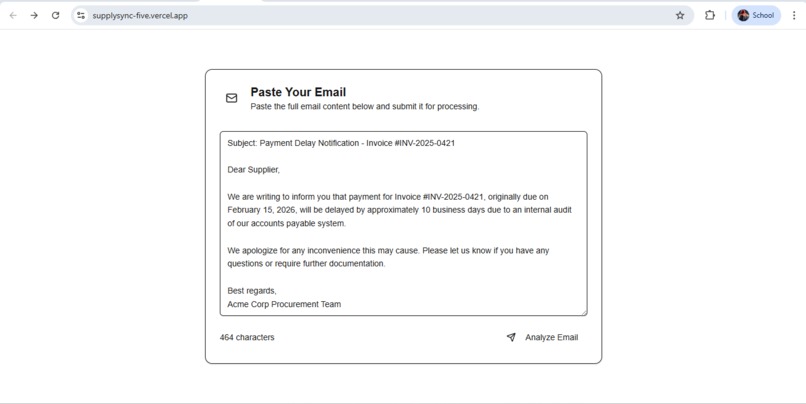
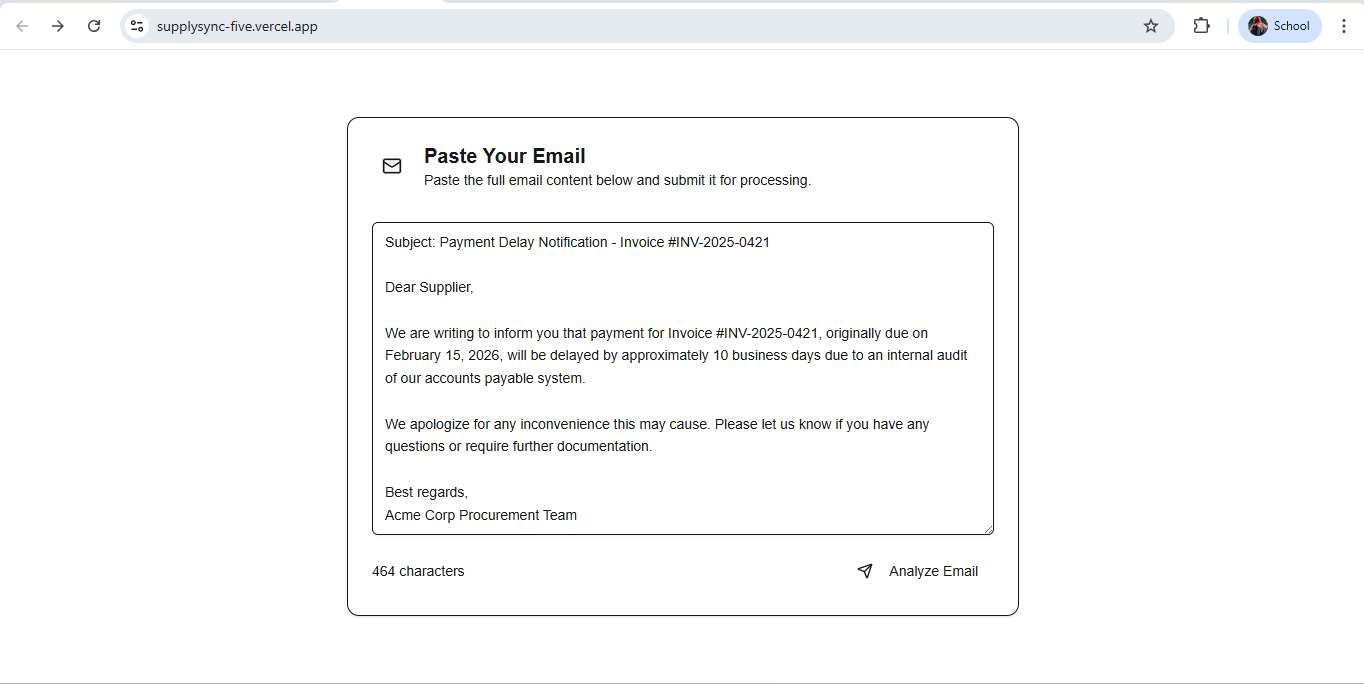
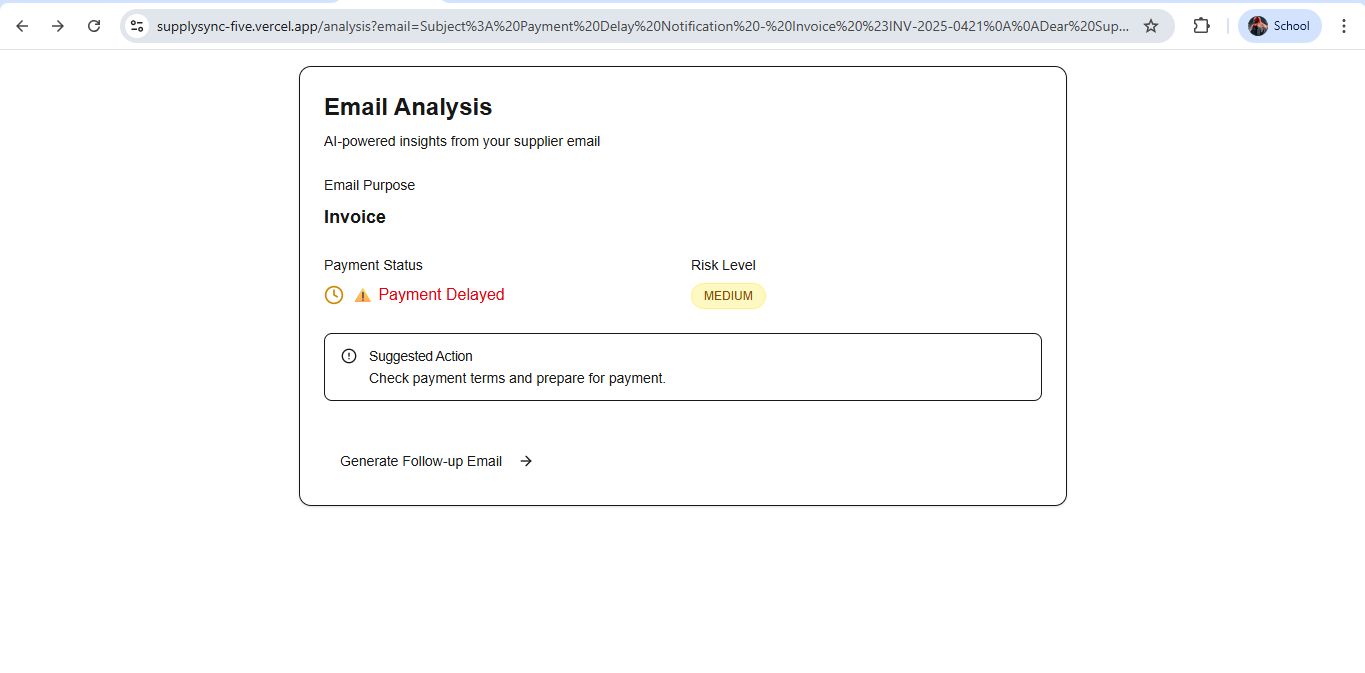
SupplySync is dead simple. You paste an email you got from a big company, and within seconds you get:
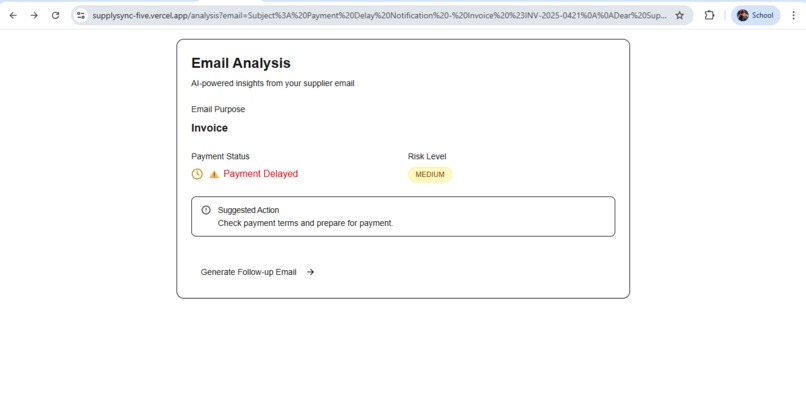
- What the email is actually about (like "oh this is a purchase order")
- Whether payment is running late
- How risky this situation is – low, medium, or high
- What you should do next
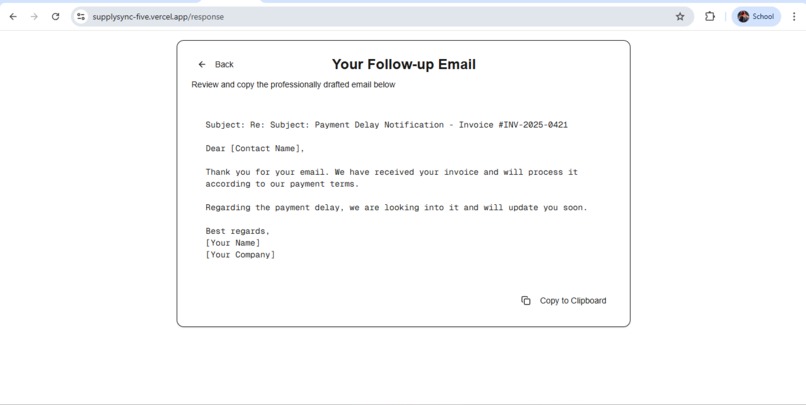
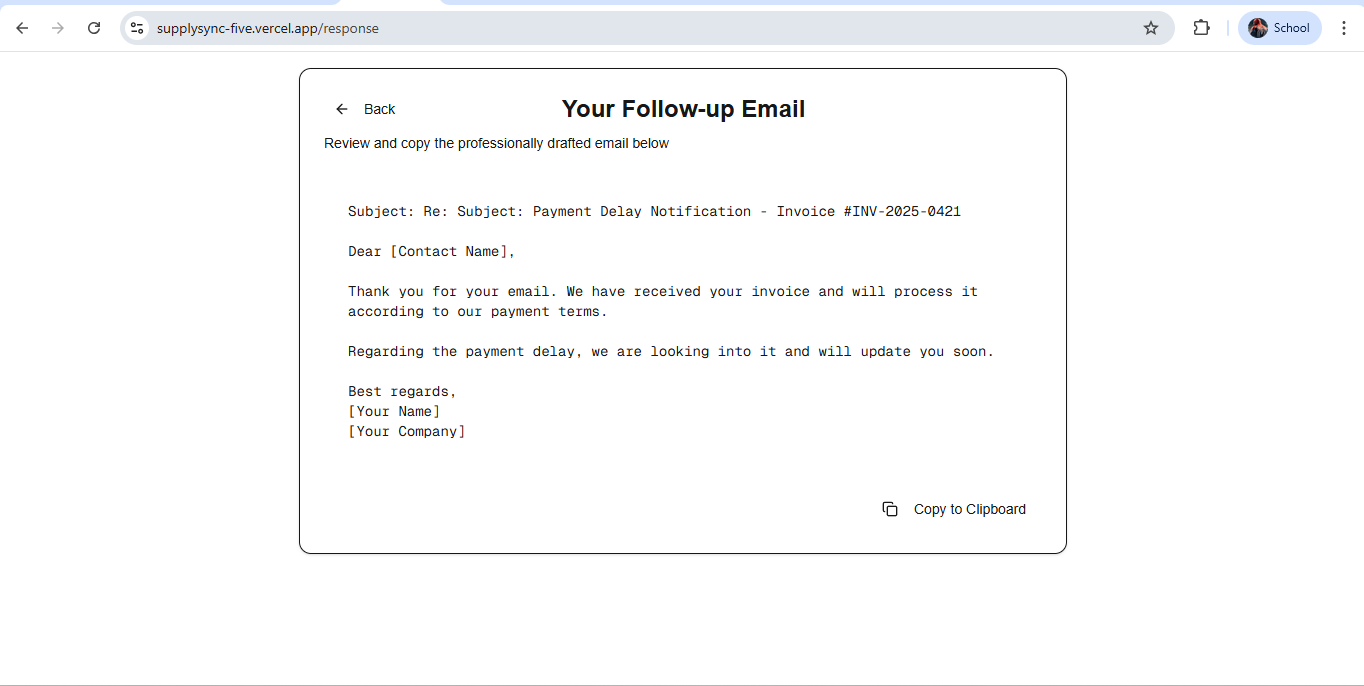
- A ready-to-send reply email that you can copy with one click
No signups, no complicated setup. Just paste and go.
How I built it
I used Next.js because it's fast and makes deployment easy. For the UI, Tailwind CSS and shadcn/ui saved me – I'm not a designer, so having pre-built components that actually look good was a lifesaver.
The "AI" part is actually a smart rule-based system I built. It scans the email for keywords like "invoice", "delay", "urgent" and figures out what's going on. No API keys, no costs, and it runs instantly. Later I can plug in a real AI, but for the hackathon this works perfectly.
Deployed on Vercel – connected my GitHub, clicked a button, and boom, it's live.
Challenges I ran into
Honestly, the biggest challenge was time. I had like 9 hours for the first hackathon deadline. There were moments I thought I wouldn't make it.
The deployment nearly broke me – Vercel kept failing because I forgot to delete an old API file. Simple mistake, but took me 20 minutes of staring at logs to figure out.
Also, getting the navigation between pages to pass the email data correctly was trickier than I expected. Query parameters, session storage – had to learn on the fly.
Accomplishments that we're proud of
It actually works! You paste an email, it analyzes it, gives you a reply, and you can copy it. That flow – start to finish – is smooth.
I'm also proud that I kept it simple. No over-engineering. Just three screens that do exactly what they need to do.
And hey, it's live on the internet. Anyone with the link can use it. That still feels cool.
What I learned
Next.js is powerful but has a learning curve. I finally understand the difference between client and server components (mostly).
Shadcn/ui is amazing – will definitely use it again.
And I learned that a working prototype with a clear problem is better than a fancy half-finished idea. Focus on the core flow first, add bells and whistles later.
What's next for SupplySync
The dream is to make this truly AI-powered with Claude or GPT so it can handle any email, not just keyword matches.
I want to add Slack integration so suppliers can just forward emails to a bot and get replies without even opening a browser.
Also thinking about a simple dashboard that shows all your analyzed emails in one place – like a history.
And for the upcoming DevDash and Airia hackathons, I'll expand it into a multi-agent thing that lives inside Slack and teams up with other bots.
But for now, I'm just happy it works and helps solve a real problem.
Built With
- css
- git
- github
- lucidereact
- next.js
- shadcn/ui
- tailwind
- typescript
- vercel

Log in or sign up for Devpost to join the conversation.