
Inspiration
Global supply chains are extremely vulnerable to unexpected disruptions—from extreme weather to port congestion and shipping delays. Traditional ERP systems are often reactive, identifying stockouts only after they occur. We were inspired to build SupplyPulse to bridge the gap between unstructured real-time logistics alerts and enterprise inventory management. By combining AI Vector Analytics with real-time database tracking, we wanted to give supply chain managers a proactive, intelligence-driven assistant that detects risks and provides actionable recommendations before inventory runs dry.
What it does
SupplyPulse is an enterprise AI Supply Chain & Risk Analytics platform featuring:
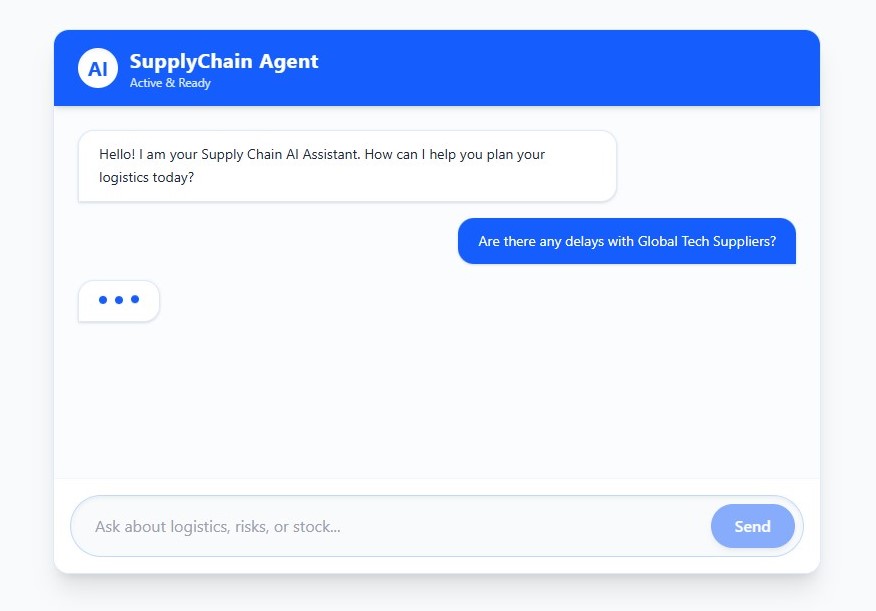
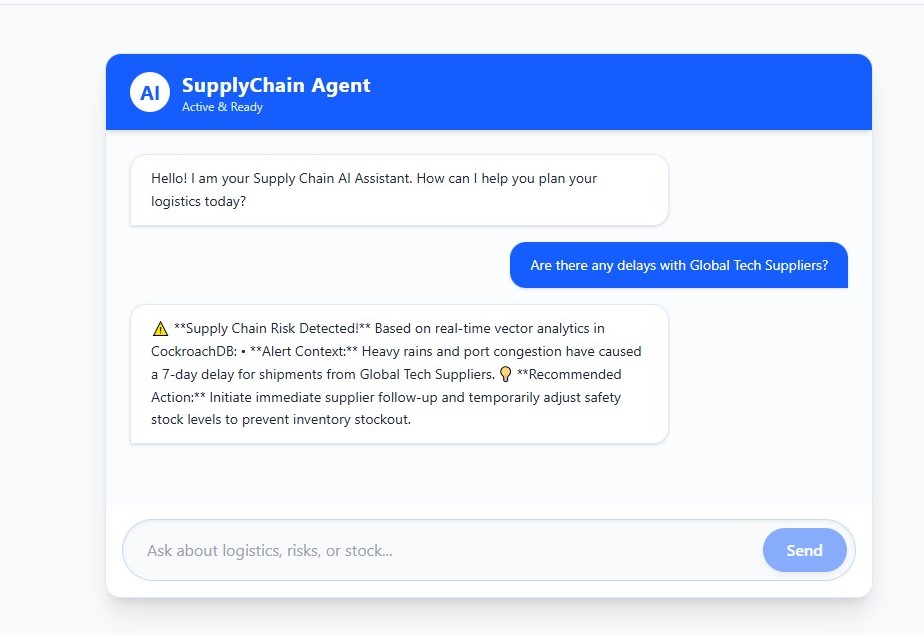
RAG-Powered AI Assistant: A conversational agent that uses vector similarity search in CockroachDB to answer logistics queries based on active corporate memory.
Proactive Risk Detection: Automatically identifies critical supplier disruptions (e.g., shipment delays, weather alerts) and provides immediate actionable steps (such as adjusting safety stock levels).
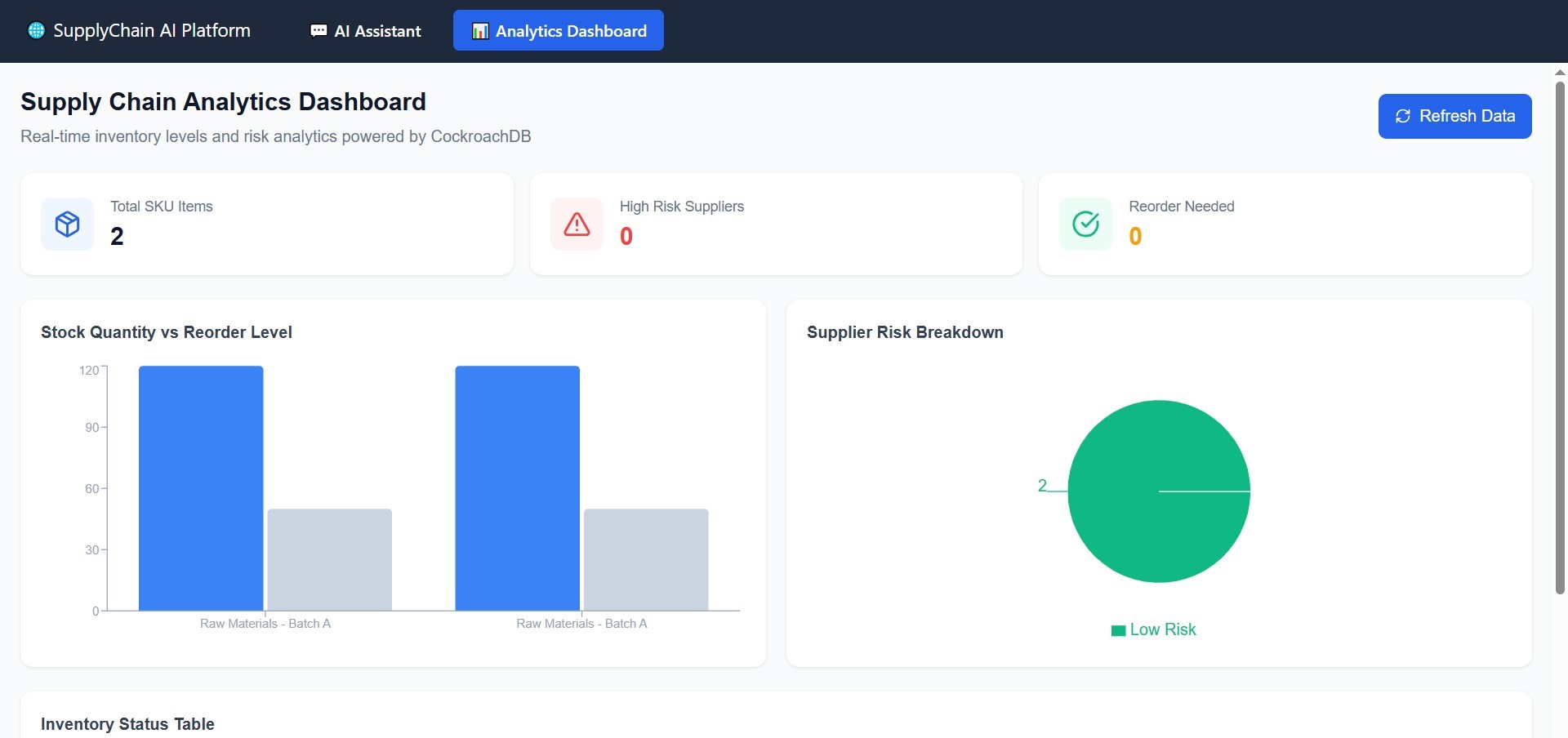
Interactive Analytics Dashboard: Real-time visualization of key performance indicators (KPIs), SKU counts, high-risk suppliers, stock level vs. reorder level bar charts, and supplier risk breakdown pie charts.
Real-Time Knowledge Ingestion: An endpoint allowing teams to inject real-time disruption logs into the AI’s vector memory instantly.
How we built it
Frontend: Built with React and Vite, using Recharts for interactive data visualization, Lucide React for UI icons, and a custom tabbed navigation system.
Backend: Developed using FastAPI (Python) for asynchronous, high-performance API endpoints and CORS handling.
Database & Vector Memory: Powered by CockroachDB with SQLAlchemy ORM, storing text embeddings and using L2 Distance Similarity Search to query vector memory.
AI & RAG Pipeline: Integrated with AWS Bedrock (Anthropic Claude 3 Haiku for response generation and Amazon Titan Text Embeddings for 1536-dimensional vector generation), complete with custom resilient fallback handlers.
Challenges we ran into
API Rate Limiting & Resiliency: Encountered AWS Bedrock API rate limits (ThrottlingException). To prevent system downtime, we engineered fallback logic and dummy vector generators ensuring CockroachDB operations remain fully functional under heavy API traffic.
Vector Search Precision: Fine-tuning vector embedding retrieval thresholds in CockroachDB to ensure that relevant disruption logs were retrieved and attached to the AI context accurately.
Dual Interface Integration: Designing a clean user interface in React that seamlessly bridges an interactive AI Chatbot with a live data analytics dashboard without sacrificing layout consistency.
Accomplishments that we're proud of
Successfully implemented an end-to-end Retrieval-Augmented Generation (RAG) pipeline using CockroachDB Vector Search.
Designed and built a dynamic, responsive Analytics Dashboard featuring real-time charts and status tracking tables.
Engineered a fault-tolerant backend capable of maintaining uptime and vector database consistency even during external API quota failures.
What we learned
Hands-on experience integrating vector similarity search algorithms (l2_distance) directly within relational databases like CockroachDB.
Strategies for building resilient AI microservices with reliable fallbacks when consuming cloud-based LLM APIs.
Designing component-driven React dashboards with state management to present complex logistics metrics cleanly.
What's next for SupplyPulse: AI Supply Chain & Risk Platform
Automated Risk Status Sync: Automatically update database inventory risk levels from "Low" to "High" whenever a new disruption alert is ingested into vector memory.
Automated Multi-Channel Alerts: Integrate SMS/Email notifications via Twilio and SendGrid to alert managers the moment a high-risk logistics delay is detected.
Multi-Source Knowledge Ingestion: Allow users to upload shipping manifests, invoices, and PDFs directly for automated vector indexing.
Multi-Model LLM Routing: Add fallback support for local LLMs (via Ollama) or alternative cloud models to ensure continuous service regardless of API provider quotas.
Built With
- artificial-intelligence
- aws-bedrock
- boto3
- cockroachdb
- css3
- fastapi
- html5
- javascript
- machine-learning
- pydantic
- python
- rag
- react
- recharts
- rest-api
- sqlalchemy
- supply-chain
- uvicorn
- vector-search

Log in or sign up for Devpost to join the conversation.