-
-
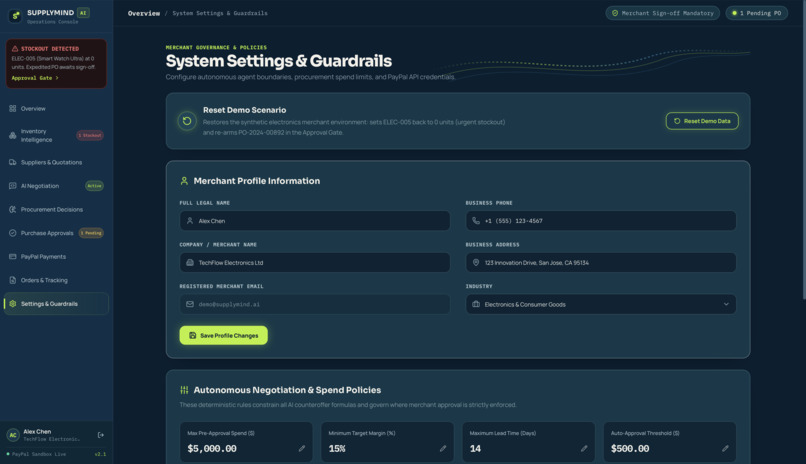
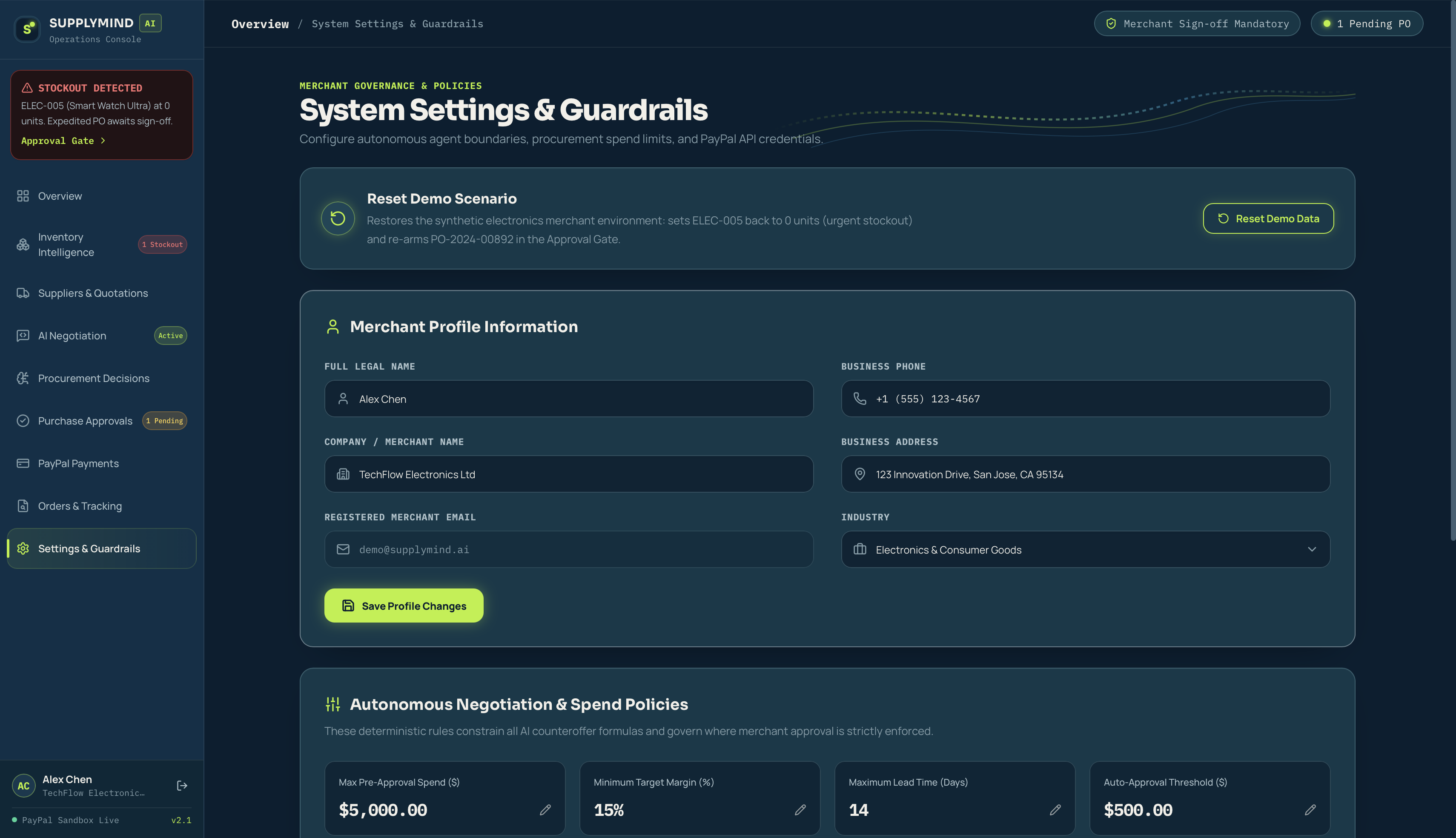
Setting Page
-
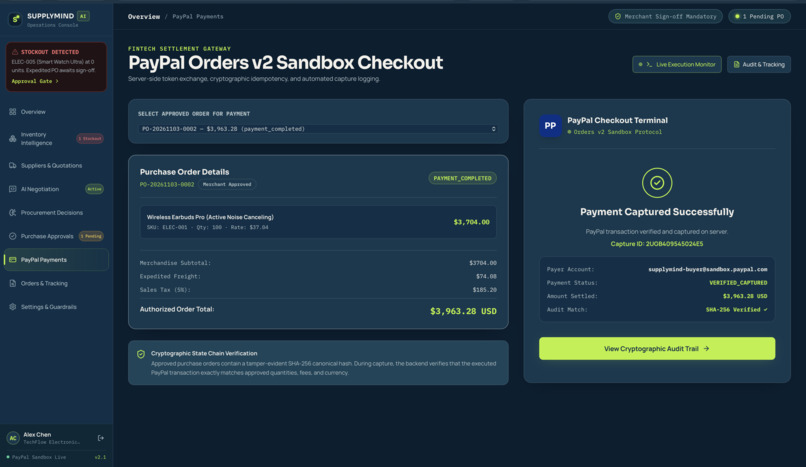
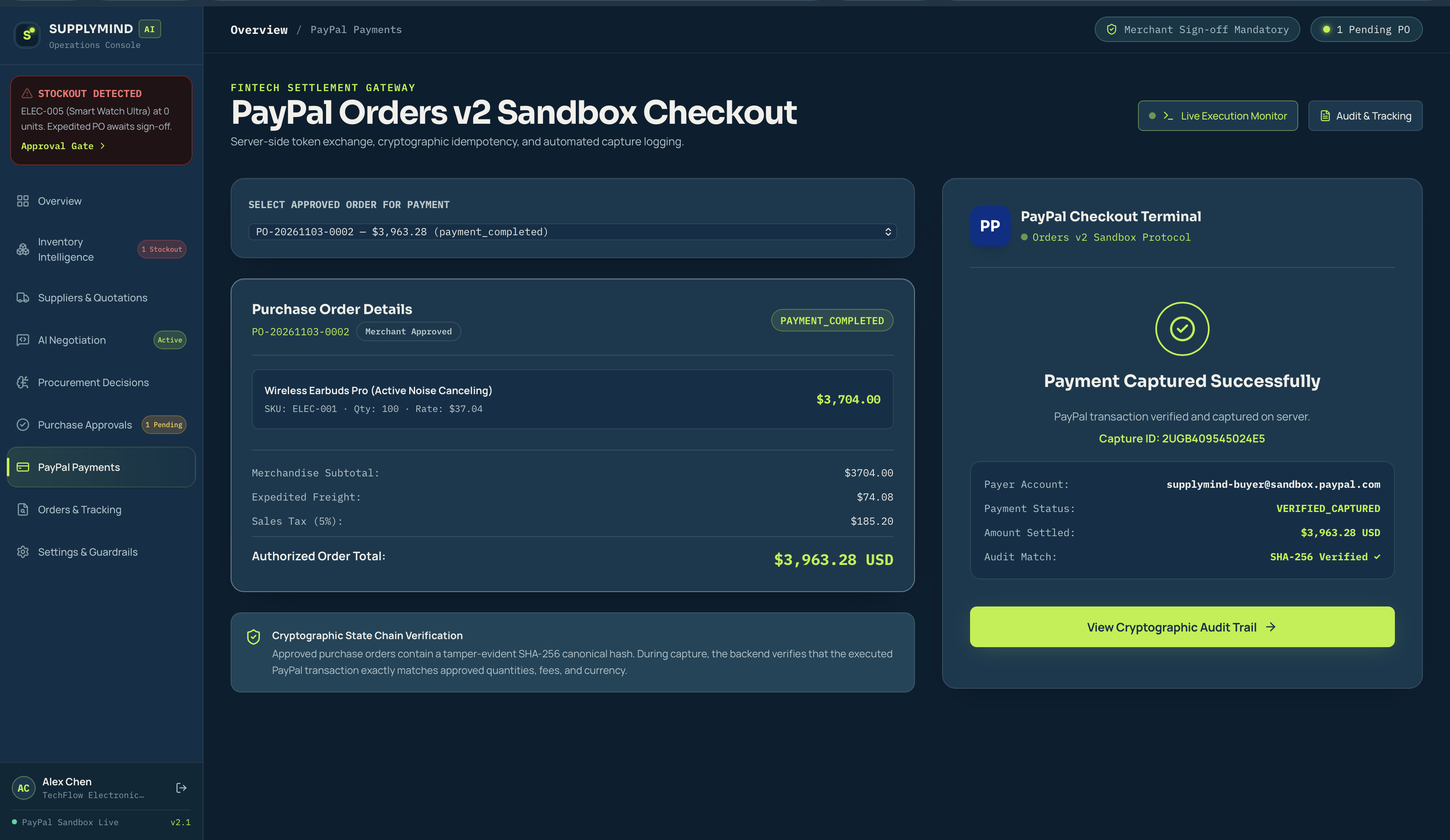
PayPal Orders v2 Sandbox Checkout
-
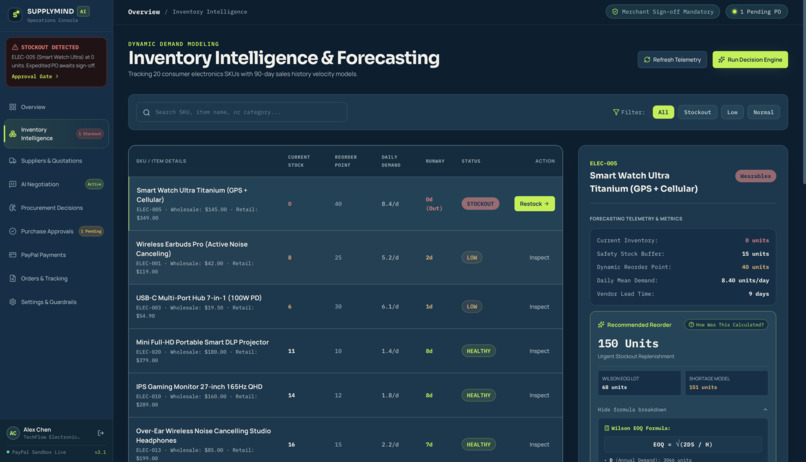
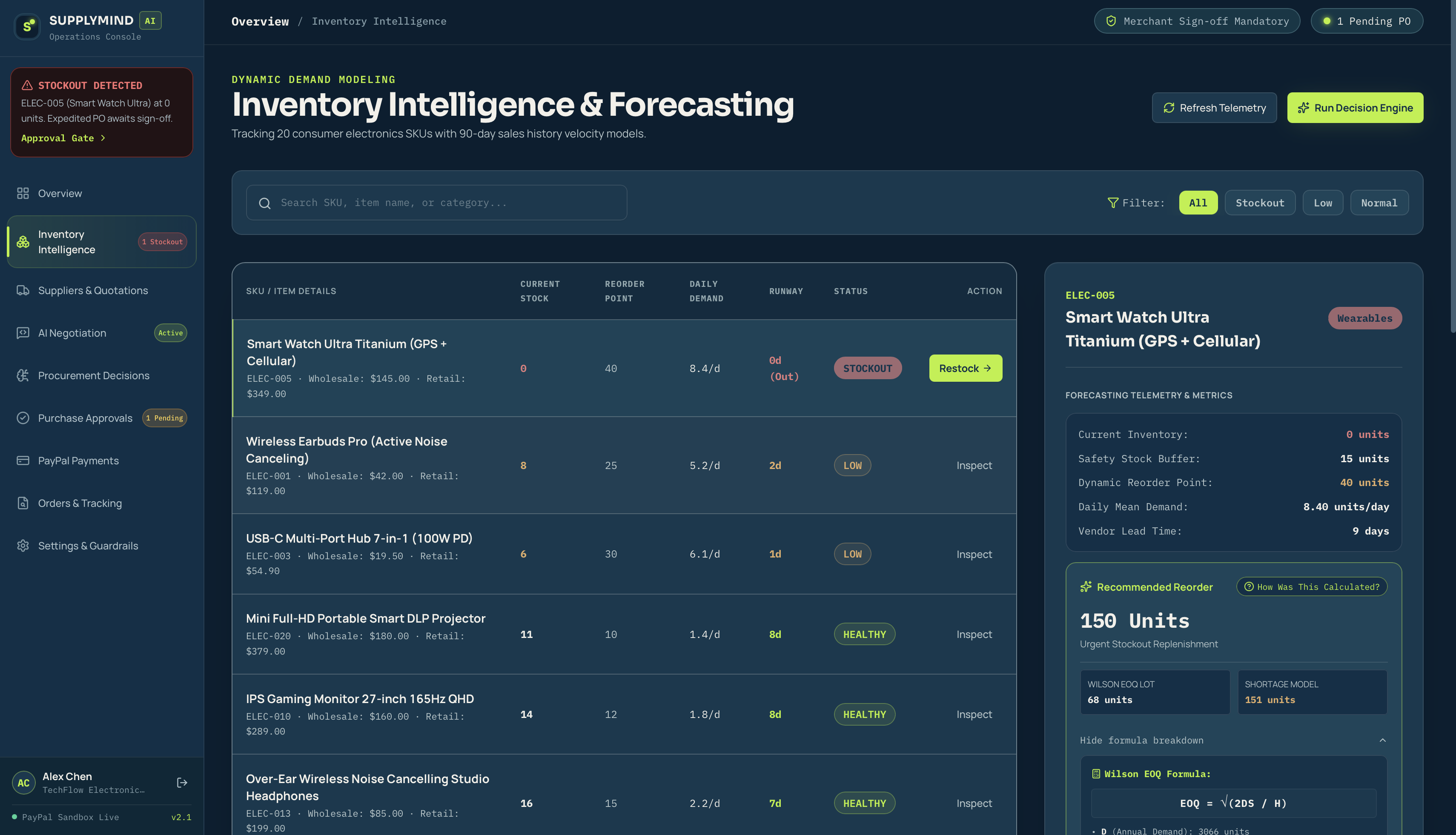
Inventory Intelligence & Forecasting
-
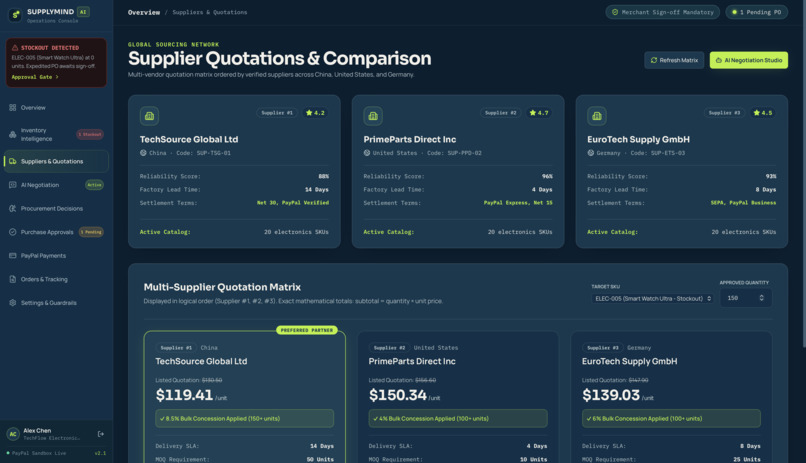
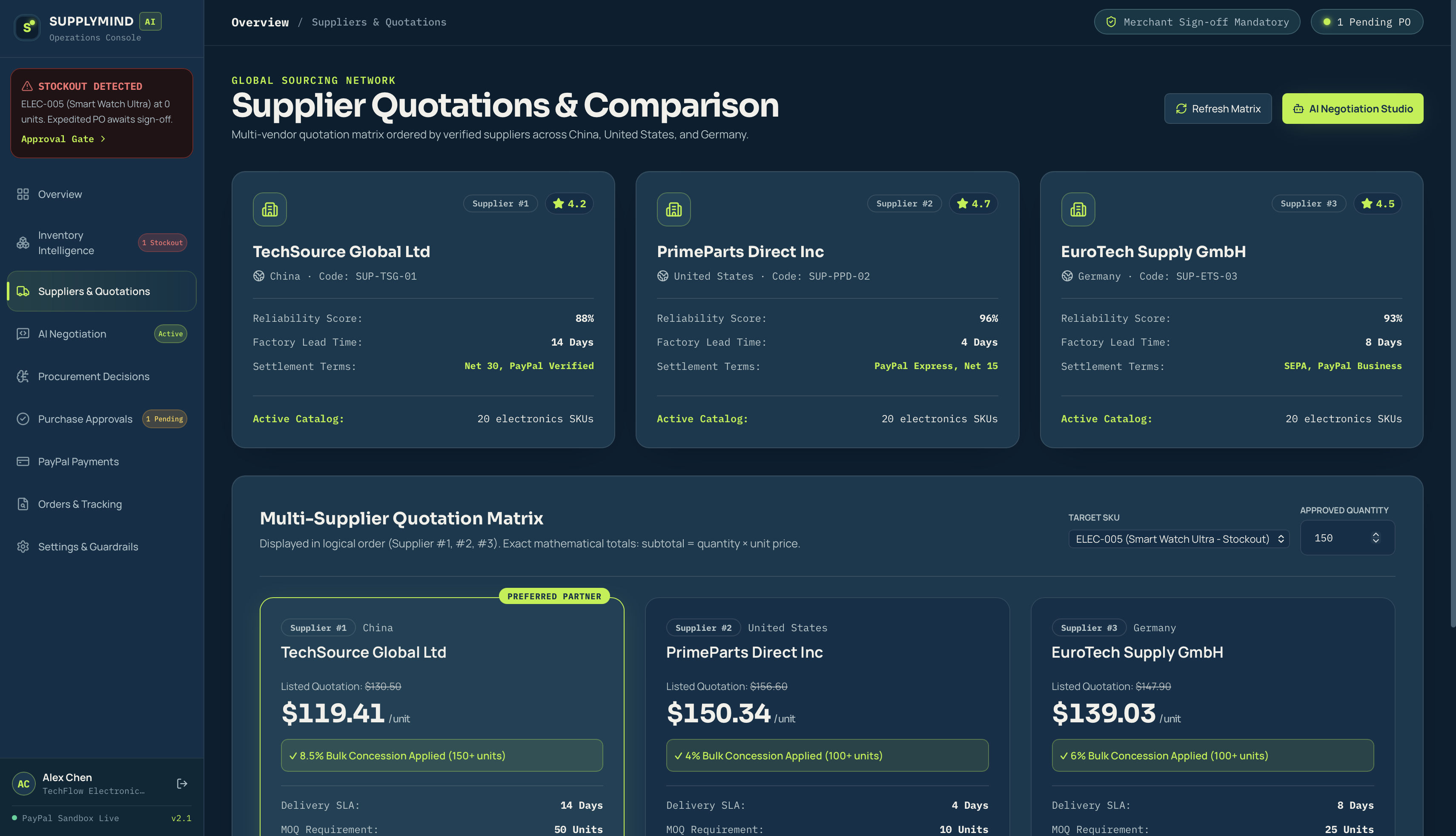
Supplier Quotations & Comparison
-
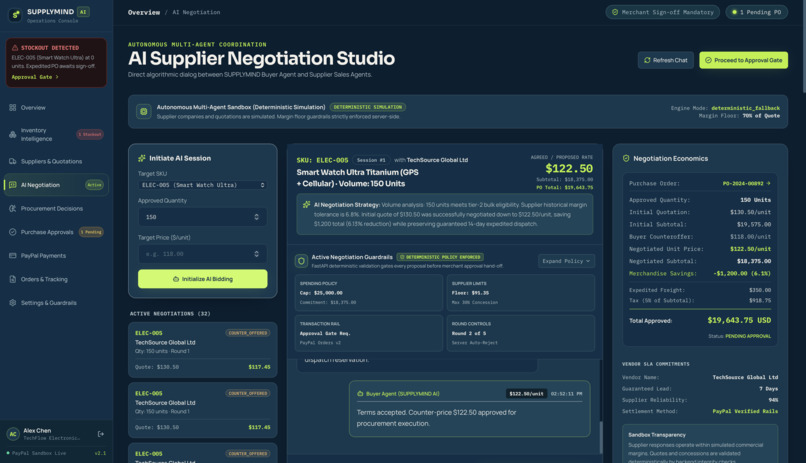
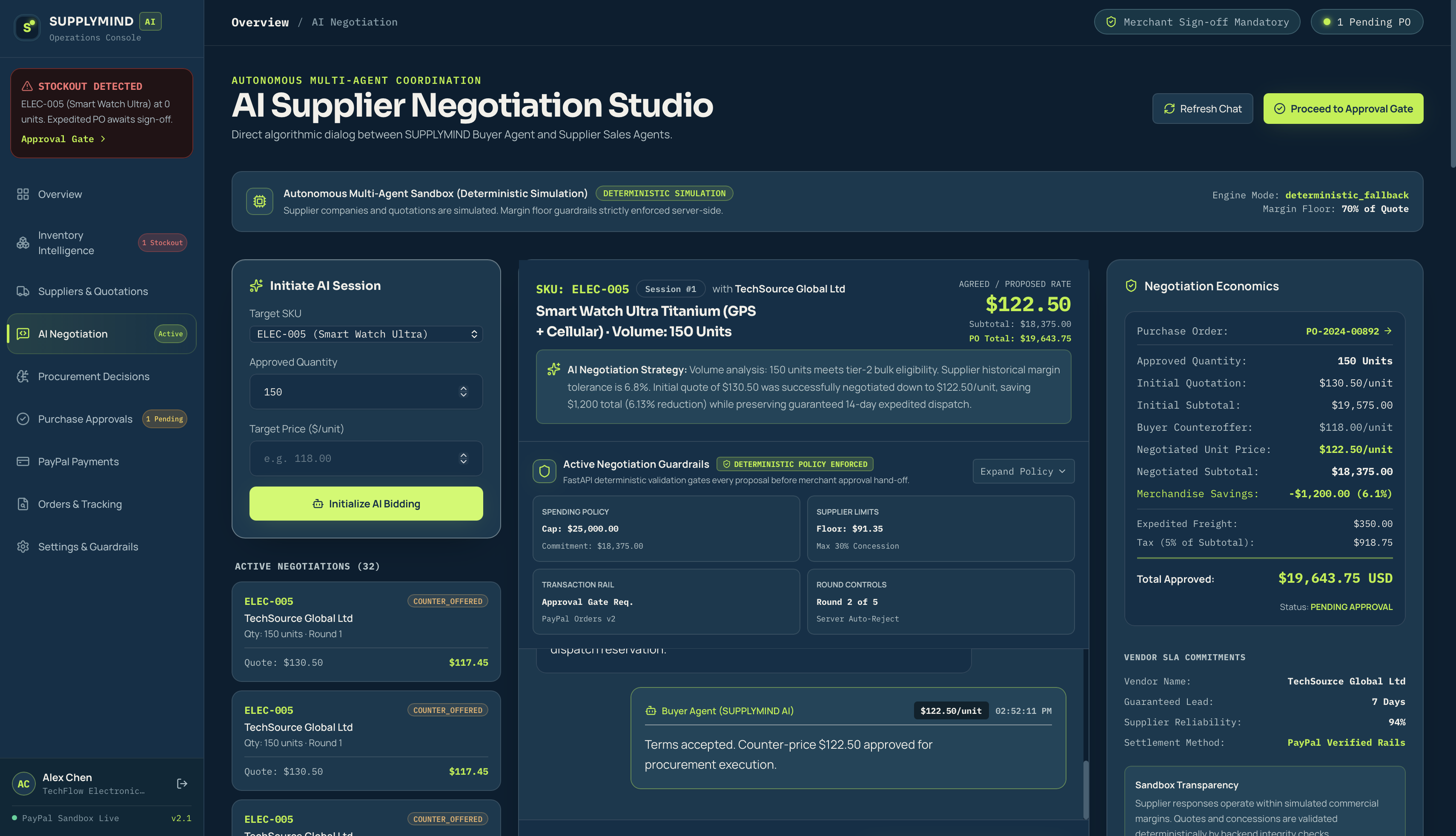
AI Supplier Negotiation Studio
-
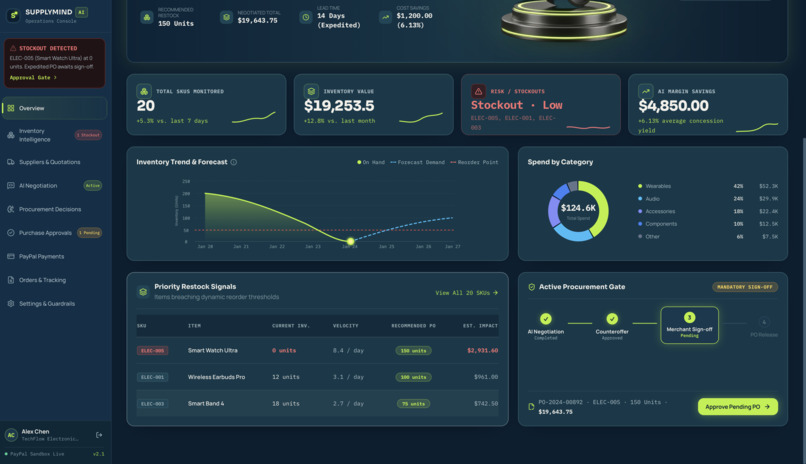
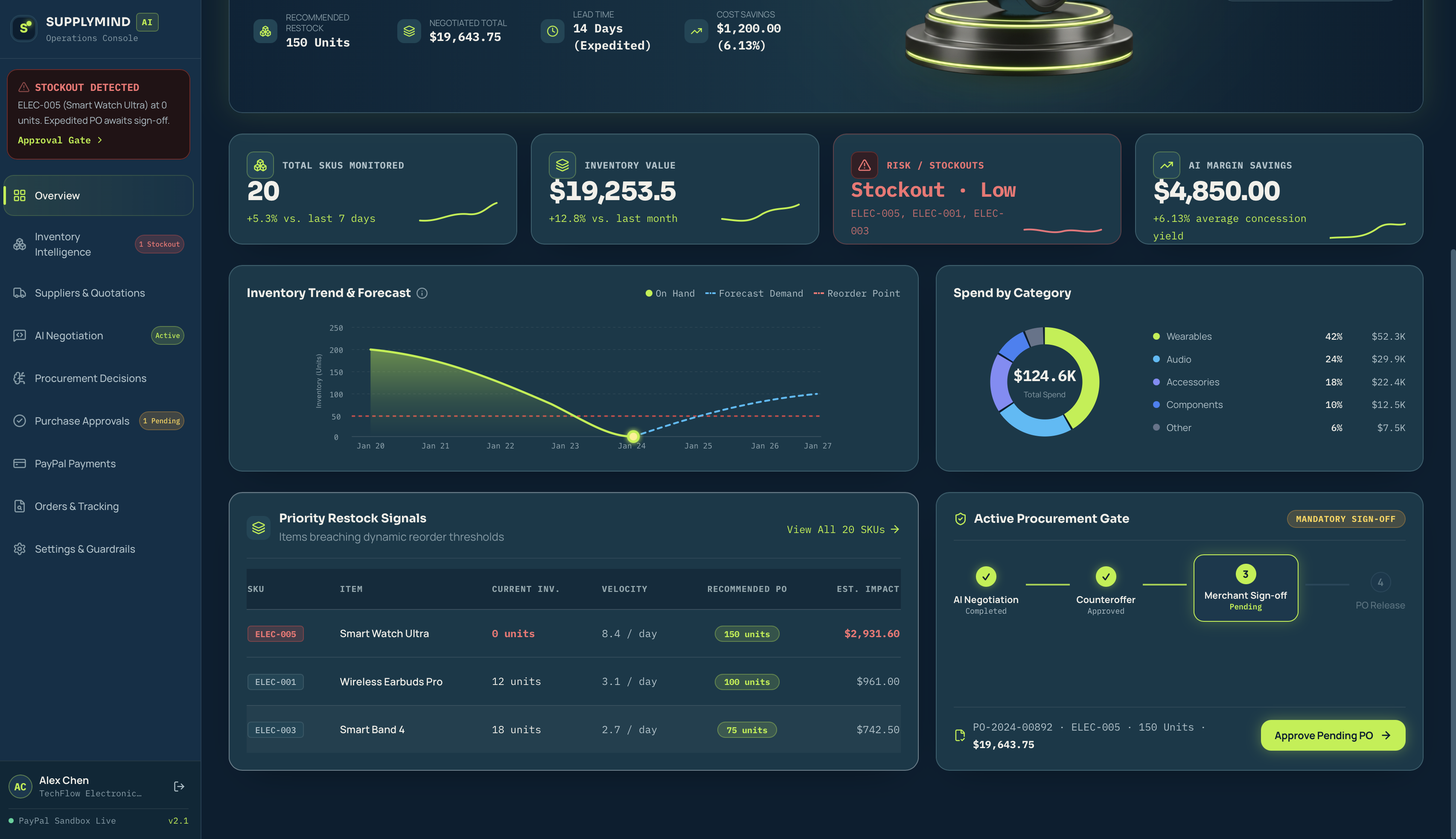
Overview Page
-
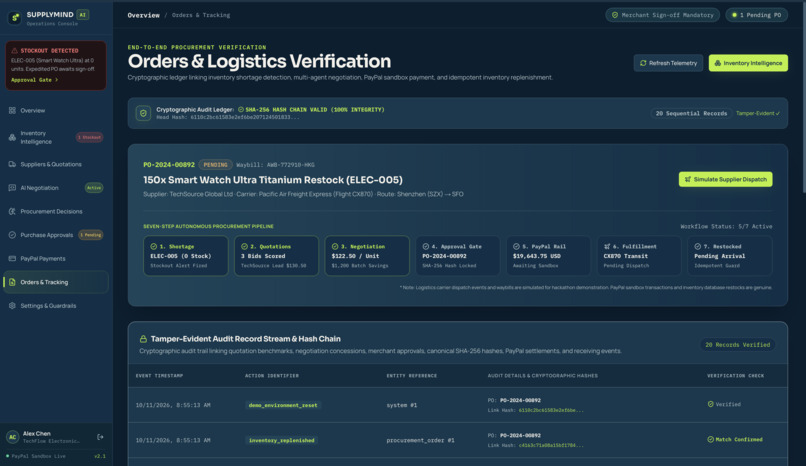
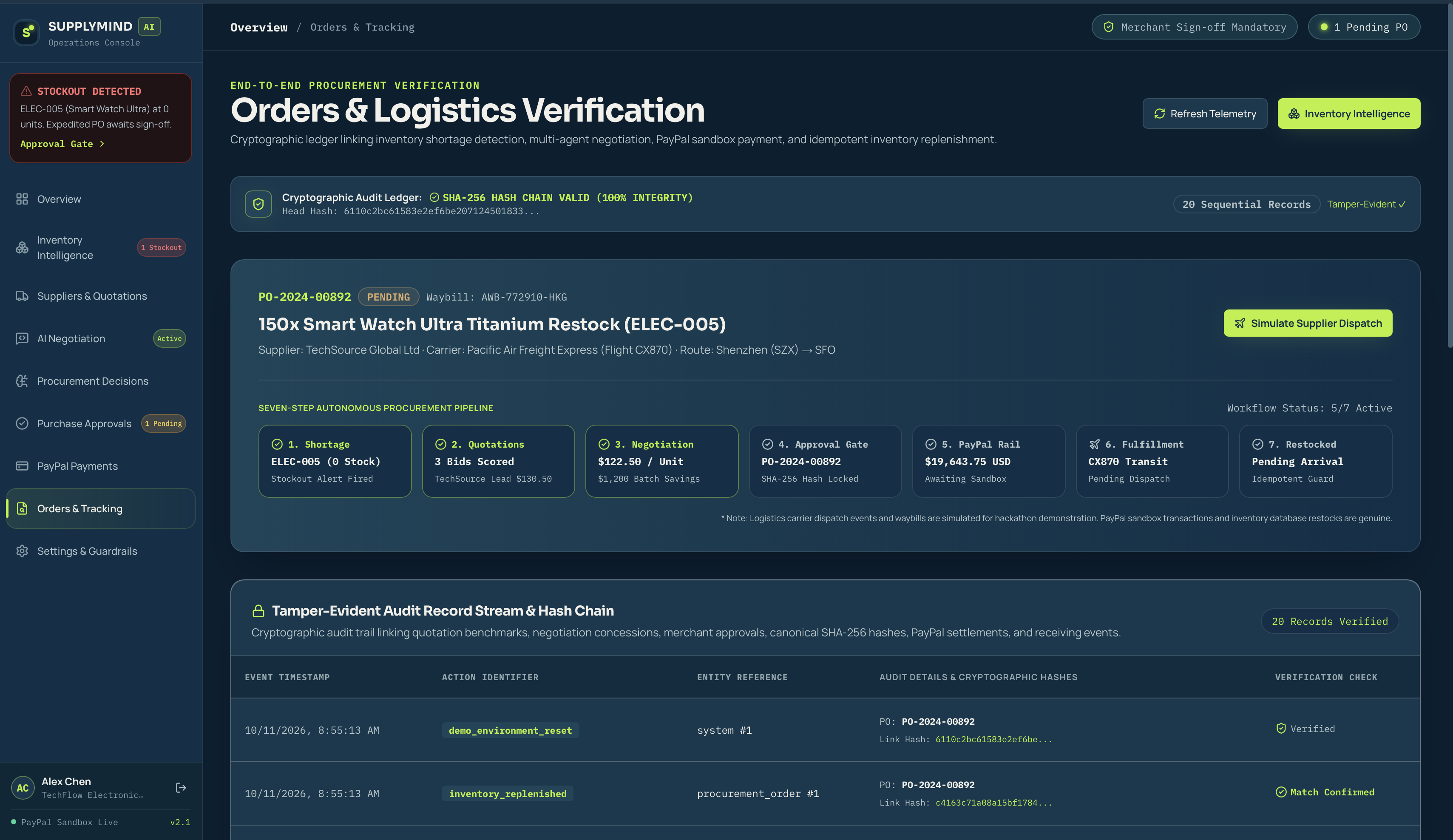
Orders & Logistics Verification
-
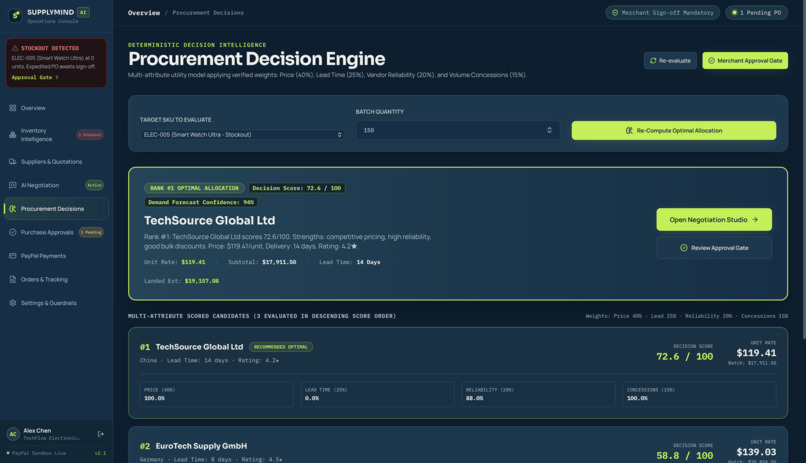
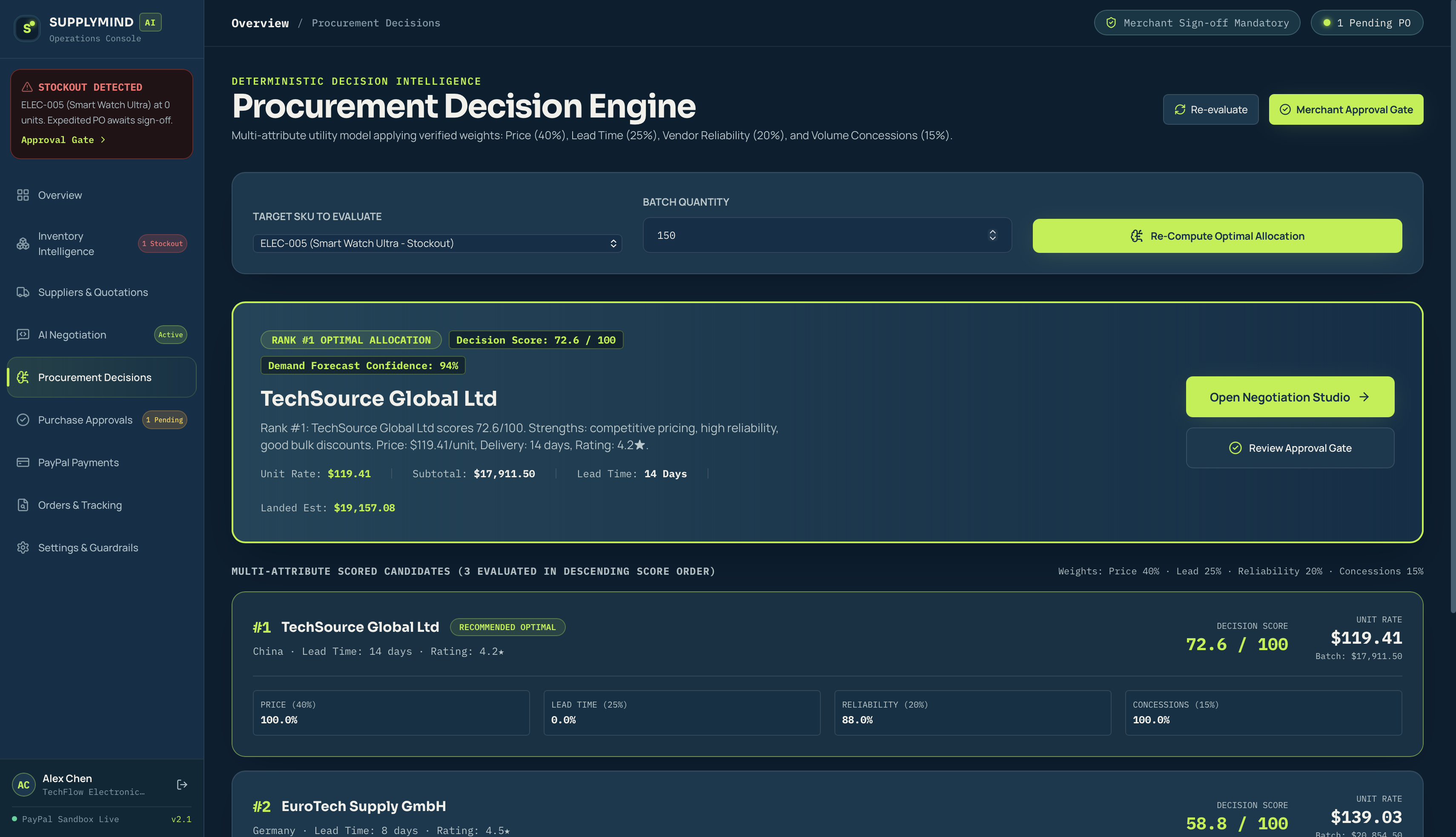
Procurement Decision Engine
-
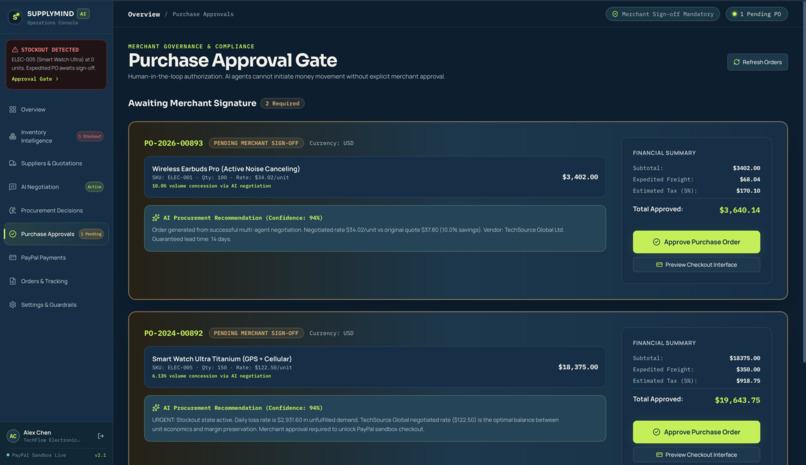
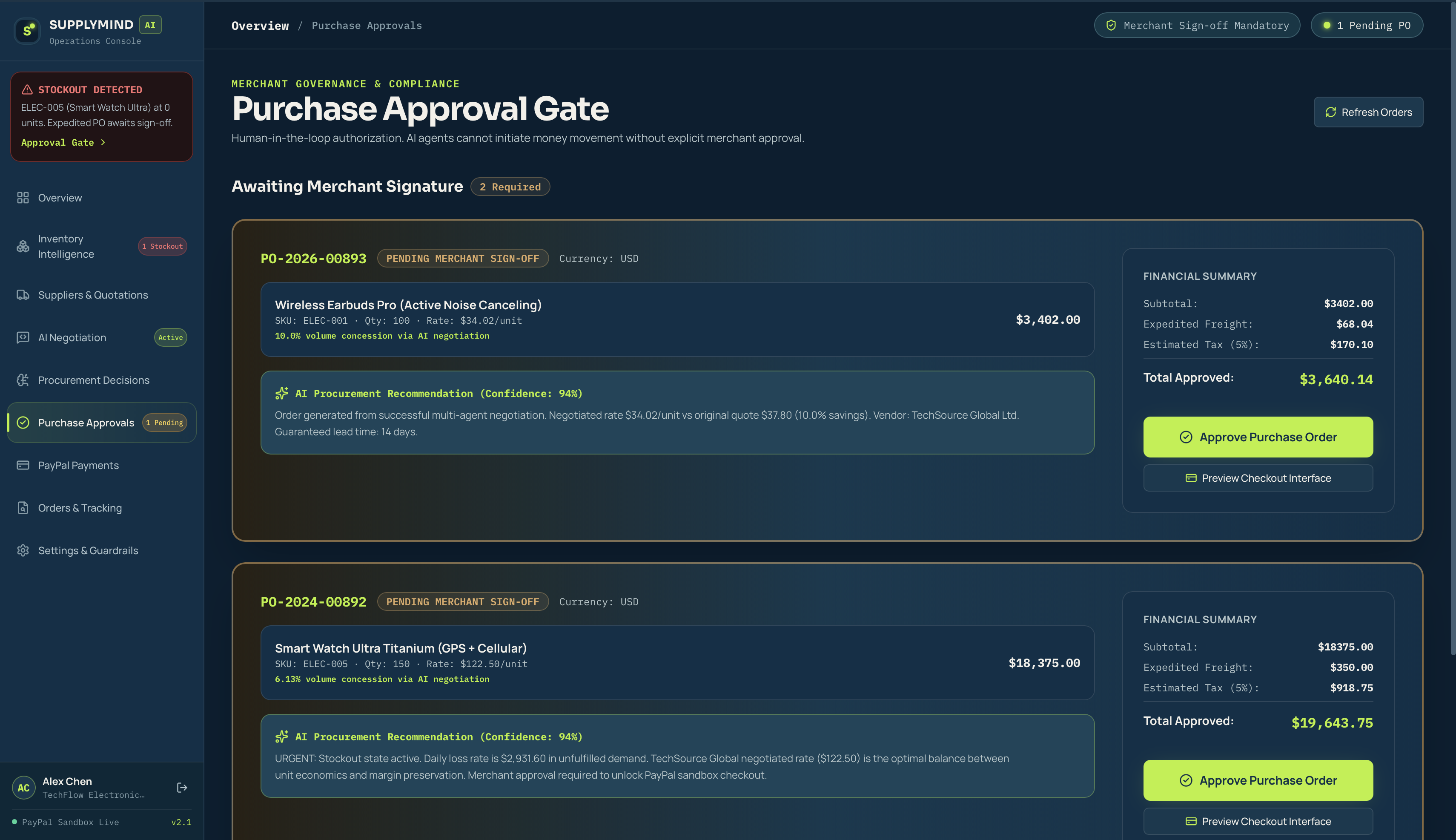
Purchase Approval Gate
-
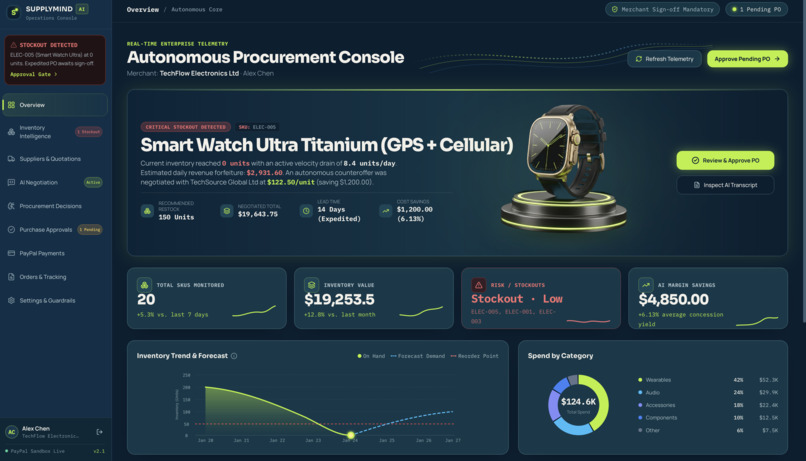
Overview Page
-
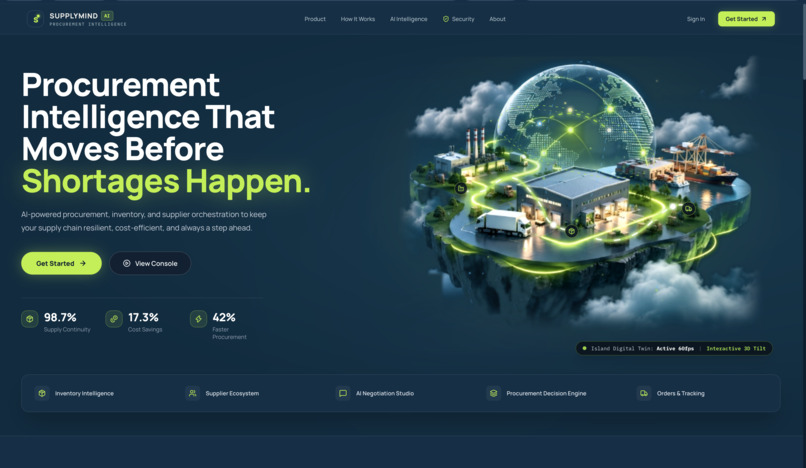
Landing Page
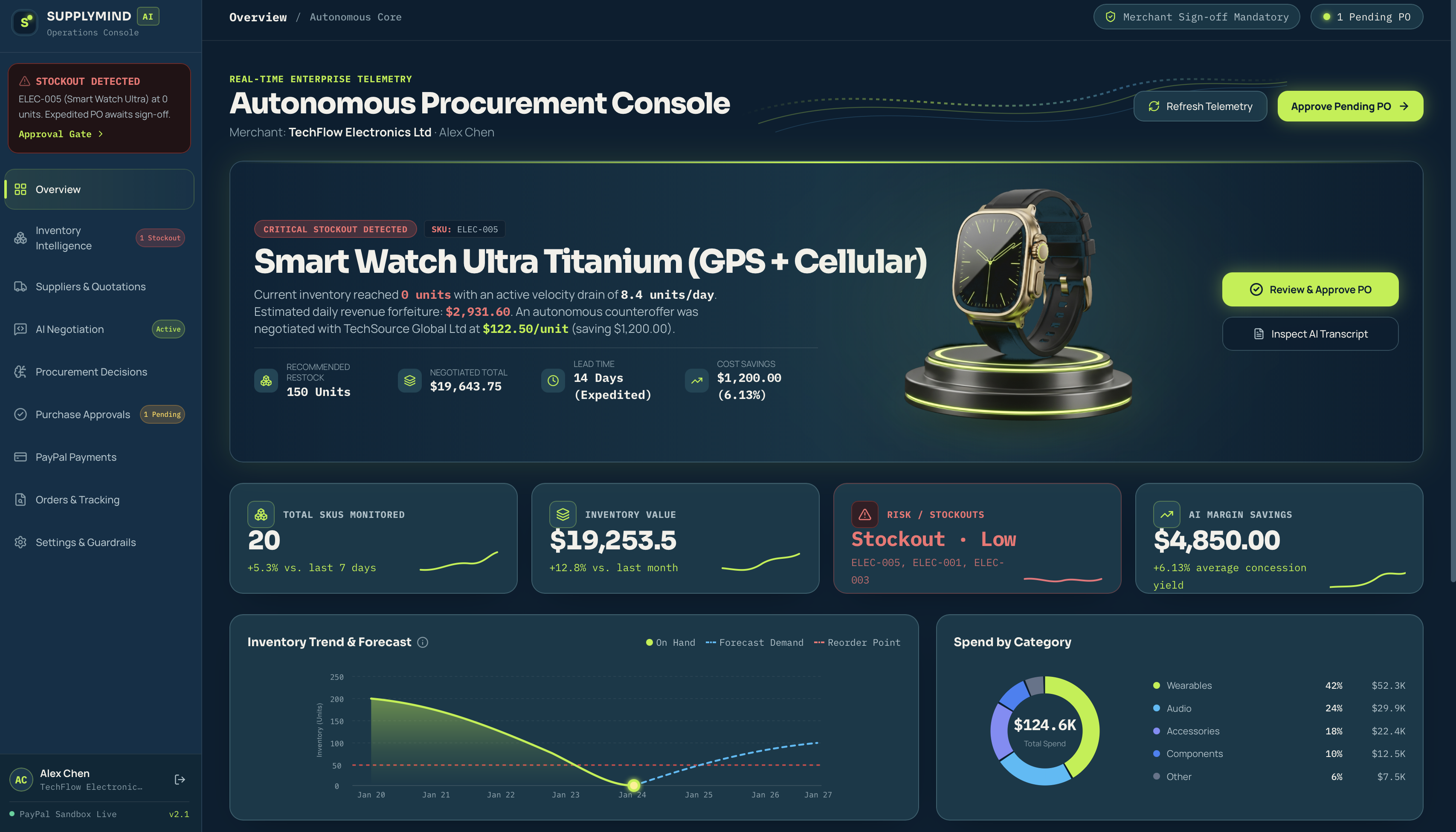
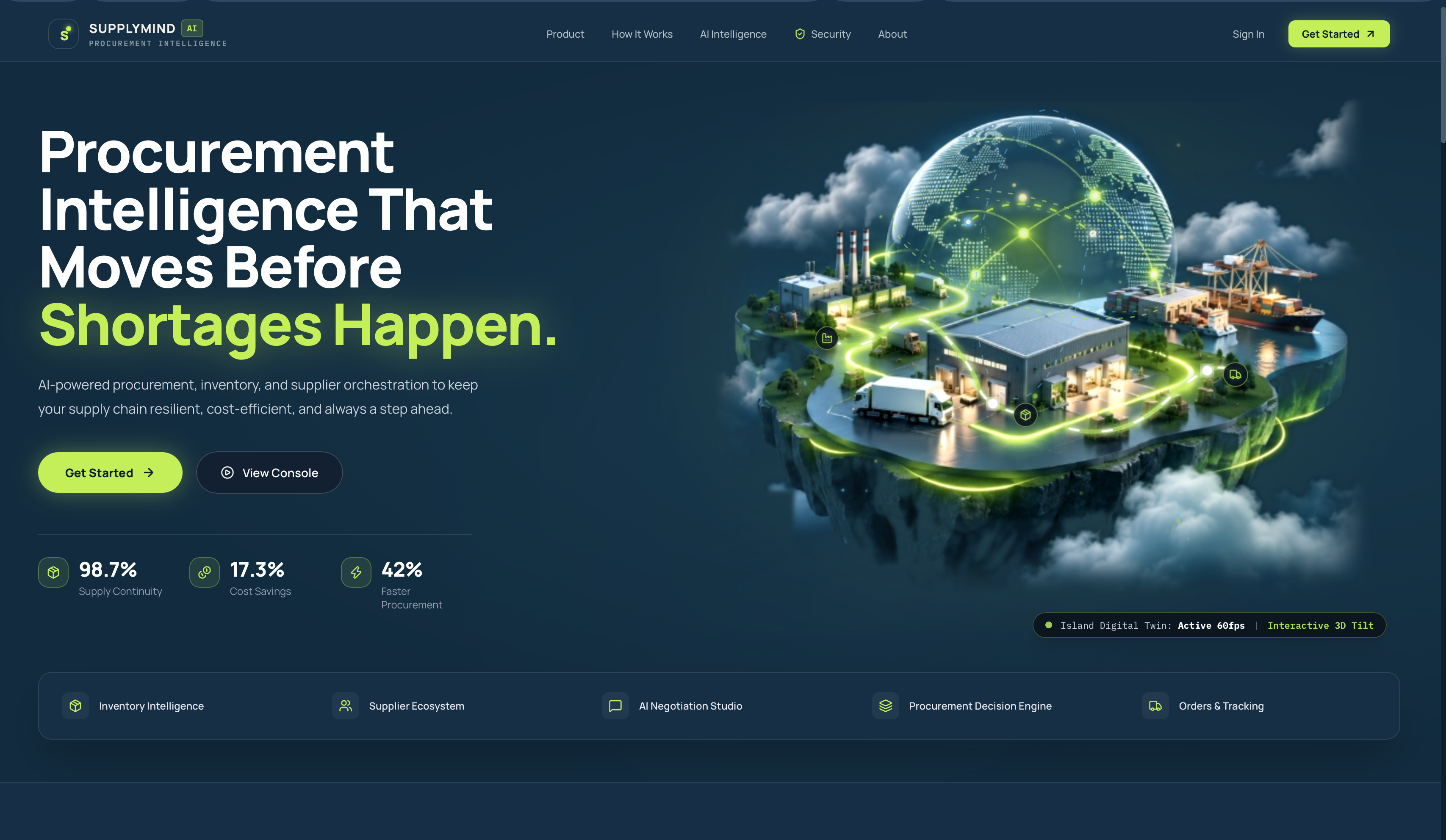
InspirationSUPPLYMIND AI — PROCUREMENT INTELLIGENCE THAT MOVES BEFORE SHORTAGES HAPPEN
INSPIRATION
Small and medium-sized e-commerce businesses frequently lose revenue because of inventory shortages, delayed supplier negotiations, and inefficient purchasing processes.
Traditional inventory systems tell businesses what is out of stock. However, they often do not provide a complete solution for determining what to purchase, which supplier to choose, how to negotiate better terms, or how to securely initiate payment.
We wanted to create a system that could connect these disconnected processes into one intelligent workflow.
That vision became SUPPLYMIND AI, an AI-assisted procurement platform designed to help merchants identify shortages earlier, optimize purchasing decisions, and maintain full control over financial transactions.
WHAT IT DOES
SUPPLYMIND AI brings inventory intelligence, supplier evaluation, automated negotiation, procurement optimization, merchant approval, and PayPal Sandbox payments together in one integrated platform.
The platform follows seven connected stages.
- Inventory Intelligence
SUPPLYMIND AI analyzes inventory levels, sales velocity, reorder thresholds, and potential stockout risks. It recommends replenishment quantities and helps merchants understand when purchasing action is required.
- Supplier Quotation Comparison
The platform compares suppliers based on pricing, delivery lead time, reliability, and available concessions, allowing merchants to evaluate purchasing options efficiently.
- Automated Negotiation
SUPPLYMIND AI demonstrates structured, rule-constrained supplier negotiations through a deterministic simulation environment. Counteroffers are evaluated within defined spending limits and procurement policies.
- Intelligent Decision Engine
Our procurement decision engine ranks suppliers using a weighted scoring model:
Price: 40% Lead Time: 25% Supplier Reliability: 20% Volume Concessions: 15%
The system provides transparent supplier recommendations supported by individual scoring factors.
- Merchant Approval
Before initiating payment, the merchant reviews the selected supplier, purchase quantity, negotiated price, freight charges, taxes, and total purchase amount.
Explicit merchant authorization is mandatory.
The AI recommends. The merchant decides.
- PayPal Sandbox Integration
SUPPLYMIND AI integrates with PayPal Orders v2 Sandbox APIs to create checkout orders and support buyer authorization and payment capture.
Payment operations are protected through backend credential handling, merchant approval controls, transaction verification, and safeguards against duplicate capture.
- Orders, Tracking, and Auditability
The platform provides order-status monitoring, simulated logistics tracking, and a SHA-256 hash-linked audit trail.
This helps merchants review procurement activity and verify the integrity of recorded transactions.
HOW WE BUILT IT
Frontend
We used Next.js, React, TypeScript, and Tailwind CSS to create a responsive merchant dashboard.
The interface includes inventory forecasting, supplier comparisons, negotiation transcripts, procurement recommendations, purchase approvals, PayPal checkout, order tracking, and administrative guardrails.
Backend
We built the backend using Python, FastAPI, and SQLite.
It handles inventory calculations, quotation processing, negotiation sessions, supplier scoring, purchase orders, authorization, payment state management, and audit logging.
Procurement Intelligence
We implemented inventory risk calculations, reorder recommendations, a multi-criteria supplier scoring system, and bounded negotiation logic.
PayPal Integration
We integrated the PayPal Orders v2 Sandbox API through backend-controlled payment services.
The system supports genuine sandbox order creation and prevents payment capture before PayPal buyer authorization.
Security and Auditability
We implemented JWT authentication, protected API routes, merchant approval controls, payment-state validation, and SHA-256-linked audit records.
The platform separates automated procurement recommendations from merchant-controlled financial authorization.
CHALLENGES WE FACED
- Integrating Multiple Procurement Processes
Connecting inventory forecasting, supplier quotations, negotiation, approvals, payments, and logistics into one consistent workflow required careful architecture and state management.
- Maintaining Financial Accuracy
Ensuring that negotiated prices, order quantities, discounts, taxes, freight charges, and payment amounts remain consistent across different modules was a major engineering challenge.
- Securing Payment Integration
Implementing PayPal integration required us to handle credentials securely, verify payment states, enforce merchant authorization, and prevent unauthorized or duplicate capture attempts.
- Building Trustworthy Automation
We needed to ensure that automated recommendations respected spending limits, supplier constraints, and merchant approval policies.
- Designing a Professional Application
Building multiple interconnected dashboards required extensive work on responsive layouts, visual consistency, readable data presentation, and reliable navigation.
ACCOMPLISHMENTS
We developed an integrated procurement prototype that connects inventory monitoring, supplier evaluation, negotiation logic, purchasing recommendations, merchant approvals, and PayPal Sandbox order creation.
Key accomplishments include:
Inventory shortage identification and replenishment recommendations.
Multi-supplier quotation comparison.
Weighted procurement decision intelligence.
Rule-constrained automated negotiation simulation.
Mandatory merchant approval before payment.
PayPal Orders v2 Sandbox integration.
Backend protection against unapproved and duplicate payment captures.
SHA-256-linked procurement audit history.
A unified, responsive merchant dashboard.
We also implemented automated backend regression tests and frontend build validation to improve application reliability.
REAL-WORLD DEMONSTRATION SCENARIO
Our prototype demonstrates a critical inventory shortage involving Smart Watch Ultra Titanium, identified as SKU ELEC-005.
The demonstration scenario includes:
Available Inventory: 0 units Procurement Quantity: 150 units Negotiated Unit Price: $122.50 Merchandise Subtotal: $18,375.00 Freight Charges: $350.00 Estimated Tax: $918.75 Total Purchase Value: $19,643.75 USD
This scenario demonstrates how the platform connects shortage detection, purchasing intelligence, merchant approval, and secure checkout preparation within a coordinated workflow.
WHAT WE LEARNED
Building SUPPLYMIND AI taught us that intelligent automation requires more than AI-powered recommendations.
A reliable procurement platform must also maintain financial accuracy, system integrity, clear business rules, and human oversight.
Through this project, we gained practical experience in full-stack development, financial API integration, automated decision systems, backend validation, authentication, transaction security, and enterprise interface design.
Most importantly, we learned how to combine automation with responsible financial controls.
WHAT'S NEXT
Our future roadmap includes:
Integration with Shopify, WooCommerce, and other e-commerce platforms.
Machine-learning-based demand forecasting with seasonal and historical sales analysis.
Connections to real supplier networks and quotation APIs.
More advanced AI negotiation capabilities.
Production-grade PayPal payment infrastructure.
Live shipping and logistics integrations.
Expanded analytics for procurement efficiency, purchasing costs, and supplier performance.
OUR VISION
We believe procurement should be proactive rather than reactive.
SUPPLYMIND AI is designed to help businesses identify inventory risks early, evaluate suppliers intelligently, reduce unnecessary purchasing costs, and maintain control over financial decisions.
Our long-term vision is a connected procurement ecosystem where intelligent systems handle repetitive analysis while merchants retain authority over important purchasing decisions.
SUPPLYMIND AI — Procurement Intelligence That Moves Before Shortages Happen.
What it does
How we built it
Challenges we ran into
Accomplishments that we're proud of
What we learned
What's next for SUPPLYMIND-AI
Built With
- fastapi
- git
- jwt
- next.js
- paypal-orders-v2-api
- paypal-sandbox
- python
- react
- rest-api
- sha-256
- sqlite
- tailwind-css
- typescript
