-
-
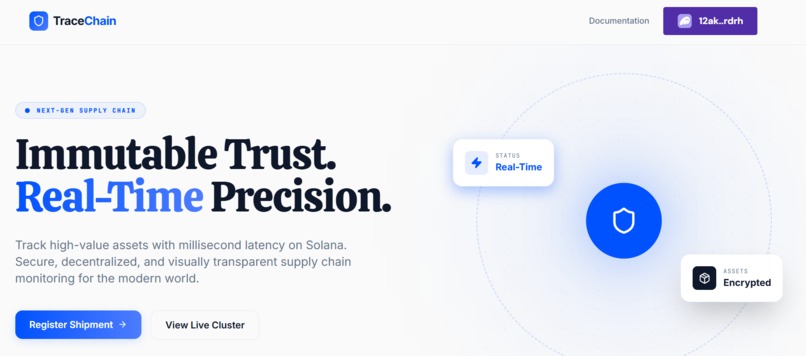
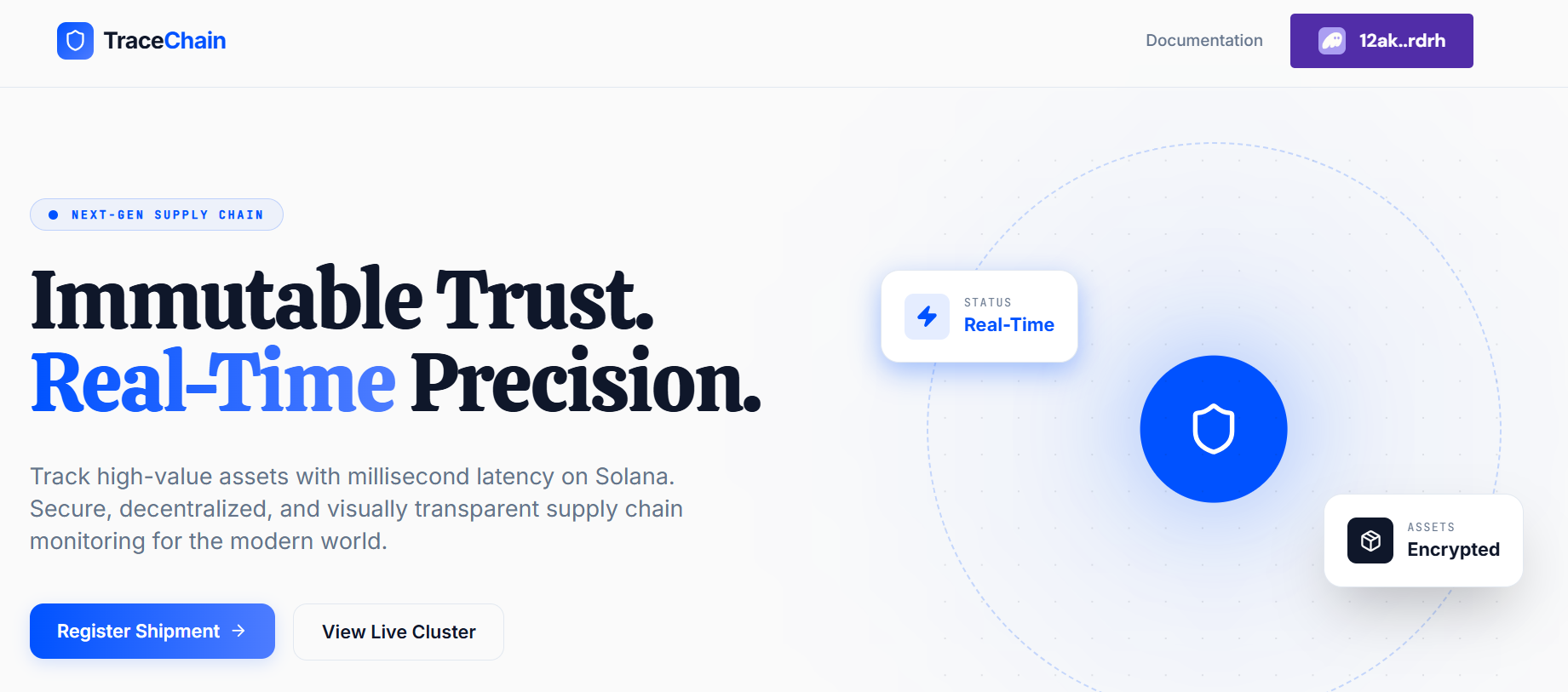
Home Screen
-
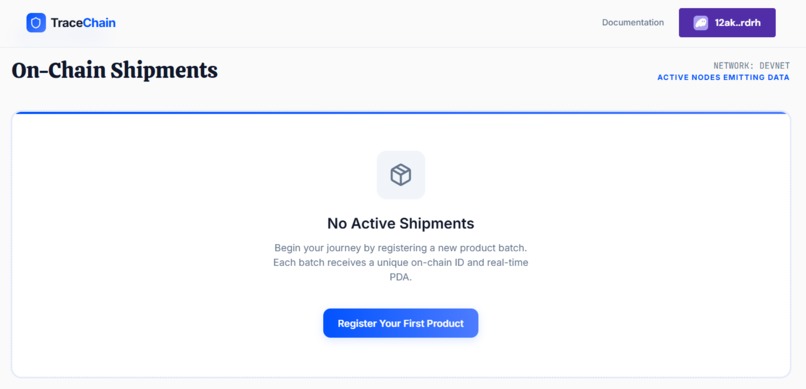
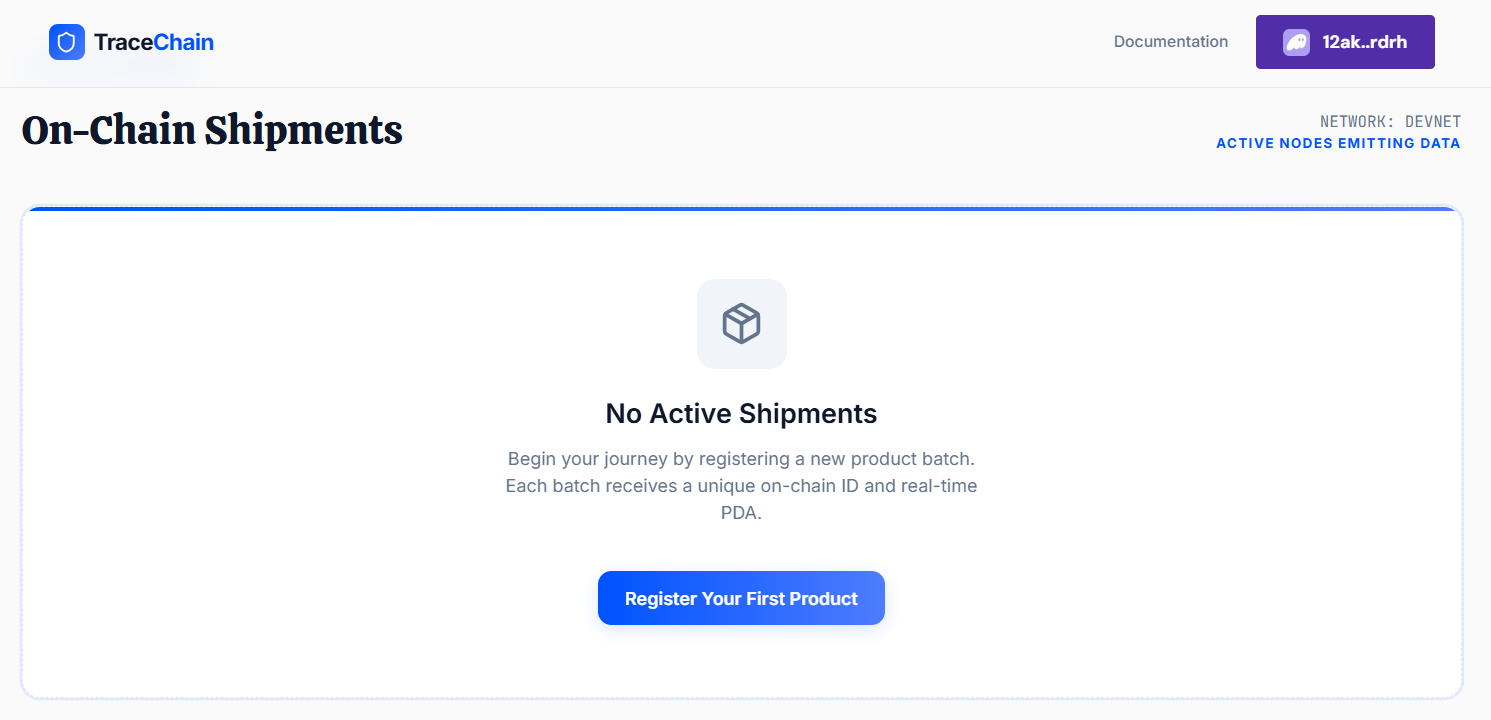
Add shipment
-
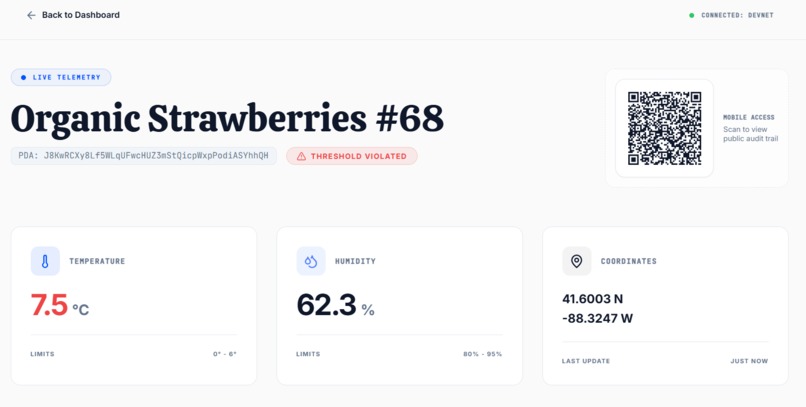
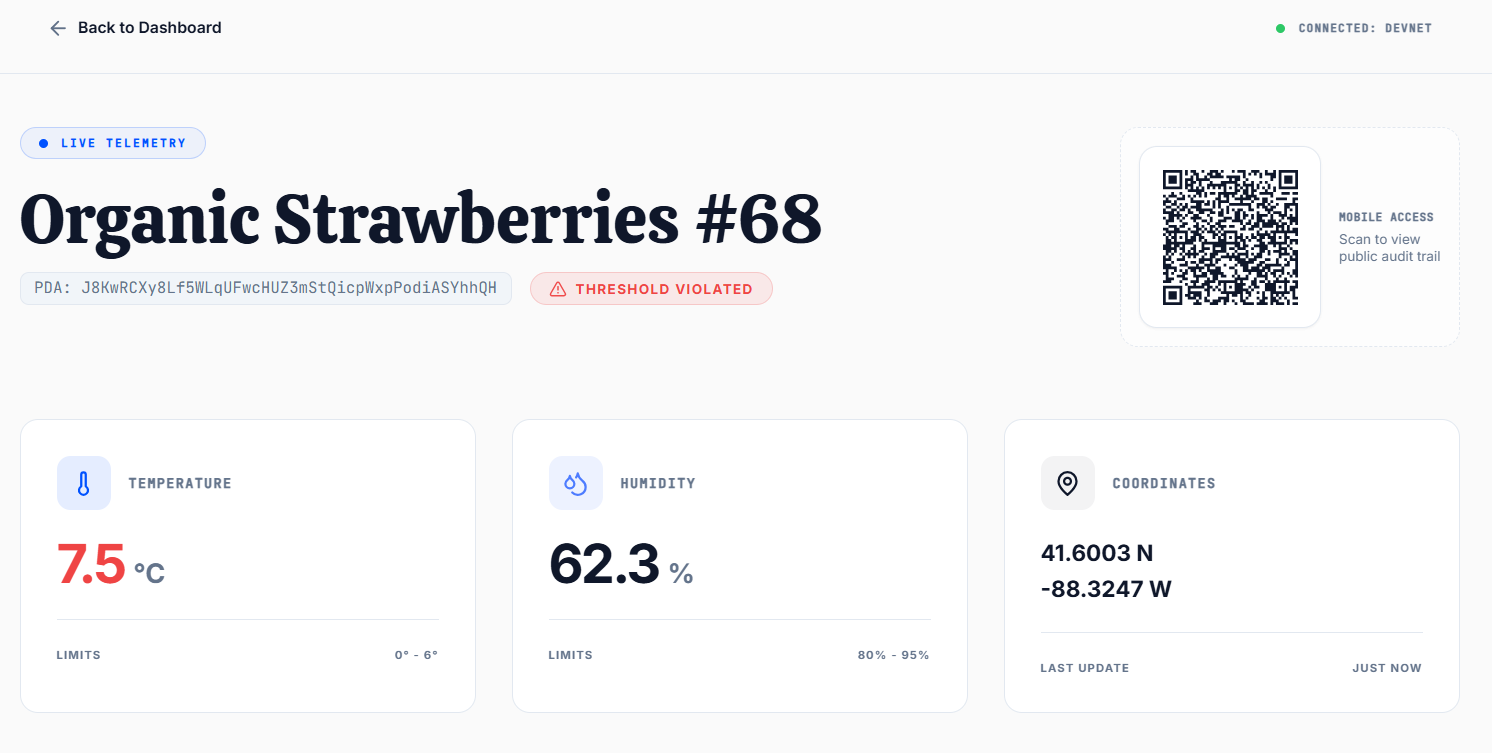
Example of Shipment Tracking Page
-
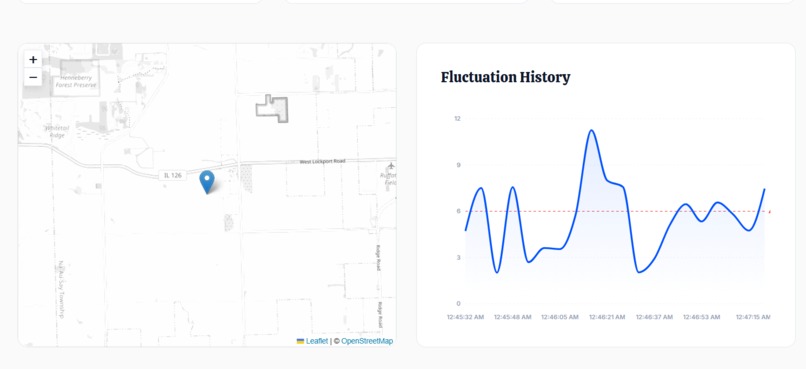
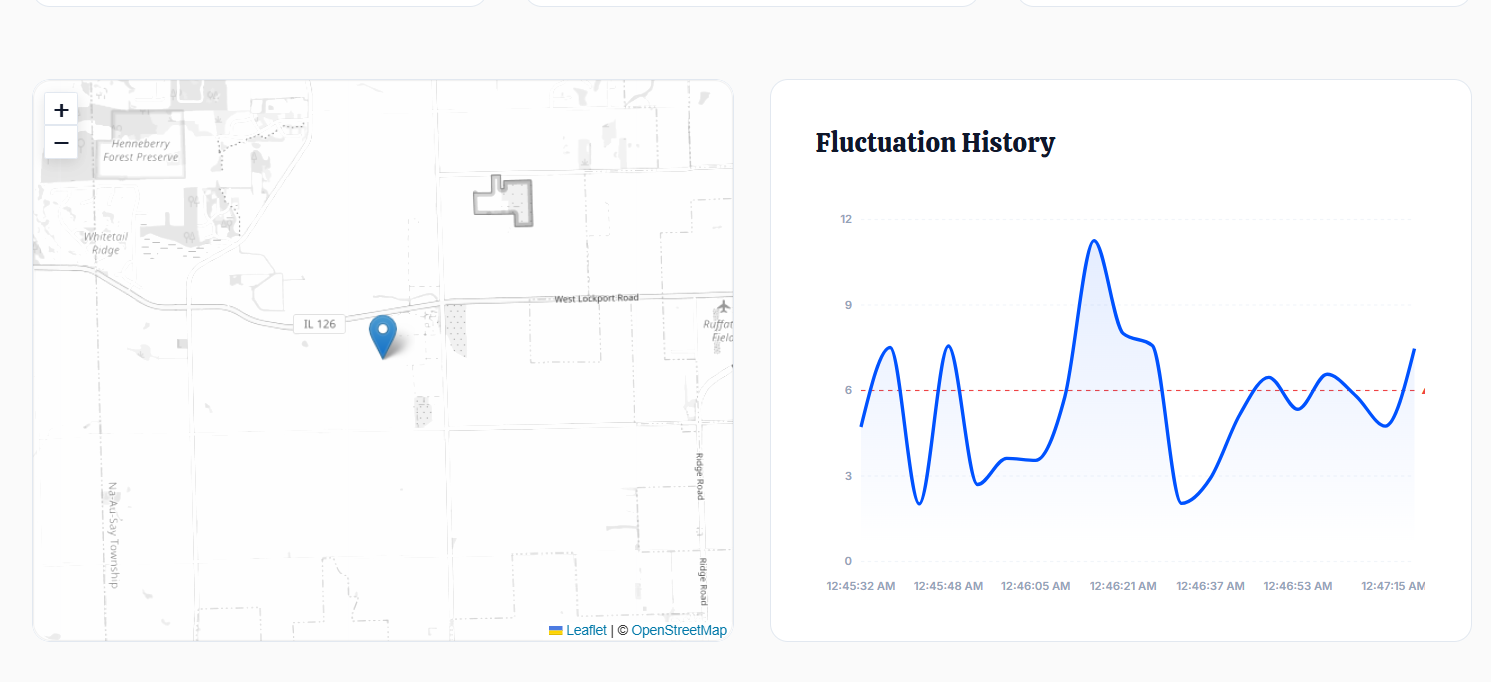
Location + Fluctuation Graph
-
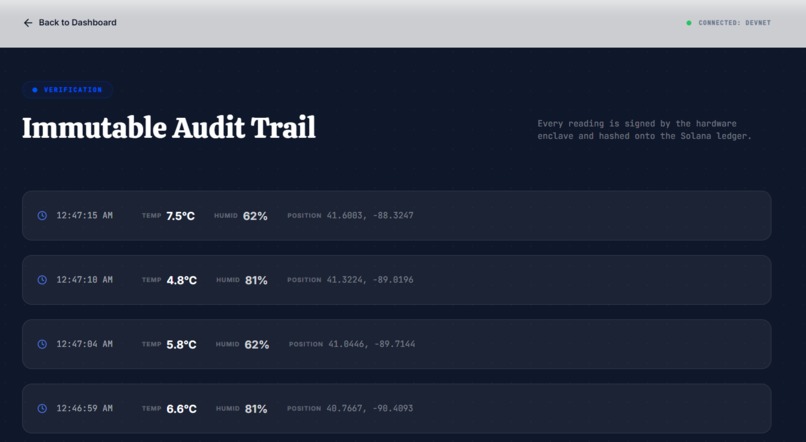
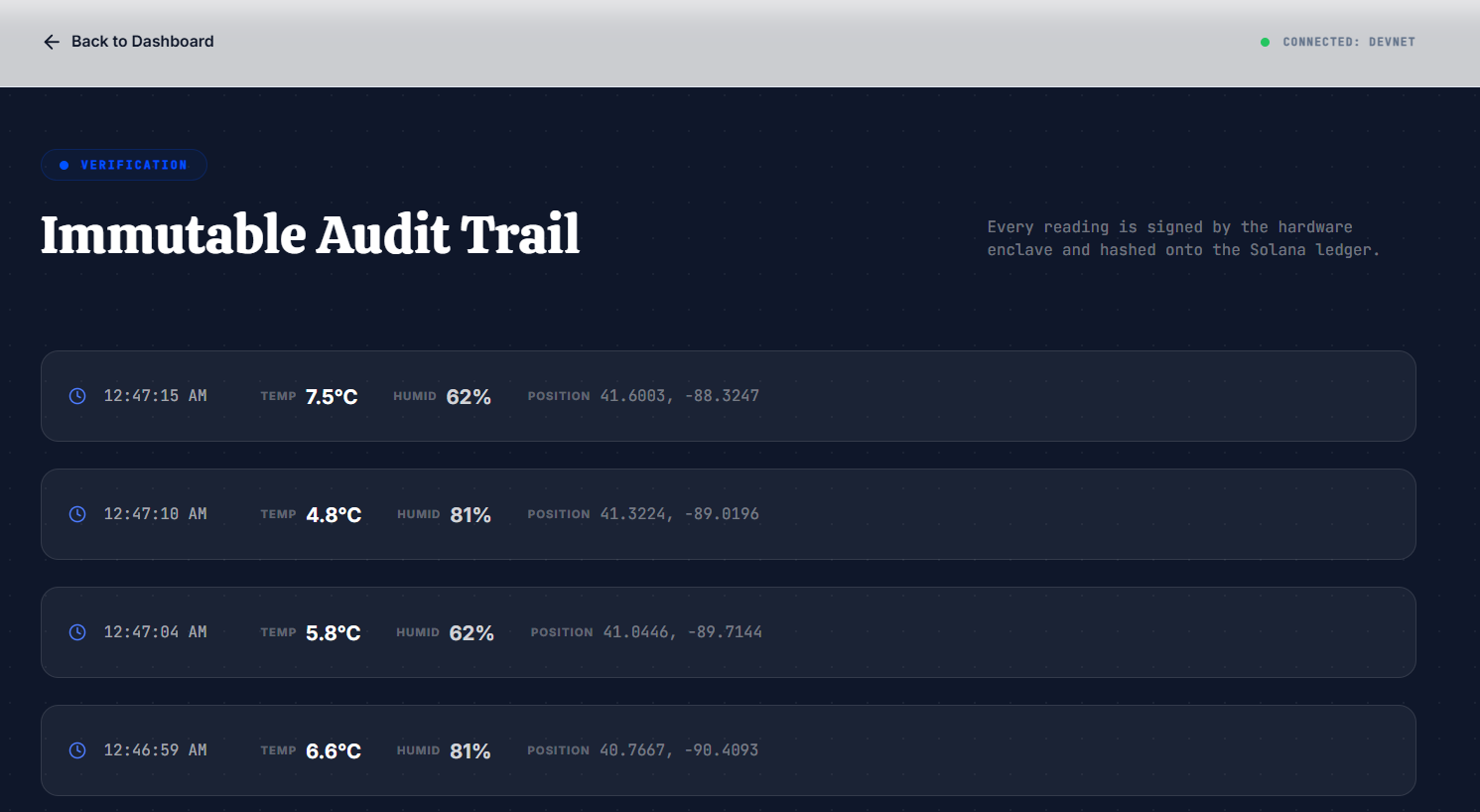
Blockchain Trail
Trace Chain: Solana Supply Chain Tracker
Trace Chain is a real‑time, end‑to‑end visibility platform for physical goods built on Solana. Every item—whether a crate of strawberries, a vaccine vial, a luxury handbag, or an aircraft part—gets a digital twin on‑chain. IoT sensors (simulated) report location, temperature, humidity, and other metrics every few seconds. Smart contracts monitor conditions and trigger alerts when thresholds are broken. Consumers, inspectors, or partners can scan a QR code to verify the entire journey of a product—every reading, every location—all stored immutably on Solana.
Inspiration
We started with a simple question: “Why is so much value lost in opaque supply chains?” Food spoils, vaccines degrade, luxury goods are counterfeited, and no one can prove what happened in transit. We wanted to build something that brings trust, transparency, and automation to physical goods. Solana's low fees and high speed make it possible to track thousands of items in real time, creating an immutable record that anyone can verify—from farmer to consumer, from manufacturer to regulator.
What it does
Registration: Producers register products on‑chain, setting acceptable thresholds (temperature, humidity, shock, etc.).
Real‑time tracking: IoT sensors send signed transactions every few seconds, updating location and sensor readings.
Alerting: Smart contracts automatically flag any reading outside thresholds; the dashboard displays active alerts.
Consumer transparency: Each product has a unique QR code linking to its full immutable history—anyone can verify the journey.
Audit trail: Every sensor reading is stored on Solana, creating a tamper‑proof record for compliance, insurance, and quality assurance.
Beyond Perishable Goods: Versatility
While our first demo focuses on food, Trace Chain adapts to countless industries:
Pharmaceuticals & Vaccines – cold chain monitoring, regulatory compliance.
Luxury Goods & Anti‑Counterfeiting – provenance and authenticity verification.
Aerospace & Manufacturing – component traceability, maintenance history.
Freight & Logistics – real‑time location, proof of delivery.
E‑Commerce & Last‑Mile – package tracking, customer updates.
Legal Documents – timestamping, notarization.
Construction Materials – concrete curing, steel sourcing.
Laboratory Samples – chain of custody, temperature logs.
Fair Trade & Ethical Sourcing – farmer payments, organic certification.
EV Batteries – lithium origin, recycling status.
Art & Collectibles – physical + NFT pairing, exhibition history.
Cold Chain (General) – chemicals, flowers, wine, film.
Medical Implants – sterilization, patient assignment.
Agricultural Commodities – grain conditions, harvest dates.
The core platform remains the same—only the sensor types, thresholds, and UI details change. We've built a general‑purpose real‑world asset tracker adaptable to virtually any industry.
How we built it
Solana & Anchor: Rust smart contract defining Product and Reading accounts, with instructions to register, report readings, and update thresholds. Deployed on devnet (FGBGprqhK9ECGEqq1ZZGyVLx4AxdisK6PVeh6Nq7ZCbL).
IoT Simulator: Python script generating realistic GPS routes and sensor data, sending signed transactions every 5 seconds.
Frontend: Next.js dashboard with Tailwind CSS, live maps (Leaflet), historical charts (Recharts), and QR codes (qrcode.react). Polls blockchain every 5 seconds.
Data Architecture: Stores last 20 readings on‑chain (due to 10KB account limit); older data can be archived off‑chain with on‑chain hashes for verifiability.
Challenges we ran into
Program ID mismatch: Resolved by syncing declare_id!, Anchor.toml, and the deployed keypair.
Account size limits: Solved by storing only the last 20 readings and planning off‑chain archival.
Real‑time updates: Polling works but we added a timestamp to manage expectations; future WebSocket integration planned.
Transaction simulation: Managed keypairs and error handling to handle hundreds of transactions smoothly.
Threshold evaluation: Simple on‑chain comparisons keep gas costs low.
Accomplishments that we're proud of
Fully functional Solana program handling high‑frequency sensor data at sub‑penny costs.
Live dashboard with interactive maps, charts, and QR codes.
End‑to‑end farm‑to‑table demo with automatic alerts.
Consumer verification system—anyone can scan and verify product history.
Complete working prototype built in 48 hours.
What I personally learned
Solana development with Anchor (accounts, events, PDAs).
Real‑time data ingestion at blockchain scale.
Hybrid on‑chain/off‑chain system design.
Importance of thorough testing and debugging.
What's next for Trace Chain
NFT passports: Compressed NFTs with full product history.
Automatic insurance: Parametric payouts via smart contracts.
Mobile app: QR scanning and push notifications.
Real IoT hardware: ESP32/Raspberry Pi integration.
Multi‑chain anchoring: Wormhole for cross‑chain proofs.
Marketplace integration: Premium pricing for verified provenance.
Built With
- anchor
- cargo
- claude
- css
- gemini
- javascript
- next.js
- node.js
- python
- rust
- solana
- typescript


Log in or sign up for Devpost to join the conversation.