-
-
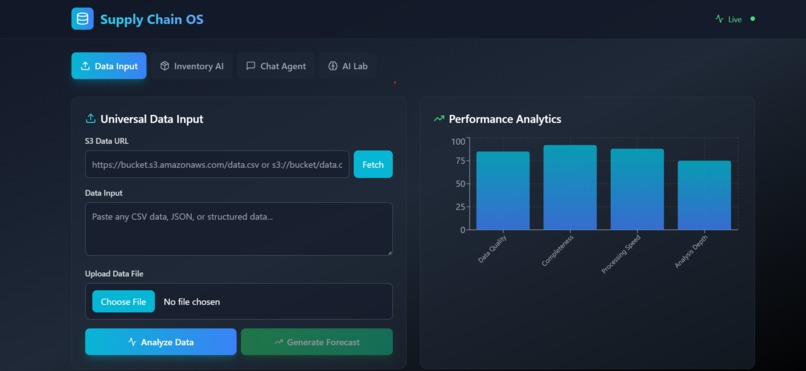
homepage
-
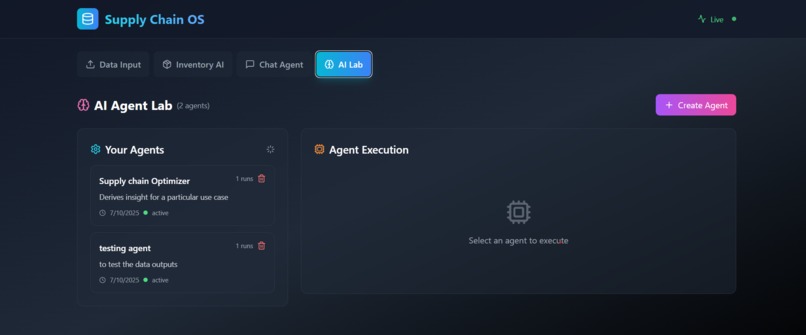
agents page
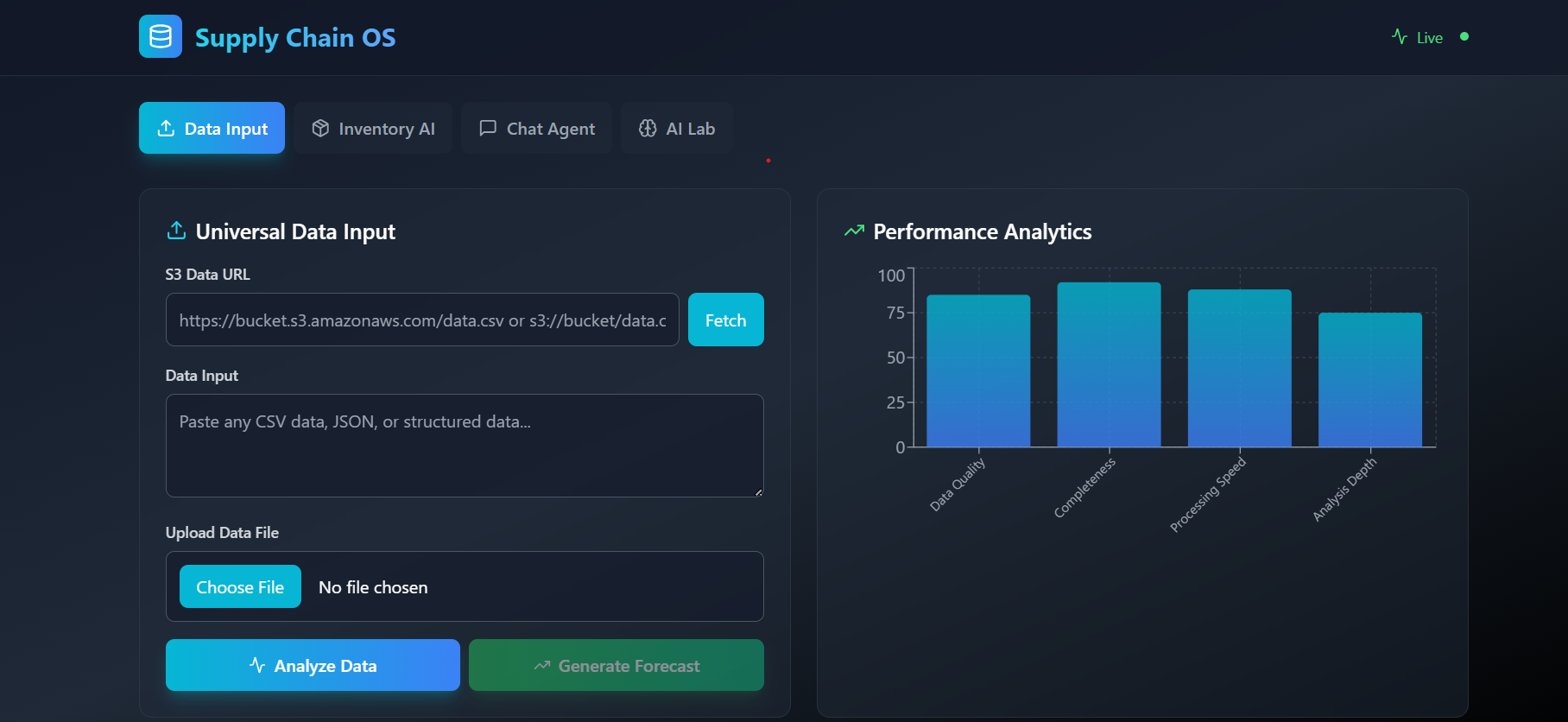
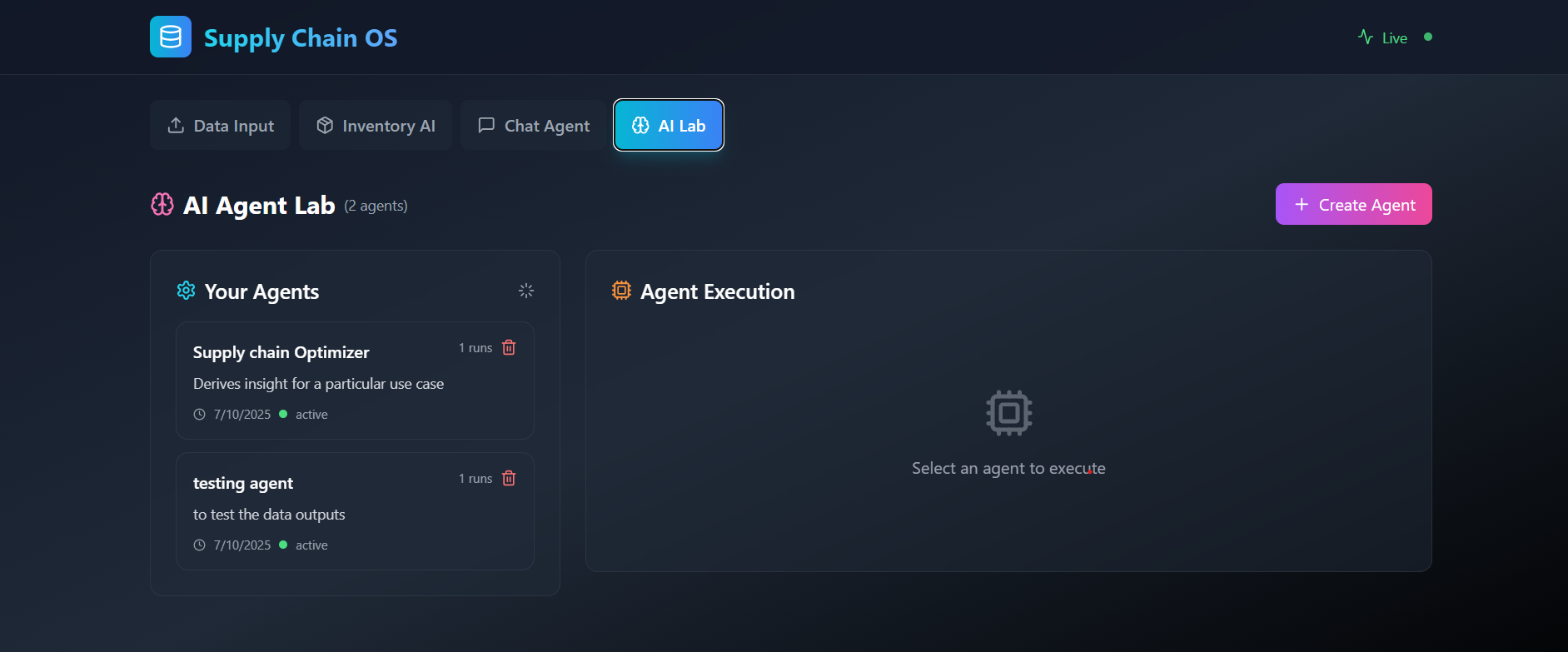
Supply Chain OS
Inspiration
This project was inspired by my earlier work on an autonomous “Follow Me” robot and Image relighting agent, where I explored concepts of spatial awareness, agentic behavior, and real-time decision-making. I realized that similar agentic principles could be applied to supply chain systems, which also require dynamic responses, predictive modeling, and autonomous coordination.
This insight led me to build Supply Chain OS — an extensible platform where agents powered by LLMs and time series forecasting can autonomously assist in logistics, procurement, and planning. In the future, such systems could integrate directly with robotic fleets in warehousing or delivery operations.
Tech Stack
- Backend: Built with
FastAPIfor asynchronous performance and modular endpoints. - Forecasting: Integrated models like
Prophet,NeuralProphet, and LLM-assisted logic for hybrid time series forecasting. - Agents: Created scalable AI agents with SQL persistence for reuse and coordination using
agents.py. - Security: Used
Pydanticfor input validation and IAM for role-based access control. - Deployment: Deployed on Amazon EC2 Instance
Learning:
- Mastered many aspects of full-stack development, including async API design, containerization, and cloud integration.
- Gained a deeper understanding of ethical AI practices, especially regarding:
- Bias mitigation
- Data privacy
- Guardrails for agent behavior
- Improved security awareness, implementing practices like schema validation, encryption, and fine-grained access controls.
Challenges
- Cloud Credit Limitations: Faced constraints when testing large-scale AI models and inference workloads.
- Scaling: Designing a system that can scale both horizontally and vertically while remaining cost-effective and modular.
- Model Safety: Managing hallucinations and drift in generative models while keeping user trust high.


Log in or sign up for Devpost to join the conversation.