-
-
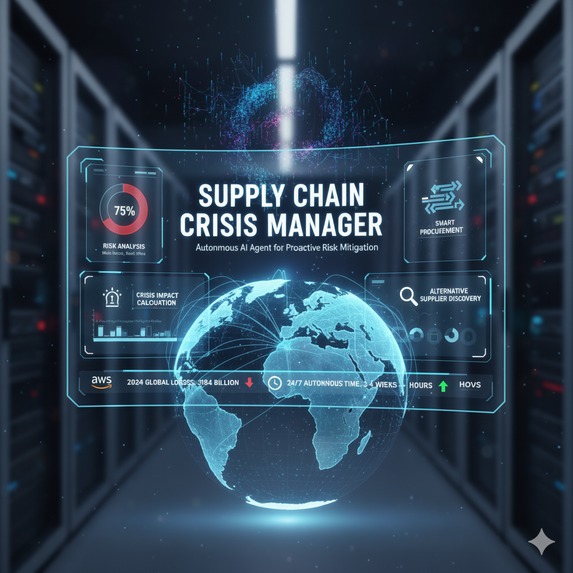
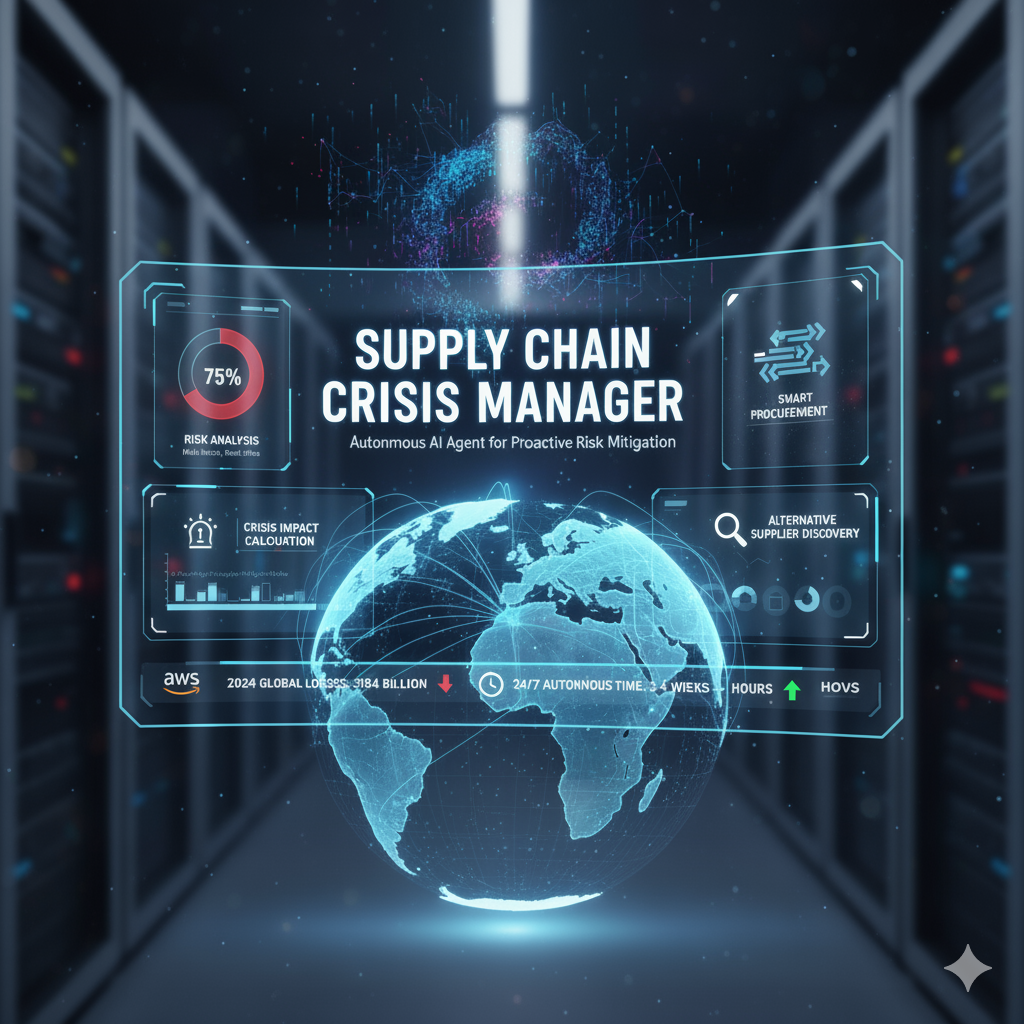
Supply Chain Crisis Manager
-
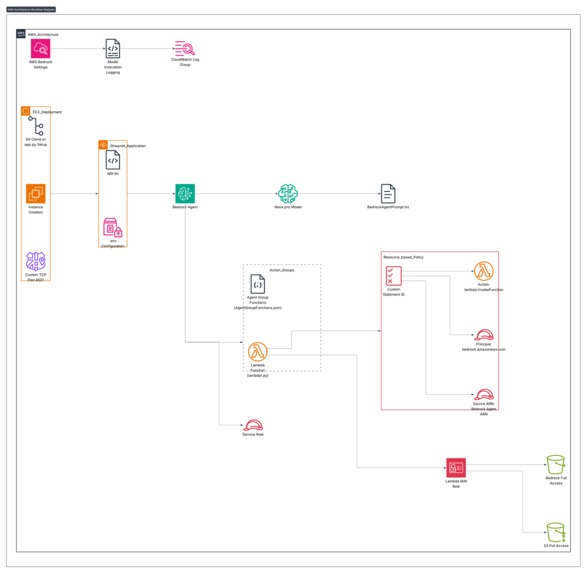
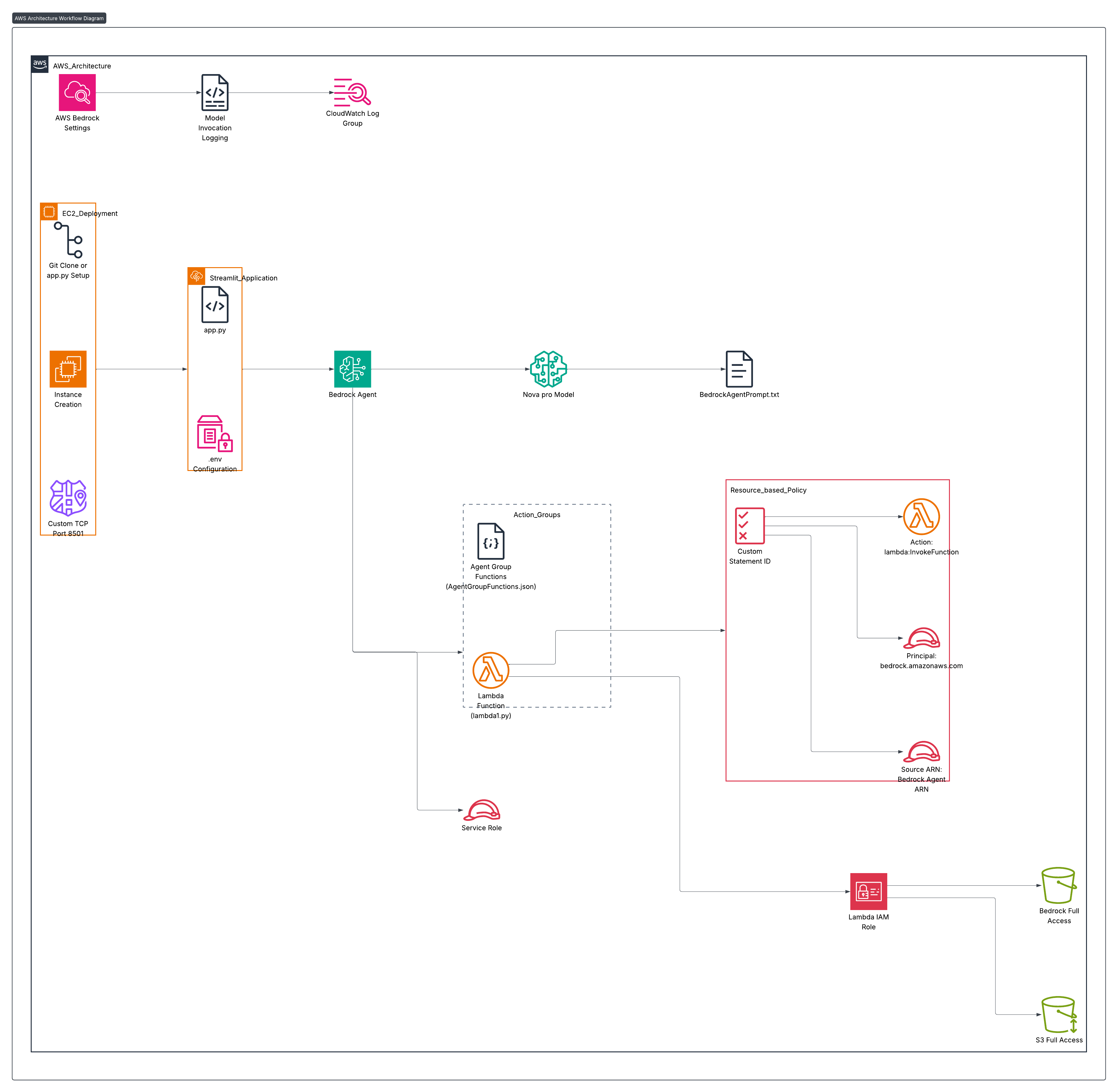
Architecture Diagram
-
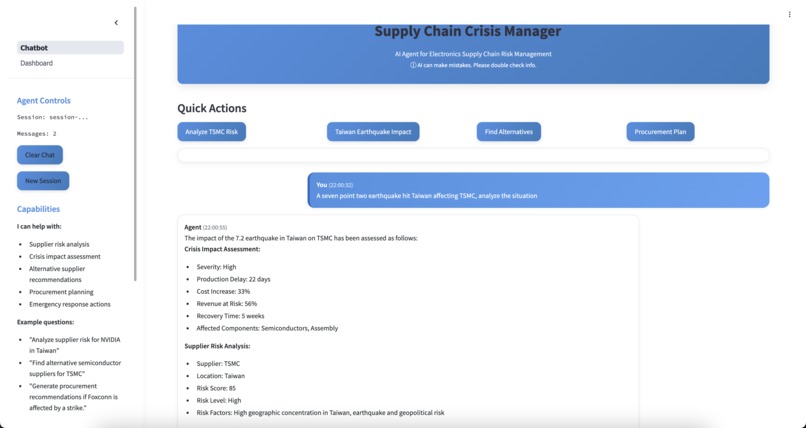
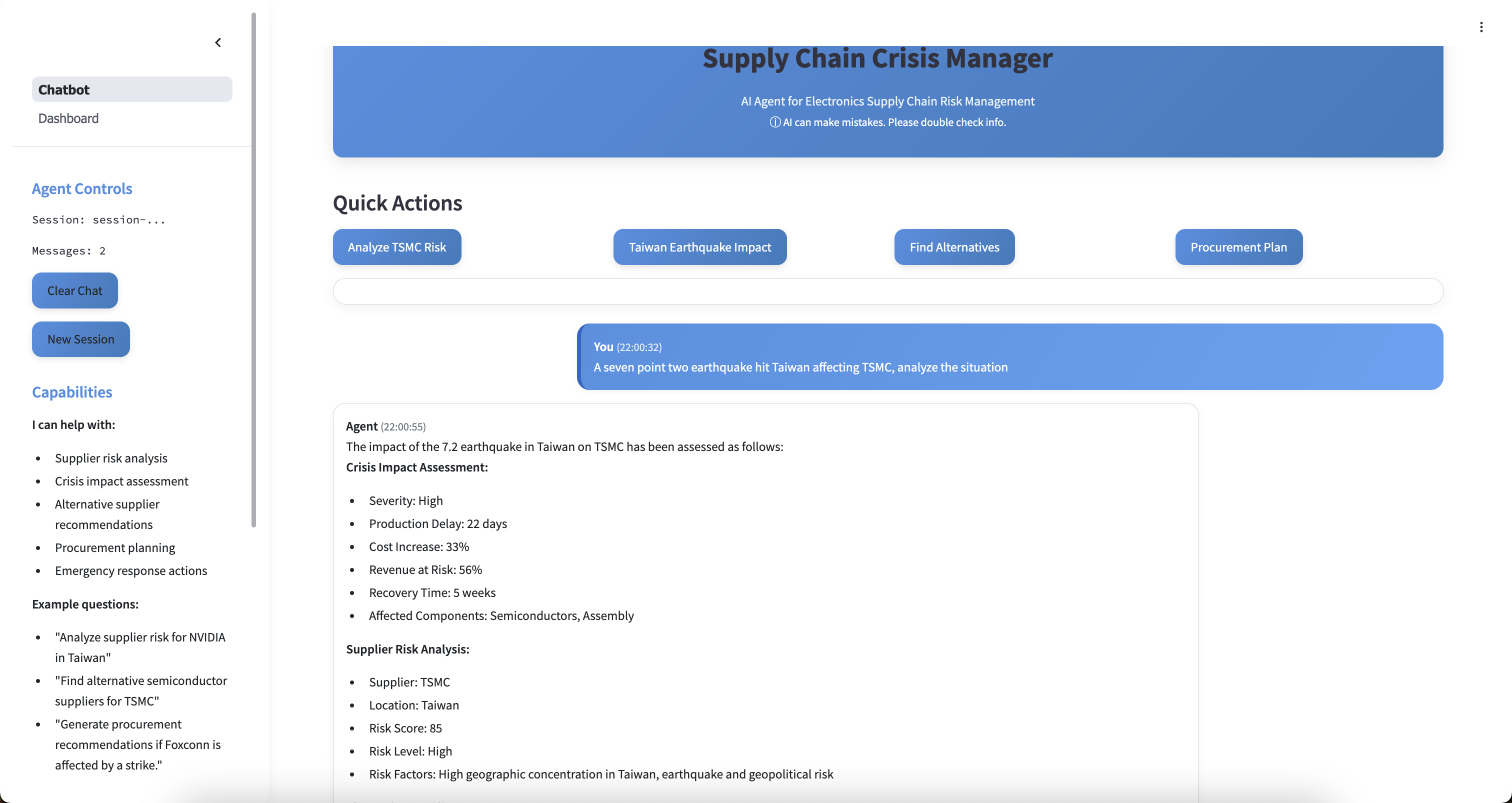
Demo 1
-
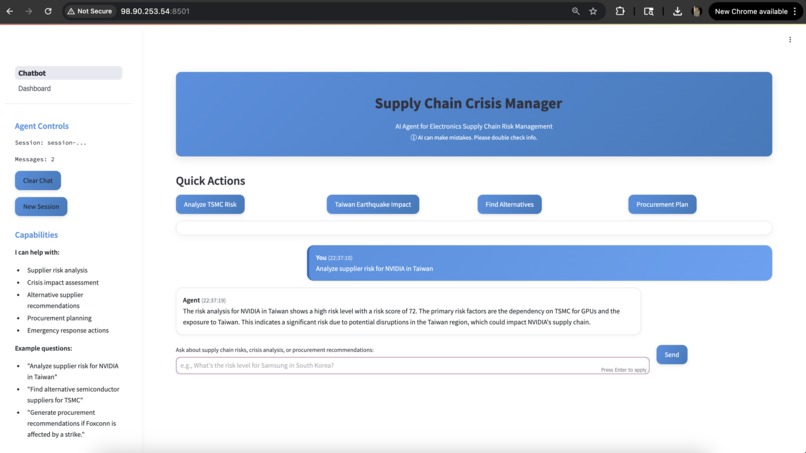
Demo 2
-
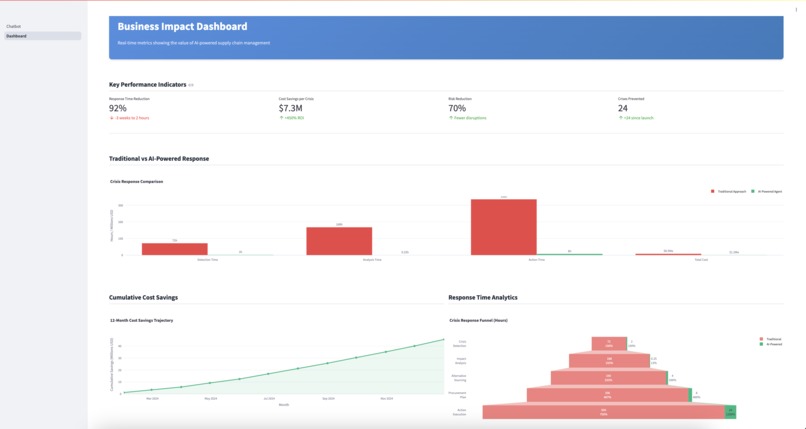
Dashboard
💡 Inspiration
March 2024. A 7.2 magnitude earthquake hit Taiwan, crippling TSMC's semiconductor facilities. Global electronics supply chains ground to a halt. What shocked me? Companies took three weeks to respond. Three weeks of cascading failures and billions in losses.
In an age where AI can diagnose diseases in seconds, why were companies still managing supply chain crises like it was 1990?
When I saw the AWS AI Agent Hackathon, I knew this was my chance to build something that could respond in minutes, not weeks. Supply chain disruptions cost $184 billion annually, this wasn't just a hackathon project, it was solving a real crisis.
🎯 What it does
Supply Chain Crisis Manager is an autonomous AI agent that transforms reactive crisis management into proactive risk mitigation.
Key Features:
- Detects instantly - Identifies crises in minutes (vs 3 days traditional)
- Analyzes impact - Calculates business impact across suppliers in minutes
- Finds alternatives - Identifies backup suppliers with capacity and cost analysis
- Generates action plans - Creates prioritized procurement recommendations with timelines
Key Results:
- Faster response time (weeks to minutes)
- Millions of dollars savings per crisis
This isn't a chatbot, it's an autonomous system that thinks, decides, and acts without human intervention.
⚙️ How I built it
Tech Stack:
- Amazon Bedrock AgentCore - Agent orchestration with action group primitives
- Amazon Nova Model - LLM reasoning engine
- AWS Lambda (Python 3.12) - 4 serverless functions for risk analysis, alternatives, impact calculation, recommendations
- Amazon S3 - Data lake with suppliers, alternatives database, location risks
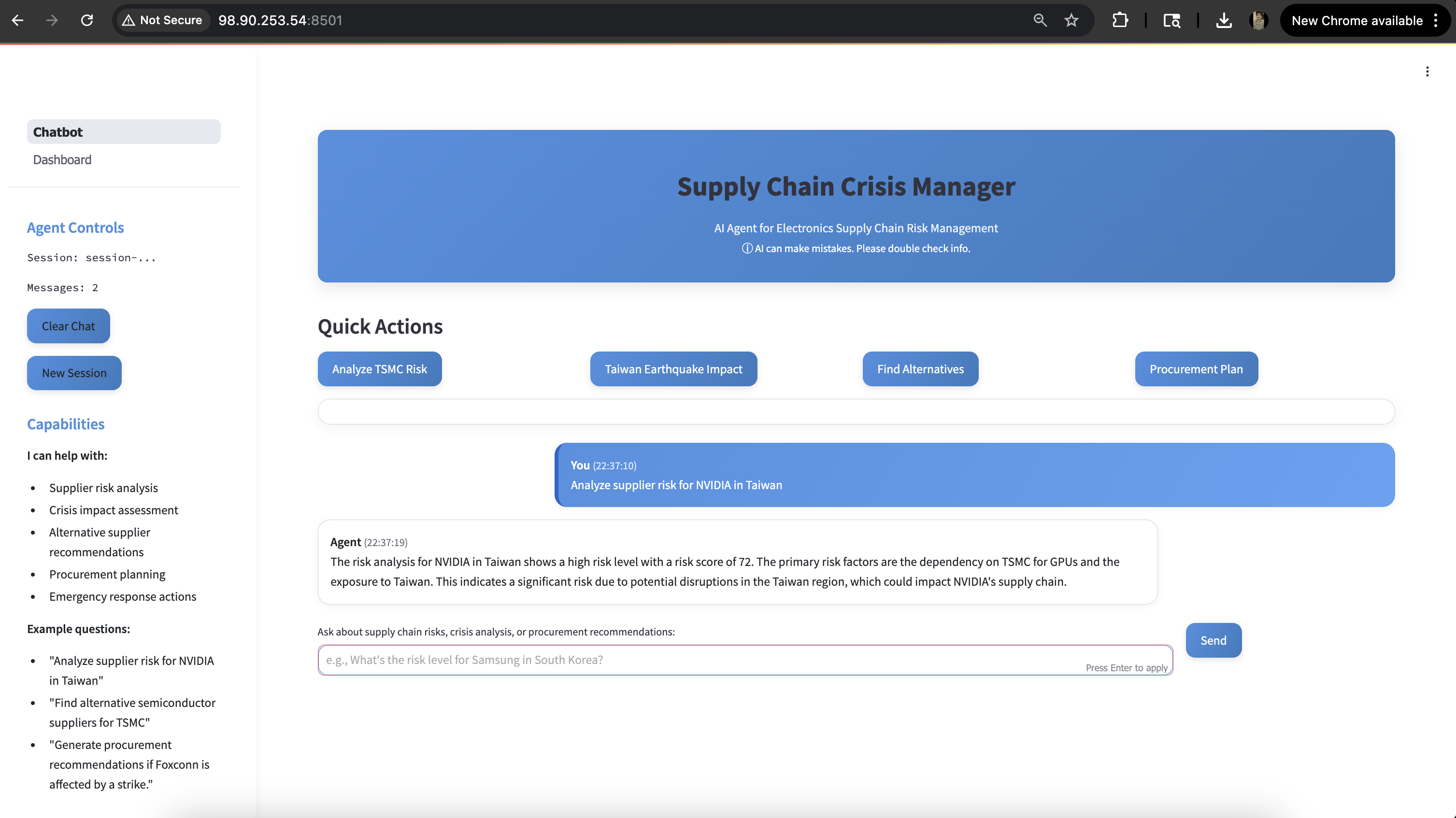
- Streamlit - Professional UI with custom CSS + business metrics dashboard
- AWS EC2 - Deployment of Chatbot
Key Implementation:
- Composite risk scoring: Risk = 0.6 * Risk{supplier} + 0.4 * Risk{location}
- Impact calculation with severity multipliers and cascading failure modeling
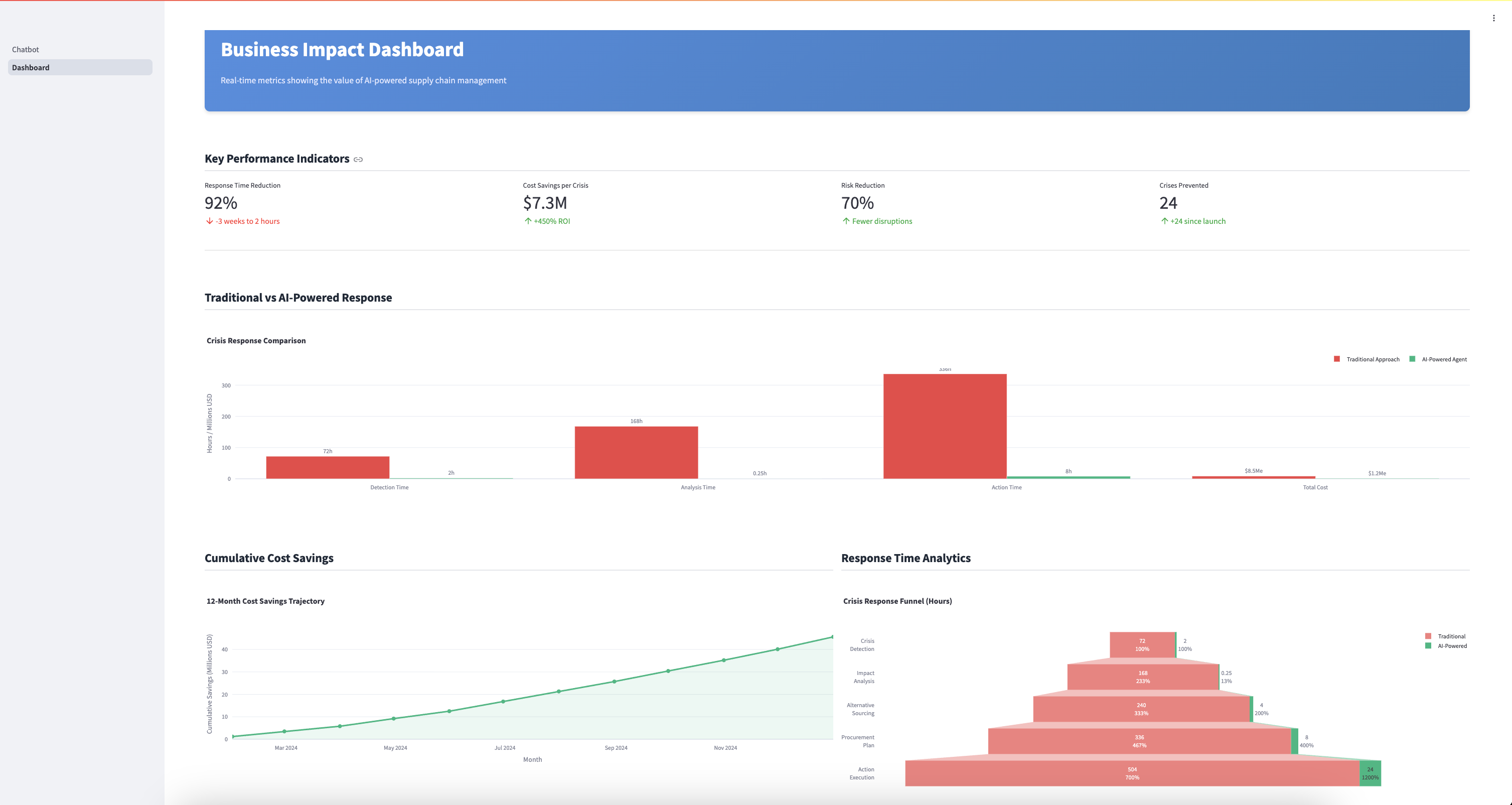
- Two-page app: Chat interface + Impact Dashboard with ROI calculator
🔥 Challenges I ran into
1. Bedrock Response Format
Lambda responses kept failing. Spent 5 hours debugging. The issue? AgentCore needs a very specific nested JSON format. One missing field = complete failure. Lesson: AWS documentation is precise for a reason.
2. Making It Look Professional
Default Streamlit looks amateur. Spent 2 days on custom CSS to create gradient headers, smooth animations, and enterprise-grade design. Also spent a significant time developing the Impact Dashboard showing ROI of the project implementation.
3. Scalability vs Speed
Started with hardcoded data (fast but not scalable). Moved to S3 data lake (scalable but slow). Final solution: S3 + Lambda container caching = best of both worlds.
🏆 Accomplishments that I'm proud of
- Full AgentCore Implementation - 4 action group primitives properly integrated with Lambda.
- Production-Ready Architecture - Serverless, scalable, monitored, following AWS best practices
- Real Business Impact - Dashboard extension to showcase cost & response comparison as quantifiable metrics
- Optimization & Prompt Engineering - Optimized for real-time performance despite complex multi-step reasoning
📚 What I learned
Technical:
- Prompt engineering matters more than I thought, spent 20+ iterations refining agent instructions
- Response time is critical, users expect instant results, not long delays
- Adding CloudWatch to track agent input and output helped to analyze the quality of responses
Product:
- Business metrics matter more than technical features, business stakeholders care about costs saved, not neural networks
- Custom UI, clean docs, compelling demo
🤖 What's next for Supply Chain Crisis Manager
Short-term (3 months):
- Real-time news integration - Live crisis detection from NewsAPI instead of static data
- Multi-agent architecture - Specialized agents for risk, procurement, and logistics working together
- Predictive forecasting - Predict supplier risks 30 days in advance using weather/geopolitical data
Medium-term (6-12 months):
- ERP integration - Connect to SAP/Oracle for real inventory levels and automatic order placement
- Supply chain network visualization - Interactive graph showing dependency cascades
- Mobile app - Push notifications for critical alerts
Long-term vision:
- Industry expansion - Beyond electronics to automotive, pharma, food supply chains
- ML model training - Learn from historical crises to improve prediction accuracy
- Marketplace deployment - AWS Marketplace listing for enterprise customers
Built With
- amazon-bedrock
- amazon-ec2
- amazon-web-services
- aws-lambda
- boto3
- json
- pandas
- plotly
- python
- s3
- streamlit


Log in or sign up for Devpost to join the conversation.