-
-
-
-
-
-
-
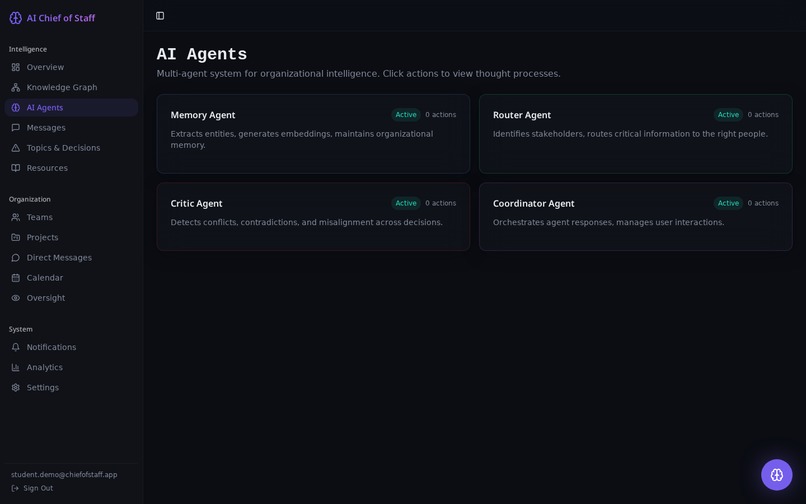
Agents -Students
-
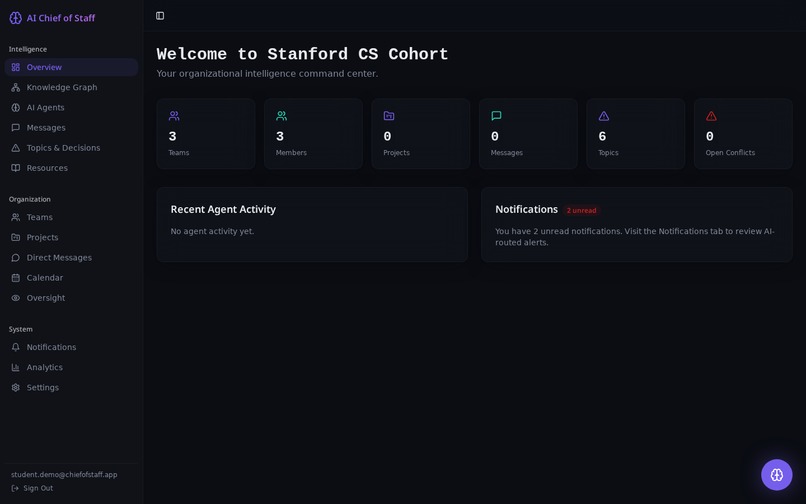
overview
-
Calendar
-
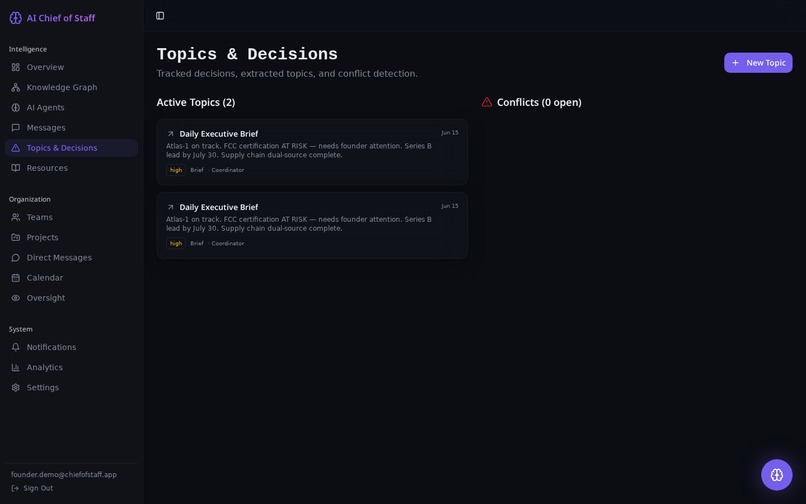
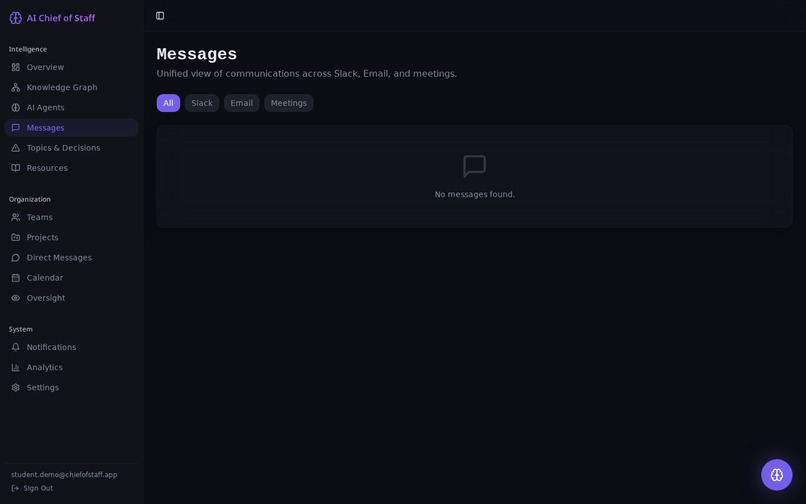
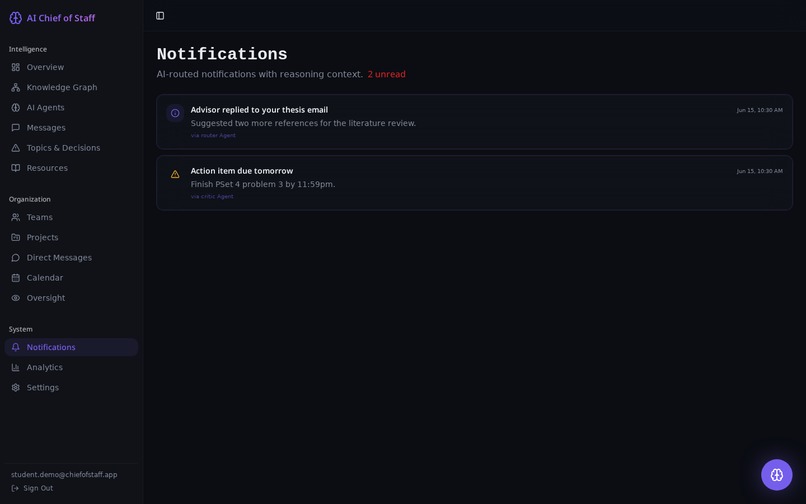
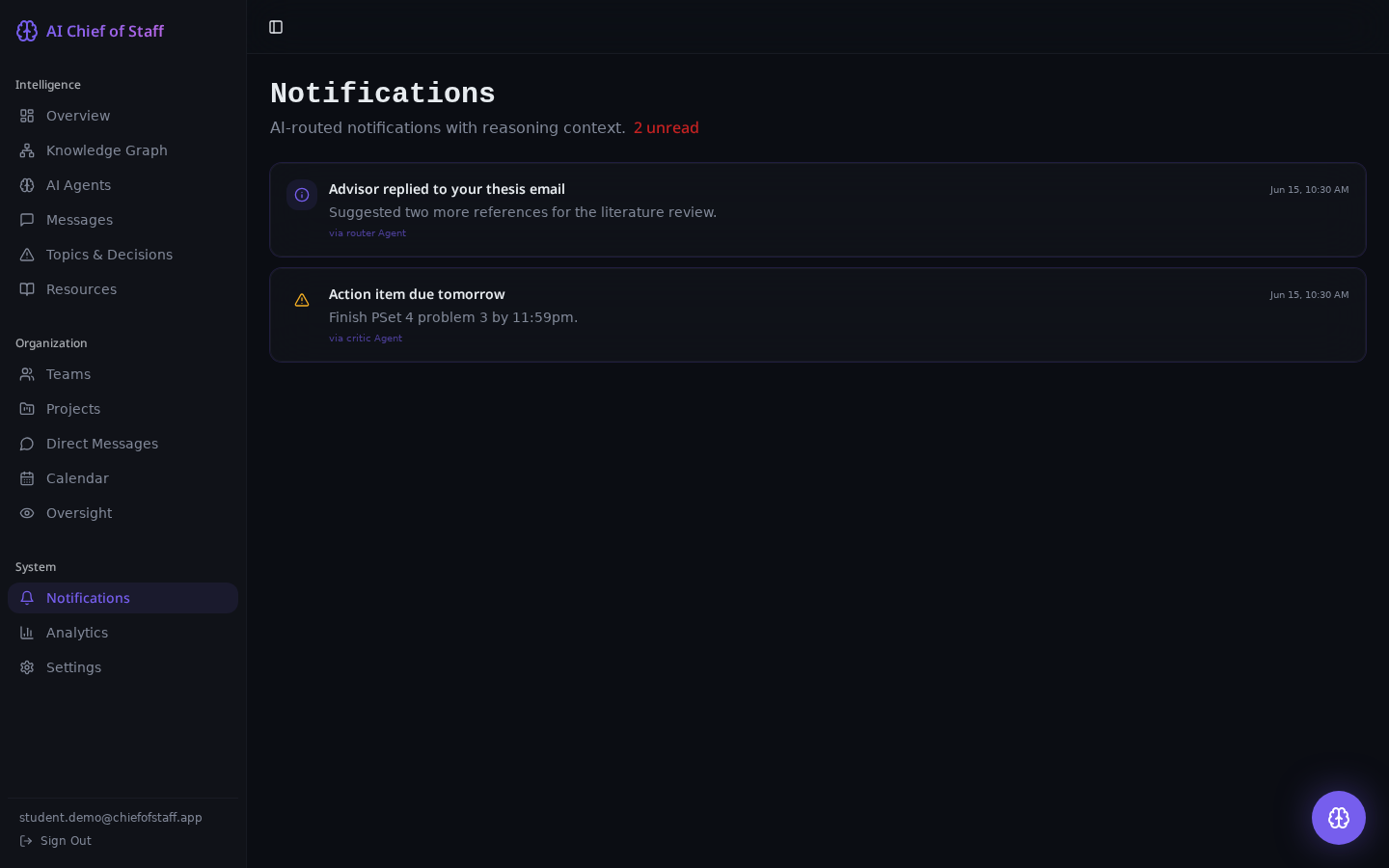
notifications
-
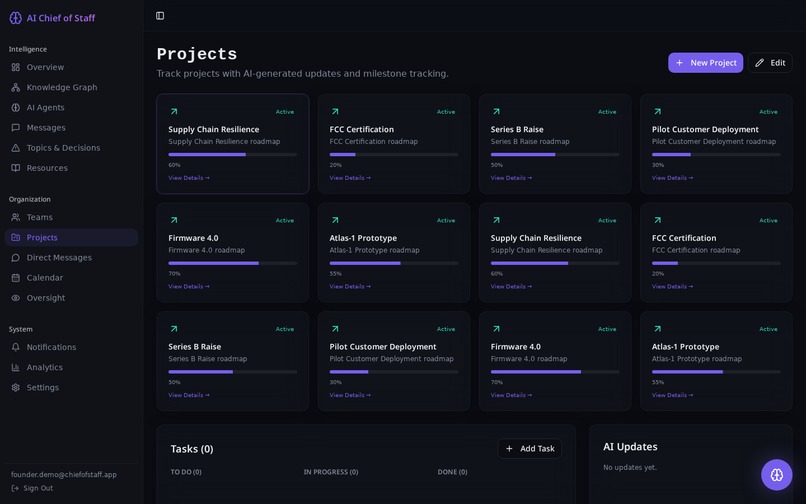
projects
Inspiration
In modern decentralized teams and fast-moving startups, valuable information is constantly leaking. Critical decisions are buried inside frantic Slack channels, lengthy email threads, and multi-hour Google Meet sessions. Misalignment festers when an engineering change contradicts a strategic timeline, yet founders and contributors only realize it when weeks of development are lost.
We were inspired to build a living "Second Brain"—not just a passive notebook for personal storage, but an active, collective operational layer that captures, versions, and untangles organizational truth in real-time. We wanted to build the Superhuman AI Chief of Staff to make collective problem-solving 100x faster, fully transparent, and completely cohesive.
What it does
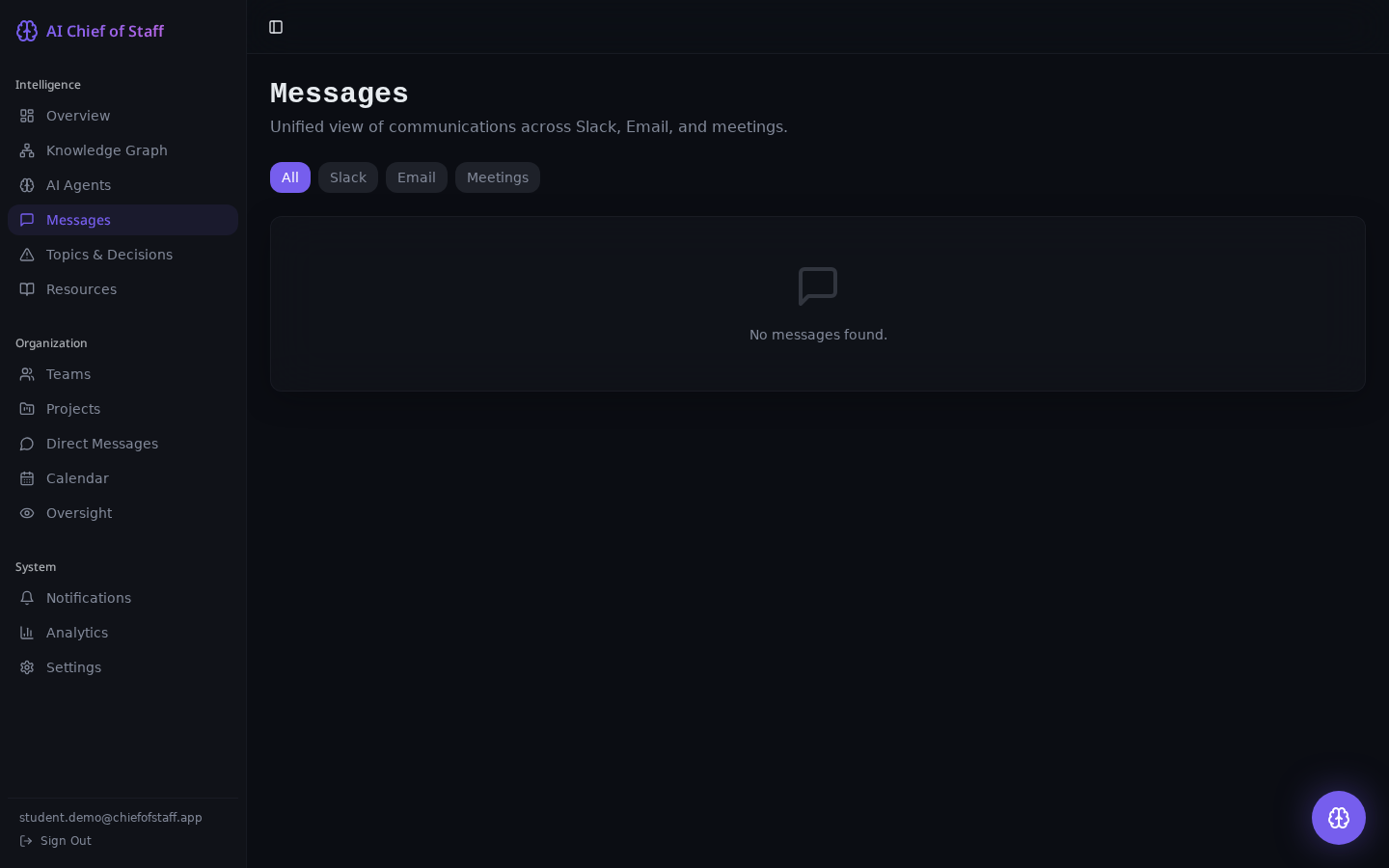
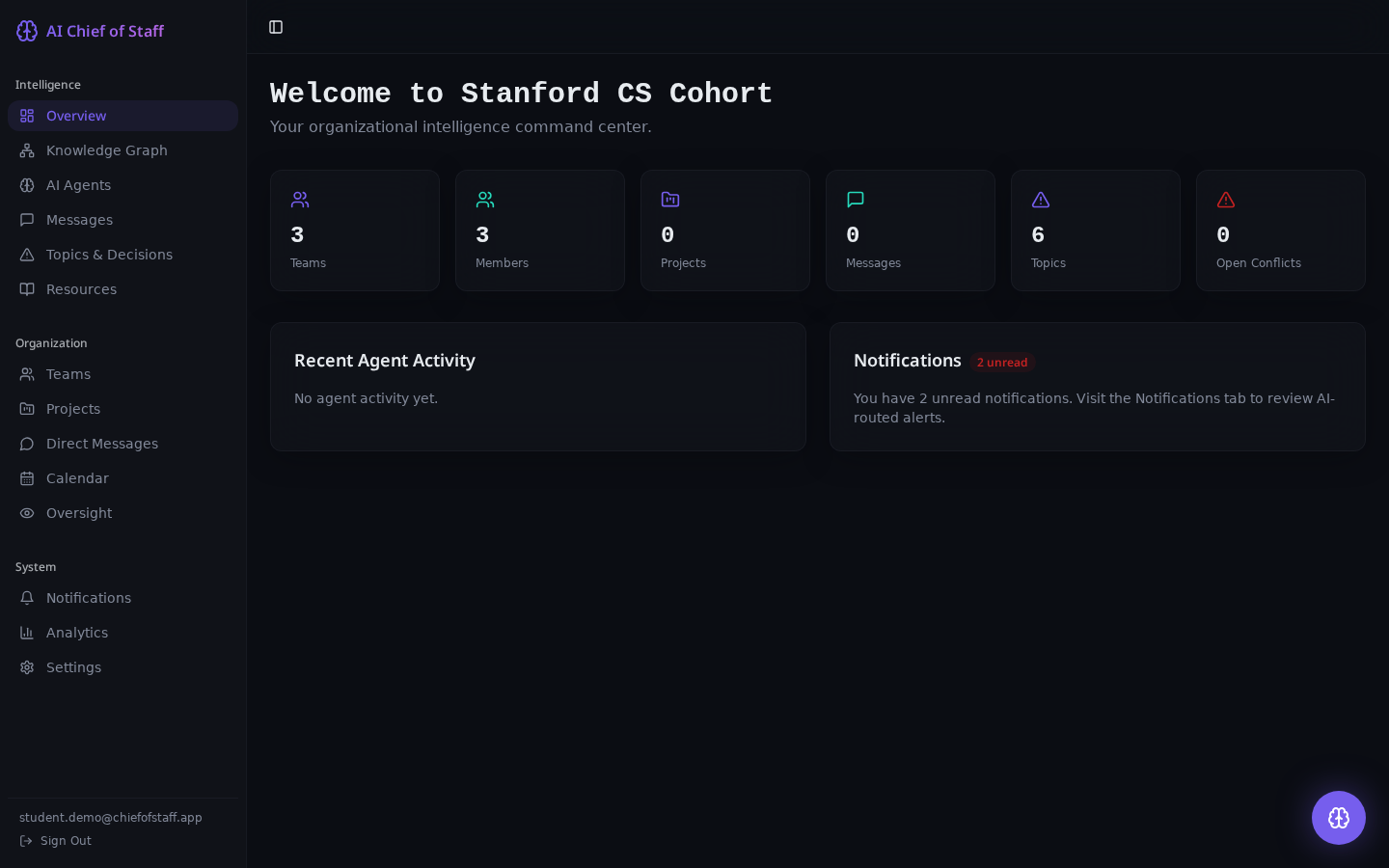
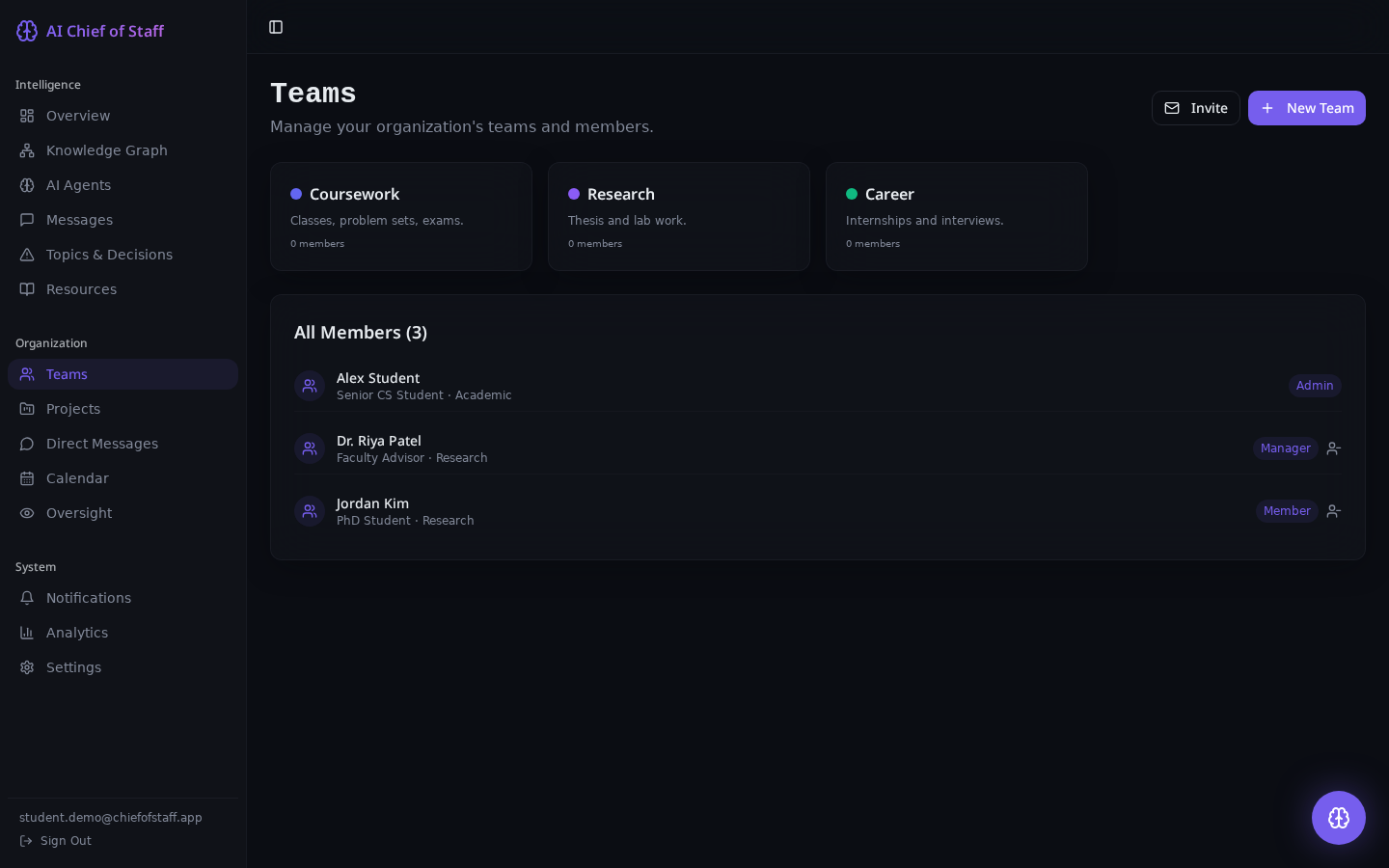
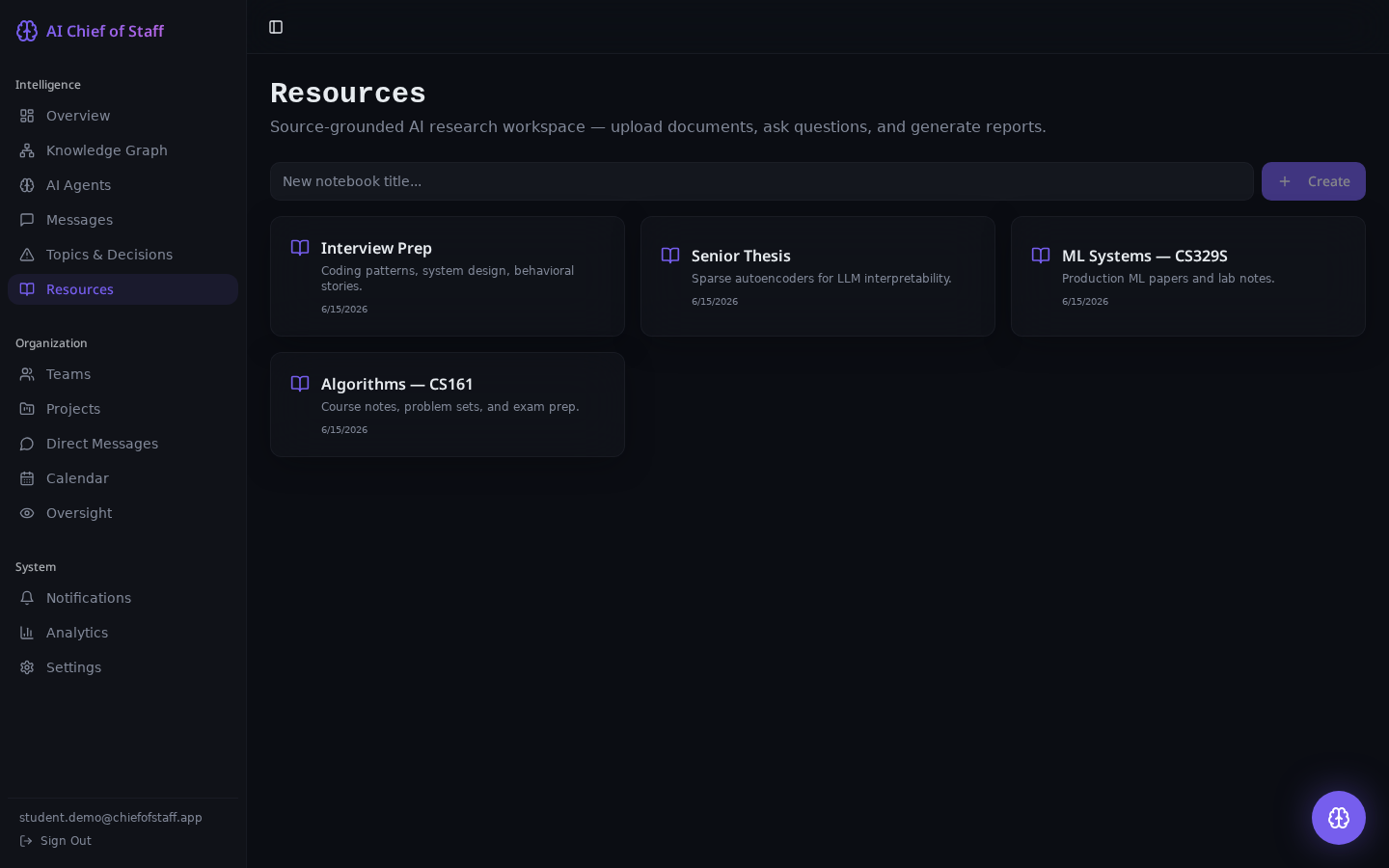
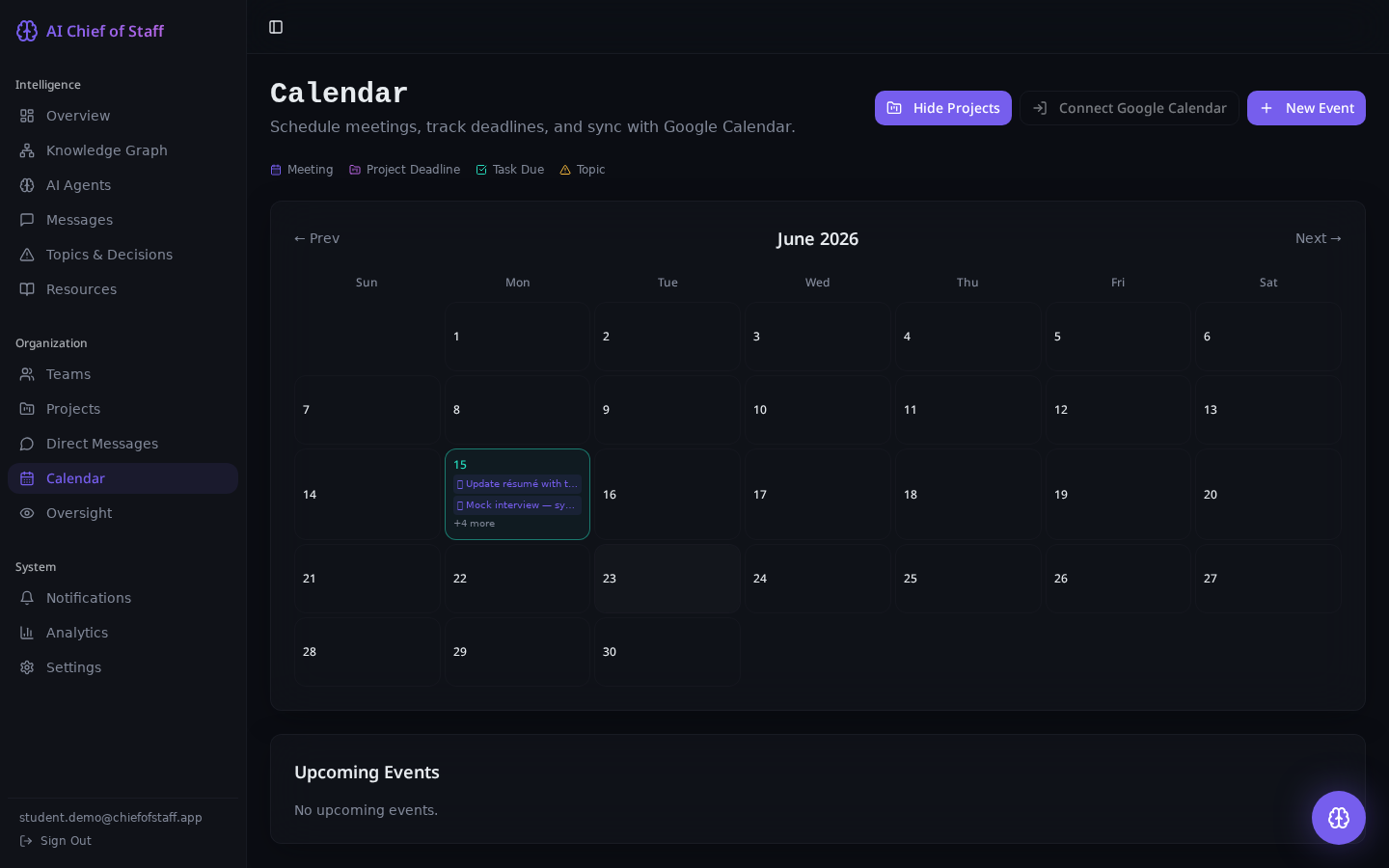
The Superhuman AI Chief of Staff dynamically ingests messy communication streams (meeting transcripts, messages, calendar events) and synthesizes them into an interactive 3D Knowledge Graph mapped with version-controlled organizational truth. Powered by a collaborative network of four specialized reasoning agents, it achieves the following:
- Ingests & Visualizes: Processes raw text or voice inputs and instantly maps entities, topics, and choices onto a real-time, nodes-and-edges 3D spatial graph.
- Conflict & Contradiction Detection: Cross-references incoming updates with historic data to instantly flag operational contradictions before they become project blockers.
- Contextual Relevance Scoring: Automatically rates the priority of updates for specific teammates, routing tailored notifications so full-time founders stay briefed without drowning in noise, and remote contributors stay tightly aligned.
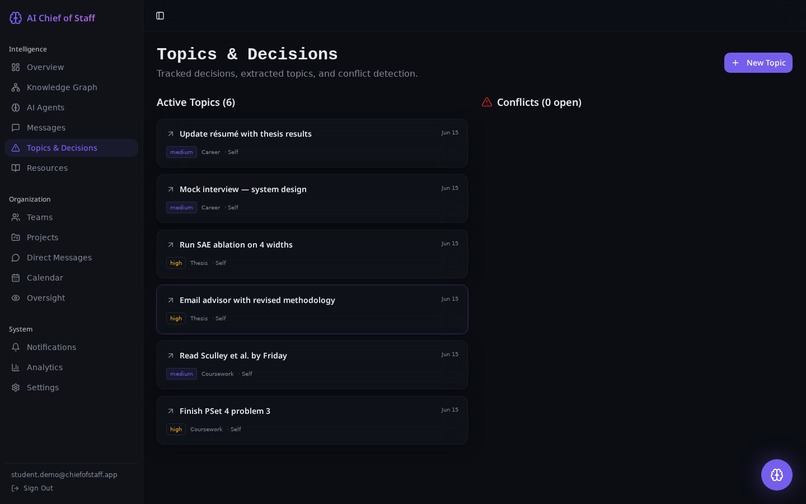
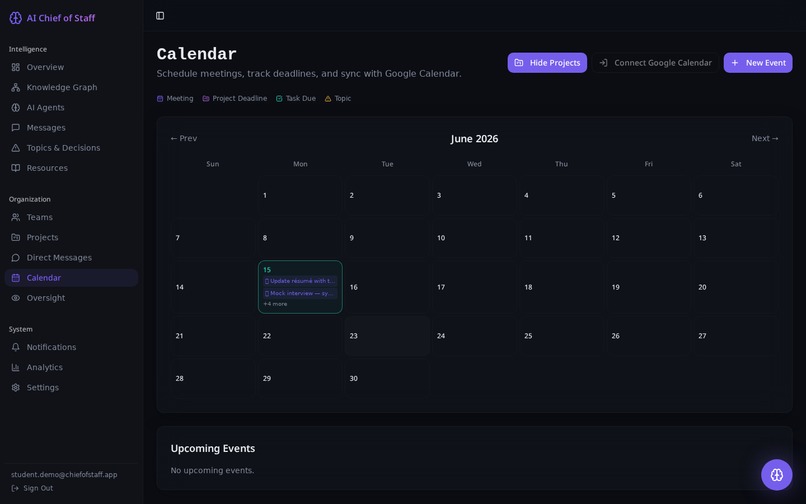
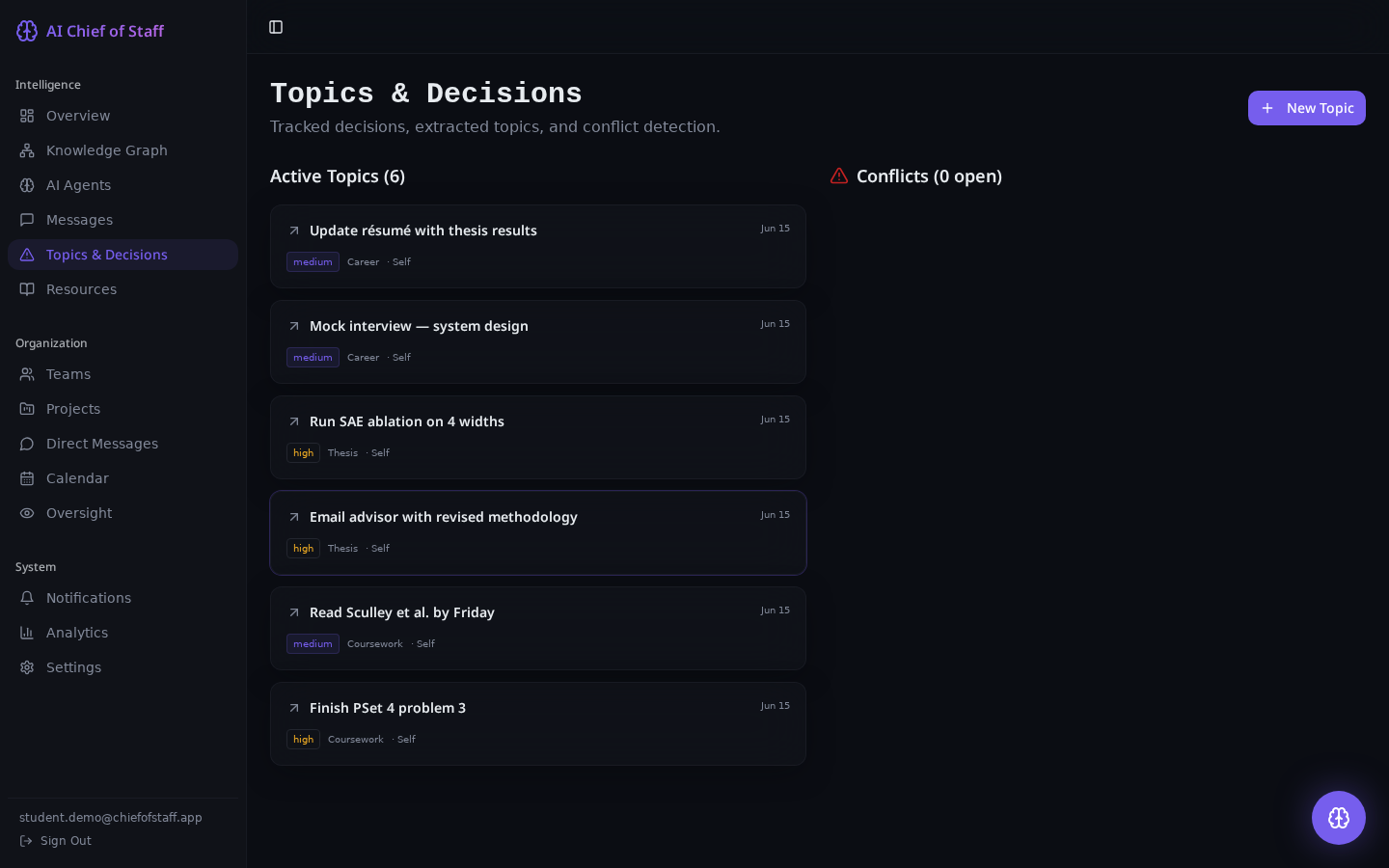
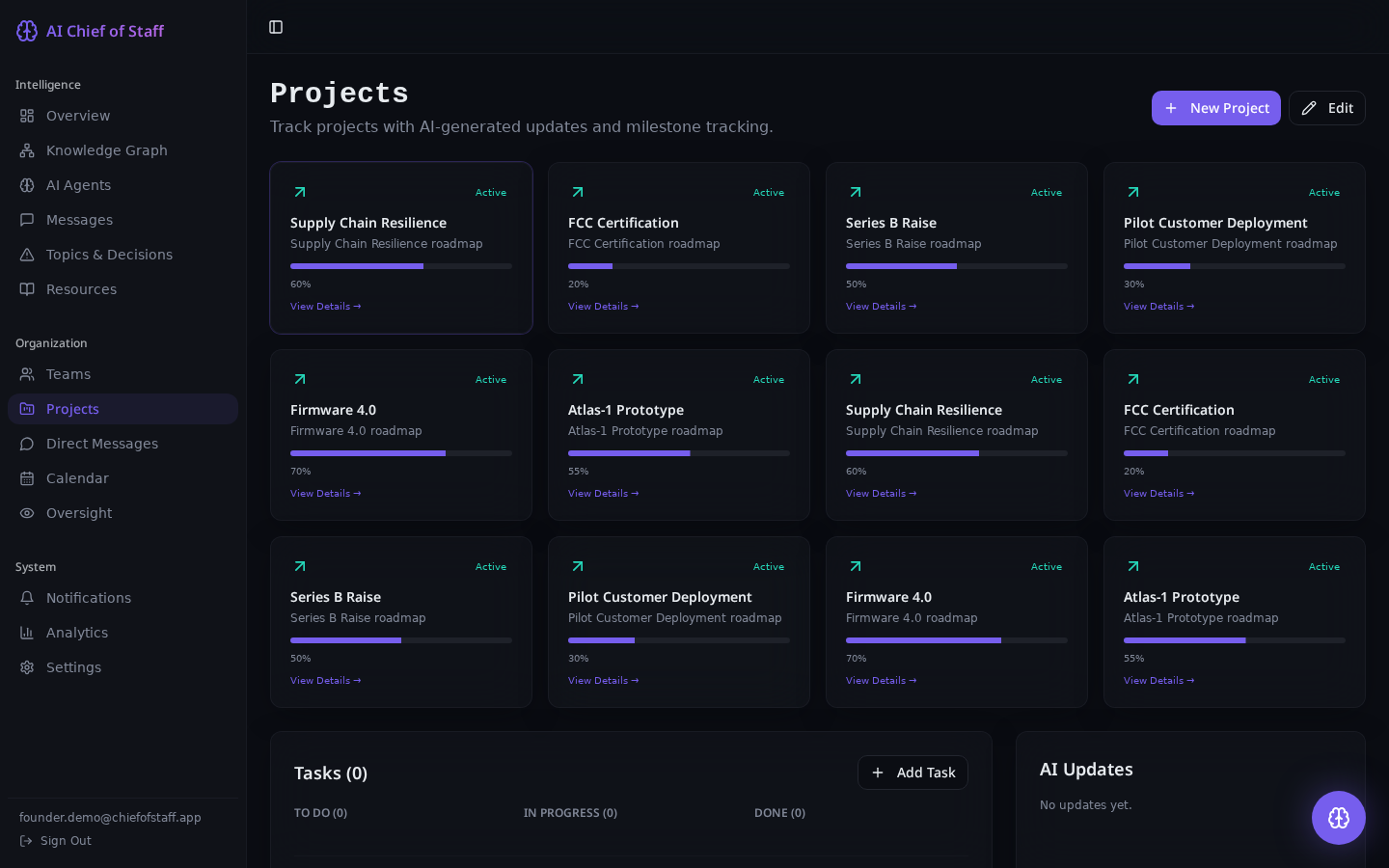
- Human-in-the-Loop Orchestration: Proposes actionable project tasks and calendar events complete with a verifiable confidence chip, waiting for user confirmation before executing external integrations.
How we built it
We engineered a production-grade, multi-tenant monorepo architecture leveraging cutting-edge web tools and advanced semantic data structures:
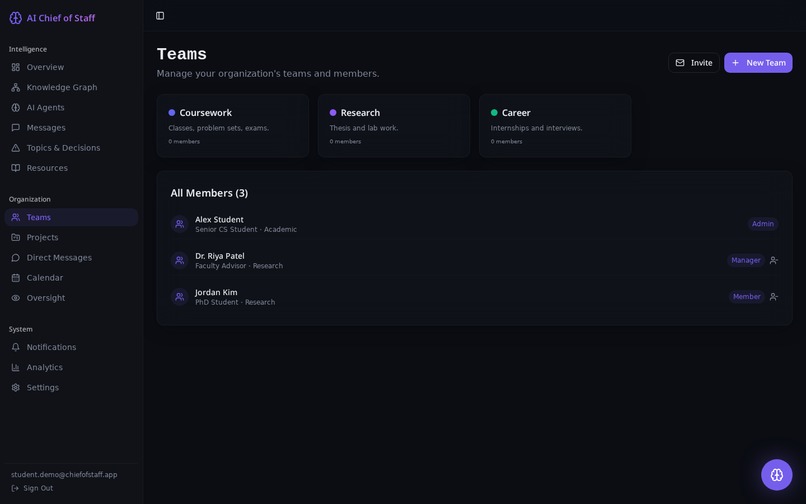
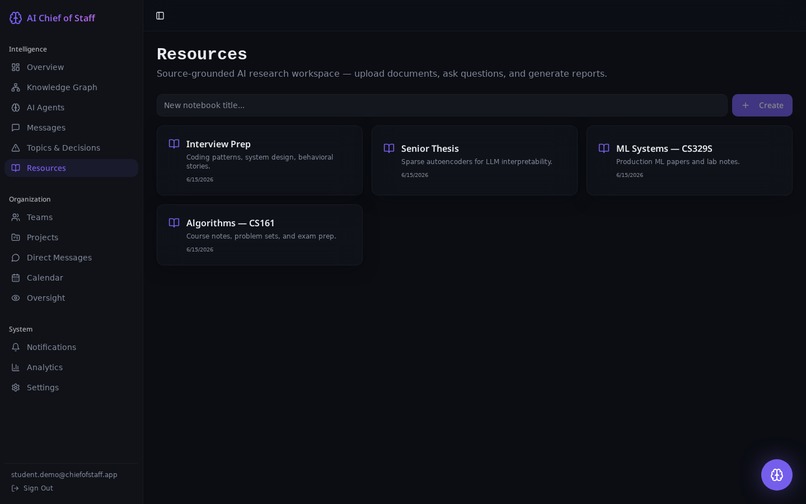
- Frontend UI/UX: Built with React, Vite, TypeScript, and Tailwind CSS. Fluid animations and high-performance, real-time node rendering inside our 13 interactive views are achieved through Three.js and Framer Motion.
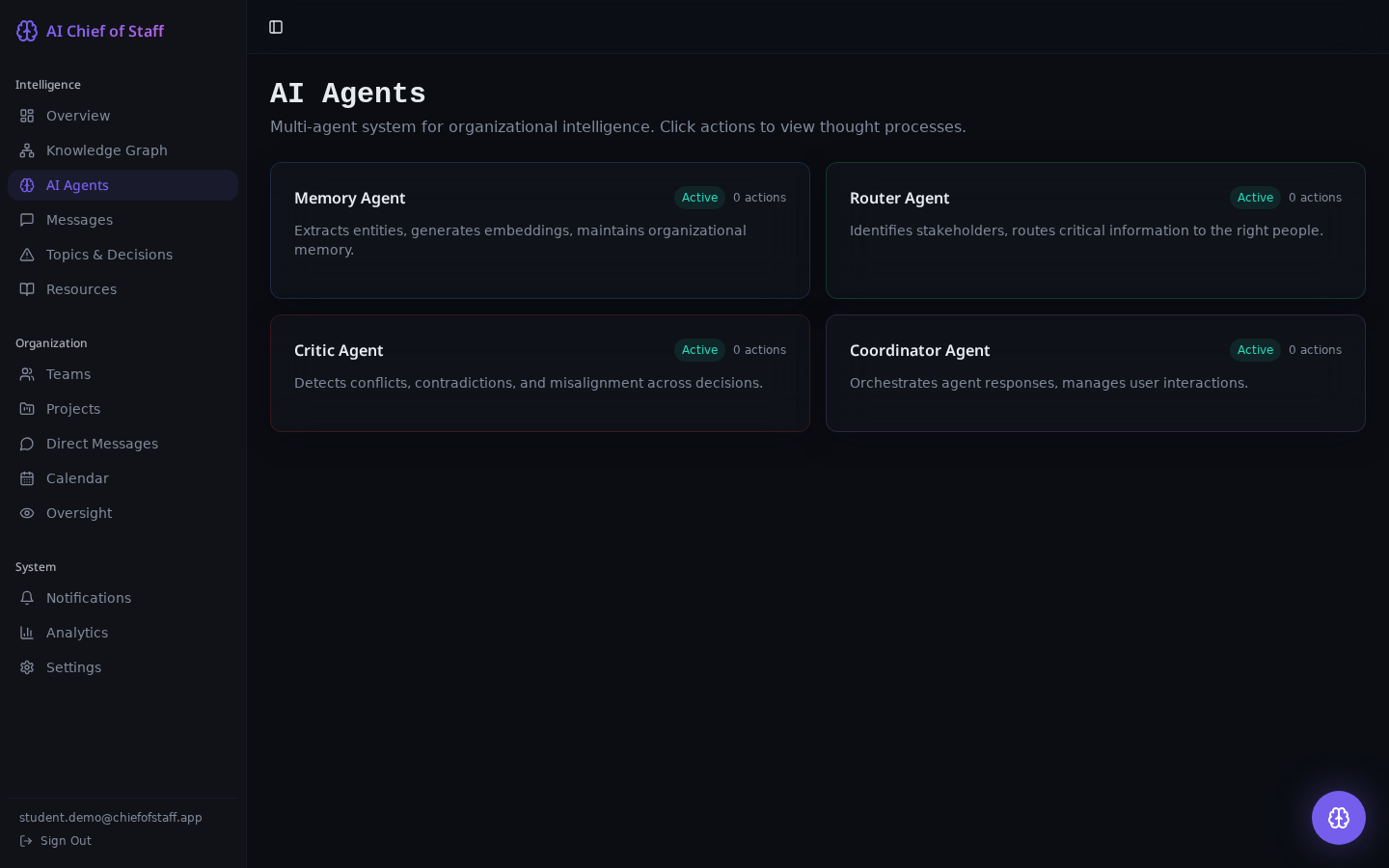
- The Multi-Agent Swarm (The Brain): Implemented an advanced processing pipeline using four distinct LLM personas powered by OpenAI and structured agent prompts:
- Memory Agent: Ingests raw inputs and extracts entities.
- Router Agent: Evaluates and scores contextual relevance to distribute smart notifications.
- Critic Agent: Executes contradiction checking across existing database vertices.
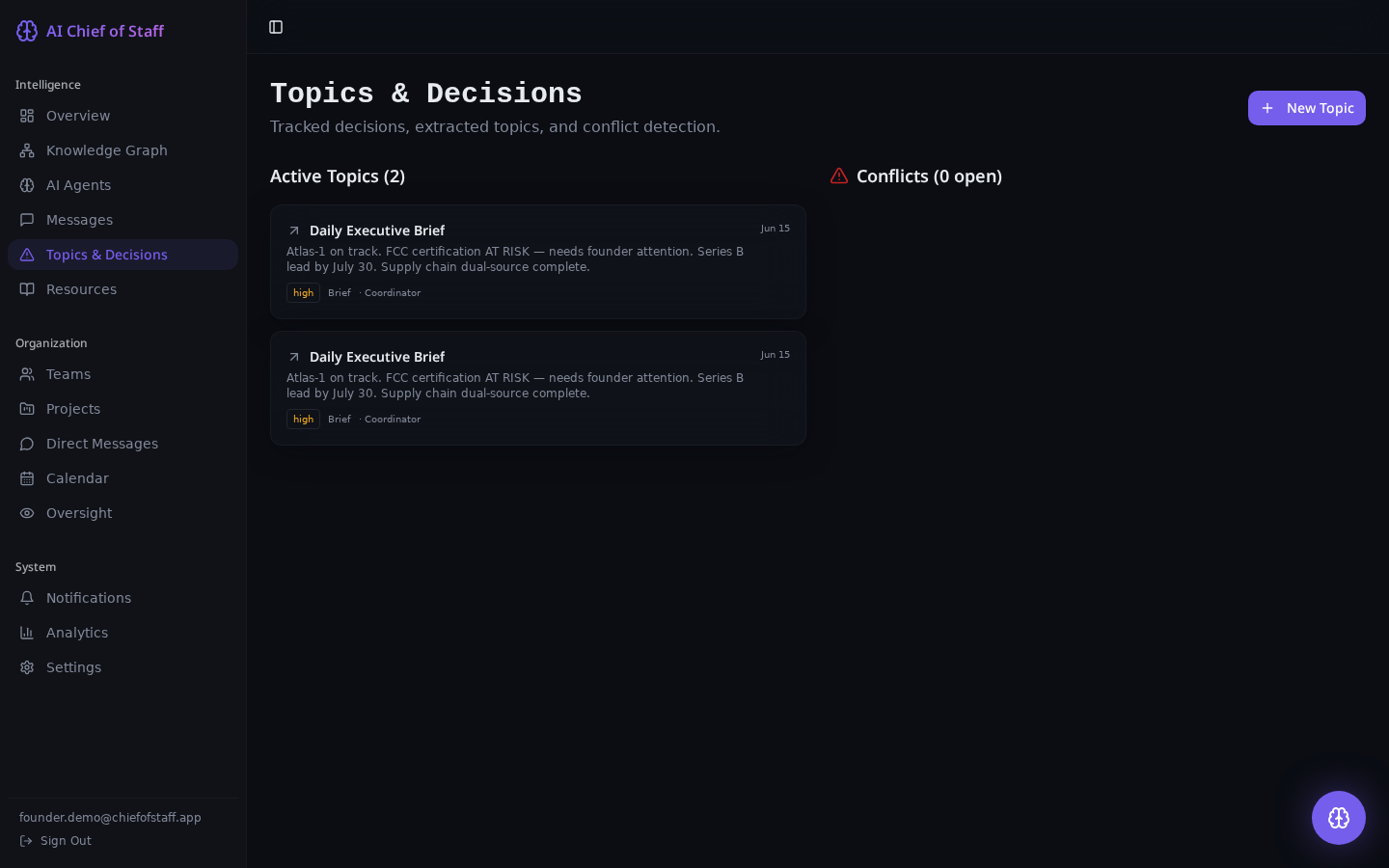
- Coordinator Agent: Generates executive briefings and constructs executable plans.
- Data & Knowledge Layer: Utilizes a hybrid database strategy. Neo4j acts as our foundational 3D graph representation for complex dependency tracking, paired with Pinecone for low-latency dense vector semantic search, all backed by Supabase (PostgreSQL) with Row-Level Security (RLS) for robust tenant isolation.
- Integrations & Infrastructure: Fully integrated with the Google Calendar API via secure OAuth 2.0. End-to-end integration flows and regression test coverage were verified using Playwright.
Challenges we ran into
The primary technical hurdle was mitigating state synchronization overhead and graph latency during live ingestion. Transforming a dynamic, conversational transcript into deterministic entities without creating cyclic redundancy in Neo4j required rigorous schema design.
We solved this by developing a dual-stage check: the Memory Agent extracts entities with an attached evaluation score, while the Critic Agent checks for logical overlaps against the vector database before committing structural changes to the graph topology. Fine-tuning the multi-agent prompt loops to avoid compounding agent hallucination required extensive iteration and hard boundary constraints.
Accomplishments that we're proud of
- Deterministic 3D State Rendering: Seamlessly syncing changes from a live conversational transcript into an interactive 3D spatial visualization with zero visible frame drops.
- Automated Conflict Resolution Engine: Achieving a system that doesn't just passively summarize data, but actively reasons to flag operational silos and explicit contradictions between separate organizational updates.
- True Human-in-the-Loop Safety: Successfully executing a complex, agentic workflow that presents clean
Accept / Skipcontrols accompanied by a verifiable confidence chip, proving that automated systems can be deeply powerful while remaining safe and accountable.
What we learned
We discovered that multi-agent systems are exceptionally potent when given narrow, specialized tasks rather than broad, all-encompassing scopes. Segregating the Critic from the Coordinator drastically increased alignment tracking accuracy.
Furthermore, this project solidified our understanding of graph databases as the ultimate architectural foundation for organizational intelligence. Vector embeddings are excellent for local semantic retrieval, but mapping complex, multi-person operational dependencies requires the absolute semantic clarity of a strict property graph.
What's next for Superhuman AI Chief of Staff - "Second Brain"
Moving forward, our immediate roadmap focuses on scaling this collective brain into a truly omnipresent ecosystem:
- Native Communication Webhooks: Shifting from manual mock streams to native Slack, Discord, and Microsoft Teams live listening hooks.
- Autonomous Graph Pruning: Deploying offline asynchronous jobs to compress, prune, and archive stale or transactional conversational nodes to optimize long-term graph resolution.
- On-Premise Enterprise Enclaves: Designing secure, self-hosted deployment models utilizing isolated Neo4j instances and open-weight models to satisfy local data residency requirements for enterprise corporations and sensitive public infrastructure networks.
Built With
- edge
- framer-motion
- google-calendar-api
- neo4j
- node.js
- oauth-2.0
- openai-api
- pinecone
- playwright
- postgresql
- supabase
- tailwind-css
- three.js
- typescript
- vite

Log in or sign up for Devpost to join the conversation.