Inspiration
The target was to build an app based on Eitan's brief. I wanted to build a recipe app that won't feel overwhelming and still serve the purpose of organising cookbooks. So I started thinking in first principles. generate recipe and save it to the cookbooks. So, I split the problem and solved it in 3 steps.
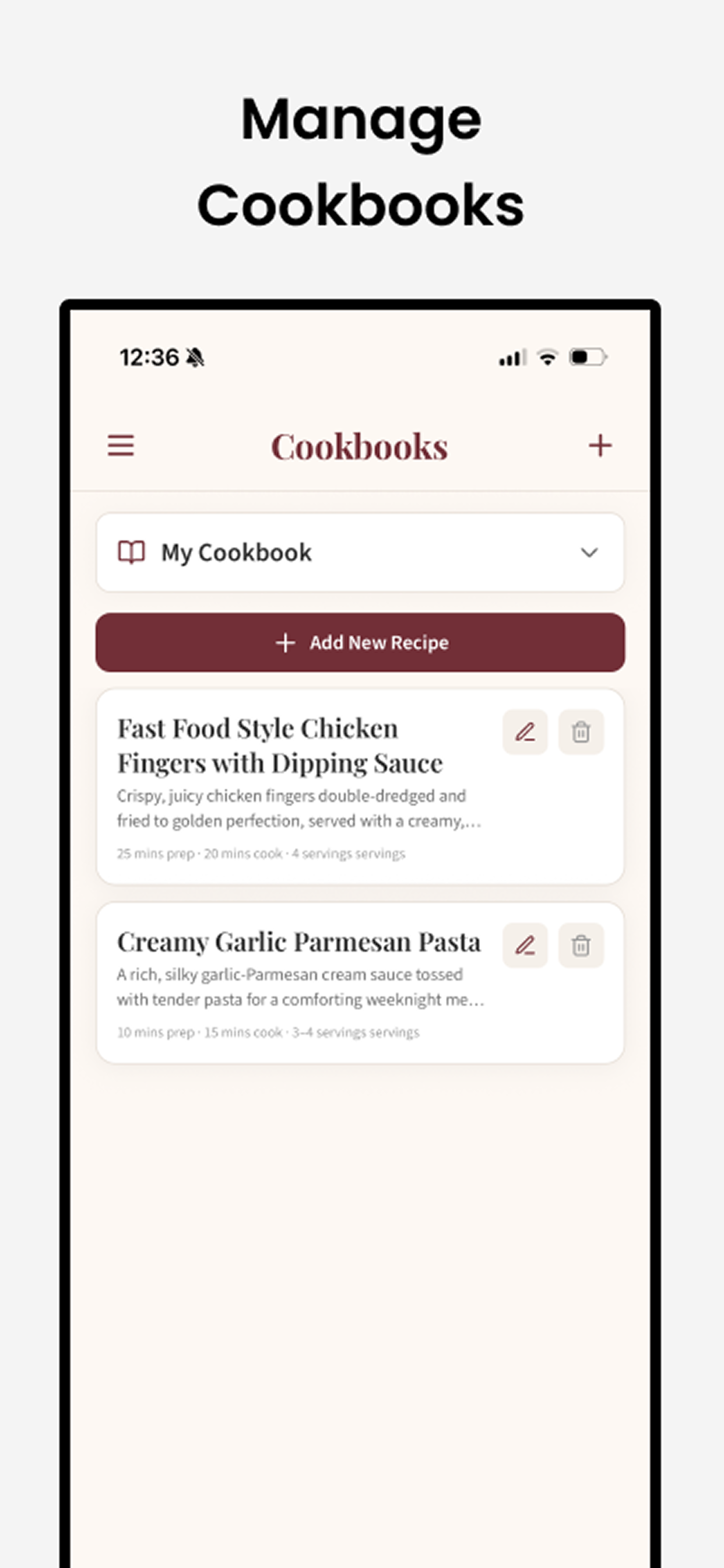
- Create cookbooks
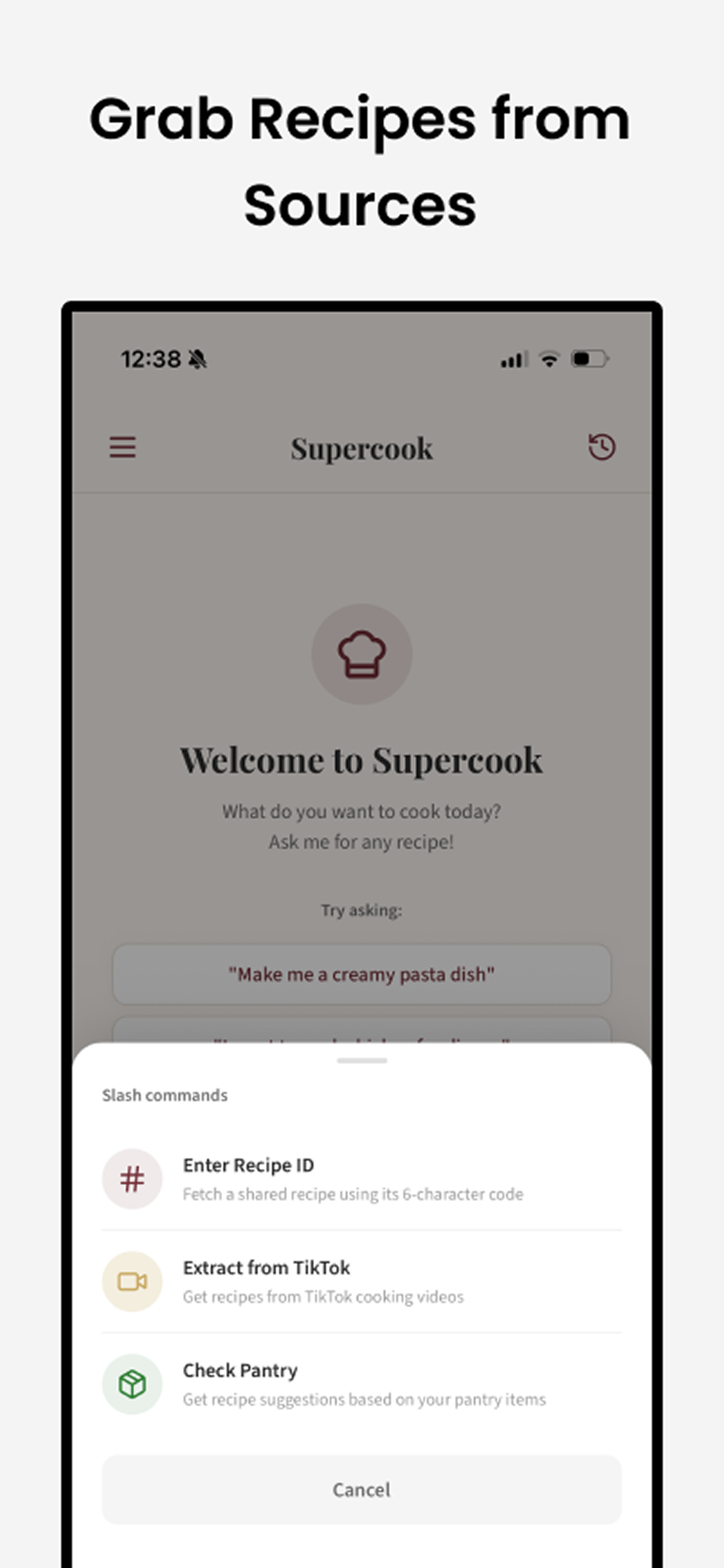
- Generate recipes in different ways (e.g. from a shared code, from a TikTok video, or just through AI), but from a single screen with the simplest way possible.
- Save the recipe in a cookbook.
What it does
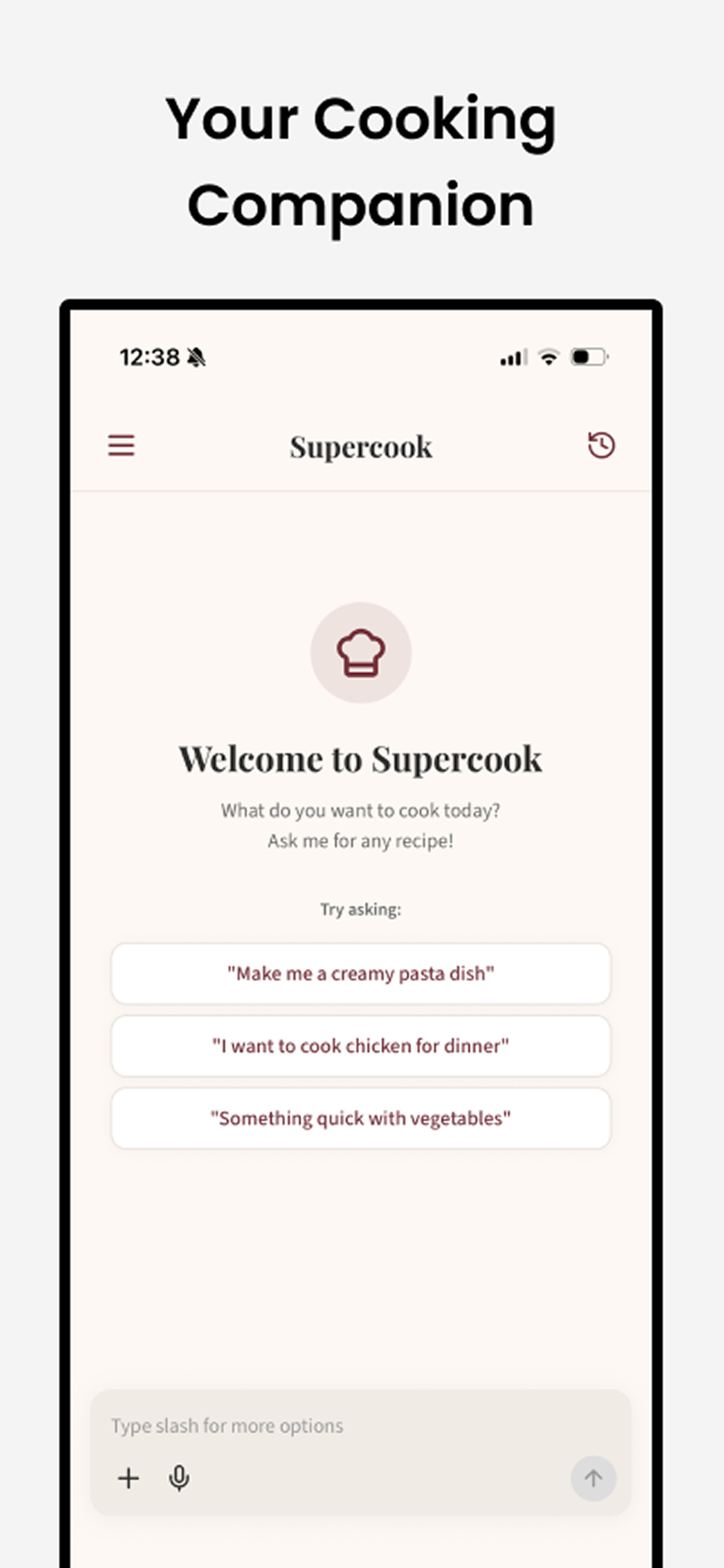
Supercook is an AI-powered recipe management platform that bridges the gap between discovering recipes and actually cooking them. The app offers four distinct ways to build your recipe collection:
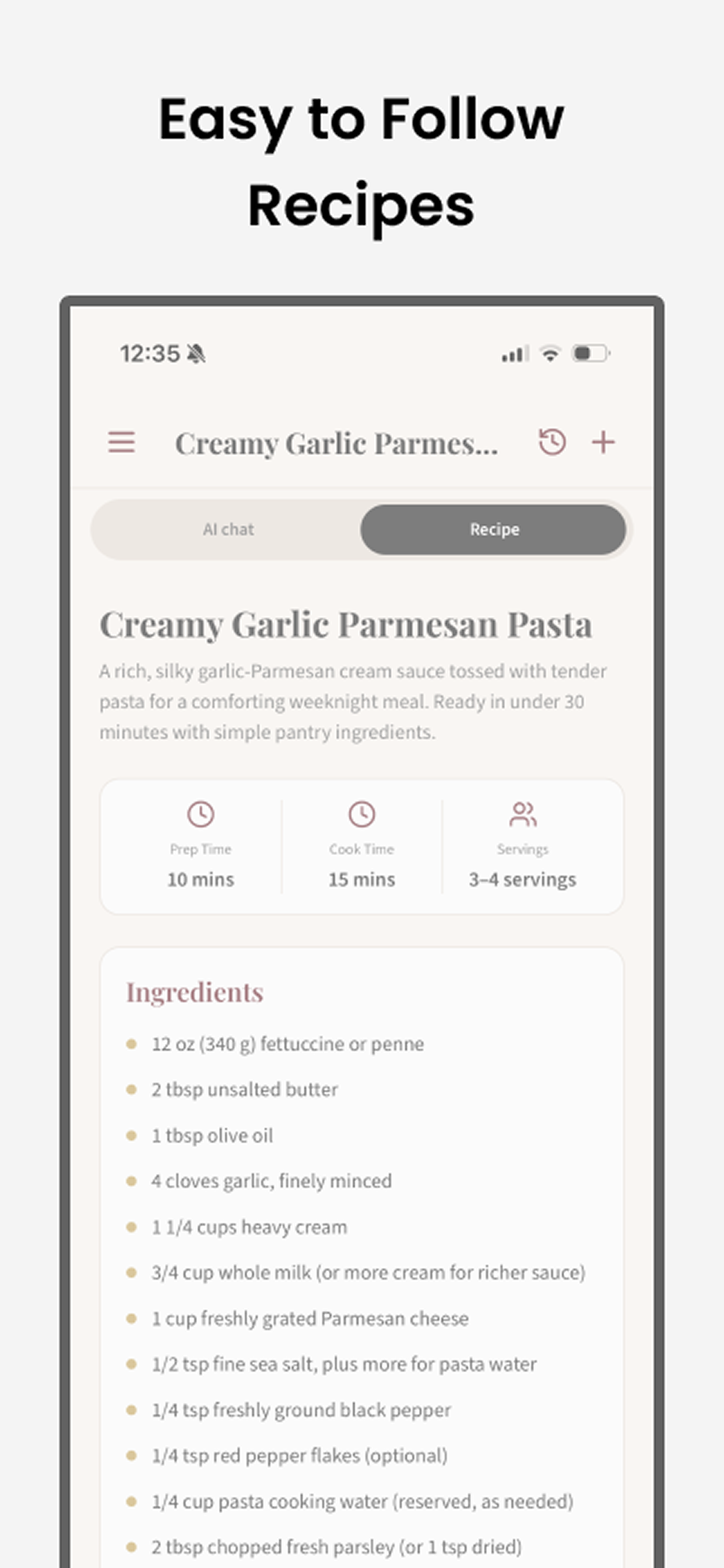
Manual Recipe Entry: Users can manually create and save their favourite recipes, organising them into custom cookbooks. Each recipe can be shared with friends, family, or followers via a simple 6-digit code, enabling community recipe exchange without requiring social media infrastructure.
Share Code Import: Users can discover recipes shared by others by entering a 6-digit code. This frictionless sharing system makes it easy to collect recipes from cooking enthusiasts, family members, or content creators.
TikTok Video Extraction: The core innovation—users paste a TikTok link, and Supercook's AI analyses the video frames to extract ingredients, quantities, and cooking instructions. This transforms passive video consumption into actionable recipes stored in your personal collection. The AI vision model identifies on-screen text, spoken ingredients, and visual cues to generate structured recipes with 90-95% accuracy.
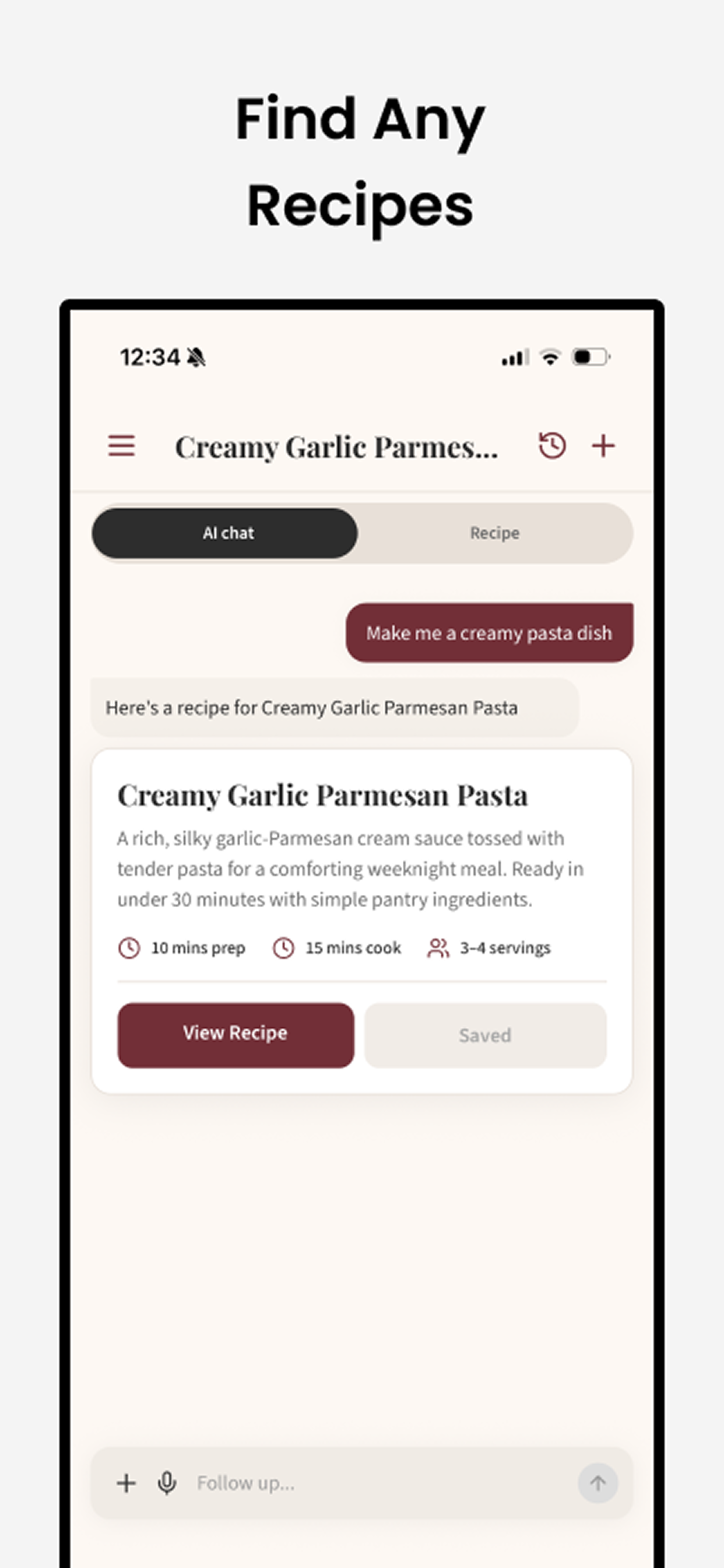
AI Recipe Agent: Users can describe what they want to cook in plain English, and Supercook's AI will either search the web for matching recipes or generate custom recipes tailored to their preferences. Users can attach ingredient lists or photos to get personalised recommendations based on what they have available.
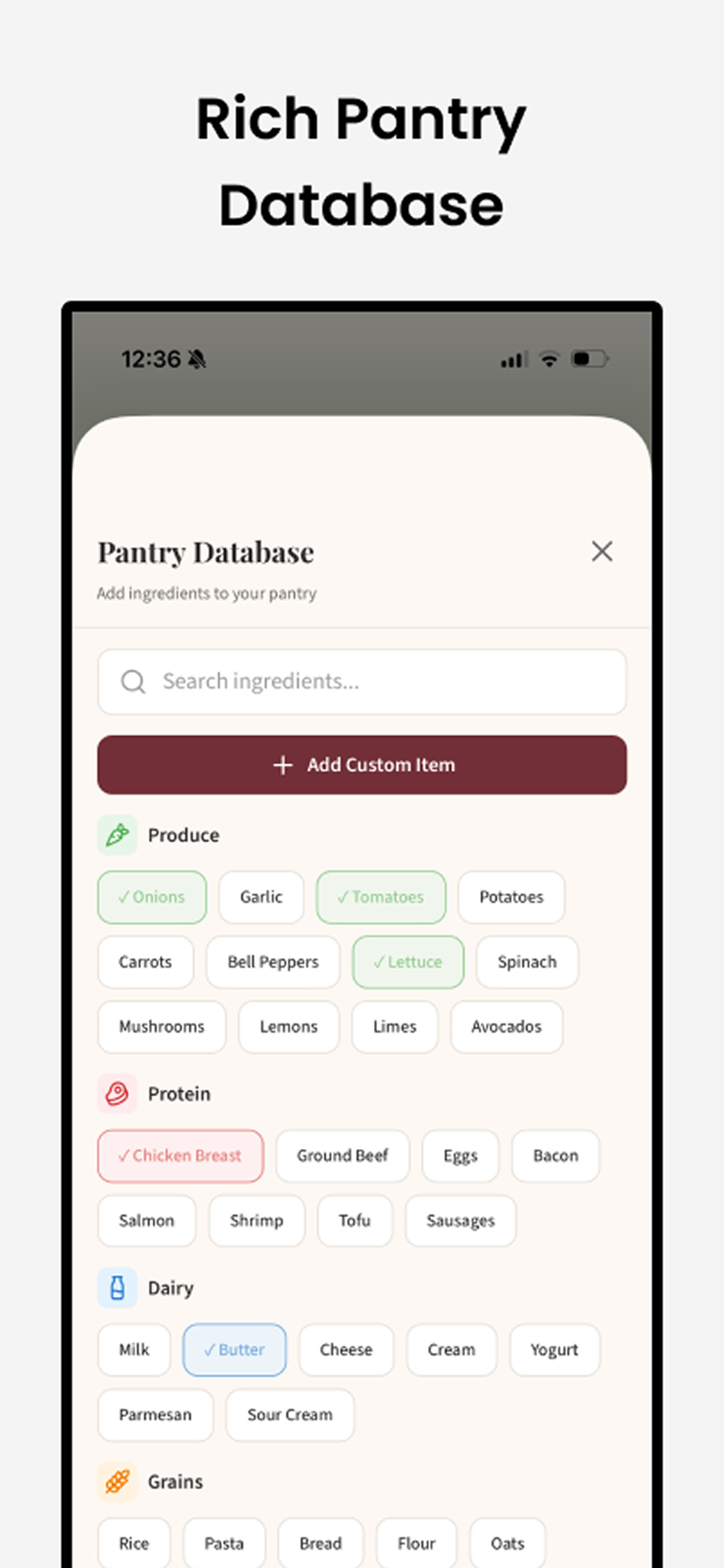
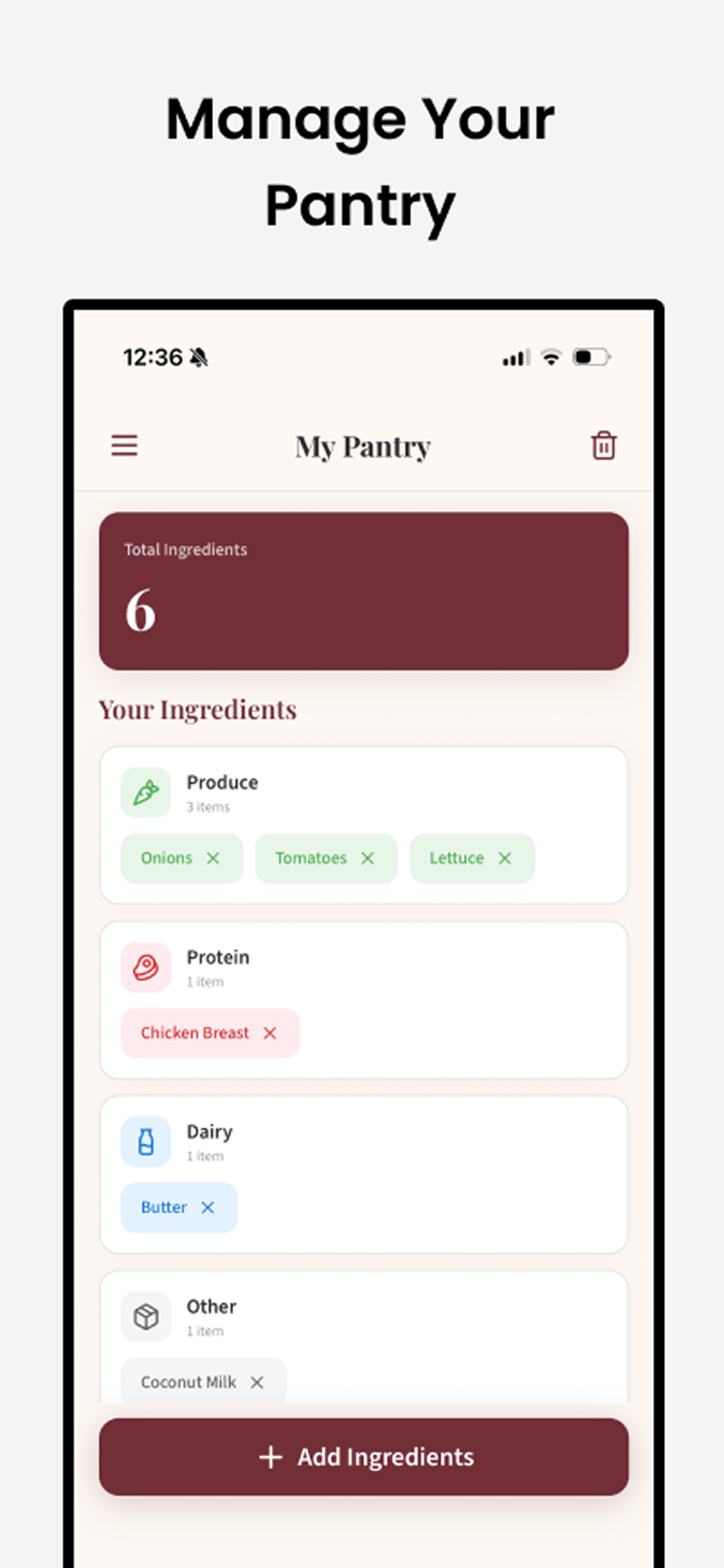
Virtual Pantry Management: Users maintain a digital inventory of ingredients, either selecting from a comprehensive database or adding custom items. The AI agent cross-references pantry contents with saved recipes to suggest dishes users can make immediately, reducing food waste and simplifying meal planning.
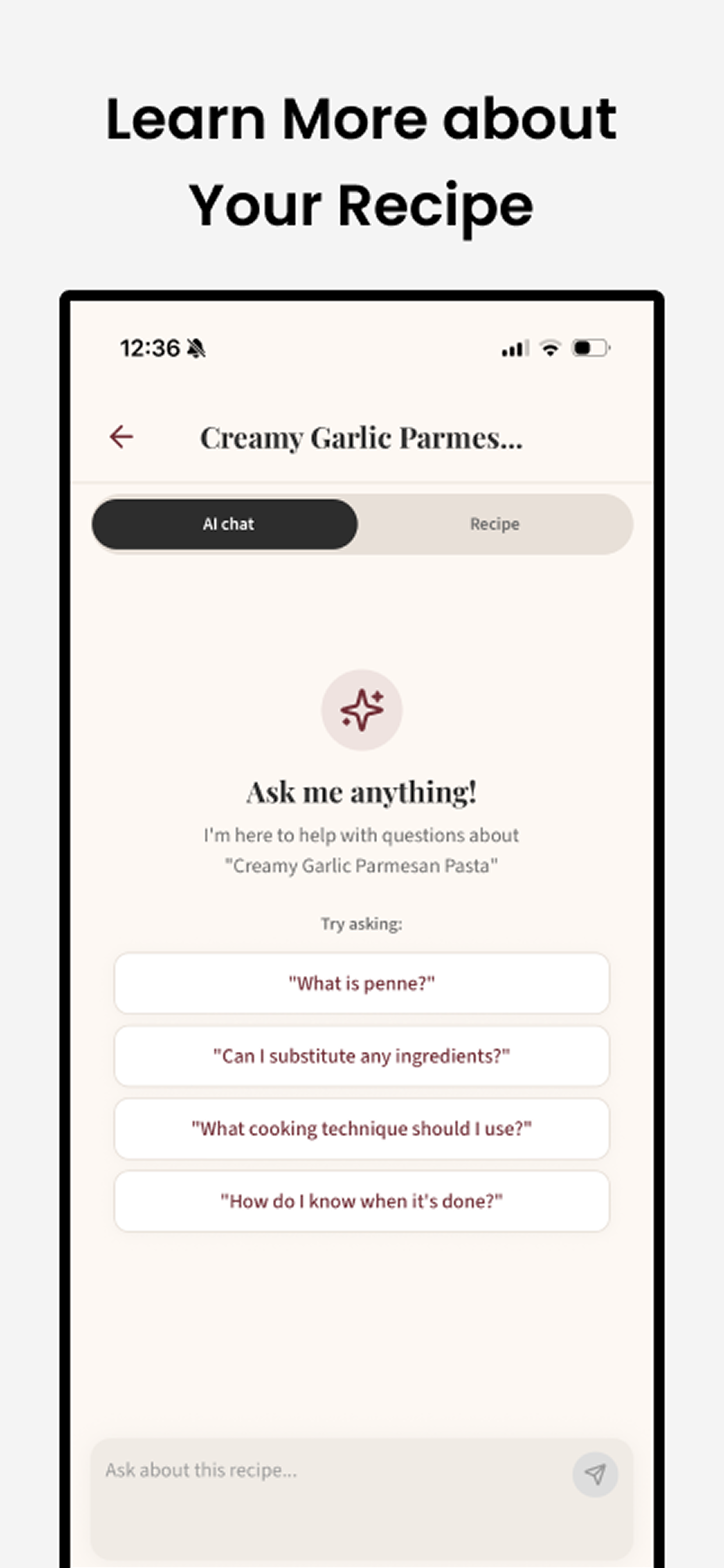
Recipe Chat Interface: Each recipe has an interactive chat feature where users can ask questions about techniques, substitutions, cooking times, or modifications. This transforms static recipes into dynamic cooking guides that adapt to user needs.
The app organises everything into custom cookbooks, allowing users to create collections by cuisine, occasion, dietary restriction, or any other categorisation that makes sense for their cooking habits.
How we built it
The application is built as a cross-platform mobile app using React Native with Expo, chosen for rapid development and native performance on both iOS and Android.
Frontend (React Native/Expo):
- React Navigation for screen routing and navigation.
- React Context API for state management.
- AsyncStorage for local persistence.
- Custom UI components for recipe cards, chat interface, and pantry management.
- Expo SecureStore for sensitive data, such as API keys.
Backend (Node.js/Express):
- RESTful API architecture handling authentication, recipe CRUD operations, and AI request routing.
- PostgreSQL database for structured data storage (users, recipes, cookbooks, pantry items).
AI Integration (OpenAI Agent SDK):
- OpenAI GPT 5.2 with multi-agent support.
- Text-based API for conversational recipe chat and AI recipe generation.
- Web search tool integration for recipe discovery.
- Custom prompts optimised for recipe extraction accuracy.
Subscription Management (RevenueCat):
- Cross-platform subscription handling for iOS and Android.
- RevenueCat Paywall.
Challenges we ran into
TikTok Video Access: The biggest technical challenge was reliably fetching TikTok videos. TikTok actively prevents scraping through CORS restrictions, rate limiting, and frequently changing API endpoints.
Mobile Development Learning Curve: This being my first mobile app, I faced constant challenges with platform-specific behaviours, navigation patterns, and touch interactions that differ significantly from web development. Simple things like keyboard handling, scroll behaviour, and image loading required mobile-specific solutions I had never encountered in web development.
Accomplishments that we’re proud of
Successfully Built My First Mobile App: As someone transitioning from web development, shipping a functional cross-platform mobile application represents a significant personal milestone. The app works smoothly on both iOS and Android, handling navigation, state management, and platform-specific features correctly.
AI Integration That Actually Works: The recipe extraction from TikTok videos is not just a proof of concept—it genuinely works well enough to be useful. Achieving 90-95% accuracy on ingredient extraction from videos is something I am genuinely proud of, especially given the variability in video quality, filming styles, and presentation formats.
Complete Product Experience: Rather than building isolated features, I created a cohesive product with onboarding, core functionality, monetisation, and support infrastructure. The app has a privacy policy, terms of service, subscription tiers, and proper error handling—details that transform a demo into something users can actually rely on.
Learning Mobile Development Under Pressure: I learned React Native, Expo, mobile UI patterns, and platform-specific deployment requirements in a compressed timeframe. The hackathon constraint forced me to learn efficiently, focusing on practical implementation rather than tutorial completionism.
What we learned
Mobile Development Fundamentals: I gained practical experience with React Native navigation patterns, touch interactions, keyboard handling, image optimisation, and platform-specific considerations that differ significantly from web development. Understanding when to use native modules versus JavaScript solutions was a key learning.
AI Integration Best Practices: Working extensively with OpenAI agent SDK taught me about prompt engineering, context window management, token optimisation, and handling AI inconsistencies gracefully. I learned that AI reliability comes from careful prompt design, output validation, and sufficient context.
Subscription Economics: Implementing RevenueCat taught me how modern mobile subscription infrastructure works.
What’s next for Supercook: AI-powered cooking companion
Reduce AI generation time: It now takes more than 10 seconds to generate a recipe. I will reduce it to 5 seconds by optimising the AI implementation and prompts.
Expand Platform Support: Add Instagram Reels and YouTube Shorts extraction. The same AI pipeline that works for TikTok can be adapted to other video platforms with minor modifications to the video fetching layer.
Enhanced Pantry Intelligence: Implement automatic pantry depletion tracking—when users cook a recipe, the app suggests removing used ingredients from their pantry. Add expiration date tracking with notifications for items nearing their expiration date.
Grocery List Integration: Partner with Instacart and Amazon Fresh APIs to enable one-tap grocery ordering directly from recipes. Users select recipes for the week, generate a consolidated shopping list, and order ingredients without leaving the app.
Recipe Collections and Discovery: Launch a public recipe feed where users can browse community-shared recipes, follow favourite creators, and discover trending dishes. Implement recommendation algorithms based on cooking history and preferences.

Log in or sign up for Devpost to join the conversation.