-
-
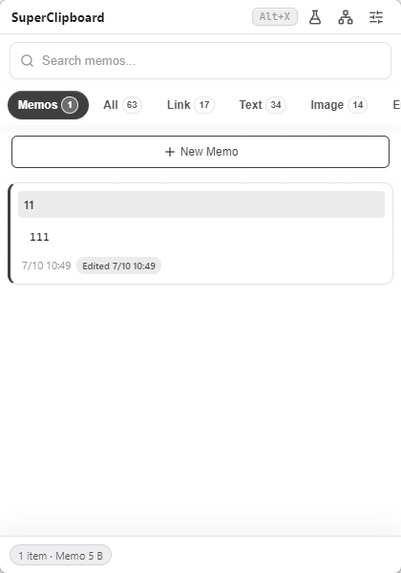
memorandum
-
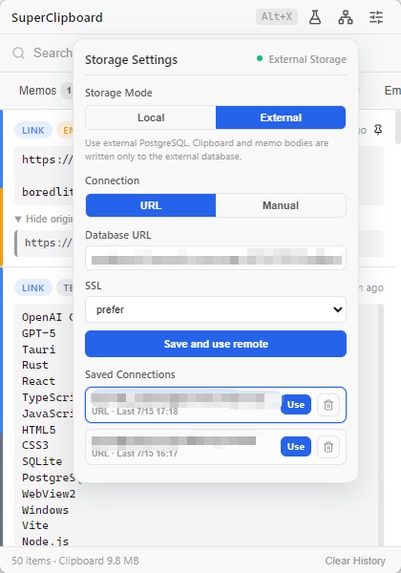
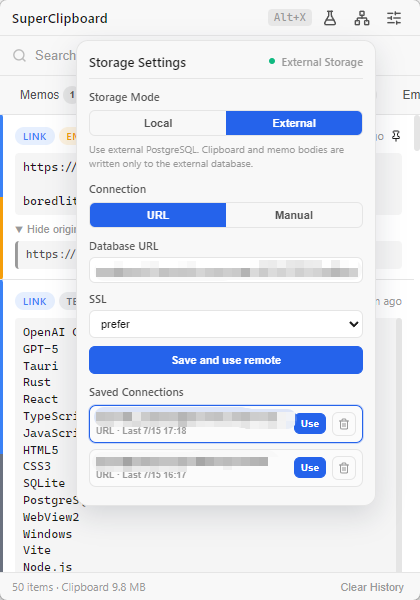
Connect to an external database
-
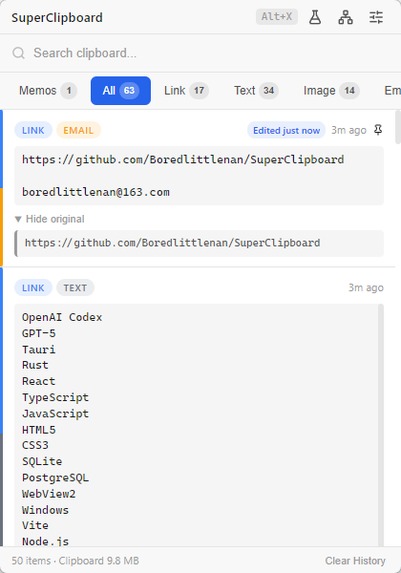
Standard Interface
-
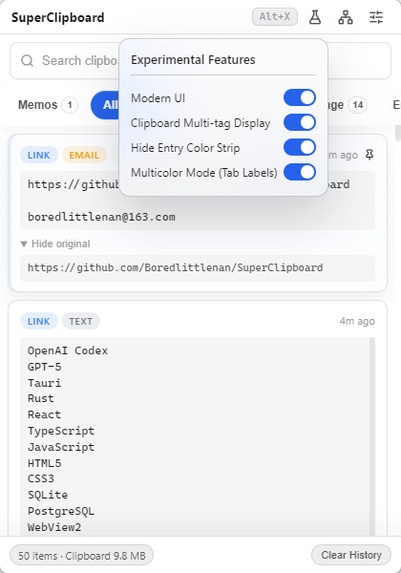
Texture Mode (In Development)
-
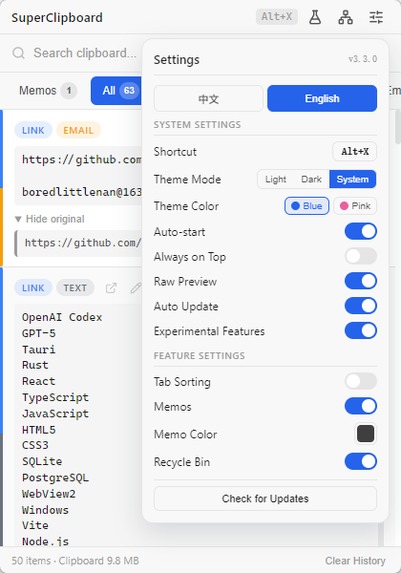
Settings page, pink theme, dark mode
-
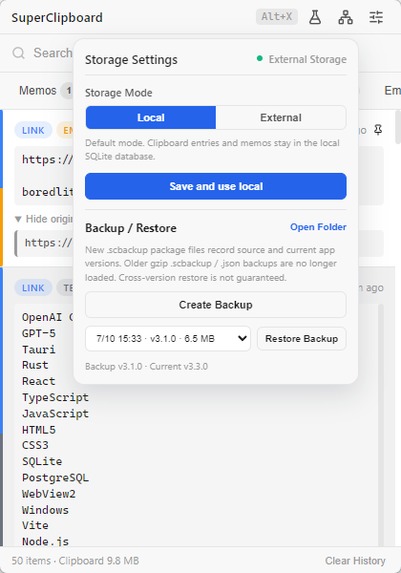
Local Backup and Recovery
Inspiration
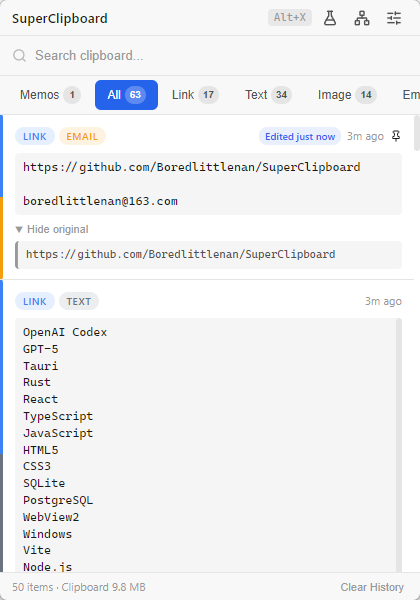
We wanted clipboard history to feel like an organized workspace instead of an endless list. SuperClipboard was inspired by the need to quickly find copied content, save important ideas, and keep full control over where data is stored.
What it does
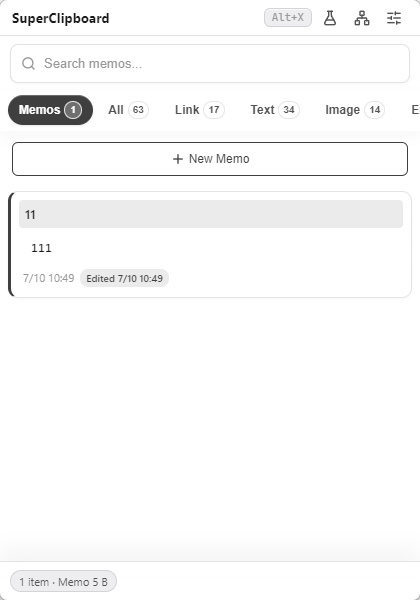
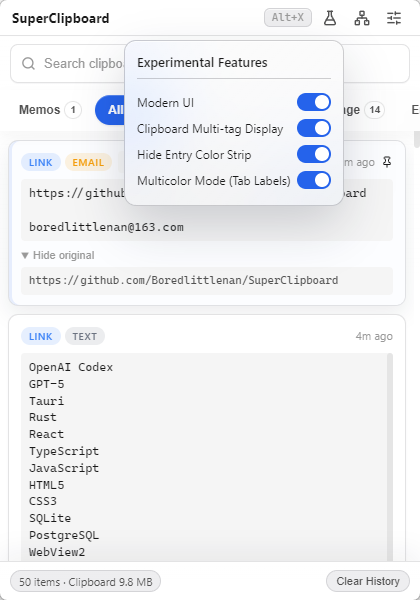
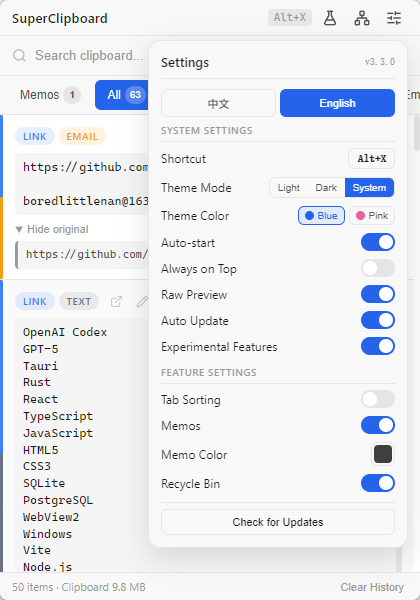
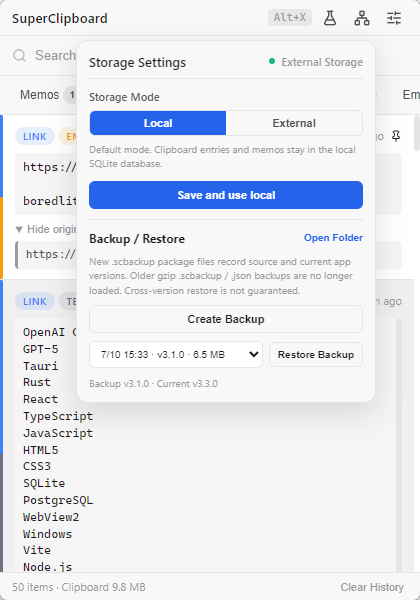
SuperClipboard manages clipboard history and image-enabled memos on Windows. It automatically categorizes content such as links, emails, paths, code, text, and images. It also provides search, tags, themes, keyboard shortcuts, a recycle bin, backups, and optional self-hosted PostgreSQL storage.
How we built it
We built the desktop application with Tauri, Rust, React, and TypeScript. SQLite powers local storage, while PostgreSQL provides optional external storage and real-time change notifications. OpenAI Codex assisted with architecture, implementation, debugging, testing, documentation, and release workflows.
Challenges we ran into
The hardest challenges involved Windows window and tray behavior, reliable global shortcuts, smooth remote database access, rich memo editing, and consistent WebView styling. We also had to prevent large Base64 image data from slowing down or polluting search results.
Accomplishments that we're proud of
We created a responsive, native-feeling Windows utility with local-first storage and no mandatory cloud account. We are especially proud of its automatic categorization, searchable image-enabled memos, multi-database support, safe database migrations, and polished bilingual interface.
What we learned
We learned that desktop application quality depends on much more than features. Window lifecycle management, migration safety, perceived performance, accessibility, and small interaction details are all essential to making an everyday tool feel reliable.
What's next for SuperClipboard
Next, we plan to improve classification accuracy, expand memo and image editing, strengthen credential security, optimize external storage performance, and continue refining accessibility and the new interface.
other
I couldn’t have built this alone. None of it would have been possible without Codex and the latest GPT models. I once tried to create a similar application in C# with the web version of GPT, but my limited experience and time kept the result from living up to my expectations. Now, with Codex, I have even been able to use Rust, a more efficient language I had never worked with before, to rebuild an idea I once had to leave behind with regret because I lacked the skills to fully realize it.
Built With
- codex
- css3
- github
- gpt-5
- html5
- javascript
- lucide
- node.js
- openai
- pnpm
- postgresql
- react
- rust
- sqlite
- tauri
- typescript
- vite
- vitest
- webview2
- windows


Log in or sign up for Devpost to join the conversation.