Inspiration
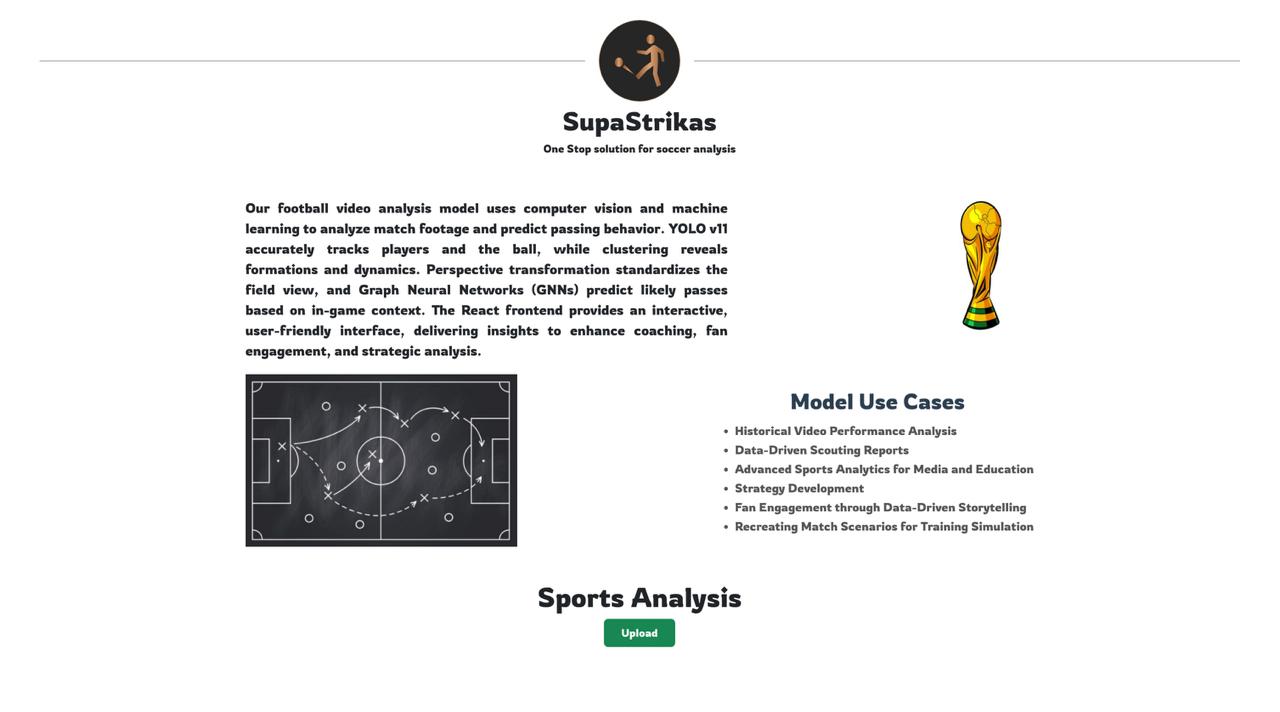
We are graduate computer science students who share a love for soccer. Our passion for the sport, combined with our background in AI and computer vision, inspired us to create Supastrikas—a tool for pass prediction in soccer that has the potential to aid coaches and players in improving game strategies and on-field decision-making. We saw the possibility of using AI to bridge our technical skills with a real-world application, creating a project that could add tangible value to sports analytics.
What We Learned
Throughout the development of Supastrikas, we gained a deeper understanding of AI and computer vision in sports analytics, especially in areas like player tracking, action recognition, and predictive modeling. Working on this project also reinforced our understanding of data preprocessing, feature engineering, and model optimization, as these were essential for accurate pass predictions. Additionally, we explored different model architectures, learning how to balance accuracy with real-time performance to make the tool as useful as possible during live play analysis.
How We Built the Project
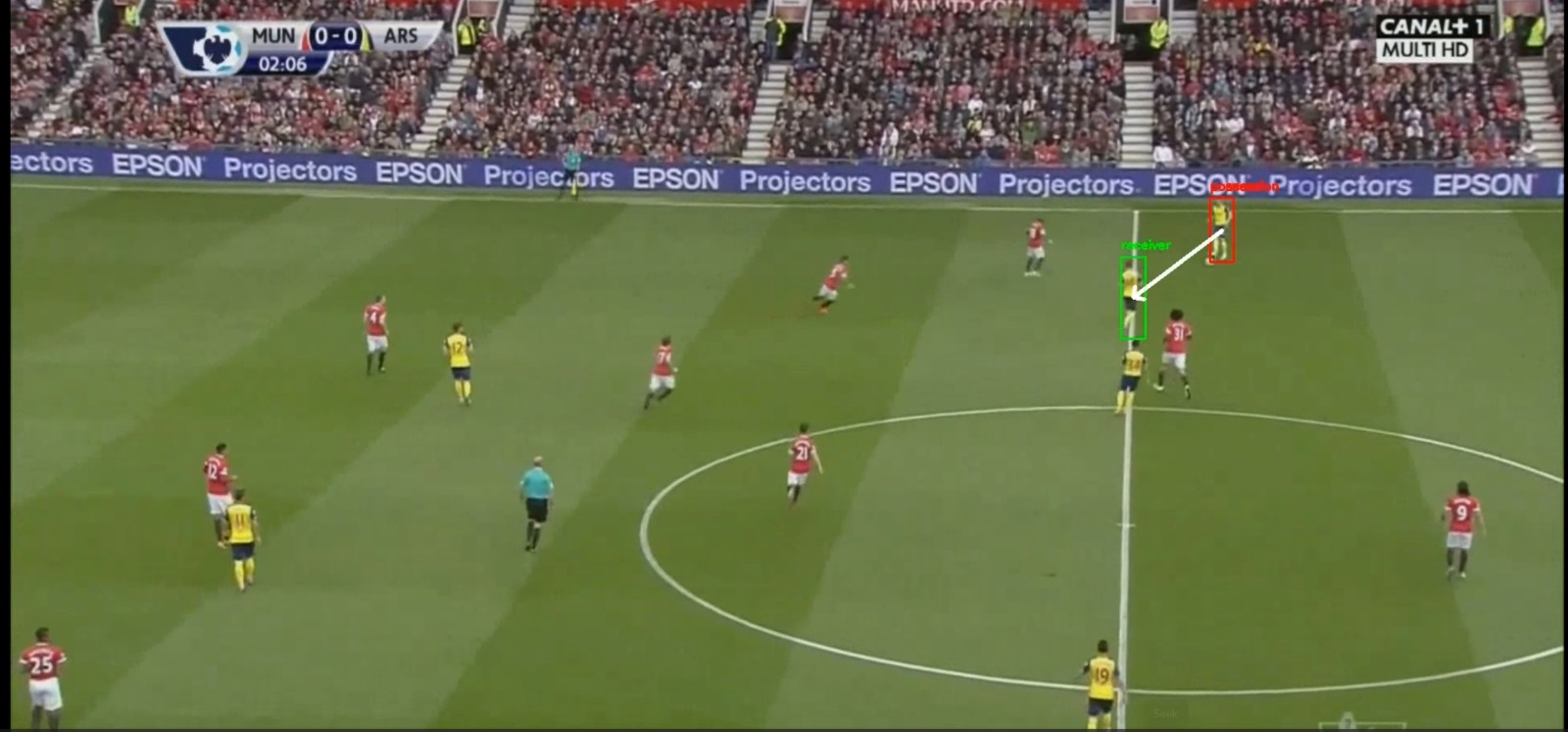
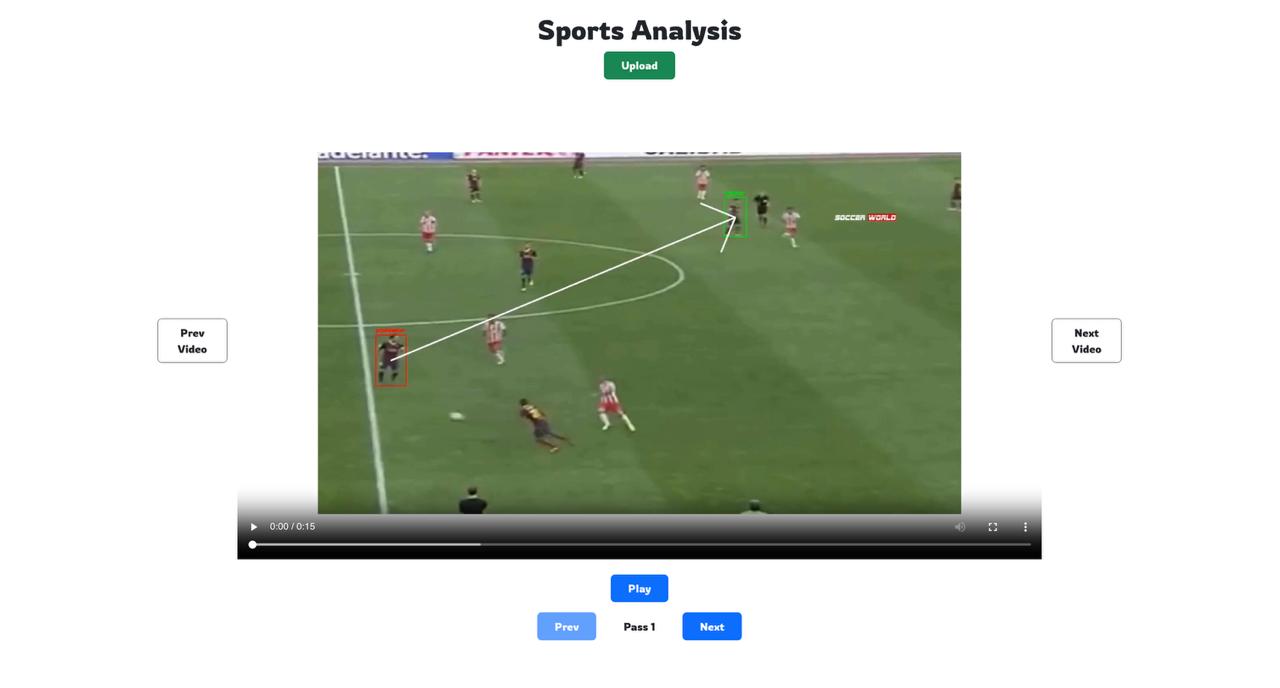
We built Supastrikas using a combination of AI and computer vision libraries. Our pipeline starts with video frames from soccer matches, which we processed to detect and track players on the field. For pass prediction, we trained our model on a labeled dataset that included various passing situations, allowing the model to learn spatial dynamics and context. We experimented with several neural network architectures before selecting the one that offered the best balance of accuracy and computational efficiency.
In the backend, we leveraged Python, OpenCV for computer vision tasks, and TensorFlow/PyTorch for model training and inference. For deployment, we designed a user-friendly interface that provides visual insights of predicted pass paths, making it accessible for coaches and analysts.
Challenges We Faced
The project wasn’t without its challenges. One of the biggest hurdles was finding a dataset that provided sufficient labeled examples for pass prediction, which required extensive preprocessing and annotation on our part. Additionally, ensuring end-to-end inference presented technical challenges given multiple models and multiple stages of processing; we had to optimize our models and experiment with hardware acceleration to achieve this. Lastly, balancing model complexity with interpretability was an ongoing challenge, as we aimed to produce predictions that were both accurate and explainable for coaches and players.


Log in or sign up for Devpost to join the conversation.