💡 Inspiration
- Rise of childhood myopia due to lack of outdoor time.
- Health risks of excessive sun exposure in schools.
- WHO + AAO research: balanced outdoor activity protects vision.
- SunSmart guidelines: avoid peak UV hours.
- We wanted to help schools strike a balance using data + automation.
⚡ What it does
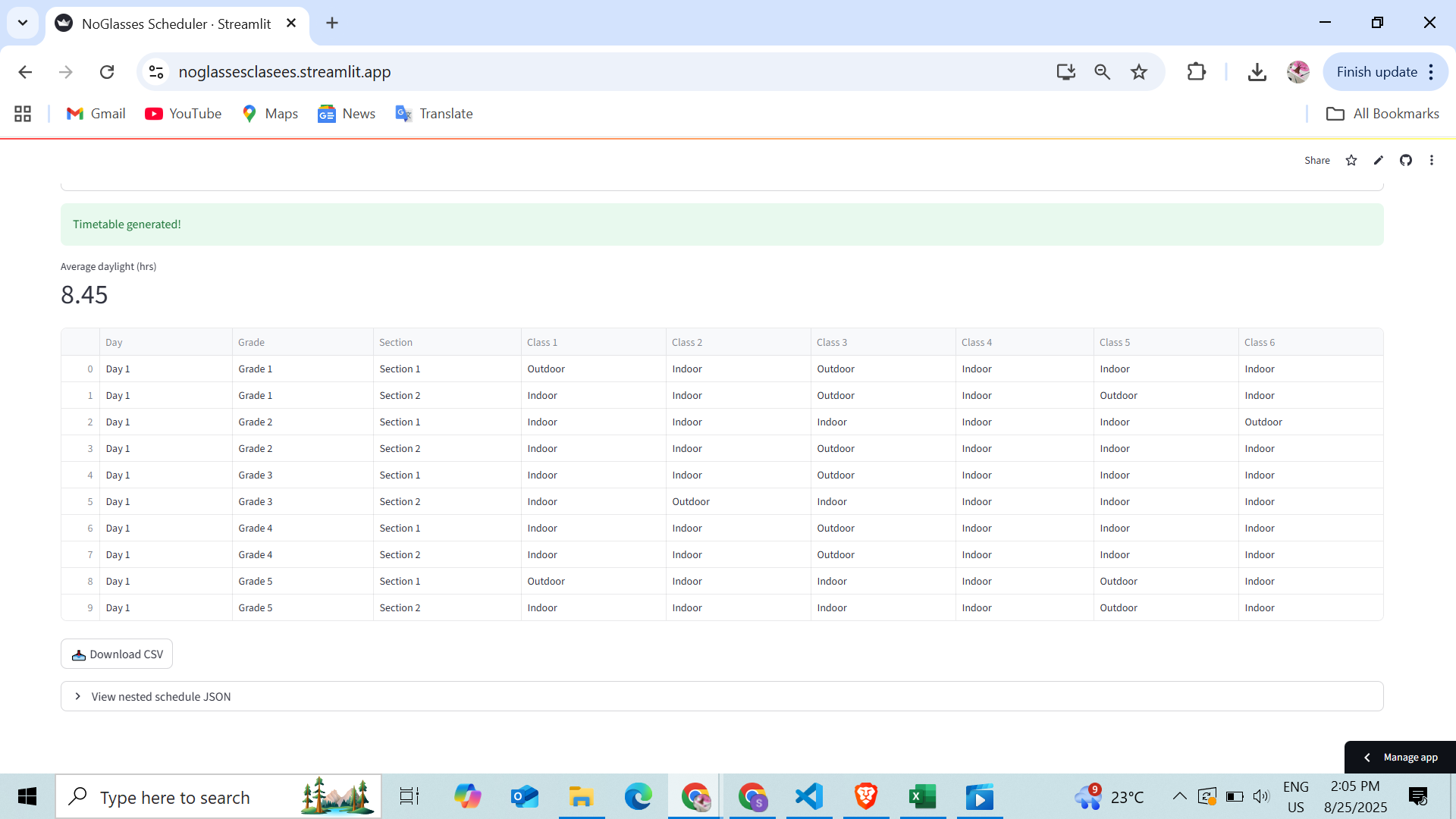
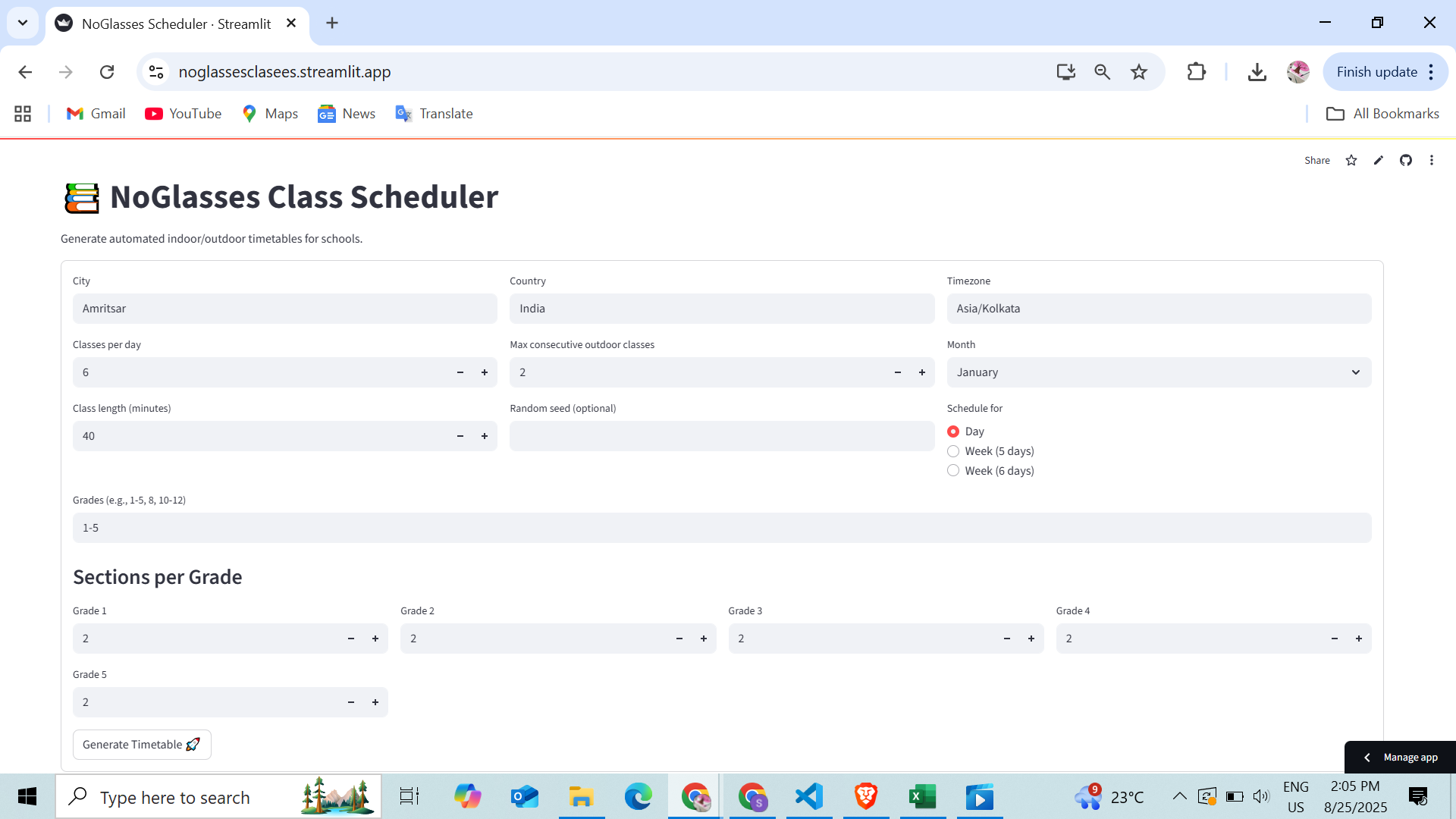
- 📅 Generates balanced timetables for schools.
- 👩🏫 Ensures daily outdoor sessions for each grade.
- 🌞 Avoids peak UV hours for safety.
- ⛅ Integrates daylight + local weather data.
- 📊 Exports easy-to-use CSV timetables for teachers/parents.
🛠️ How we built it
- Python (3.9+) → Core engine.
- Astral → Fetch sunrise/sunset times.
- pytz + timezonefinderL → Handle timezones.
- OR-Tools CP-SAT → Constraint optimization (e.g., max 3 outdoor classes in a row).
- CSV Export → Shareable schedules with enhanced console output.
🚧 Challenges
- 🌍 Handling timezone + daylight for different locations.
- ⛅ Integrating weather data into CP-SAT while keeping it efficient.
- 🐼 Pandas quirks + avoiding chained assignments.
- 🎛️ Balancing user inputs (grades, sections, classes/day) with flexibility.
🏆 Accomplishments
- ⚙️ Built an end-to-end scheduler in < hackathon timeframe.
- 🌦️ Integrated real weather data into scheduling optimizer.
- 👓 Designed a tool with public health impact:
- Healthier eyes
- Safer outdoor activity
- Better learning environments
- Healthier eyes
📚 What we learned
- 🧩 Constraint programming (CP-SAT) is powerful for real-world scheduling.
- 🌌 Astronomical + weather data can support social good.
- 👁️ Eye health research gave us new perspectives on wellbeing.
- 🧱 Clean data handling + modular design ensures scalability.
🚀 What’s next
- 🌤️ Add live UV index APIs for real-time risk adjustment.
- 📱 Build a web/mobile dashboard for admins.
- 🧠 Use ML models for smarter schedules (attendance + weather history).
- 👓 Track student myopia prevalence to validate long-term benefits.


Log in or sign up for Devpost to join the conversation.