-
-
-
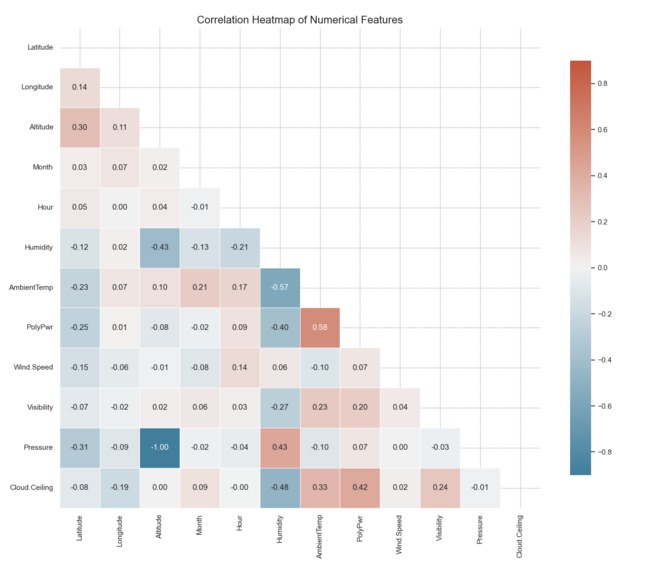
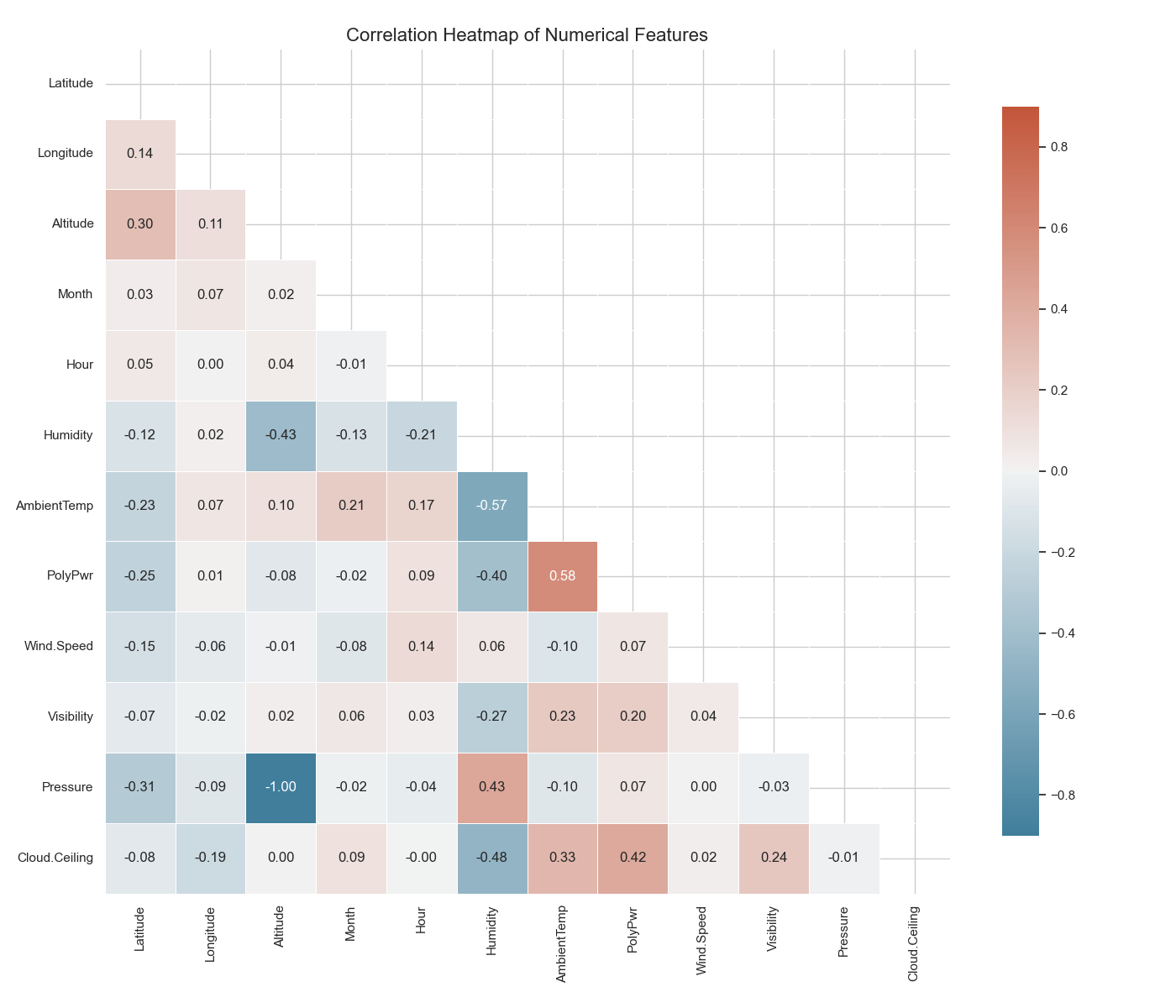
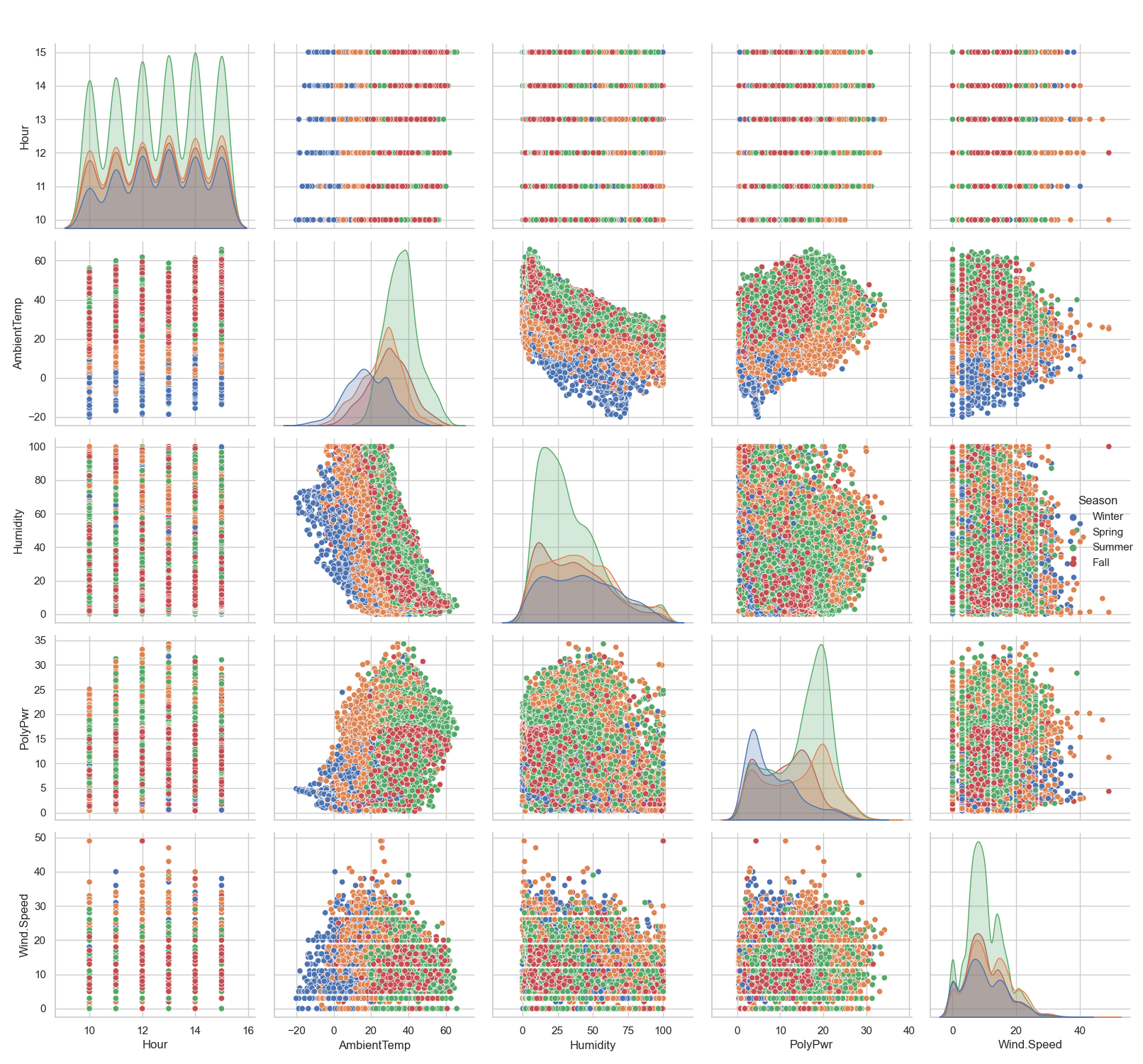
Visualizes relationships between numerical variables, helping identify which factors most strongly correlate with solar power output.
-
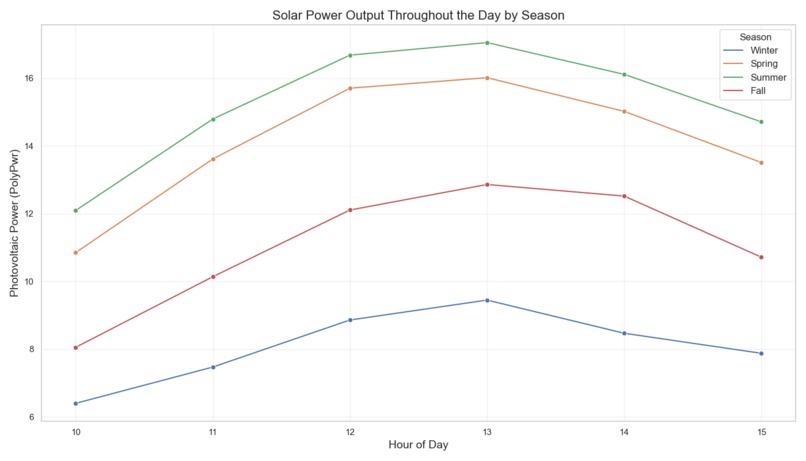
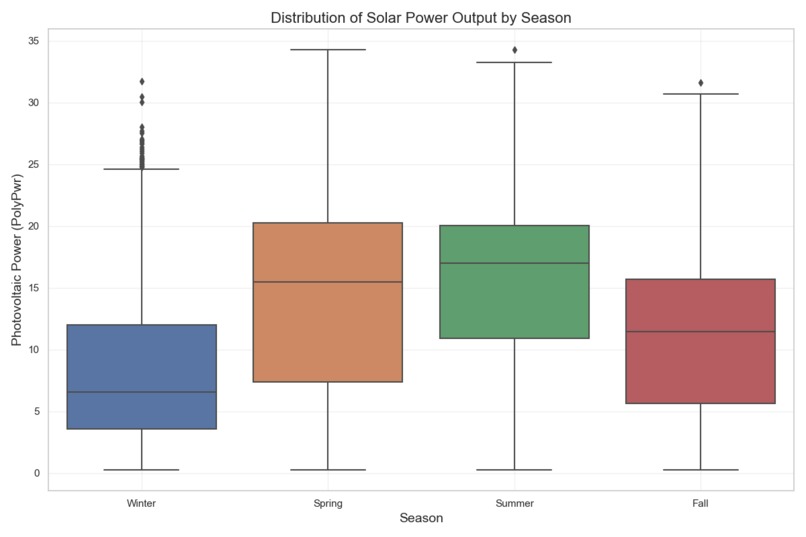
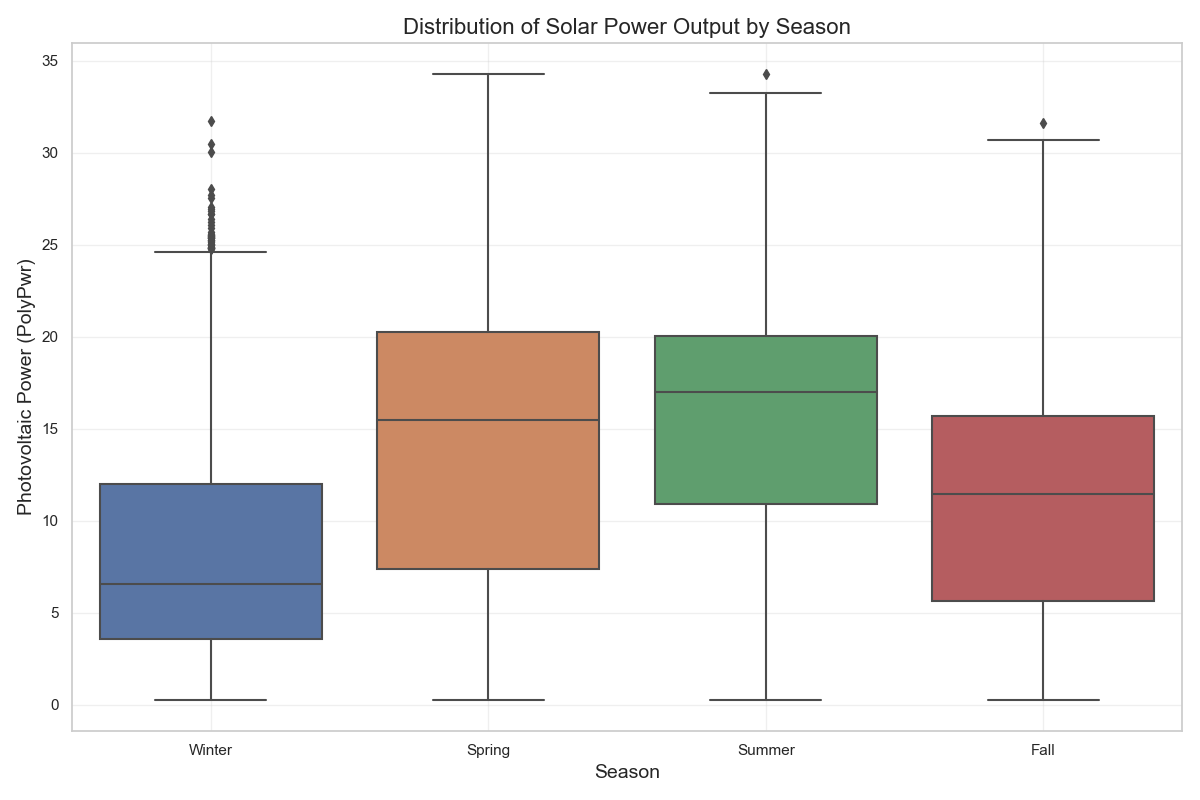
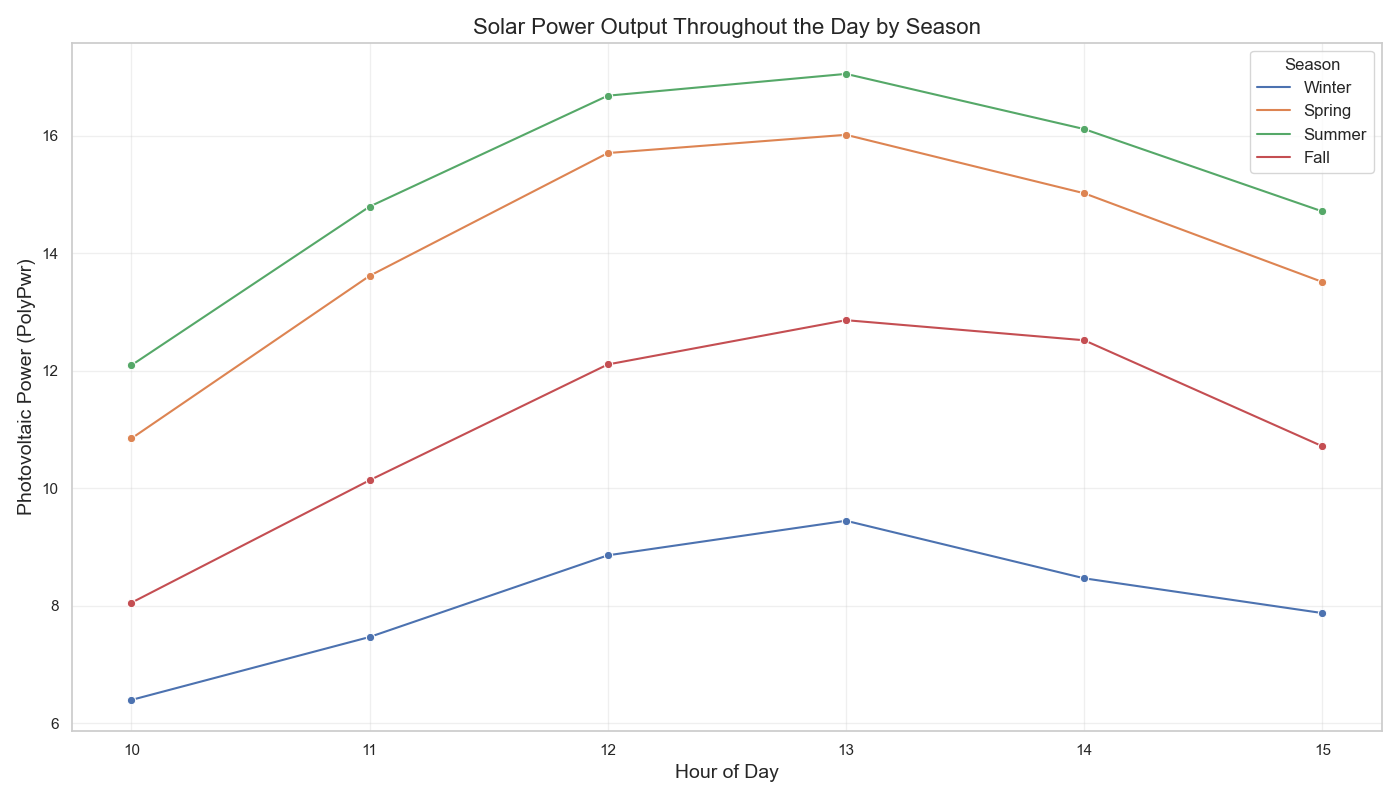
Summer consistently generates the highest photovoltaic power output.
-
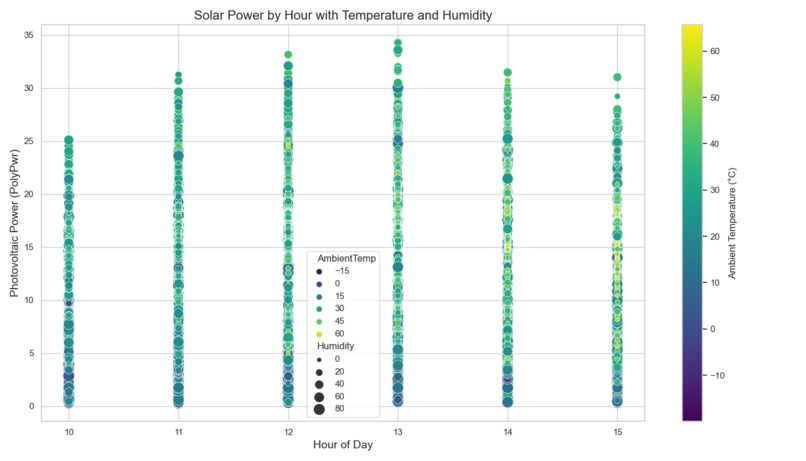
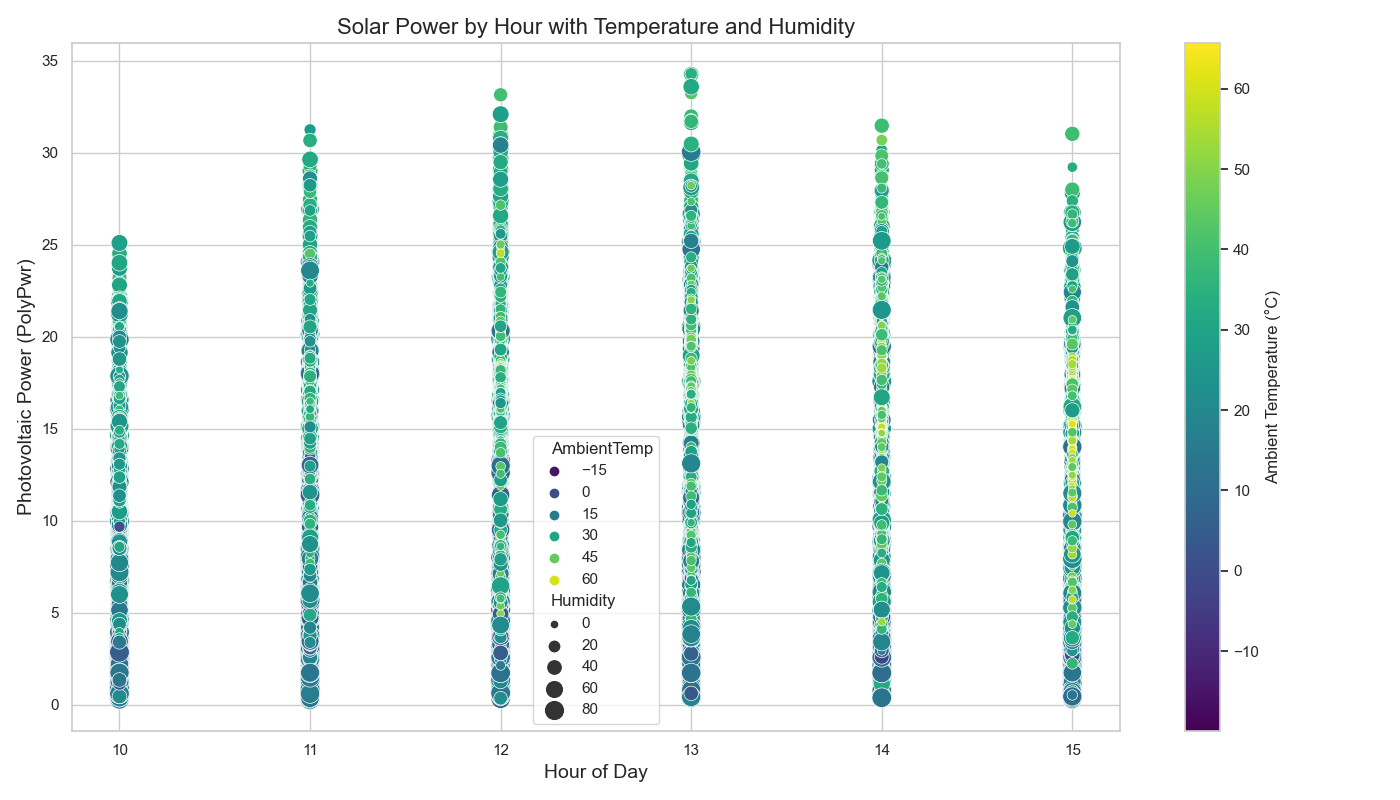
Mid-day sunlight produces peak power outputs, with warmer temperatures boosting generation and high humidity typically reducing efficiency.
-
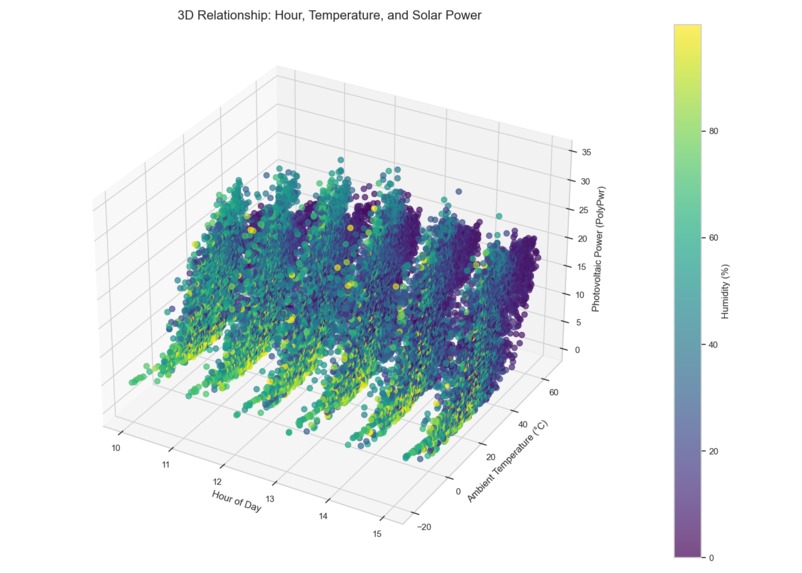
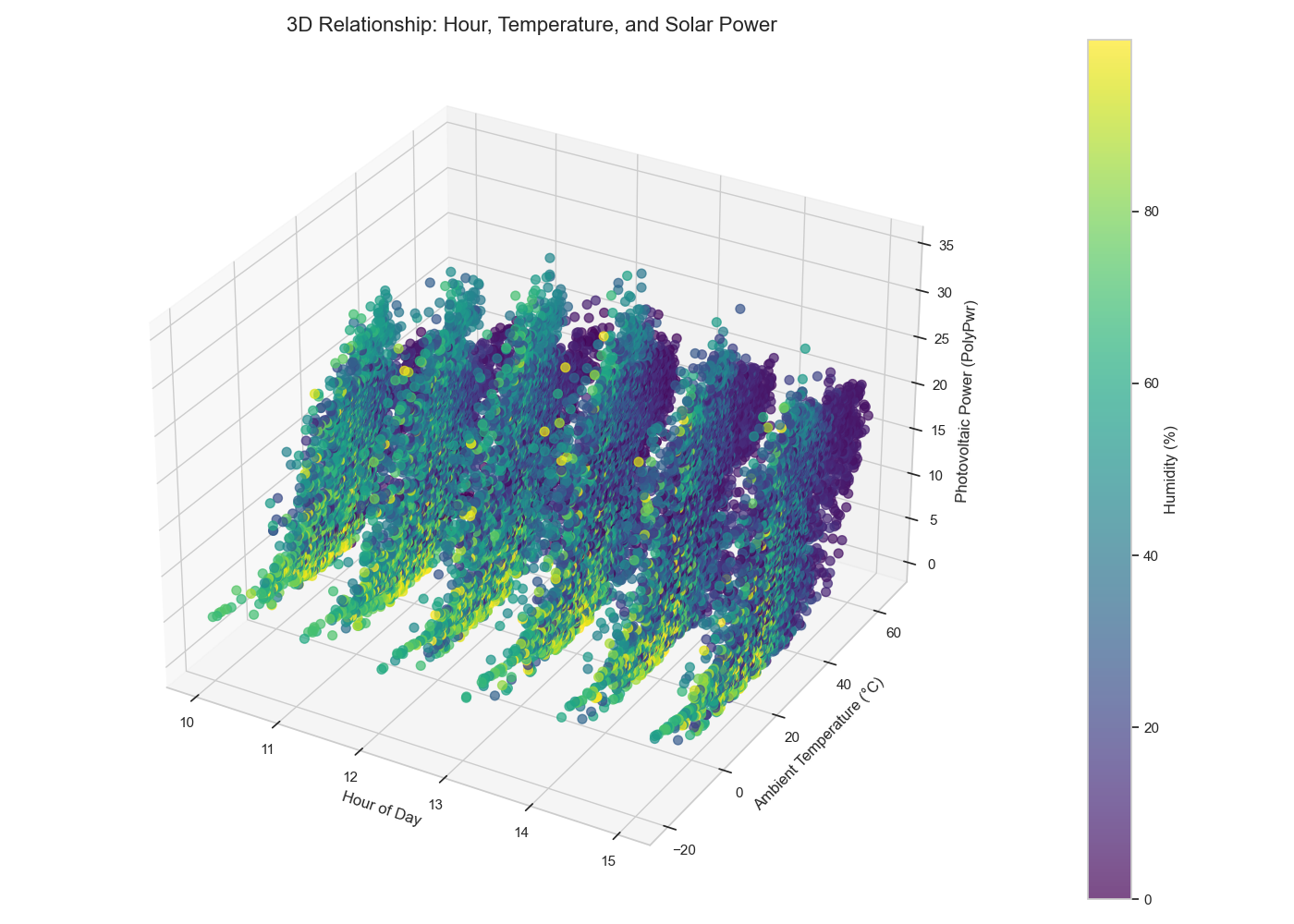
A 3D scatter plot showing the relationship between hour, ambient temperature, and power output.
-
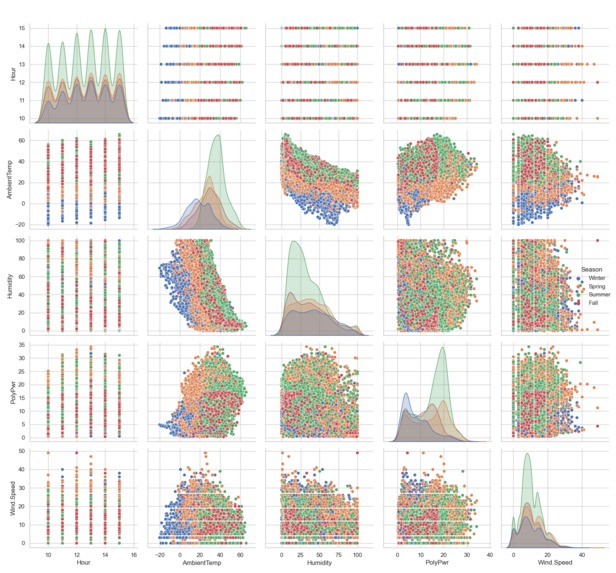
A pair plot showing relationships between key features, separated by season.
-
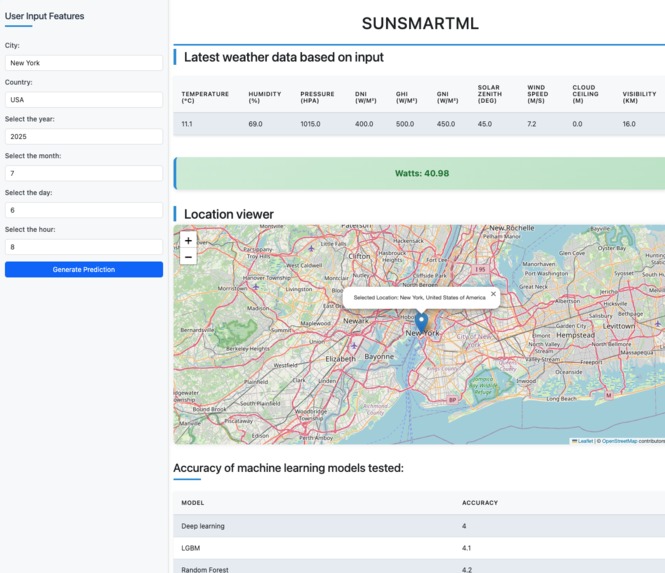
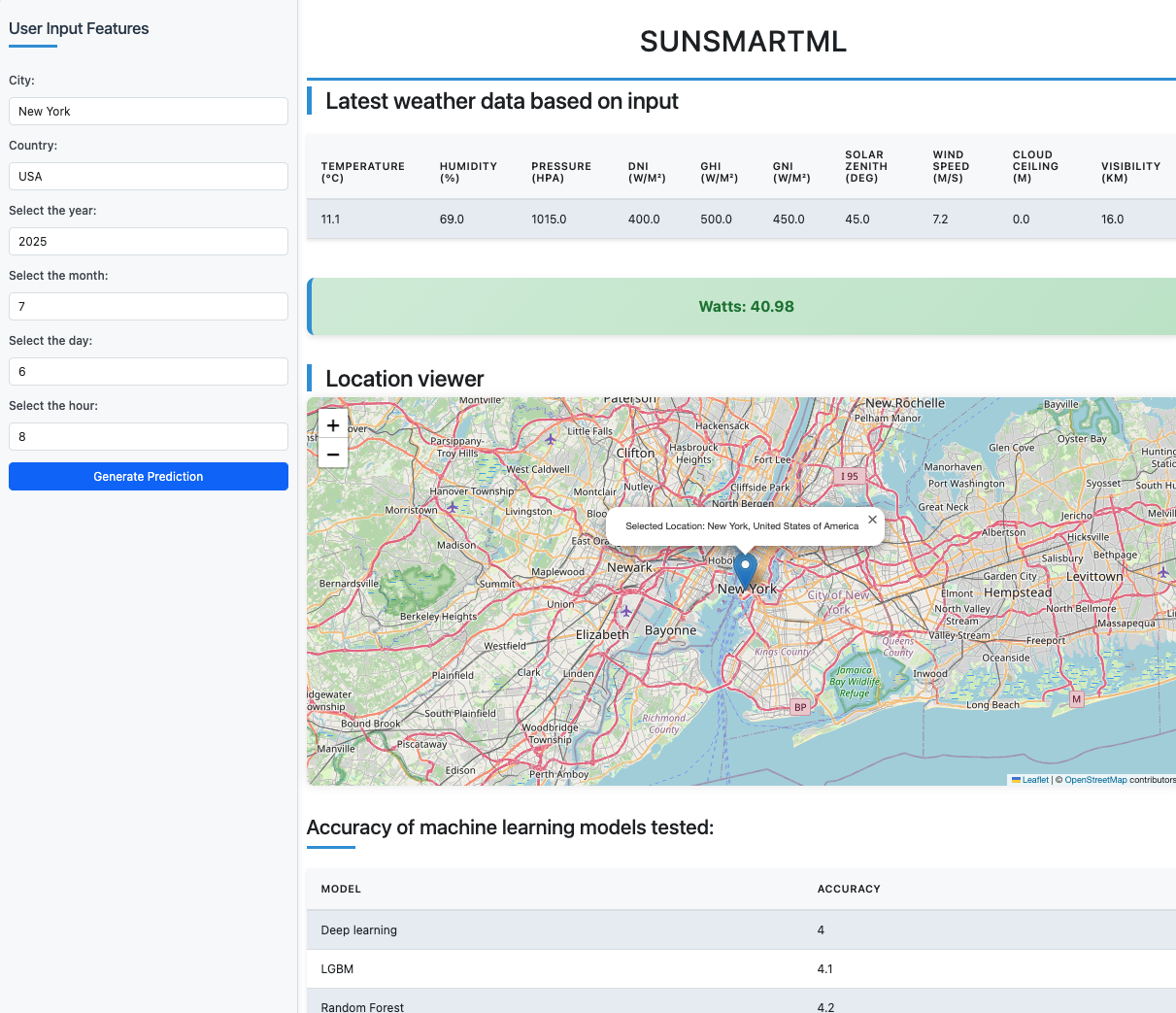
A preview of what the website looks like
SunSmartML
Motivation
SunSmartML was developed in response to the urgent need for sustainable energy on a worldwide scale and the exorbitant expenses of conventional solar prediction techniques. By using machine learning to avoid expensive irradiance measurements, we want to democratize solar energy forecasting and make it affordable and accessible.
What it does
SunSmartML uses regional data and current meteorological conditions to provide accurate solar energy predictions. Trained on 17 important features, it provides accurate forecasts through an easy-to-use web app, empowering individual users and large-scale solar plants to make well-informed decisions regarding solar installations.
How it was constructed
A horizontal photovoltaic cell dataset from Kaggle was used as the data source in order to train reliable models. In order to compare options such as decision trees and linear regression, a Random Forest Regressor model was developed. In order to find the ideal hyperparameters that enhance prediction accuracy, Hyperparameter Tuning uses GridSearch.
- Model Selection: Thoroughly examined models; Random Forest Regressor fared better than others. A null checking process was put in place to deal with missing data, and a comprehensive data analysis was carried out to identify important features.
- Deployment: Developed a user-friendly web app that integrates a real-time weather API with input forms for location and weather data. For smooth endpoint access, the model was deployed using Pyxeda.
Issues we faced - Handling incomplete Kaggle dataset entries required thorough null checking and sophisticated preprocessing.
The computationally demanding GridSearch optimization required effective resource management. Synchronization and compatibility issues arose when the real-time weather API was integrated with the Pyxeda endpoint.
## Achievements of which we are proud A very accurate Random Forest Regressor was created and tuned using GridSearch, establishing a new benchmark for solar forecasting. In order to improve accessibility, a scalable web app was introduced that lets users enter features and get predictions right away. By doing away with the requirement for expensive measurements, solar energy forecasting is now inclusive for a wide range of users.
SunSmartML's Impact
The renewable energy landscape is changing dramatically because to SunSmartML. It makes it possible for small businesses, homeowners, and communities to confidently embrace solar energy by eliminating the financial obstacles to solar forecasting. By lowering carbon footprints and encouraging adoption of renewable energy, the project supports global sustainability goals. Its scalable model promotes energy equity by helping areas with scarce resources. Economically speaking, it reduces the barrier to entry for solar projects, promoting innovation and job creation in the renewable energy industry. SunSmartML speeds up the shift to a greener, more sustainable future by providing users with real-time, data-driven insights.
What we learned:
Data preprocessing procedures, such as feature selection and null testing, were mastered.
- Improved model performance by becoming proficient in GridSearch for hyperparameter optimization. For real-world applications, I experimented on how to deploy machine learning models using Pyxeda and integrate them with real-time APIs. Recognized how effective the Random Forest Regressor is at processing intricate, non-linear solar data.
## Future Plans for SunSmartML Expand datasets: To improve accuracy across a range of climates, include global datasets (such as NOAA). Improve web app: For greater accessibility, include interactive visuals and multilingual support. The integration of IoT: Create real-time solar panel monitoring with a Raspberry Pi or other inexpensive gear.
- Mobile expansion: Release a mobile application for measuring energy savings and making predictions while on the go.
- Social impact tools: Include a carbon savings calculator to help people measure the environmental advantages.

Log in or sign up for Devpost to join the conversation.