-
-
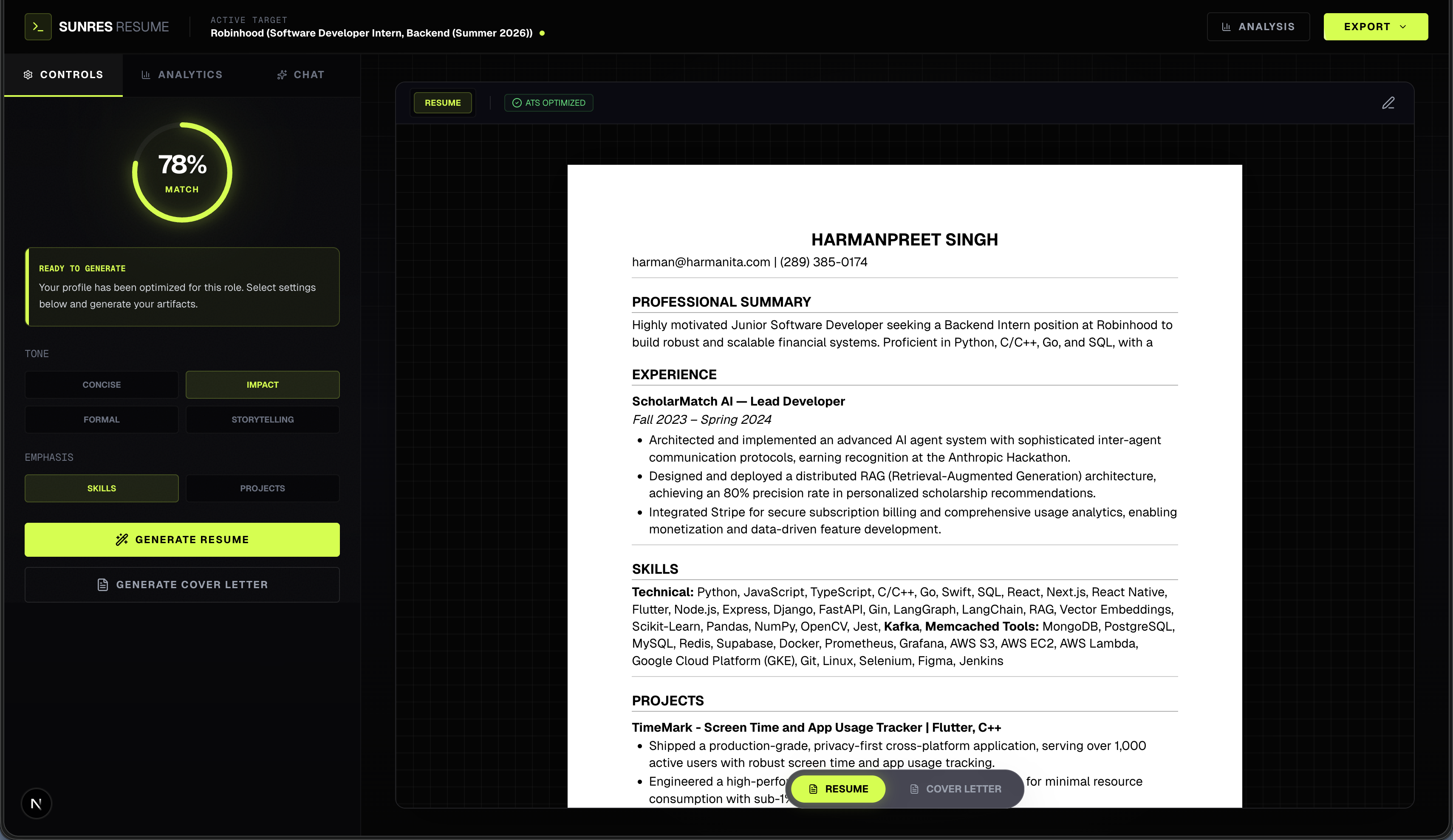
Resume Outcome
-
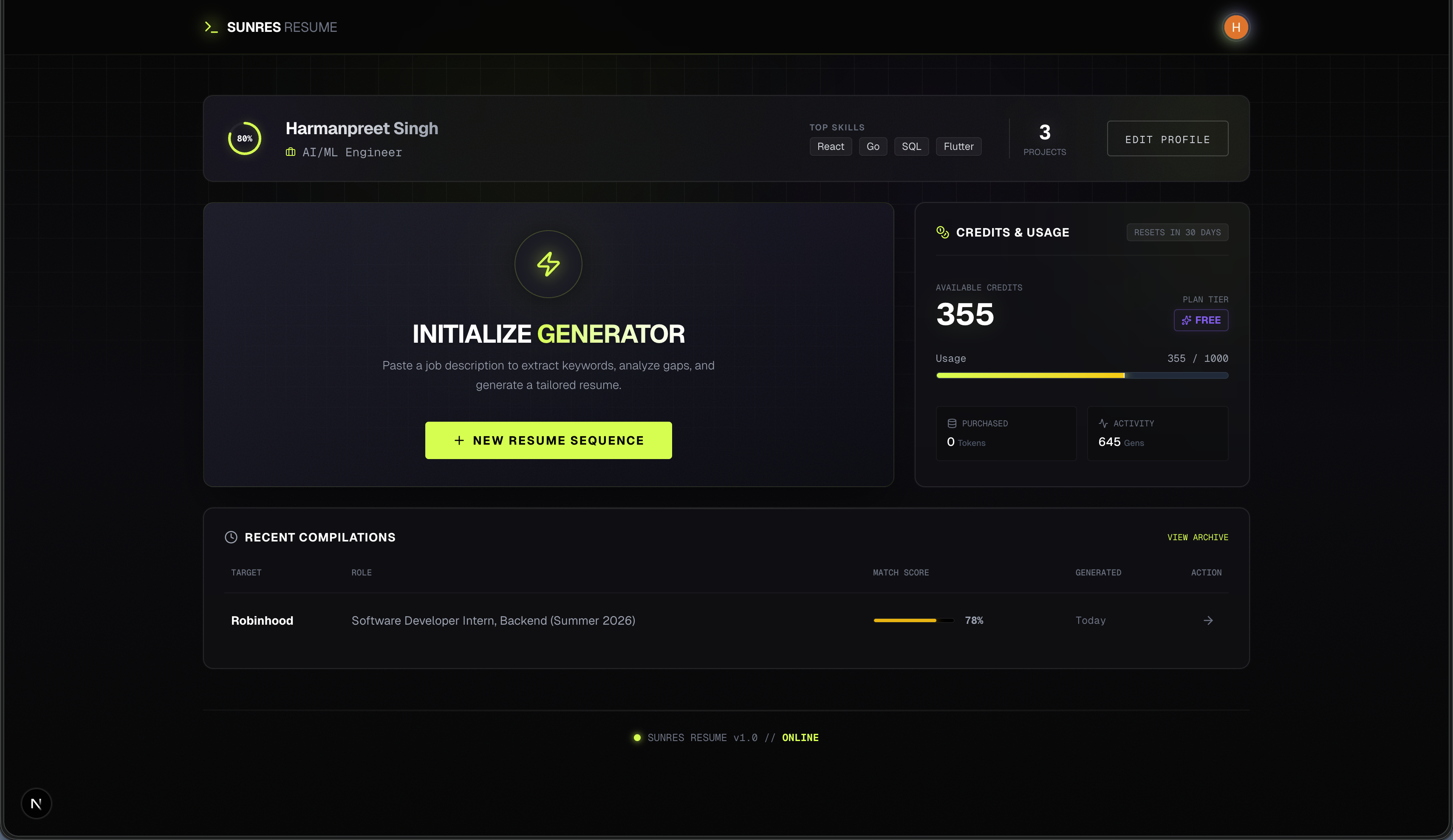
Dashboard
-
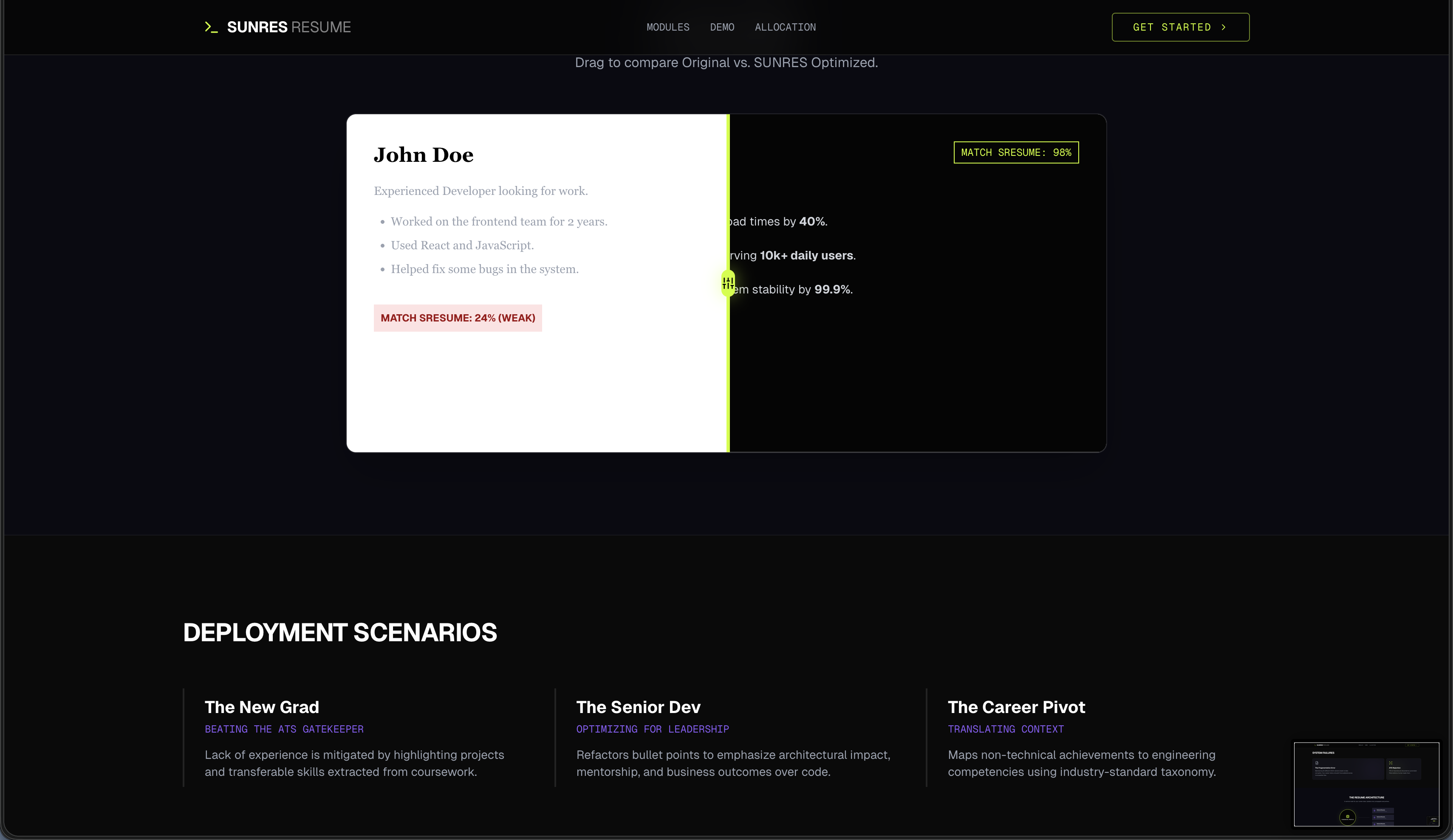
Landing
-
Landing
-
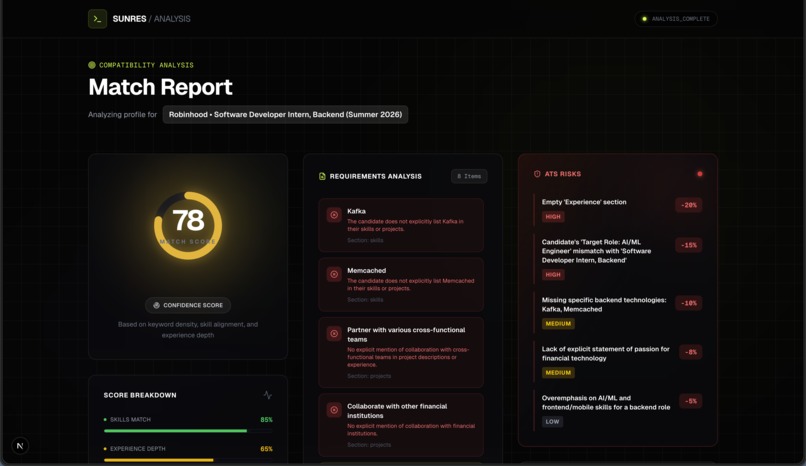
Analysis
Inspiration
Applying for jobs is frustrating — not because people lack skills, but because their resumes don’t match what companies are actually looking for. Most applicants submit the same resume to dozens of roles and never understand why they get rejected. I wanted to build a tool that doesn’t just generate resumes, but explains mismatches, highlights gaps, and helps candidates fix them before they apply. As students and developers actively applying for internships and roles ourselves, this problem felt very real and personal.
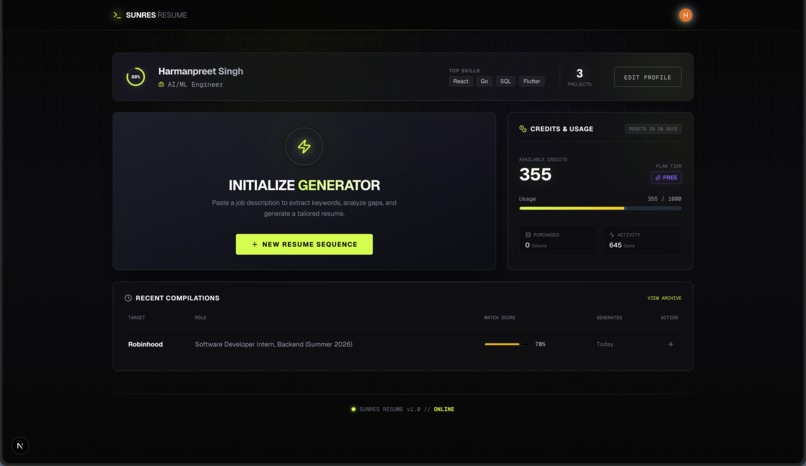
So you can have multiple resumes from one profile
Build your profile, have all your projects and achievements listed there, and AI will automatically pick the top ones for your resume for that specific job application
What it does
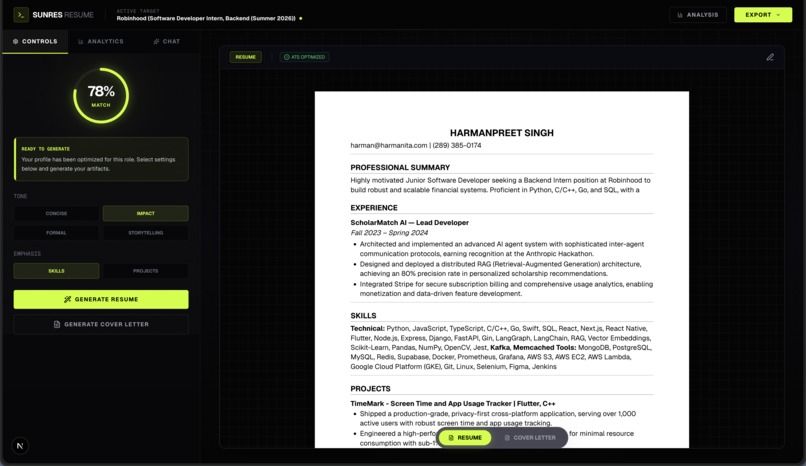
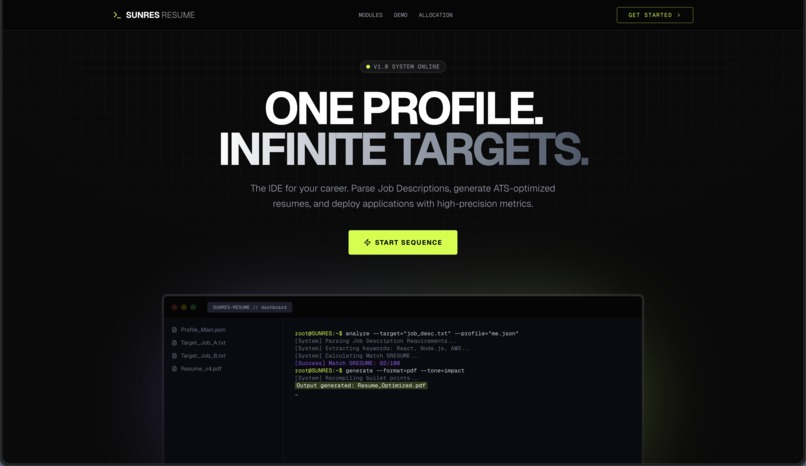
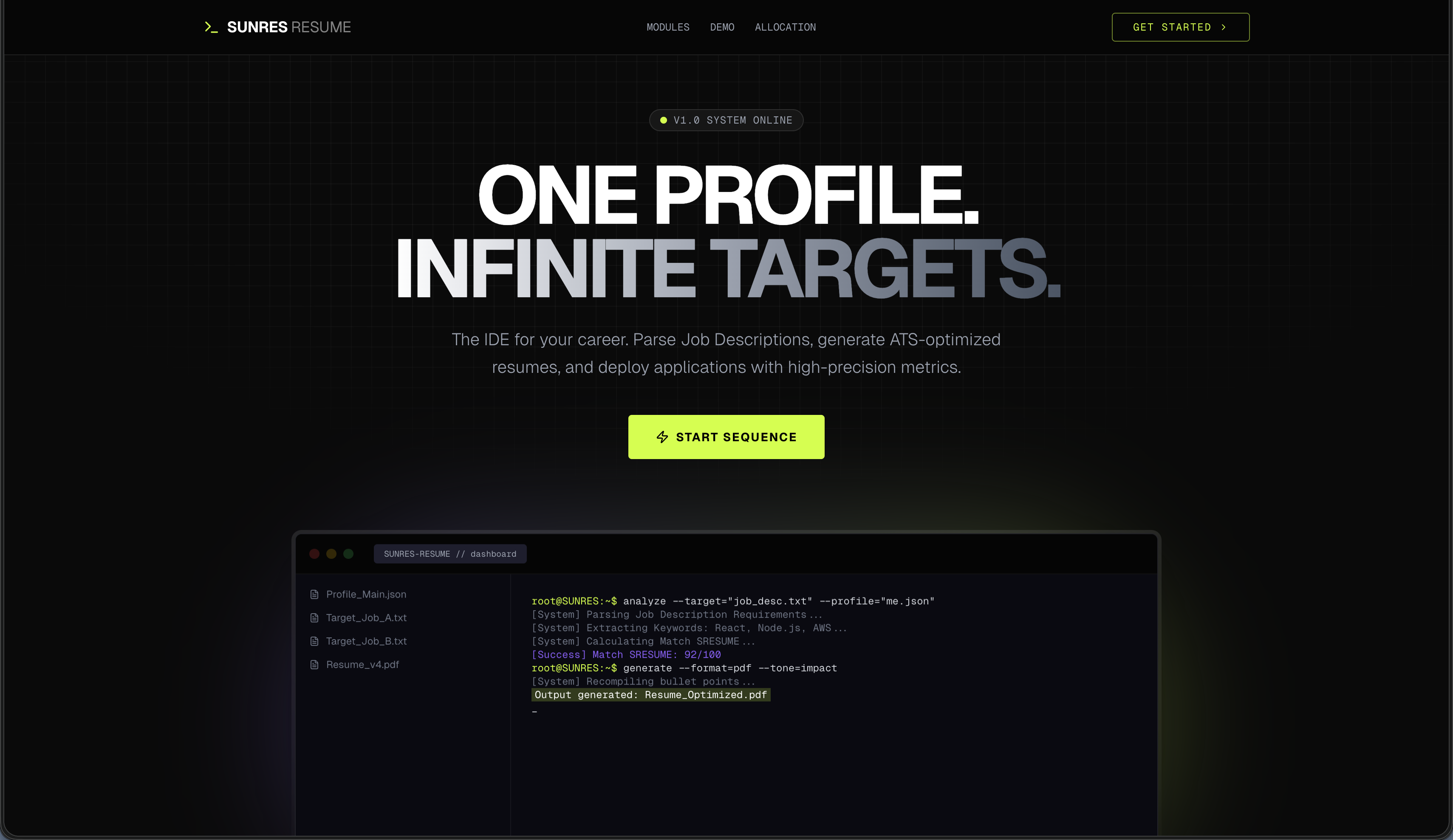
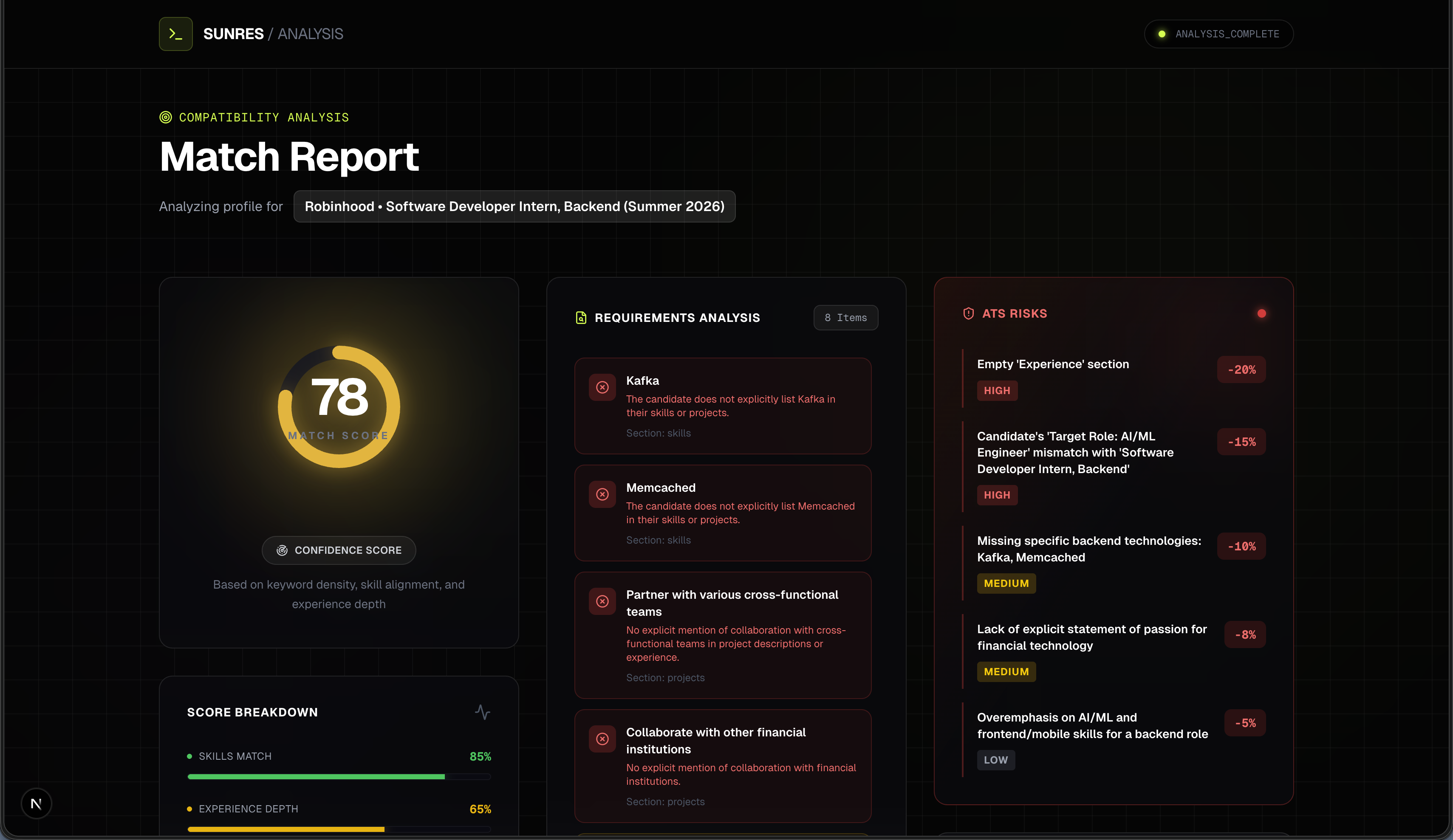
SunRes helps users get closer to their dream job interview by analyzing how well their profile matches a job posting and generating a tailored resume and cover letter.
Users can:
- Upload an existing resume to auto-populate their profile
- Enter job descriptions and role details
- See a job–profile match score
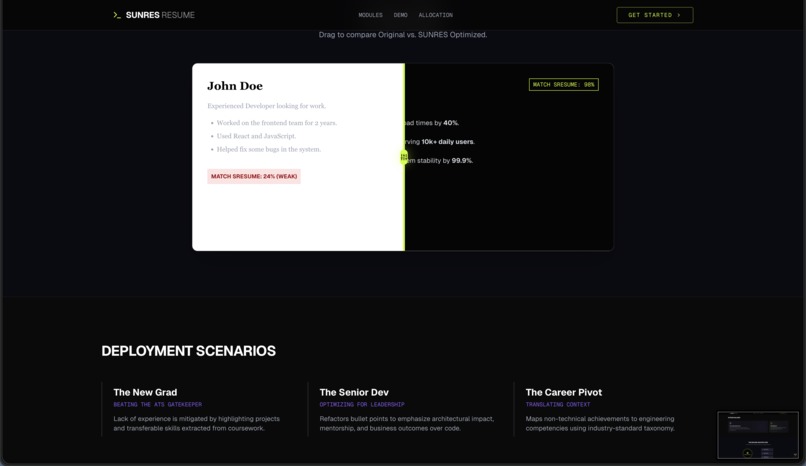
- Understand why they might get rejected
- Identify missing skills and weak resume sections
- Apply AI-suggested fixes to improve compatibility
- Generate a tailored resume and cover letter
- Ask a chatbot job-specific questions based on their profile
- Edit resume through chat or manually and download it for applying
Instead of blindly applying, users now apply strategically and confidently.
How I built it
SunRes was built using:
- Next.js for the frontend UI and workflow
- FastAPI (Python) for backend APIs and business logic
- PostgreSQL for structured user and application data
- Google Gemini API to power:
- Resume parsing and structured extraction
- Job requirement understanding
- Profile–job mismatch reasoning
- ATS-style feedback generation
- Tailored resume and cover letter creation
- Resume parsing and structured extraction
I designed a clean pipeline: Resume → Structured Profile → Job Analysis → Fix Suggestions → Resume Generation
Gemini was used not just for text generation, but for reasoning and structured decision-making.
Challenges I ran into
- Designing a clear user flow without overwhelming users with too many AI features
- Parsing resumes reliably across different formats
- Keeping AI outputs structured and consistent for scoring and analysis
- Balancing feature scope within hackathon time limits
Accomplishments that I'm proud of
- Built a complete end-to-end product in hackathon time
- Created a meaningful job–profile mismatch engine, not just a resume generator
- Integrated Gemini for real reasoning workflows
- Designed a clean, demo-friendly UX
- Delivered a working system users could realistically use to apply for jobs
- Focused on solving a real problem I personally experience
- Authentication + Database storage
What I learned
- AI products are strongest when they explain decisions, not just automate tasks
- User onboarding matters as much as AI capability
- Structured data + LLM reasoning is powerful
- Clear storytelling wins hackathons
- Scope discipline is critical under time pressure
What's next for SunRes - Get your dream job interview with perfect resume
I plan to:
- Track application outcomes and improve match scoring with feedback loops
- Add interview preparation tools based on resume claims
- Support multiple job applications with resume version history
- Integrate job boards and company ATS systems
- Provide skill-gap learning recommendations
- Expand AI reasoning to predict interview success likelihood
Our goal is to help candidates move from application → interview → offer with confidence.
I have used Gemini API, Here's what it does - Parse existing resume to fill in input fields parse job description to get context of job idea get analysis of job and user profile to have best match fix problems with existing profile for job generate cover letter generate resume ask gemini chatbot for giving user interface to get resume modified and ask questions
Built With
- clerk
- fastapi
- gemini
- nextjs
- postgresql
- python
- react
- tailwind


Log in or sign up for Devpost to join the conversation.