-
-
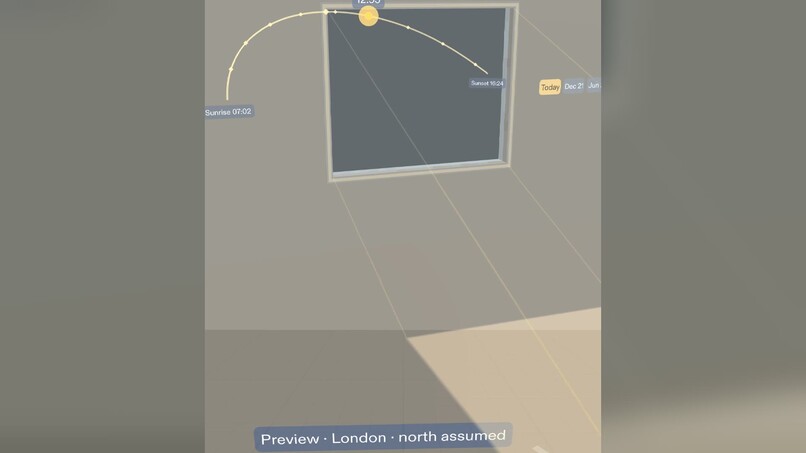
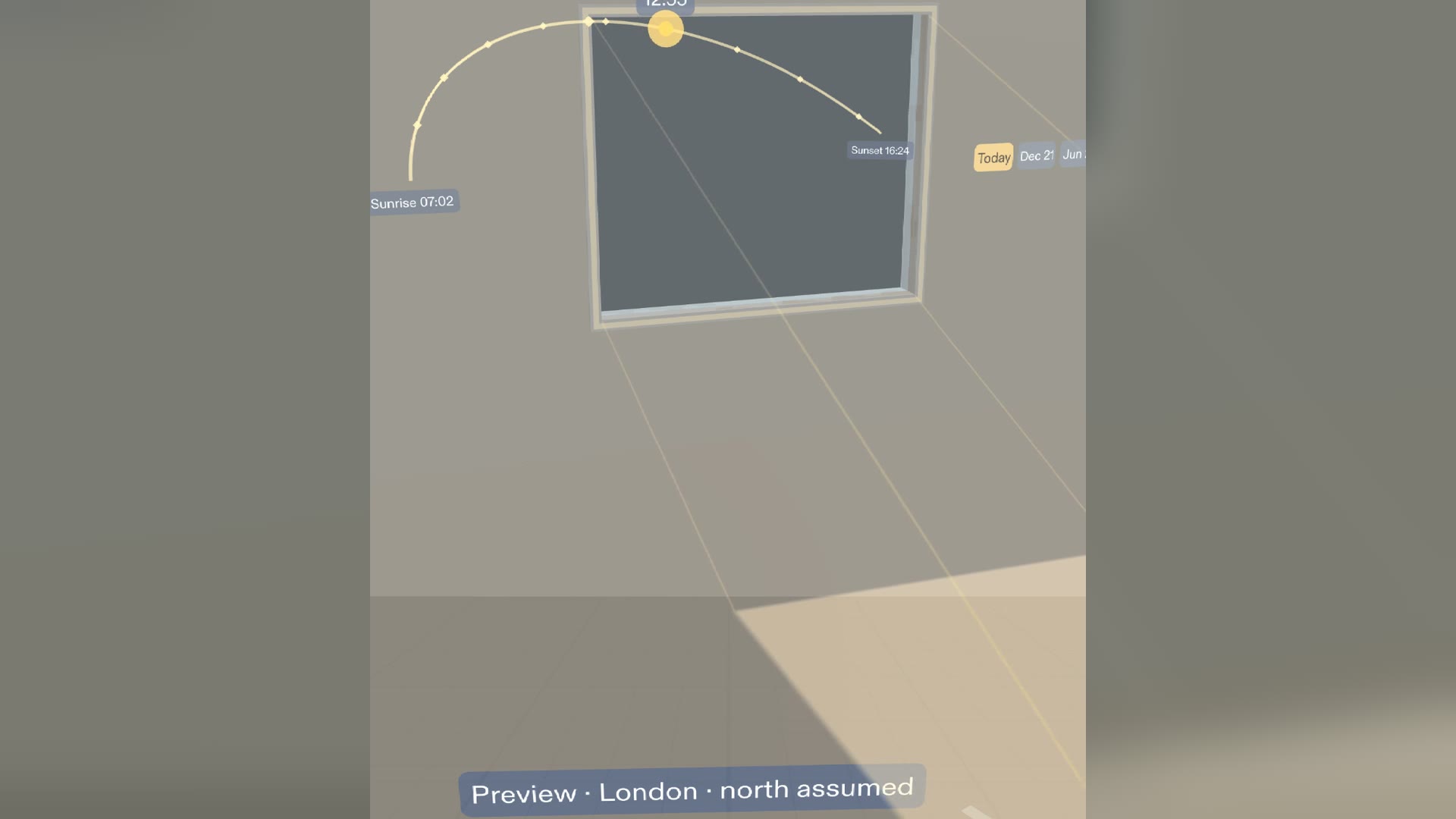
Grab the sun and drag it along the day's path: the light slides across the floor.
-
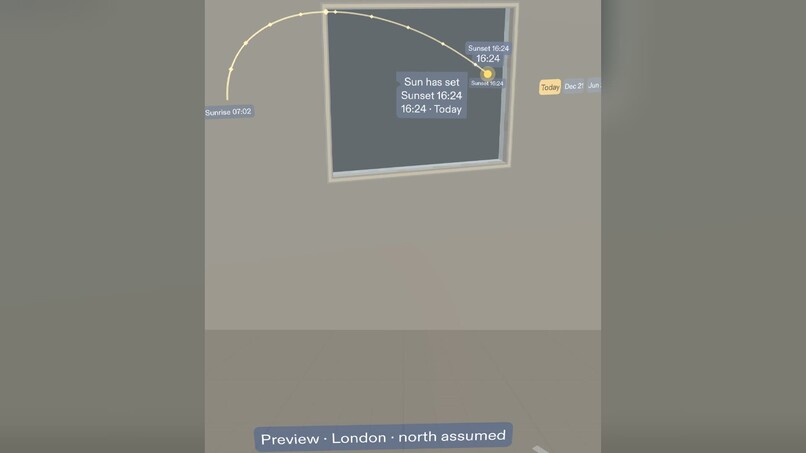
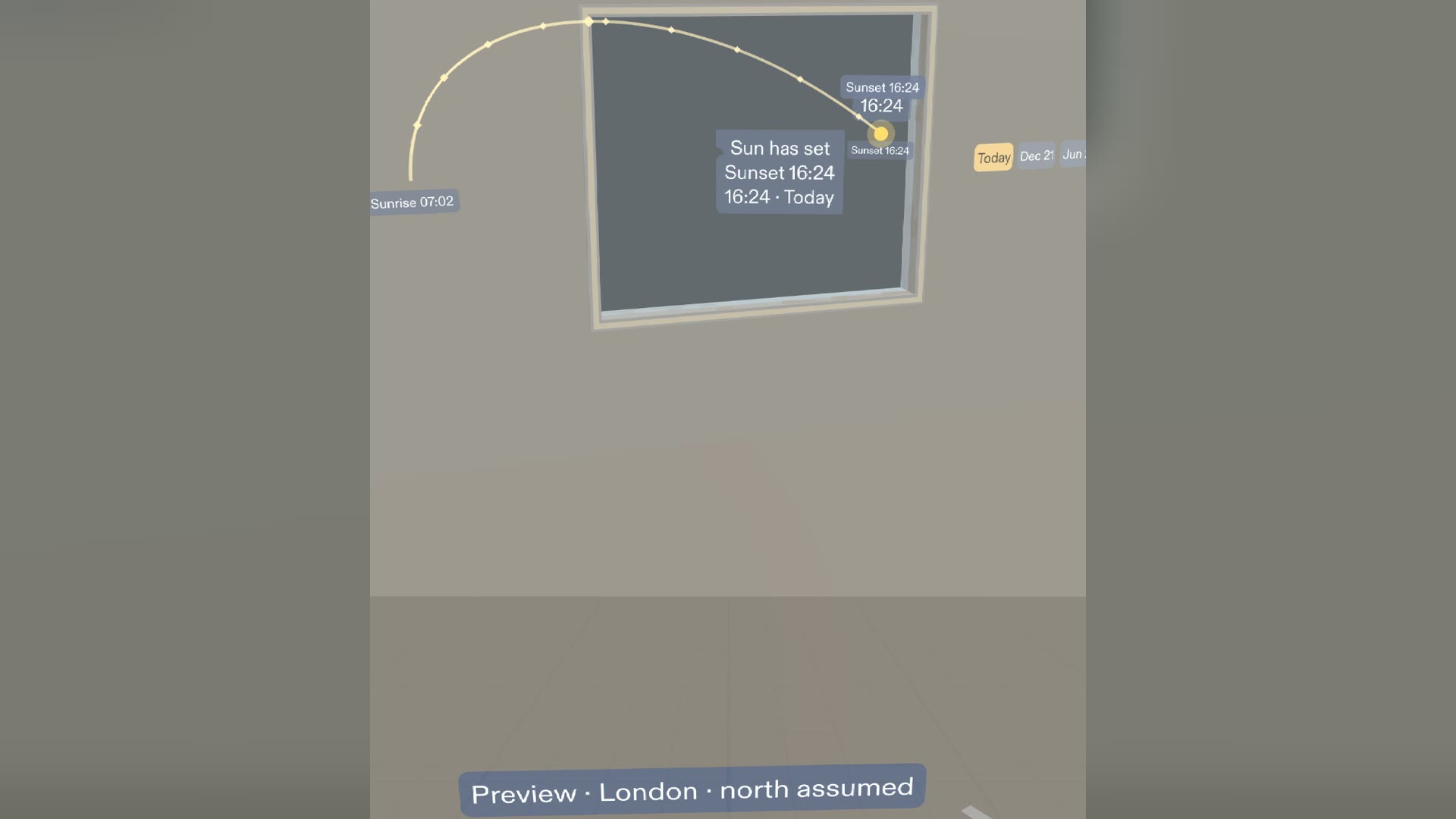
Drag to the end of the arc: the sun sets at 16:24 and the light leaves the room.
-
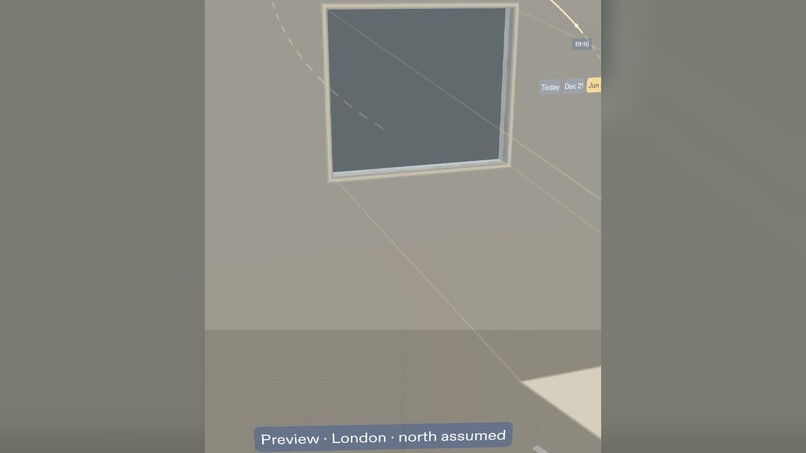
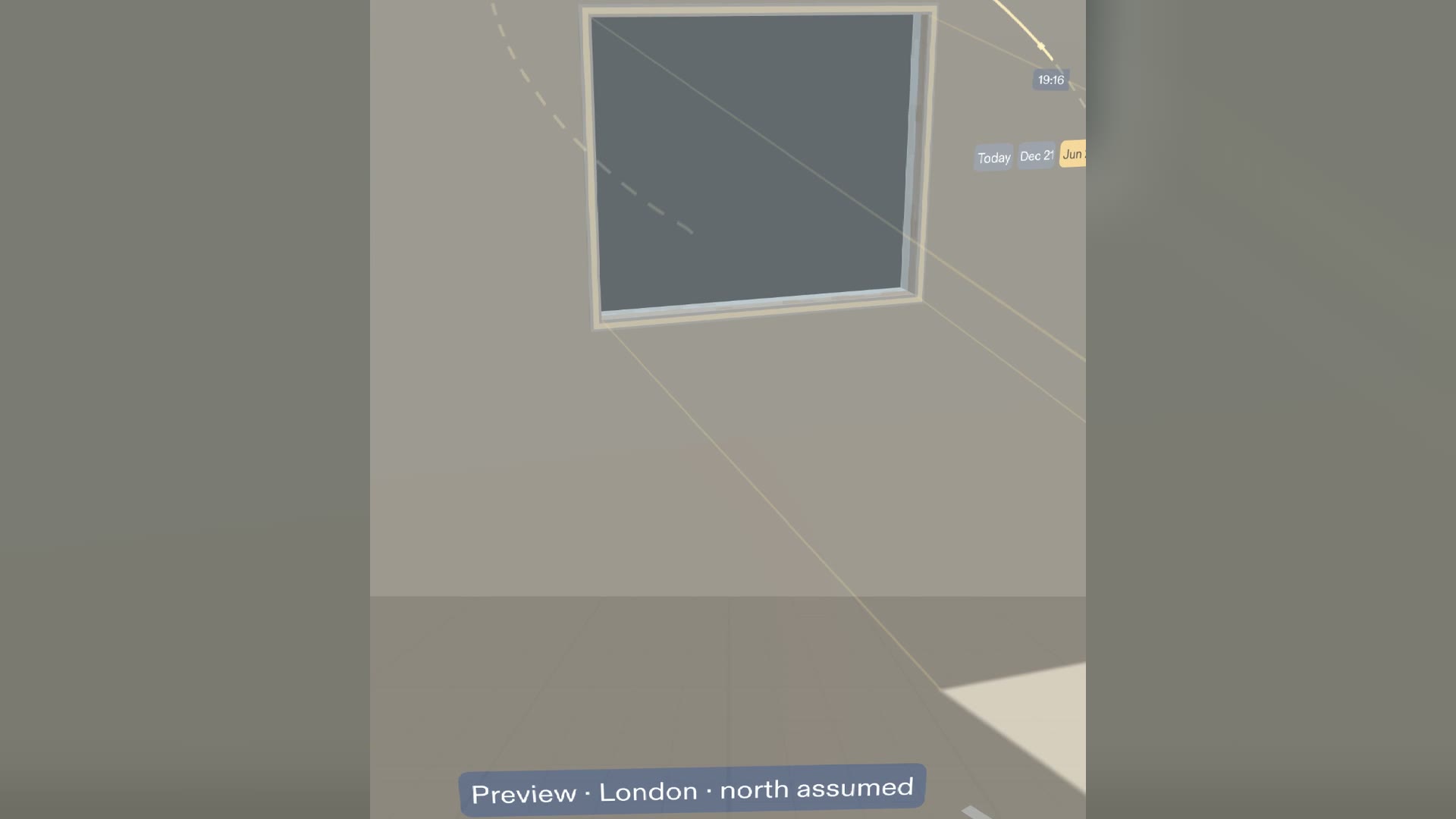
Jun 21 at noon: the high sun keeps the light by the window.
-
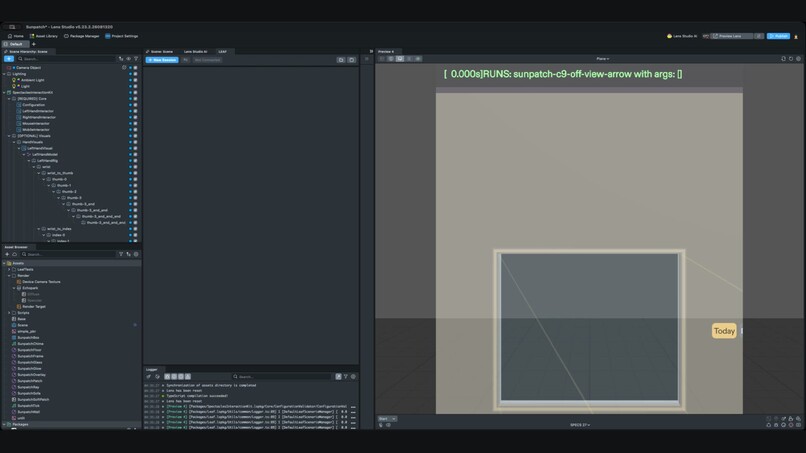
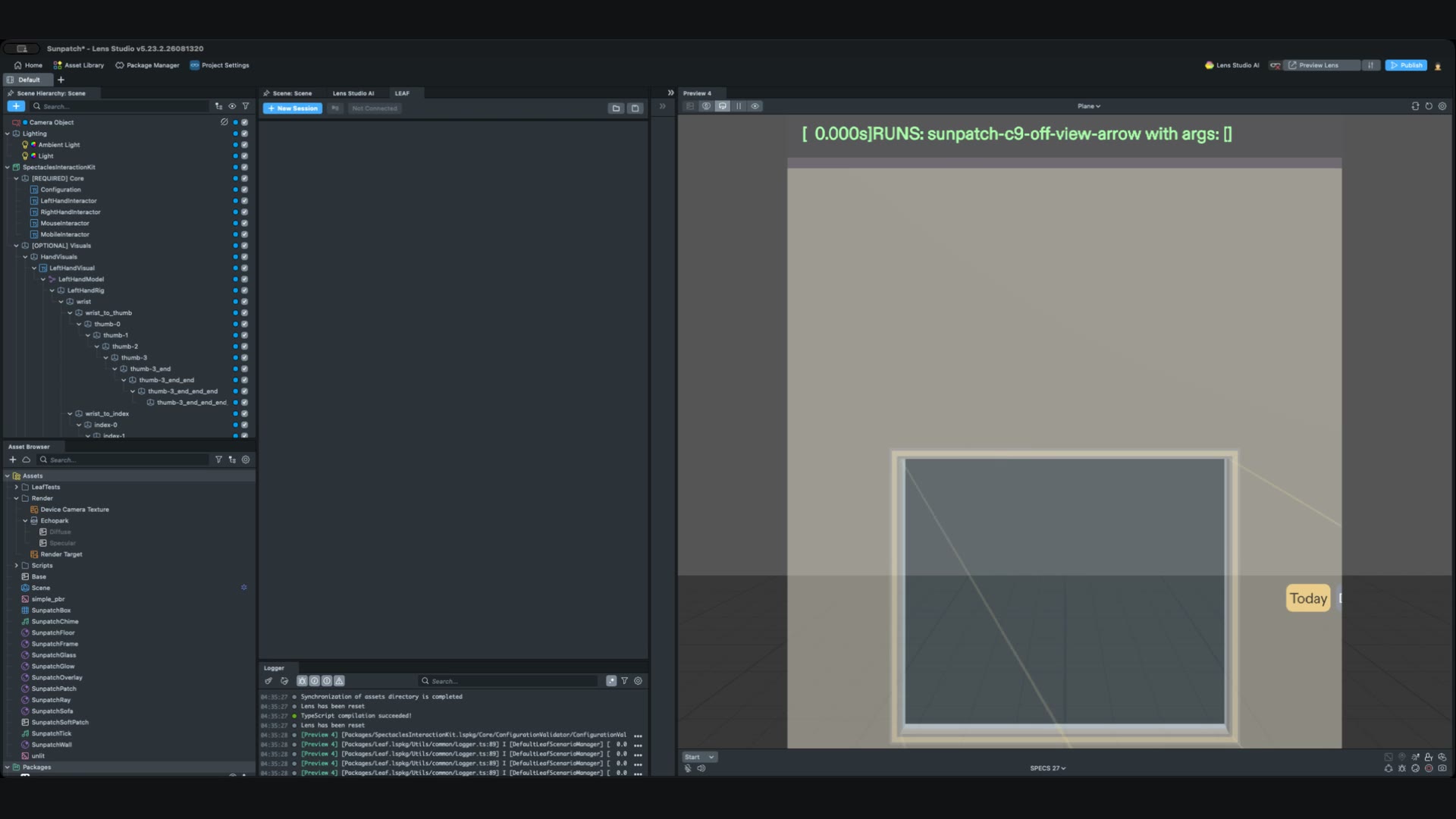
A LEAF scenario running in Lens Studio; all 16 pass in one run.
-
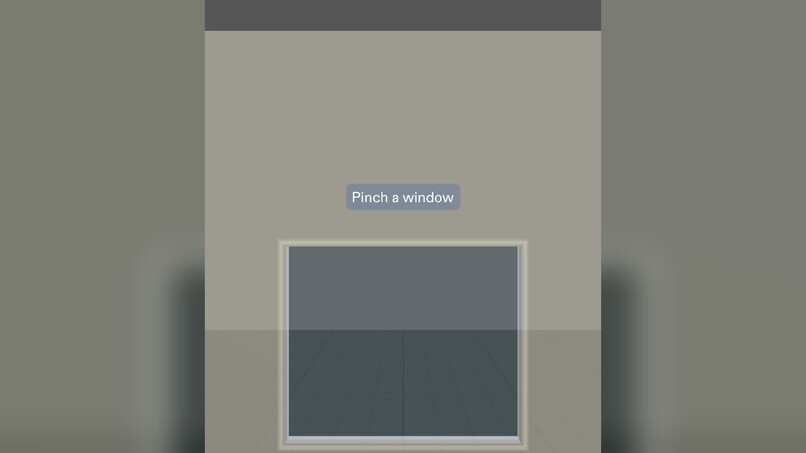
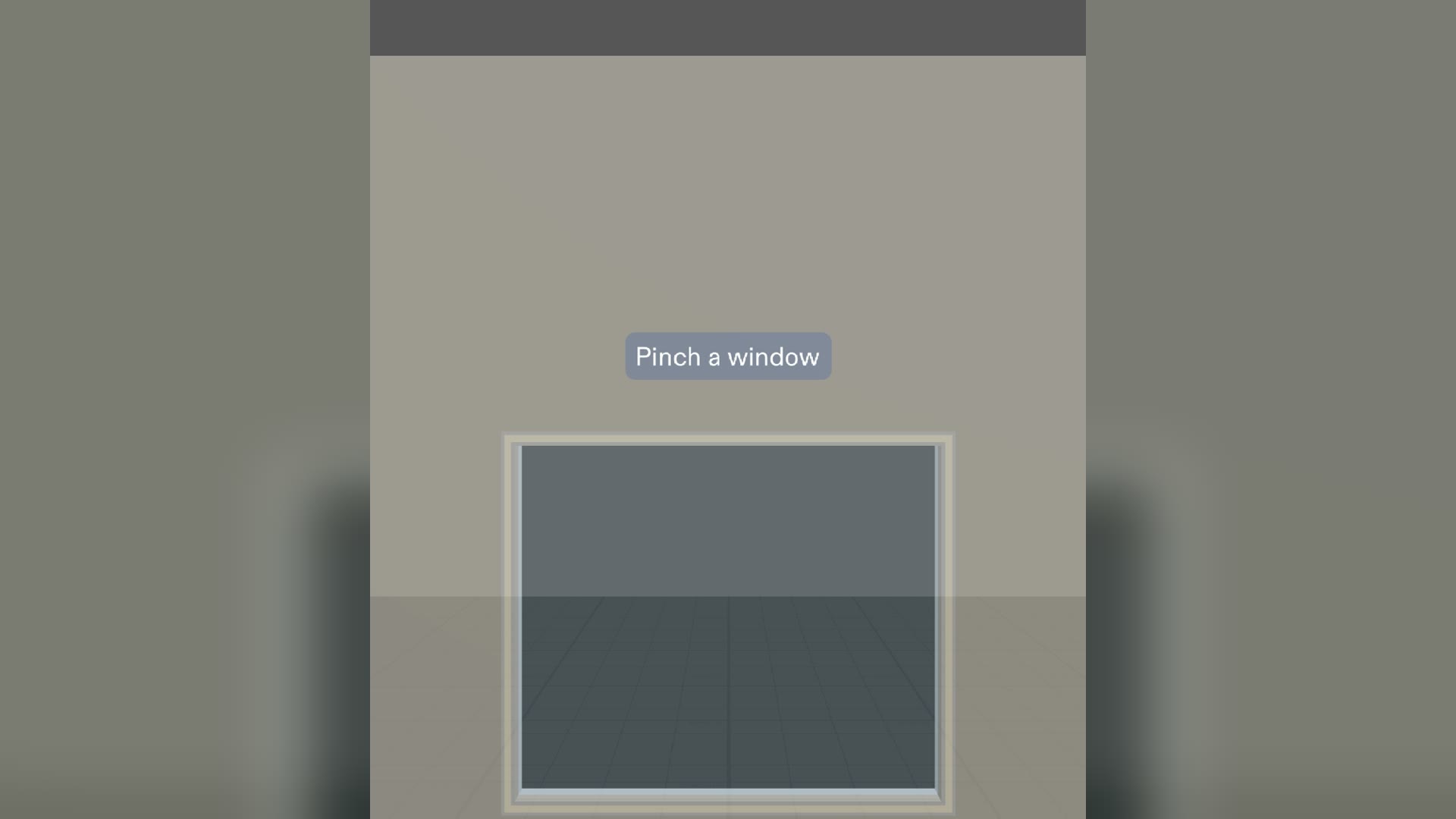
Facing the window before anything is pinned: the Lens asks for one pinch.
-
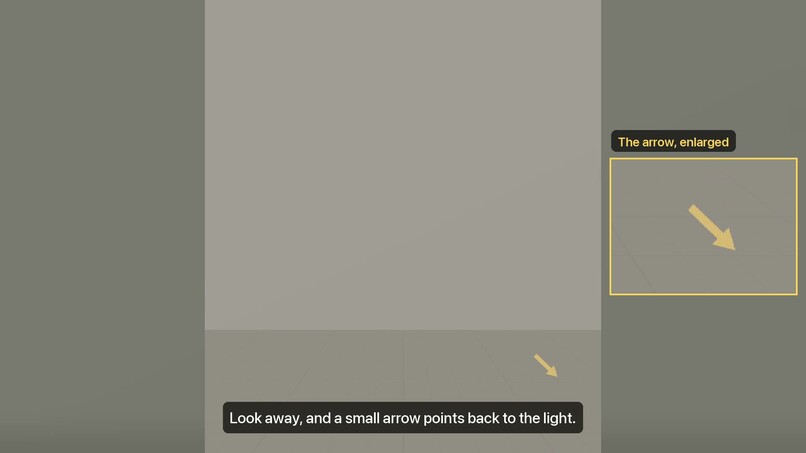
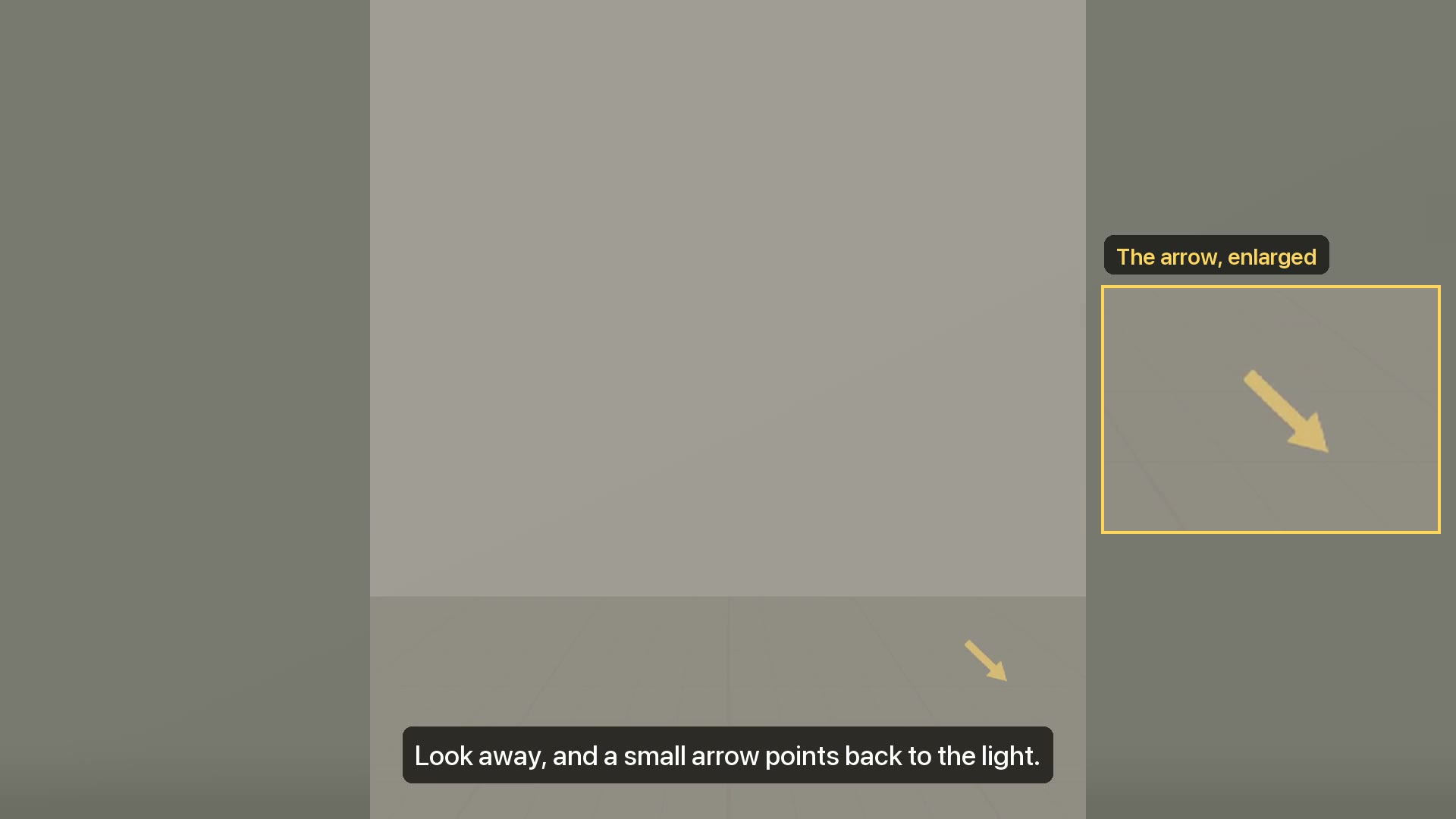
Look away and a small arrow points back to the light (shown enlarged on the right).
-
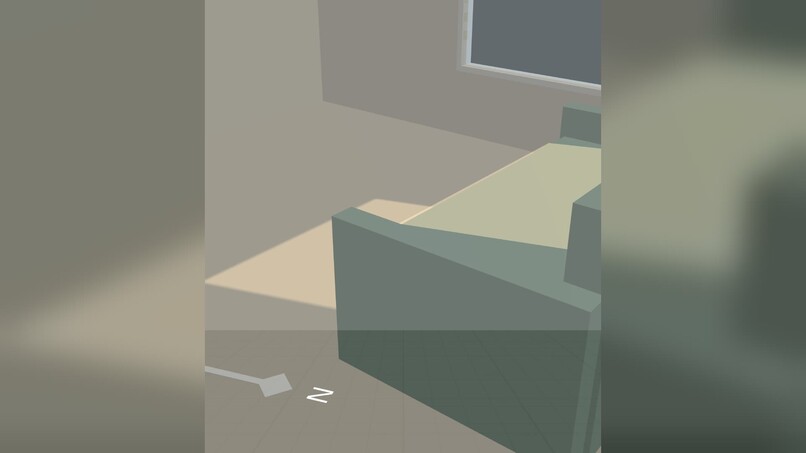
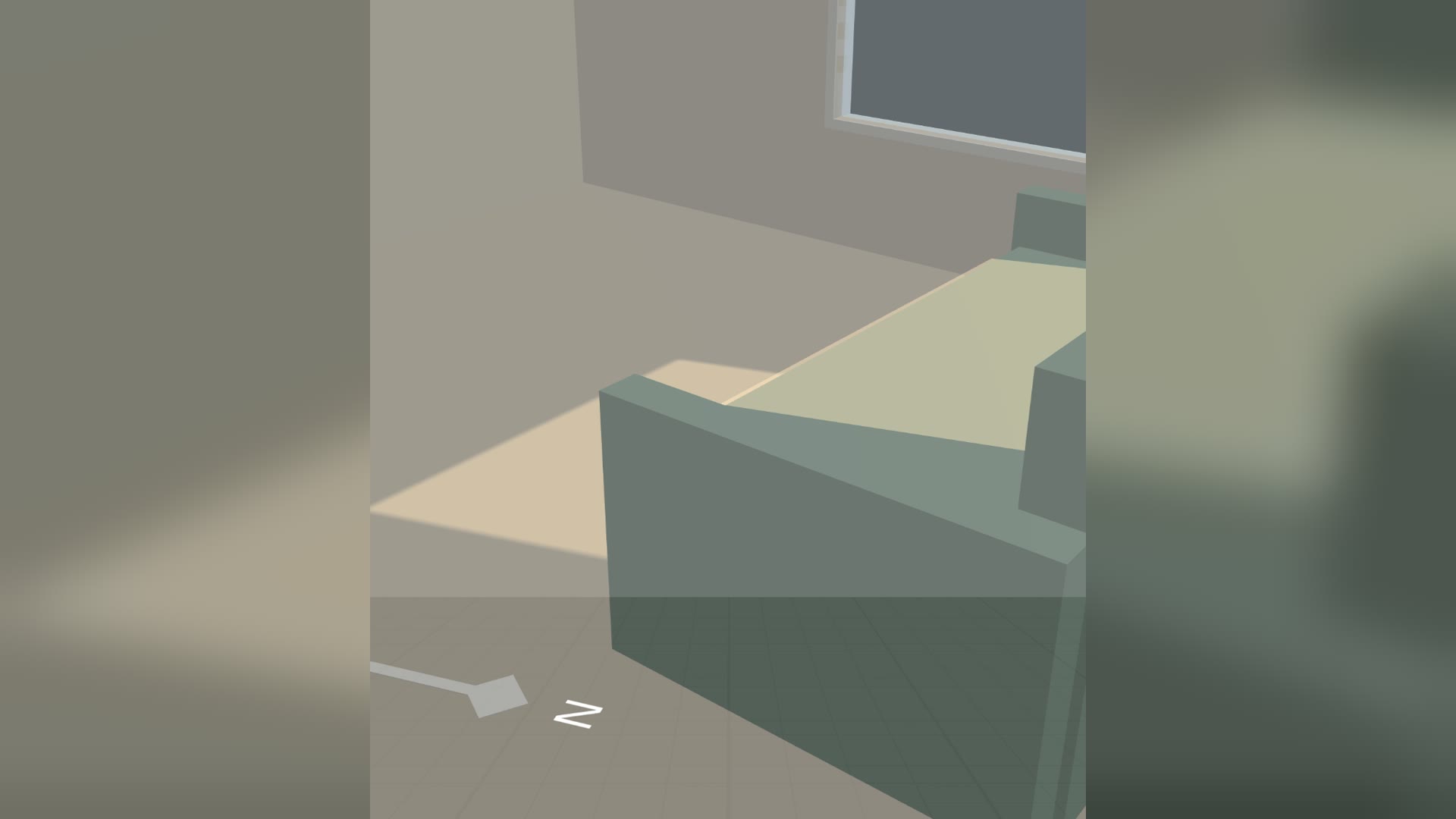
Dec 21 at noon: the low sun reaches the sofa, about 3 m in, and lands on its seat; the floor behind it stays in shadow.
-
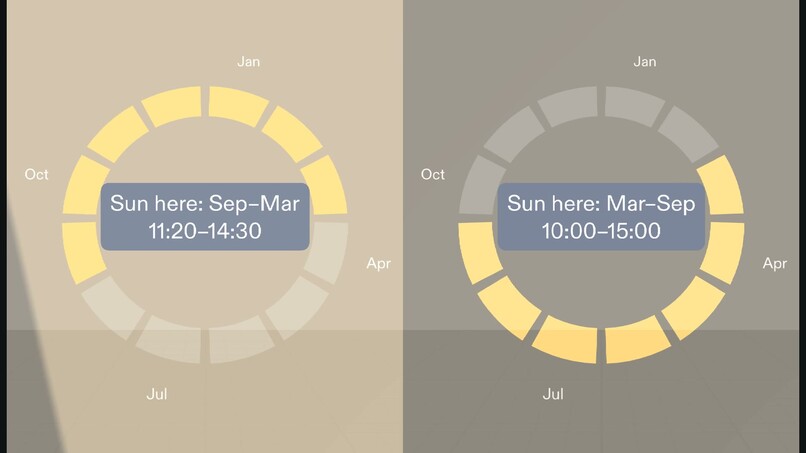
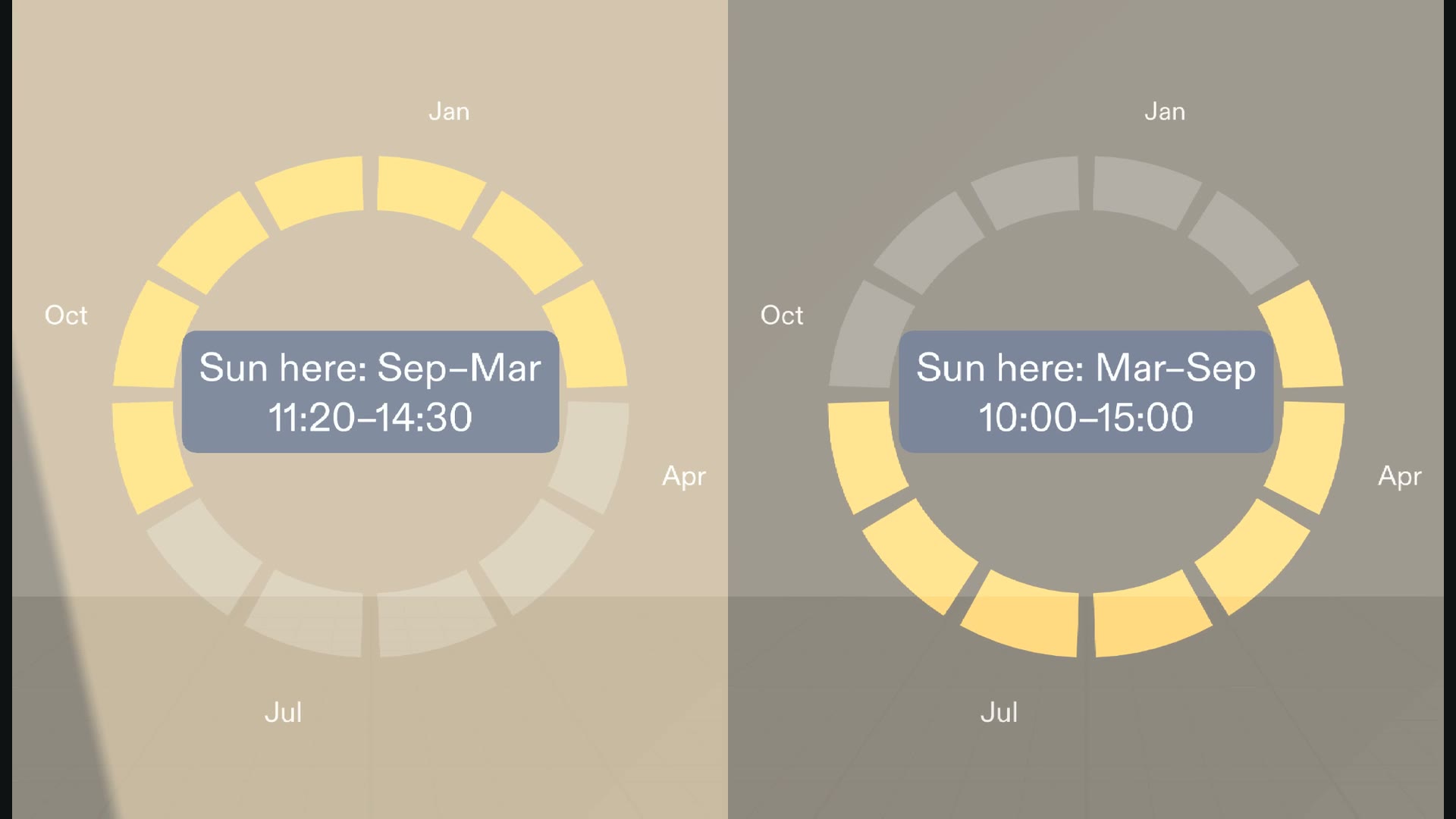
Stand where a chair would go and look down: 12 months, gold when that spot gets sun. By the sofa Sep–Mar; nearer the window Mar–Sep.
In four lines
- The problem: at a 15-minute flat viewing in November you can't see where the winter sun will fall, or whether it ever reaches the sofa.
- Who it's for: anyone viewing a flat or house before signing, or deciding where a plant or a desk goes.
- Why glasses: the light is drawn on your floor while you stand at the real window; you grab the sun itself to change the hour.
- What's new: it doesn't show the sun in the sky, it shows where the light lands in this room on any day. In this room that means: the sofa gets direct sun only from late November to late January, around midday, and never from February to October. And you can ask any spot: stand where a chair would go, look down, and a ring of the twelve months shows when that spot gets sun.
What it does
Sunpatch is a Spectacles Lens for one question you can't answer at a 15-minute apartment viewing in November: does this room get winter sun, and where?
- Pinch the window once. A soft patch of light grows onto the floor, exactly where sunlight through that window lands now, with a small label:
15:10 · Today. - Look at the window and the day's sun path appears outside it. Grab the sun and drag it: the patch slides across the floor. Drag to evening and the light leaves the room, then
Sun has set · Sunset 16:24. - Pinch Dec 21 next to the window: the sun drops and the light reaches the sofa, 3 m into the room, and lands on its seat. Jun 21: it stays by the window.
- Stand where a chair would go and look down. A ring of the twelve months appears on the floor around that spot, gold where it gets direct sun, with one line in the middle:
Sun here: Sep–Mar · 11:20–14:30. One step toward the window and it readsMar–Sep · 10:00–15:00. Nothing to pinch: where you stand is the input. - Look away and nothing extra shows. If the light is out of view, a small arrow points to it.
Who it's for
Someone viewing a flat or house before signing a lease, in November, when the light in the room says nothing about December or June. Second: someone deciding where a plant, a desk or a reading chair goes.
Why glasses (what I applied from the concept video)
- Shares your view. A phone sun app draws the sun's path in the sky. Sunpatch draws the light on your floor while you look at the window and the floor together.
- Draws in the world. The light lies on the floor, the arc sits outside the window it comes through. No panel floats in front of you; the only text is a clock time and a date.
- Leaves your hands free. Nothing to hold. You grab the sun itself, and for the month ring your body is the input: you walk to the spot and look down.
- What shows depends on where you look: the window shows the arc and the sun, the floor shows the light's label, anywhere else shows only the light.
- Used where the question is asked. You stand at the real window during the viewing. The light is drawn from the real sun for that place, date and hour, on the floor in front of you.
Not a simulation
The patch is geometry: the window's four corners pushed along the sun's direction until they meet the floor. The sun's direction comes from NOAA's solar position equations for the place, the date and the clock. A LEAF test checks the June noon altitude in London against NOAA (61.94° vs 61.93°) and another checks that every patch corner sits on its ray (0.000 cm off).
The Lens never judges a room. No "bright", no "good light", no score: only times, dates and plain states like No direct sun. A test walks 3 windows × 3 days × 24 hours and checks all 1,915 texts.
A year at this window (measured with the Lens's own code)
tools/measure_year.ts runs the Lens's sun code with the same window, room and sofa. It first reproduces the LEAF result exactly (Dec 21 noon light 345.2 cm into the room, Jun 21 38.3 cm), then checks every minute of the 21st of each month:
- Nov 21, Dec 21, Jan 21: sun on the sofa seat about 10:30–14:00 (203–213 minutes).
- Feb 21 to Oct 21: none on the sofa. Jun 21: the light never gets more than 1 m into the room.
- The same window elsewhere (Dec 21 noon): 3.44 m in London, 1.68 m in Seoul, 1.38 m in San Diego, 4.81 m in Oslo. On glasses the location is the device's. A LEAF scenario checks the same edge in the Lens: light on the seat on Jan 21 at noon, none on Feb 21. The month ring asks the same question for any floor spot: on the 21st of each month, every 10 minutes, does the ray from that spot toward the sun leave through the window opening without passing through the sofa? The floor under the sofa never gets direct sun; the spot just in front of it gets September to March.
How the skill pack helped
I ran the Devpost Learn plan-lens skill and let it interview me. Its brief is in the repo at devpost/design-brief.md:
- The one spatial moment cut the idea to one pinch, one patch and one drag. Light on walls, trees and curtains went to "Out of scope".
- Product or overlay made me name the stand-ins up front: a built room with three windows, London and a fixed north. The Lens says so on a small standing note:
Preview · London · north assumed. - Where things live set the numbers: label cap height 4.5 cm so it reads from 3.5 m, a 6 cm sun with a 24 cm grab area, the day control as three 16 × 10 cm parts 20 cm right of the window.
- After the build: judge it drove three reviews (bugs, spatial design, motion). The brief's change log lists what changed: the sun handle is reachable from where you stand, one cycling button became three parts, onboarding (
Pinch a window), calmer motion, a brighter patch, and light that lands on the sofa seat instead of under it. - Done criteria became the LEAF tests.
Tests
16 LEAF scenarios drive real SIK pinches, hovers and drags in the Lens Studio preview, and all pass: NOAA sun position in June and December, sunrise/sunset within a minute, Dec 21 reaching farther than Jun 21 (345 cm vs 38 cm), patch corners on the rays, a north window with no direct sun, dragging the sun, the three-part day control and re-pinning another window, the off-view arrow, the gaze switch, reduce motion, no judgement words, handle reach, the first minute (onboarding and the pin order), the light on the sofa seat with the seat's shadow on the floor, and the month ring (looking down near your feet gives a spot, looking across the room doesn't; a spot in the Dec 21 light gets December; the floor under the sofa gets No direct sun here).
What I learned
On glasses the hard part is deciding what not to show. The arc and the sun only show while you look at the window, the light's label only while you look at the floor, the month ring only while you look down near your feet, and nothing extra anywhere else. I also learned that light has to look like light: a pale patch on a grey floor read as a shape, not as sun, so the patch is now brighter, its opacity follows the sun's height, and its soft edge is as wide as the real penumbra.
Preview stand-ins and limits
Preview only: London, north fixed at 200°, a built room with three windows. On Spectacles, the location, compass and the pinched window would be real; that is not tested yet. The light is drawn on the floor and on the sofa's seat (with the seat's shadow on the floor behind it); walls, other furniture faces, curtains, trees and neighbouring buildings are not modelled.
Sources
NOAA Global Monitoring Laboratory, Solar Calculator and its spreadsheet equations (after Jean Meeus, Astronomical Algorithms).
Built With
- clad
- leaf
- lens-studio
- snap-spectacles
- spectacles-interaction-kit
- typescript

Log in or sign up for Devpost to join the conversation.