-
-
-
-
-
-
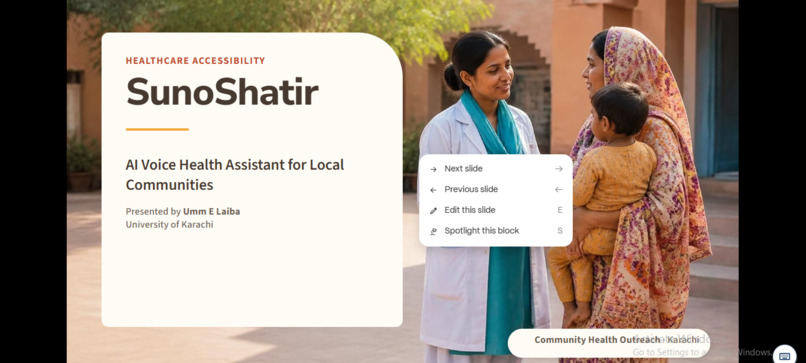
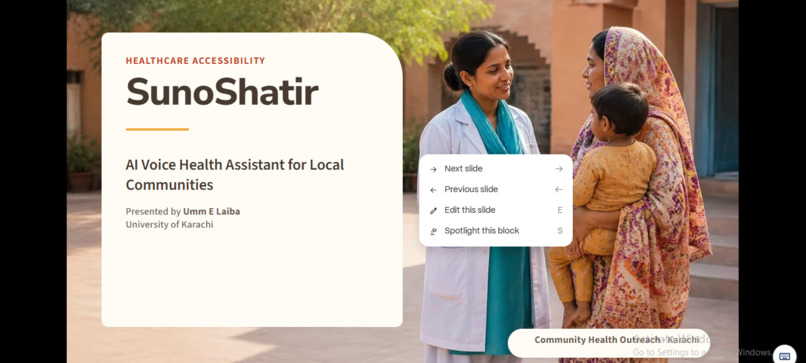
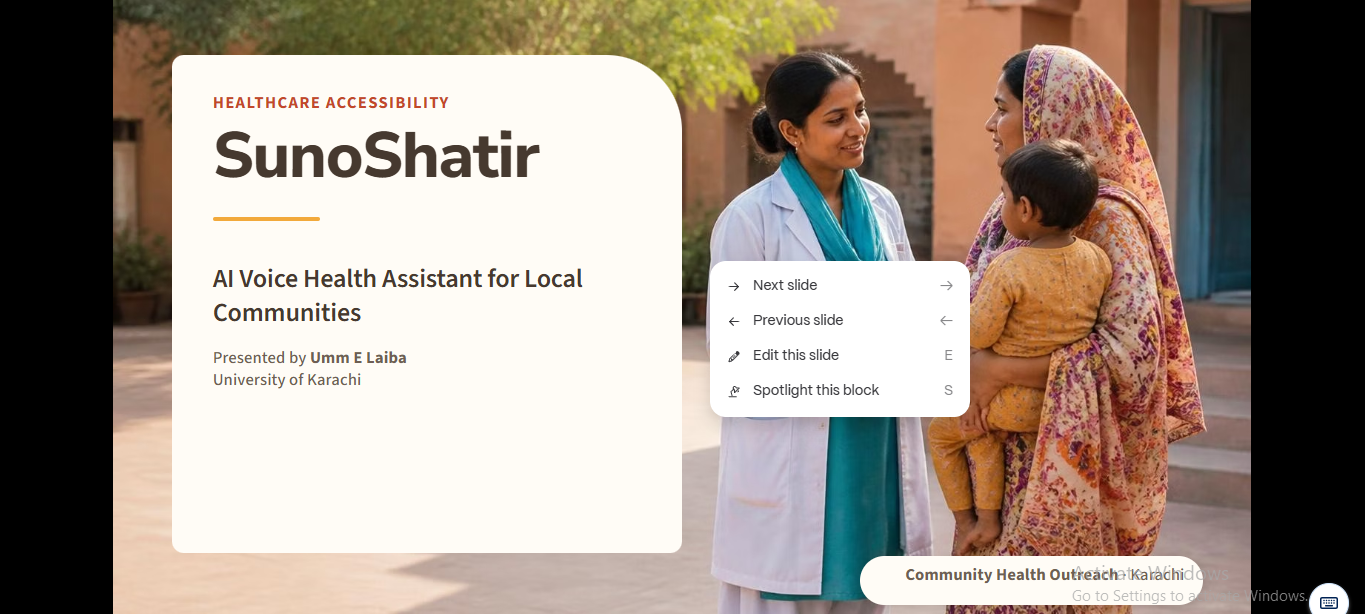
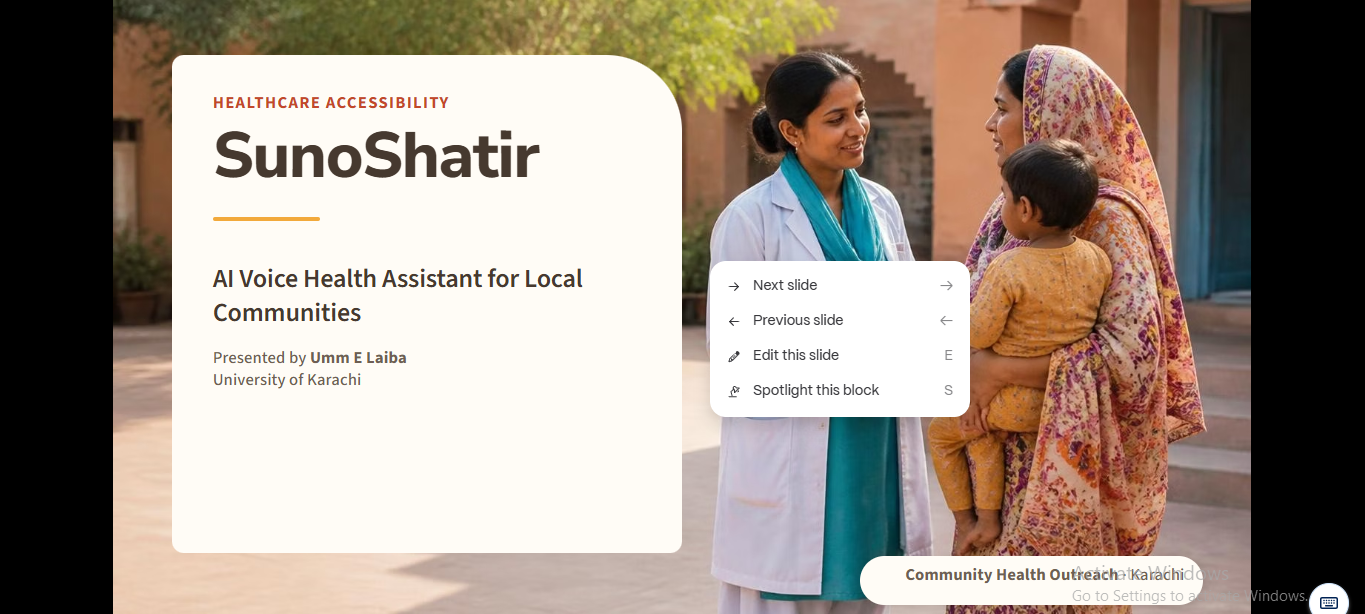
SunoShatir title slide displaying the multi-lingual AI voice health assistant concept for local communities.
-
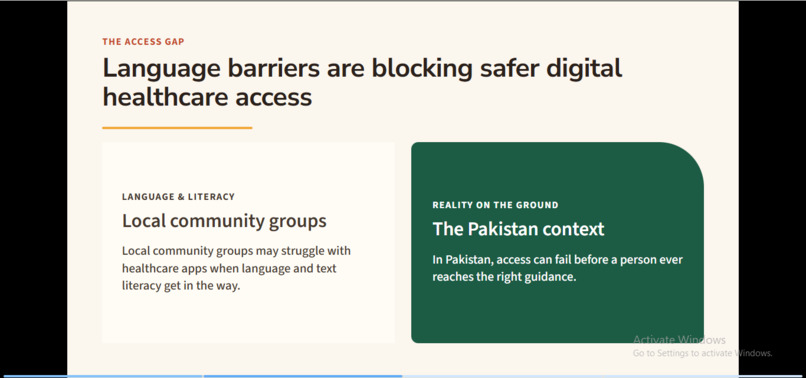
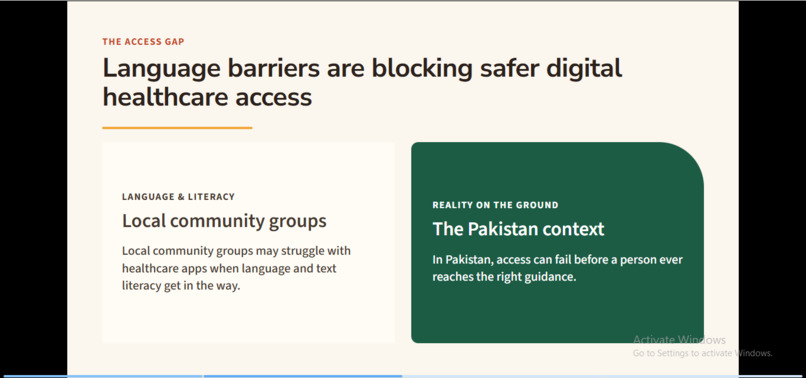
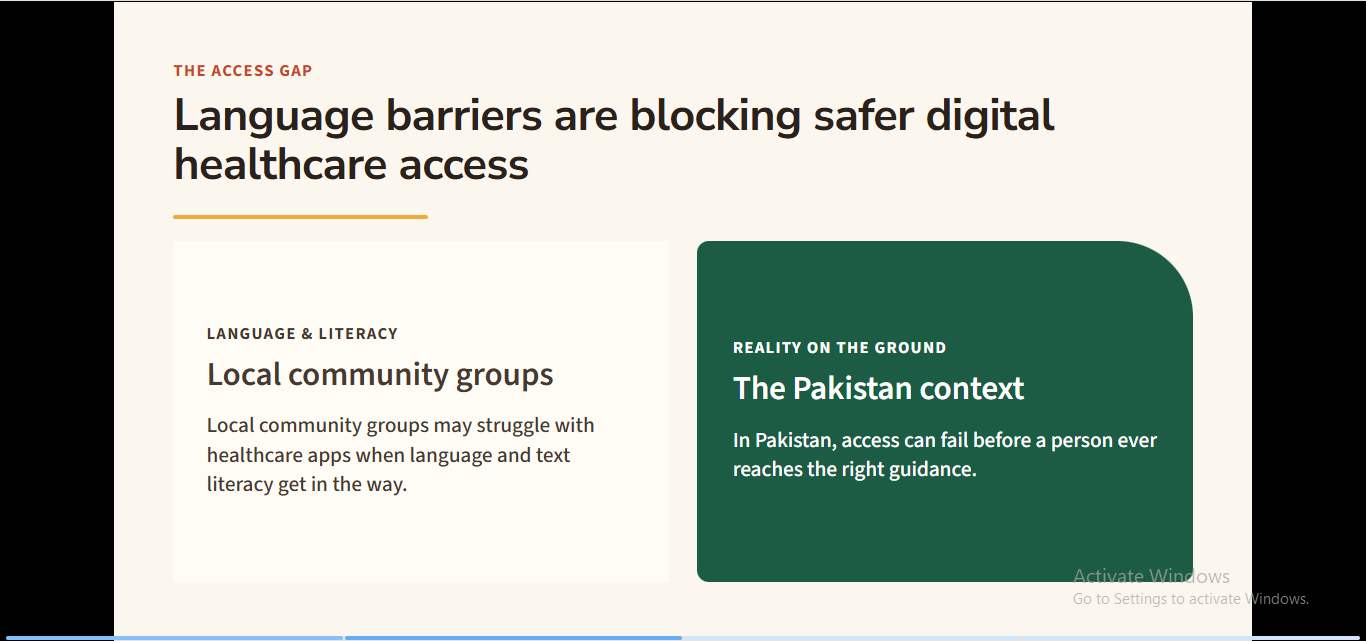
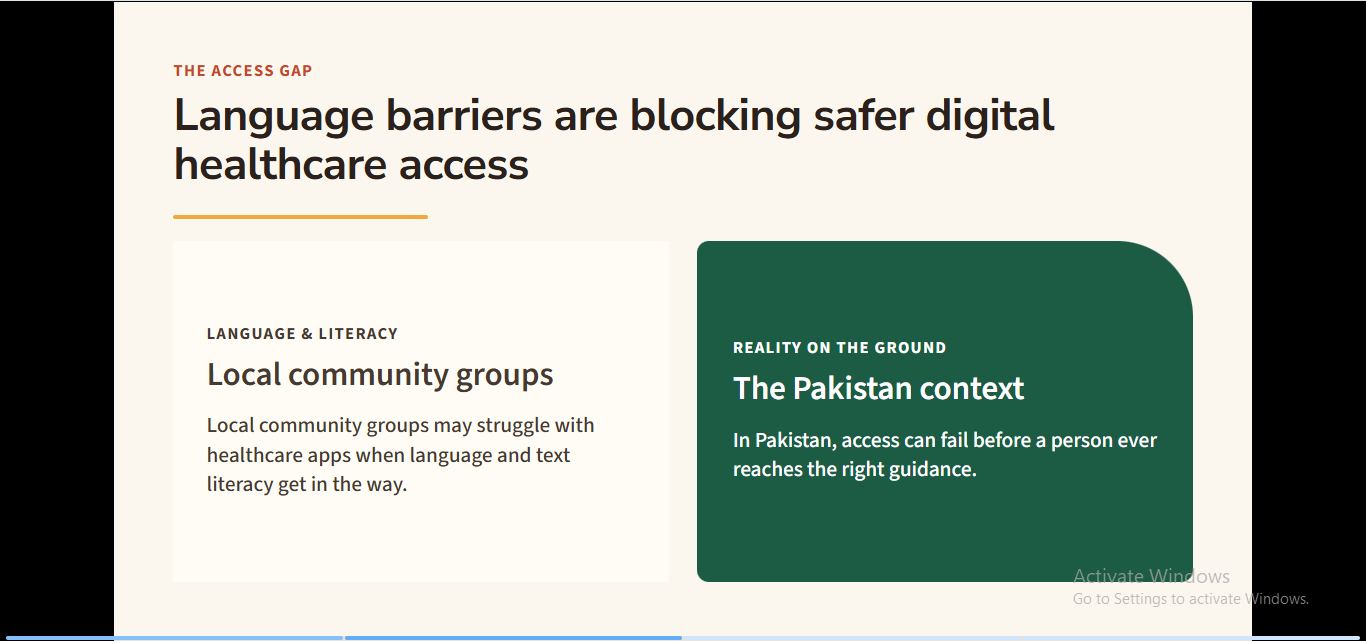
The access gap overview mapping language barriers and structural digital literacy limitations in Pakistan.
-
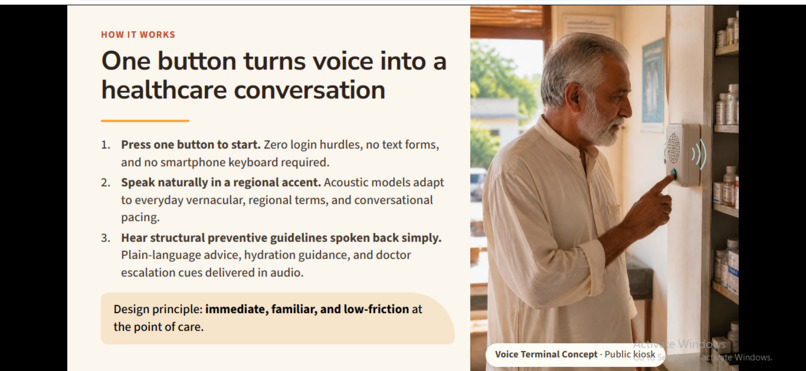
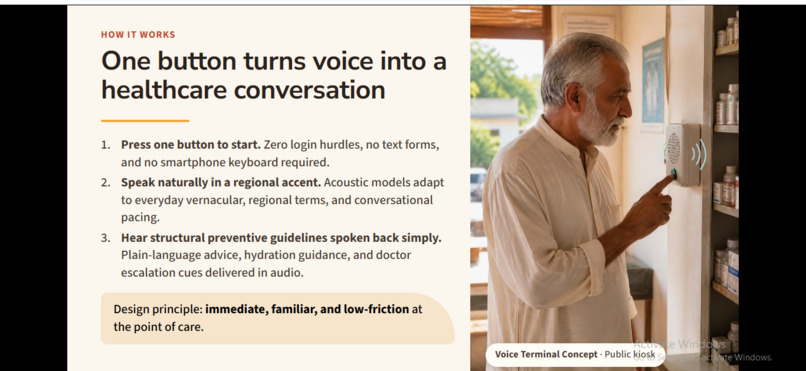
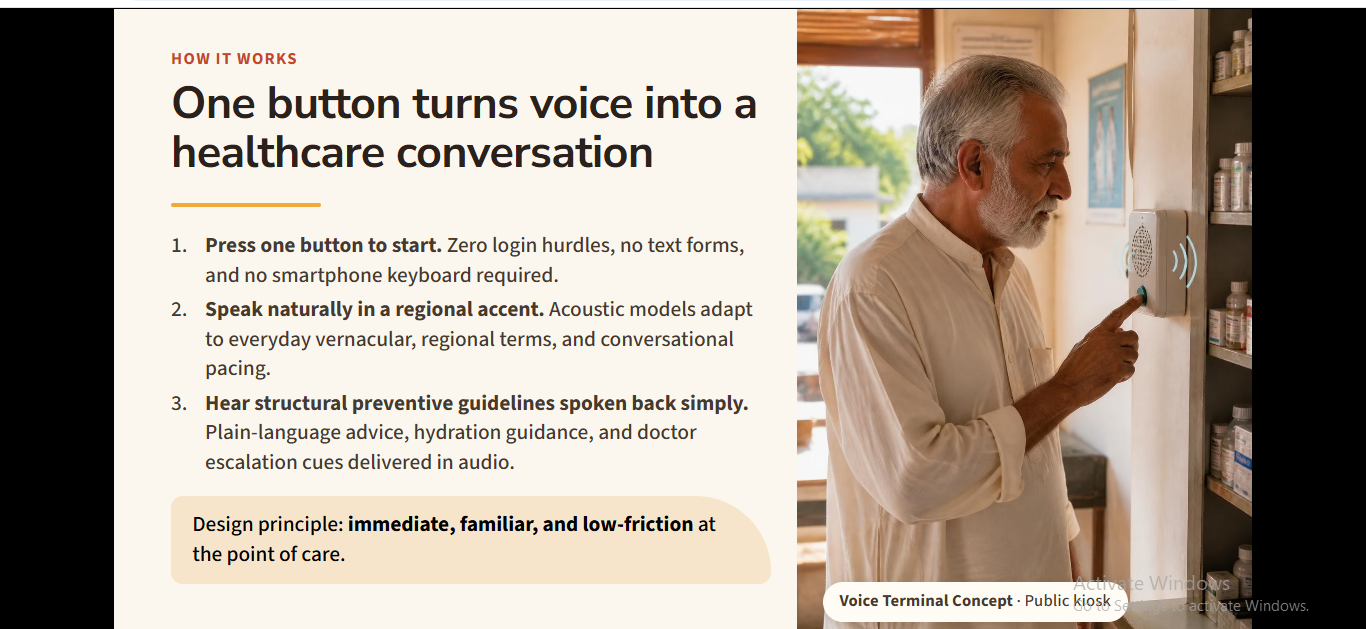
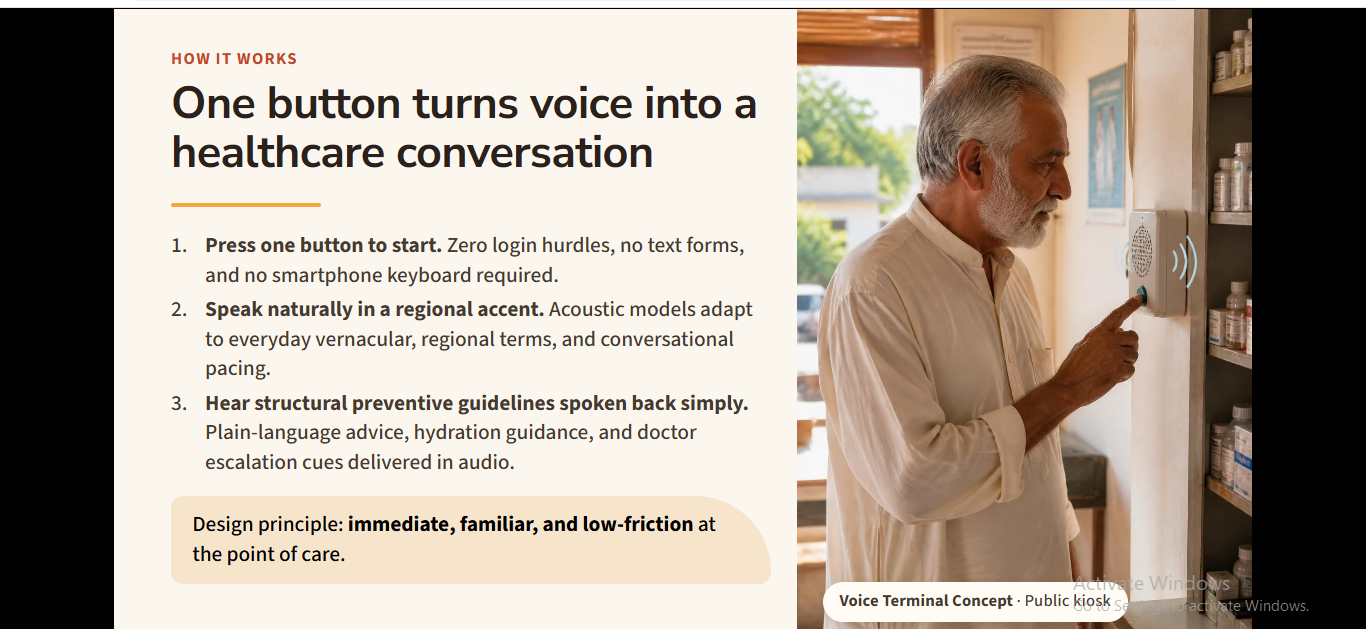
Operational workflow showing a single-button voice input routing system designed for rural kiosk deployment.
-
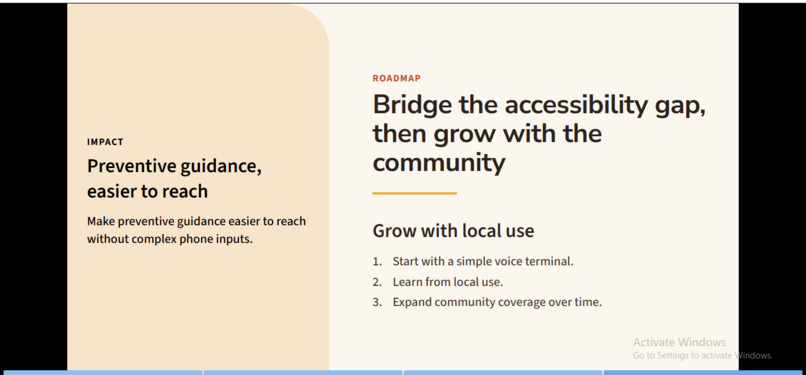
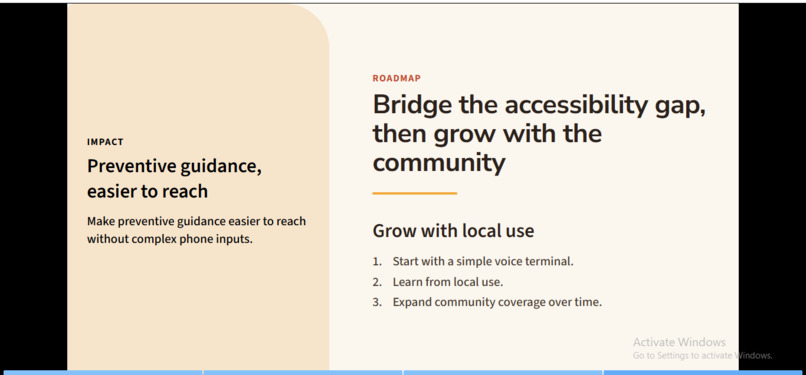
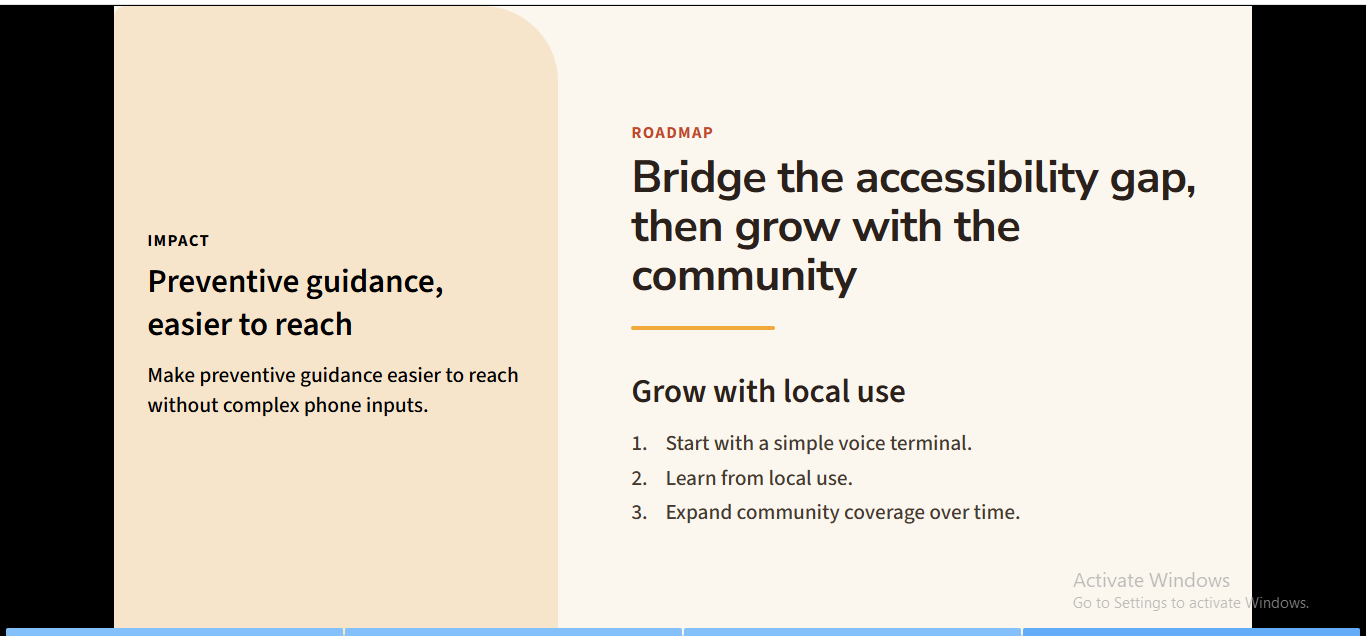
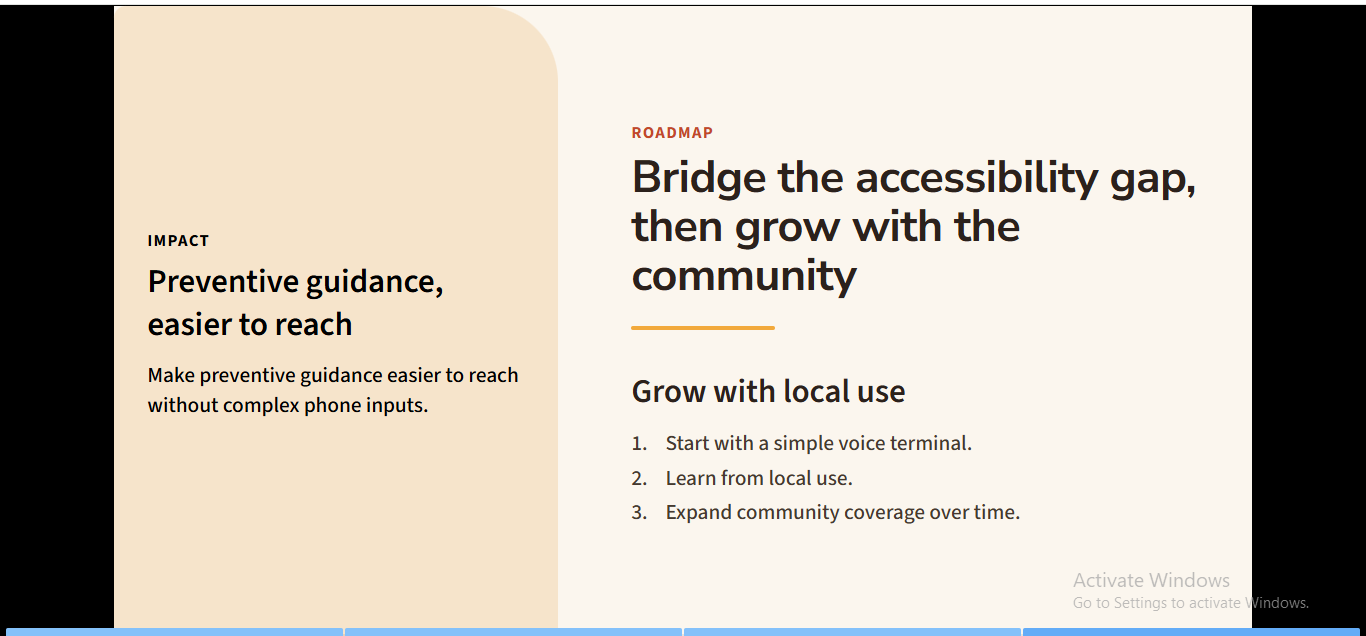
Strategic growth roadmap detailing community impact metrics and localized scale parameters over time.
Inspiration
In local communities across Pakistan, millions of citizens face severe health literacy issues alongside deep regional language barriers. Most advanced medical applications are designed in strict text-heavy formats that require high digital literacy. As a physiology student at the University of Karachi, I wanted to conceptually design a system that bypasses text interfaces entirely to deliver instant, accessible health guidance using native vocal accents and regional dialects.
What it does
SunoShatir is an Ideathon concept for a voice-driven, multi-lingual health control terminal designed specifically for low-literacy communities in Pakistan. Instead of typing symptoms or navigating complex menus, a user simply presses a single prominent button and speaks their health distress or questions in their native language (such as Urdu, Sindhi, or Punjabi). The system parses the voice input, tracks it against safe physiological baselines, and speaks back automated, verified preventive guidance and step-by-step instructions in the exact same native regional tongue.
How we built it
Since this is an Ideathon track submission, the system infrastructure was built through deep process architecture, logical workflow modeling, and localization user-journey maps. We systematically mapped out how regional Pakistani voice inputs could be split, filtered, and processed safely using natural language models to return instant vocal guidelines without putting a heavy computing load on low-tier smartphones.
Challenges we ran into
The primary challenge was managing the diverse pronunciation variations in regional dialects across different provinces to prevent faulty interpretations. We addressed this by conceptually integrating an interactive double-check audio routing loop, which repeats critical symptoms or numbers back to the user for instant confirmation before finalizing any automated guidance.
Accomplishments that we're proud of
We are proud of designing a conceptual solution that addresses a genuine, grass-roots infrastructure problem in Pakistan. It places human accessibility at the absolute center, proving that high-end AI capabilities can be channeled through incredibly simple touchpoints to solve national health equity gaps.
What we learned
We learned a lot about localized service design frameworks and the immense power of audio user interfaces (Voice UI) in bridging the massive digital literacy gap across developing socio-economic segments.
What's next for SunoShatir
We plan to map out high-fidelity wireframes detailing the mobile user layout, design intuitive iconic cues for the dashboard, and pitch the framework to local community clinics and health non-profits for localized validation tests.
Built With
- ai
- api
- artificial
- business
- design
- healthcare
- intelligence
- model
- strategy
- ui
- voice


Log in or sign up for Devpost to join the conversation.