Inspiration
Sunhold Survival began with a simple design question: Why do some survival games make calm moments feel so valuable?
One of our biggest inspirations was Valheim. Its early experience feels peaceful, musical, colorful, and inviting, but that peace matters because the world can become hostile. The contrast between safety and danger makes preparation feel meaningful. It gives the player a reason to care about the place they are building.
We wanted to bring that same emotional rhythm into a mobile-friendly survival loop:
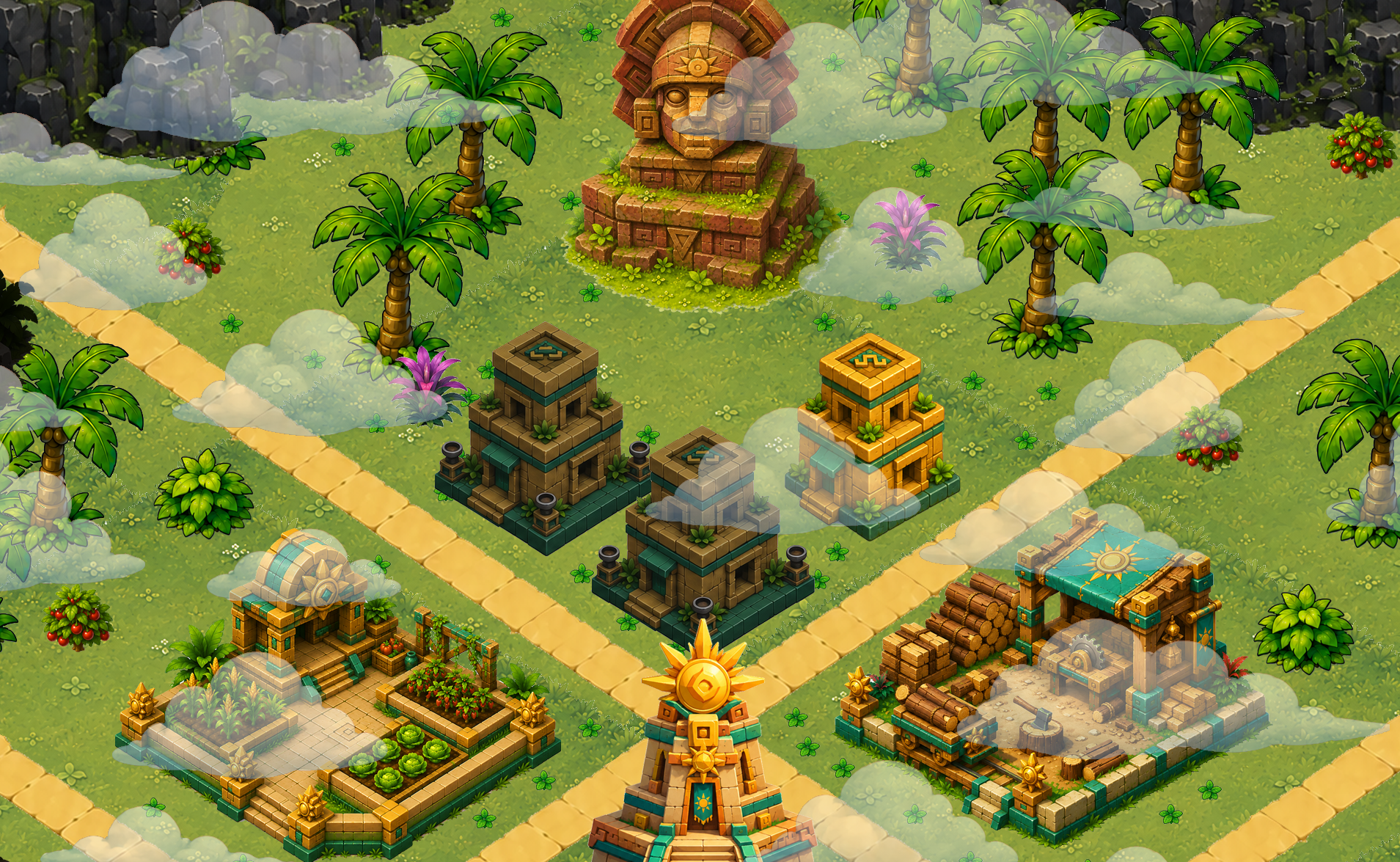
- A warm, readable jungle settlement during the calm phase
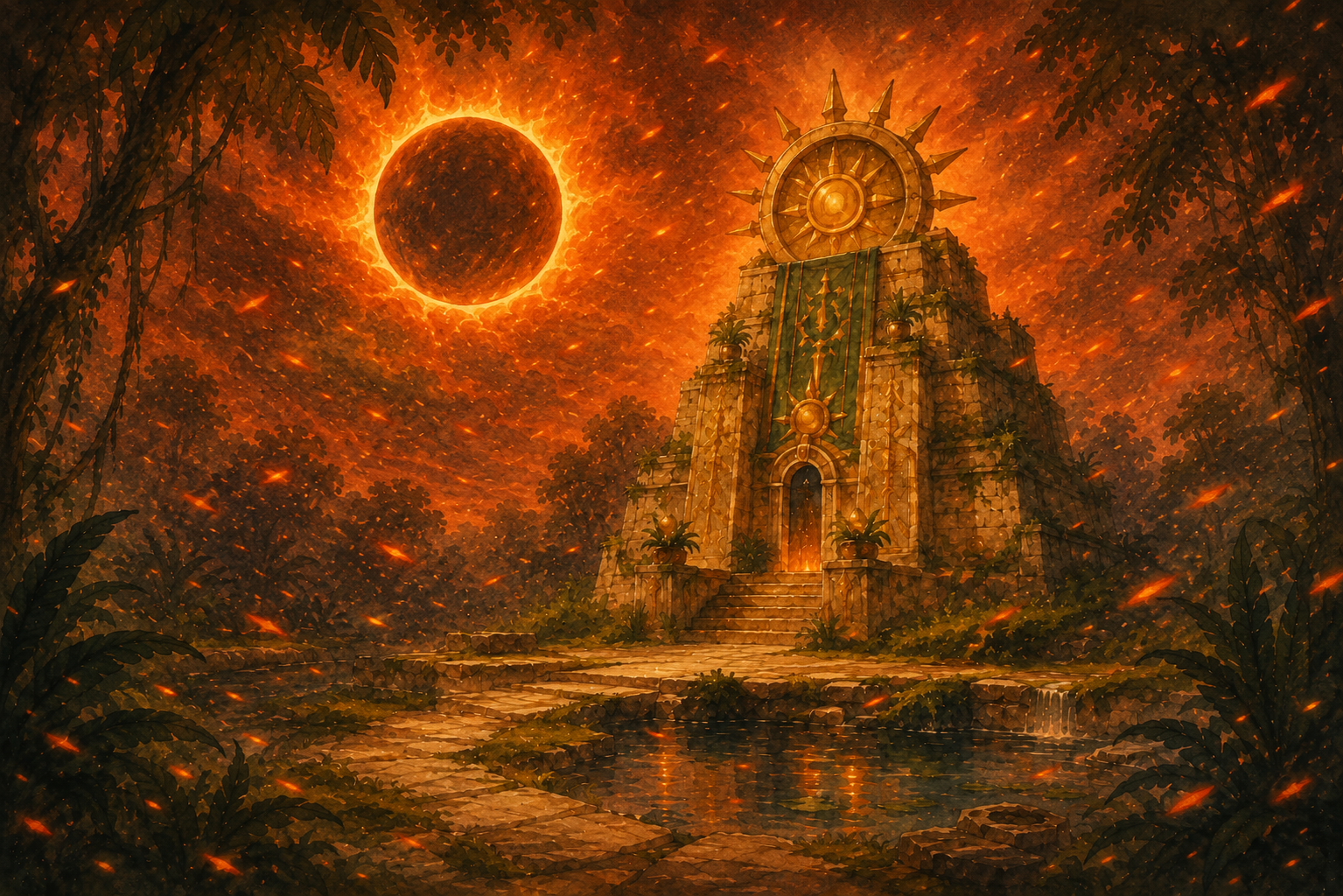
- A dangerous Crimson Eclipse that tests every choice the player made
- A world that feels worth protecting, not just a system for collecting resources
We also studied modern mobile hits and noticed a pattern behind games that feel easy to start but hard to put down: clear goals, readable UI, simple resource pressure, satisfying upgrades, fast feedback, and strong visual identity.
Sunhold Survival is our attempt to combine that accessibility with a more atmospheric survival loop. The player is not just gathering berries and wood. They are building a home, preparing for danger, and defending something that feels alive.
What it does
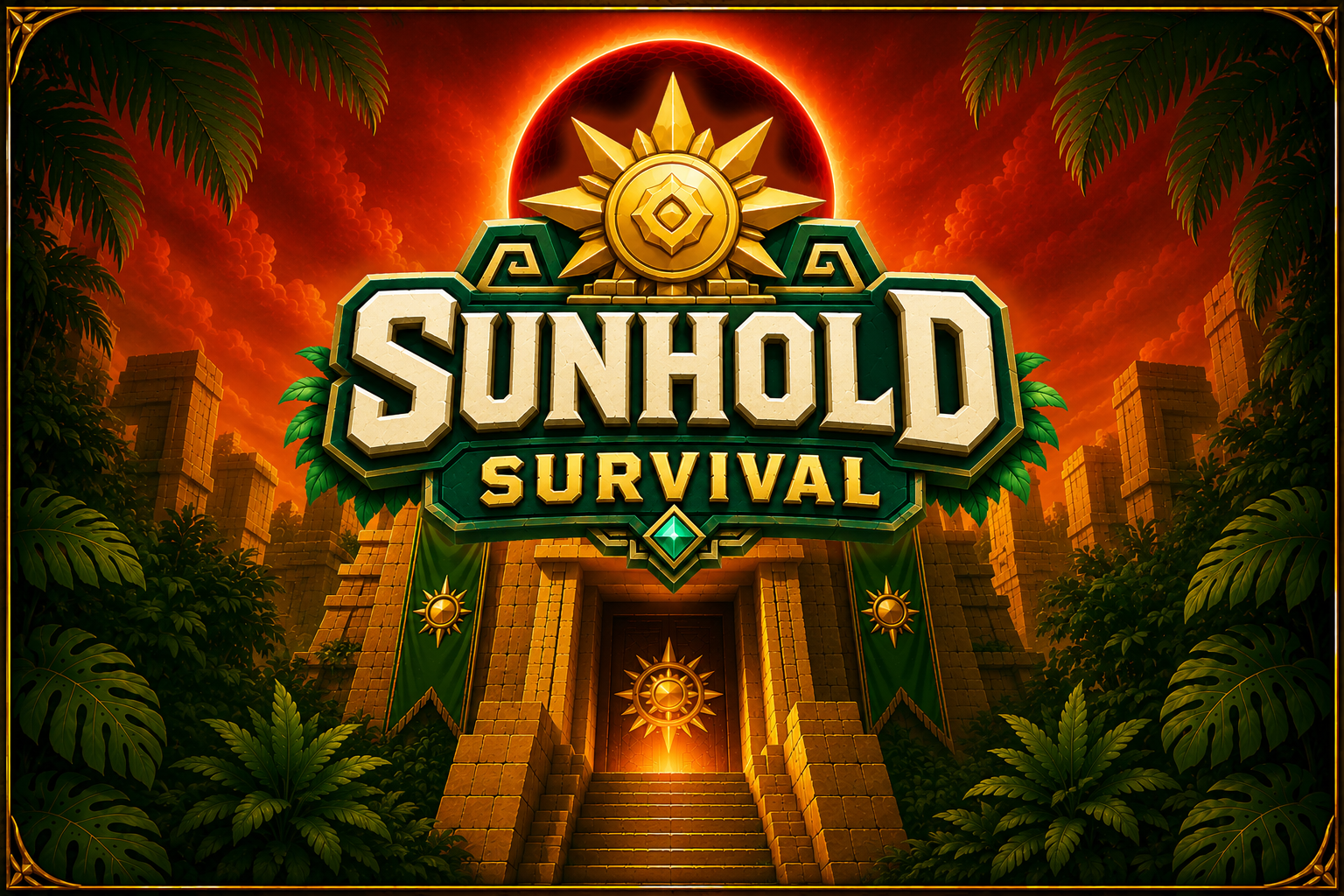
Sunhold Survival is a mobile survival and resource-management game about building a sunlit jungle settlement and surviving the Crimson Eclipse.
During the calm phase, the player gathers resources, assigns Sun People to buildings, upgrades fixed plots, and prepares the settlement. When the Crimson Eclipse arrives, the world shifts into a dangerous state. Enemies attack, resources are pressured, and the player’s preparation is tested.
Surviving the Eclipse gives the player upgrade choices that improve the settlement and push the next loop forward.
The MVP is built around a focused state-management system:
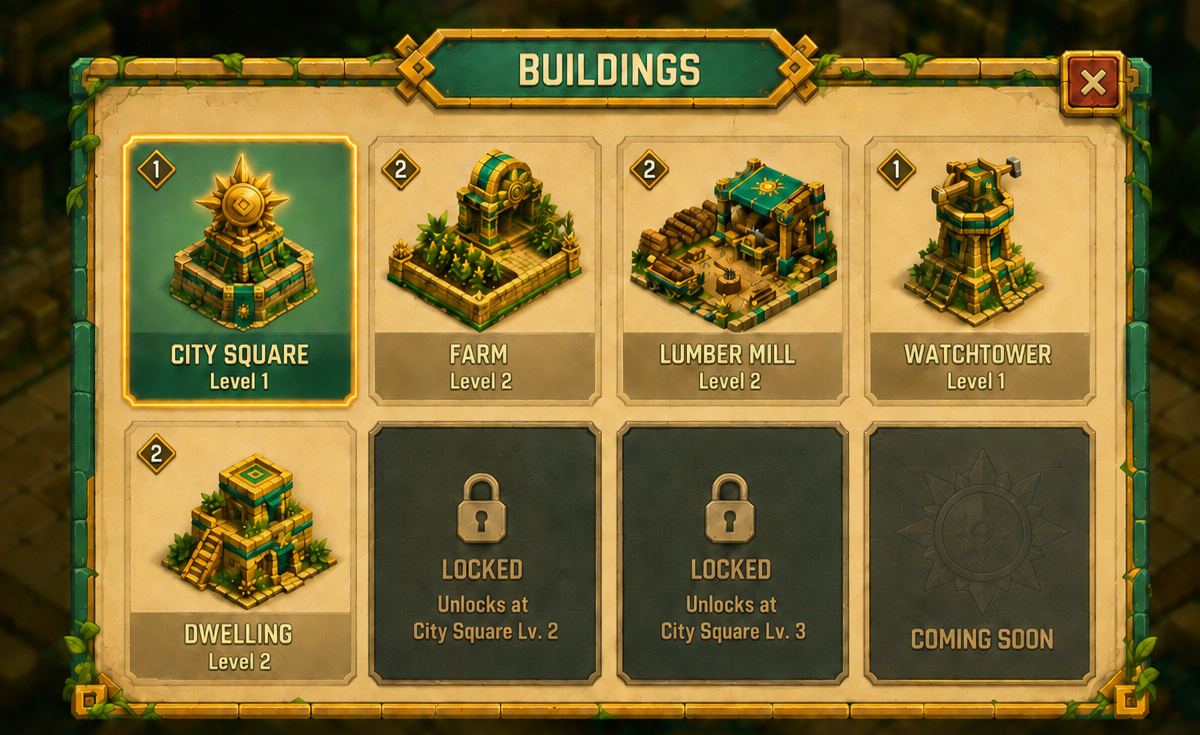
- Buildings exist in clear states: locked, upgrade 1, upgrade 2, and upgrade 3
- Workers can be assigned to specific buildings
- Core resources stay intentionally simple: berries, wood, and population
- World state shifts between calm preparation and Crimson Eclipse defense
- Post-Eclipse rewards create a small but meaningful upgrade loop
A major part of the project is the production pipeline behind the visuals. Instead of treating the artwork as disconnected concept images, we organized the assets into a structure that can support implementation.
Gameplay assets are stored in active Photoshop files with separate toggleable layers, states, and visual rules. This keeps the MVP grounded: every asset has a purpose, every building fits into the system, and the visual direction can move toward production instead of remaining loose concept art.
How we built it
We built Sunhold Survival through a highly iterative design and visual development process using Photoshop and an AI-assisted workflow with GPT-5.5.
The process was not about generating images and accepting the first result. Most of the work came from critique, rejection, refinement, and documentation. We repeatedly identified what was not working, explained why it did not fit the game, and pushed the direction closer to a unified style.
We refined details such as:
- Mobile readability from a zoomed-out view
- Isometric tile alignment
- NPC silhouettes
- UI scale and contrast
- Building upgrade states
- Crimson Eclipse screen treatment
- Sprite direction and movement readability
- Resource HUD clarity
- Consistent borders, logos, colors, and presentation language
Over time, we turned the visual direction into a stronger production system. We created a game design document, production plan, UI mockups, world concept pages, building state references, sprite direction sheets, and a visual concept package.
The biggest technical and design choice was scope control. We kept cutting the MVP down to the systems that actually prove the game loop:
- Gather
- Assign workers
- Unlock/Upgrade
- Defend
- Survive Choose a reward
That restraint made the project stronger because every asset and system supports the same core experience.
Challenges we ran into
The project did not start as Sunhold Survival.
Our first concept was a side-view cutaway tower simulation game. It had charm, but as we kept building assets and testing the idea visually, we realized the format was fighting the experience we wanted. The side-view structure limited the sense of space, danger, and survival pressure.
Pivoting was difficult because we had already invested time into the first direction, but it was the right decision.
Moving into an isometric survival format gave the game more dimensionality. It let us show a settlement, paths, towers, enemies, resources, and world-state changes in a way that felt more playable and more readable.
Another major challenge was consistency.
AI can generate impressive individual pieces, but impressive individual pieces are not the same thing as a game. Assets can easily drift in style, perspective, palette, silhouette, or level of detail. We had to develop discipline around the process:
- Documenting visual rules
- Rejecting mismatched outputs
- Simplifying over-detailed assets
- Reworking anything that hurt readability
- Bringing every piece back to the same production language
The hardest work was often invisible. It was not one big feature. It was hundreds of small decisions about what to keep, what to remove, what to simplify, and what needed to be rebuilt.
Accomplishments that we're proud of
We are proud that Sunhold Survival feels like a unified game direction rather than a loose collection of ideas.
This project taught us how much taste, judgment, and persistence matter when working with frontier AI tools. AI can produce a huge amount of material quickly, but the real product work is deciding what belongs, what does not, and how each piece serves the player experience.
We are especially proud of:
- Finding a strong calm-versus-tense core loop
- Pivoting away from a weaker format instead of forcing it
- Building a consistent visual language across world art, UI, buildings, sprites, and presentation pages
- Keeping the MVP focused instead of expanding endlessly
- Creating an asset structure with clear states and implementation intent
- Learning how to direct AI with specificity instead of relying on vague prompts
This project made us more confident that small teams can now reach a level of visual exploration and production value that used to require much larger teams.
It also made us respect the craft more. The tools are powerful, but the bottleneck is still judgment: knowing what the game is, what the player should feel, and when something is not good enough yet.
What we learned
The biggest lesson was that AI does not remove the need for taste.
It increases the importance of taste.
When a tool can generate endless options, the most valuable skill becomes knowing what to choose, what to reject, what to refine, and what to document so the next output gets closer to the target.
We also learned that strong creative direction has to be paired with systems thinking. A beautiful image is not enough. For a game to work:
- Assets need to support mechanics
- UI needs to support decisions
- Resources need to create pressure
- Progression needs to reward preparation
- Scope needs to stay small enough to test quickly
This project helped us understand a more futuristic workflow. A founder or small team can now move from idea to visual direction to production plan much faster than before. But speed only helps when it is guided by discipline.
The best results came when we slowed down enough to define rules, enforce consistency, and protect the core loop from unnecessary complexity.
What's next for Sunhold Survival
The next step is turning the production-ready MVP plan into a playable prototype.
The immediate roadmap is to:
- Implement the core loop in Unity
- Build the calm-phase resource and worker-assignment systems
- Add building upgrade states
- Implement the Crimson Eclipse defense phase
- Add enemy waves and Watch Tower behavior
- Create the post-Eclipse reward selection system
- Test the first 15 minutes of gameplay for pacing, clarity, and emotional rhythm
After that, we want to expand the Sun People, improve animation, add more building personality, and test how much depth can come from a small number of readable systems.
Longer term, we are interested in how Sunhold Survival could live inside broader shared ecosystems, such as Meta Horizon. We believe there is a huge opportunity for small developers to build polished, focused experiences if distribution, shared systems, and reusable gameplay primitives become easier to access.
Sunhold Survival is our first step toward that larger vision: a small but carefully crafted survival game that proves a focused team, strong taste, and AI-assisted production can create something cohesive, playable, and widely popular.
Built With
- gpt5.5
- photoshop


Log in or sign up for Devpost to join the conversation.