
Inspiration A checkout migration is more than replacing an API call. A merchant needs confidence that successful payments, cancellations, refunds and duplicate callbacks still behave correctly.
We built Sundown around one question: How can a business prove its checkout is ready for its next chapter?
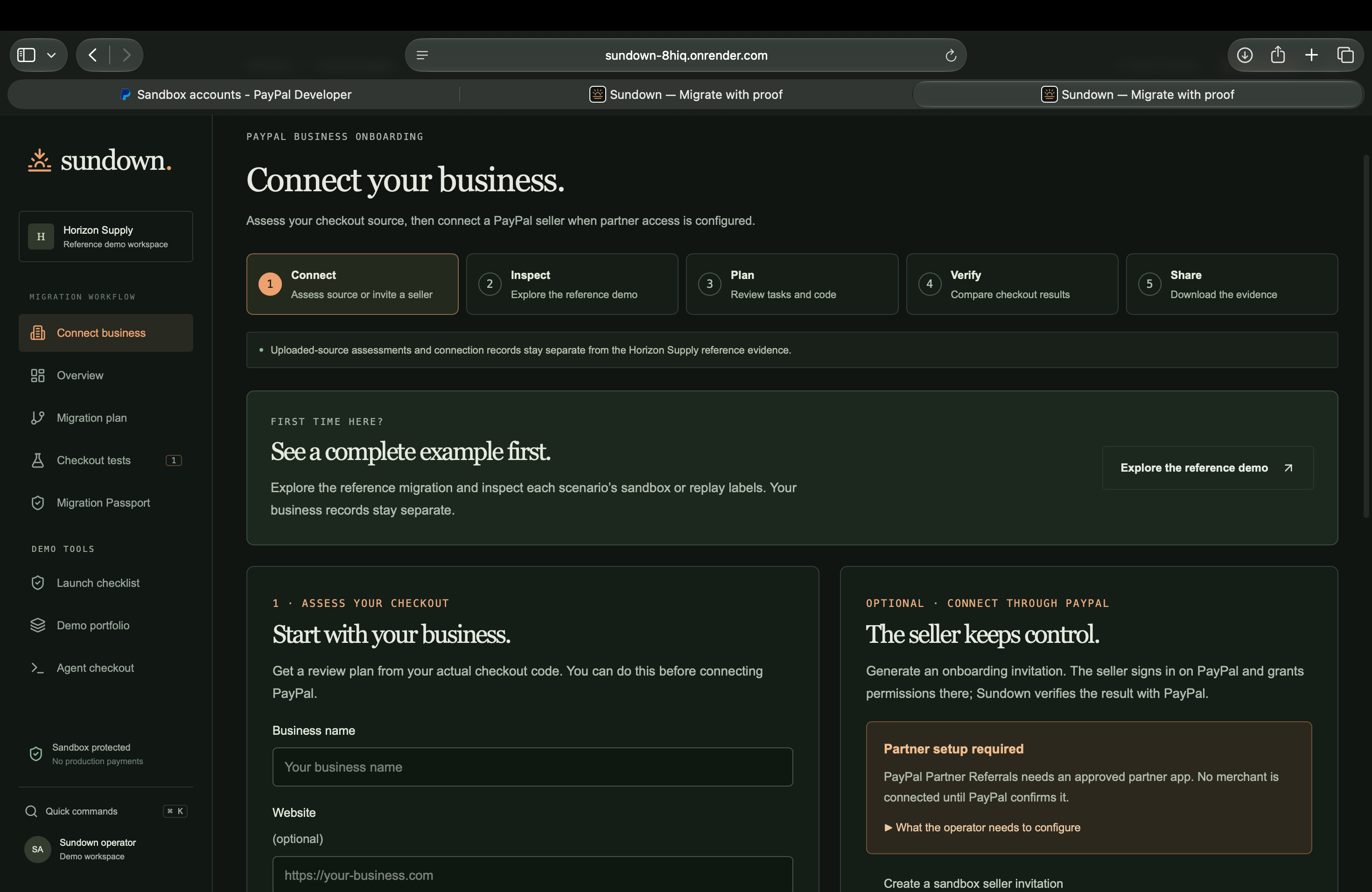
Our goal was to connect legacy checkout analysis, migration planning and behavioral verification in one understandable workspace—and explore what that foundation means for shopping agents. What it does Sundown helps a business move from legacy PayPal integrations toward Orders v2 with evidence at each step:
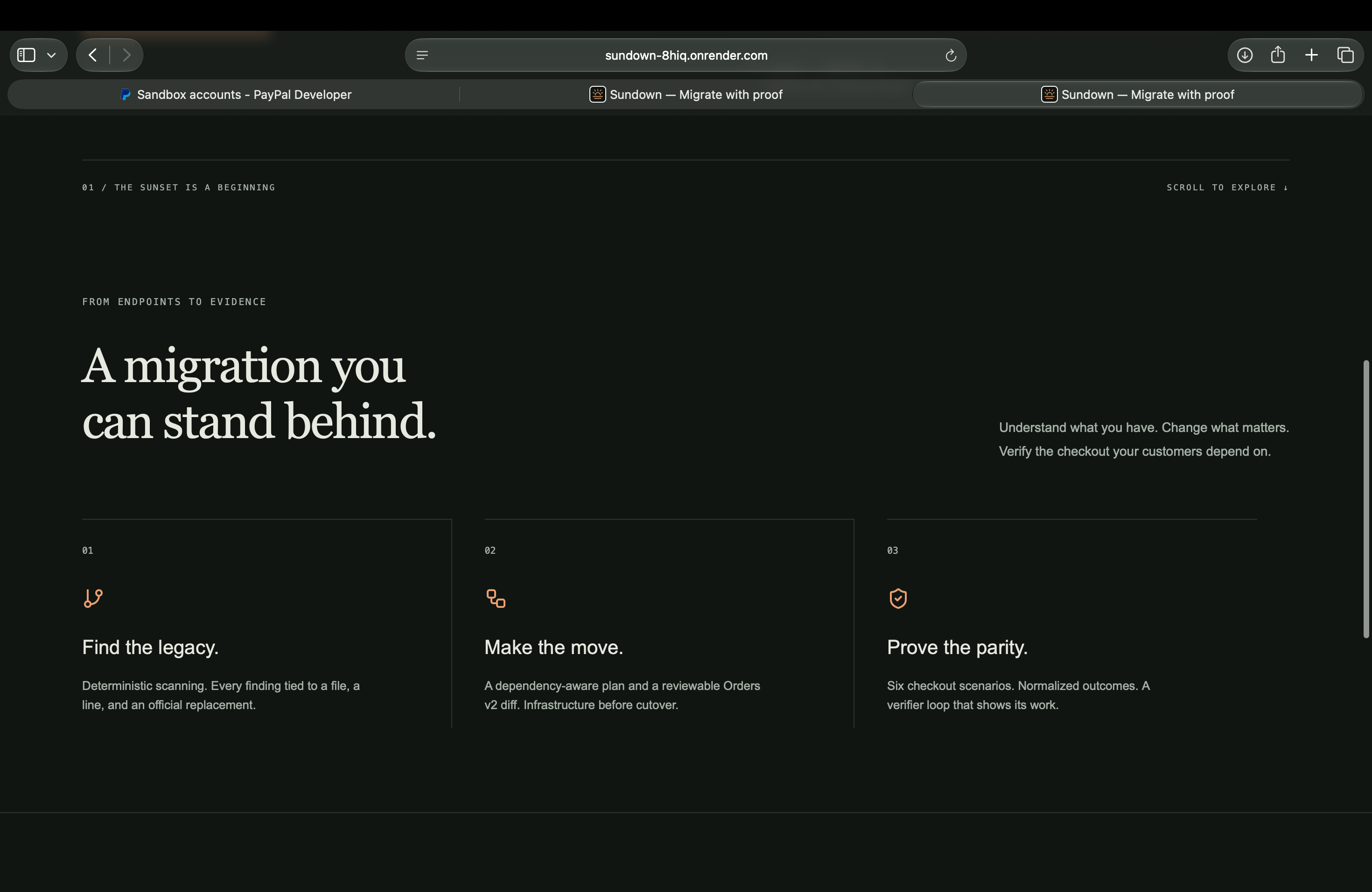
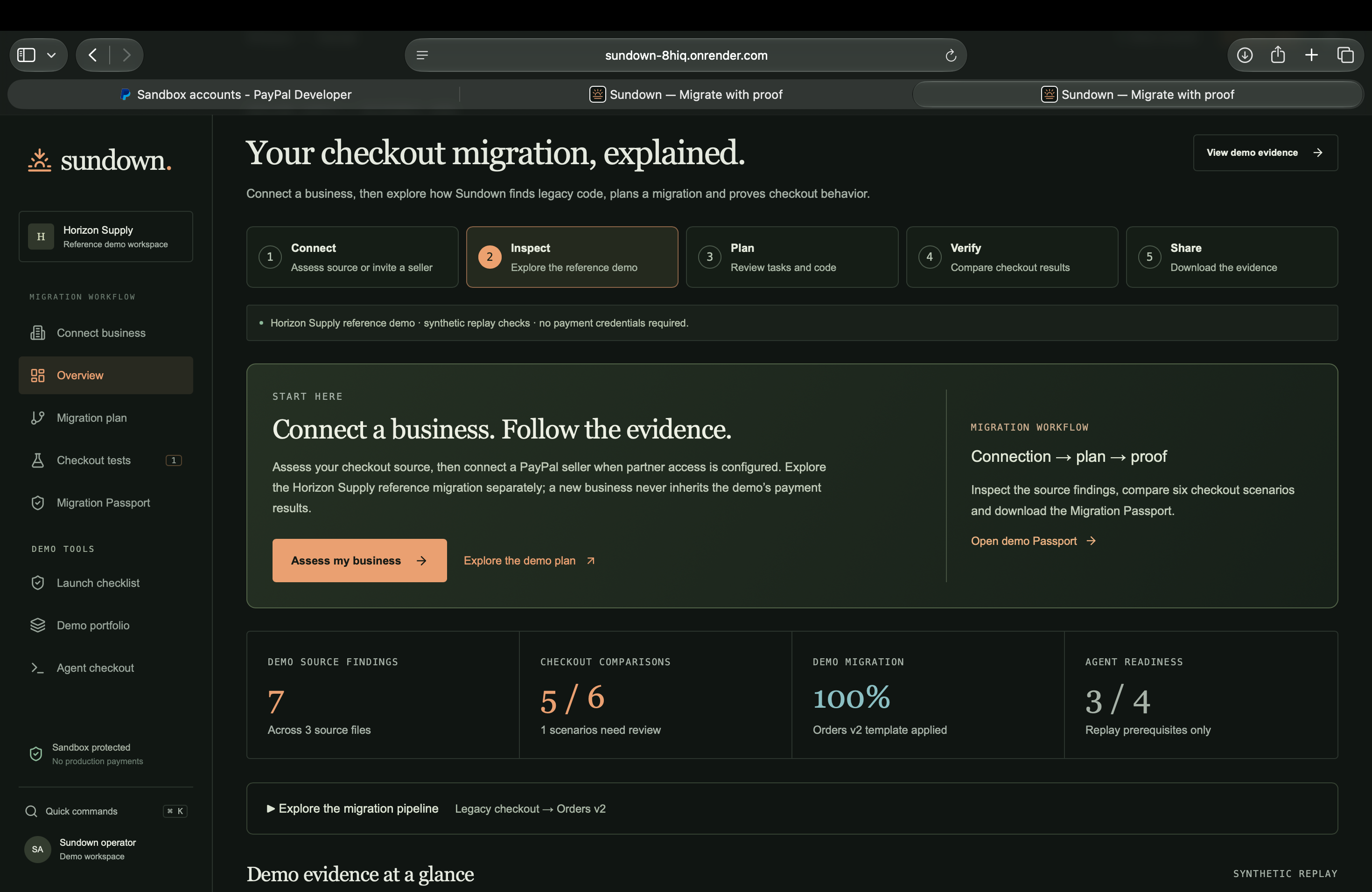
- Inspect: Scan checkout source for recognized legacy patterns and show findings tied to files and lines.
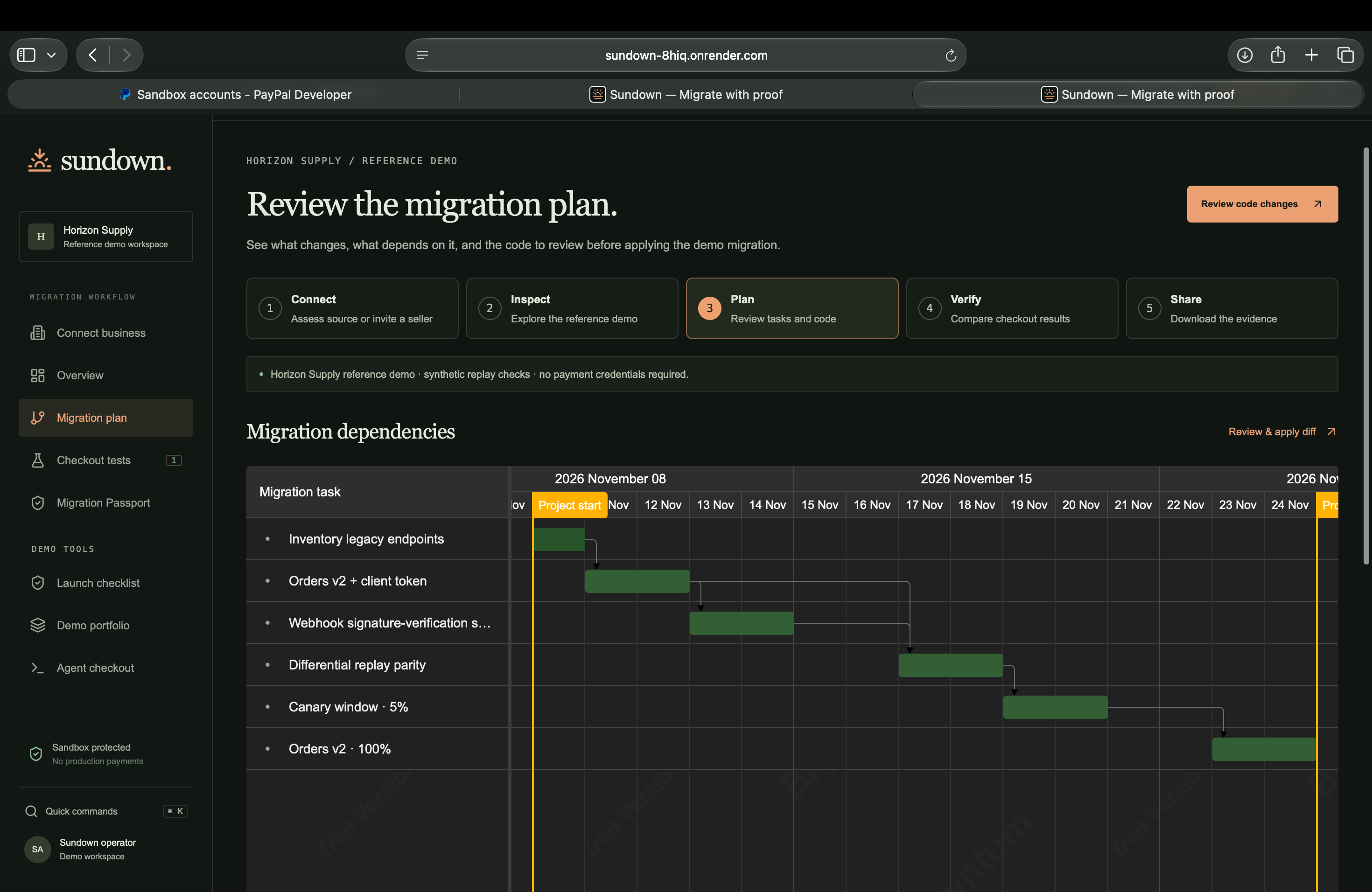
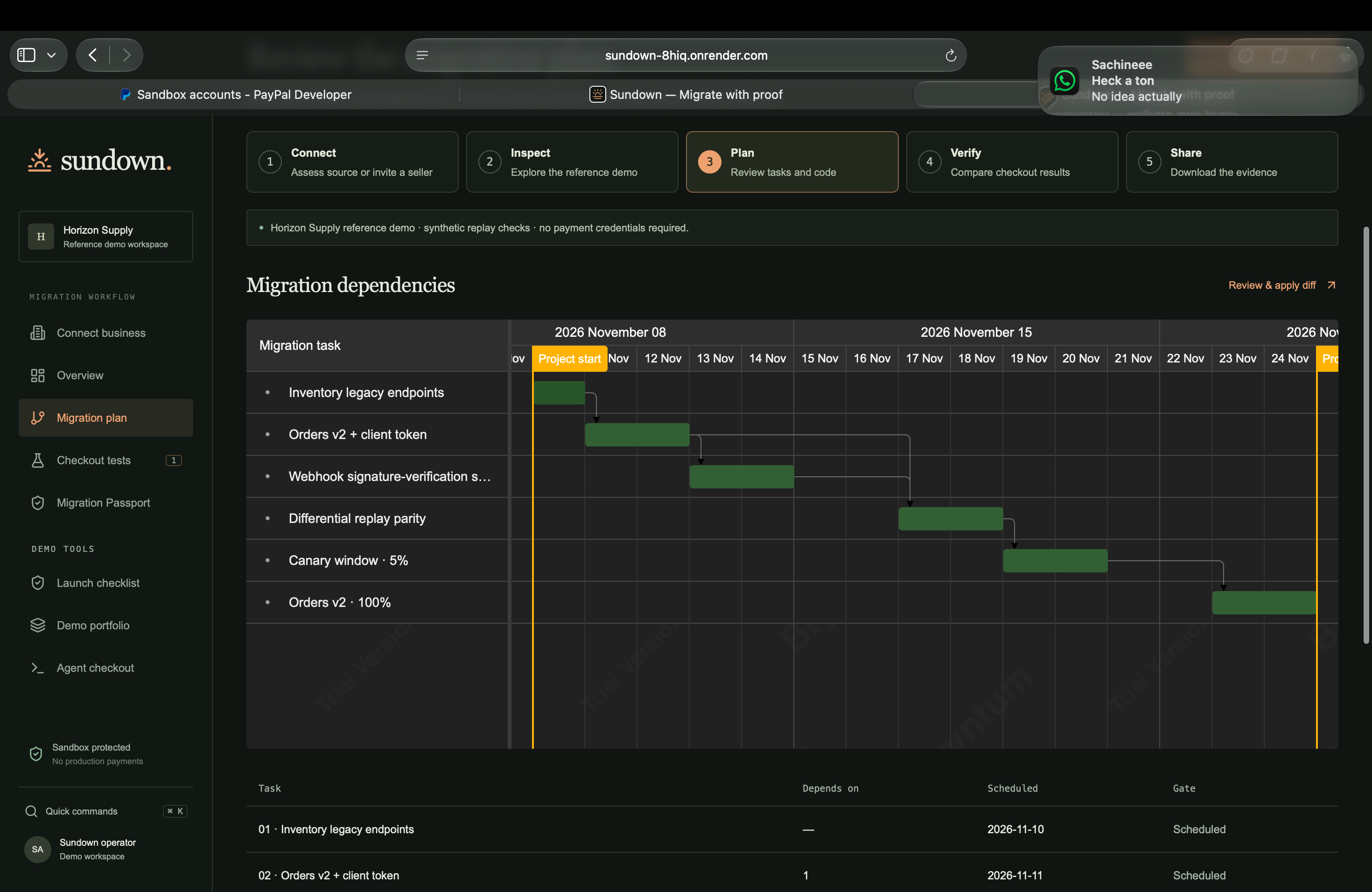
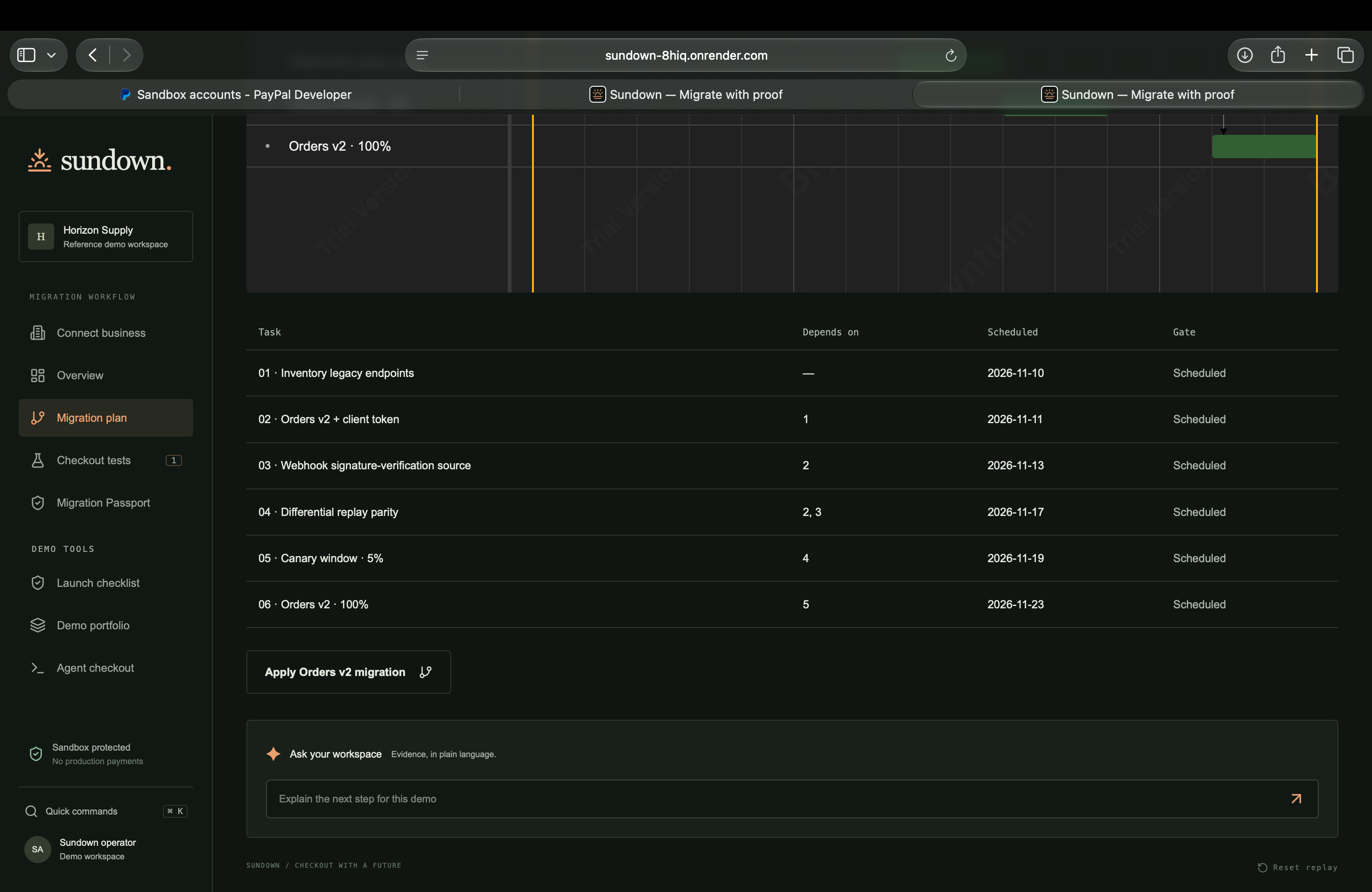
- Plan: Generate migration tasks with dependencies and reviewable replacement templates.
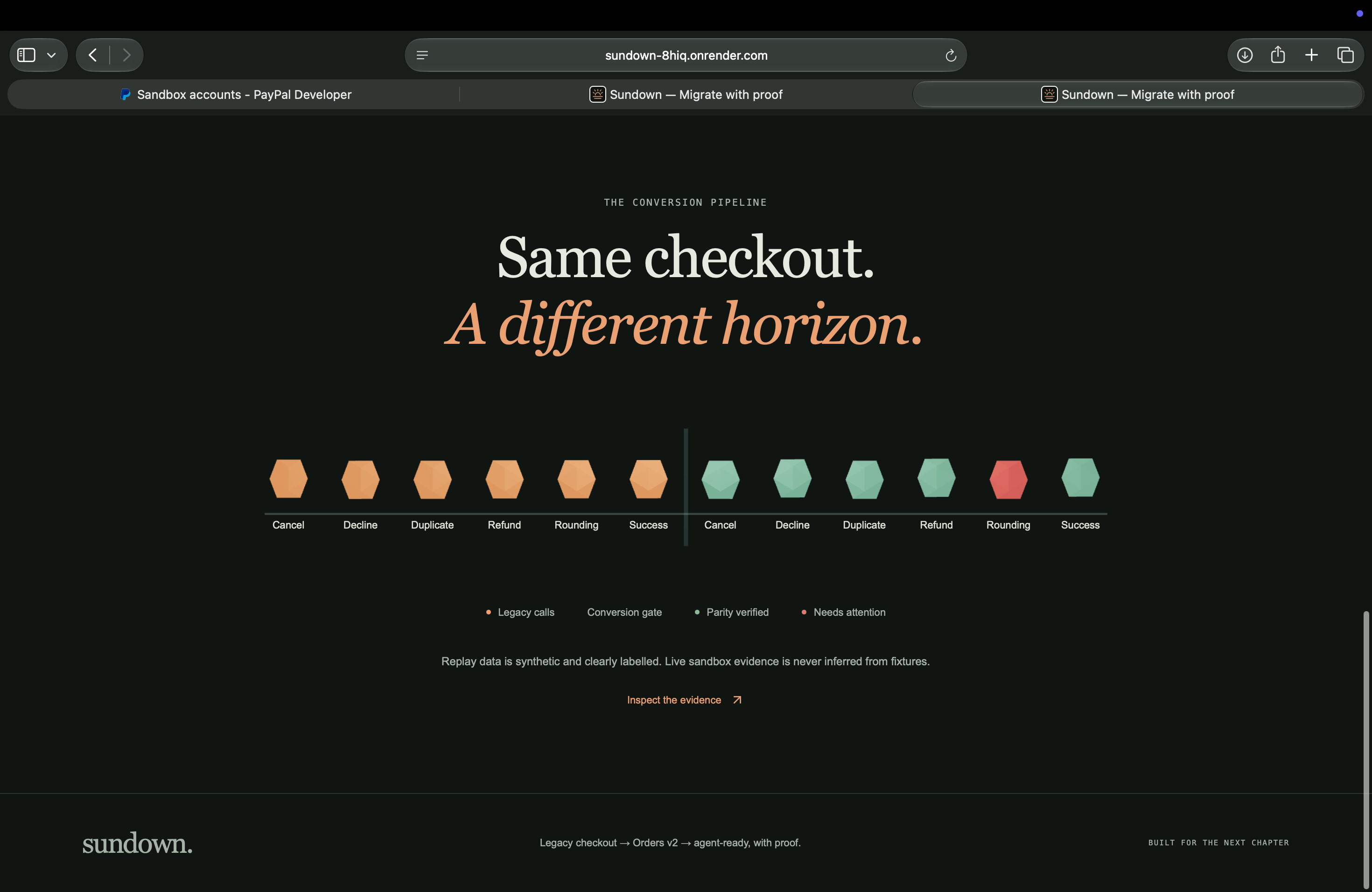
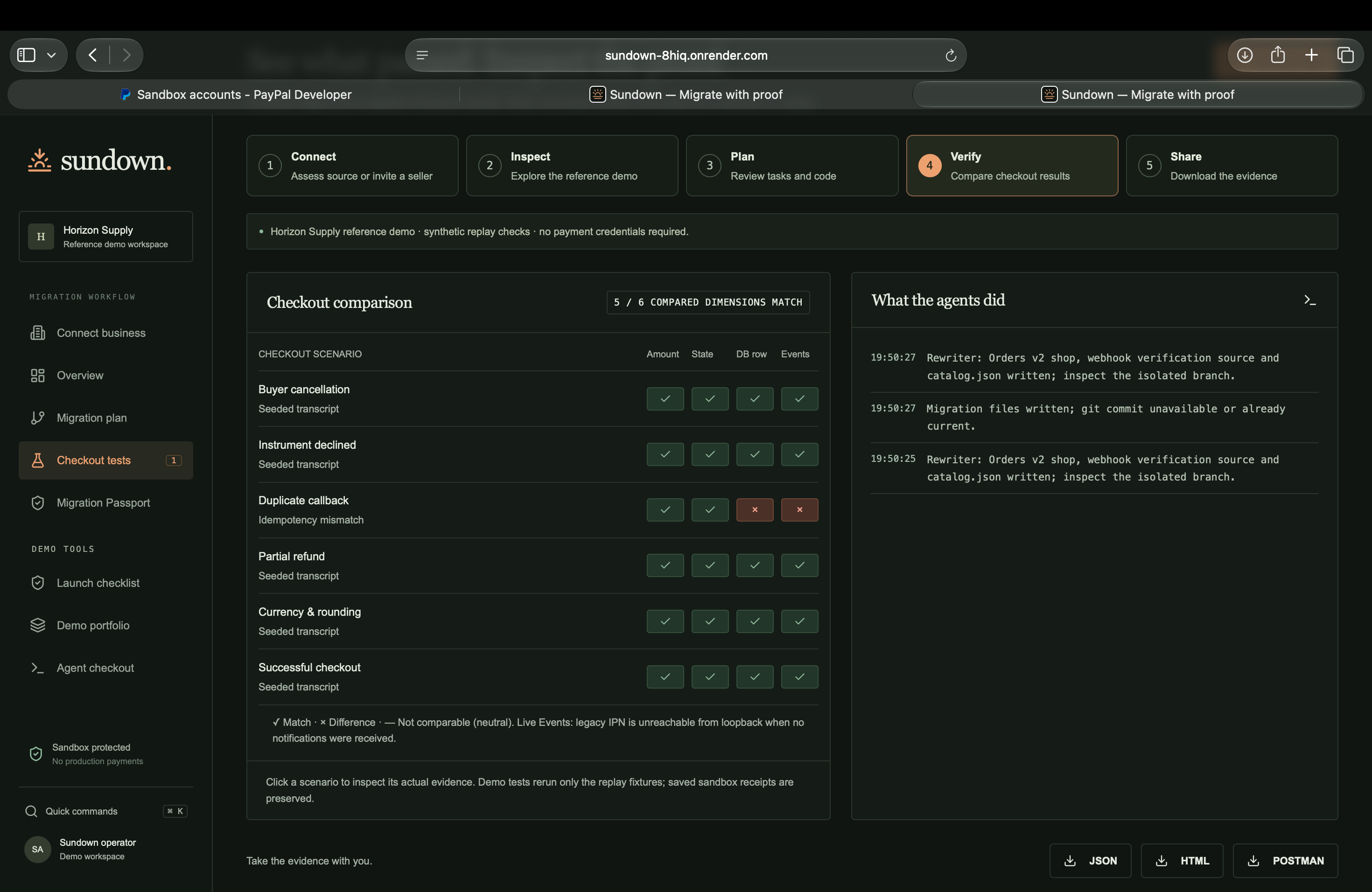
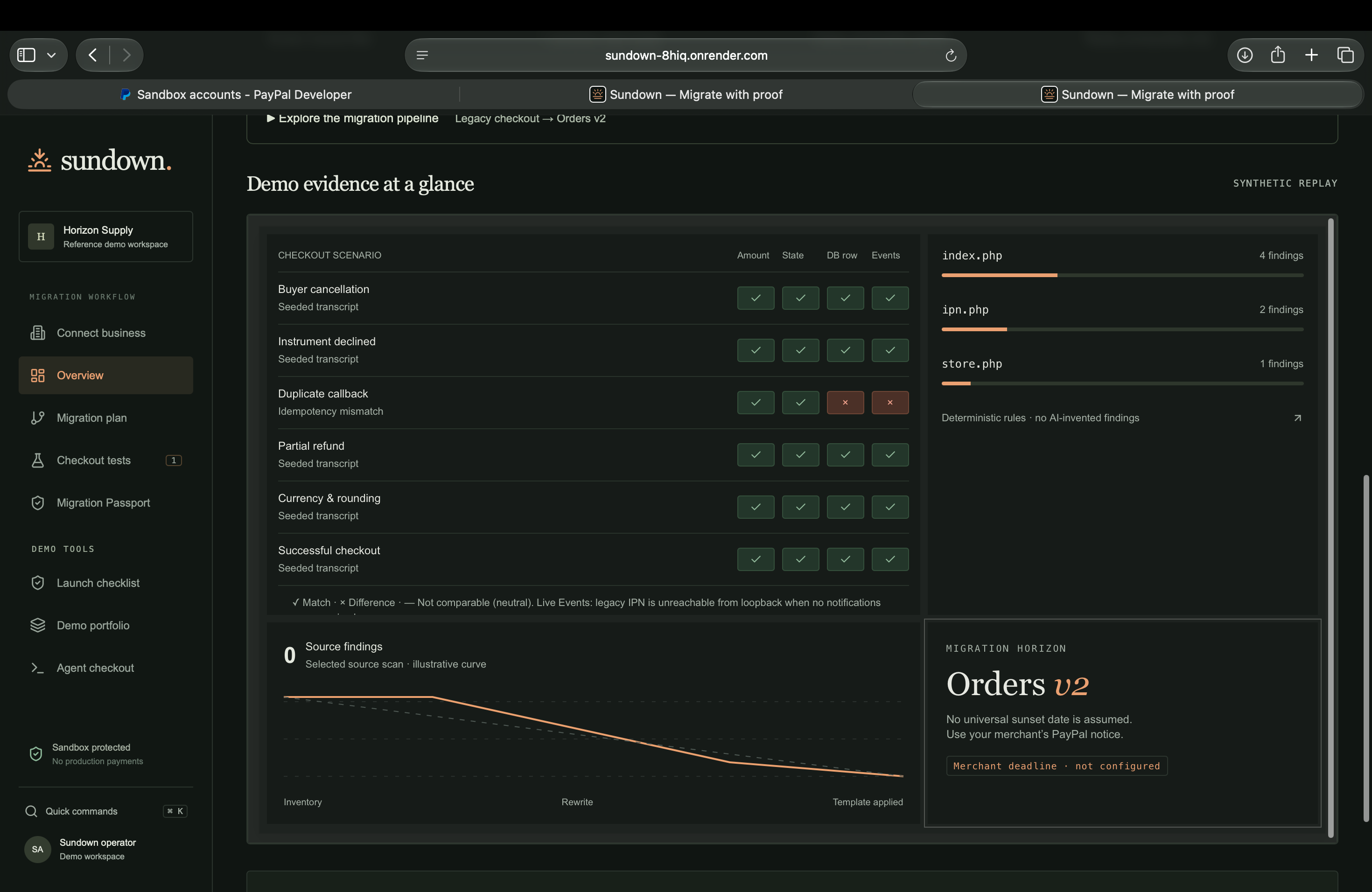
- Verify: Compare six checkout scenarios across amount, state, database rows and events where comparable.
- Repair and recheck: Demonstrate a known duplicate-callback defect, defer dependent migration gates, apply the replay repair and rerun verification.
- Explore agent checkout: Compare legacy and migrated checkout behavior, with simulated steps explicitly labelled.
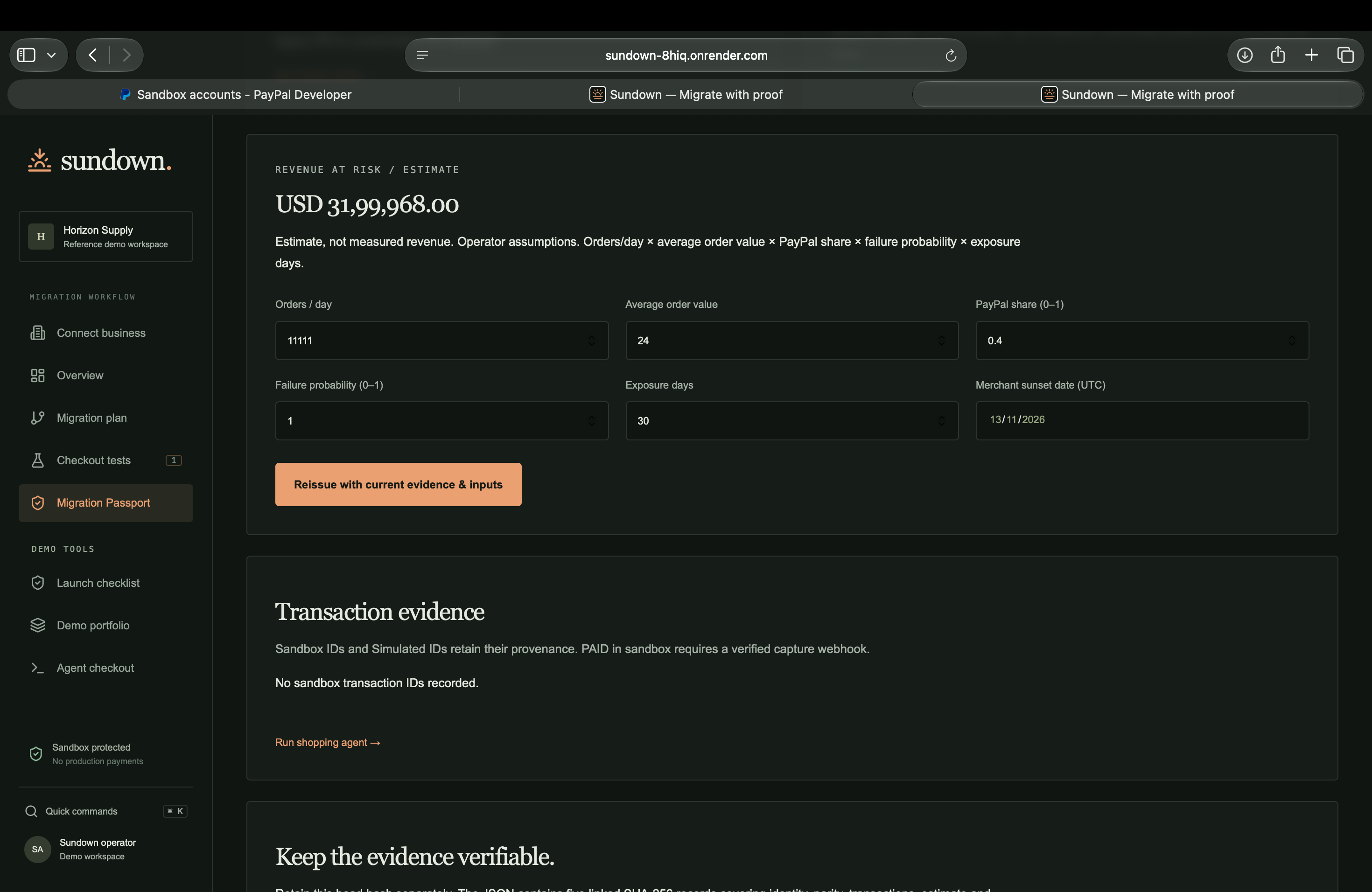
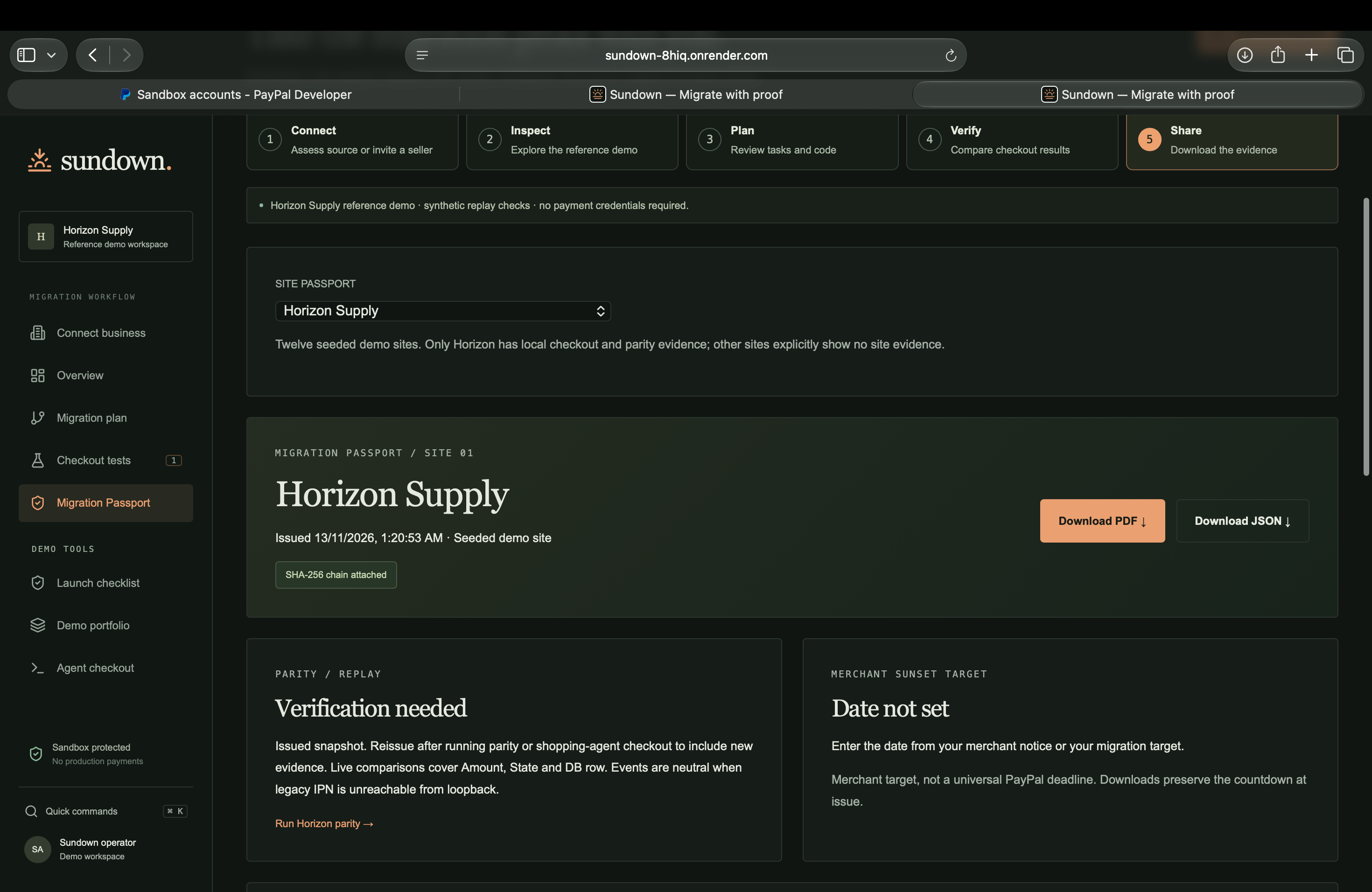
- Share proof: Export a Migration Passport as PDF or JSON, including parity results, available sandbox transaction IDs, an estimated revenue-at-risk calculation and a tamper-evident hash chain. The workspace also supports business-source assessments. PayPal partner onboarding is implemented behind configuration requirements; connecting real sellers requires approved partner access. How we built it We built a TypeScript monorepo with a Next.js and React interface, a deterministic migration engine, an agent orchestration layer and SQLite-backed state.
The engine scans recognized source patterns, builds dependency plans and normalizes checkout outcomes for comparison. The workspace presents the findings alongside migration timelines, scenario details and downloadable evidence.
For payment verification, we exercised PayPal Orders v2 and legacy NVP flows in the sandbox. Headed browser approval let us approve transactions manually before continuing with capture and partial refund. We verified webhook signatures before settling migrated orders in the shop database.
We also built sundown verify, a CLI and reusable GitHub Action that detect parity regressions and retain reports and a Postman collection as artifacts. Challenges we faced Separating evidence from simulation. A replay result cannot establish that a real payment succeeded. We kept live sandbox, replay and simulated outcomes visibly distinct.
Handling asynchronous payments. Buyer approval, capture and webhook delivery are separate events. We had to preserve transaction IDs and incomplete attempts while waiting for verified settlement.
Comparing events honestly. Legacy IPN notifications could not reach the local loopback shop. Instead of treating empty notifications as a match, we marked Events as not comparable and compared the available dimensions.
Making local behavior survive deployment. Concurrent SQLite initialization caused build-time locking failures. We added bounded initialization retries and corrected production startup and deployment configuration. What we learned Payment migrations need both code-level analysis and behavioral evidence. A successful API response alone does not establish that the order reached the correct database state.
We also learned that uncertainty belongs in the interface. Showing “Replay,” “Simulated” or “Not comparable” makes the evidence more useful than an unexplained green checkmark. Accomplishments we’re proud of We completed sandbox checkout and partial-refund flows on both legacy and migrated integrations, retained real transaction identifiers, and verified migrated webhook settlement.
We connected that evidence to an understandable migration workspace, downloadable Passports and regression checks that can run in CI. Our latest local validation passed 135 tests, typecheck, lint, the production build and production smoke checks. What’s next We want to validate seller-consent onboarding with approved PayPal partner access, expand migration-pattern coverage and support publicly reachable legacy notifications for fuller event comparisons.
Before supporting independent customer businesses at scale, we would add tenant isolation, per-merchant authorization and stronger operational controls.
