Sundo — Project Pitch
Hackathon submission story
Repository: https://github.com/joaquingalang/sundo
Inspiration
By early 2026, the war in the Middle East had triggered Philippine deployment bans across eight countries. Over a million OFWs were affected. Forty thousand were already stranded in Manila, with more arriving every week.
The government responded fast — emergency flights, PHP 50,000 in relief funds, a hotline. But that's where the support structure ended. What came next was a void. An OFW who spent a decade as a construction foreman in Riyadh has no local employment history, no network, no idea how to register a business or claim their OWWA benefits. And in that void, scammers thrive.
We built Sundo because the crisis needed more than emergency relief. It needed a way for returning workers to find trusted guidance — fast, accountable, and safe.
Sundo is a Filipino word: the act of going to meet someone where they are and bringing them home safely.
What it does
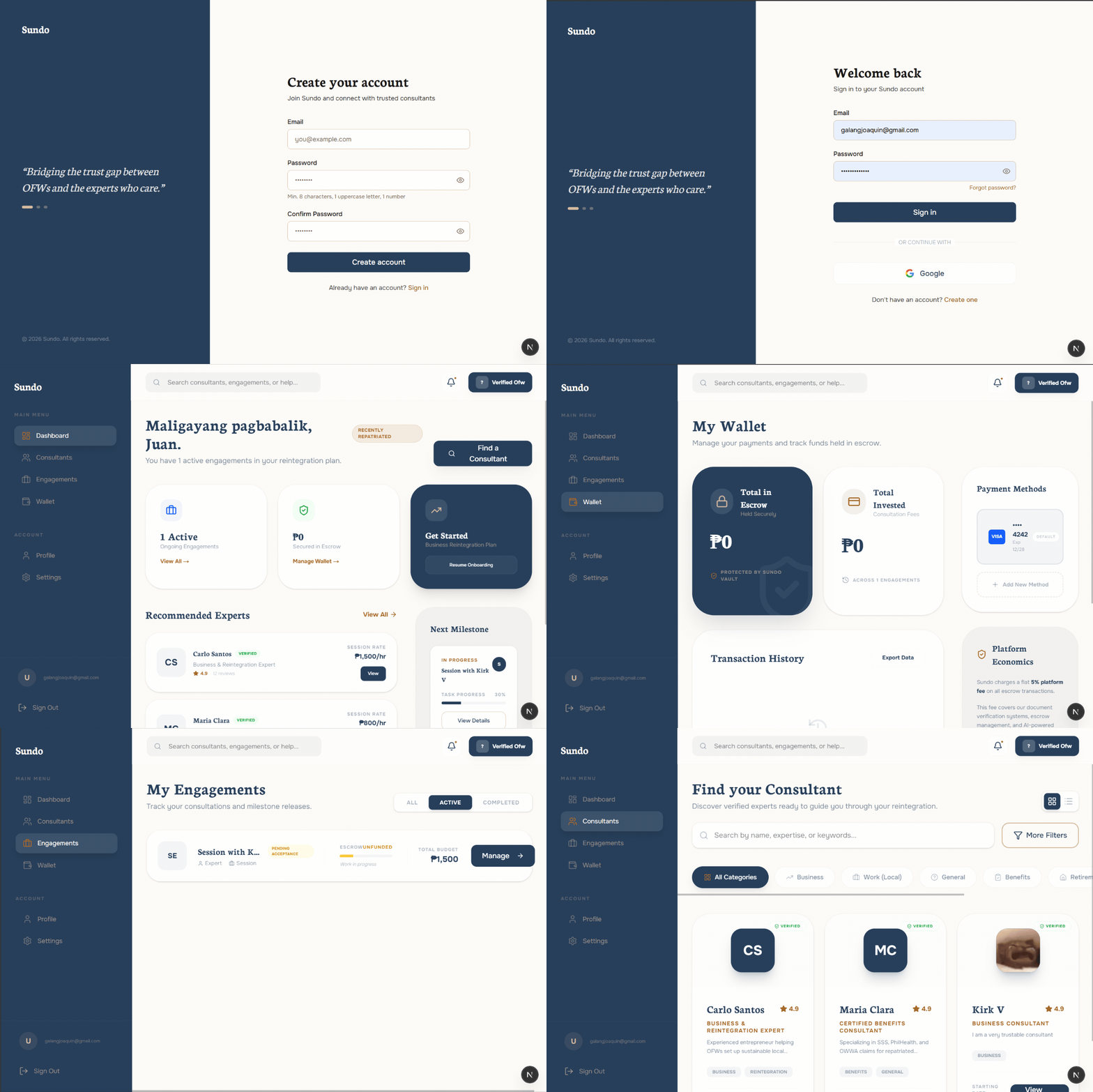
Sundo connects returning OFWs with verified consultants who guide them through reintegration — business registration, local employment, benefits claims, retirement planning, and more.
OFWs pay into a secure escrow vault. Money doesn't move until the work is done, reviewed, and approved. Consultants build a public credibility profile through completed engagements and client reviews. Every user on both sides is identity-verified before they can transact.
How we built it
We built Sundo in weeks using Next.js, Firebase, and Stripe. The escrow vault is backed by real payment infrastructure — funds are held and only released when milestone deliverables pass an AI review. Google Gemini acts as an objective validator on proof-of-work documents before any money moves. Communication happens through in-app chat with auto-generated Google Meet links so OFWs and consultants can meet without extra friction.
The whole stack was chosen for one reason: get something real and trustworthy in front of people who need it now.
Challenges we ran into
The hardest challenge wasn't technical — it was the weight of who we were building for. Every UX decision carried stakes we couldn't ignore. The onboarding couldn't feel like a government form. The escrow screen had to feel safe for someone trusting us with PHP 20,000. We were constantly asking: does this make the OFW feel safer?
On the technical side, getting the escrow logic right — ensuring money only moves under the right conditions, with the right safeguards — took longer than expected. And tuning the AI validator to be fair without being a blocker required more iteration than we anticipated.
Accomplishments that we're proud of
That we built something that treats OFWs as people navigating a crisis, not users navigating a product. The verification system, the escrow vault, the AI validation, the 5% fee — every decision points back to the same question: does this protect someone who is already vulnerable?
We're also proud that the architecture is already shaped for a DMW/DFA government API integration. When that becomes available, Sundo can plug in without a rebuild.
What we learned
Trust is a feature, not a policy. You can't write a terms of service and call it safe. Trust is built through mechanisms — escrow, verified identities, AI-reviewed deliverables, public review scores. We got better at designing those mechanisms as the project went on.
We also learned that the product context is everything. Every feature only makes sense because of what these workers are going through. Keeping that context visible — not just as inspiration but as a design constraint — shaped every decision we made.
What's next for Sundo
Government API integration, so OFW verification can happen in real time instead of manually. A mobile-first experience, since most users will be on a phone. Smarter consultant matching that factors in an OFW's situation and urgency, not just their category. And eventually, direct referral links to DTI grants, TESDA programs, and OWWA livelihood funds — so a consultation doesn't just give advice, it opens a door.
Built With
- antigravity
- firebase
- gemini
- google-calendar
- google-meet
- nextjs
- typescript
- vercel

Log in or sign up for Devpost to join the conversation.