-
-

Sunaloom app icon. Original, uncropped 1024 x 1024 PNG.
-
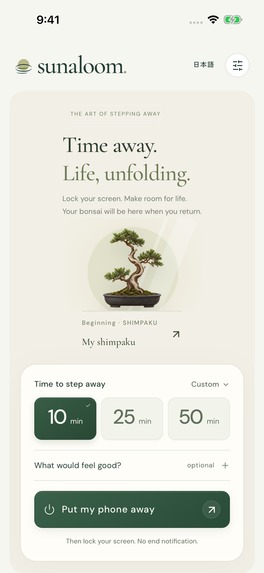
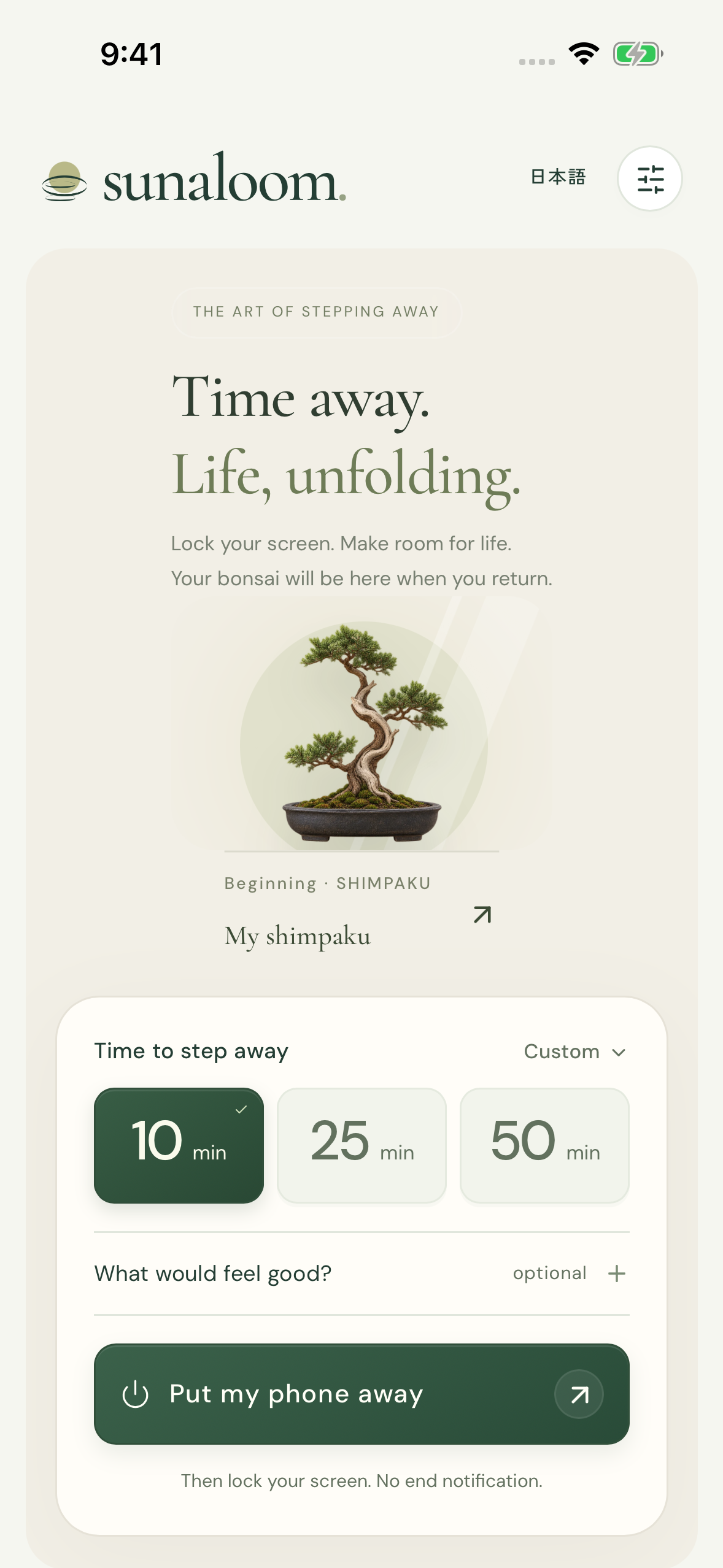
One bonsai. One intention. Put the phone away. Native iOS Simulator, 1179 x 2556.
-
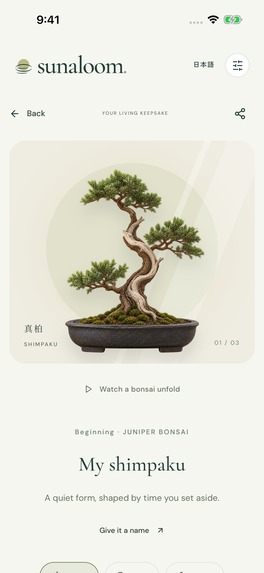
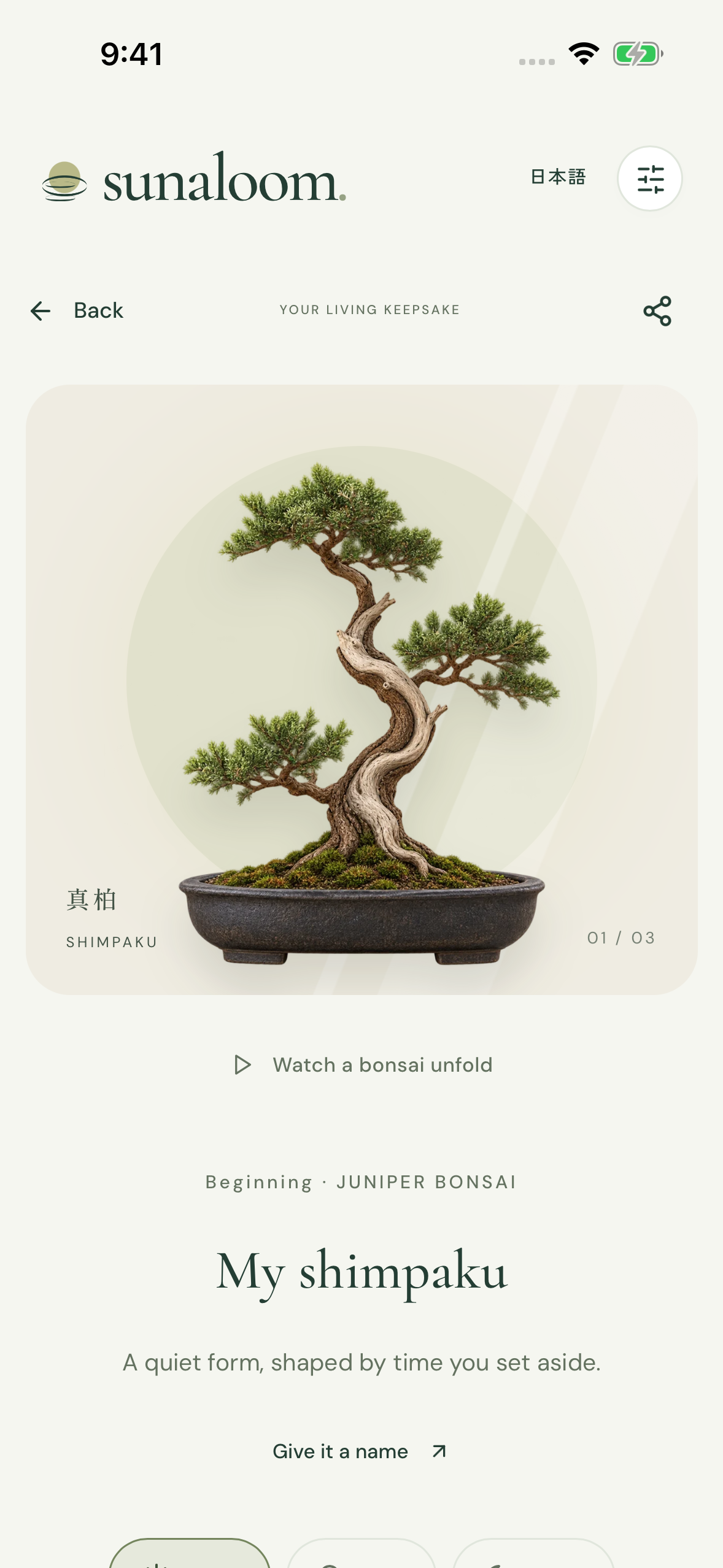
A single shimpaku remembers saved time. All growth stages are free. Native iOS Simulator.
-
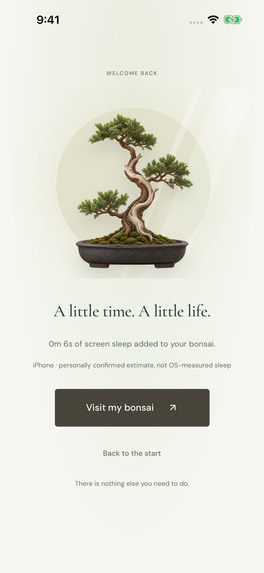
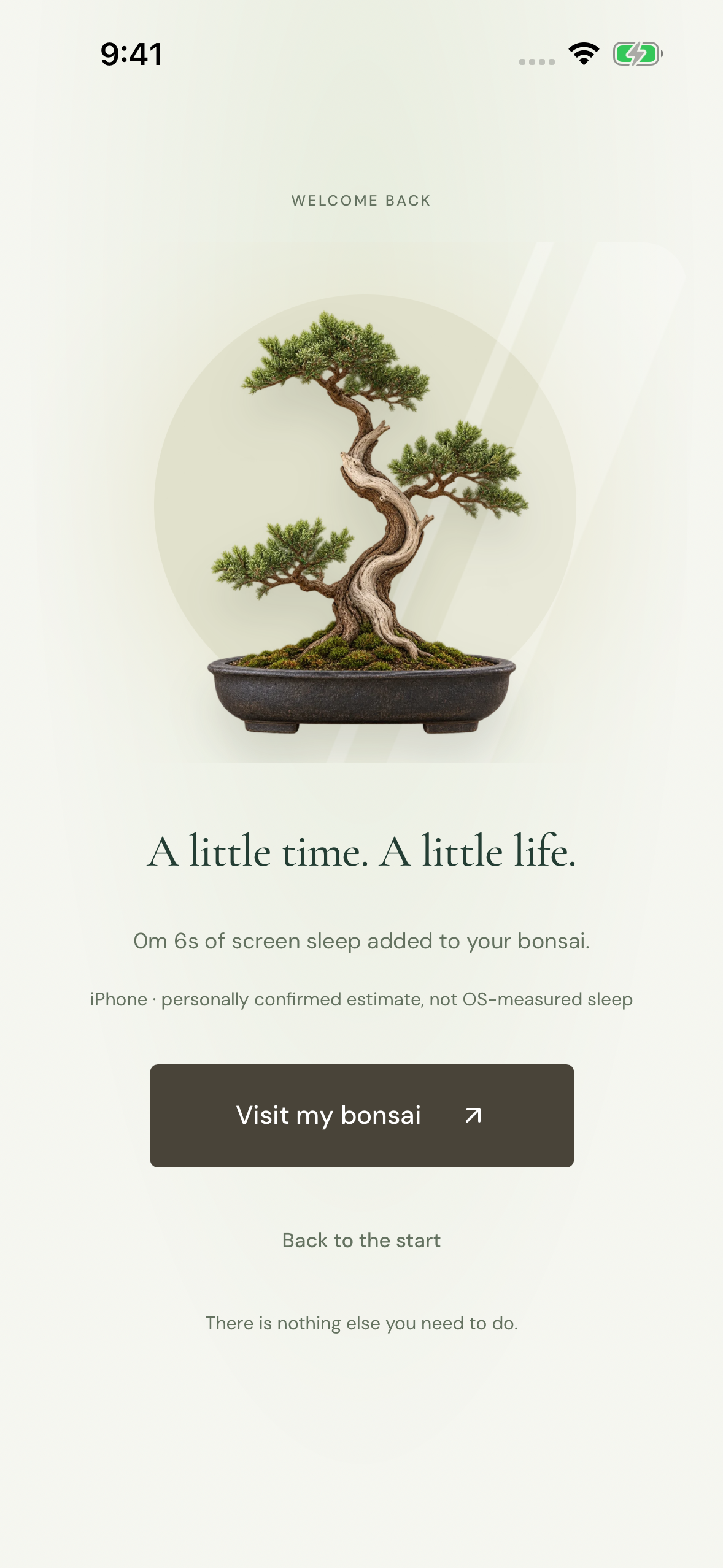
Save confirmed time, then let a short growth reveal return to stillness. Native iOS Simulator.
-
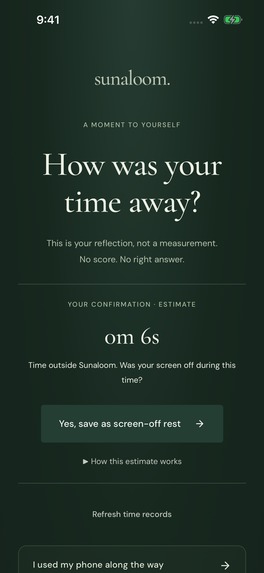
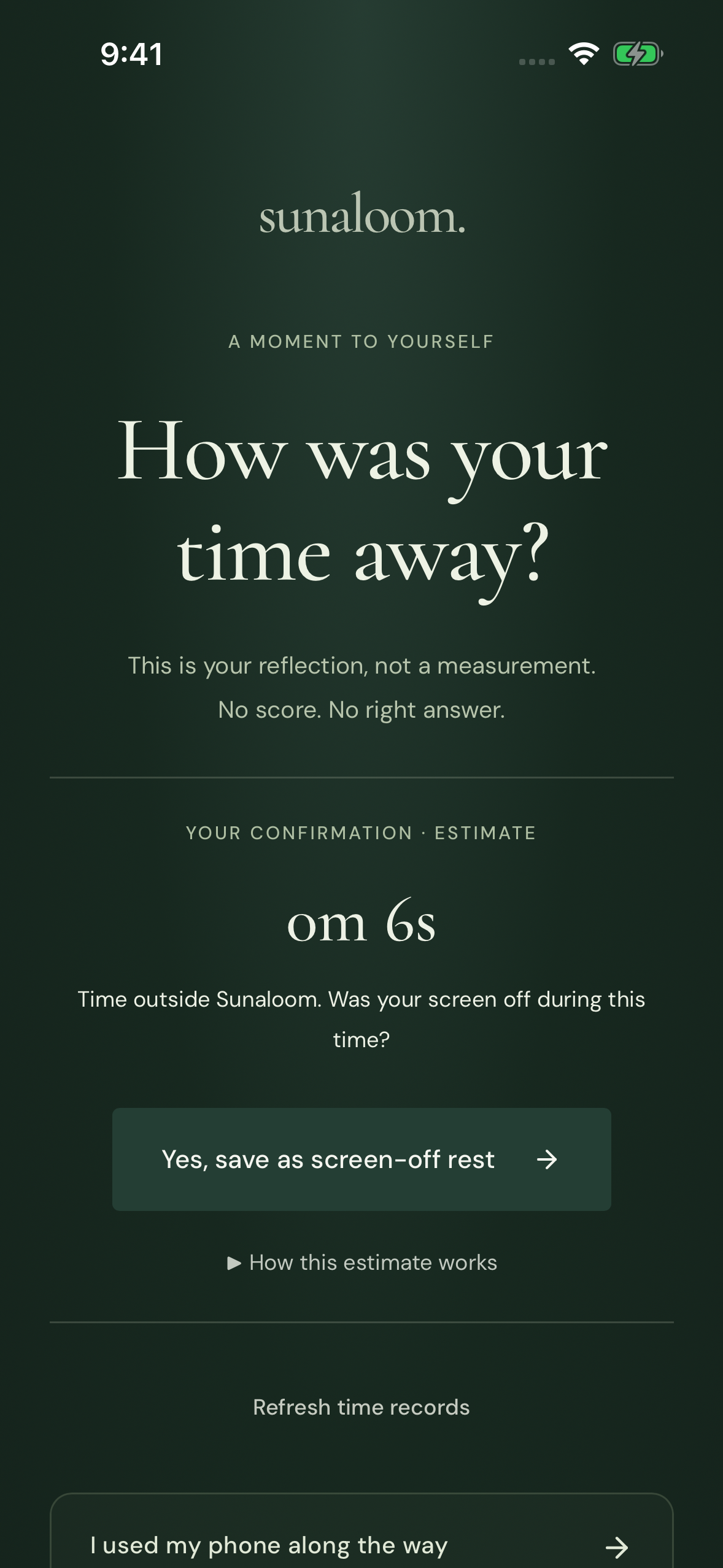
On iPhone, screen-off time requires personal confirmation and is labelled an estimate. Native iOS Simulator.
-
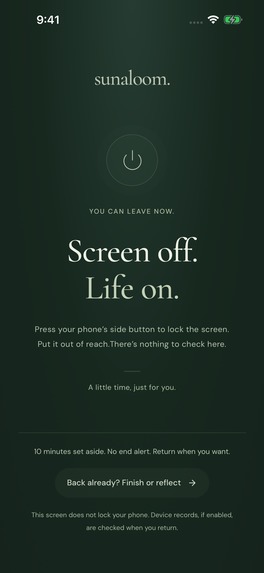
The bonsai disappears when a pause begins. No countdown to watch. Native iOS Simulator.


Inspiration
I am Riku Nagano, building Sunaloom from Japan. I wanted the moment of leaving a phone to feel complete. In many focus products, a second goal soon appears: check a timer, defend a streak, collect a reward. Sunaloom gives people permission to close the app.
A single shimpaku bonsai became the visual memory of a pause. Its asymmetrical branches, restrained color and generous space reflect Japanese design principles through behavior as well as appearance. There is no watering chore, punishment for an interruption, leaderboard or completion notification.
What it does
Choose a time, optionally name an intention, and press Put my phone away. The bonsai disappears. Lock the phone yourself and return when you choose. The session survives closing and reopening the app.
After returning, Android users can save OS-recorded non-interactive screen time with optional Usage Access. On iPhone, a native ledger preserves app-absence intervals across app termination. The user explicitly confirms that the screen was off during that interval; it is labelled a personally confirmed estimate, never OS-measured sleep. Saved time shapes one bonsai through three illustrated forms. Ordinary self-reports, foreground timer duration and web sessions do not create growth.
A short growth reveal settles into a still image. An optional art preview demonstrates the future forms without adding saved time. Reduce Motion and a stop control keep the experience accessible.
The core is free: unlimited pauses, every growth stage, three settings, private notes, offline use, backup and standard image sharing. Studio is an optional one-time purchase, adding twelve personal ritual presets, three additional settings and high-resolution or wallpaper exports. It never accelerates growth or limits free focus time.
How we built it
TypeScript, React and Capacitor share the interface across web, iOS and Android. Native platform bridges handle operating-system evidence. iOS includes a DeviceActivityReport extension and a separate native rest ledger using lifecycle events and a continuous clock that includes suspension. Android reads screen-state events with optional Usage Access. RevenueCat handles the Studio purchase, entitlement and restoration. The website runs on private Amazon S3 behind CloudFront and HTTPS.
Locally hosted Japanese and Latin fonts support both languages. Shared bonsai portraits omit private names, intentions and device records. Core records stay on the device; Sunaloom requires no account of its own. Purchases use an anonymous RevenueCat identifier and the transaction information needed to validate access.
Challenges and what we learned
An app cannot prove that someone never physically touched a phone. Android screen-state events describe the screen, not attention or physical contact. iOS Screen Time reports remain inside Apple's protected presentation and do not determine growth. An iPhone app-absence interval cannot distinguish another app from a locked screen by itself, so our estimate requires a personal confirmation. Invalid or missing intervals stay unknown. Sunaloom does not block other apps or force a device lock.
Simulator tests cover persistence, denied permissions and purchase handling. A Google Play-enabled emulator completed a real Sandbox purchase, cold-launch restoration, store refund and entitlement revocation, with corresponding RevenueCat events verified. Apple Sandbox transaction verification remains pending. These tests do not establish physical non-use, real iPhone Screen Time history or production revenue.
What we are proud of
The primary interaction is leaving. Sunaloom removes visual stimulation when a pause starts, accepts interruptions without punishment and asks for no daily maintenance. Its optional purchase supports personal routines and creative expression while keeping the full core free.
In the demo, look for the bonsai disappearing at the start, the honest iPhone estimate label on return, and the finite growth reveal that returns to stillness. The artwork is a memory of time beyond the screen, not another thing to maintain.
Current availability and next steps
Sunaloom became publicly available on the US App Store on September 10, 2026, within the Shipaton submission period: US App Store listing. The website is also live. The 109-second demonstration uses the iOS Simulator and is labelled throughout.
Next: invite a small English-speaking cohort and improve the first and second pause from feedback. We will report production conversion and revenue only after real customers generate them. No customer traction or revenue is claimed here.
Sunaloom. Less phone. More life.
Built With
- amazon-web-services
- capacitor
- cloudfront
- java
- playwright
- react
- revenuecat
- swift
- typescript
- xctest

Log in or sign up for Devpost to join the conversation.