Inspiration
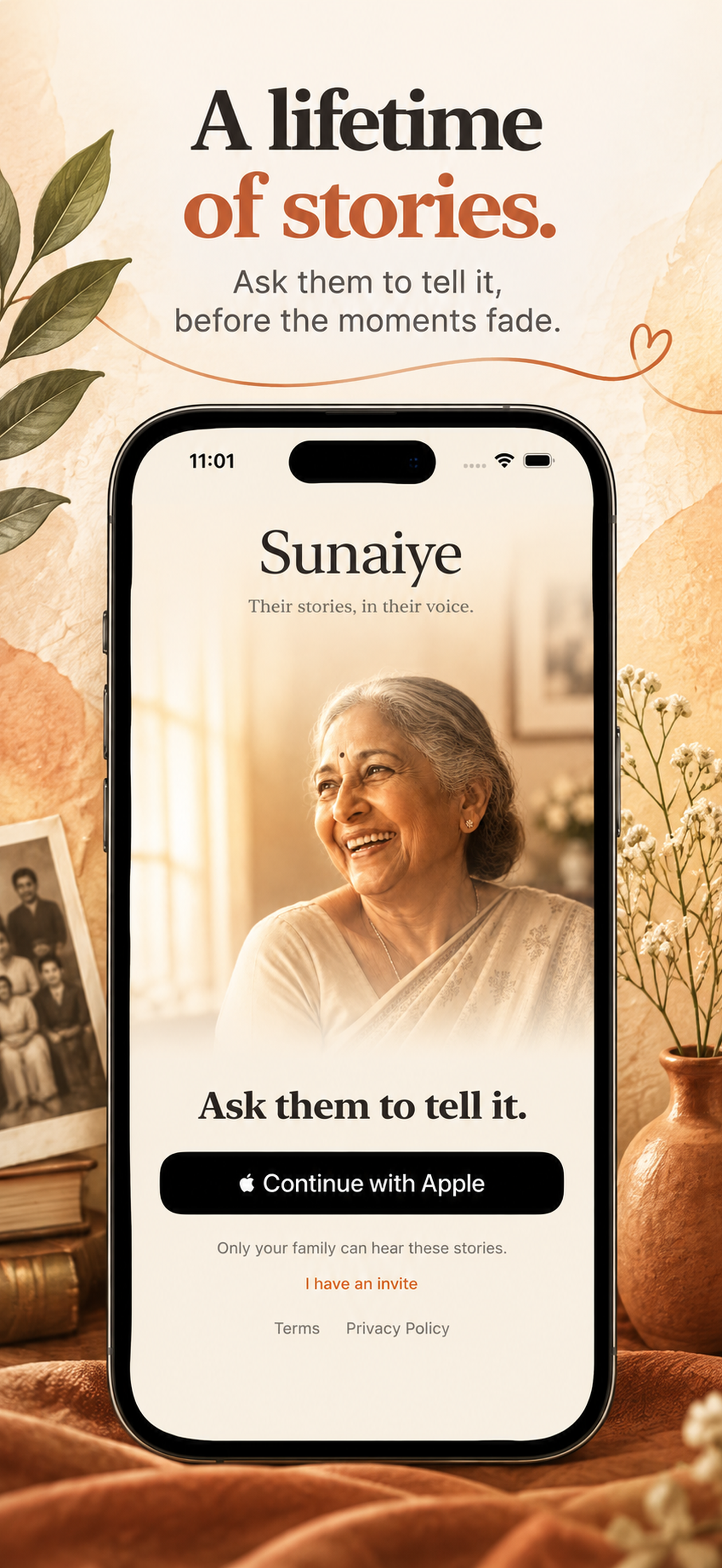
Sunaiye started with a simple thought: we take thousands of photos of the people we love, but rarely preserve their stories in their own voice.
Our parents and grandparents carry decades of memories — childhood stories, family traditions, struggles, funny moments, relationships, and experiences that may never have been written down.
We often think we'll ask them about these things someday.
But "someday" can easily become too late.
That led to the idea behind Sunaiye: what if preserving a life story didn't require someone to write a memoir, sit through a formal interview, or learn complicated technology?
What if they could simply talk?
Sunaiye was built around that idea.
What Sunaiye Does
Sunaiye helps families capture the stories of their parents and grandparents through natural conversations.
Instead of presenting a long questionnaire, the app gently guides the storyteller with thoughtful questions. They can respond naturally in Hindi, English, or Hinglish, just as they would while talking to family.
Their conversations can then be transformed with AI into readable, organized chapters.
But we didn't want AI-generated text to replace the person behind the story.
That's why the original voice remains an important part of the experience. Chapters can include moments from the actual recording, allowing future family members not only to read a story, but to hear the person telling it.
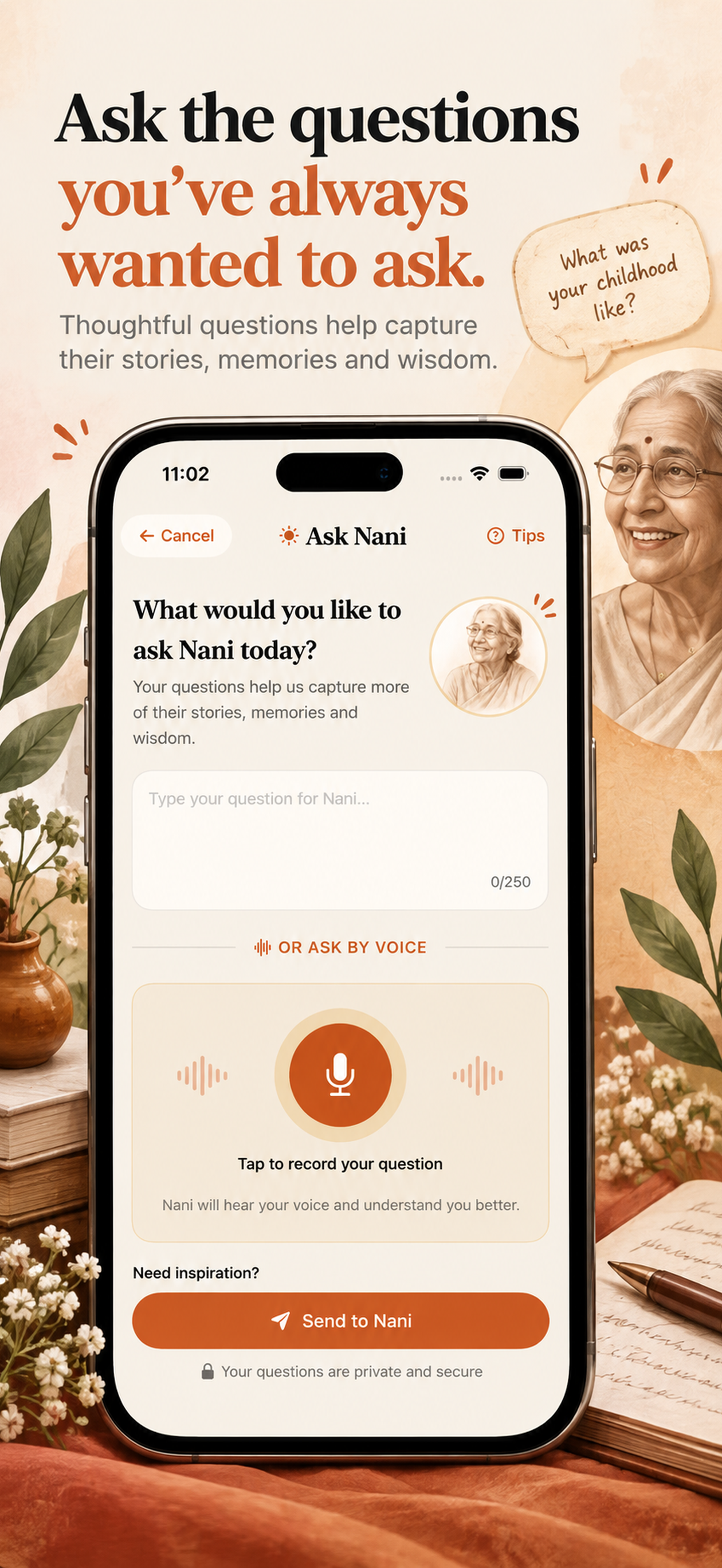
Family members can also ask questions remotely, helping uncover stories they may never have thought to ask about themselves.
Over time, these conversations become a private family archive.
How We Built It
Sunaiye is built as a native iOS application with a strong focus on making the experience simple enough for different generations to use.
The app includes two sides of the experience:
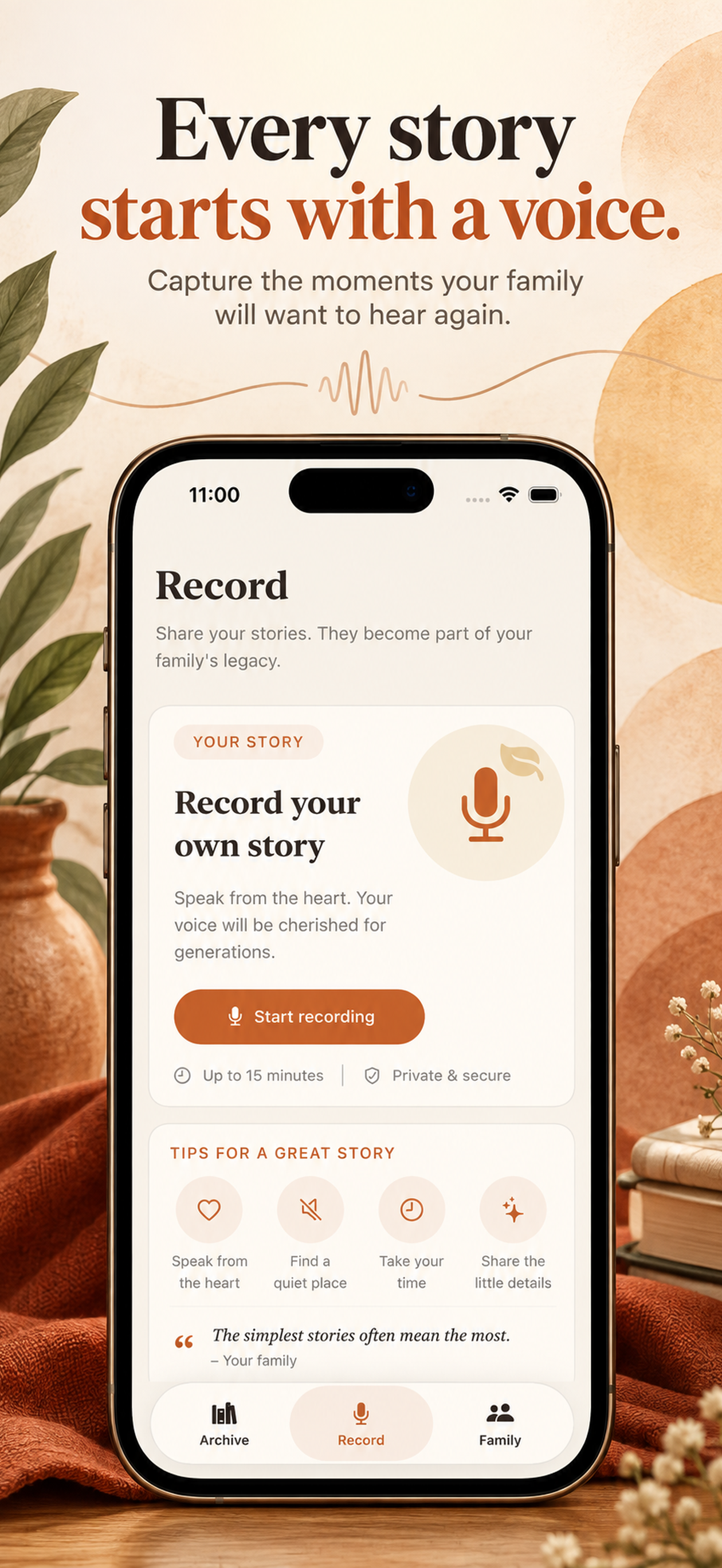
- A storyteller can record memories naturally.
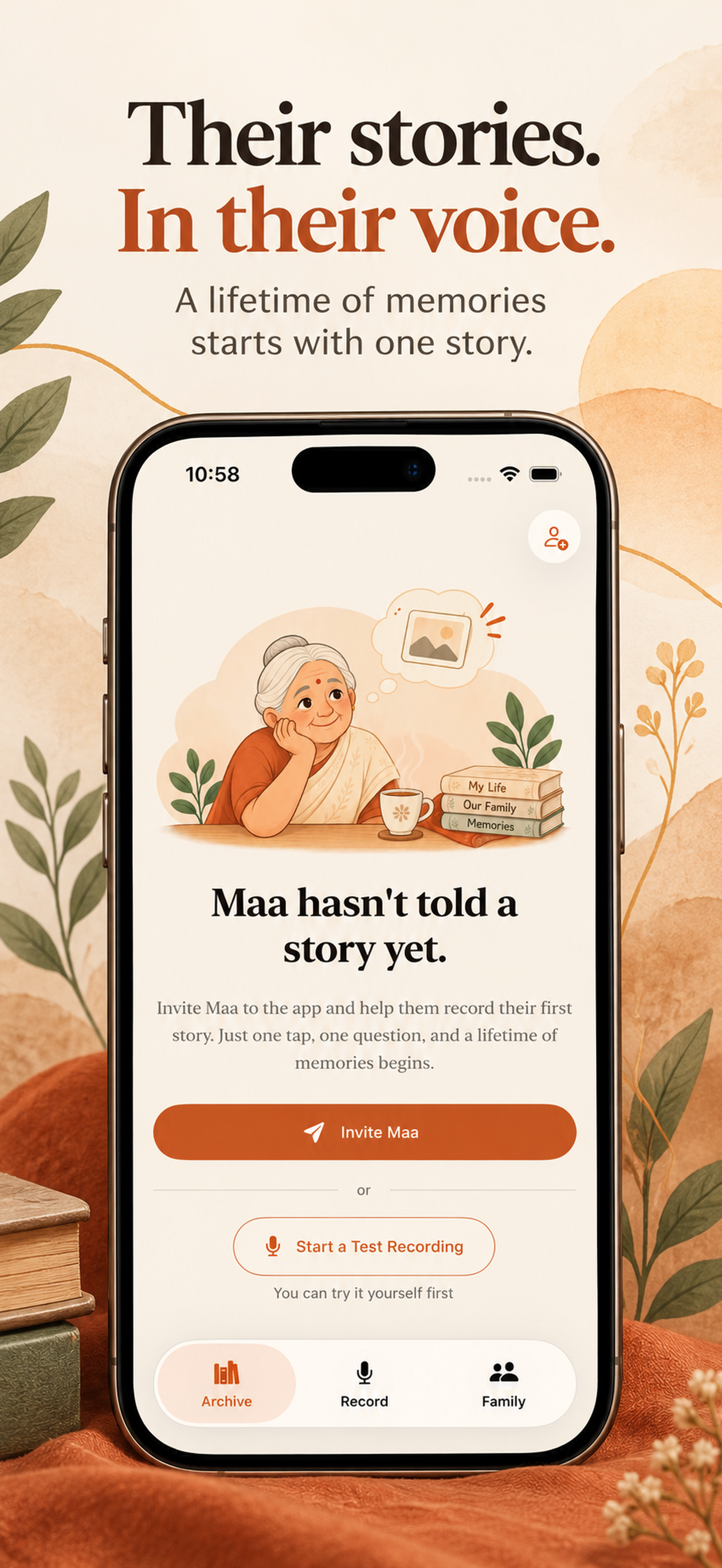
- Family members can listen, read chapters, invite relatives, and send new questions.
The backend is built with Node.js and Fastify, with Supabase handling authentication, database, and storage.
Audio recordings are securely uploaded and processed through an AI pipeline for transcription and story generation. We use large language models to help transform conversational speech into structured chapters while trying to preserve the meaning and personality of the original story.
The API is deployed on Render, while Cloudflare powers the public Sunaiye website and supporting pages.
On iOS, the experience was designed around warm colors, large readable interfaces, simple actions, and as little technical complexity as possible for the storyteller.
Challenges
One of the biggest challenges wasn't simply building the AI pipeline — it was deciding how much AI should do.
It would have been easy to turn a recording into a polished AI-written biography. But doing too much rewriting risks losing the person's actual personality and way of telling a story.
We therefore designed Sunaiye around the idea that AI should help organize and preserve a story, rather than become the storyteller.
Another challenge was designing for very different users.
The person setting up an archive may be comfortable with technology, while the parent or grandparent telling the stories may not be. Recording a memory therefore needs to feel closer to answering a family member's question than operating a complicated recording or AI application.
Privacy was another important consideration. These aren't public social-media posts — they can be deeply personal family memories. Sunaiye is designed around private family archives and controlled invitations rather than public profiles and feeds.
We also had to deal with the practical challenges of audio uploads, transcription, AI processing, failed network requests, subscription handling, and keeping the experience understandable when something goes wrong.
What We Learned
The biggest lesson was that the most meaningful part of the product isn't necessarily the AI.
It's the conversation the AI helps make possible.
A question as simple as:
"What was your childhood home like?"
can unlock a story that a family may never have heard before.
We also learned that preserving someone's voice changes the emotional value of the archive. Reading a story is meaningful, but hearing the pauses, laughter, accent, and emotion of the person telling it makes it something very different.
Technology is useful here when it becomes almost invisible.
What's Next
We want Sunaiye to grow from a storytelling app into a living family archive.
Future versions can help families discover unanswered questions, connect related memories across generations, improve multilingual storytelling, and make decades of family history easier to explore without losing the original recordings behind it.
The long-term idea is simple:
Photos preserve how someone looked. Sunaiye should help preserve what they sounded like, what they remembered, and the stories they wanted their family to know.
Their stories, in their voice.

Log in or sign up for Devpost to join the conversation.