-
-
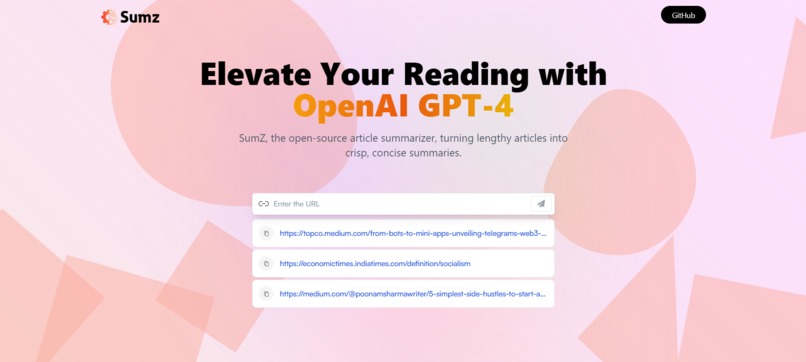
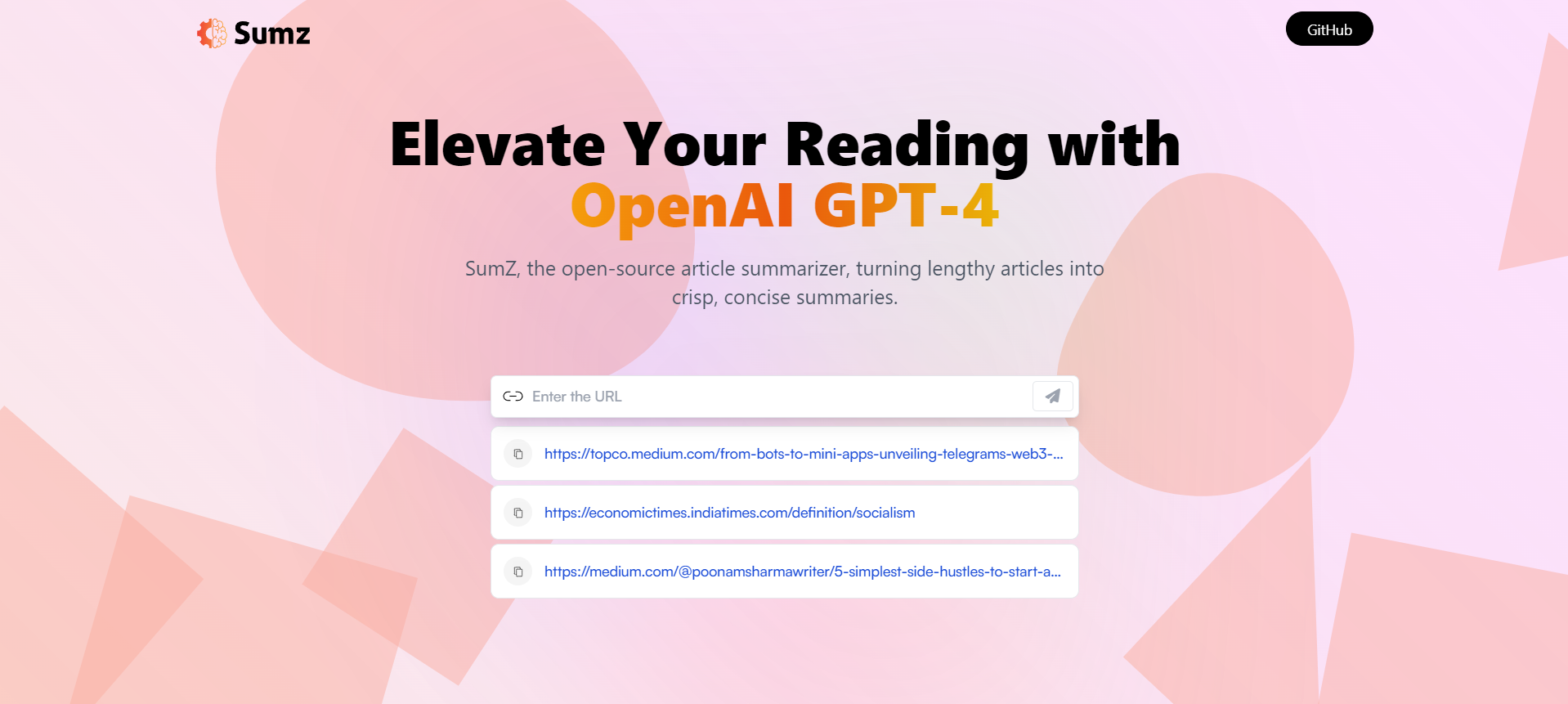
The UI of the SumZ
-
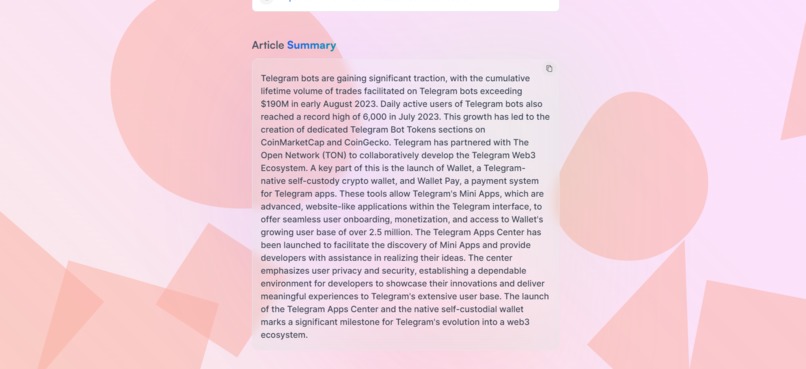
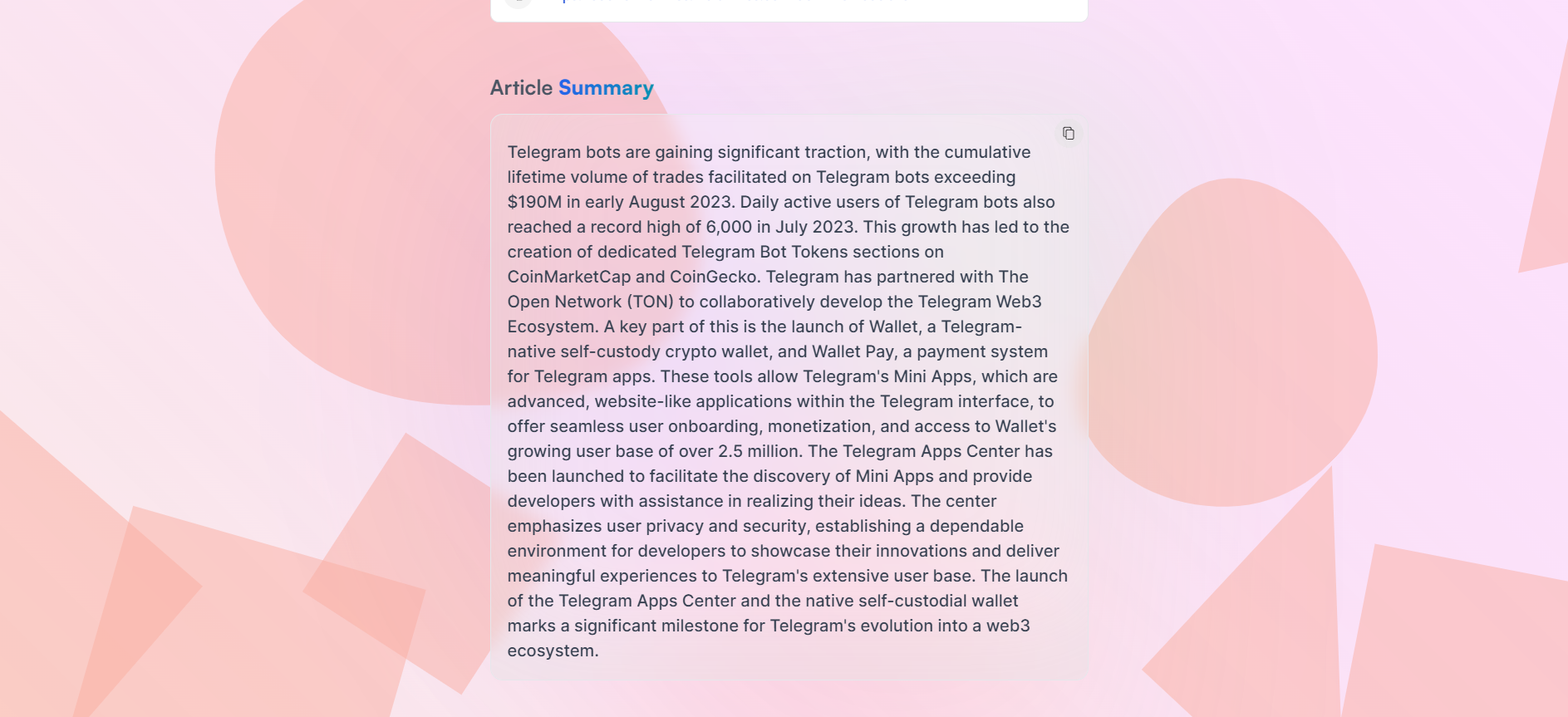
How summarizes looks like
Inspiration
The inspiration behind SumZ originated from my own experiences as a student and the feedback from peers who often felt overwhelmed by the volume of information they needed to process. In the fast-paced world of academia and professional life, time is a precious resource. Students, researchers, and professionals frequently encounter lengthy articles, research papers, and documentation that are critical to their work. However, sifting through these materials to extract key information can be time-consuming and daunting. Recognizing this challenge, I envisioned a tool that could leverage advanced AI technology to alleviate this burden. The goal was to create a solution that would not only save time but also enhance productivity by delivering concise and relevant summaries of long texts.
What it does
SumZ is an innovative article summarizer powered by GPT-4, designed to transform how users interact with long-form content. The primary function of SumZ is to provide accurate and concise summaries of lengthy articles, enabling users to quickly grasp the main points and essential information without having to read through the entire text by just pasting the URL of the article on the SumZ Summarizer. This is particularly beneficial for students who need to review multiple research papers, professionals who must stay updated with industry reports, and anyone who deals with extensive documentation. By delivering key insights swiftly, SumZ helps users make better use of their time and focus on what truly matters.
How I built it
The development of SumZ involved several key stages, each critical to ensuring the tool's effectiveness and user-friendliness:
Designing the User Interface: The project began with designing an intuitive and aesthetically pleasing user interface using Tailwind CSS. The focus was on creating a seamless experience where users could easily input article links and receive summaries with minimal effort.
State Management: To handle the dynamic nature of the application, Redux was employed for state management. This allowed for efficient handling of user inputs, storing previous summaries, and managing application states to ensure smooth performance.
API Integration: Integrating the GPT-4 API was a pivotal part of the project. This involved setting up API calls to process the articles and generate summaries. Ensuring that the integration was seamless and could handle various types of content was a significant challenge that required careful planning and execution.
Data Storage and Retrieval: Implementing a system to store previous summaries was essential for enhancing user convenience. Users can easily retrieve and review past summaries, making the tool more functional and practical.
Testing and Optimization: Rigorous testing was conducted to ensure that the application was robust and could handle different use cases. Performance optimization was also a priority to ensure that summaries were generated quickly and accurately.
Challenges we ran into
The development of SumZ was not without its challenges. Some of the major hurdles I faced are:
API Integration: Ensuring seamless integration with the GPT-4 API was challenging, especially when dealing with various types of articles and ensuring the accuracy of summaries. Handling API rate limits and optimizing API calls for performance were key issues that needed resolution.
State Management Complexity: Managing the application's state effectively with Redux was complex, especially when dealing with asynchronous operations and ensuring that the UI remained responsive and consistent.
UI/UX Design and Responsiveness: Designing a user interface that was both functional, responsive and visually appealing required careful consideration. Ensuring that the UI was intuitive and could cater to users with varying levels of technical expertise was a critical challenge.
Performance Optimization: Ensuring that the summarization process was efficient and could deliver results promptly was a significant technical challenge. This involved optimizing the backend processes and ensuring that the frontend remained responsive.
Error Handling: Ensuring that user face less error as much as can, and ensuring the proper error handling when a API call fails or the API does not recognize the URL.
Accomplishments that I am proud of
Despite the challenges, several accomplishments stand out in the development of SumZ:
Impact on Productivity: I am proud to have built a tool that helps students and professionals increase their productivity. Through SumZ, I can make a positive impact on how students manage their time and resources, enabling them to focus on their studies and work more effectively.
Time-Saving Tool: Developing a tool that significantly saves time and enhances productivity for students and professionals is a rewarding accomplishment. Knowing that SumZ can make a tangible difference in users' lives is a source of pride.
Successful API Integration: Achieving seamless integration with the GPT-4 API and ensuring accurate and concise summaries was a major milestone. This required a deep understanding of the API and effective handling of different content types.
User-Friendly Interface: Creating an intuitive and visually appealing user interface that enhances the user experience is a significant accomplishment. The positive feedback from initial users validates the effort put into UI/UX design.
What I learned
The development of SumZ was a profound learning experience, providing insights into several key areas:
Advanced React and Redux Skills: Working extensively with React and Redux deepened my understanding of state management, component architecture, and performance optimization.
API Integration: Gaining hands-on experience with integrating third-party APIs, particularly the GPT-4 API, was invaluable. This involved understanding API documentation, handling asynchronous operations, and optimizing API calls.
UI/UX Design Principles: Learning the principles of effective UI/UX design and applying them to create a user-friendly interface was a significant learning outcome. This involved user research, prototyping, and iterative design.
Problem-Solving and Debugging: Overcoming the various challenges and errors encountered during development enhanced my problem-solving and debugging skills. This involved troubleshooting integration issues, optimizing performance, and ensuring robustness.
What's next for SumZ- Article Summarizer
The journey for SumZ doesn't end here. Several future enhancements and expansions are planned:
Enhanced Features: Adding additional functionalities such as keyword extraction, sentiment analysis, and personalized summaries to further enhance the tool's utility.
Platform Expansion: Making SumZ available as a browser extension and mobile app to increase accessibility and convenience for users across different platforms.
User Feedback and Improvement: Continuously gathering feedback from users to improve the tool based on their needs and preferences. This involves iterating on the design and functionality to better serve the user base.
Built With
- api
- javascript
- openai
- react
- redux
- tailwind
- vite


Log in or sign up for Devpost to join the conversation.