-
-
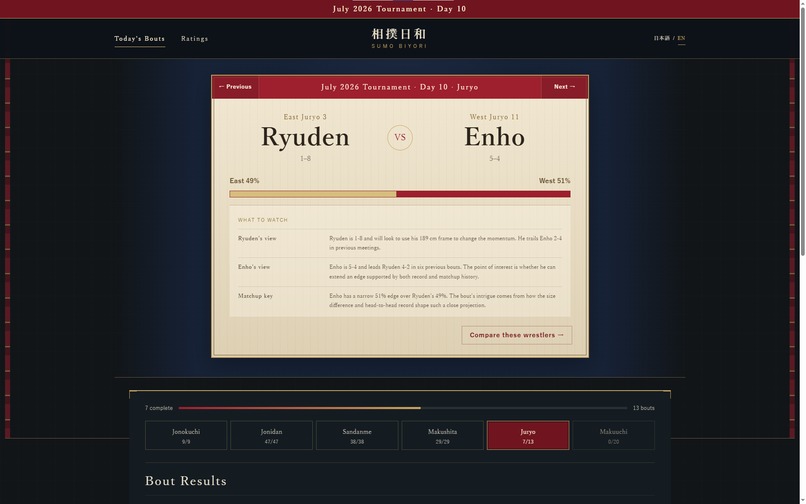
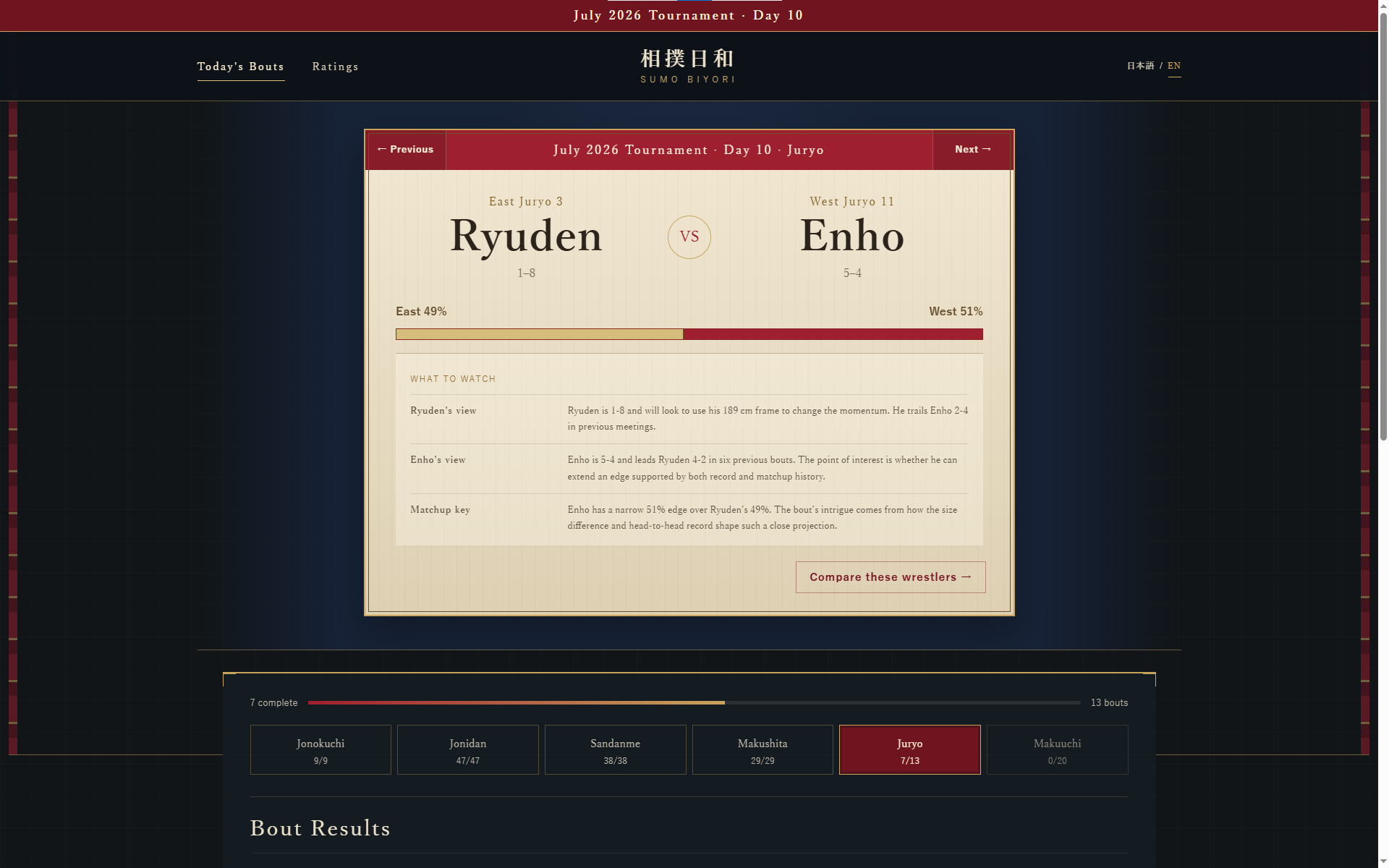
Live tournament view with win probabilities, wrestler records, and AI-generated “What to Watch” insights for each bout.
-
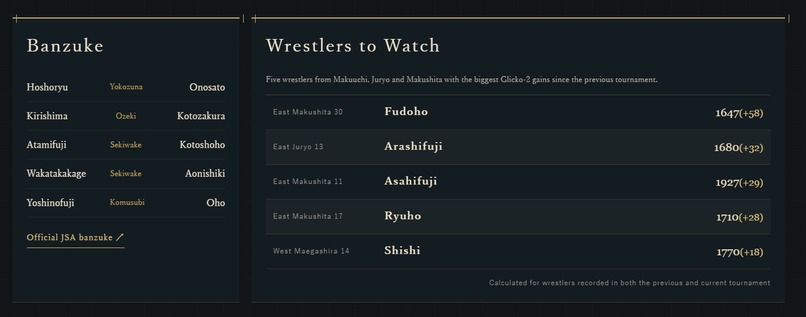
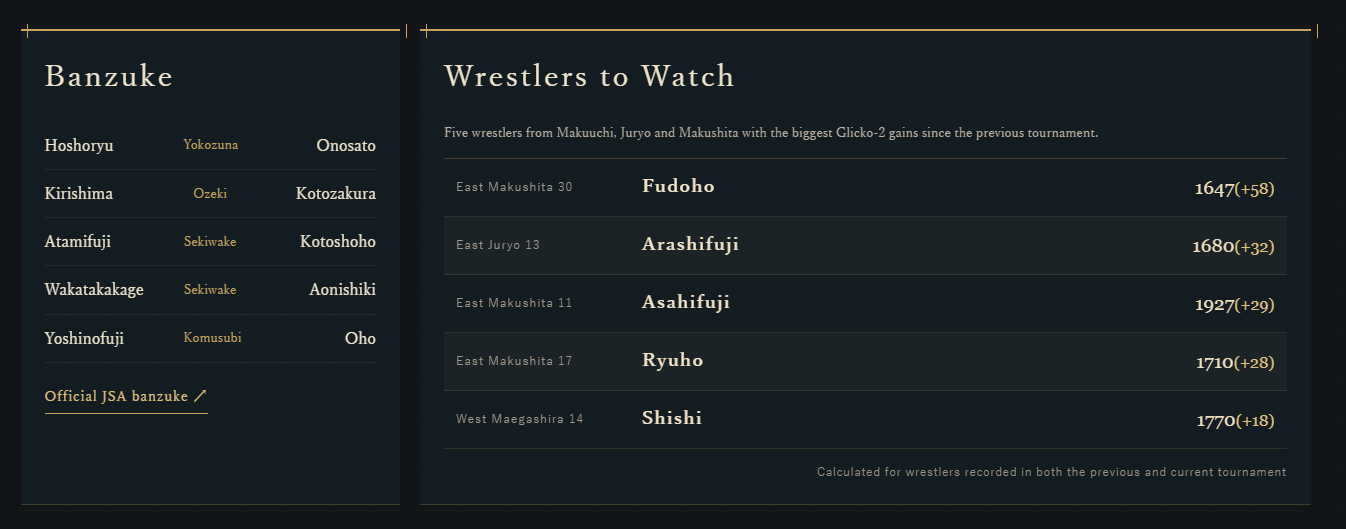
Discover overlooked wrestlers through rating momentum, not just rank or name recognition.
-
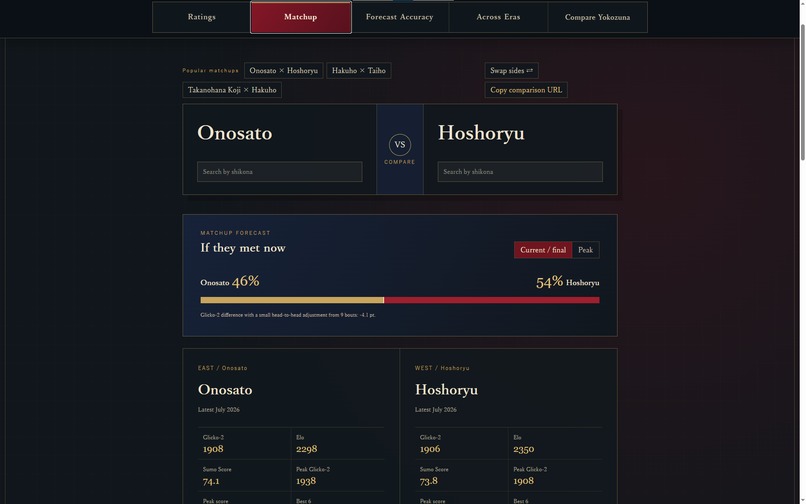
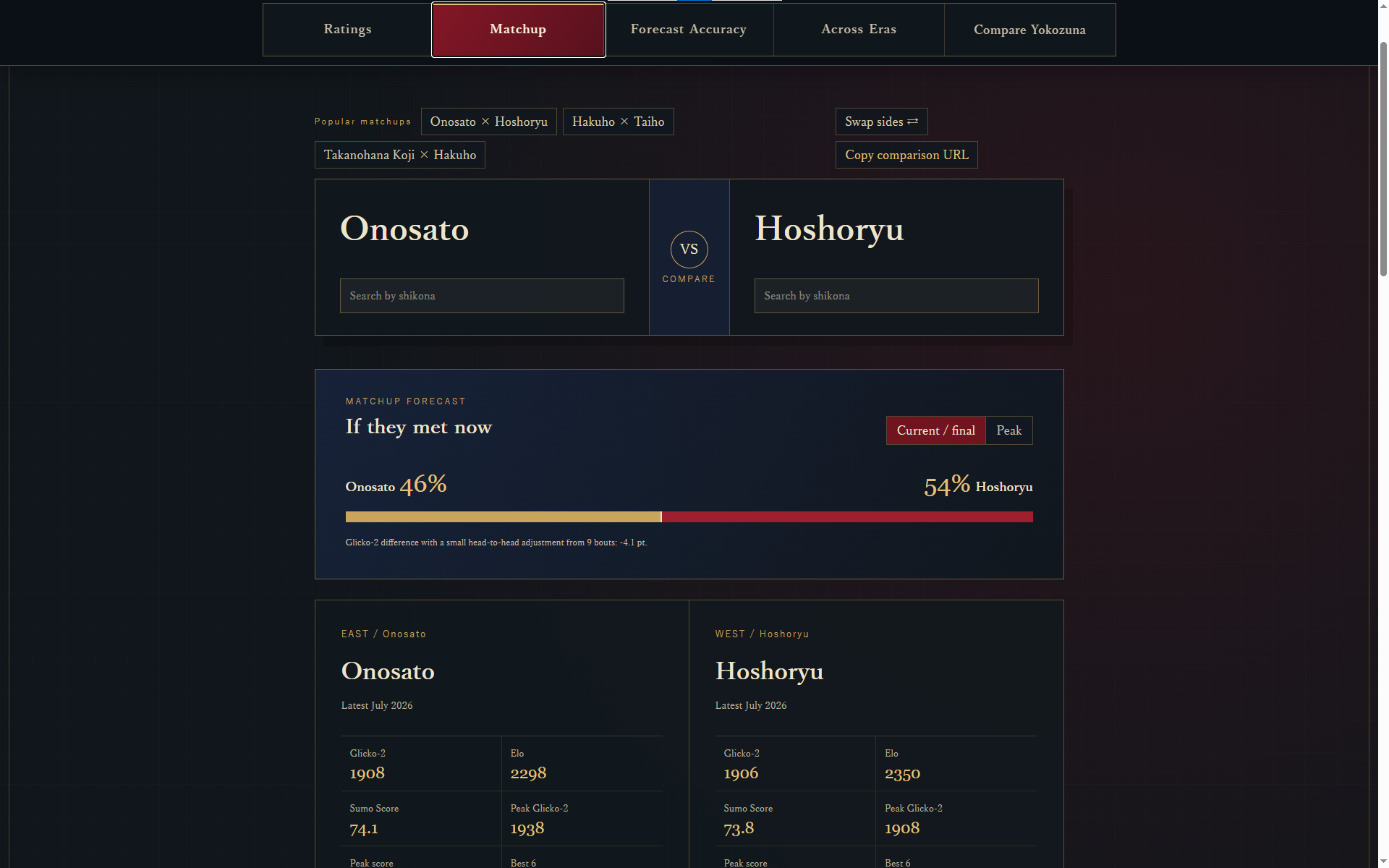
An interactive matchup simulator that explains not only who is favored, but why.
-
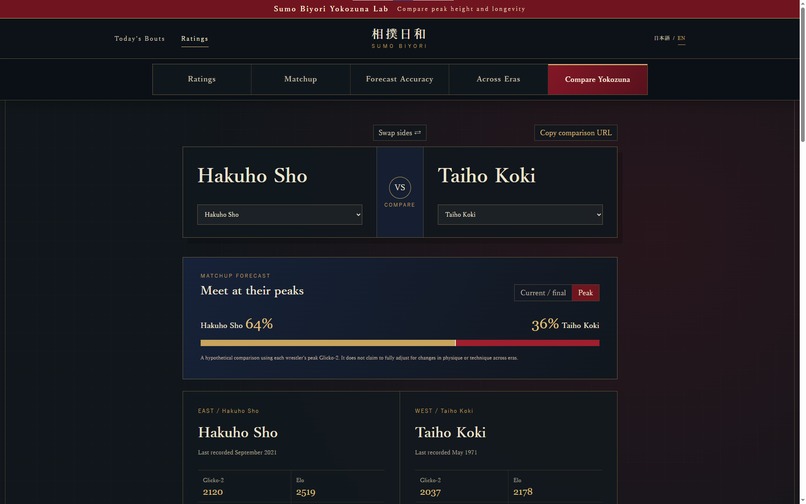
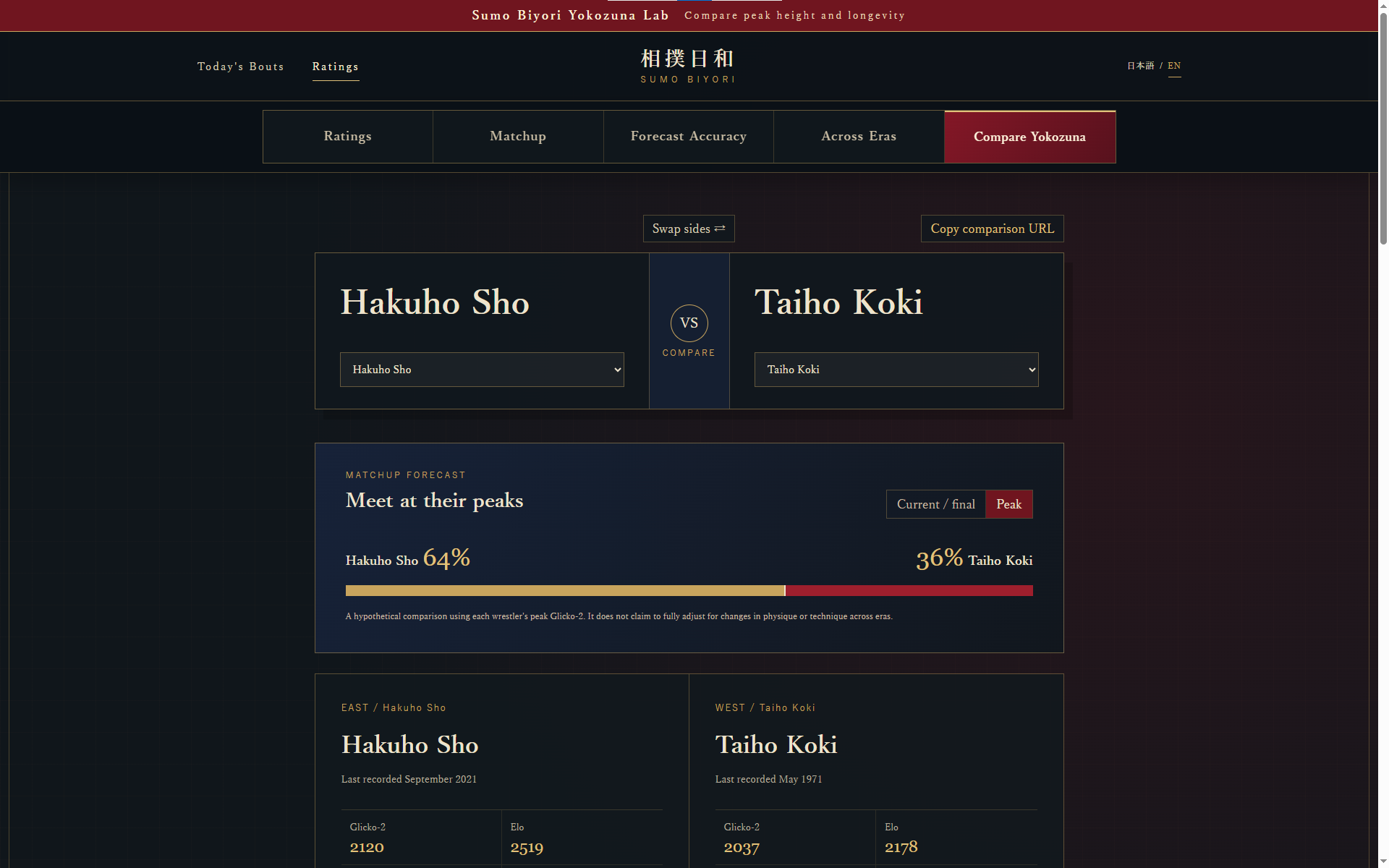
A cross-era Yokozuna comparison using peak ratings to explore hypothetical matchups between legendary champions.
Inspiration
I am a long-time sumo fan, and I noticed a major problem in how the sport is covered.
Top-ranked wrestlers receive plenty of attention, while many other bouts—especially in the lower divisions—are presented with little context or explanation. Fans may see the result, but not understand why the matchup matters, which wrestler is improving, or what makes the bout worth watching.
I created Sumo Biyori to give every bout the context, analysis, and story it deserves.
My broader goal is to show how AI can bring high-quality coverage not only to sumo, but also to overlooked sports and lower divisions where traditional journalism is difficult to scale.
What it does
Sumo Biyori is a live sumo fan platform that provides:
- Win-probability predictions
- Wrestler ratings
- Recent-form analysis
- AI-generated match previews
- Featured bouts from the lower divisions
- Prediction validation and calibration data
The platform covers every Makuuchi bout and highlights selected high-interest bouts from the lower divisions.
The win probabilities are calculated from structured historical data rather than generated directly by an LLM. GPT is then used to transform verified facts, ratings, and matchup data into readable and engaging match previews.
How we built it
I built the project with extensive use of Codex.
The website was created using the Codex Sites environment. I used medium reasoning for straightforward implementation tasks and higher reasoning settings for more difficult work such as statistical modeling, data analysis, debugging, and architecture decisions.
The backend processes approximately 87,000 historical sumo bouts that I collected and structured. This data is used to calculate wrestler ratings and win probabilities.
I also built a calibration and validation system to check whether predicted probabilities match real-world outcomes. For example, bouts predicted at around 70% should actually be won at roughly that rate over time.
Finally, I send verified facts and computed statistics to the GPT API, which generates grounded, high-quality match previews.
Challenges we ran into
The biggest challenges were:
- Collecting and normalizing historical sumo data
- Designing a reliable prediction system
- Preventing unsupported AI-generated claims
- Keeping the site updated with current tournament data
- Building a complete web product despite having very limited web-development experience
I am originally an embedded-systems engineer, so web development, data pipelines, and modern frontend frameworks were all relatively new to me.
Accomplishments that we're proud of
I am proud that Sumo Biyori is not just a technical prototype, but a working product.
It provides real predictions, real-time tournament updates, wrestler ratings, lower-division discovery, and AI-generated commentary grounded in verified data.
I am also proud of the prediction-validation system, which makes the model's performance transparent rather than simply presenting probabilities without evidence.
Most importantly, I built the project from initial concept to a release-ready product in only four days.
What we learned
I learned that Codex can be much more than a code generator.
It helped me reason about architecture, debug complex issues, design statistical validation, improve the user experience, and move from an idea to a working product.
Before this year, I had no meaningful experience with AI-assisted coding. This project showed me that, with the right tools, a single developer can build a data-driven product that would previously have required a much larger team.
What's next for sumo-biyori
I plan to improve the prediction model, expand wrestler and historical analysis, and make the platform more accessible to international sumo fans.
I also want to improve the real-time experience during tournaments and add more ways to discover rising wrestlers and interesting matchups.
In the future, I would like to apply the same approach to other overlooked sports and lower divisions—using structured data and AI-generated storytelling to provide context where little or no coverage currently exists.
Built With
- api
- gpt-5.6
- next.js
- node.js
- openai
- react
- typescript

Log in or sign up for Devpost to join the conversation.