-
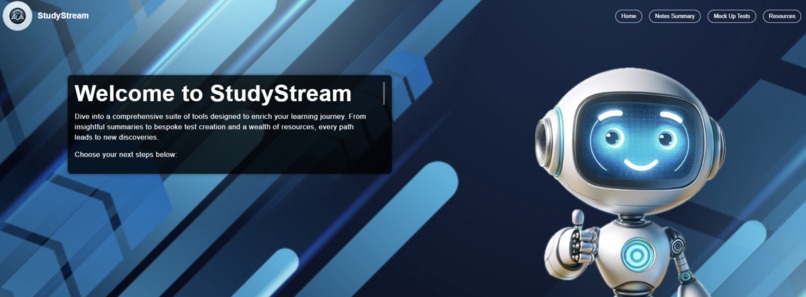
Home Page
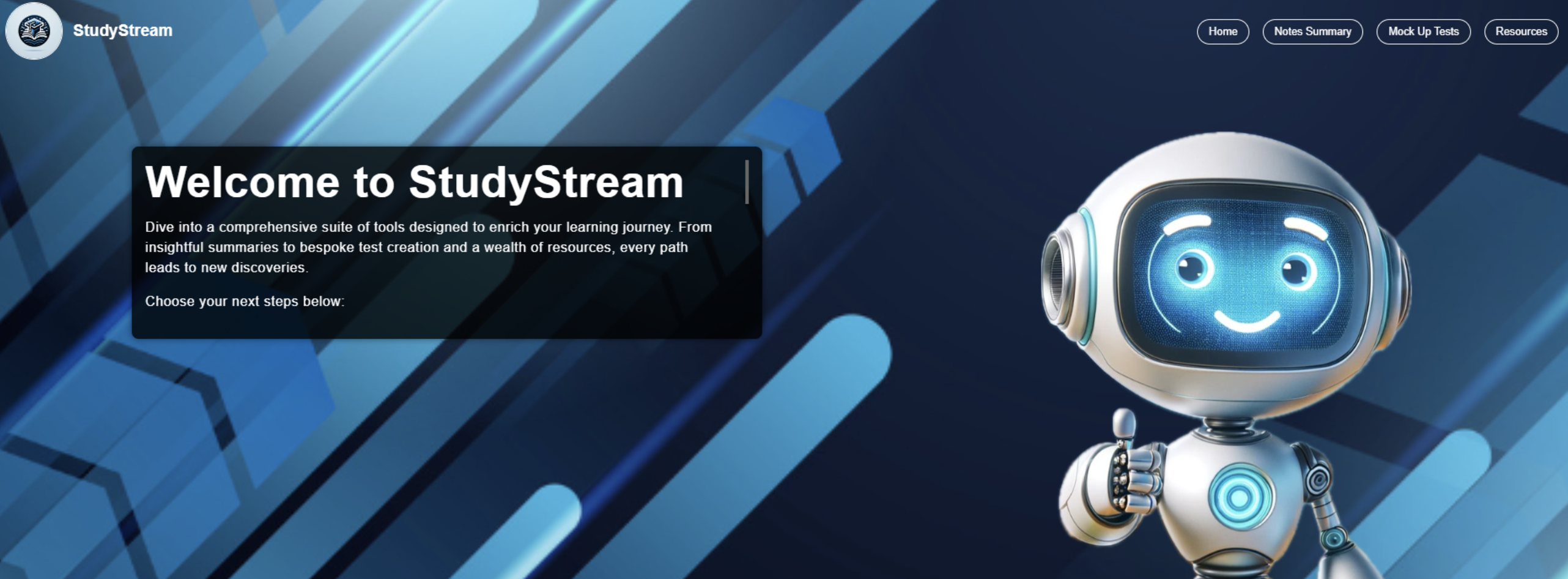
Inspiration
We wanted to create a tool that not only condenses text into manageable summaries but also aids in active learning by generating quizzes and sourcing credible materials, making study sessions both effective and engaging. We are currently taking a 4th year computer engineering course that is brand new this year. There are no previous quizzes or tests for this course and while we were studying for our first test, we wish we had previous tests to help us prepare. Therefore, we thought it would be neat to create a tool that creates practices tests/quizzes if you give it the class notes or lecture slides.
What it does
StudyStream leverages cutting-edge AI to transform lengthy articles, papers, and documents into concise summaries and bullet points. It creates quizzes for self-testing and provides links to external resources related to the material inputted.
How we built it
We harnessed the power of OpenAI's API for natural language processing, combined with pdf.js for PDF text extraction. The app is built on a React front end, creating an interactive user experience. StudyStream runs on Node.js, ensuring a robust and scalable back-end architecture.
Challenges we ran into
Integrating the API was challenging, particularly ensuring that the summarization and resource-fetching algorithms returned relevant and accurate information. We also had trouble incorpaoring the upload a file feature. The API only accepts a certain input, so we ran into issues converting the file into the proper format for the API to process.
Accomplishments that we're proud of
We are proud of creating an intuitive interface that masks the complexity of the underlying technology. We are also proud that we were able to piece everything together, and to properly prompt the API with clear and understandable instructions.
What we learned
We improved our skills in integrating various APIs. We also learned that user experience is just as crucial as the technology itself — simplicity on the surface can lead to wider adoption and greater impact. We also now have a great understanding on how the OpenAI api works, which will be super beneficial for future AI-related projects.
What's next for StudyStream
Moving forward, we aim to refine the AI to handle more complex and subject-specific texts. We're looking to introduce multi-language support and incorporate a feature that allows users to contribute to and refine the pool of external resources, fostering a community of shared knowledge. We also plan to host our server via Microsoft Azure if we plan on scaling this product.


Log in or sign up for Devpost to join the conversation.