-
-
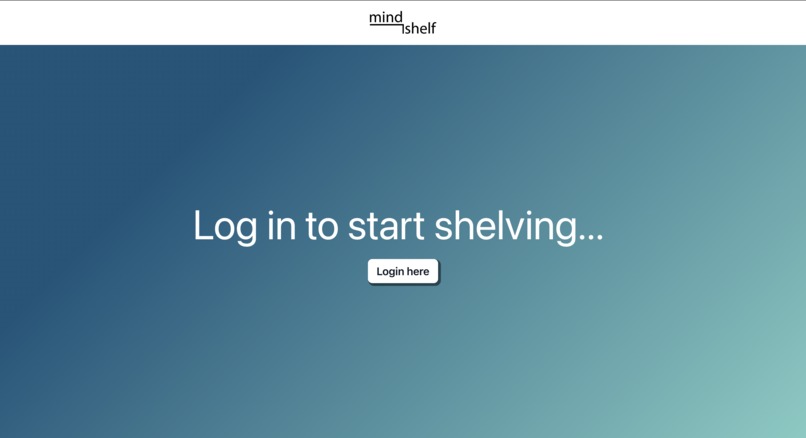
Landing page
-
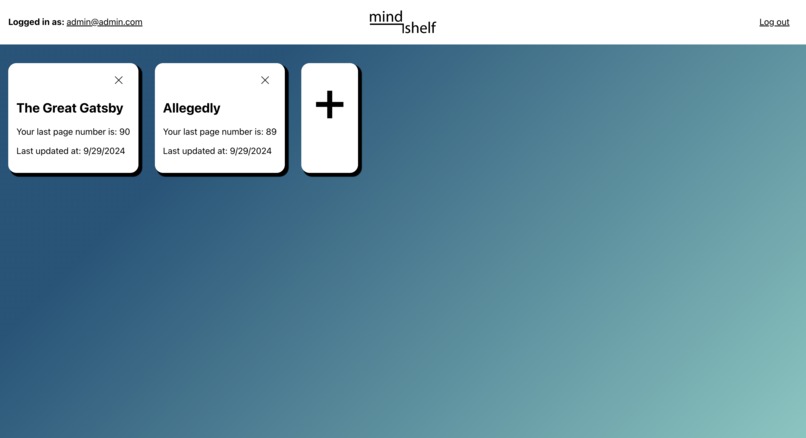
User page
-
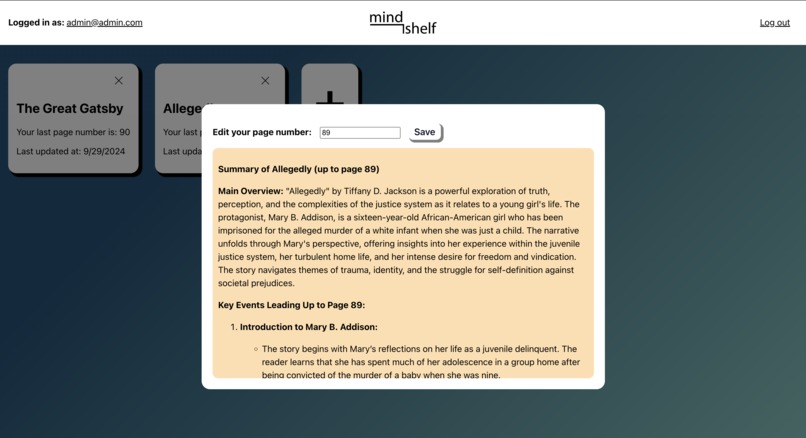
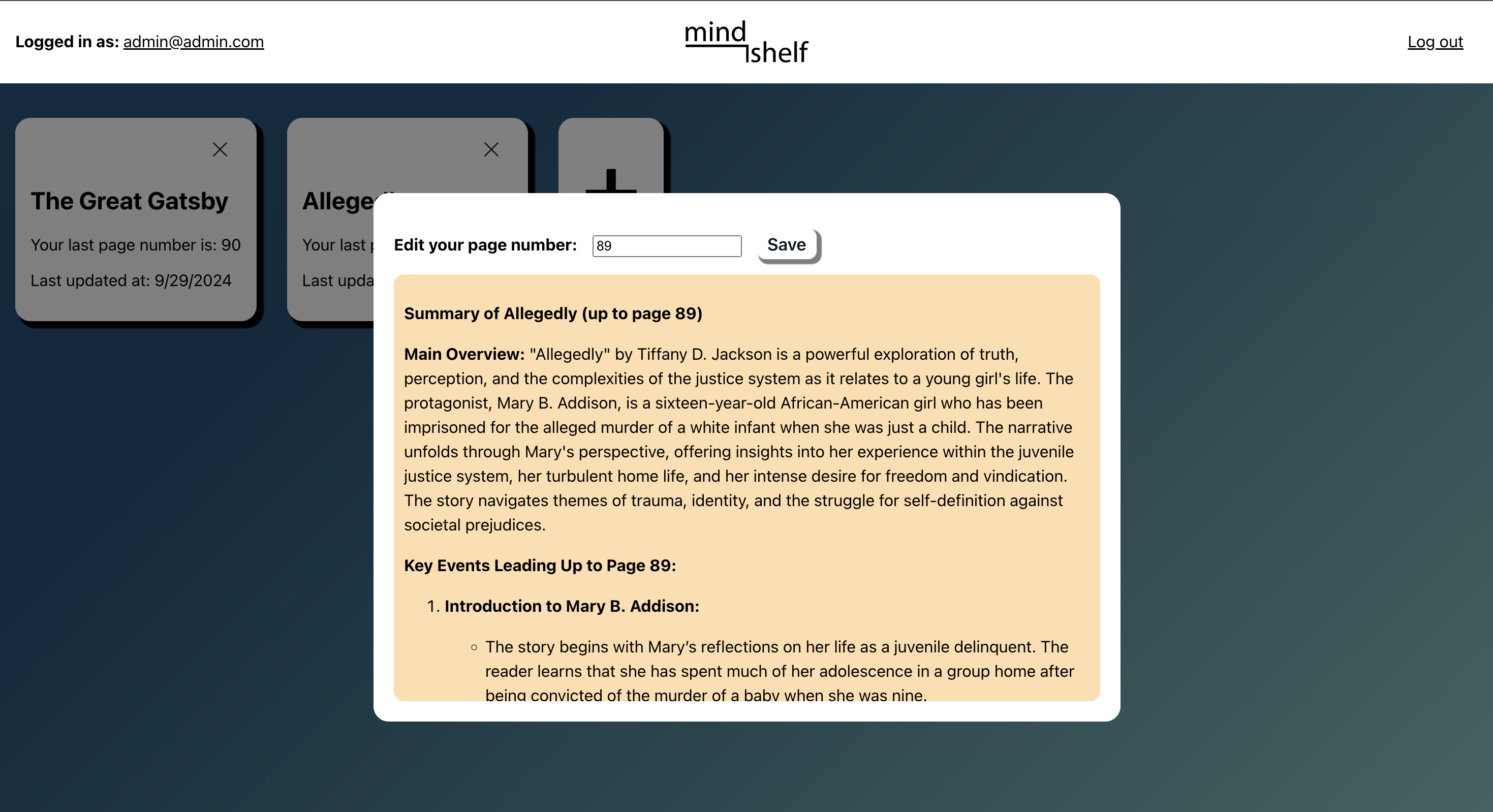
Description page


Inspiration
This past summer, I dove into a book I had been excited to read, but when the semester rolled around, life got hectic, and I had to put it down. A little over months later, when I finally had time to pick it back up, I realized I’d forgotten most of the details. Characters’ names barely rang a bell, and I found myself disconnected from the story. I was faced with two frustrating options: either keep reading and dilute the story’s impact until I caught up, or start from the beginning; neither of which felt right, given my limited time.
As someone with a terrible memory and a love for anime, this situation felt all too familiar. When a new season of anime drops after a year or two, I always turn to YouTube for summary videos, and they do a great job of getting me back on track. That’s when it hit me: I could use the same method for books?
I searched for chapter-specific summaries for my book, but the resources were limited, and broad summaries risked spoilers. I even tried ChatGPT, but it took multiple prompts to get the info I needed. That’s when I realized, what if I created the perfect tool for this?
What it does
With this tool, simply input the title of the book and the page number you’re on, and it will generate a detailed summary of everything up to that point in the story. If you have any lingering questions or need further clarification, you can engage in a conversation with the bot, allowing it to fill in any gaps or provide deeper insights into the plot and characters. It’s designed to help you seamlessly reconnect with your book, without missing a beat.
Challenges we ran into
One of the more significant challenges we encountered during this project was implementing page routing. As this was our first experience with routing in Next.js, we faced difficulties that stemmed from our unfamiliarity with the framework. We initially saw it as an opportunity to experiment and learn, but despite our efforts, we struggled to find a solution within the time constraints of the hackathon. Ultimately, we decided to pivot back to the more familiar and reliable React routing method. This experience taught us valuable lessons, and we plan to revisit Next.js routing in the future, armed with more knowledge and experience.
One of the key challenges we faced was crafting prompts that consistently delivered accurate and detailed summaries. Initially, the AI would either mix up key story elements or omit crucial information, making the output incomplete or confusing. To overcome this, we had to experiment with different prompt structures, assign distinct role classifications to the model, and fine-tune its behavior through trial and error. It took extensive testing and prompt engineering to finally achieve clear, concise, and comprehensive results that met our expectations.
What we learned
Through this project, we learned how accessible it is to bring complex ideas to life using AI APIs like OpenAI and Google’s Gemini AI. We also gained valuable experience experimenting with Next.js routing, deepening our understanding of modern web development frameworks.
What's next for MindShelf
Moving forward, we aim to enhance the prompt structure for generating summaries, creating a more comprehensive information base to enable the AI to deliver even more polished and accurate results. Additionally, rather than solely relying on the OpenAI API, we are considering the possibility of fine-tuning our own model specifically tailored for this task. This approach could provide us with greater control and customization to better meet our users' needs.
Built With
- css
- express.js
- html
- javascript
- mongodb
- openai
- react
- vite


Log in or sign up for Devpost to join the conversation.