-
-

SumeLens logo representing a modern AI-powered hiring solution with a sleek, professional identity.
-
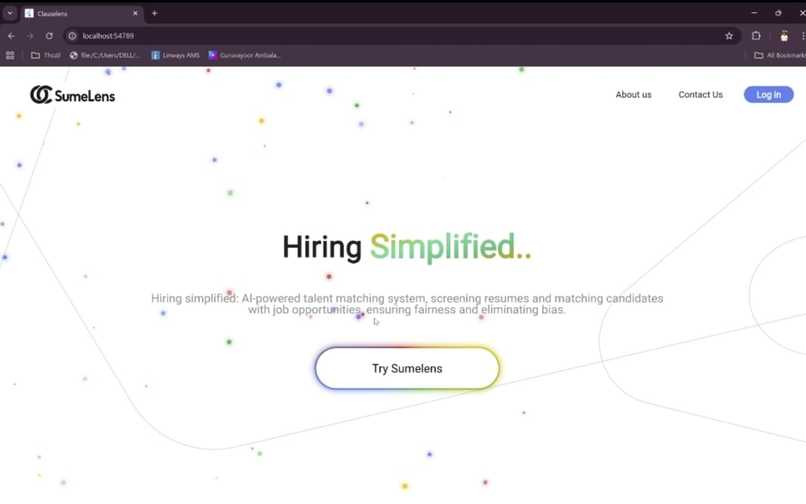
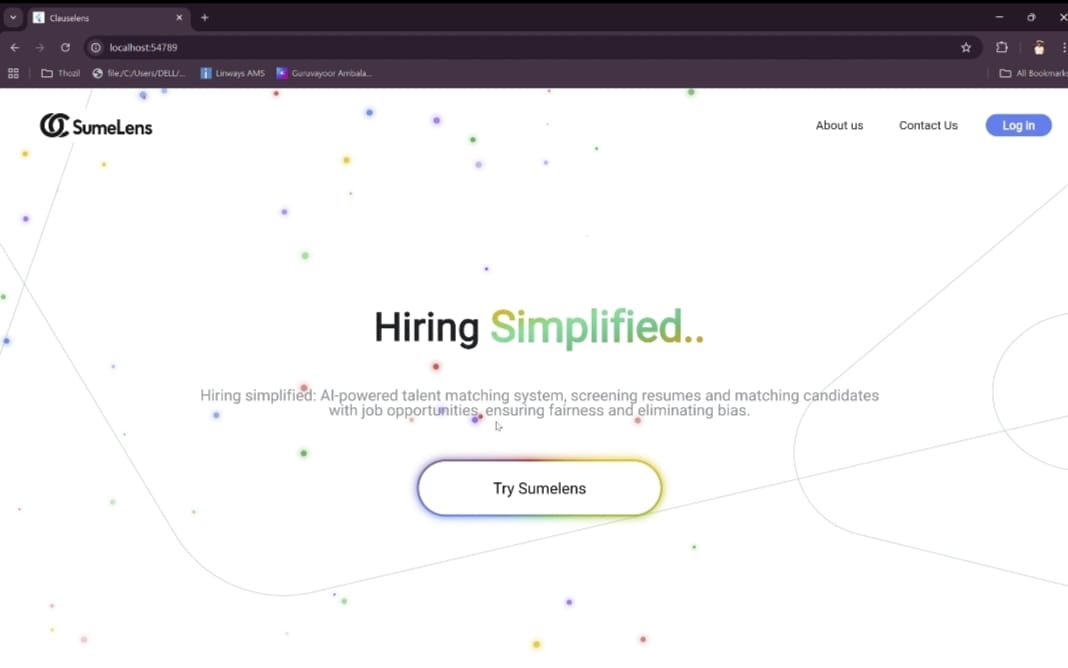
SumeLens homepage with tagline “Hiring Simplified..” highlighting AI-driven, bias-free hiring and candidate matching.
-
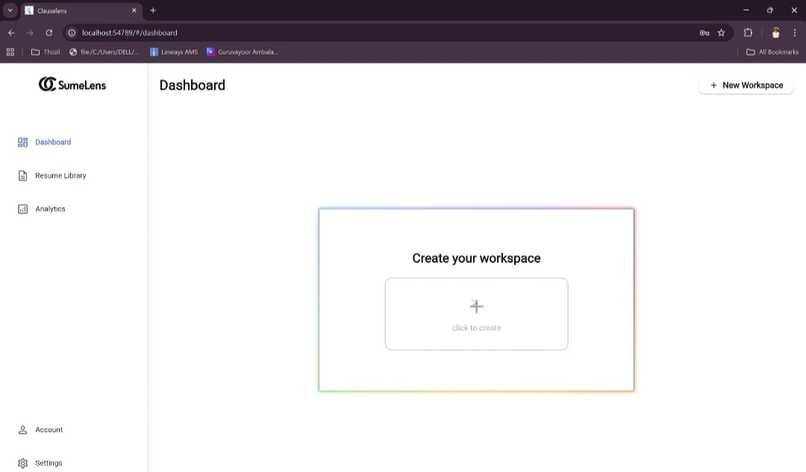
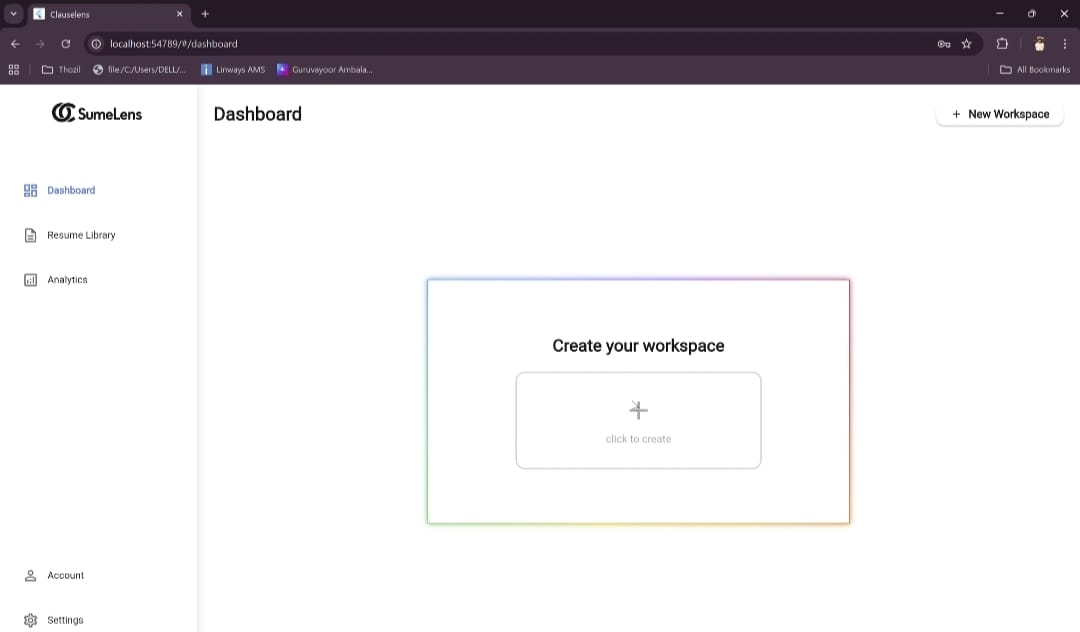
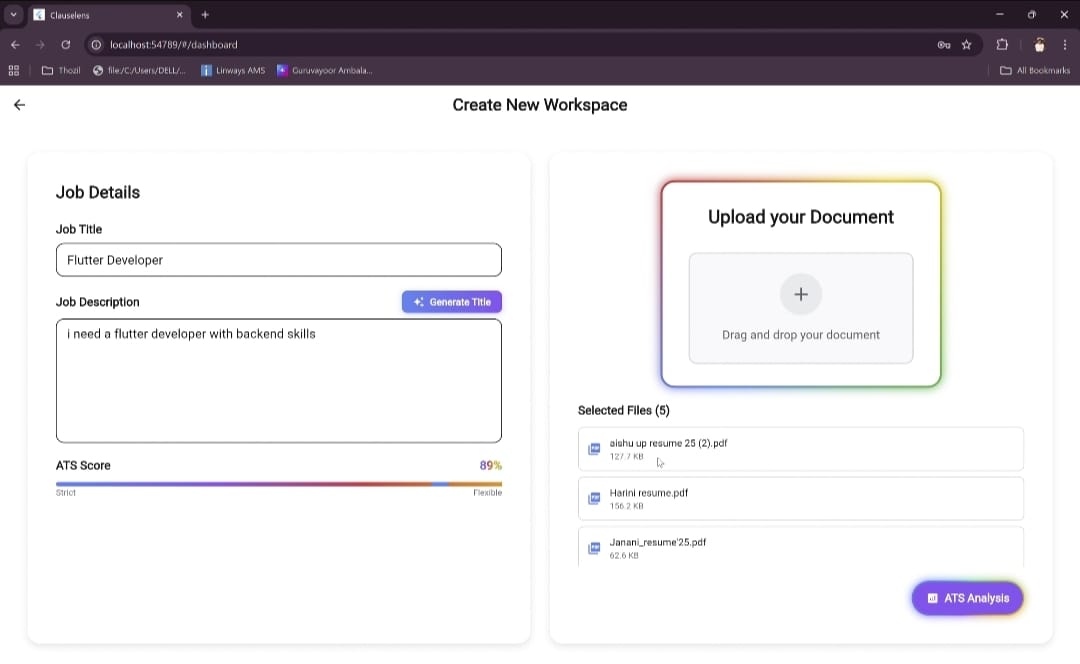
Create workspace screen where HR adds job title, description, ATS score, and uploads resumes for analysis.
-
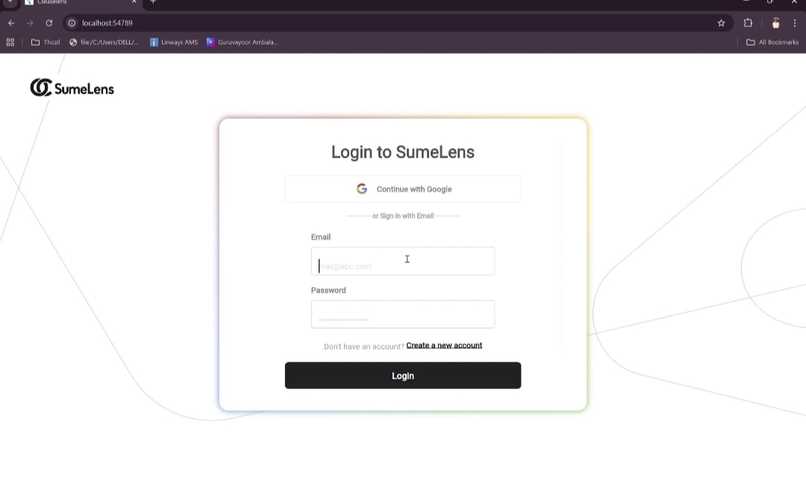
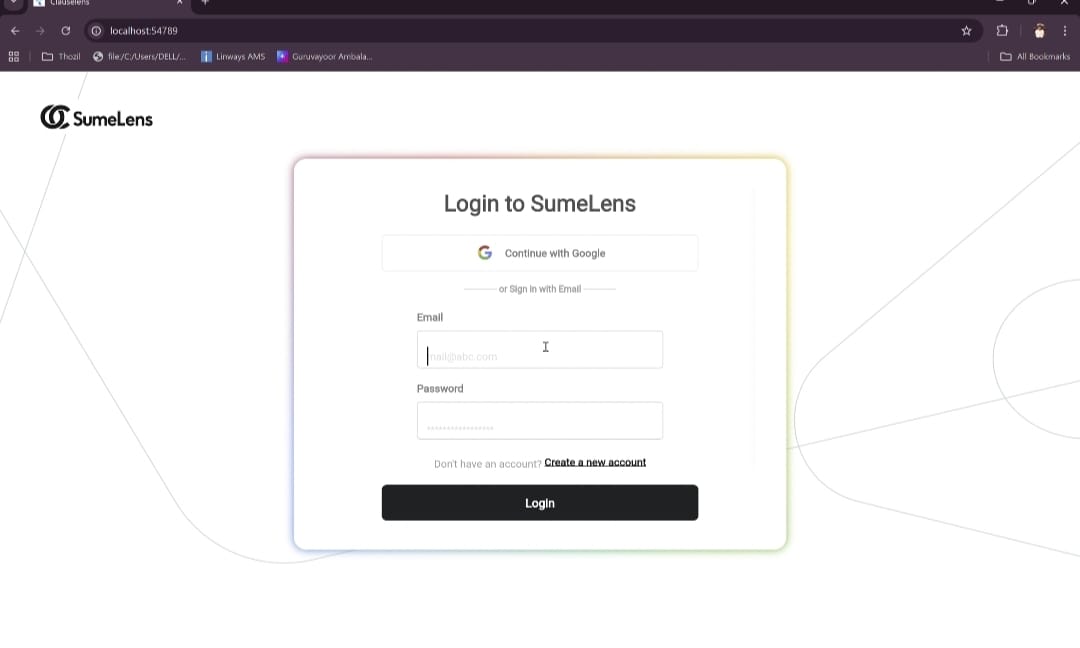
SumeLens login page offering sign-in via Google or email for secure access to AI-powered recruitment tools.
-
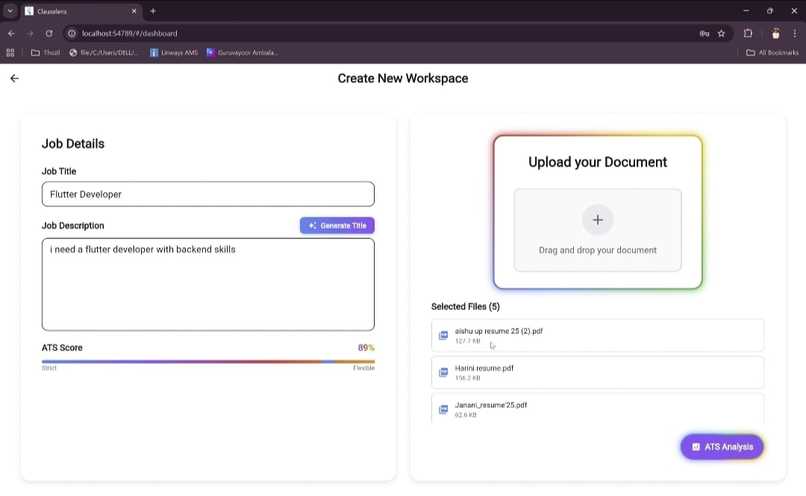
Create workspace screen where HR adds job title, description, ATS score, and uploads resumes for analysis.
-
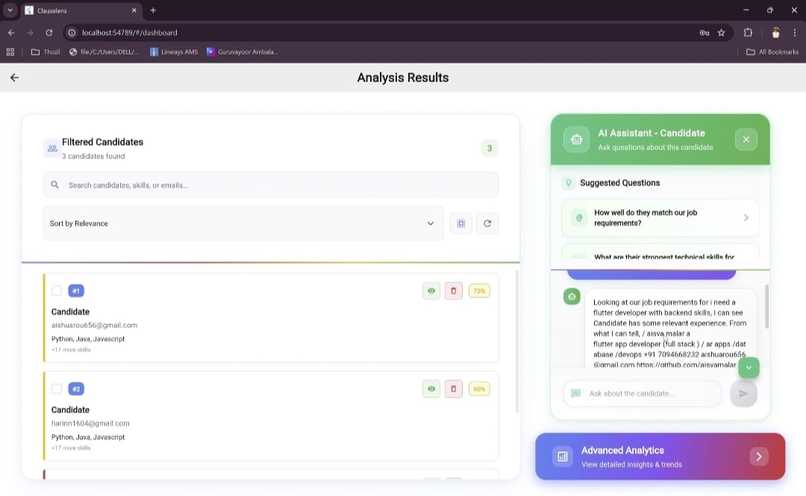
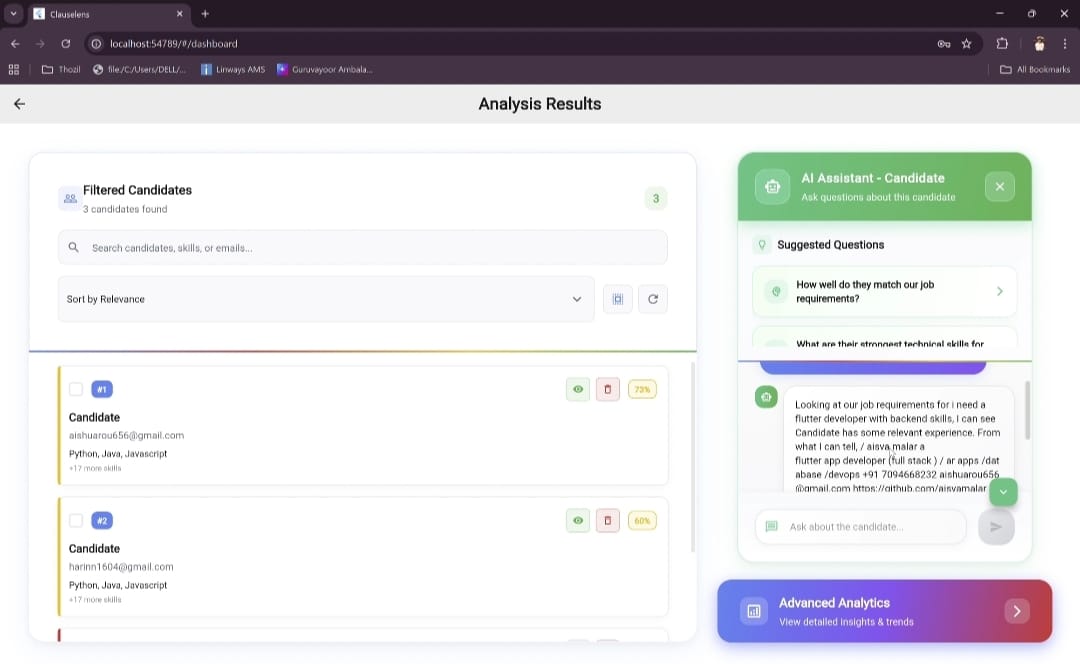
Candidate analysis screen showing AI-ranked resumes, ATS scores, and an AI assistant for deeper candidate insights.

🚀 SUMELENS – Our Story
✨ What Inspired Us
The inspiration for SUMELENS came from observing the inefficiencies and biases in recruitment. In India, every job posting attracts over 1000 resumes, and HR teams spend hours filtering through them, yet nearly 75% of qualified candidates are still overlooked. Beyond this volume challenge, there is also the issue of bias—whether through gender, religion, or referrals, many deserving candidates are denied opportunities.
We asked ourselves a simple question:
\text{“What if hiring could be both fair and efficient?”}
This question became the foundation of SUMELENS.
⸻
📚 What We Learned
While building SUMELENS, we learned that recruitment is not only a technical problem but also a human one. It requires an understanding of HR pain points such as time, cost, and workload, as well as the need for fairness and diversity. We realized that keyword-based filtering is not enough; what matters is semantic understanding—the ability to recognize intent and context. Ultimately, recruitment must balance human empathy with machine efficiency.
⸻
🛠️ How We Built It
We developed SUMELENS as a web application that integrates multiple intelligent components into a single workflow. First, resumes are filtered using an ATS model powered by Random Forest. Then, a semantic ranking engine powered by generative AI compares resumes against the job description—not just at the keyword level but by understanding intent. For instance, the system identifies that a “Full Stack Flutter Developer” is relevant to a “Full Stack App Developer” role.
The experience for HR is seamless. They receive custom filters and a visual dashboard that adapts to each job description, enabling them to refine candidates in real time. They can interact with an AI chatbot, asking questions such as, “Is this candidate a good fit for this role?”, and receive instant, data-backed insights. Finally, when the decision is made to call a candidate for an interview, our autonomous scheduling agent automatically checks the HR’s calendar and sends an invite—removing the need for manual effort.
In short, the pipeline can be described as:
Upload → Filter → Rank → Refine → Schedule
⸻
⚡ Challenges We Faced
Building SUMELENS was not without its challenges. One major hurdle was ensuring that our AI remained bias-free, since models can unintentionally replicate the prejudices present in training data. Another challenge was scalability, as the system needed to handle thousands of resumes per job posting efficiently. We also had to design advanced semantic matching capabilities to ensure intent was captured correctly. Moreover, integrating different components—ATS, semantic search, chatbot, and scheduling—into a seamless flow was complex. Finally, we had to carefully design the user experience, making it intuitive for HR teams while keeping the backend powerful and robust.
⸻
🌍 The Impact
With SUMELENS, the impact is twofold. For candidates, it ensures that they are judged purely on skills, without bias, giving everyone a fair chance. For HR teams, it saves hours of manual work, reduces costs, and enables smarter, faster, and bias-free hiring decisions.
\text{At SUMELENS, we don’t just filter resumes—we give candidates a fair chance to shine, while helping HRs hire smarter, faster, and better.}
⸻
🏗️ Tech Stacks
🎨 Frontend • Flutter – for building a cross-platform user interface. • Firebase – for hosting, authentication, and real-time database support.
⚙️ Backend • Flask – for API handling and connecting frontend with AI models. • SQLite – lightweight relational database for structured storage. • ChromaDB – vector database for semantic search. • LangGraph – for orchestrating agentic workflows.
🤖 AI / ML • scikit-learn – Random Forest for ATS scoring and semantic ranking. • MiniLM Embeddings – for vector-based similarity and ranking. • LLAMA – large language model for contextual reasoning and insights. • spaCy Pre-trained Models – for text extraction and NLP preprocessing.
⸻

Log in or sign up for Devpost to join the conversation.