-
-

Suma App Logo
-
-
-
-
-
-

Inspiration
I've practiced yoga consistently for years, along with Pilates, meditation, and at-home workouts. I've gone to countless classes, followed YouTube videos, and used apps like Headspace and Insight Timer. But whenever I practice at home, I keep running into the same problem: sometimes I spend more time choosing what to do than actually doing it. There are thousands of great classes and videos out there, but choosing between them takes work. What type of practice do I want? How long should it be? What part of my body needs attention? How much energy do I have today?
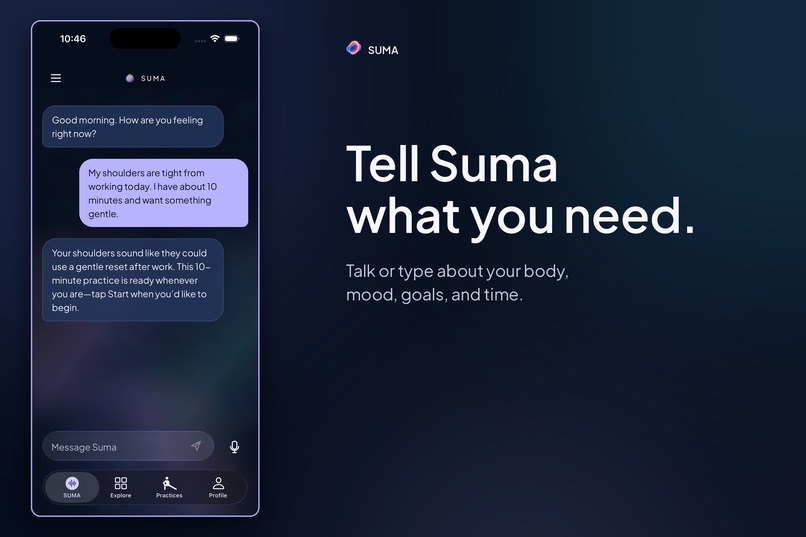
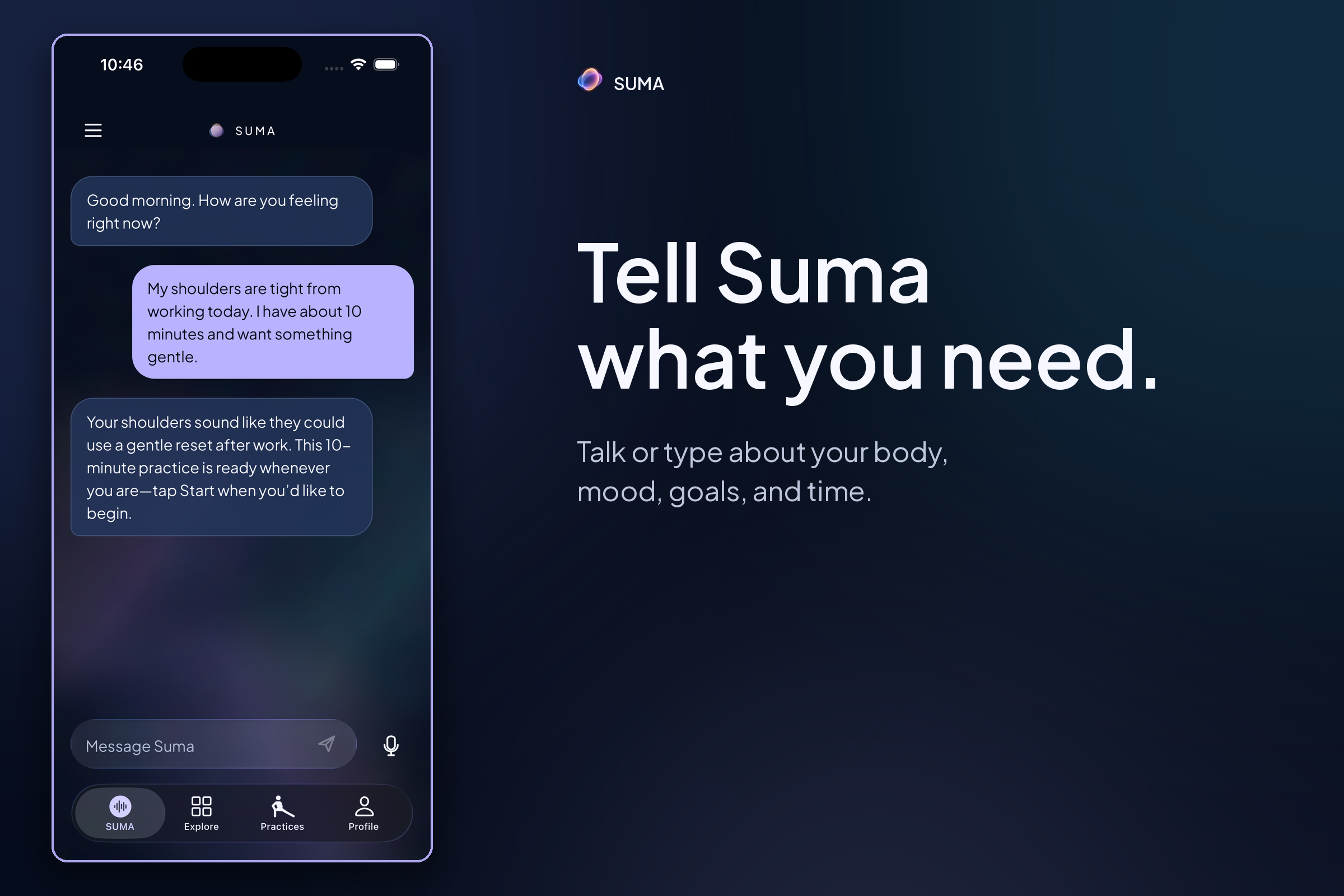
Sometimes I just want to say, "My shoulders are tight from sitting all day, I'm tired, and I have 15 minutes. Give me something gentle." Then I want to press play and start moving. That's where the idea for Suma came from. I wanted something that could meet me where I am that day instead of asking me to search through a library and make a series of decisions before I even begin.
What it does
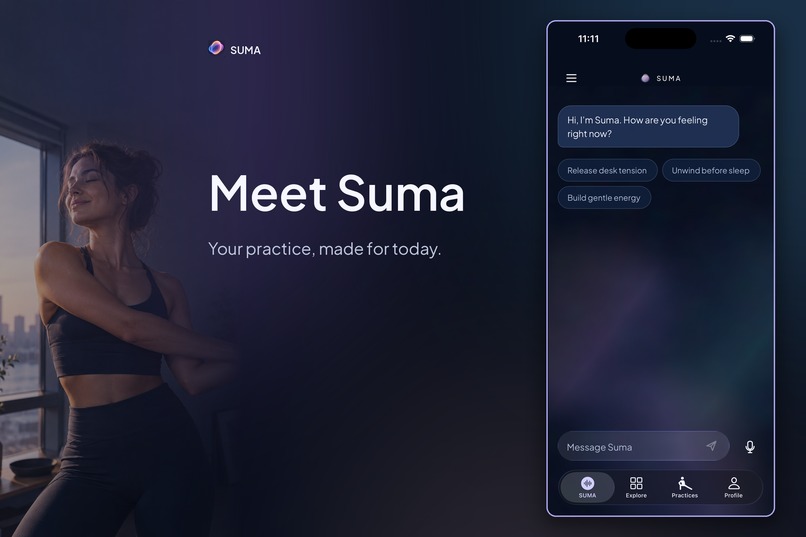
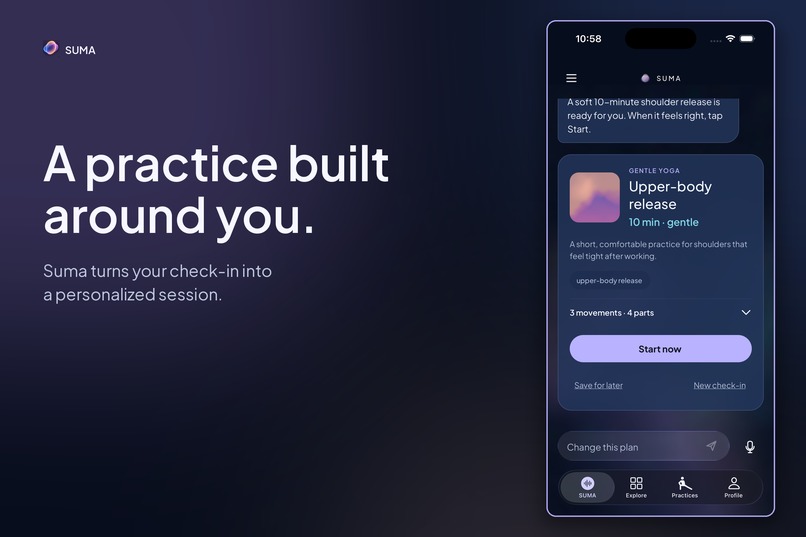
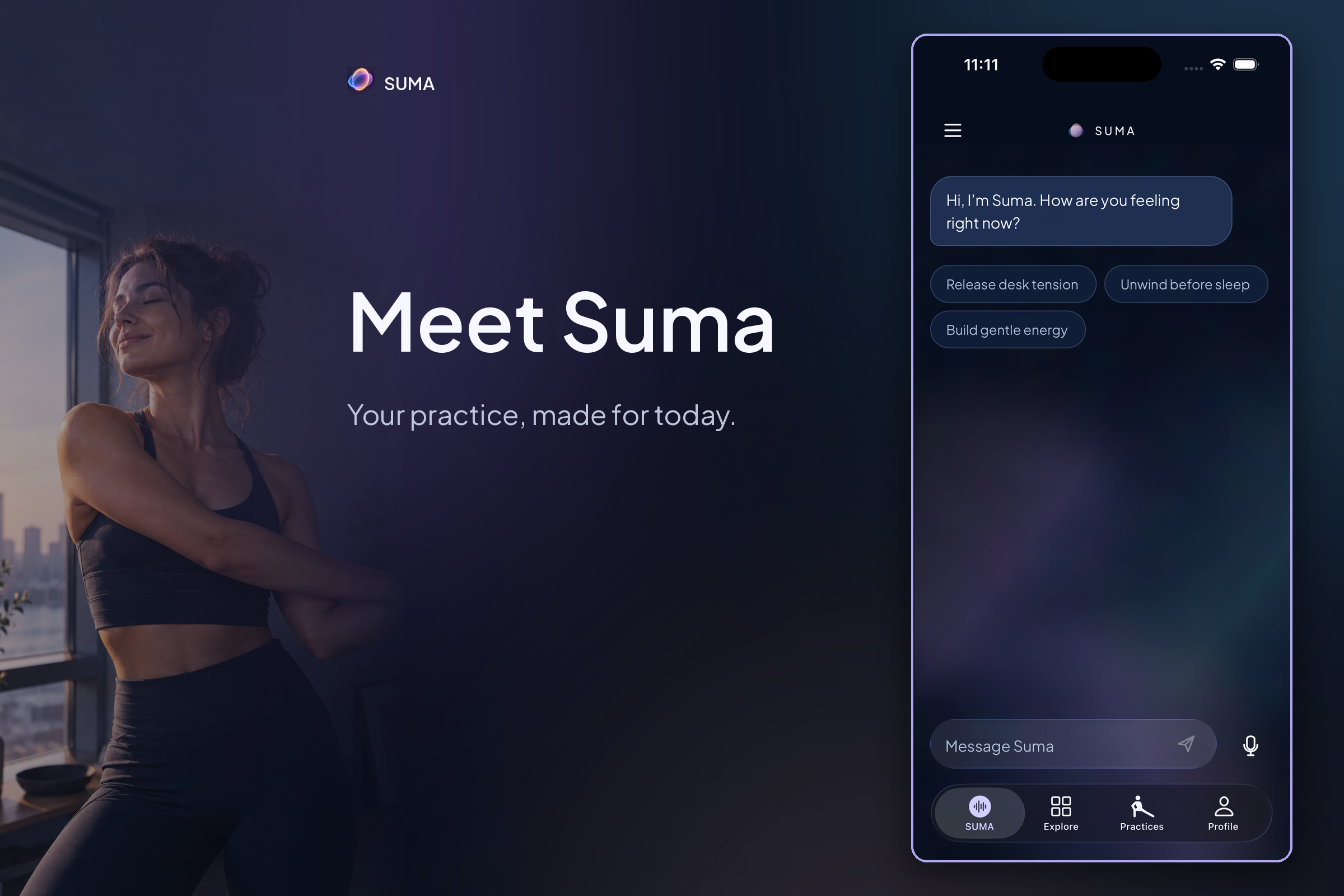
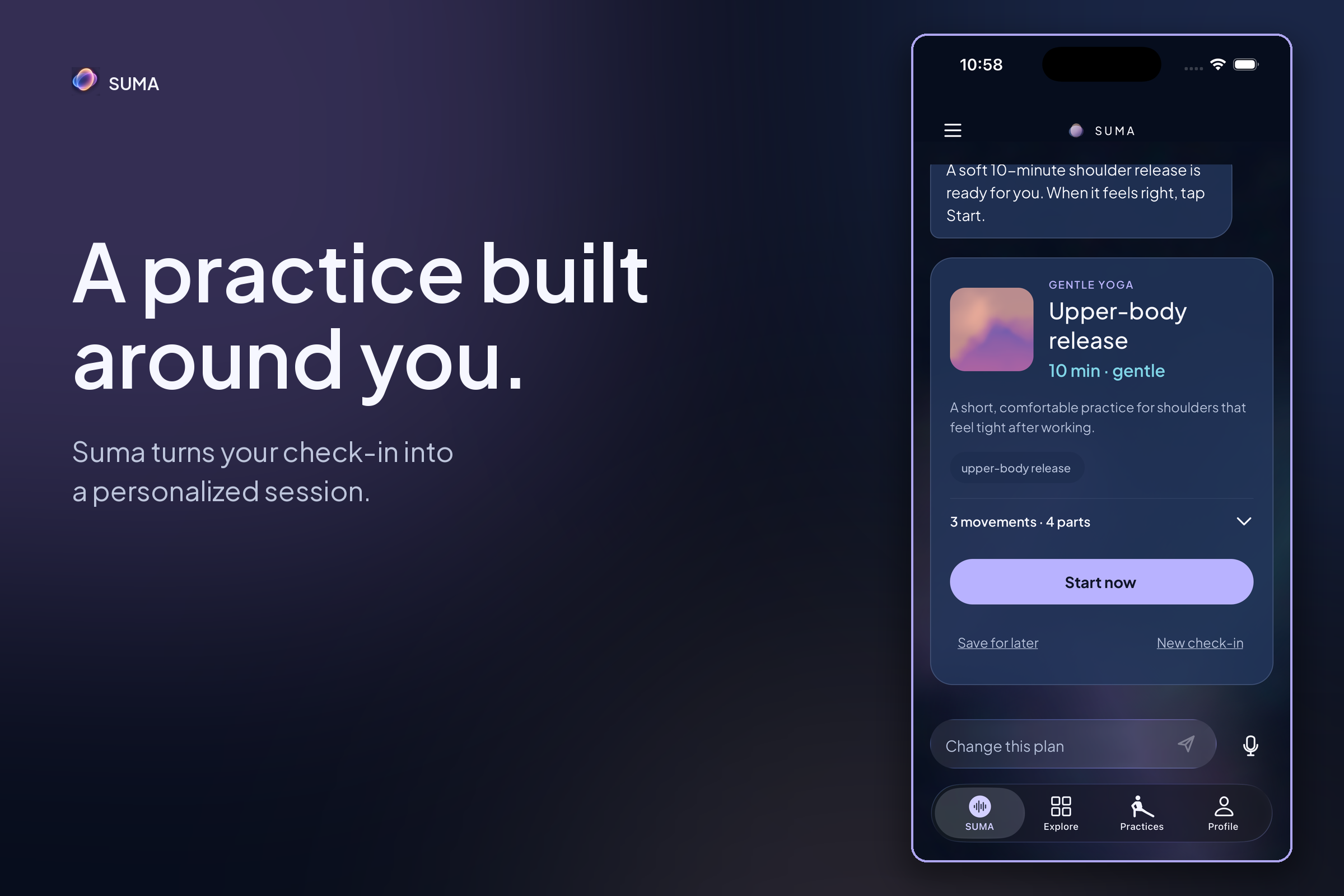
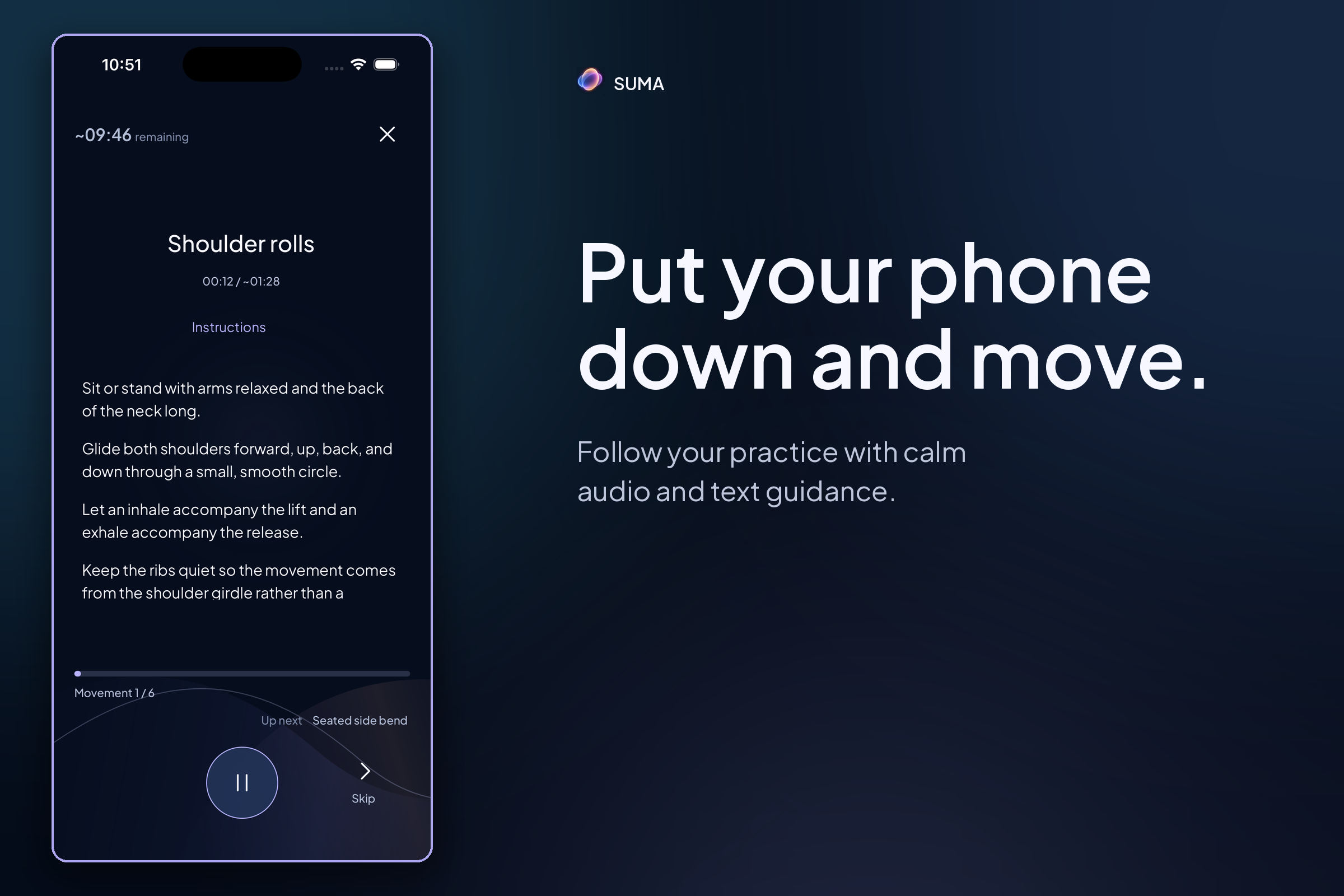
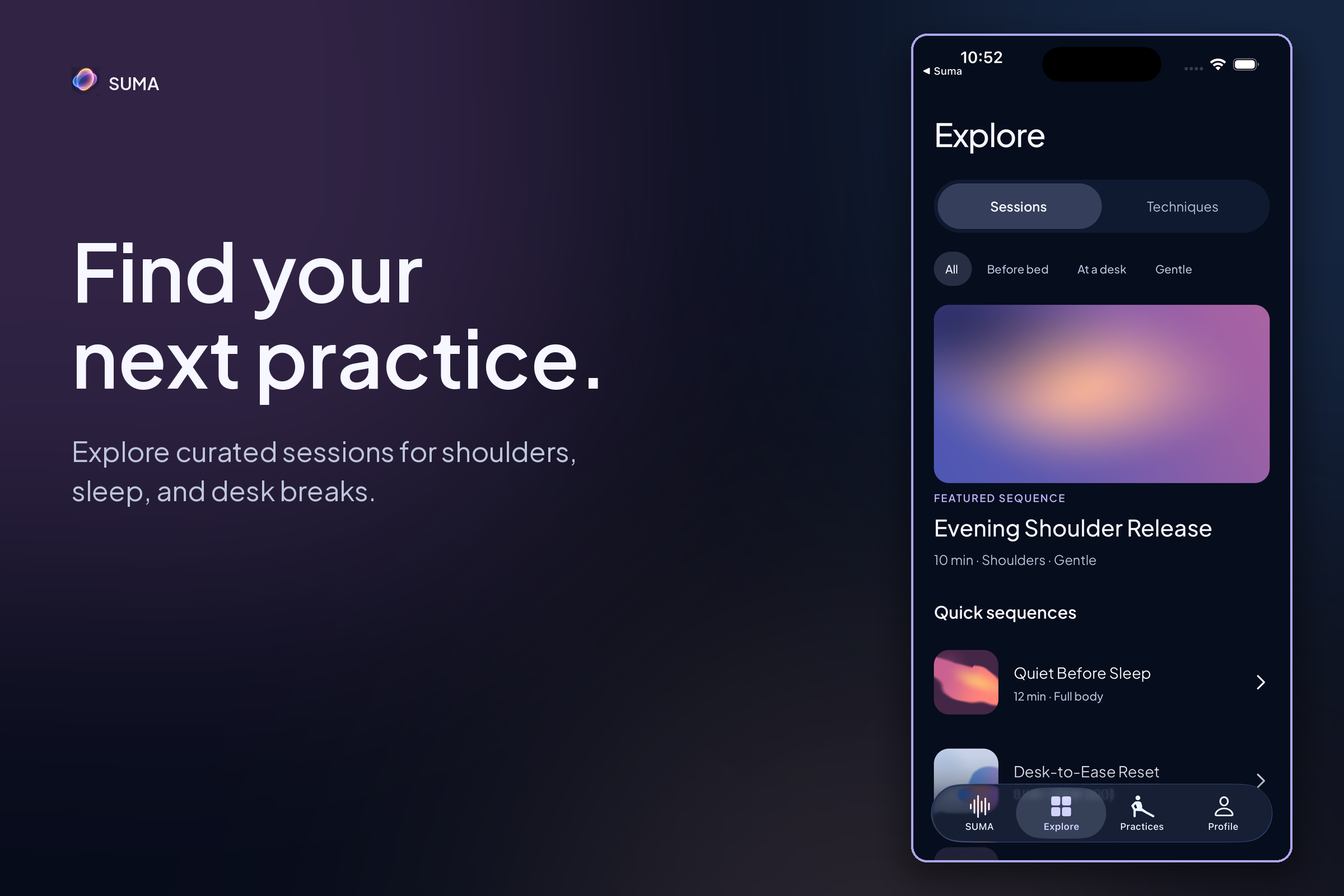
Suma is an AI wellness coach that creates a practice around how you feel today. You can talk or type about what your body needs, how much time you have, what you want to work on, your energy level, or any limitations you're working around. Suma takes that context, creates a personalized session, and then guides you through it with audio and text. A session might include yoga, Pilates-inspired movement, mobility, recovery, breathwork, or mindfulness. The goal isn't to give you more classes to choose from; it's to create one practice that makes sense for you right now.
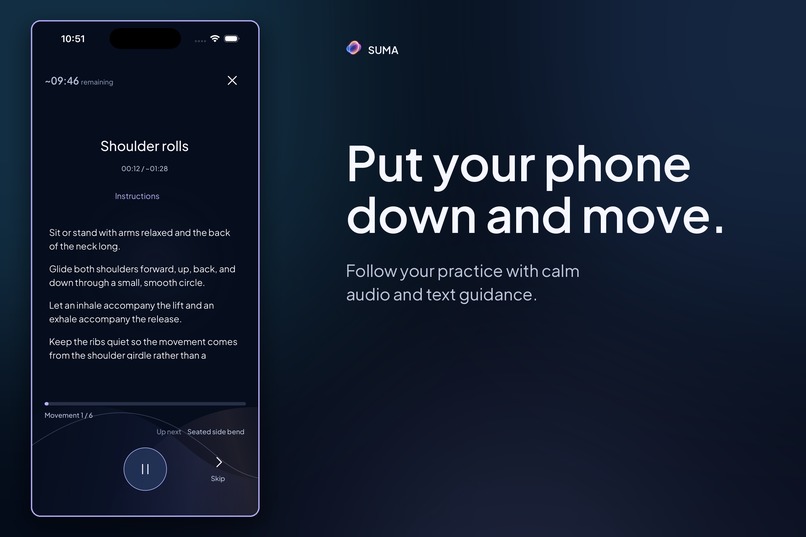
A big inspiration for Suma is the flexibility and adaptability of a good teacher. In a great class, a teacher isn't just naming poses. They're thinking about how movements build on each other, giving useful cues, offering modifications, and adjusting the practice based on what someone needs. I wanted to explore how we could bring more of that thoughtful guidance into home practice, while still making the experience simple enough that you can put down your phone, listen, and actually be present.
How we built it
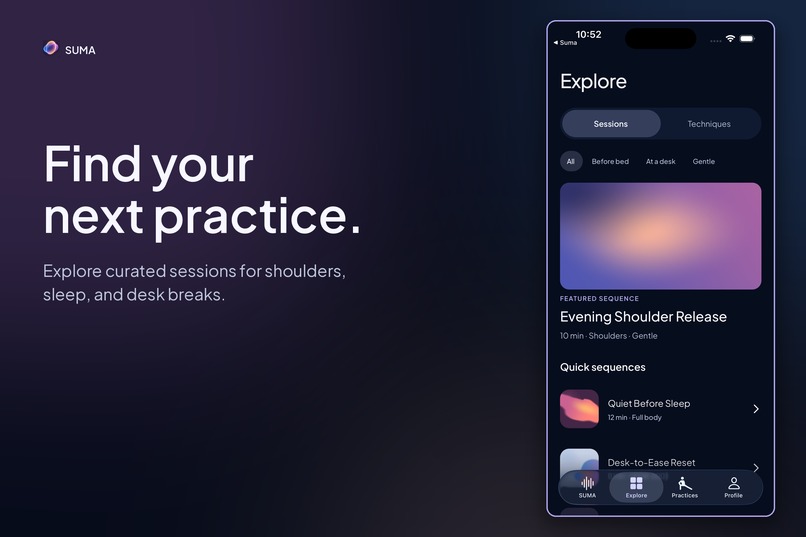
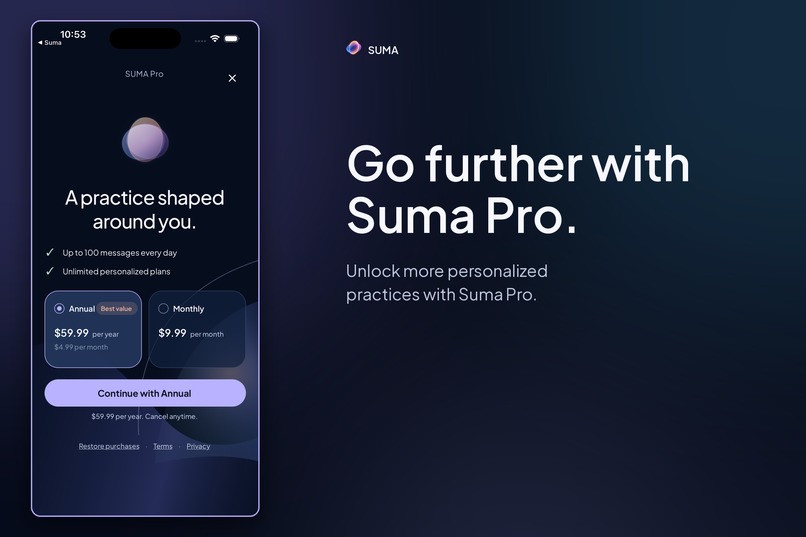
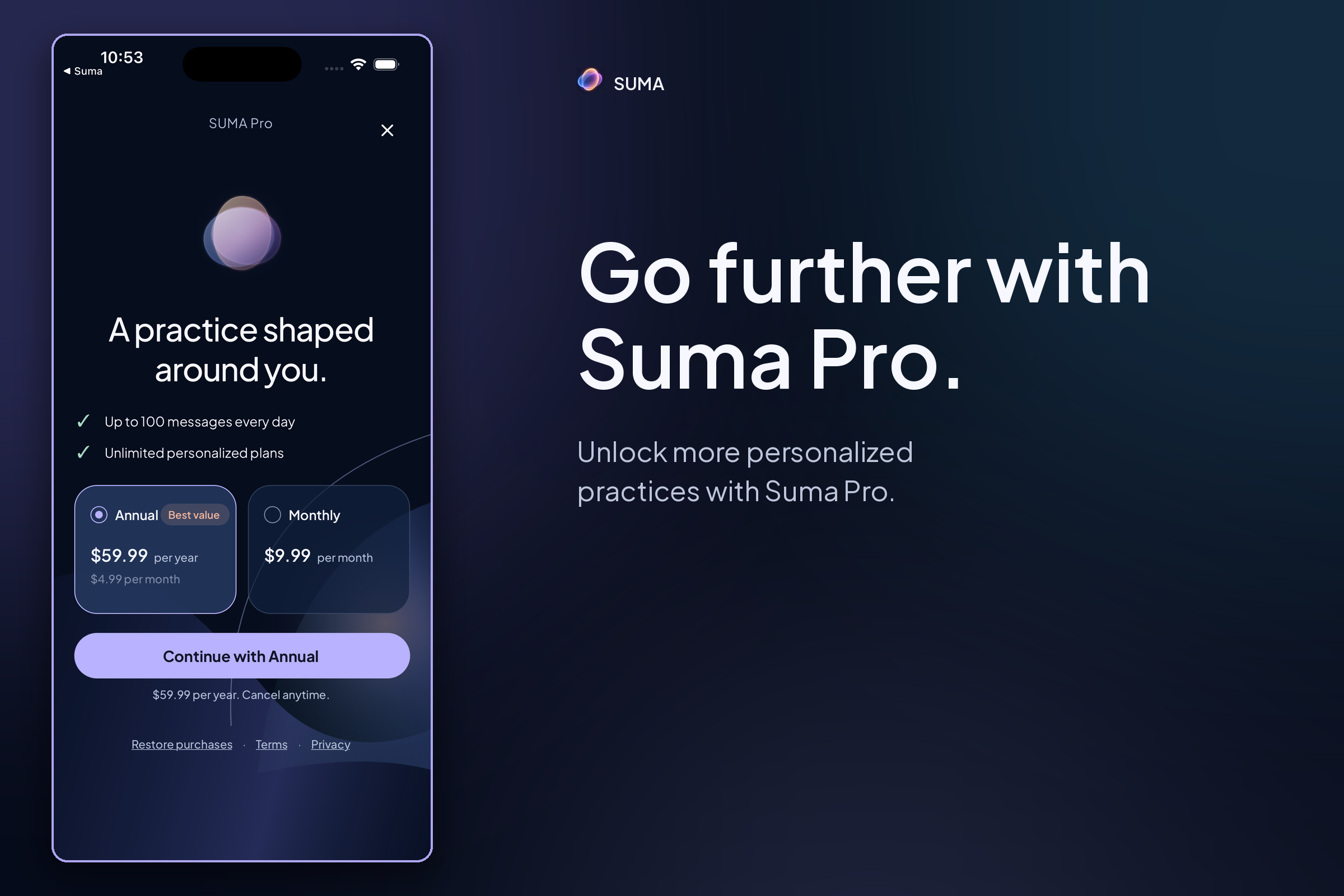
Suma is built with React Native and Expo, with AI powering the conversation and personalized session generation. RevenueCat handles our subscriptions and entitlements. We designed the core experience around a simple flow: tell Suma what you need → review your practice → press play → follow the guidance. We also built sessions so that practices can be saved and returned to rather than disappearing after they're generated.
We spent a surprising amount of time thinking about the experience around the AI. Typography, color, motion, spacing, and even how much information appears on each screen went through many iterations. Wellness apps can easily become crowded with programs, streaks, recommendations, metrics, and huge content libraries. We wanted Suma to feel calm and focused instead. Ideally, the intelligence is there when you need it, but once the practice begins, the technology starts to fade into the background.
Challenges we ran into
One of the biggest challenges was learning to scope down. My original vision was much more ambitious: a real-time AI coach that could respond throughout a practice, supported by a much larger knowledge base spanning yoga, Pilates, movement, meditation, breathwork, and other wellness practices. With the Shipaton timeline, I had to decide what we could realistically build well instead of trying to build everything at once.
We narrowed the first version to something more focused: generate a thoughtful practice, work from a smaller set of well-defined movements and techniques that we could cue properly, and guide the user through the session with audio. That meant saying "not yet" to a lot of ideas I still really want to build. It was difficult, but it forced me to understand what the core experience of Suma actually needed to be.
Design was another challenge throughout the process. We wanted Suma to feel calm without feeling generic, and intelligent without looking overly technical. A lot of small decisions—from the colors and typography to the geometric visual system and the amount of information on each screen—came back to the same question: How do we want someone to feel when they open this app? That question ended up guiding much more of the product than I initially expected.
Accomplishments that we're proud of
I'm proud that Suma went from something I genuinely wished existed for my own practice to something I can actually use. I can open the app, tell it how I'm feeling, get a practice created for that moment, put my phone down, and follow along with the audio guidance. That sounds simple, but getting the conversation, generation, session structure, guidance, and design to come together as one experience was the most important thing for us to ship.
I'm also proud that we resisted adding features simply because we could. There are many directions Suma can eventually grow into, but the experience still comes back to the same idea that inspired it in the first place: tell Suma where you are today, and start from there.
What we learned
Building Suma changed how I think about personalization. At first, it's easy to think that better personalization means generating more sophisticated content or giving people more options. What I learned is that a lot of its value comes from doing the opposite: reducing how much the person has to decide. That's also what I appreciate about a good coach or teacher. They don't hand you 50 possibilities and ask you to choose; they listen, understand your constraints, and help you figure out what makes sense today.
I also learned that building with AI requires restraint. The goal isn't to put AI into every interaction or make the user constantly aware that they're using an AI product. Sometimes its best role is simply to understand what someone needs, remove the friction between intention and action, and then get out of the way. For Suma, that's especially important because once a practice begins, I don't want someone thinking about the technology. I want them moving, breathing, and paying attention to themselves.
What's next for Suma
There is still a lot of the original vision left to build. I want Suma to become more adaptive during the practice itself, deepen its understanding of movement and mindfulness, and learn from what works for each person over time. Eventually, I'd love for Suma to feel less like generating a new workout each time and more like working with a coach that actually knows you—your preferences, your routines, what you've been working on, and what might make sense for you today.
We're also exploring the community side of Suma, where people can save and share practices that worked for them. A session created for one person's particular day might turn out to be exactly what someone else was looking for too. Ultimately, the vision is to build a wellness coach you can talk to, that gets to know you over time, and helps you practice in a way that fits your actual life.

Log in or sign up for Devpost to join the conversation.