-
-
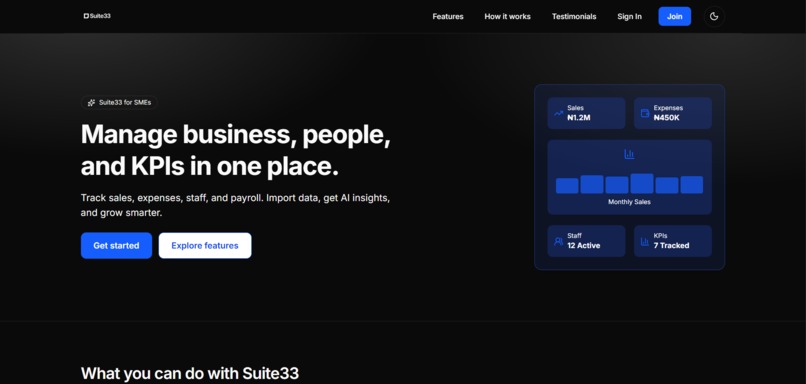
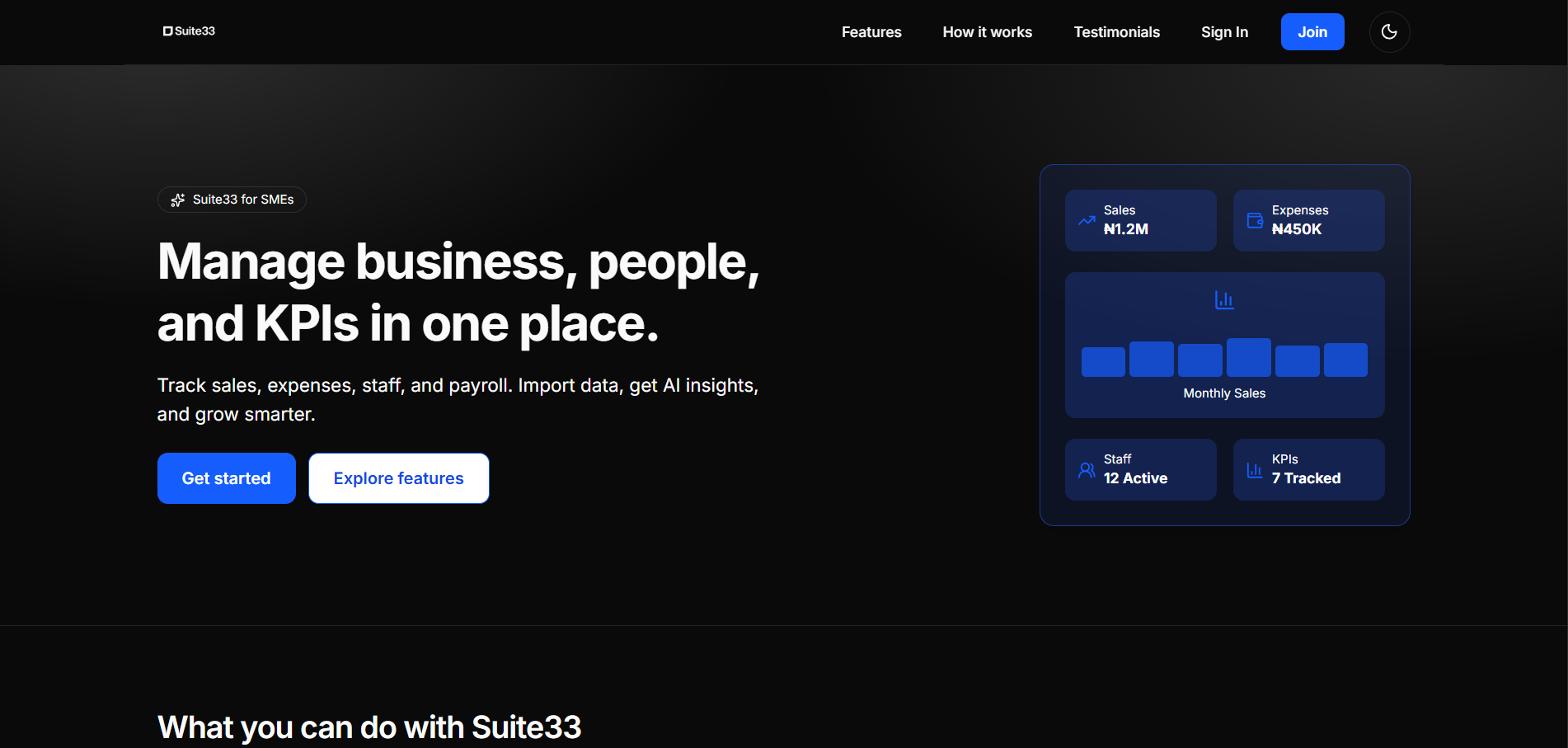
Homepage
-
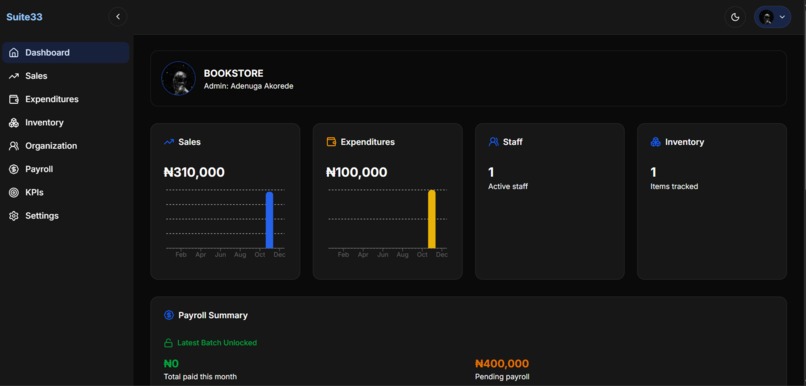
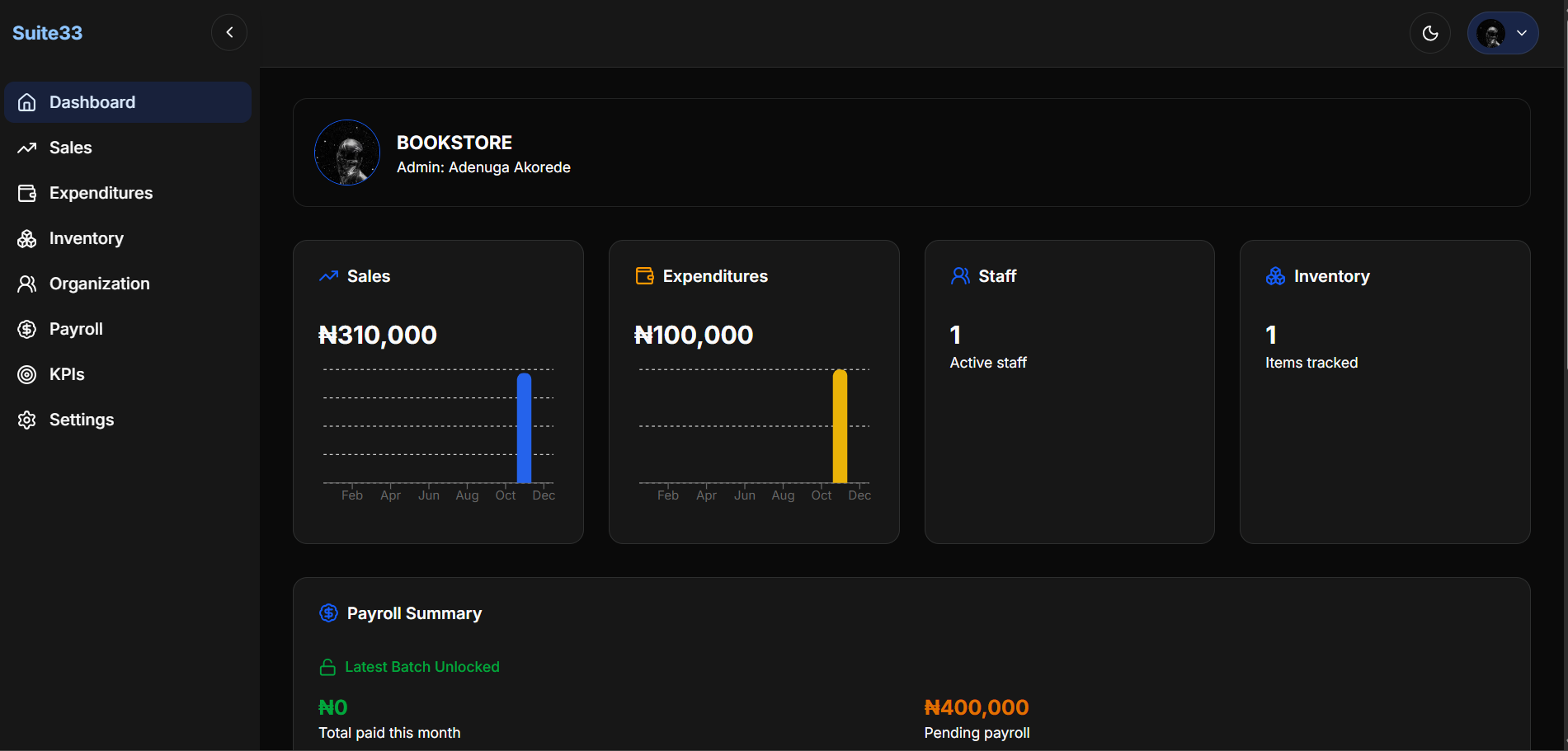
Dashboard
-
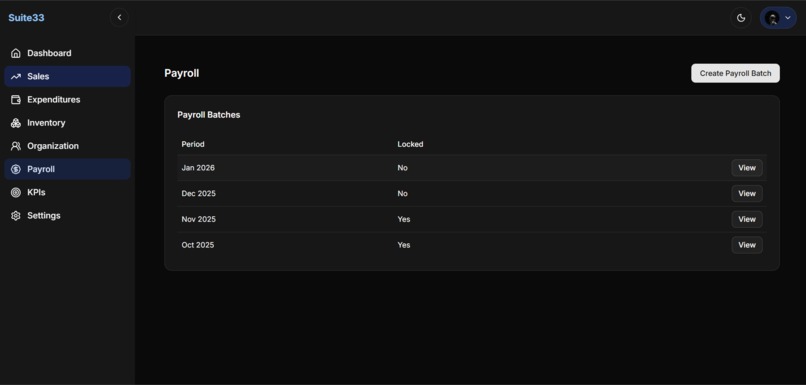
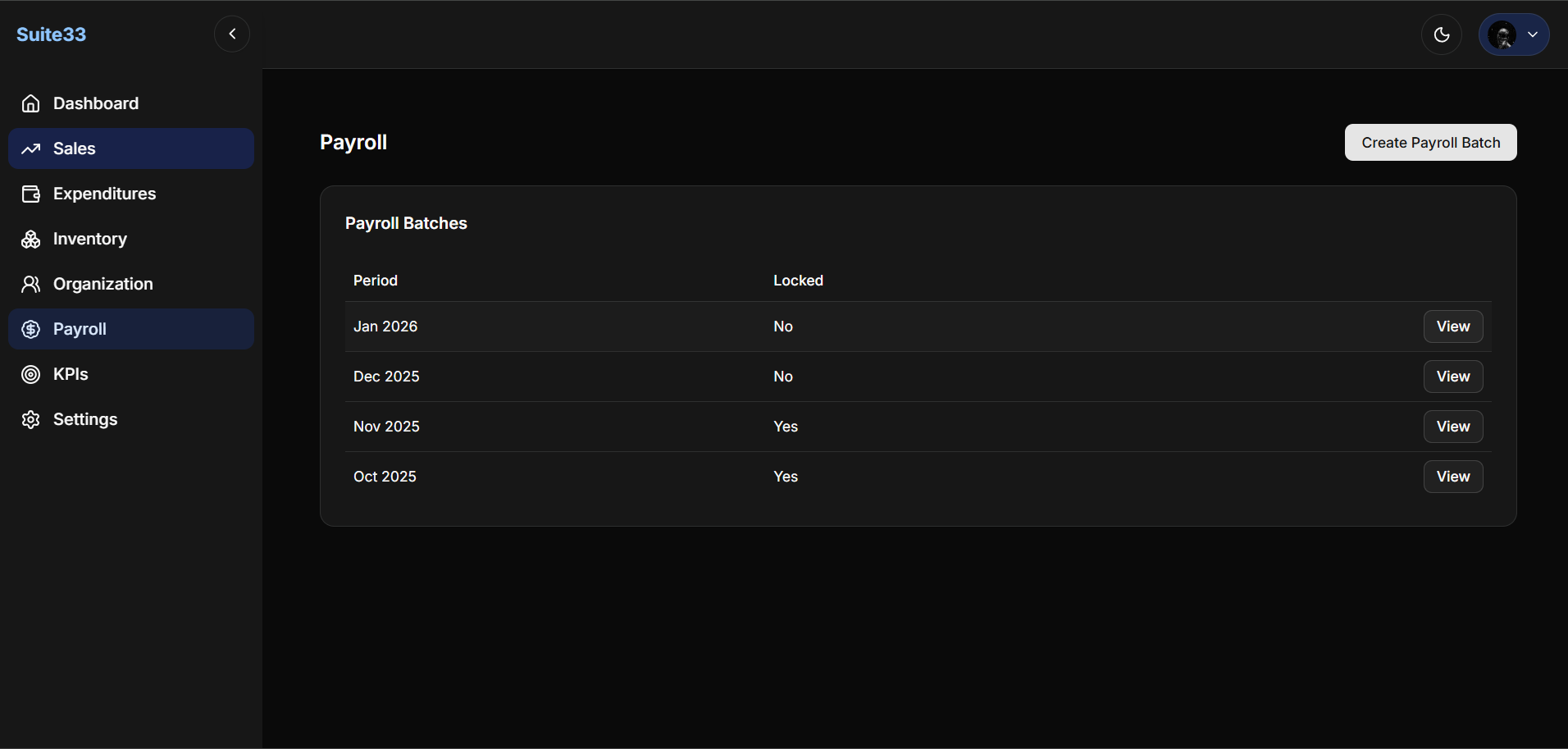
Payroll Batch
-
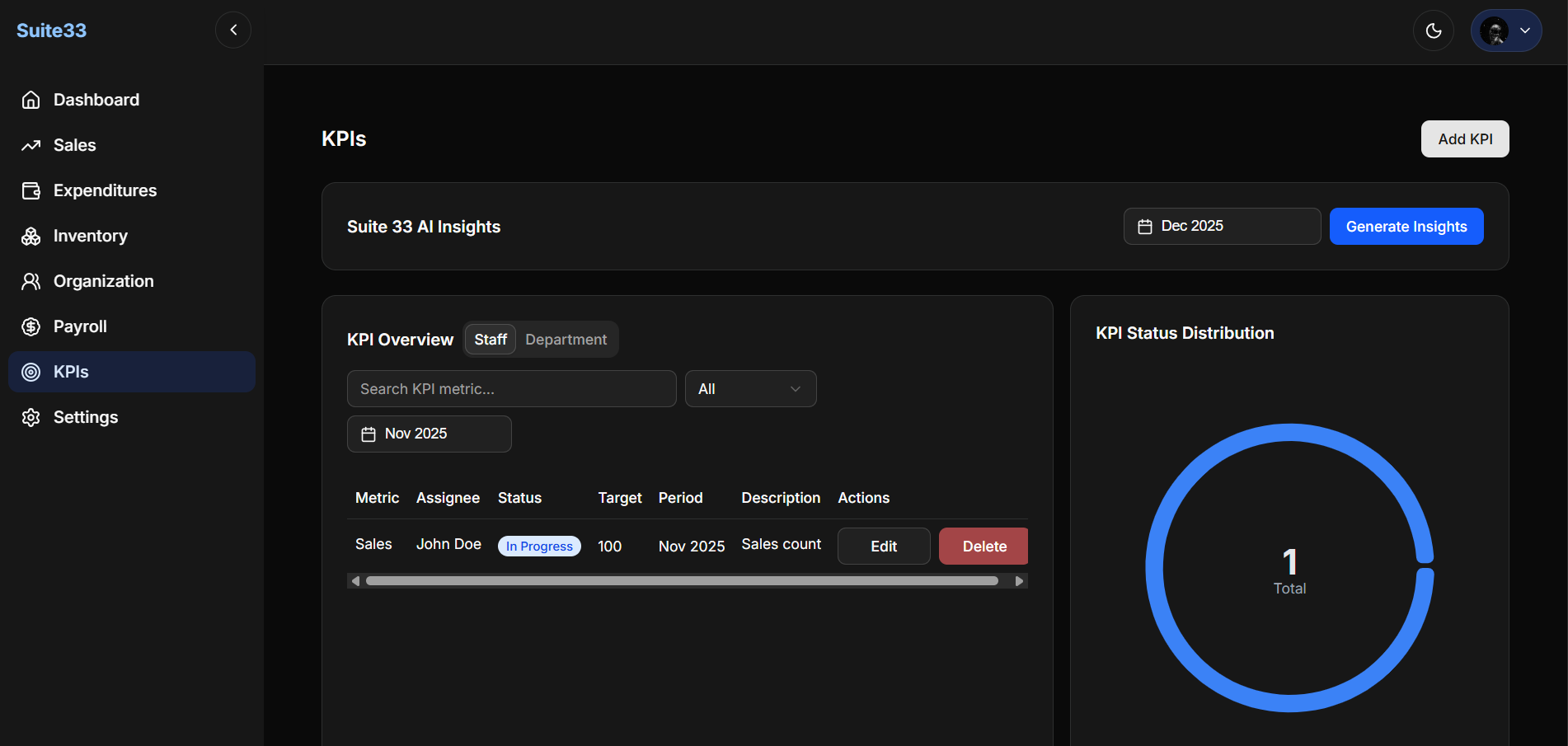
KPIs
-
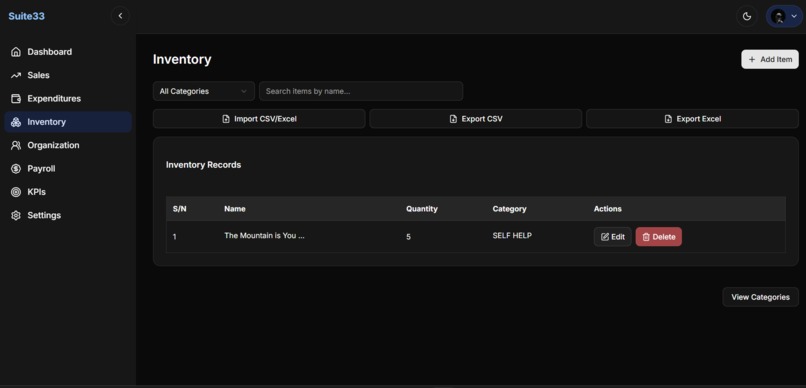
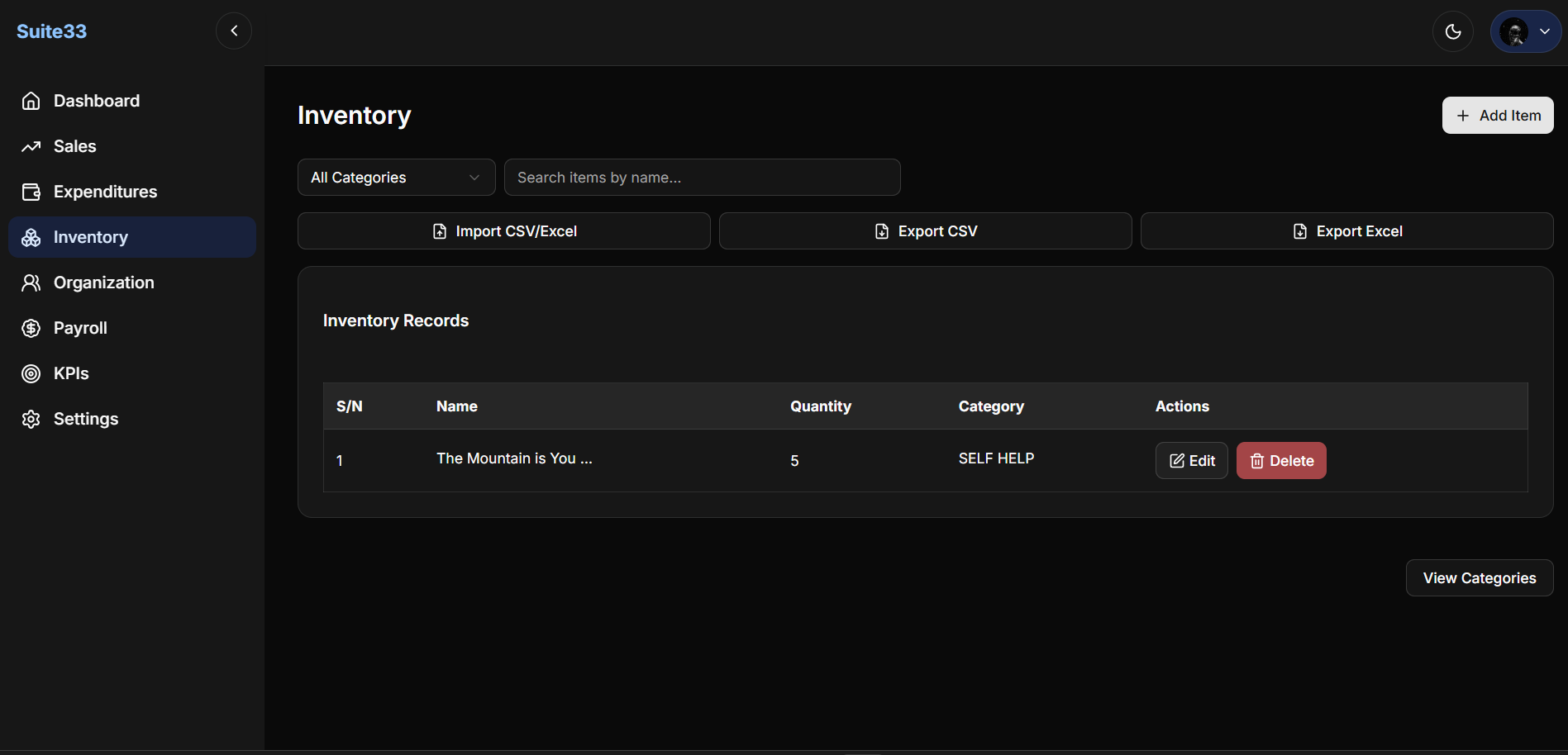
Inventory Page
-
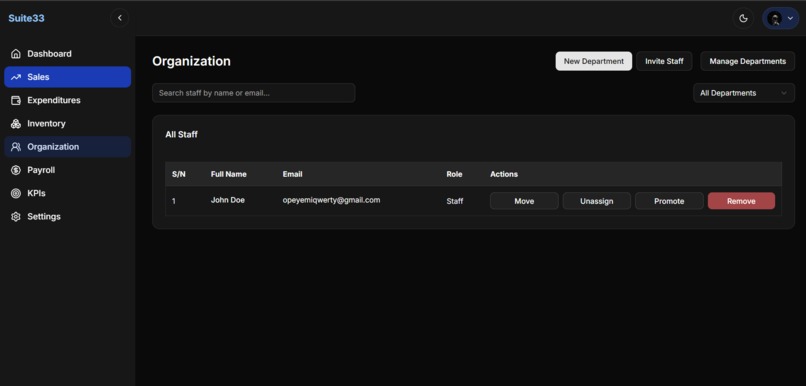
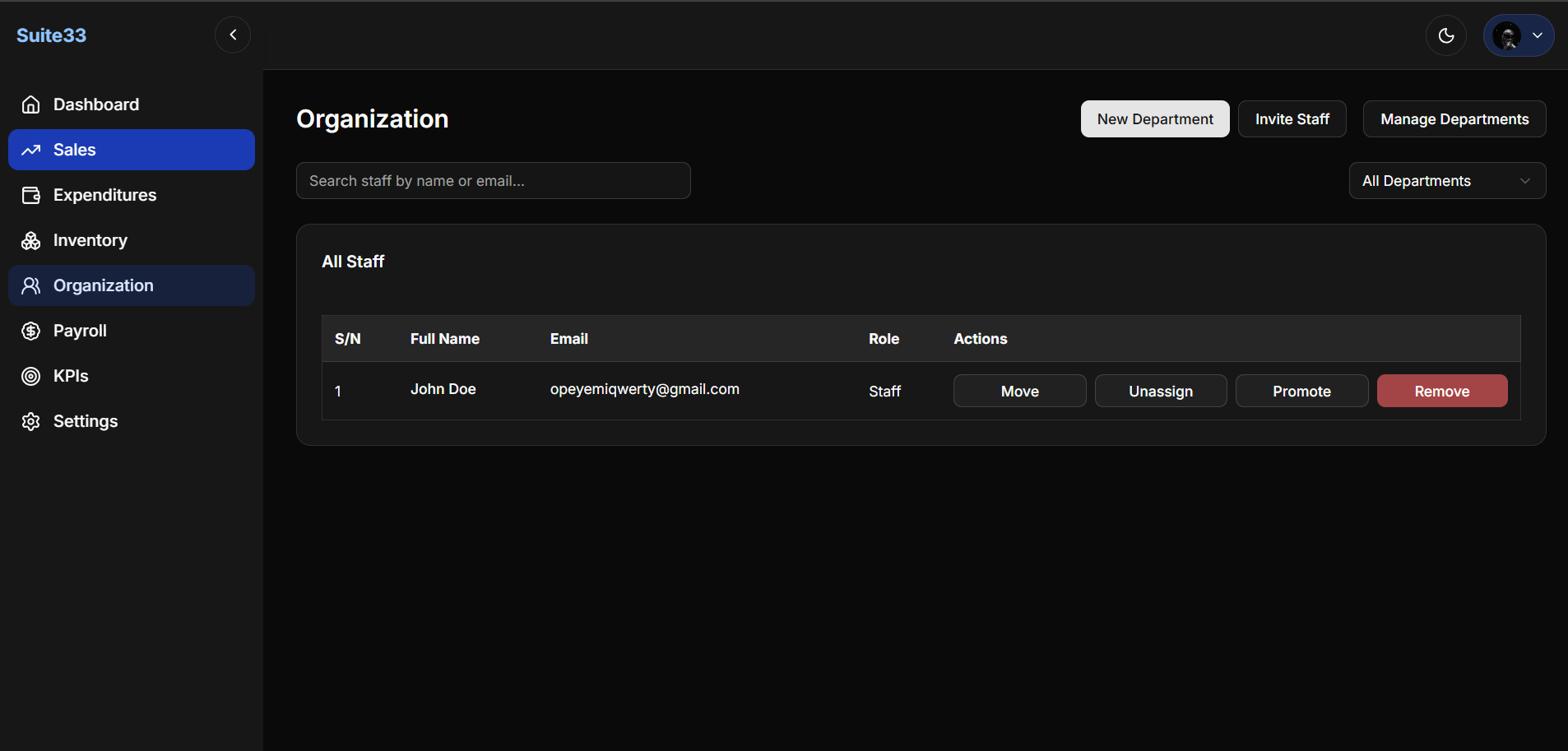
Staff & Dashboard Management
-
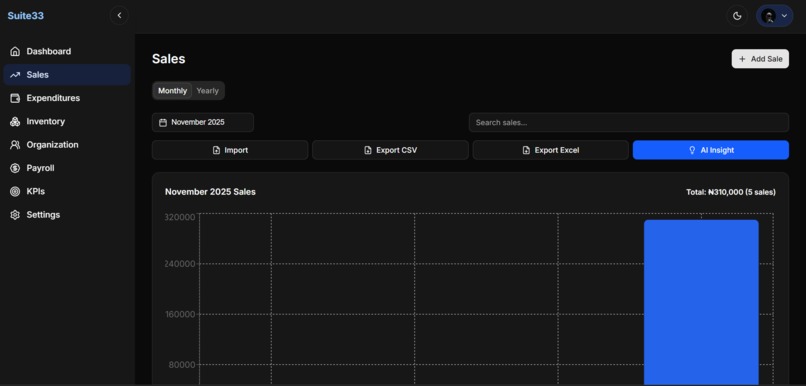
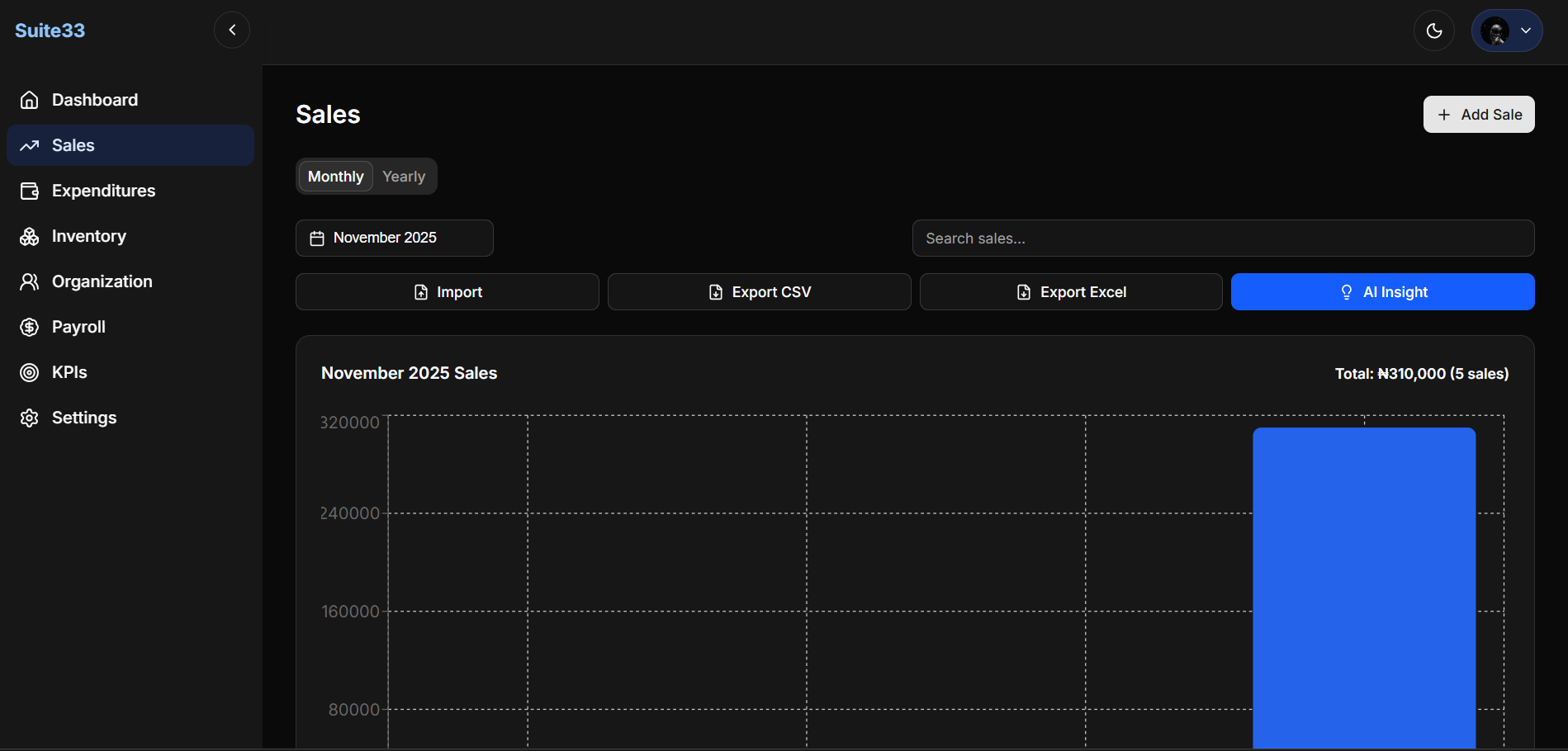
Sales Page
-
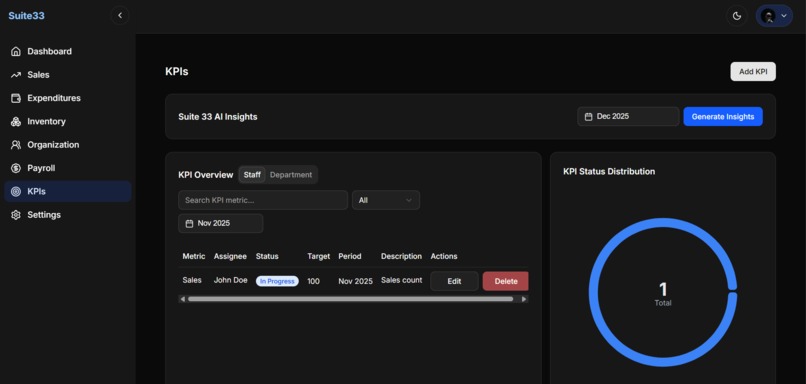
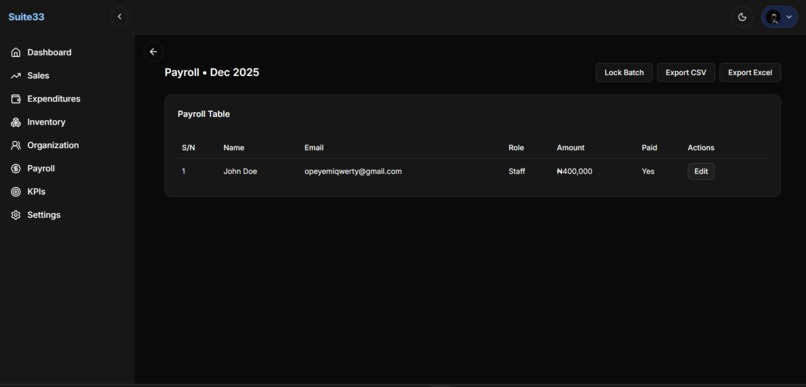
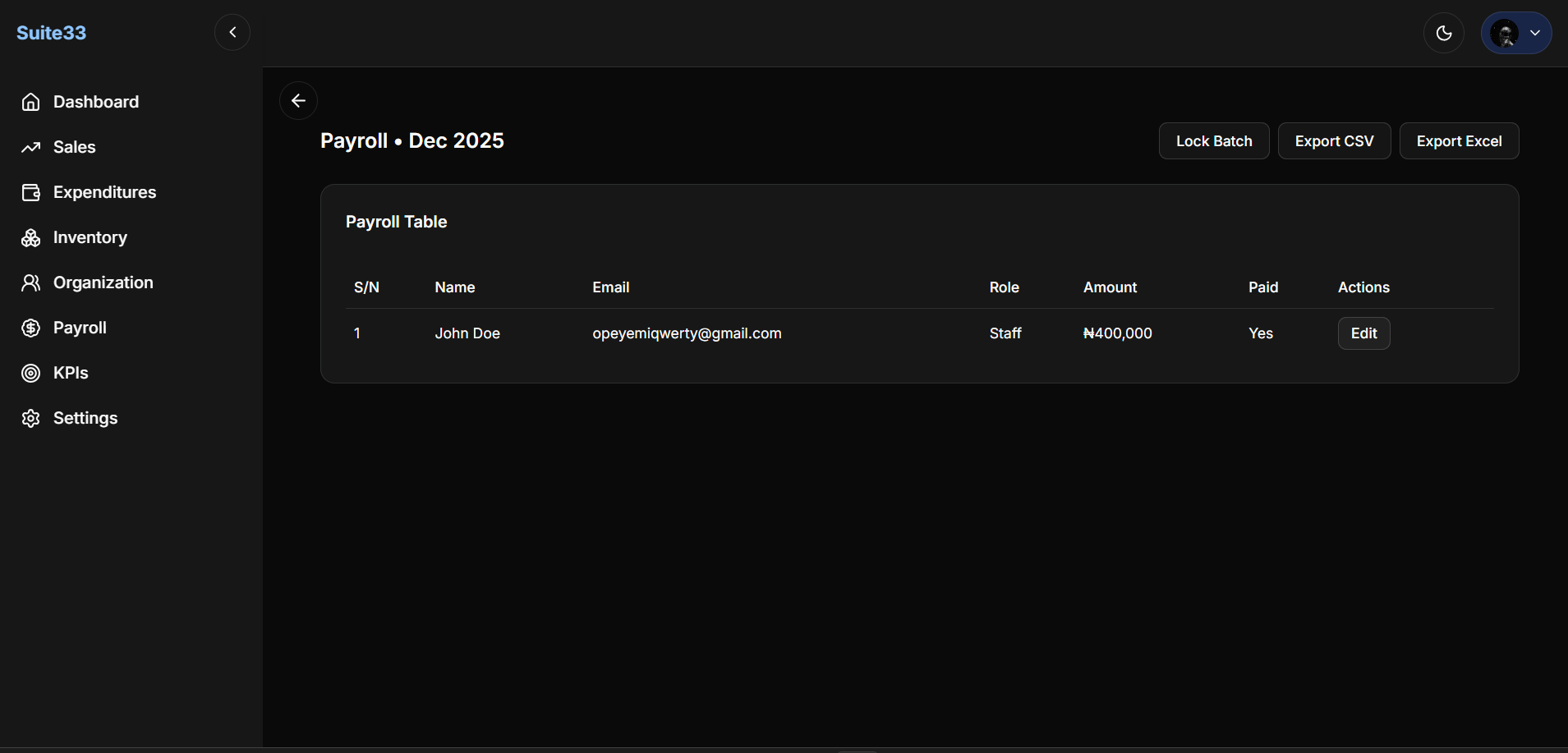
Staff Payroll
Suite33 – Business Management Application
Suite33 is a modern, all-in-one business management application designed to help small and medium-sized businesses streamline daily operations. It provides a unified dashboard for managing sales, inventory, payroll, expenditures, staff, KPIs, and overall business performance.
The platform focuses on structure without complexity, helping businesses move away from fragmented manual processes into a single, coherent system.
Why Suite33 Was Built
Suite33 was inspired by real-world exposure to how many small and medium-sized businesses operate day to day.
During a consulting engagement with a small business, core operations such as sales tracking, payroll, inventory, and staff performance were handled manually using notebooks, paper records, and informal processes. Information was scattered, historical data was difficult to retrieve, and decisions were often made from memory rather than insight.
What stood out was not a lack of effort, but a lack of structure that fits how SMEs actually work. Existing tools were either too complex, too expensive, or designed for larger organizations with very different workflows.
Suite33 was built to bridge that gap.
A system that introduces structure, visibility, and accountability without overwhelming small teams.
How the Project Was Built
Suite33 was designed as a modular system where each core business function operates independently, but feeds into a shared dashboard and analytics layer.
The application follows a clear separation of concerns:
- Authentication and authorization are handled centrally.
- Each business module (sales, payroll, inventory, etc.) owns its data and logic.
- The dashboard aggregates read-only insights across modules.
- Role-based access ensures users only see what is relevant to them.
From a data perspective, all business actions are scoped to a single business entity, making it possible to enforce clean boundaries, safe deletions, and predictable queries.
Time-based data such as payroll periods, sales summaries, and KPIs are normalized around months and years to allow consistent reporting and comparisons.
Challenges Faced
1. Designing for Multiple Roles
One of the biggest challenges was handling different user roles without duplicating logic or leaking data. Admins, assistant admins, and staff all interact with the same system but with very different permissions.
This required careful API design to ensure:
- Admins have full visibility.
- Staff only see personal or read-only data.
- Shared endpoints return different payloads depending on role.
2. Payroll Complexity
Payroll introduced unique challenges:
- Batches must be immutable once finalized.
- Staff should never see other staff salaries.
- New payroll periods should remain consistent and predictable.
Ensuring correct date normalization, preventing duplicate batches, and locking historical records required extra attention to data integrity.
3. Handling Destructive Actions Safely
Deleting a business is not just removing a record. It affects sales, payroll, staff, inventory, and analytics.
Instead of hard deletes, Suite33 uses soft deletion across all related records, followed by forced sign-out and redirection. This ensures data safety while keeping the user experience clear and intentional.
What Was Learned
Building Suite33 reinforced several key lessons:
- Clarity beats complexity. Small businesses value systems that are easy to understand more than systems packed with features.
- Role-aware design is essential. Access control must be intentional from day one.
- Time-based data needs strict normalization. Small inconsistencies in dates can cause large reporting errors later.
- UX matters as much as correctness. Actions like deleting a business or locking payroll must feel deliberate and reassuring, not abrupt.
Most importantly, the project highlighted how much impact thoughtful software can have when it is designed around real operational pain points rather than abstract requirements.
Features Overview
Authentication & Authorization
- Secure account management.
- Role-based access control:
- Admin – Full access to all modules.
- Assistant Admin – Limited admin rights.
- Staff – Personal dashboard and read-only access.
- Server-protected routes using authenticated sessions.
Business Core Modules
1. Sales Management
- Create, view, update, and delete sales records.
- Monthly and yearly summaries.
- CSV and Excel exports.
- Visual charts for performance tracking.
- AI-generated sales insights.
2. Inventory Management
- Inventory item and category management.
- Stock quantity tracking.
- Dashboard summary metrics.
- CSV and Excel export.
3. Staff Management
- Add and manage staff members.
- Role and department assignment.
- Permission-aware access to features.
4. KPI Management (Performance Tracking)
- Monthly staff performance tracking.
- Admin-defined KPIs.
- Staff visibility into expectations and results.
- Historical KPI records for review.
5. Payroll System
Admin View
- Monthly payroll batch creation.
- Automatic staff payroll generation.
- Batch locking and unlocking.
- Editable payroll entries.
- CSV and Excel export.
- Aggregated payroll analytics.
Staff & Assistant Admin View
- Personal payslip visibility.
- No access to company-wide payroll data.
6. Expenditure Tracking
- Expense recording and categorization.
- Monthly and yearly summaries.
- Visual insights and exports.
- AI-assisted expenditure analysis.
7. Dashboard & Analytics
- Unified overview of business health.
- Sales, expenditure, staff, and inventory metrics.
- Monthly performance charts.
- Yearly Profit & Loss summary.
- Payroll status and summaries.
8. Business Settings
- Update business details.
- Controlled business deletion.
- Automatic sign-out and cleanup after deletion.
Setup & Installation
git clone https://github.com/Rahmannugar/suite33.git
cd suite33
npm install
npx prisma generate
npx prisma db push
npm run dev
Built With
- css
- gemini3
- javascript
- supabase
- typescript

Log in or sign up for Devpost to join the conversation.