-
-
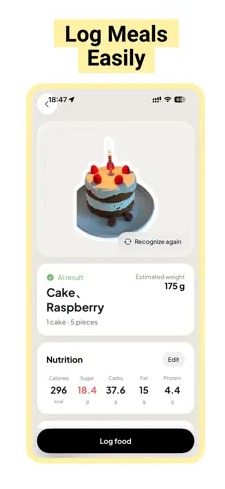
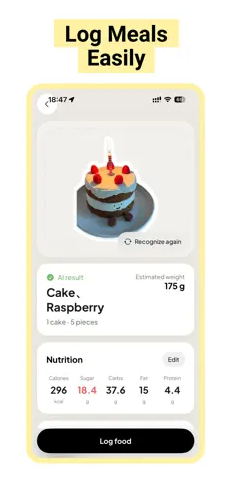
Log meals easily
-
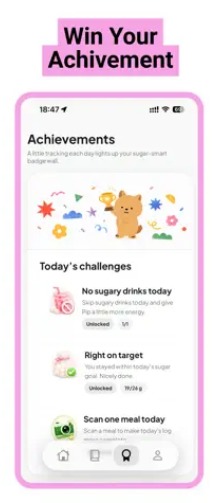
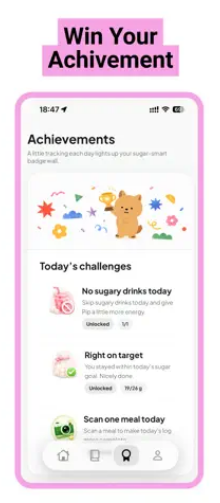
Win your achievement
-
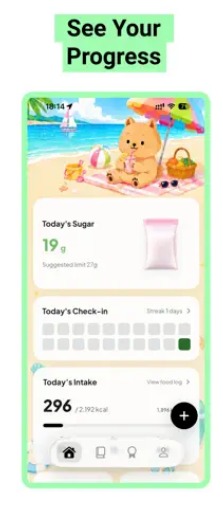
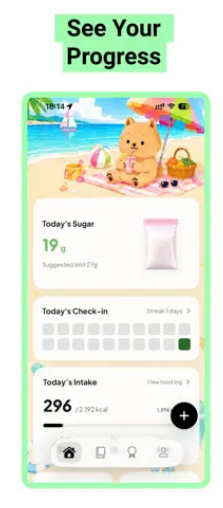
See your progress
-
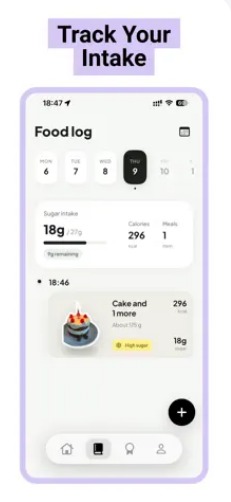
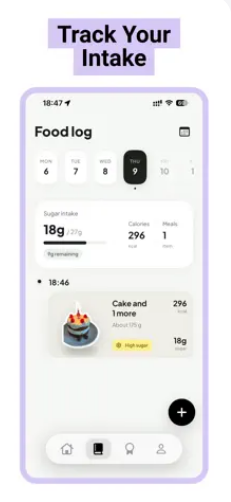
Track your intake
About the project
Sugarly started from a personal problem.
I have fatty liver disease and a terrible habit of drinking milk tea, sweet coffee, and sugary drinks almost every day. Like many people, I knew sugar wasn't ideal for my health, but I never truly understood how much sugar I was consuming until I started paying attention.
When I looked for existing apps, most focused on calories, dieting, or strict nutrition tracking. They often felt complicated and stressful. I wanted something simpler and more human:
Take a photo, understand the sugar, and gradually build healthier habits without guilt.
That's how Sugarly was born.
The app uses AI vision models to recognize food and drinks from photos, estimate calories and sugar intake, and visualize sugar in an intuitive way that people can actually understand.
I'm not a software engineer — I'm a product manager.
Building Sugarly became my way of learning modern AI-powered software development and exploring what a single person can build with the right tools.
My journey started with Cursor and Claude Code CLI, which helped me ship early prototypes quickly and learn how to communicate with AI coding agents effectively.
When Codex became available, it changed my workflow again.
Instead of thinking in terms of implementation details first, I could focus on product decisions, user experience, and iteration speed while letting Codex handle a large amount of engineering work:
- Generating SwiftUI interfaces and animations
- Refactoring large view files into reusable components
- Debugging complicated state management issues
- Building Supabase integrations and backend functions
- Iterating on prompts and AI pipelines for food recognition
- Rapidly experimenting with new ideas and features
The most difficult challenge wasn't writing code.
It was making food recognition reliable enough for real-world usage.
A latte can look like an Americano. A milk tea brand can be confused with another brand. Portion estimation from a single image is still a surprisingly hard problem, especially when multiple foods appear in one photo.
Another challenge was product philosophy.
I didn't want Sugarly to become another app that tells users they failed because they ate dessert.
I wanted it to feel supportive rather than judgmental.
My goal was to build an app that helps people understand their relationship with sugar, not fear it.
As a product manager, Sugarly has completely changed how I think about software creation.
A few years ago, building an AI-powered consumer app would have required a team of engineers, designers, and data scientists.
Sugarly is the result of that shift.
Built With
- codex
- supabase
- swift


Log in or sign up for Devpost to join the conversation.