-
-
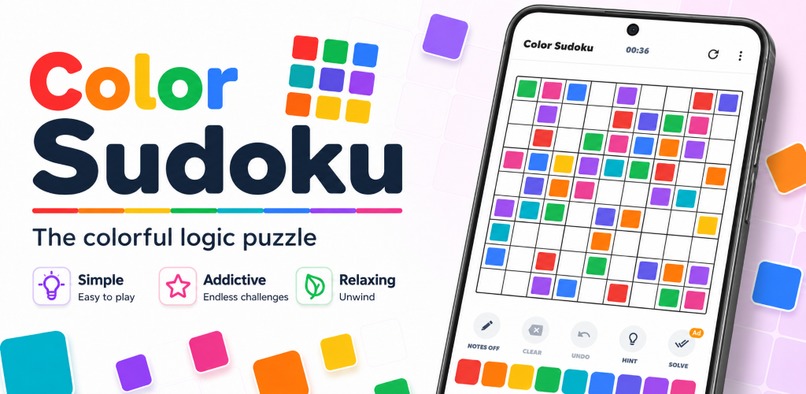
Game board
-
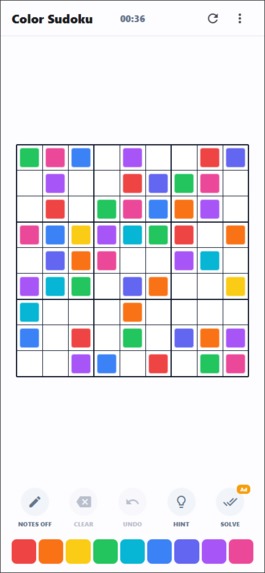
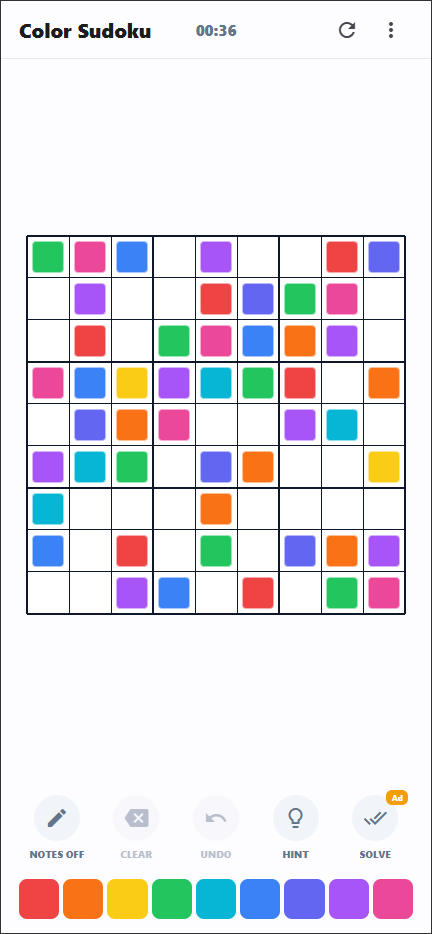
Colors as sudoku symbols
-
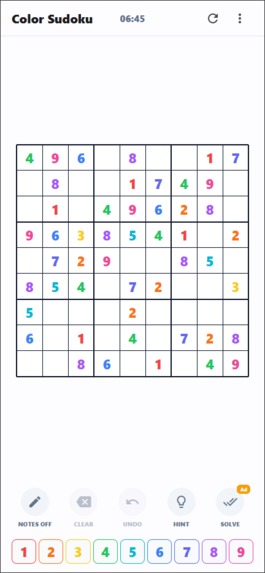
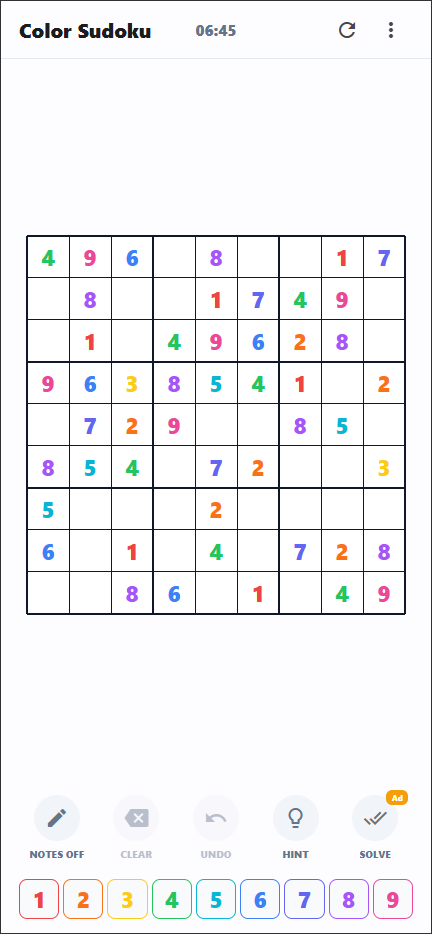
Classic sudoku
-
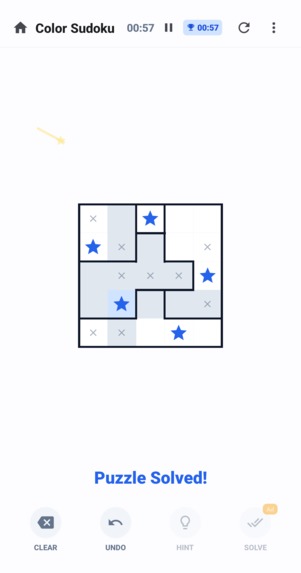
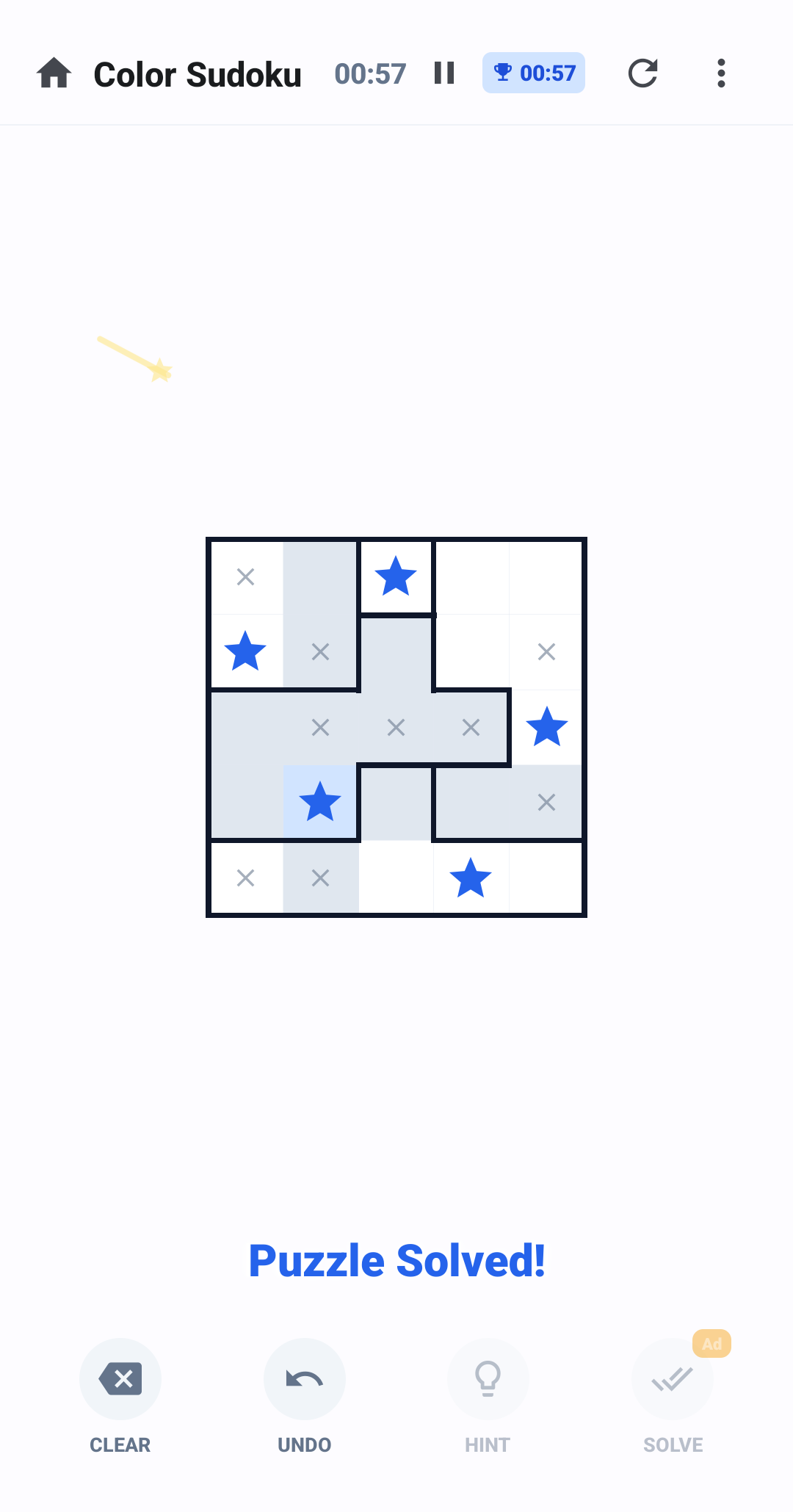
Stardoku/mewdoku
Inspiration
Color Sudoku started as a simple idea: make Sudoku feel fresh again by letting players use colors instead of only numbers. The first version, built with Codex GPT-5.5, worked well enough, but it felt like an “okay” Sudoku game rather than something that would truly stand out.
Then I thought about newer puzzle games like Mewdoku, where simple rules, fast play, and satisfying logic make the experience feel modern. I wanted to bring that spirit into my game with infinite puzzles, difficulty levels, and a second puzzle mode that could sit beside Sudoku naturally.
What it does
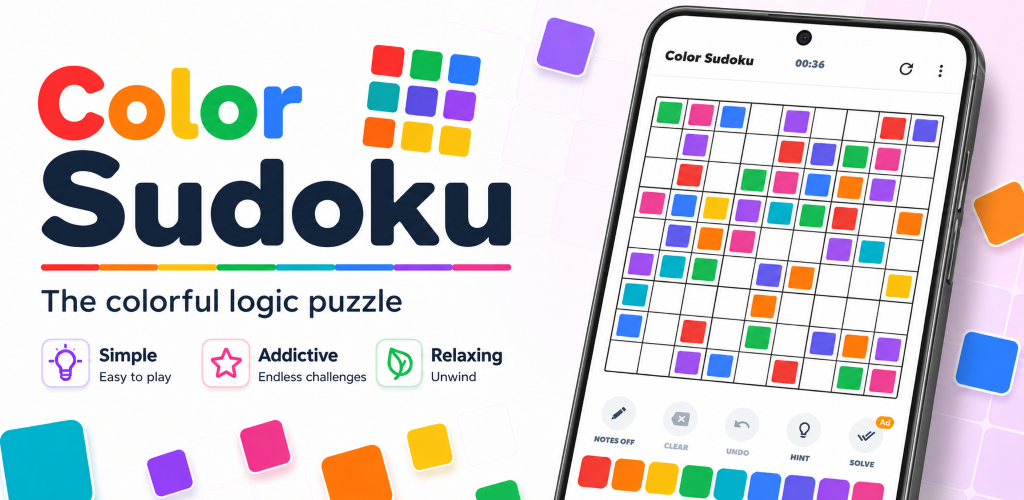
Color Sudoku is a mobile logic puzzle game where players can solve Sudoku using either colors or numbers.
It includes classic Sudoku, multiple Sudoku variants, daily challenges, saved progress, offline fallback for simple 9x9 puzzles, and a new mode called Star Sudoku. Star Sudoku adds a different kind of logic puzzle with infinite generated boards and multiple difficulty levels.
How we built it
The game was built as a React Native Expo app, with puzzle generation delegated to an AWS Lambda Python backend for responsiveness. The app handles gameplay, gestures, themes, local preferences, saved games, records, ads integration, and daily challenge progression.
The first version was created with Codex GPT-5.5. Later, when GPT-5.6 Sol became available, I used it to build and improve the Star Sudoku generator and solver, which made the new puzzle mode much more reliable and polished.
Challenges we ran into
The biggest challenge was puzzle generation. Standard Sudoku already has many constraints, but supporting variants, difficulty levels, and adding a Star Sudoku puzzle game was especially challenging.
The first generator and solver produced by GPT-5.5 were not good enough for a production-quality game. The puzzles were not consistently reliable, and the implementation needed stronger logic. GPT-5.6 Sol helped solve this by producing a much cleaner and more dependable implementation.
Another challenge was making the mobile experience feel smooth: pinch zoom, drag gestures, large grids, daily challenges, offline handling, and responsive layouts all required careful tuning.
Accomplishments that we're proud of
I am proud that Color Sudoku evolved from a basic playable Sudoku into a more complete puzzle platform.
The biggest accomplishment is Star Sudoku: it gives the app a more unique identity and adds infinite replayability beyond classic Sudoku. I am also proud of the daily challenge system, local progress persistence, offline fallback, multilingual support, dark mode, and the ability to switch between colors and numbers depending on the player’s preference.
What we learned
I learned that a working prototype is only the beginning. The first version can prove the idea, but making a game feel polished requires many small improvements: smoother interaction, better difficulty, clear progression, reliable generation, and thoughtful defaults.
I also learned that different AI model versions can be useful at different stages. Codex GPT-5.5 helped build the foundation, while GPT-5.6 Sol helped push the more complex logic into a much stronger final implementation.
What's next for Sudoku puzzle game
Next, I want to keep expanding Color Sudoku into a richer puzzle experience.
Planned improvements include more Star Sudoku difficulty tuning, more daily challenge content, better animations, player statistics, leaderboards, achievements, and additional puzzle modes inspired by modern logic games. The goal is to make Color Sudoku feel both familiar and new: a Sudoku game for players who love logic puzzles but want something more colorful, flexible, and replayable.
There is an Android version, if interested provide your Google Play account and I'll add you as tester.
Built With
- android
- asyncstorage
- aws-api-gateway
- aws-lambda
- codex
- dark-mode
- eas-build
- expo.io
- gpt-5.5
- gpt-5.6
- internationalization
- ios
- javascript
- offline-mode
- puzzle-generation
- python
- react-native
- solver
- sudoku
- web

Log in or sign up for Devpost to join the conversation.