-
-
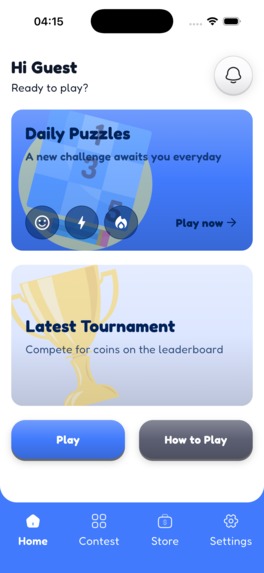
Homepage
-
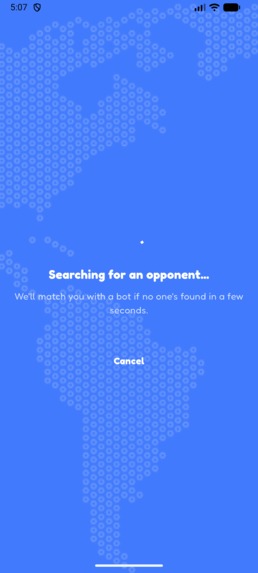
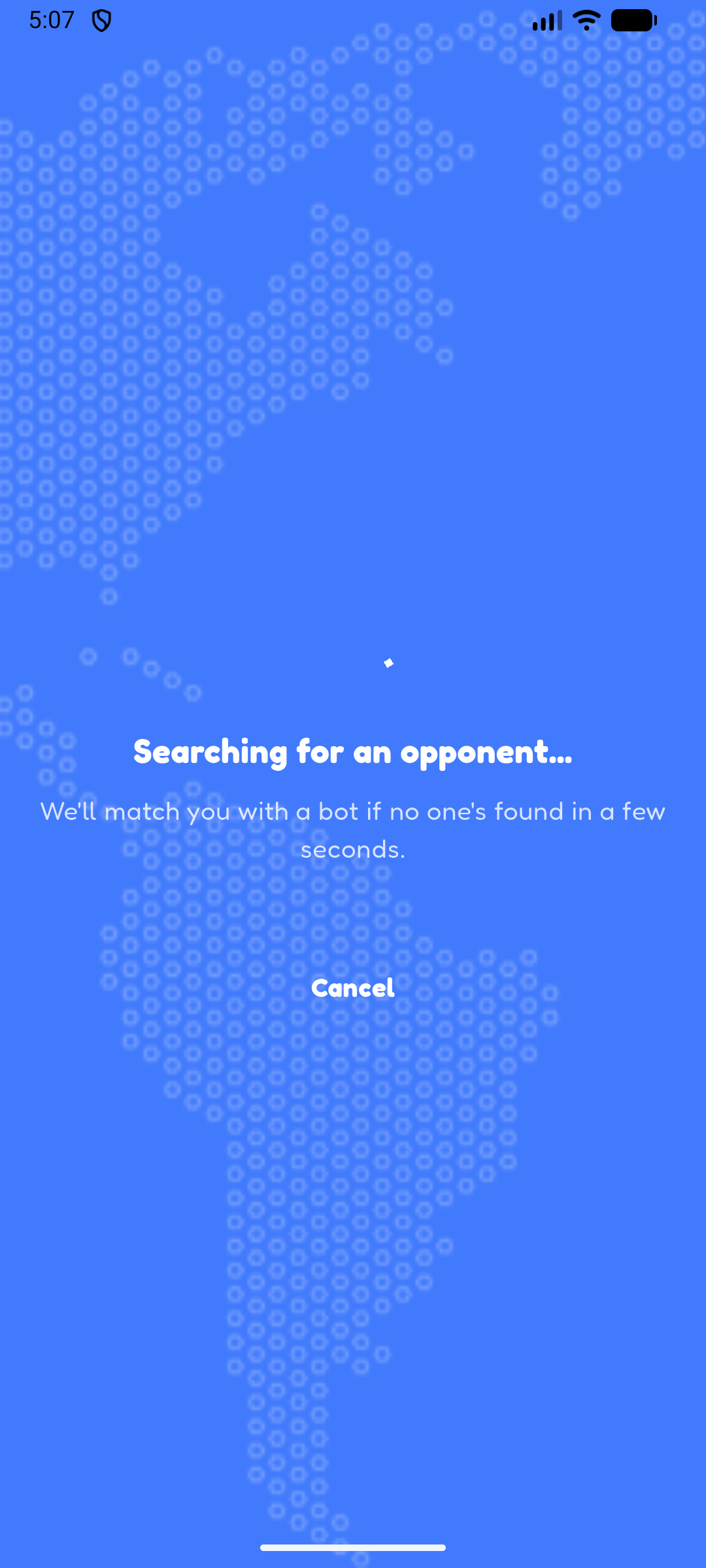
Search for players online
-
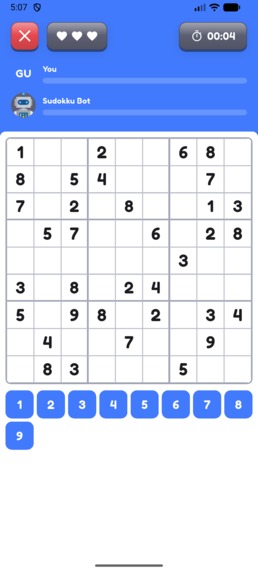
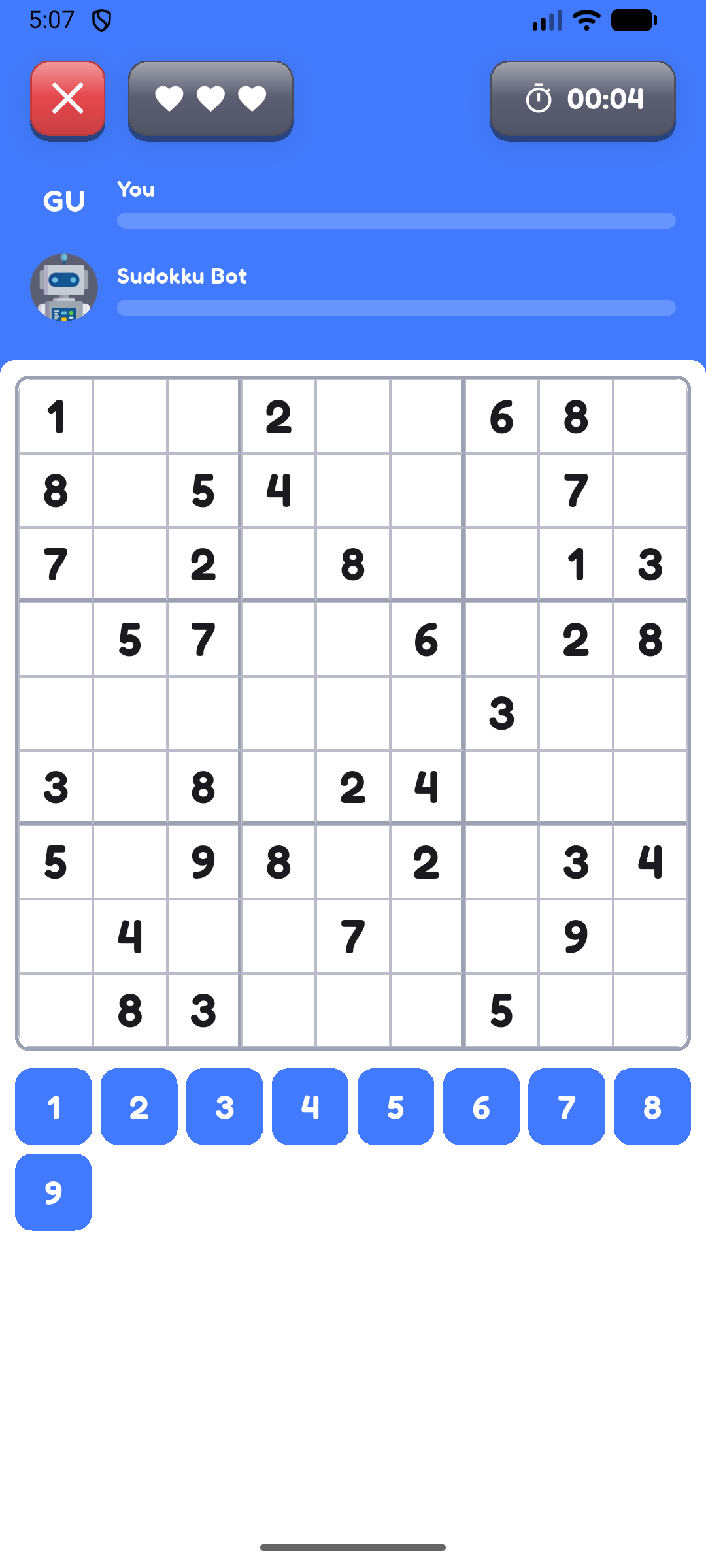
Play with a bot or another real life player
Sudokku
Inspiration
I created Sudokku so that anyone with an event can turn it into a tournament where people join, compete, and win something, or use it to promote their own product. Sudoku is familiar and easy to pick up, which makes it a good base for that. I wanted to wrap it in something social, with rewards and rivalry, so it's fun for the organizer, the players, and the audience.
What I Learned
- Designing an in-app economy. Coins power hints, extra lives, tournament entry fees, and prizes. Tried to give non paying players in the app by using adds for coins while allowing paying customers to purchase coins.
- Subscriptions and purchases with RevenueCat. I learned how to manage coin packs and subscription plans, and how to let players convert coins into a plan.
- Real-time and competitive play. Matching two players on the same puzzle, deciding who finishes first, and keeping win/loss records accurate.
- Scheduled automation. Tournaments need a reliable background process to announce starts and pay winners.
- Shipping under a deadline. Publishing a complete product on Google Play within the competition window forced me to prioritize ruthlessly.
How I Built It
Sudokku has several connected modes:
- Quick Game: solo play on 4×4, 9×9, 16×16, and 25×25 boards at three difficulties, with three lives per run.
- Daily Puzzle: three 9×9 puzzles per day (easy, medium, hard) that pay 5, 10, and 15 coins on the first clear and reset each day.
- Play with Random: matchmaking pairs two signed-in players on the same puzzle, and the first to finish wins. If nobody joins within 20 seconds, a bot steps in so nobody waits forever.
- Tournaments (Contest tab): a creator spends coins to host a timed event on one shared puzzle. Entrants pay an optional entry fee per attempt, only their best time counts, and the fastest player wins the prize. Public tournaments are listed for everyone, while private ones use an access key. A cron job announces public starts and pays the winner.
- Store: coin packs and subscriptions through RevenueCat, rewarded ads, and coin-to-subscription conversion.
- Accounts and engagement: email/password, Google, Apple, and Facebook sign-in, a local guest profile, levels, streaks, a Hall of Fame of personal bests, an in-app inbox, and OneSignal push notifications.
Challenges I Faced
- Fair tournaments. Counting only each player's best time and handling per-attempt entry fees so that each game seems fair to all.
- Supporting very different board sizes. A 4×4 board and a 25×25 board need different pacing, difficulty tuning, and UI scaling.
- Multiple sign-in methods plus guests. Supporting four auth options and a guest profile, while keeping matchmaking limited to signed-in players, added complexity.
- Time. Building and publishing all of this within the competition period meant making hard calls about scope.
What's Next
- I want to bring event organizers on board, with branded tournaments and sponsor-funded prize pools, so Sudokku becomes a place where communities and businesses run puzzle competitions.
- I also want to setup communities where organizations and ngos can interact with other users making use of the app
Built With
- flutter
- onesignal
- supabase

Log in or sign up for Devpost to join the conversation.