Sudharak — Turning Civic Problems into Community Action
Inspiration
Every day, Indian cities face environmental and civic challenges such as overflowing garbage dumps, dangerous potholes, and leaking water pipelines. Although citizens encounter these problems regularly, reporting them can be complicated, and tracking whether action has been taken is often difficult.
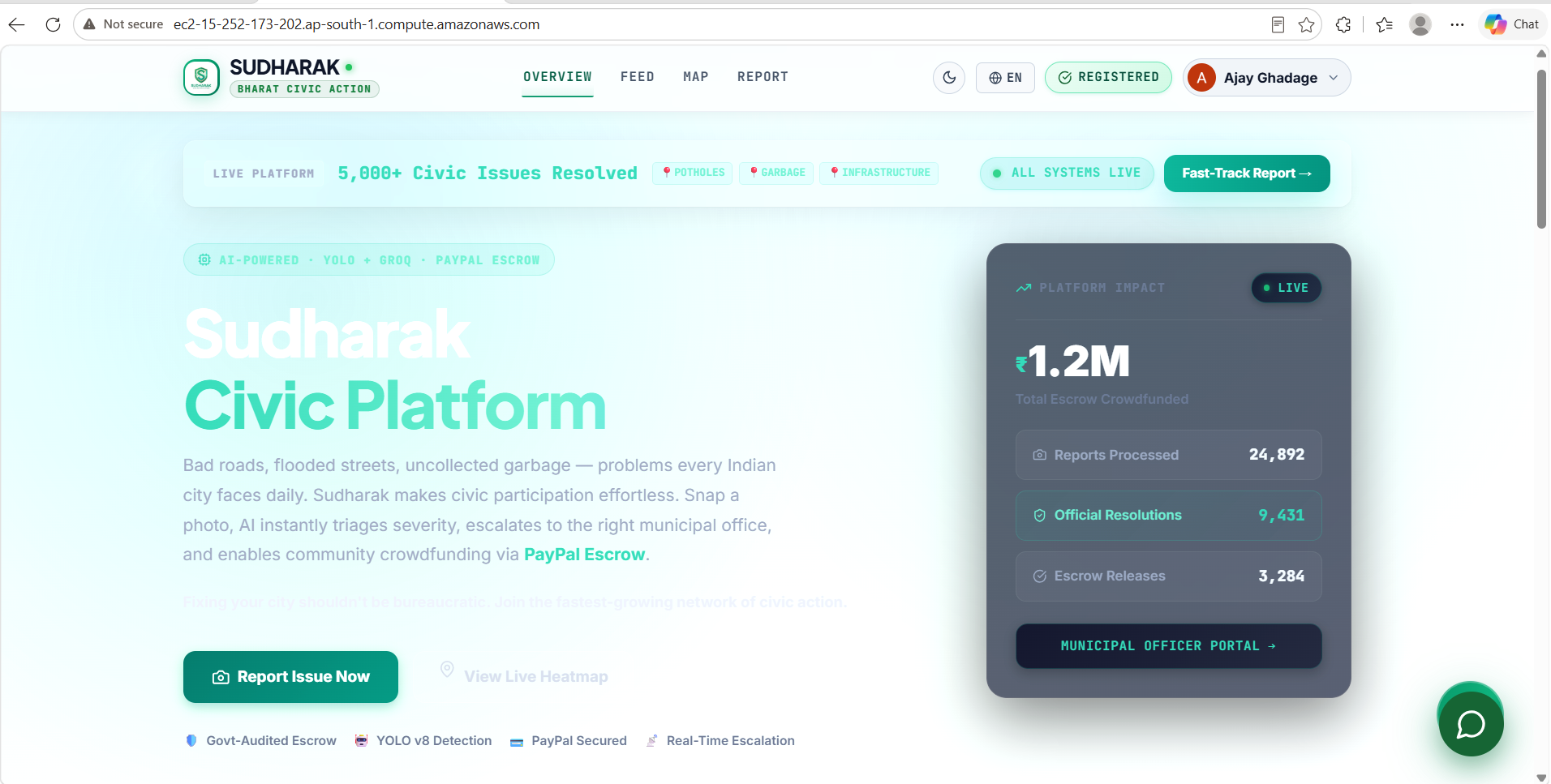
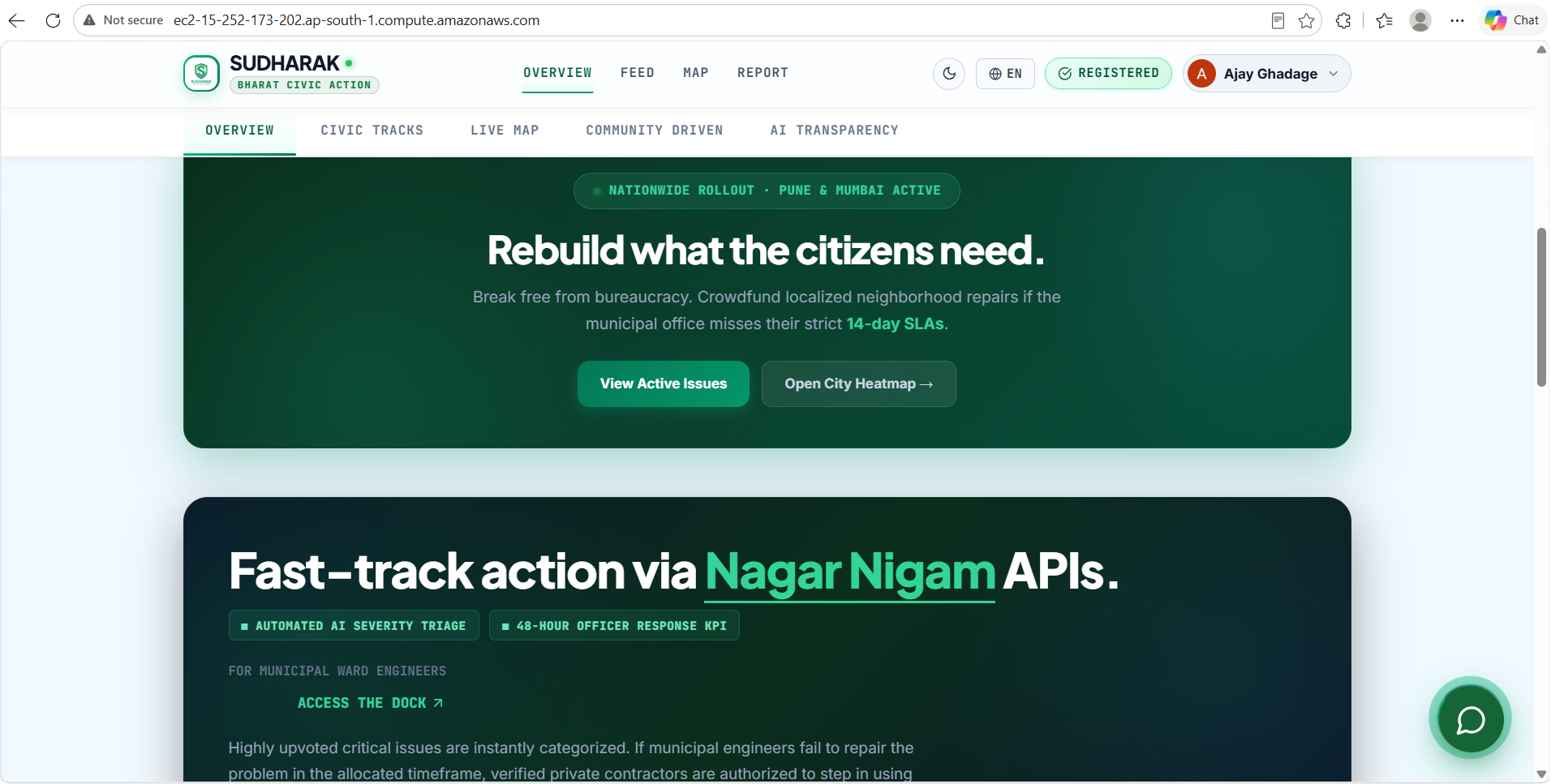
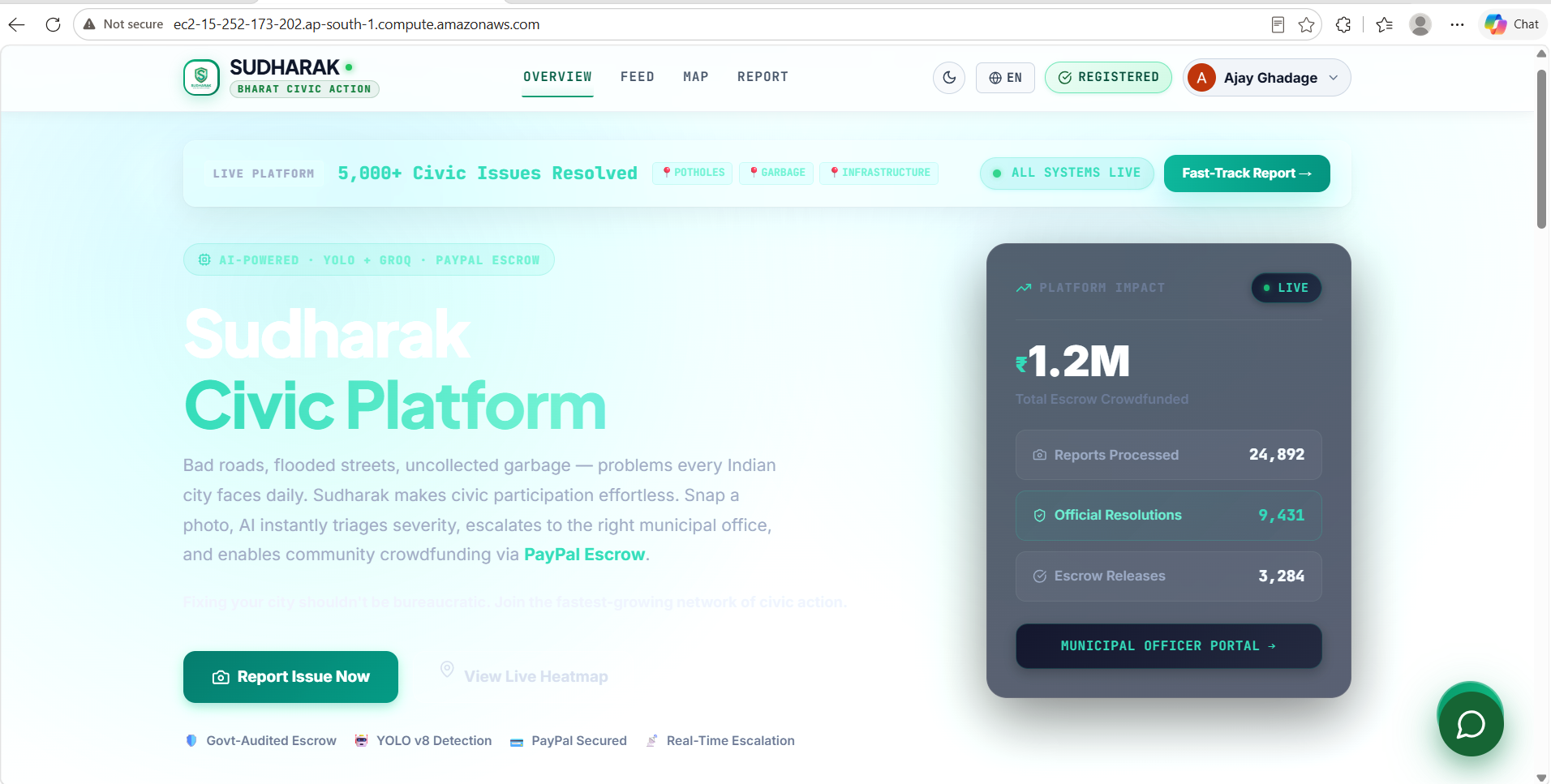
We wanted to build a platform that goes beyond reporting problems. Our vision was to connect citizens, artificial intelligence, municipal authorities, and community funding in one transparent ecosystem.
That vision led to Sudharak — See a problem. Report it. Fix it together.
What It Does
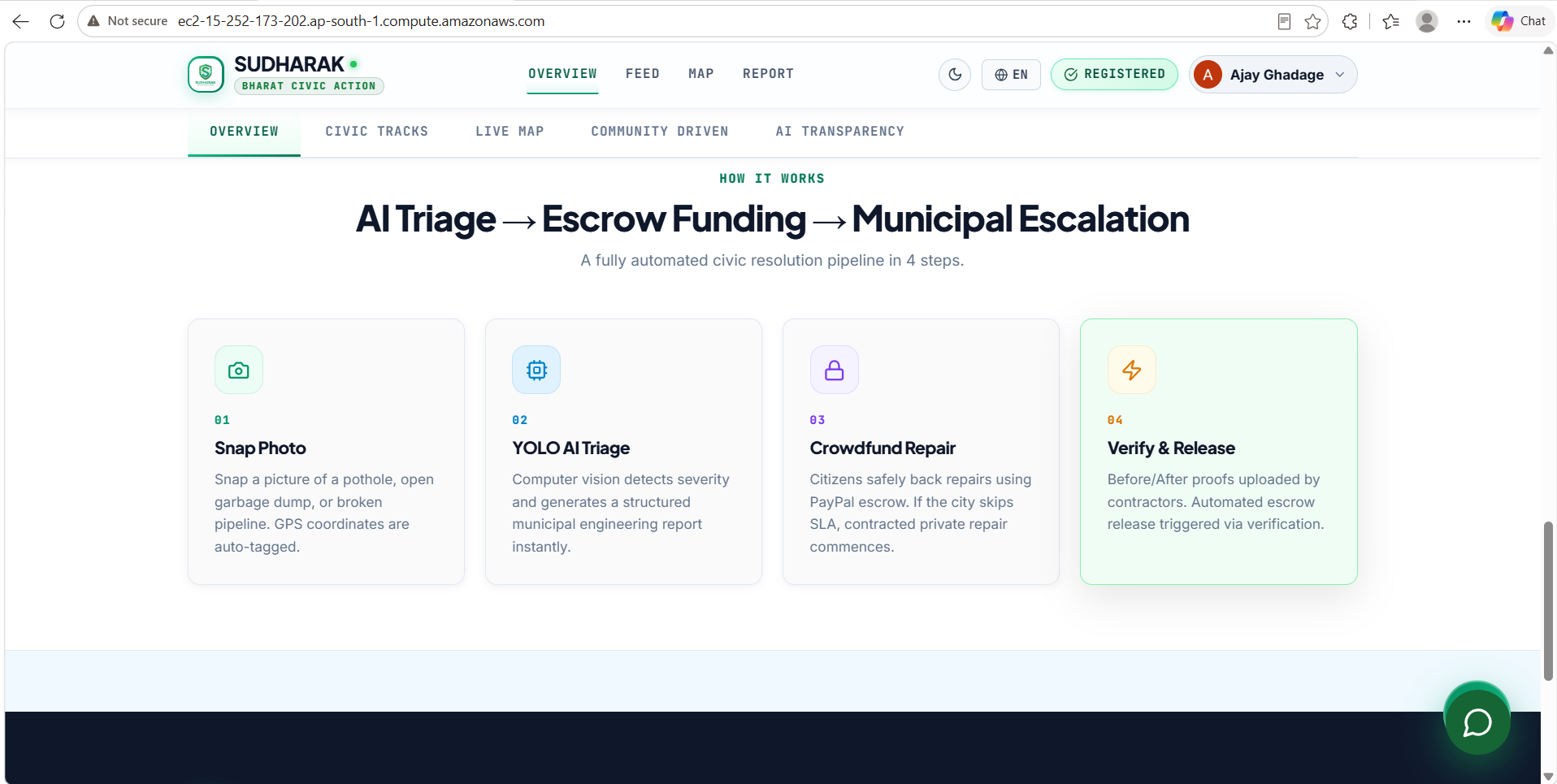
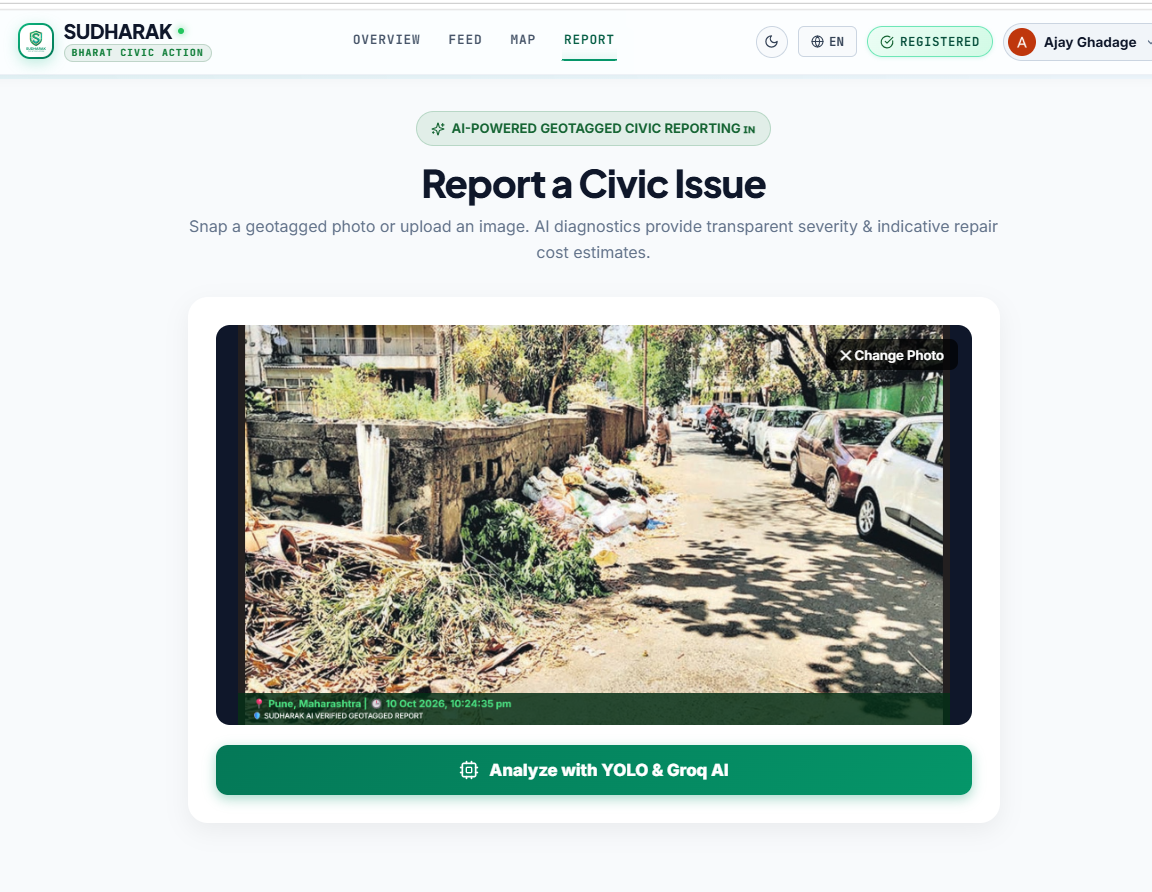
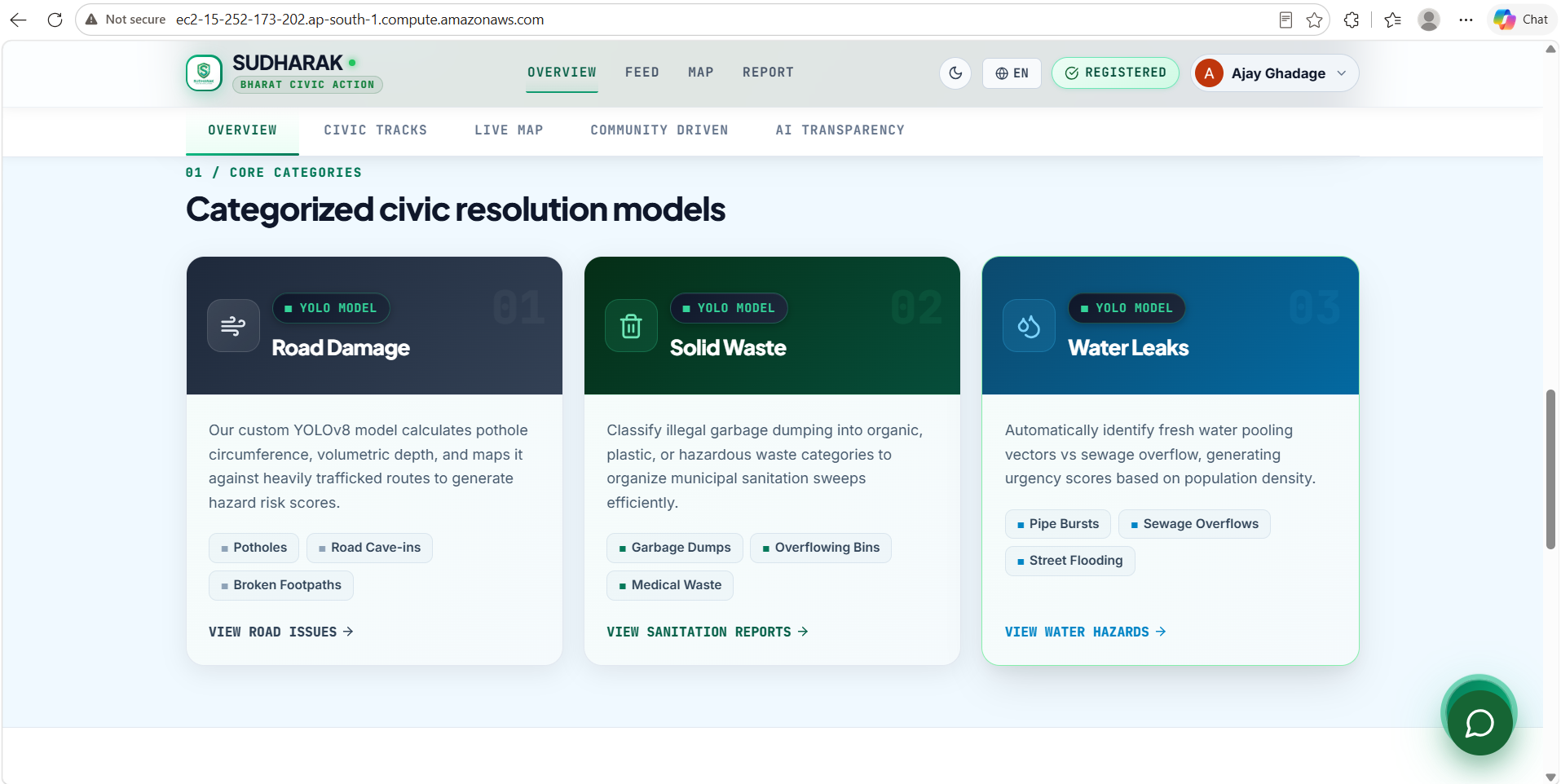
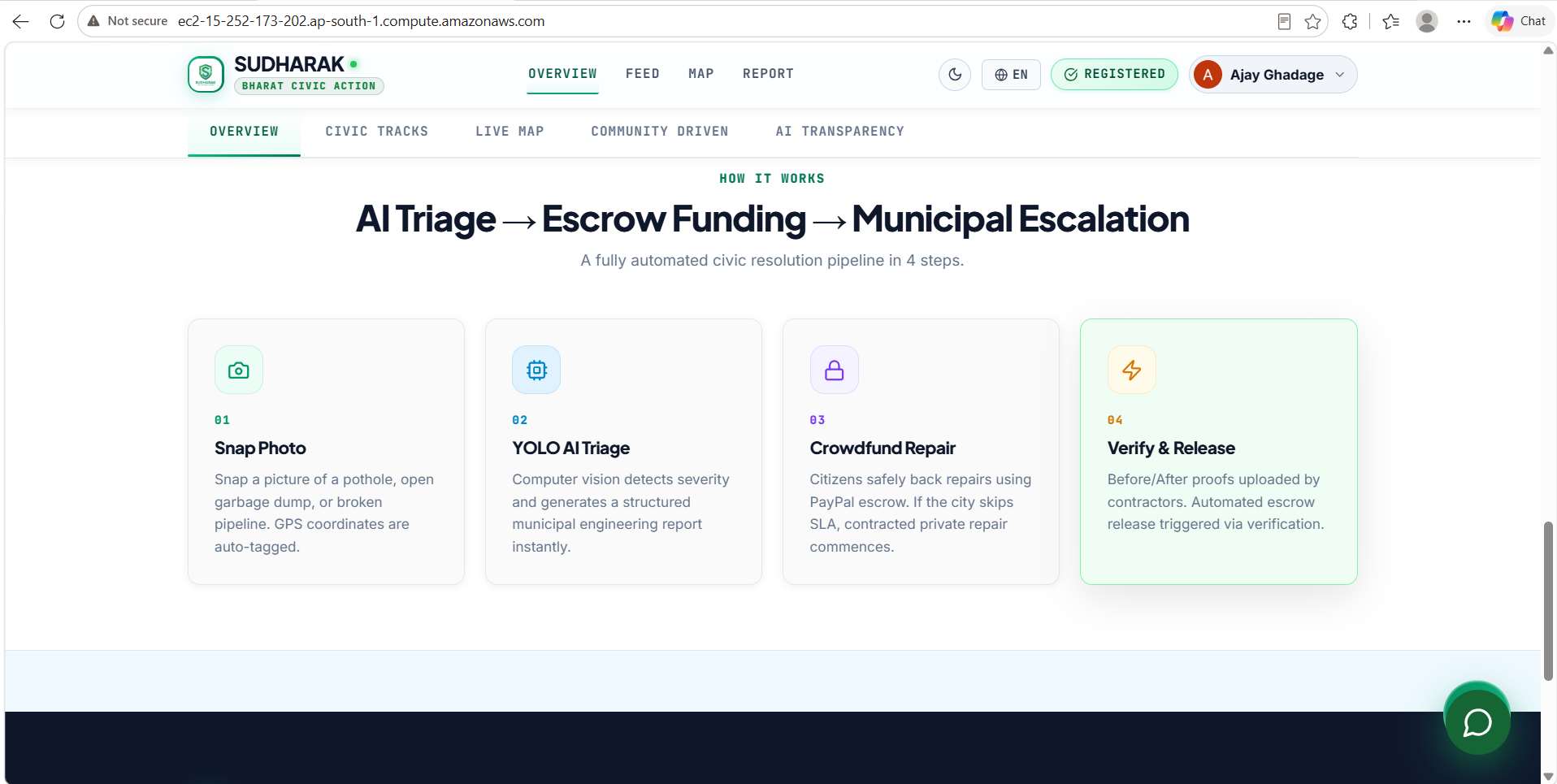
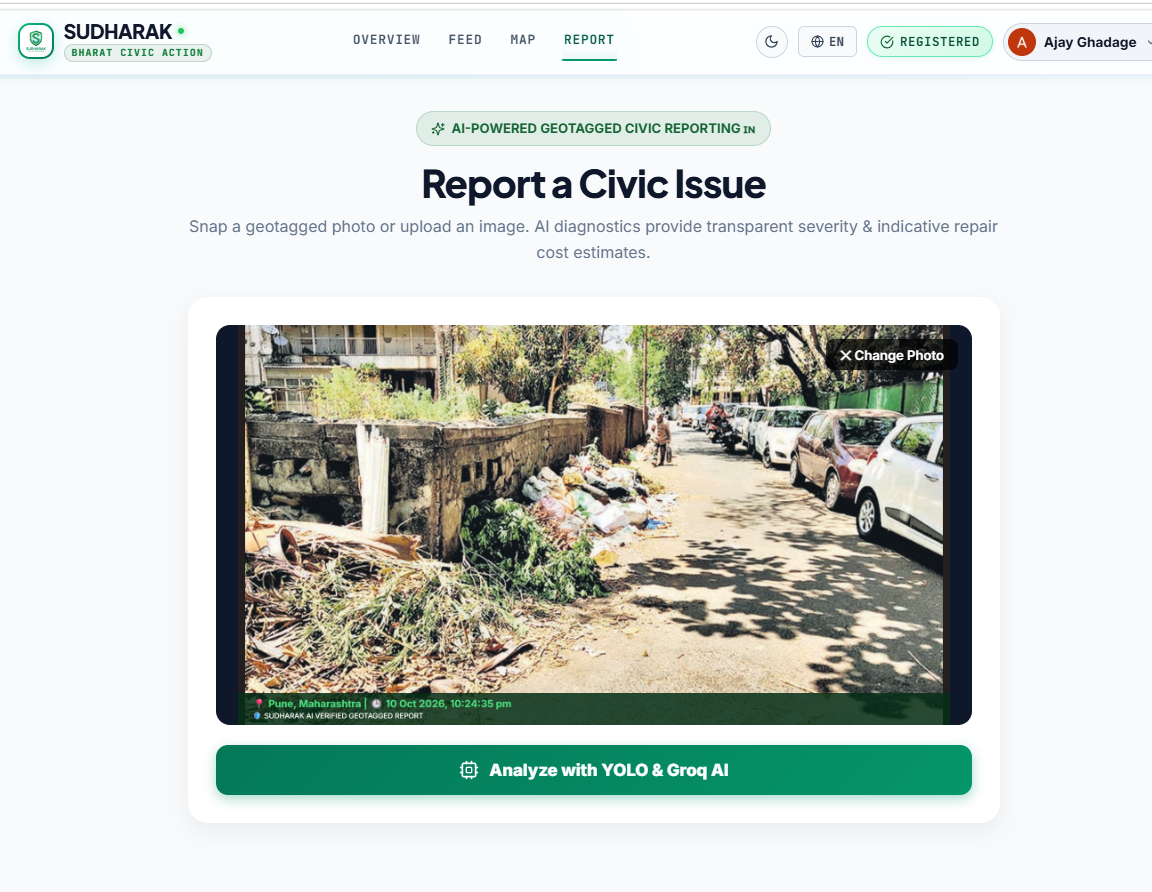
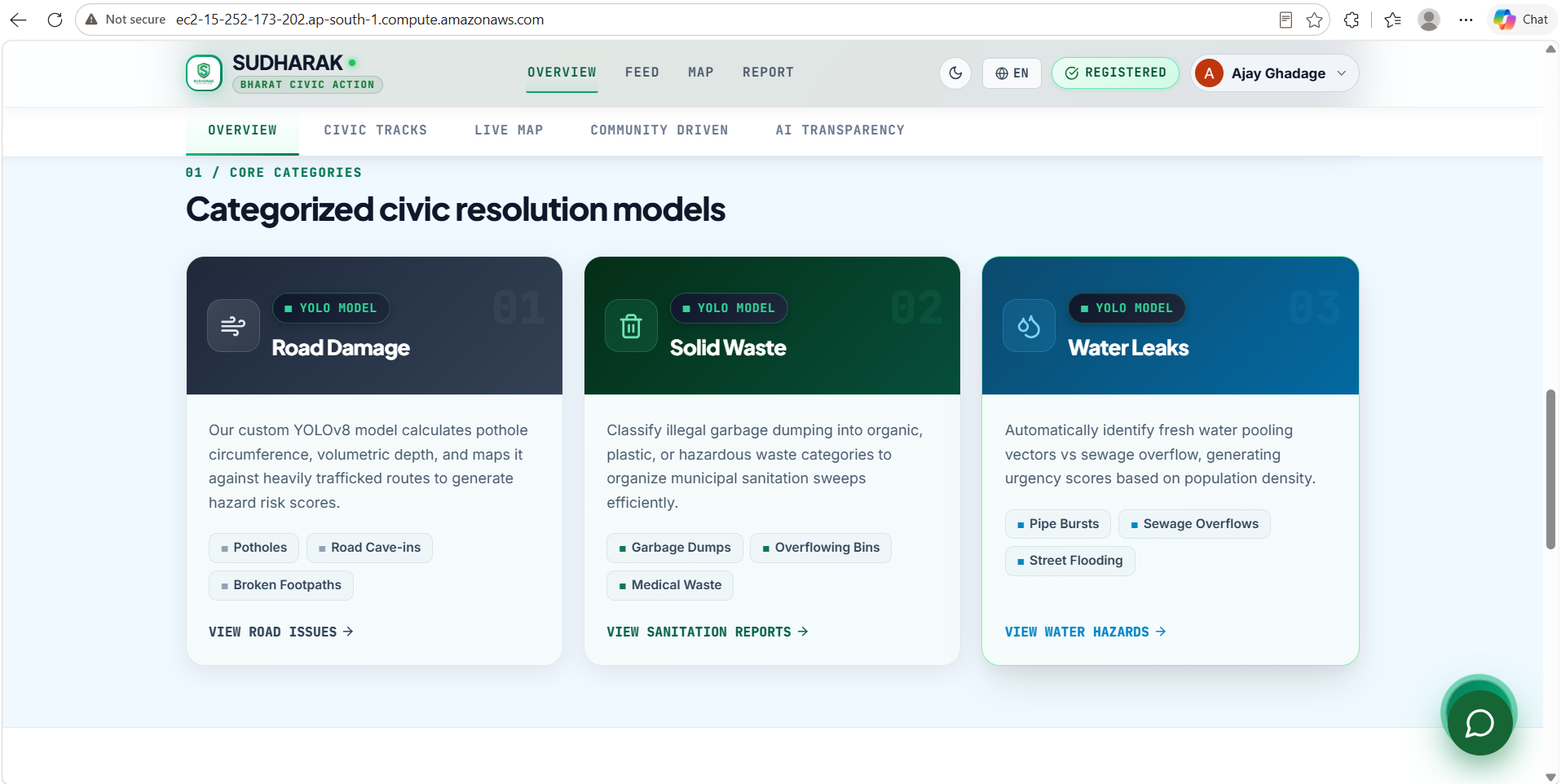
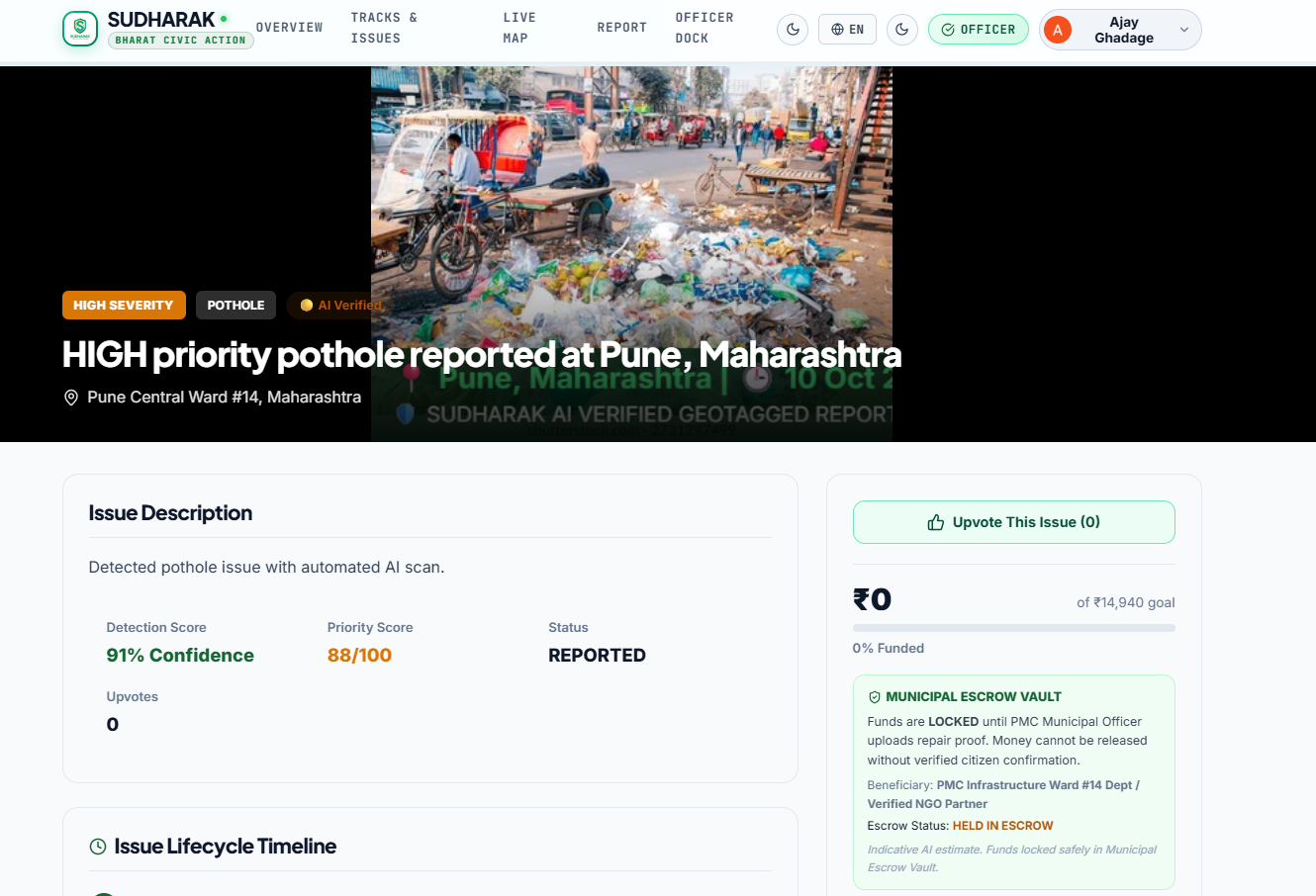
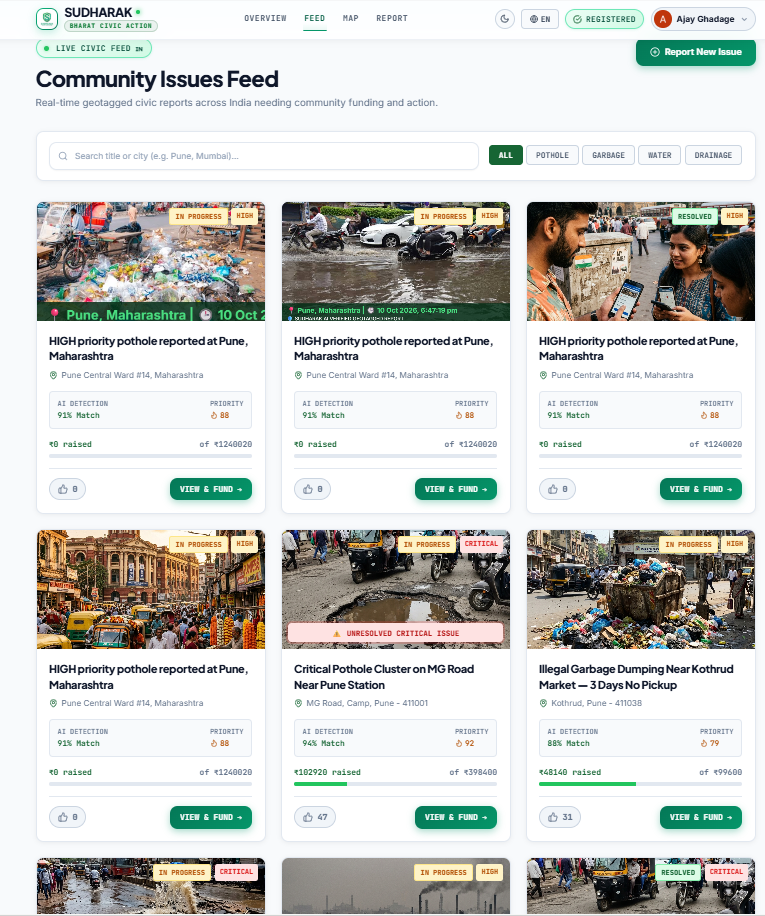
Sudharak enables citizens to report civic issues using photographs. Our YOLOv8-based computer vision models detect supported hazards, while Groq-powered LLM reasoning helps generate severity assessments, recommended actions, and indicative repair-cost estimates in Indian rupees.
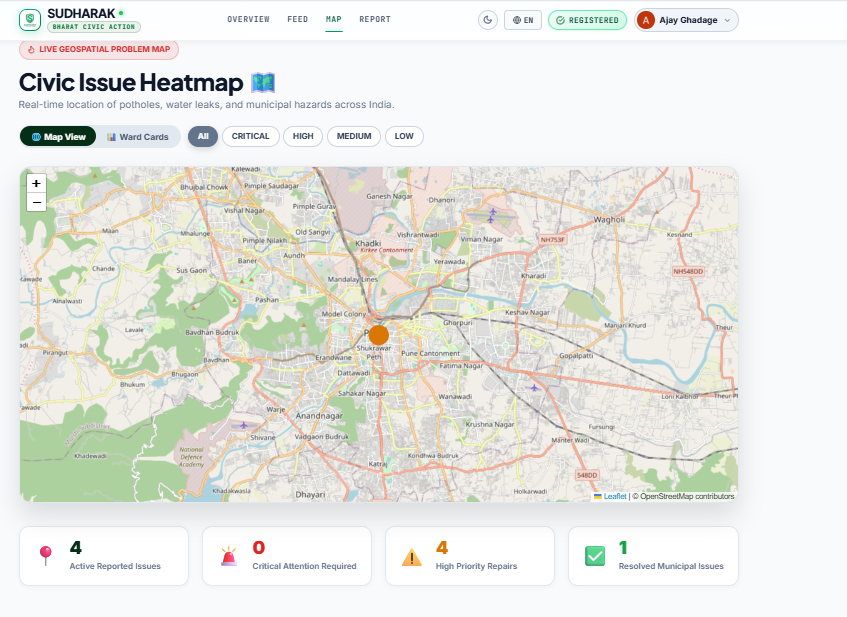
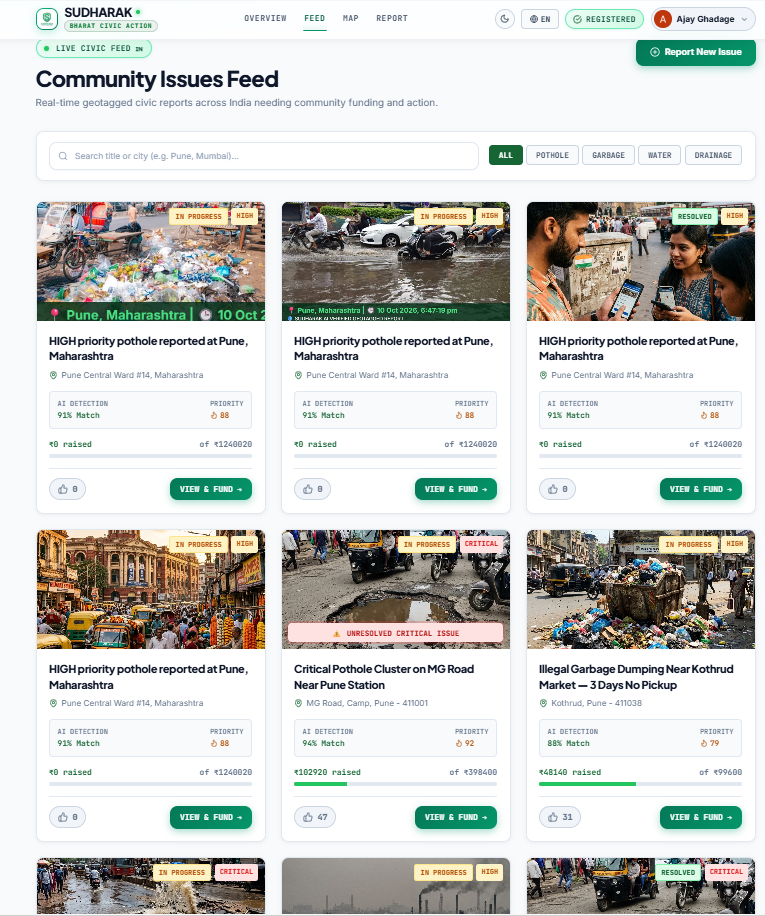
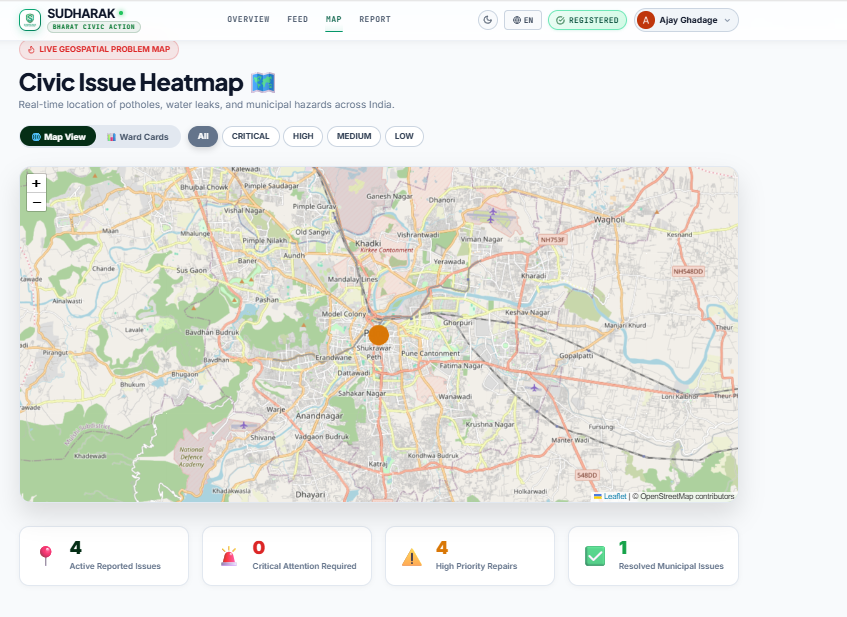
The platform also supports duplicate issue detection, geospatial visualization, municipal response tracking, and community engagement through upvotes and comments.
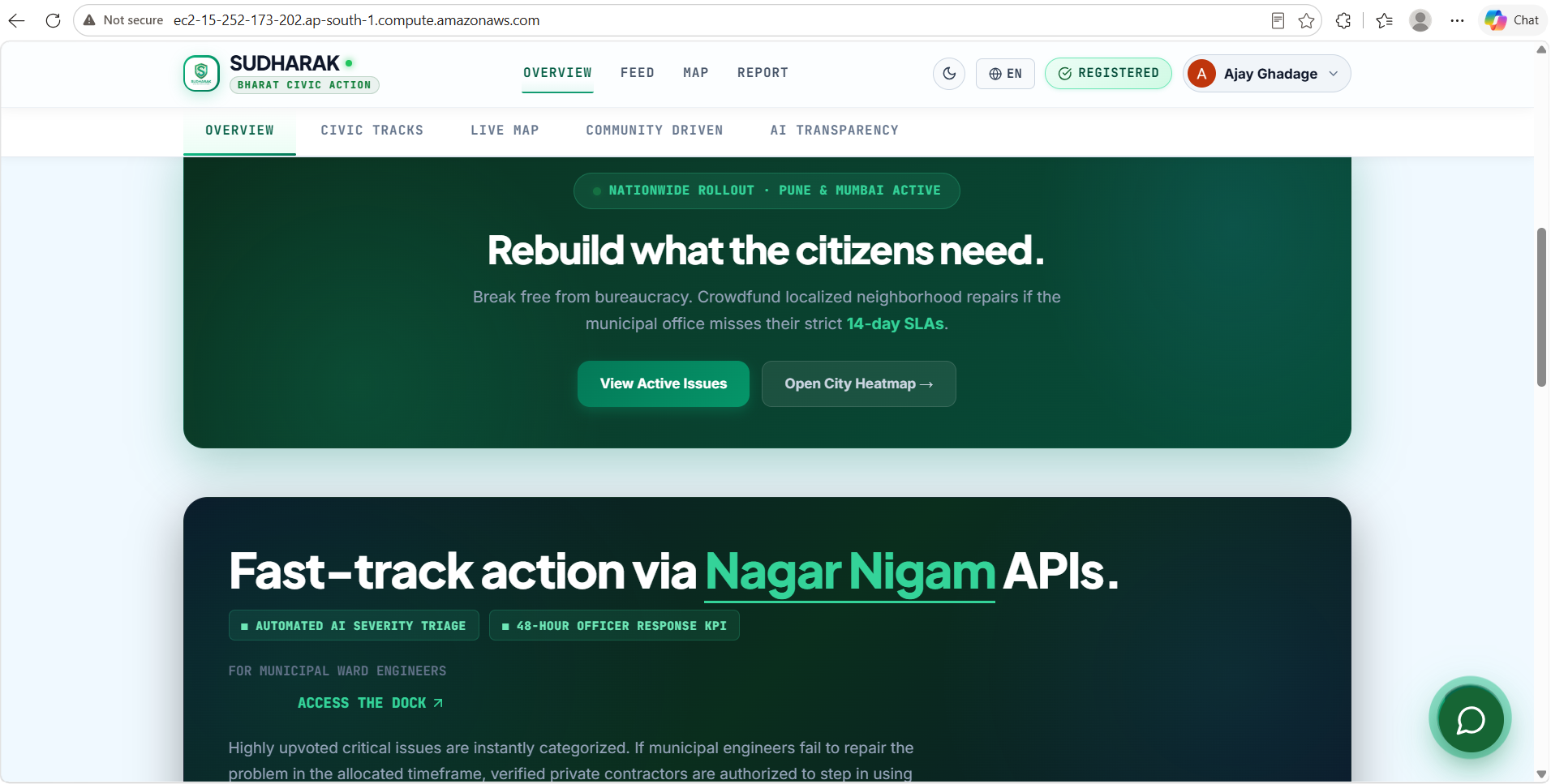
PayPal integration enables community contributions through a payment workflow, connecting reported problems with potential funding for repairs. The proposed resolution workflow includes repair evidence and verification before funds are released.
How We Built It
We designed Sudharak using three major components:
- Client: React and JavaScript for a responsive, citizen-friendly interface.
- Backend: Node.js and Express.js for authentication, issue management, API orchestration, and payment workflows.
- ML Services: Python, FastAPI, and YOLOv8 for image-based hazard detection.
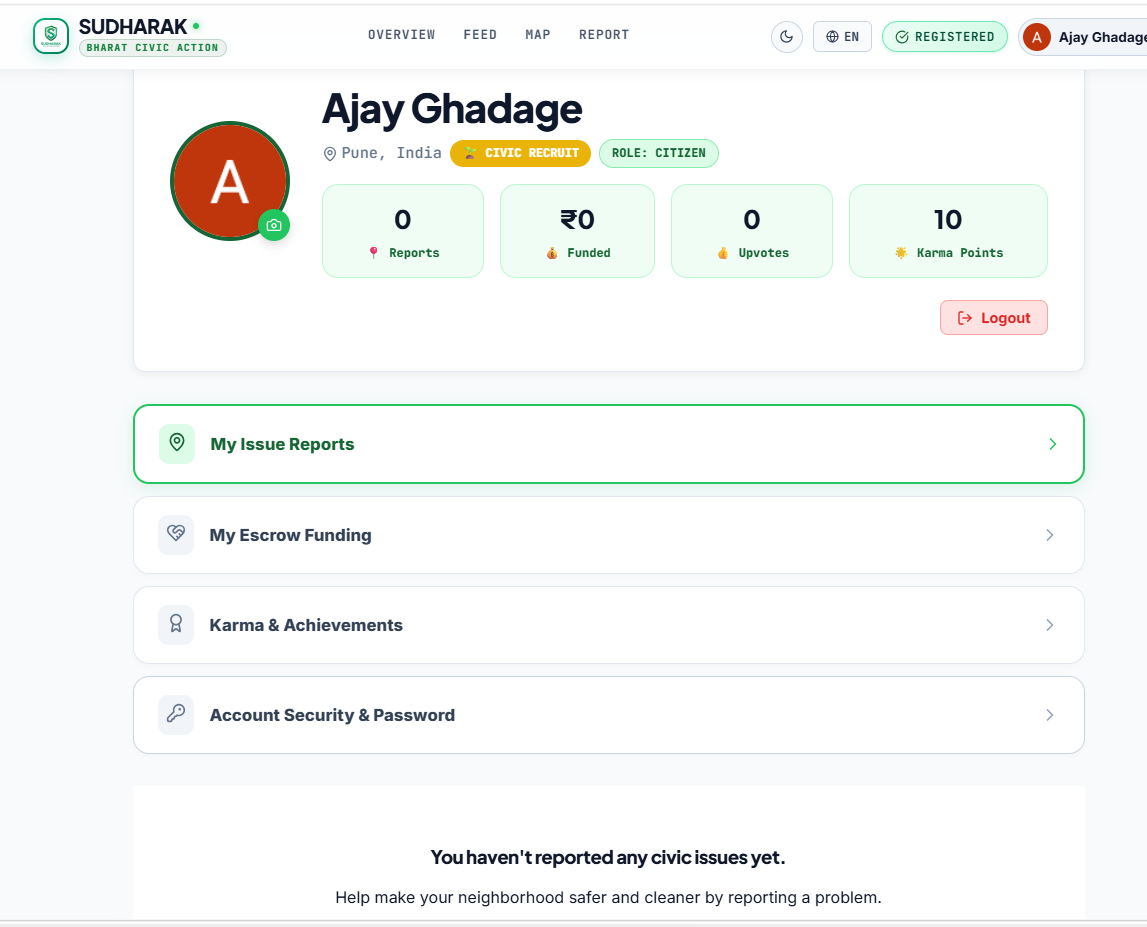
We integrated Groq for AI-generated reasoning, Google OAuth and JWT for authentication, SQL for relational data management, and PayPal Sandbox for payment integration and testing.
Challenges We Faced
One of our biggest challenges was combining computer vision with language-model reasoning without treating AI predictions as unquestionable facts. We worked toward making classifications explainable, presenting cost estimates as indicative ranges, and allowing users to correct incorrect categories.
We also considered duplicate reports, recurring hazards, location privacy, camera permissions, payment failures, authentication security, and responsive design.
Integrating multiple services introduced additional complexity because each component had to communicate reliably and handle failures gracefully.
What We Learned
Building Sudharak taught us that an effective AI application requires more than a working model. It needs reliable backend orchestration, secure authentication, trustworthy payment handling, clear explanations, and a user experience that people can understand and trust.
We also learned to distinguish a proposed workflow from a fully implemented capability, particularly when handling financial contributions and repair verification.
What's Next
Our goal is to evolve Sudharak into a scalable civic-action platform with stronger municipal integrations, verified repair partners, multilingual support, and transparent issue-resolution tracking.
We believe technology should not merely identify problems. It should help communities organize around solutions.
Built With
- amazon-web-services
- artificial-intelligence
- computer-vision
- express.js
- fastapi
- generative-ai
- google-oauth
- groq
- javascript
- jwt
- machine-learning
- mysql
- node.js
- paypal
- python
- react
- yolov8

Log in or sign up for Devpost to join the conversation.