Inspiration
Every day across Indian cities, citizens face dangerous civic hazards: overflowing garbage dumps that spread disease, potholes that cause accidents, and leaking water pipelines that waste thousands of liters of clean water.
Reporting these problems often involves lengthy manual forms, limited transparency, and slow administrative responses. When municipal authorities miss their response deadlines, communities also lack a transparent and accountable way to support local repairs.
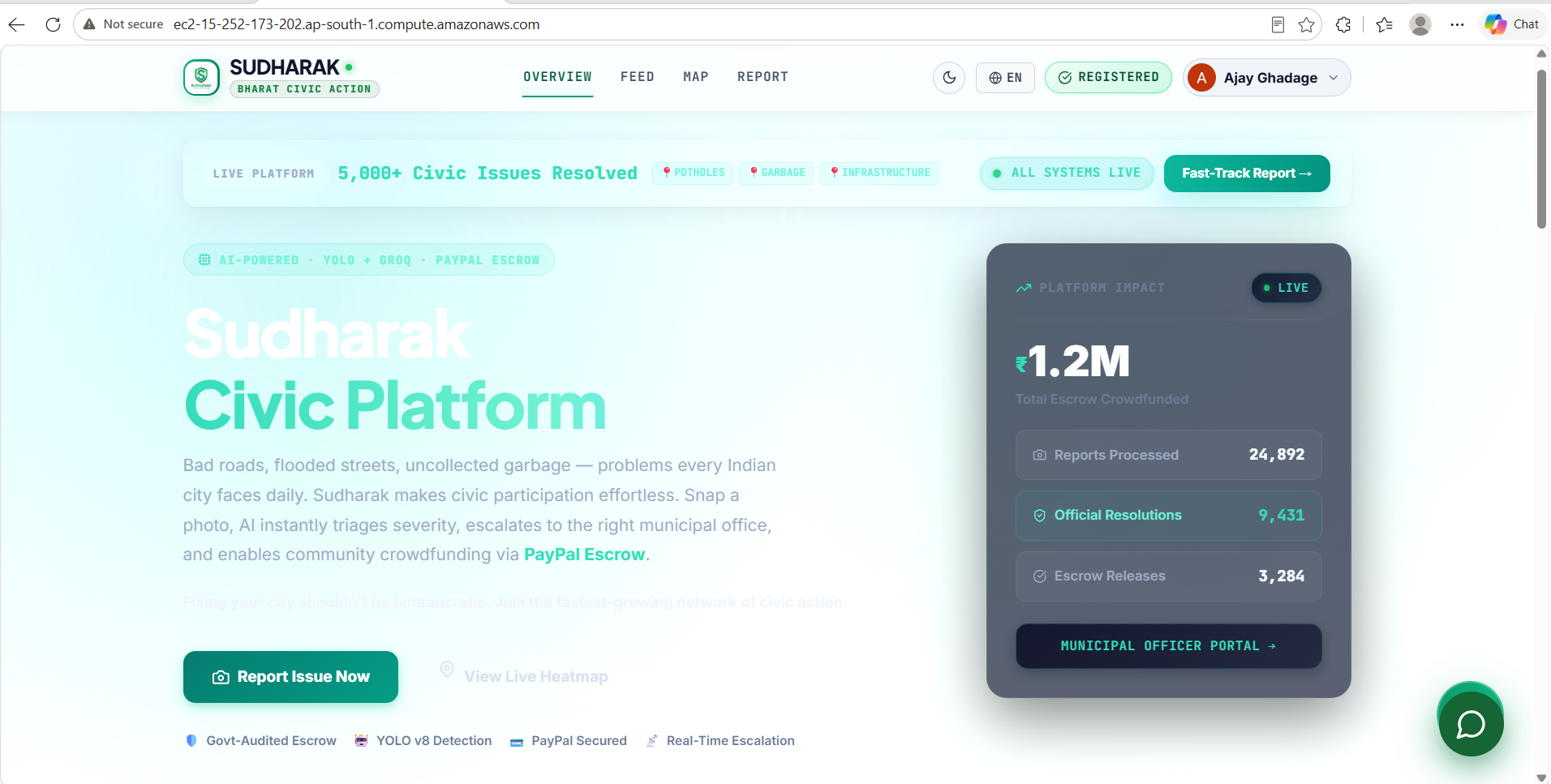
We built Sudharak (सुधारक) to transform civic participation into an AI-powered, community-driven action platform. By combining computer vision, LLM-based reasoning, and PayPal-powered community funding, Sudharak aims to help communities identify civic issues, prioritize urgent repairs, and support verified restoration when official responses are delayed.
What It Does
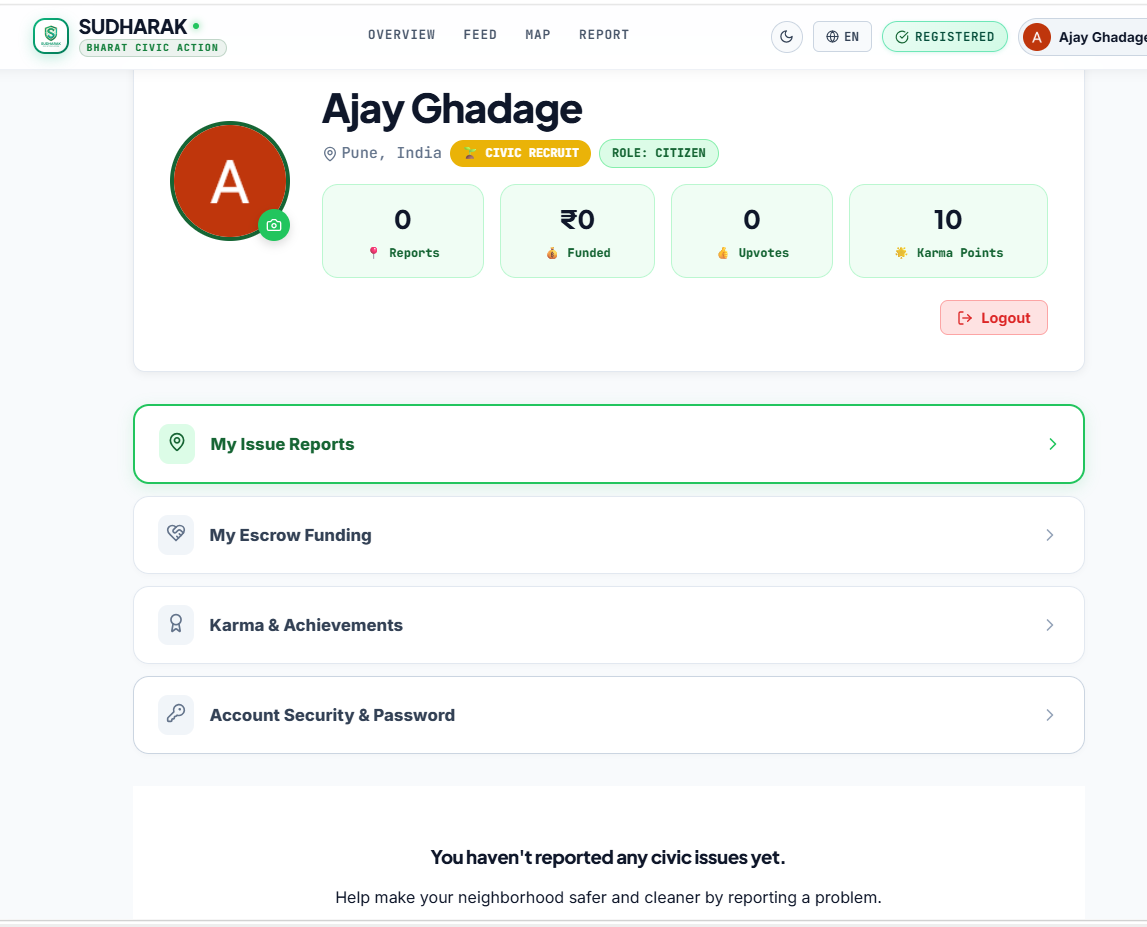
Sudharak is an AI-powered civic issue reporting and community funding platform with six core capabilities:
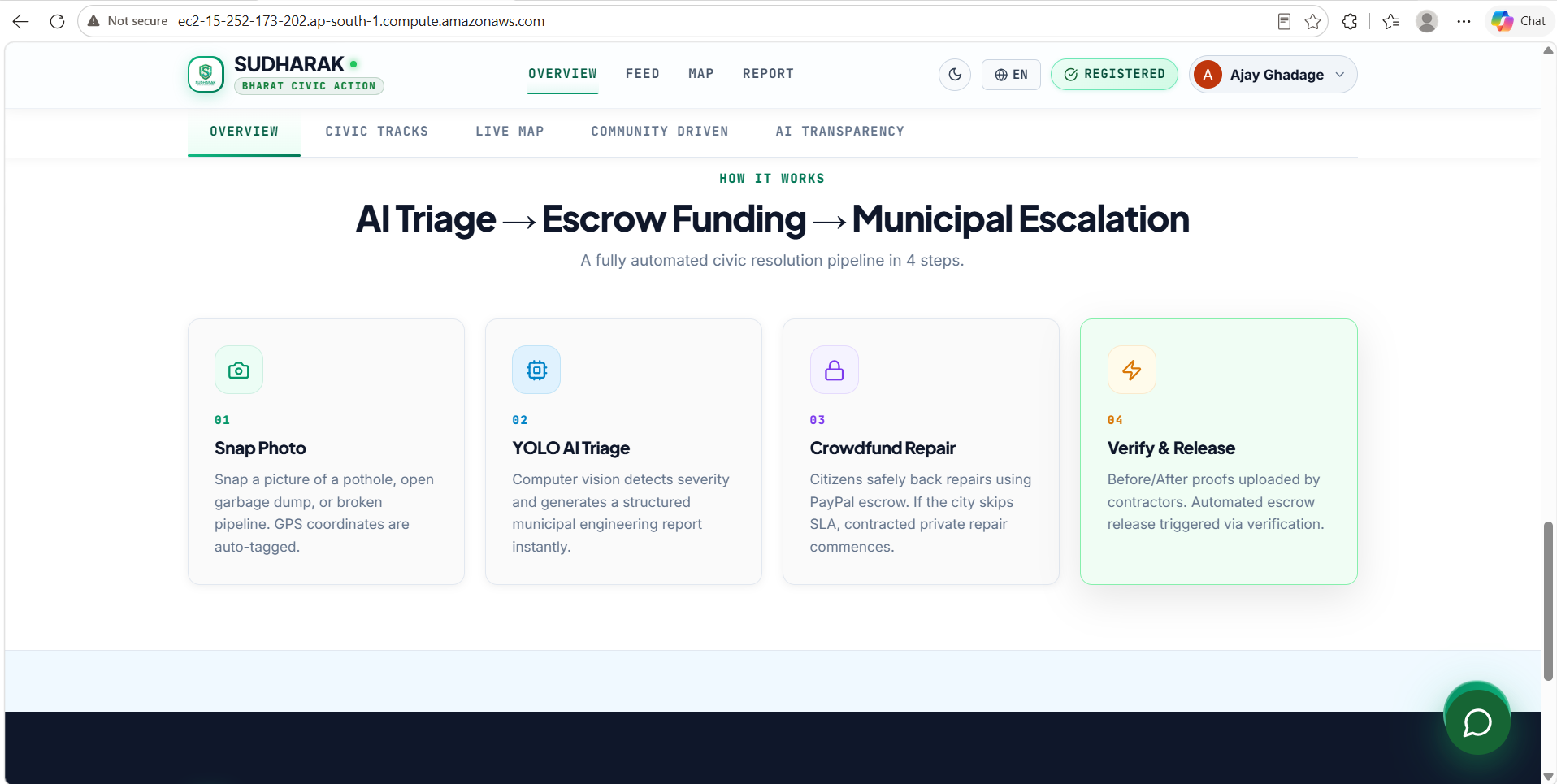
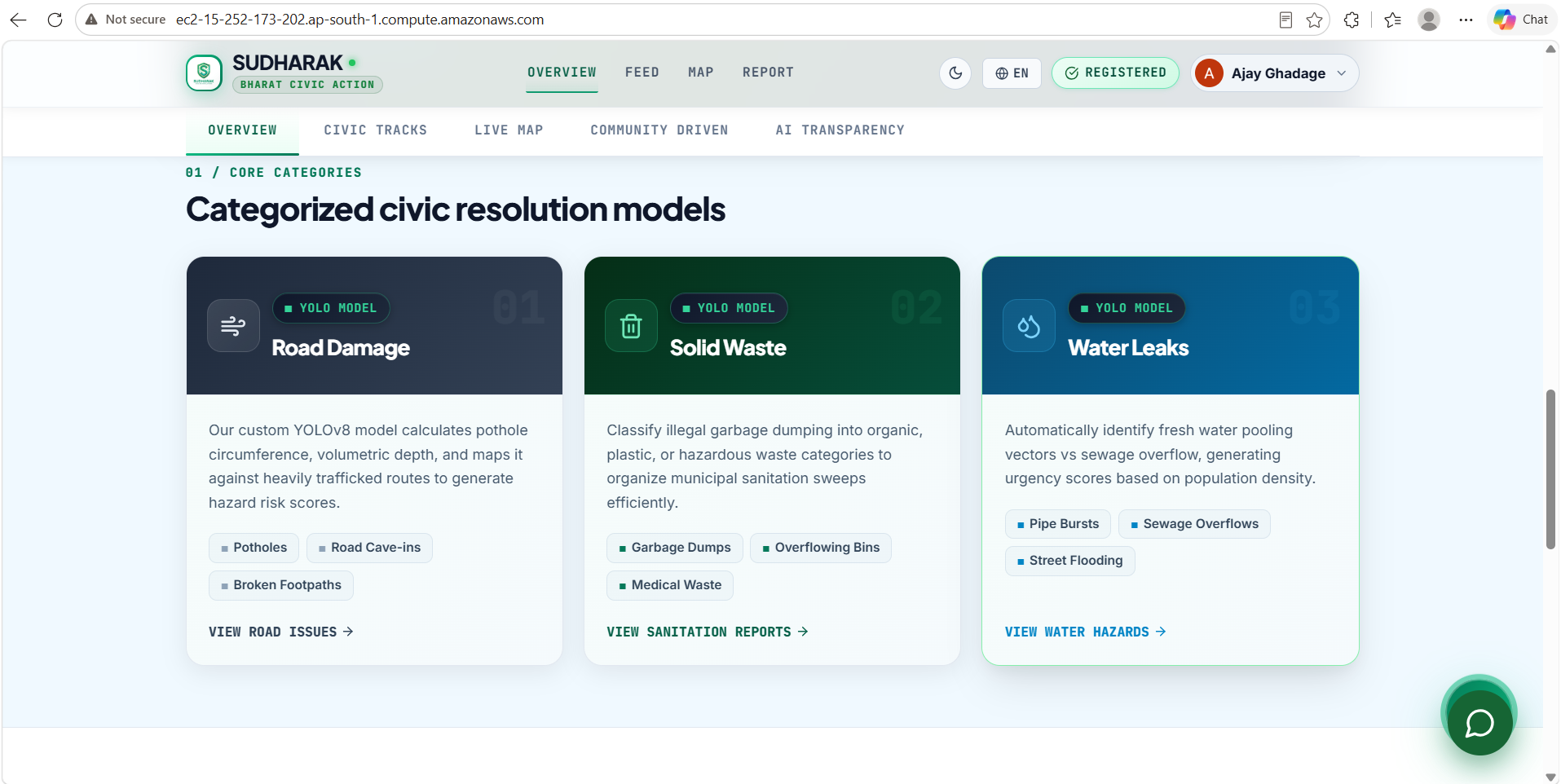
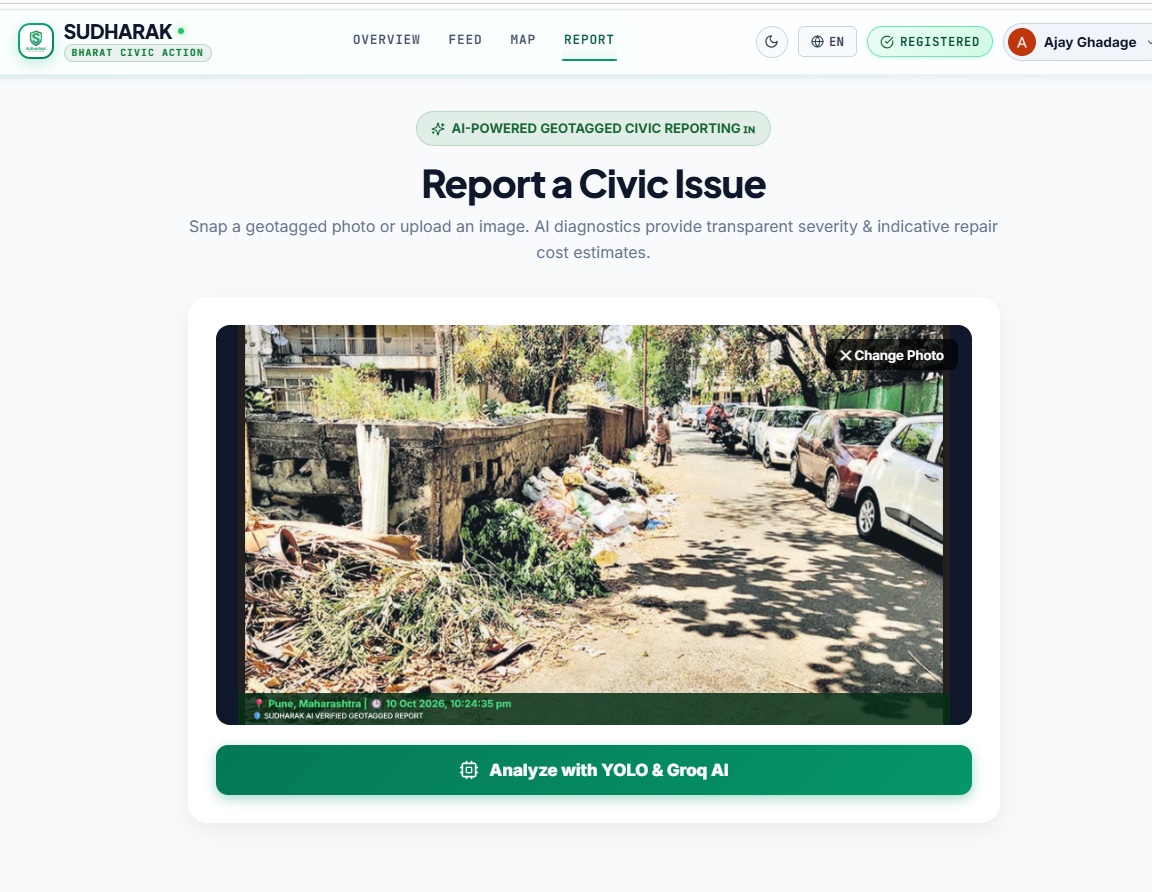
Snap and Detect: Citizens capture or upload photos of potholes, garbage dumps, and water leaks. Our YOLOv8 computer vision models detect civic defects and provide confidence scores.
AI Reasoning and Cost Estimation: Using Groq-hosted Llama models, the system generates structured incident reports, calculates a risk severity score from 0 to 100, and estimates repair costs in Indian Rupees (INR).
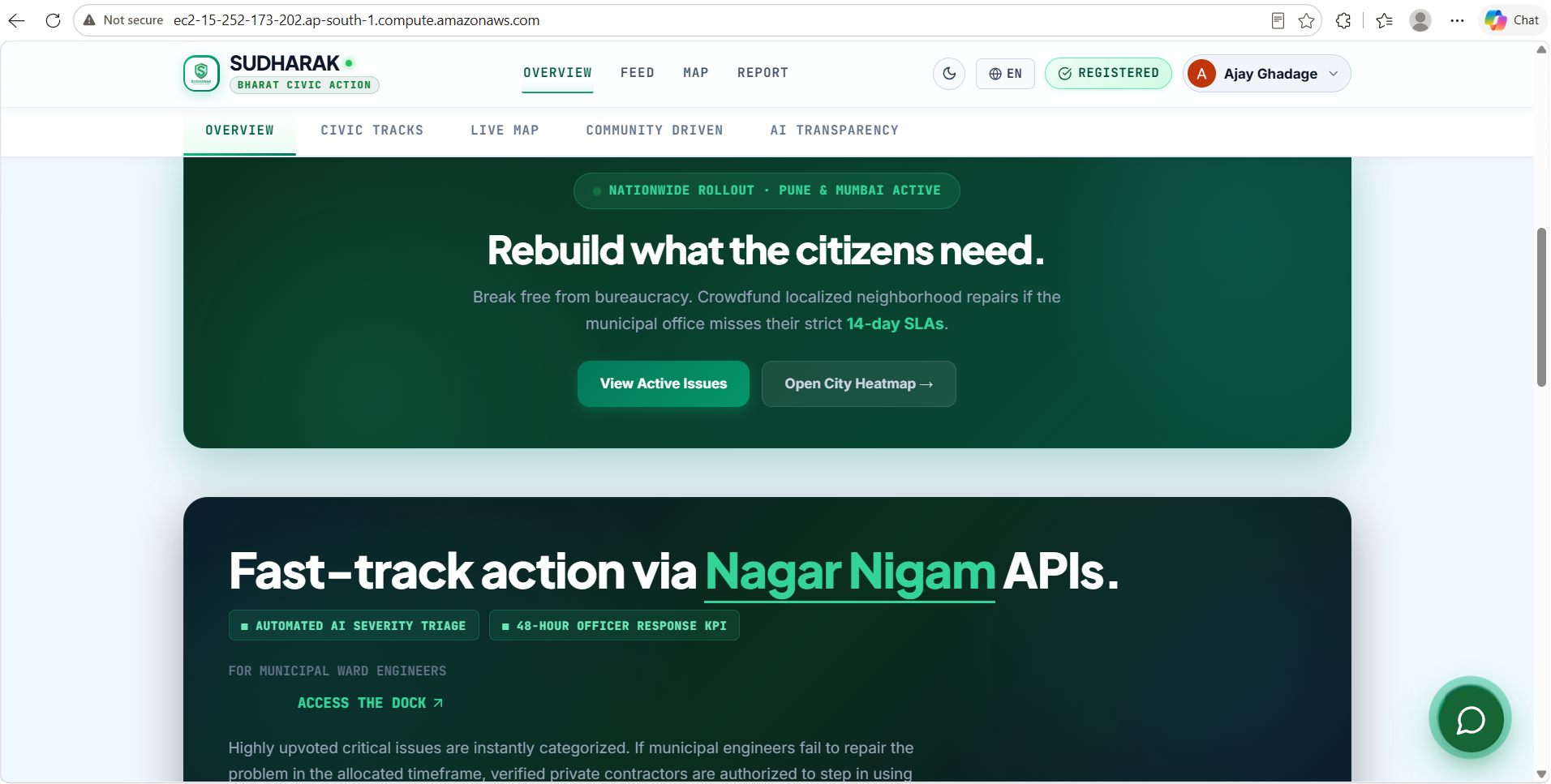
Municipal Escalation: Reported issues are routed to a municipal ward dashboard with a 48-hour response countdown to highlight unresolved complaints.
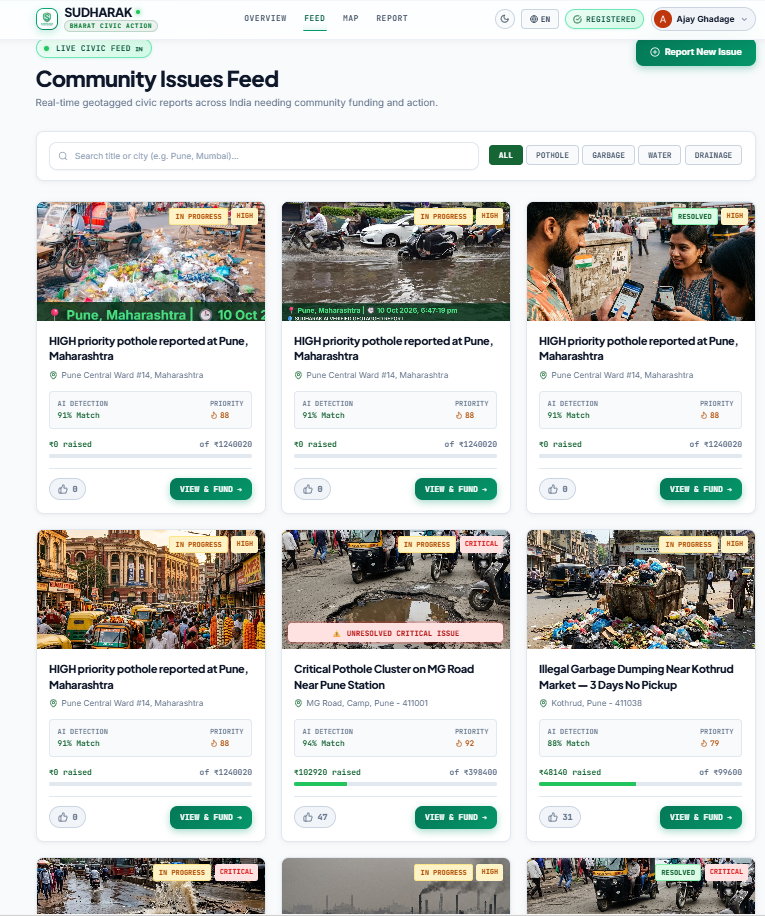
Community Funding with PayPal: When an issue remains unresolved beyond the configured response deadline, citizens can contribute through PayPal to help fund the proposed repair.
Repair Verification: The platform supports before-and-after photographic evidence to help verify completed repairs before funds are considered for release.
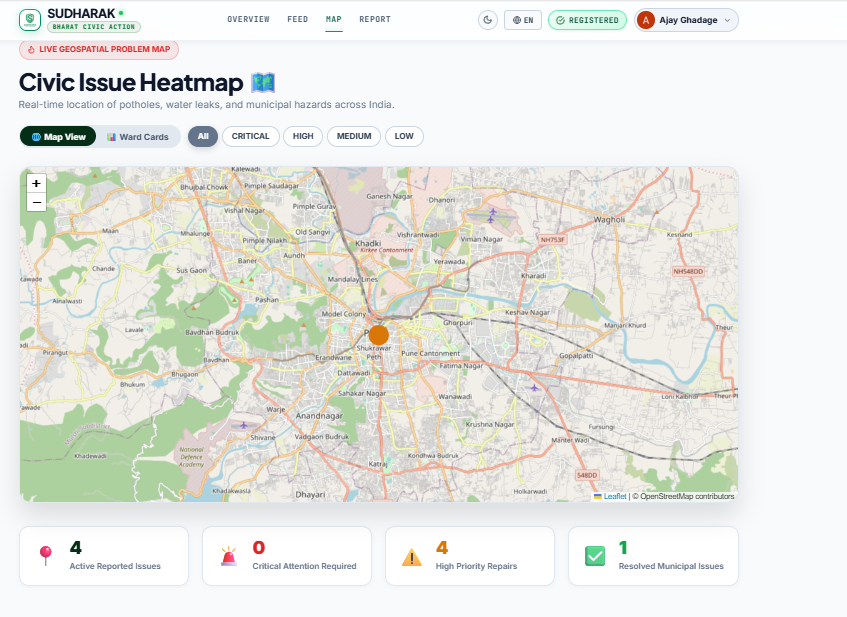
Live City Heatmap: An interactive map visualizes reported civic issues and helps citizens and municipal teams identify areas requiring attention.
How We Built It
Frontend: React 18 and Vite power a responsive Progressive Web App (PWA). Custom CSS provides dark mode, live status indicators, interactive maps, and mobile camera capture.
Backend: Node.js and Express.js handle API requests, issue management, authentication, and funding workflows. Prisma ORM connects the backend to a serverless Neon PostgreSQL database. Authentication supports JWT and Google OAuth 2.0.
AI and Computer Vision: A Python FastAPI microservice runs custom YOLOv8 models, including
pothole_model.ptandgarbage_best.pt, for civic issue detection. Groq-hosted Llama models generate structured reports and assist with severity assessment and cost estimation.PayPal Integration: The PayPal REST API supports payment orders and contribution tracking. The backend verifies payment capture confirmations before updating the funding ledger.
Cloud and DevOps: The application is deployed on an AWS EC2 instance running Amazon Linux 2023, with Nginx as a reverse proxy. HTTPS is configured using Let's Encrypt, with DuckDNS providing a hostname. Media assets are stored in Amazon S3 in the
ap-south-1region.
Challenges We Ran Into
Payment and Funding Workflows: Designing a contribution system that aggregates small donations toward repair targets while handling payment confirmations, duplicate requests, and funding-state consistency.
AI Inference on Limited Hardware: Running the Express backend alongside Python, OpenCV, and YOLOv8 inference on a 1 GB RAM EC2 instance required memory optimization, swap configuration, and careful worker management.
Mobile Security and OAuth: Mobile camera access and Google OAuth require secure origins and correctly configured redirect URLs. Configuring HTTPS helped address browser security restrictions.
Reliable Repair Verification: Designing a workflow that connects reported issues, community contributions, repair evidence, and funding decisions requires clear status transitions and validation safeguards.
Accomplishments That We're Proud Of
End-to-End Civic Workflow: Connecting mobile issue reporting, AI-powered detection, incident management, and community contributions in one platform.
AI-Assisted Prioritization: Combining computer vision with language-model reasoning to help assess civic risks and generate structured reports.
Payment Integration: Connecting PayPal payment workflows with issue-level contribution tracking.
Evidence-Based Accountability: Incorporating before-and-after photographic evidence into the repair verification process.
Cloud Deployment: Deploying the application using AWS EC2, S3, Nginx, and HTTPS to make the platform accessible online.
What We Learned
- How to integrate Python-based machine learning services with Node.js APIs and a PostgreSQL database.
- How to connect PayPal payment workflows with application-level funding records.
- How to deploy and optimize a multi-service application on resource-constrained cloud infrastructure.
- How to design transparent workflows that connect civic reporting, issue prioritization, community participation, and repair verification.
What's Next for Sudharak
- Contractor Marketplace: Allow verified local contractors to submit proposals for community-funded civic repairs.
- AI-Based Repair Verification: Compare before-and-after images to assess whether a reported defect has been repaired.
- Municipal API Integration: Connect with official municipal grievance systems to support automated complaint submission and status synchronization.
- Multilingual Accessibility: Expand support for Indian languages to make civic reporting accessible to more communities.
- Transparent Funding Dashboard: Provide clear records of contributions, funding milestones, repair evidence, and payment status.
Built With
- amazon-ec2
- amazon-web-services
- computer-vision
- express.js
- fastapi
- groq
- javascript
- jwt
- nginx
- node.js
- paypal
- postgresql
- prisma
- pwa
- python
- react
- vite
- yolov8

Log in or sign up for Devpost to join the conversation.