-
-
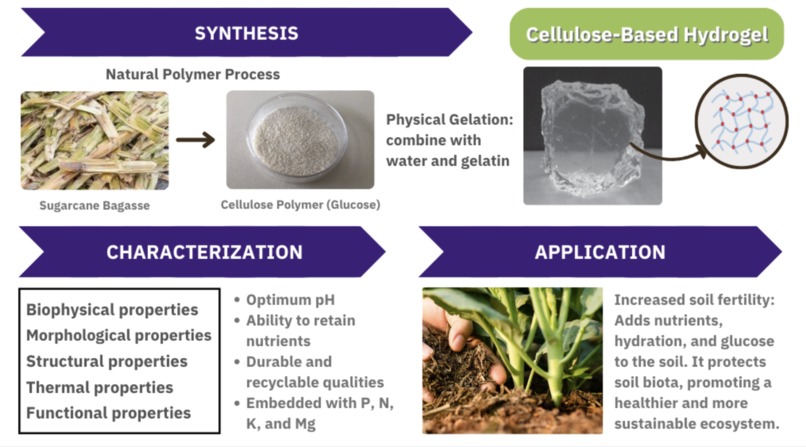
Simplified Scientific Overview
-
Logo
-
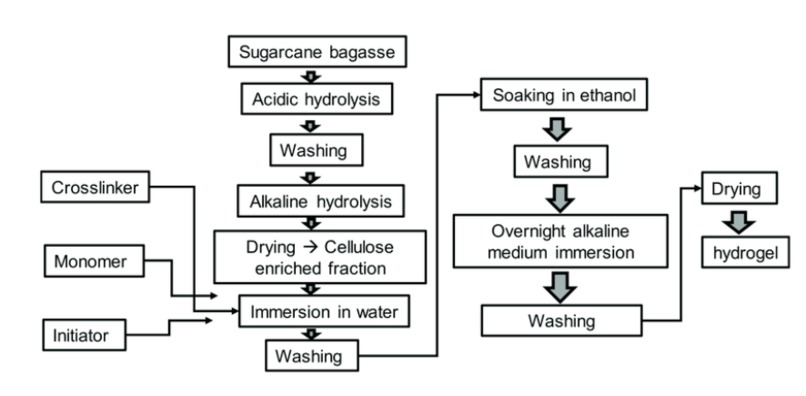
hydrogel methodology
-
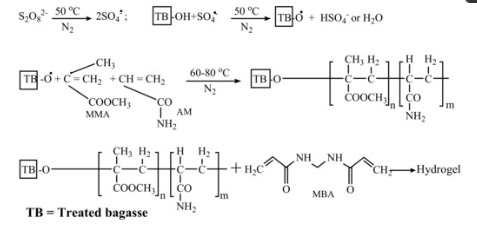
hydrogel linking and chemical structure
Inspiration
Growing up on farms in rural India, we experienced a very different lifestyle, where sometimes running water was not an option for days, healthcare was not available for miles and many of our peers were pursuing a career in the village instead of pursuing education. Mothers were expected to manage resources and were constantly under mental stress and turmoil, with little help from the government financially. Agriculture is the pinnacle of income in developing countries: crop yields decide whether children get educated, if families can eat, and if we have clean water to drink. On a global scale, it decides how much land we free up from deforestation, food prices, supply vs demand, nutrition, etc. Regardless to say, it is an invaluable market - a dying market.
"Today, up to 40 percent of the world's land surface has been degraded including 30 percent of its cropland and 10 percent of its pastureland. In the last fifty years, the area of drylands in drought has increased on average by more than 1 percent per year — affecting mostly countries in Africa and Asia." ~ UN
This means that crop yields are low, families aren't getting steady incomes, and poorer nations keep getting worse, especially with the other impacts of climate change. Farmers turn to fertilizers, which may add nutrients to the soil but have intense drawbacks. Fertilizers, despite being traditional methods for enhancing agricultural productivity, present numerous issues. Their excessive use leads to a decline in soil quality by depleting soil biota, which is essential for soil health. It reduces plant and wildlife populations, which serve as natural carbon sinks, and exacerbates the challenge of mitigating greenhouse gas emissions.
This affects all of us eventually, our family members, our closest friends, and our communities due to climate change spreading the issue into "developed nations". The disproportionate effects fall directly on poor communities. Young girls don't get educated, premature deaths occur in villages with little health resources, women have to find alternate sources of water, and it is obvious that we need new solutions to boost the agricultural industry.
What it does
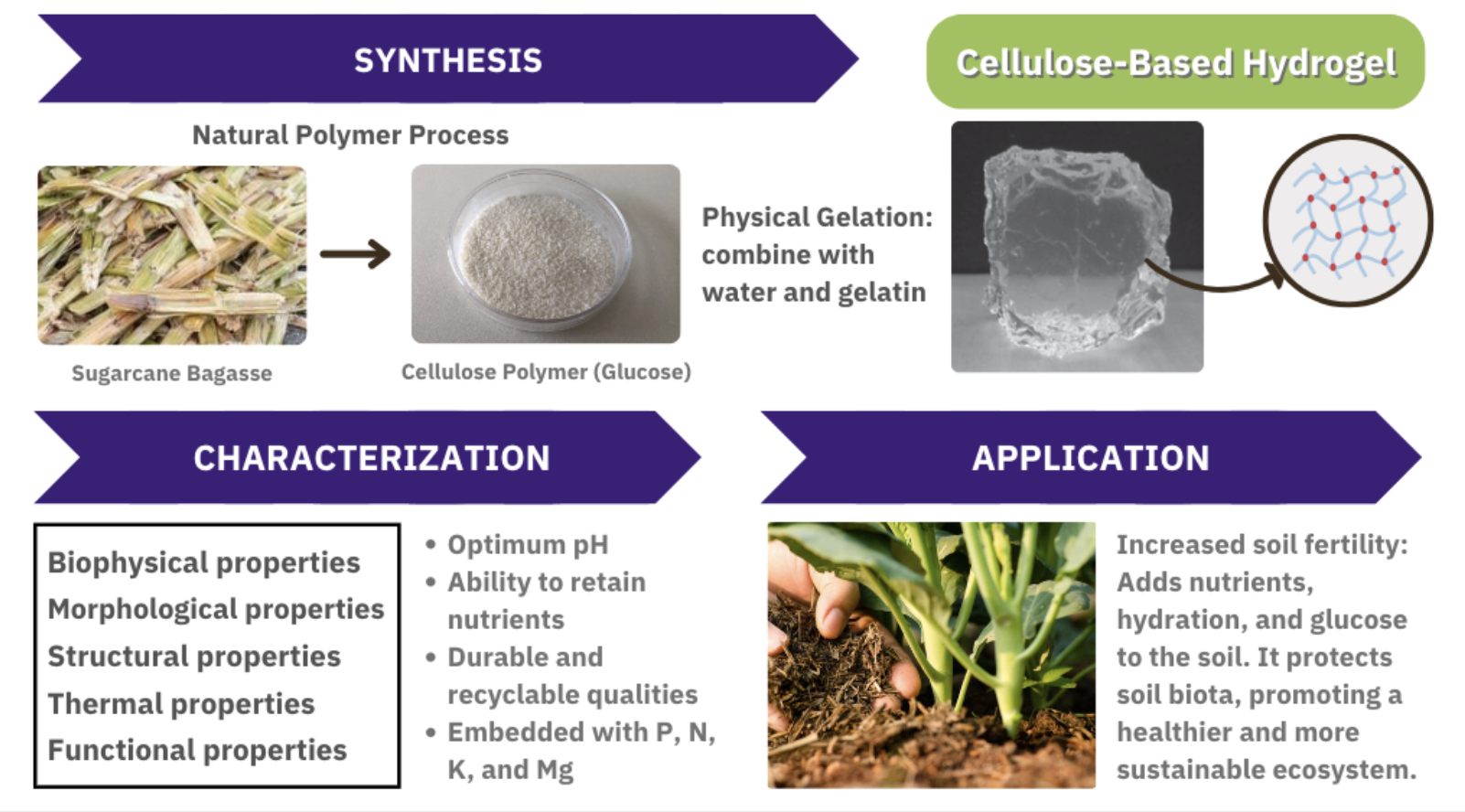
SucroSoil uses sugarcane bagasse, a waste product from sugar production, to synthesize hydrogels to rejuvenate soil. The hydrogels are embedded with nutrients needed to support soil fertility, such as magnesium and nitrogen. It is then applied directly to the soil and gradually releases these nutrients into the environment. This controlled release mechanism ensures that nutrients are delivered precisely where they are needed, minimizing wastage. By releasing nutrients gradually and directly into the soil, SucroSoil promotes healthy crop growth without contaminating the soil or emitting harmful emissions.
How we built it
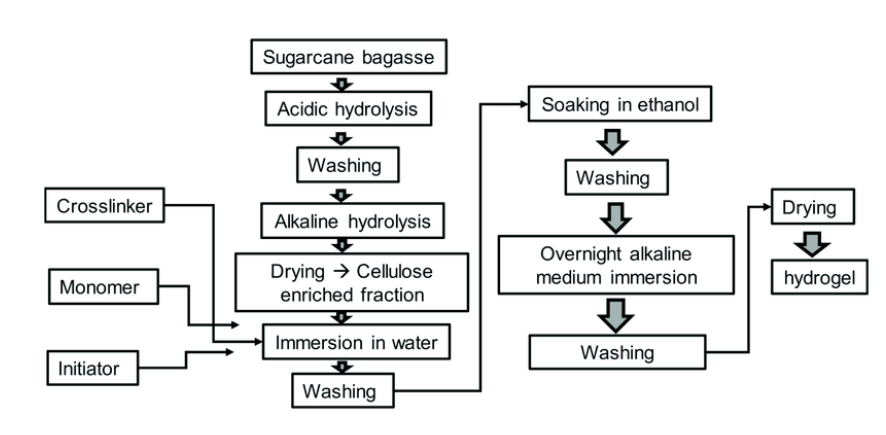
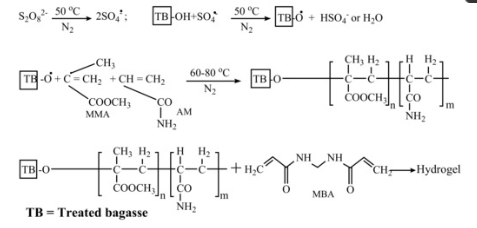
Hydrogels are 3D polymer chains, generally made by synthetic polymers such as PPE and used for water retention. They are primarily made from water and synthesized from chemical cross-linking - typically a simple process that can be done in the comfort of one's home. By replacing synthetic polymers with natural ones like cellulose, we can create a hydrogel that is natural and fully biodegradable. This can be cross-linked through physical gelation as it is a natural polymer.
From conducting research calls, we decided to embed P, Mg, K, and N between the chemical cross-links, the carbon should form a covalent bond with the hydrogen in the hydrogel meaning that the nutrients stay concentrated and can be released when entering the soil due to a change in pH. We characterized these hydrogels to decompose at the required pH for soils, not release any harmful chemicals as they are made from sugarcane bagasse, a waste product of sugar production, and to withstand differing temperatures.
Challenges we ran into
One of our main challenges was understanding the chemical composition of the hydrogels and how they functioned. Initially, we struggled to find a natural synthesis method for the hydrogels, as most existing techniques relied on chemical frameworks like Metal-Organic Frameworks or other solutions based on reforestation methods. To overcome this we did extensive research and experimentation on chemical modelling tools to develop a sustainable and effective synthesis process using sugarcane bagasse.
Accomplishments that we're proud of
We managed to talk to about 15 farmers in India and nearby countries to validate the problem and solution - we mostly heard that this impacts their day-to-day lives by being incredibly tight on money. We generally found that farmers who have to use fertilizers have complex health issues and are strained by medical bills, which is straining many families and communities. Additionally, we validated our methodology and solution by talking to local university professors in India who work in the material science space. She expressed that our idea has the potential to improve the health and environment of the communities that rely on farming in her area. Having these discussions was the peak of our hackathon experience because we gained a solid understanding of the industry and found a vision for bringing this idea to communities.
"The pressure to sell and grow enough food is hard to withstand. Sometimes we do not have sufficient money for food every night, rent, and are unable to educate our children so instead they are working on our farms" ~ anonymous farmer in Pakistan
What We Learned
After combing through dozens of research papers we increased our knowledge in the material science space by learning how to synthesize hydrogel technology from waste products such as sugarcane bagasse. We gained a deeper awareness of the impacts of desertification on the environment and the byproducts of current solutions. While building our idea, we used these takeaways to ensure our solution was biodegradable and minimized these side effects on communities.
What's Next for SucroSoil
Looking ahead, we envision a future where SucroSoil is central to transforming agriculture globally. We will start by synthesizing our sugarcane hydrogel in local research labs and ensure to test in conditions with varying conditions (such as humidity, aridness, etc). After our proof of concept is achieved we will focus on regions like Rajasthan, where desertification and soil degradation are prevalent for beta testing. By partnering with organizations such as the Swades Foundation, we will have the opportunity to engage directly with local farmers and communities, gaining firsthand feedback on SucroSoil's efficacy and impact on soil health and crop productivity.
As SucroSoil gains traction and validation in Rajasthan, we will expand our reach to other regions facing similar agricultural challenges. By establishing a robust supply chain through partnerships with local sugar mills and implementing a systematic rollout plan, we aim to ensure the widespread adoption of SucroSoil, empowering farmers worldwide to cultivate resilient and sustainable ecosystems.
Sources Used In Research
https://www.sciencedirect.com/science/article/abs/pii/S2213343724001611 https://www.sciencedirect.com/science/article/pii/S2214785321057928
Built With
- hydrogels
- materialscience
- nanotechnology


Log in or sign up for Devpost to join the conversation.