-
-
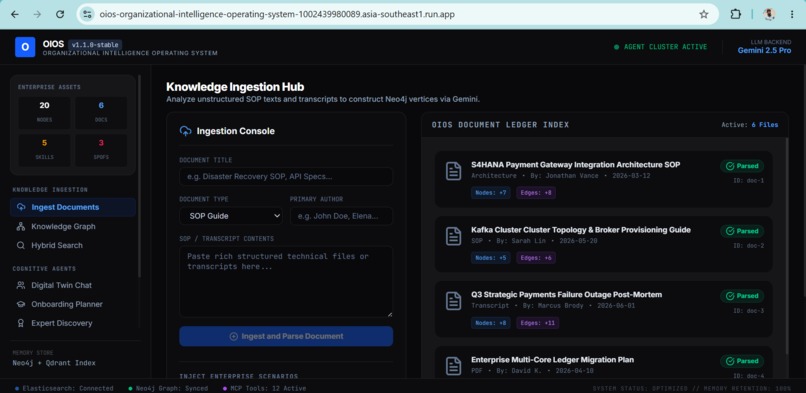
Process/ KT Training Page
-
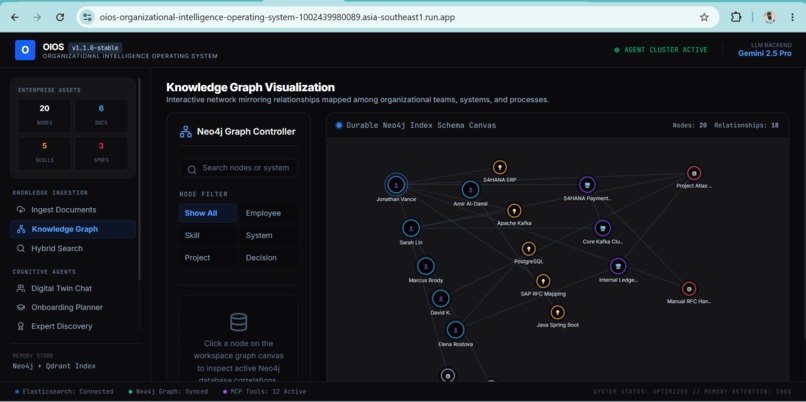
Knowledge Graph
## Inspiration
Knowledge Transfer (KT) is one of the most overlooked challenges in modern organizations. Every time an experienced employee resigns, changes teams, retires, or completes a project, valuable knowledge often leaves with them. While companies conduct KT sessions, maintain documents, and record meetings, critical project and process knowledge remains fragmented across documents, emails, tickets, recordings, and individual expertise.
We were inspired by a simple question:
Why do organizations repeatedly lose knowledge they have already paid to acquire?
This led us to build a platform that transforms KT from a one-time activity into a structured, searchable, and reusable organizational asset.
## What it does
Success is an AI-powered Knowledge Transfer and Knowledge Hub platform that helps organizations capture, organize, transfer, and preserve project and process knowledge.
The platform enables organizations to:
- Manage end-to-end Knowledge Transfer activities
- Store and organize project and process knowledge
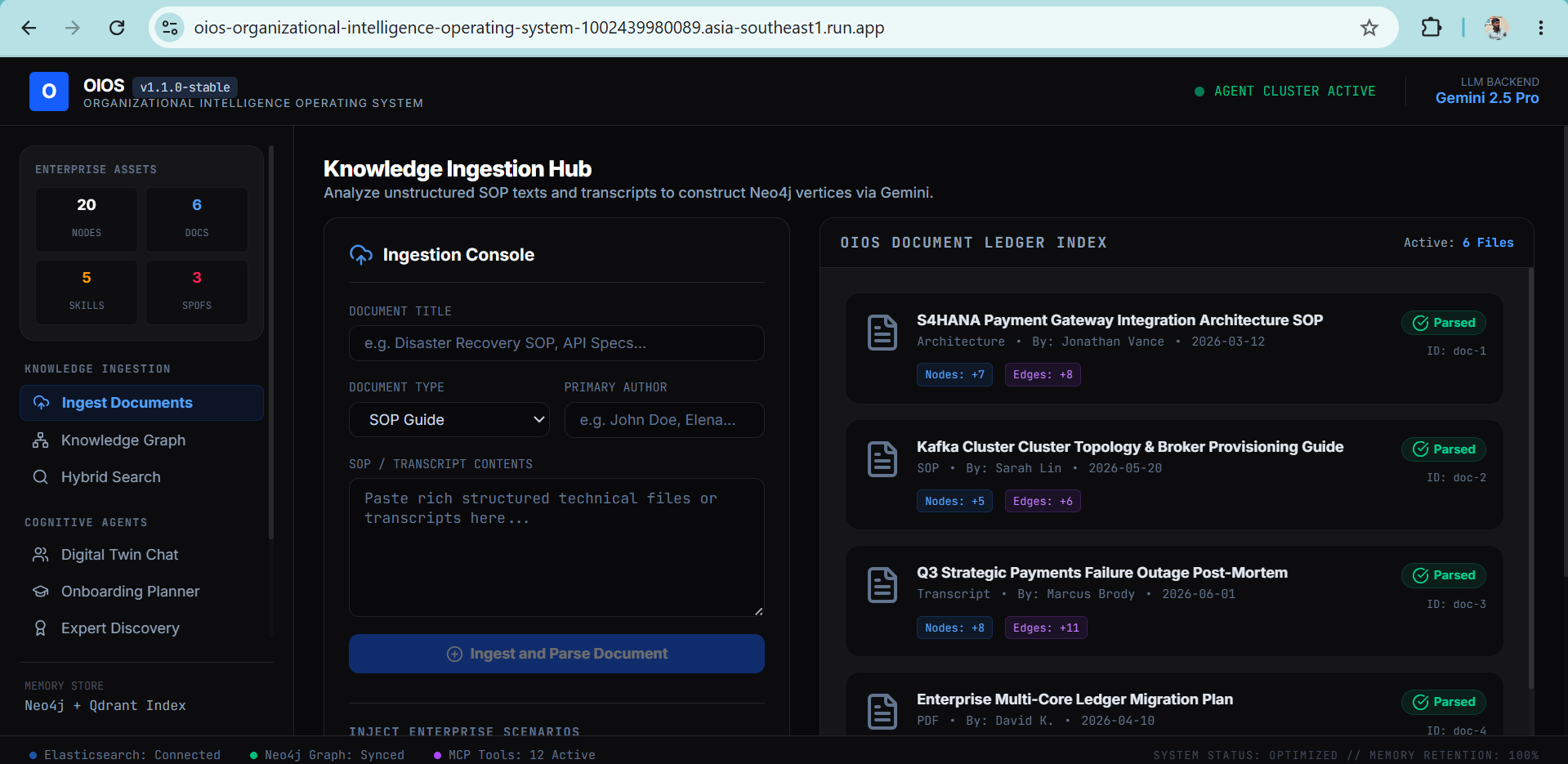
- Capture insights from documents and meeting transcripts
- Discover internal experts and subject matter specialists
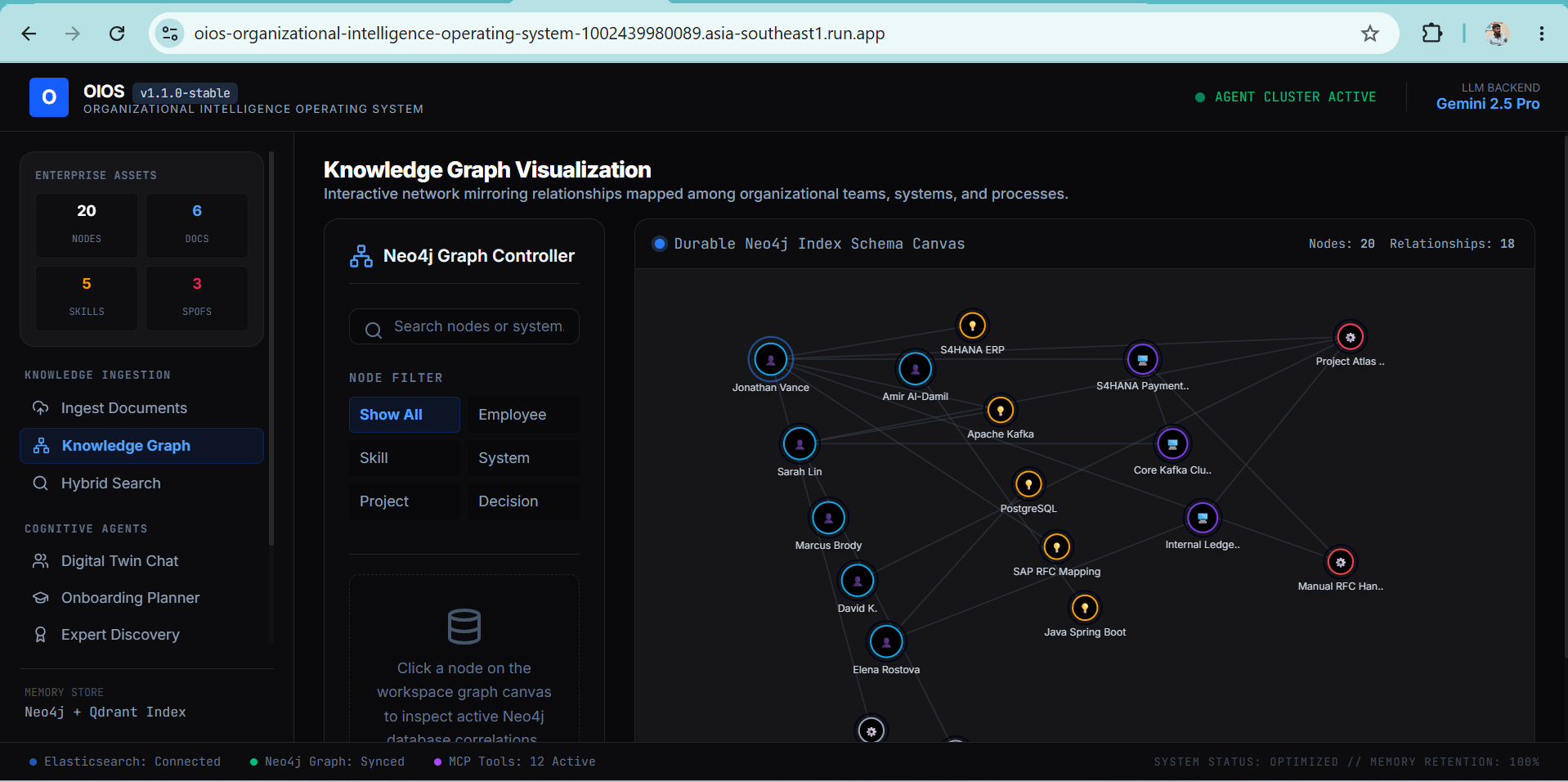
- Build organizational knowledge graphs
- Identify knowledge risks and single points of failure
- Accelerate employee onboarding
- Search organizational knowledge using natural language
- Preserve critical knowledge beyond individual employees
Instead of knowledge being scattered across multiple systems, Success creates a centralized and intelligent knowledge hub for the entire organization.
## How we built it
We built Success as an AI-native platform using modern cloud-native and agentic AI architecture principles.
Core Components
- Next.js frontend for an intuitive user experience
- FastAPI backend services
- PostgreSQL for structured data
- Neo4j for organizational knowledge graph modeling
- Elasticsearch for enterprise search
- Qdrant for semantic retrieval
- Redis for caching and performance optimization
AI and Agent Layer
We implemented specialized AI agents responsible for:
- Knowledge Extraction
- Meeting Intelligence
- Expert Discovery
- Knowledge Risk Analysis
- Onboarding Assistance
- Knowledge Search
These agents collaborate to convert raw organizational information into structured and actionable knowledge.
Knowledge Graph
The platform automatically creates relationships between:
- Employees
- Projects
- Systems
- Processes
- Skills
- Documents
- Decisions
This enables contextual discovery and deeper organizational insights.
## Challenges we ran into
Capturing Knowledge Beyond Documents
One of the biggest challenges was recognizing that documentation alone does not represent organizational knowledge. The most valuable insights often exist in conversations, decisions, and individual experience.
Knowledge Fragmentation
Enterprise knowledge exists across multiple formats and systems. Creating a unified representation required designing flexible ingestion and normalization pipelines.
Expertise Identification
Determining who truly possesses expertise in a specific domain is not straightforward. We had to combine multiple signals such as project involvement, document ownership, contributions, and skill relationships.
Knowledge Risk Modeling
Measuring organizational dependency on specific individuals required designing a framework that could identify potential knowledge bottlenecks and single points of failure.
Balancing Search and Context
Finding information is easy. Finding the right information with proper context is difficult. We focused heavily on contextual search and relationship-driven discovery.
## Accomplishments that we're proud of
- Built a unified Knowledge Transfer and Knowledge Hub platform
- Successfully modeled organizational knowledge using a knowledge graph
- Designed a multi-agent architecture for knowledge intelligence
- Created expert discovery capabilities across projects and domains
- Implemented knowledge risk analysis to identify organizational vulnerabilities
- Enabled AI-powered onboarding and knowledge discovery
- Integrated enterprise search with semantic understanding
- Established a scalable foundation for organizational memory systems
Most importantly, we transformed KT from static documentation into an intelligent and reusable organizational asset.
## What we learned
Through this project, we learned that:
- Knowledge Transfer is fundamentally a people problem, not a documentation problem.
- Most organizational knowledge is never formally documented.
- Context is often more important than content.
- Search alone cannot solve knowledge management challenges.
- Knowledge graphs provide powerful visibility into organizational relationships.
- AI agents can significantly improve knowledge discovery and transfer.
- Organizations need living knowledge systems rather than static repositories.
We also gained valuable experience in designing agentic AI systems, knowledge graphs, enterprise search architectures, and organizational intelligence platforms.
## What's next for Success
Our vision is to evolve Success into a complete Organizational Knowledge and Intelligence Platform.
Future enhancements include:
- AI-generated Digital Twins of subject matter experts
- Real-time organizational memory systems
- Automated KT interview workflows
- Advanced succession planning capabilities
- Knowledge health and freshness scoring
- Enterprise integrations with Jira, Confluence, GitHub, Slack, Teams, and SharePoint
- Agent-to-Agent collaboration using A2A protocols
- MCP-powered enterprise tool ecosystem
- Personalized learning and onboarding journeys
- Predictive knowledge risk analytics
Long term, we aim to help organizations ensure that critical project and process knowledge remains accessible, transferable, and reusable—regardless of employee transitions or organizational change.
Success is building the future of Knowledge Transfer and Organizational Knowledge Management.
Built With
- a2a
- adk
- elasticsearch
- gemini
- langgraph
- neo4j
- python
- react

Log in or sign up for Devpost to join the conversation.