Inspiration
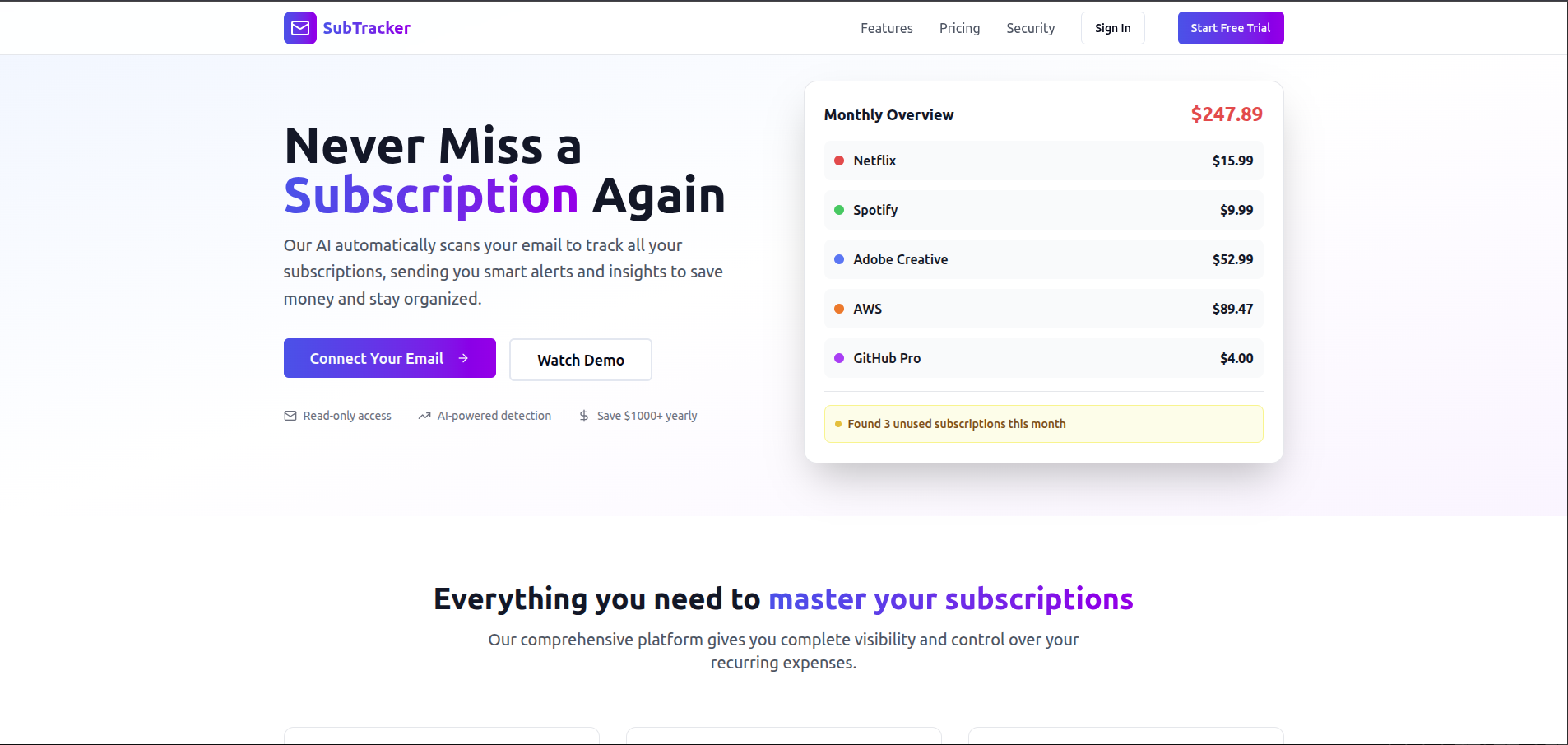
The concept for SubTracker emerged from a widespread issue: the difficulty of keeping track of numerous subscriptions in today’s digital age. With subscription services proliferating—think streaming platforms, software tools, and more—users often lose sight of what they’re paying for, resulting in unnecessary expenses. We envisioned a tool that taps into a resource users already rely on—their email inbox—to automatically detect and organize subscription details, simplifying financial oversight.
What it does
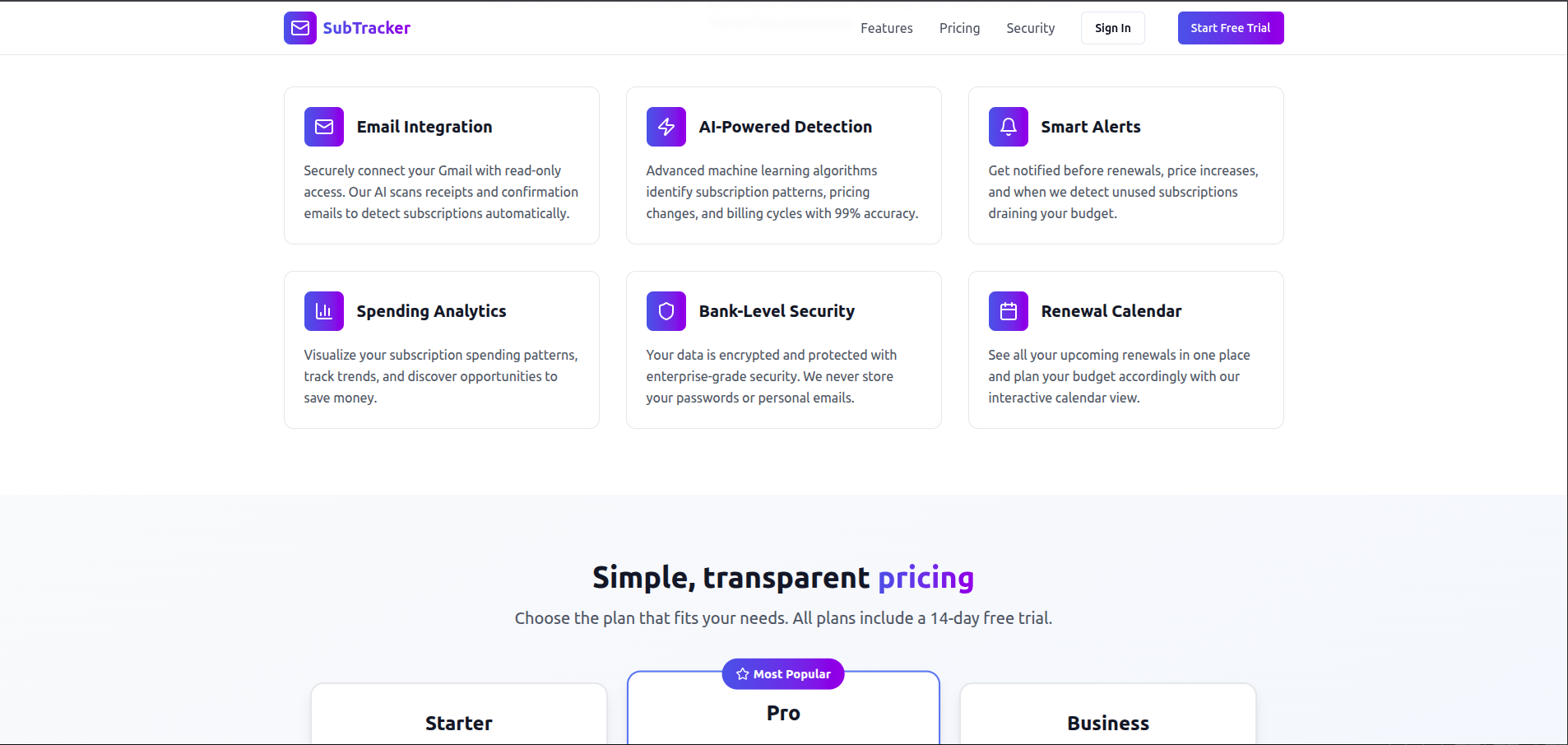
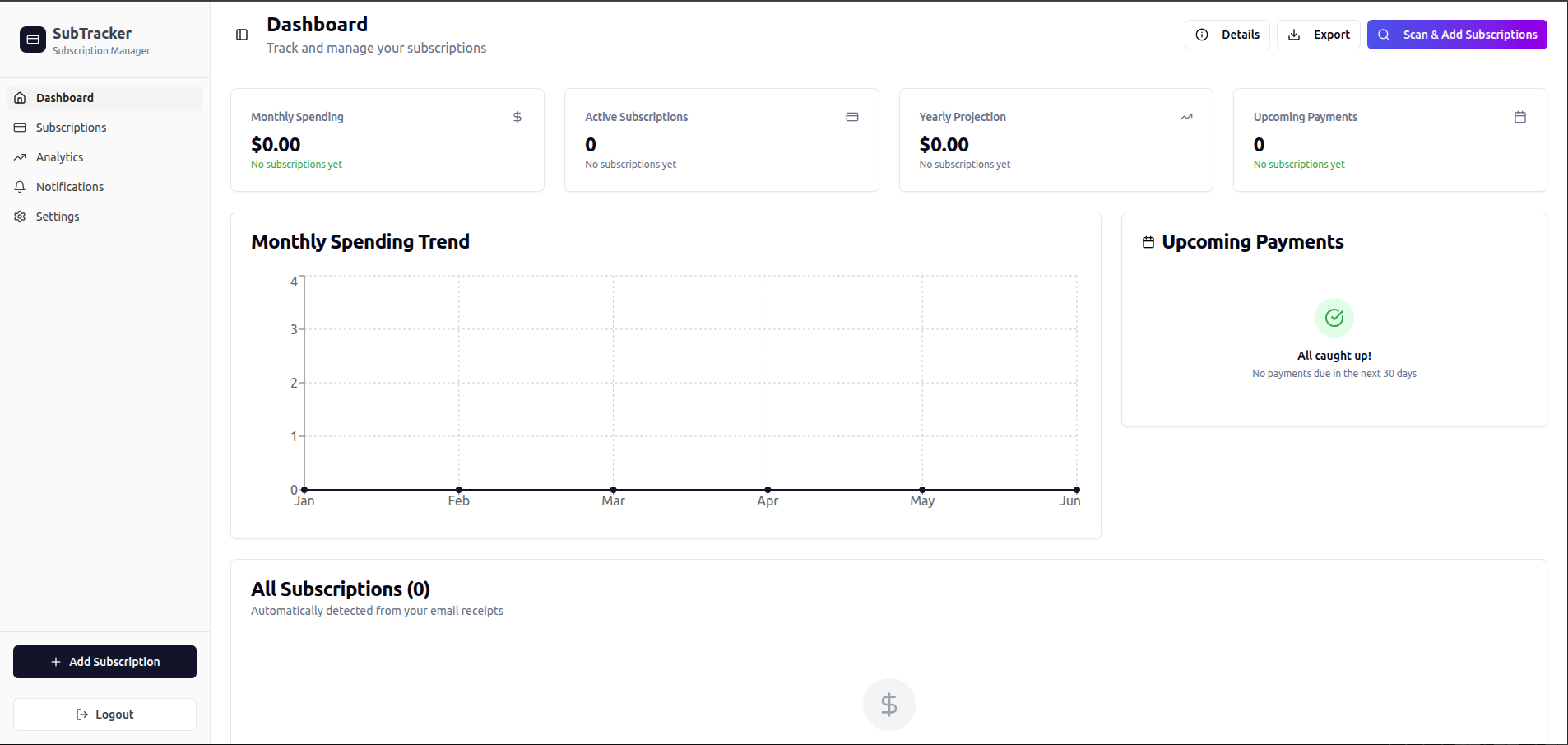
SubTracker connects to a user’s email account and scans their inbox for subscription-related correspondence, such as billing receipts or renewal notifications. It employs text analysis to pull out critical information—subscription name, cost, billing cycle, and renewal date—and presents it in an intuitive dashboard. Users can see their total recurring expenses, receive timely renewal alerts, and even get help canceling unwanted subscriptions, all in one place.
How we built it
We crafted SubTracker with a mix of robust technologies:
Email Access: Integrated with Gmail and Microsoft Graph APIs for secure inbox access.
Text Analysis: Leveraged NLP techniques to identify and extract subscription data from emails.
Backend: Built with Node.js and Express for efficient data processing and storage in MongoDB.
Frontend: Designed a responsive React-based dashboard for a seamless user experience.
Security: Used OAuth for authentication and AES-256 encryption to safeguard sensitive information.
Challenges we ran into
Developing SubTracker wasn’t without hurdles:
Parsing Variability: Subscription emails differ widely in format, making accurate data extraction a challenge.
Performance: Processing large inboxes efficiently required careful optimization.
Privacy Concerns: Balancing functionality with strict data security standards was critical to earning user trust.
Accomplishments that we're proud of
We’re thrilled with several milestones:
High Accuracy: Achieved over 90% precision in detecting subscription emails across providers.
User-Friendly Design: Delivered a dashboard that’s both powerful and easy to navigate.
Secure Foundation: Built a privacy-first system that users can rely on.
What we learned
The journey taught us a lot:
User Needs: Subscription habits vary, so flexibility is key.
Tech Growth: We honed our skills in NLP and secure app development.
Feedback Loops: Iterative testing was essential to refining the product.
What's next for SubTracker
We’re excited to take SubTracker further:
Smart Insights: Add AI to recommend cost-saving options or flag unused services.
Broader Reach: Extend tracking to SMS or bank data.
Global Support: Expand language and currency compatibility for a worldwide audience.

Log in or sign up for Devpost to join the conversation.