-
-
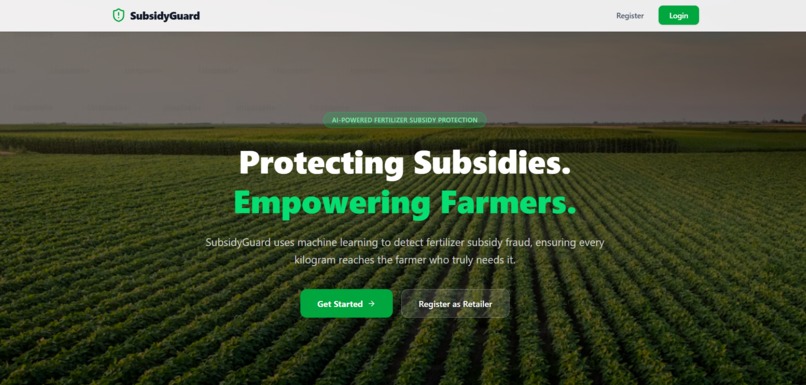
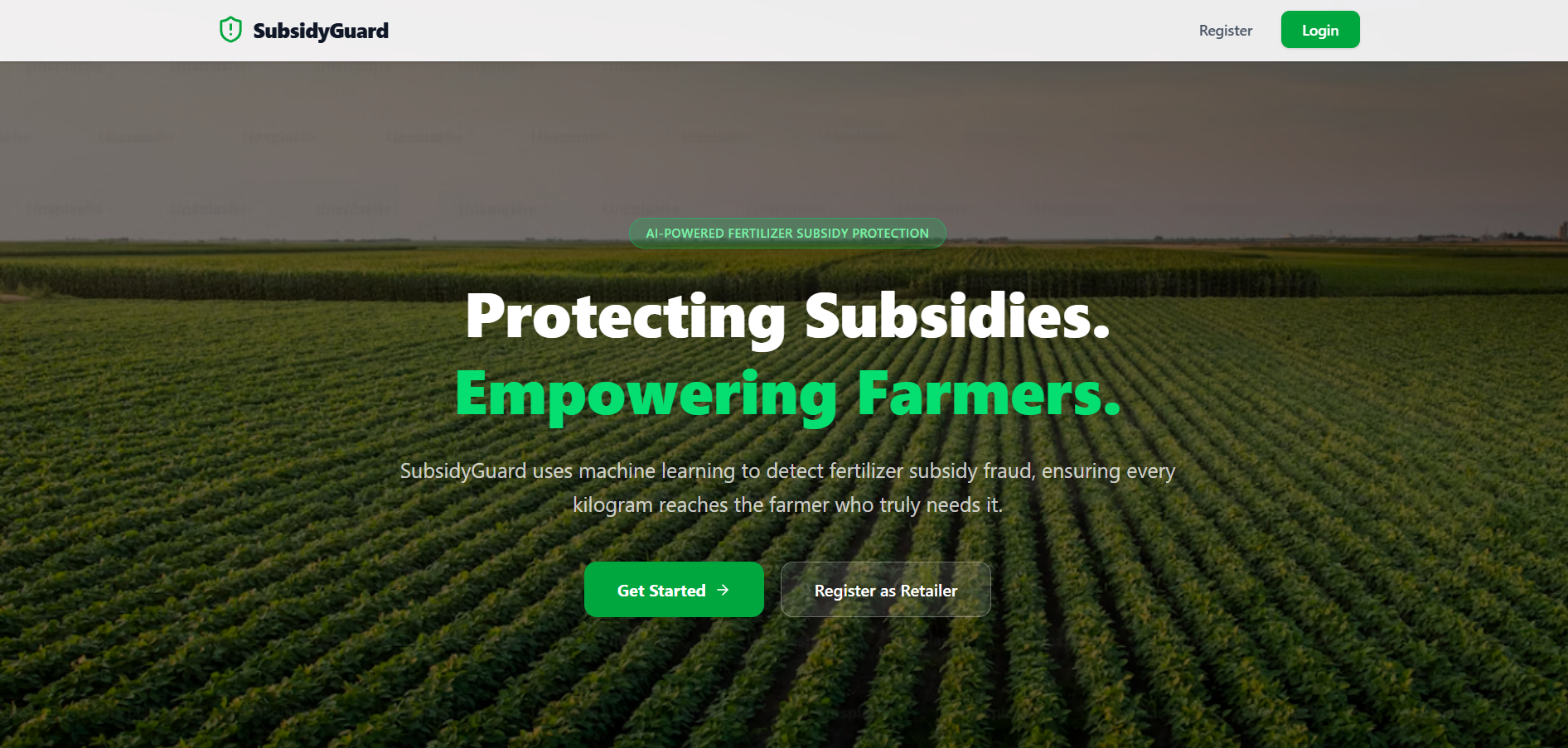
Home page
-
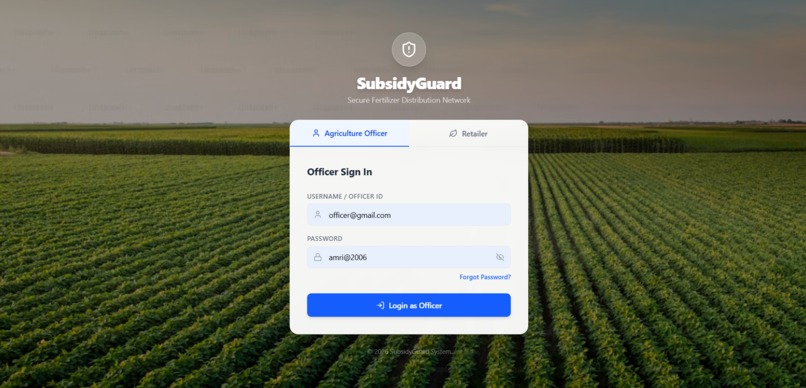
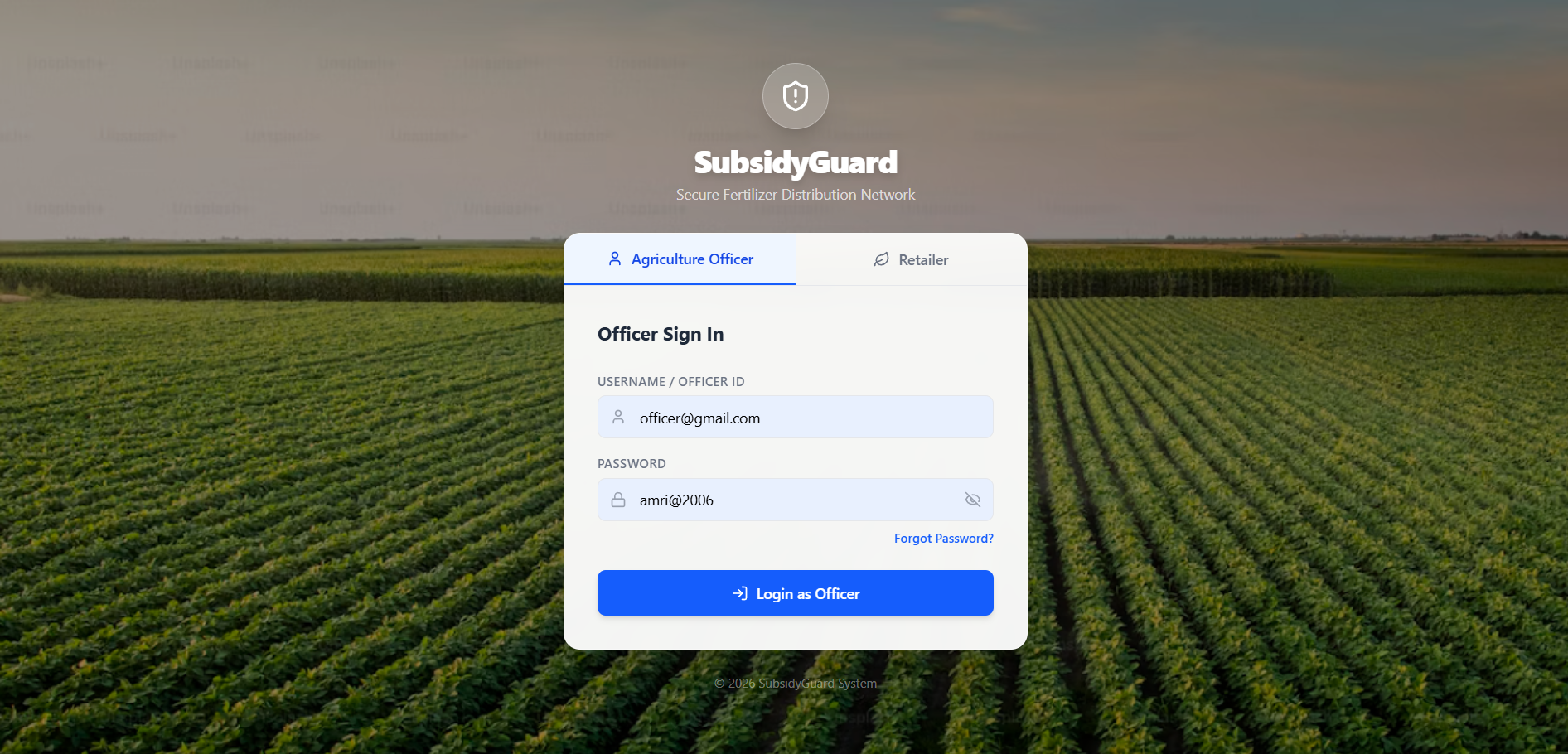
There are two logins : Agri officer & Retailer
-
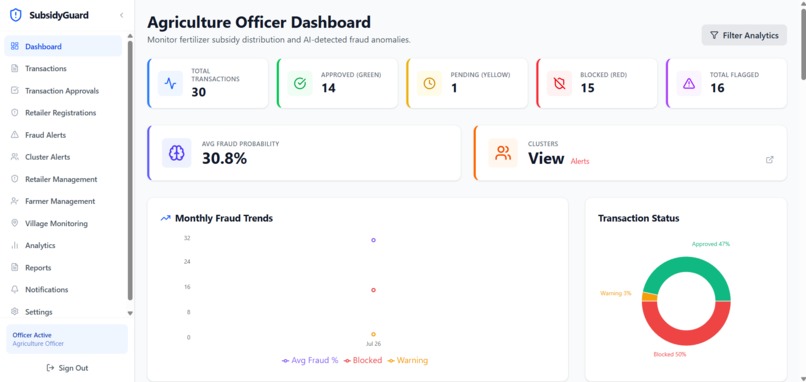
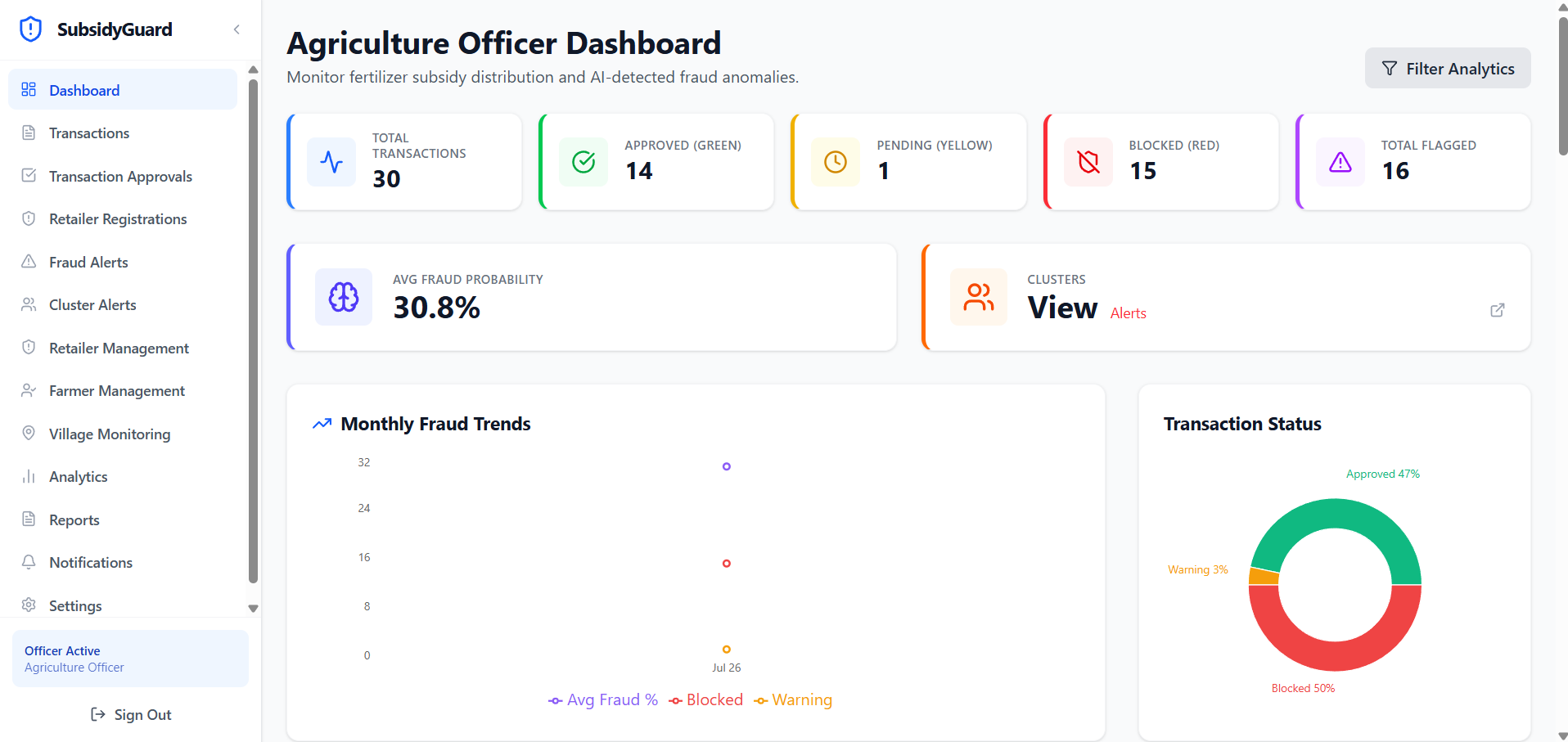
This is officer dashboard where all the transactions are shown, that are approved, blocked, warning
-
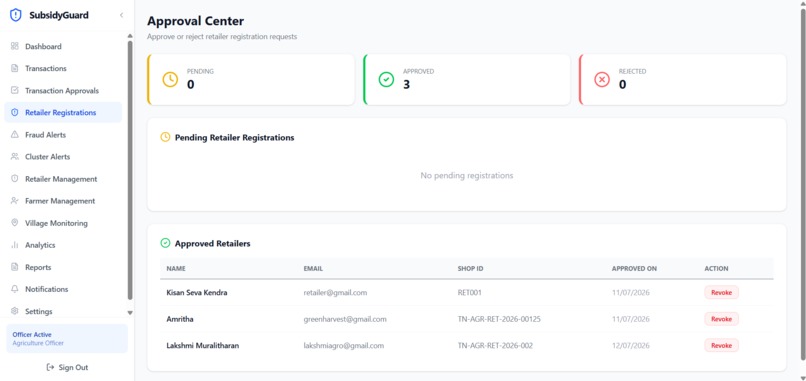
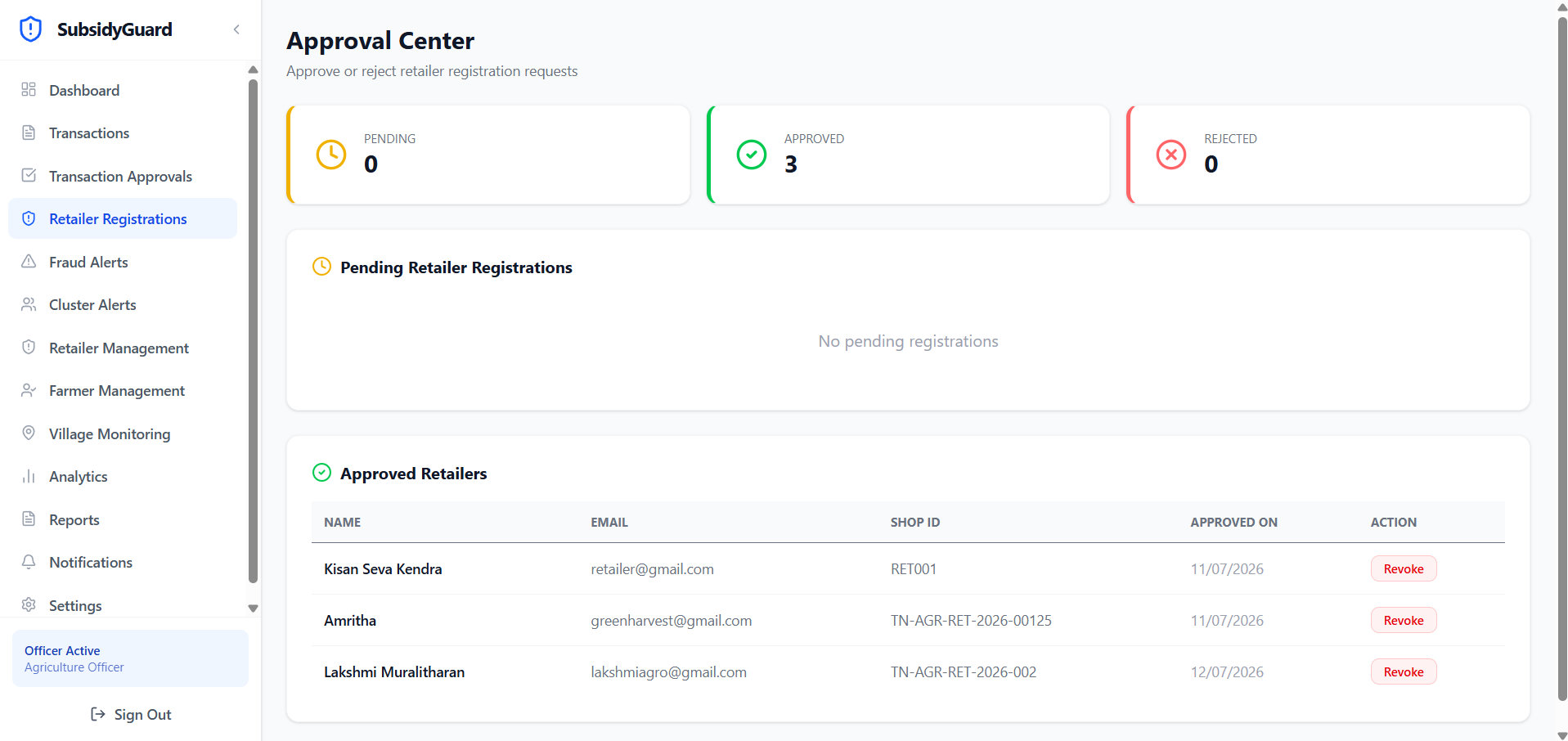
This is where the officer approves retailer only if his details are valid
-
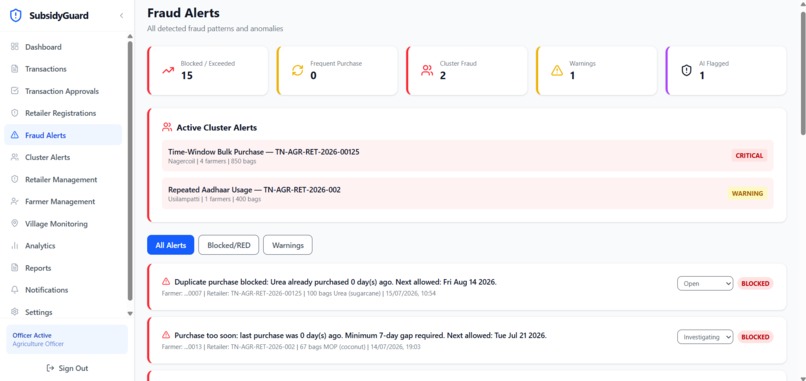
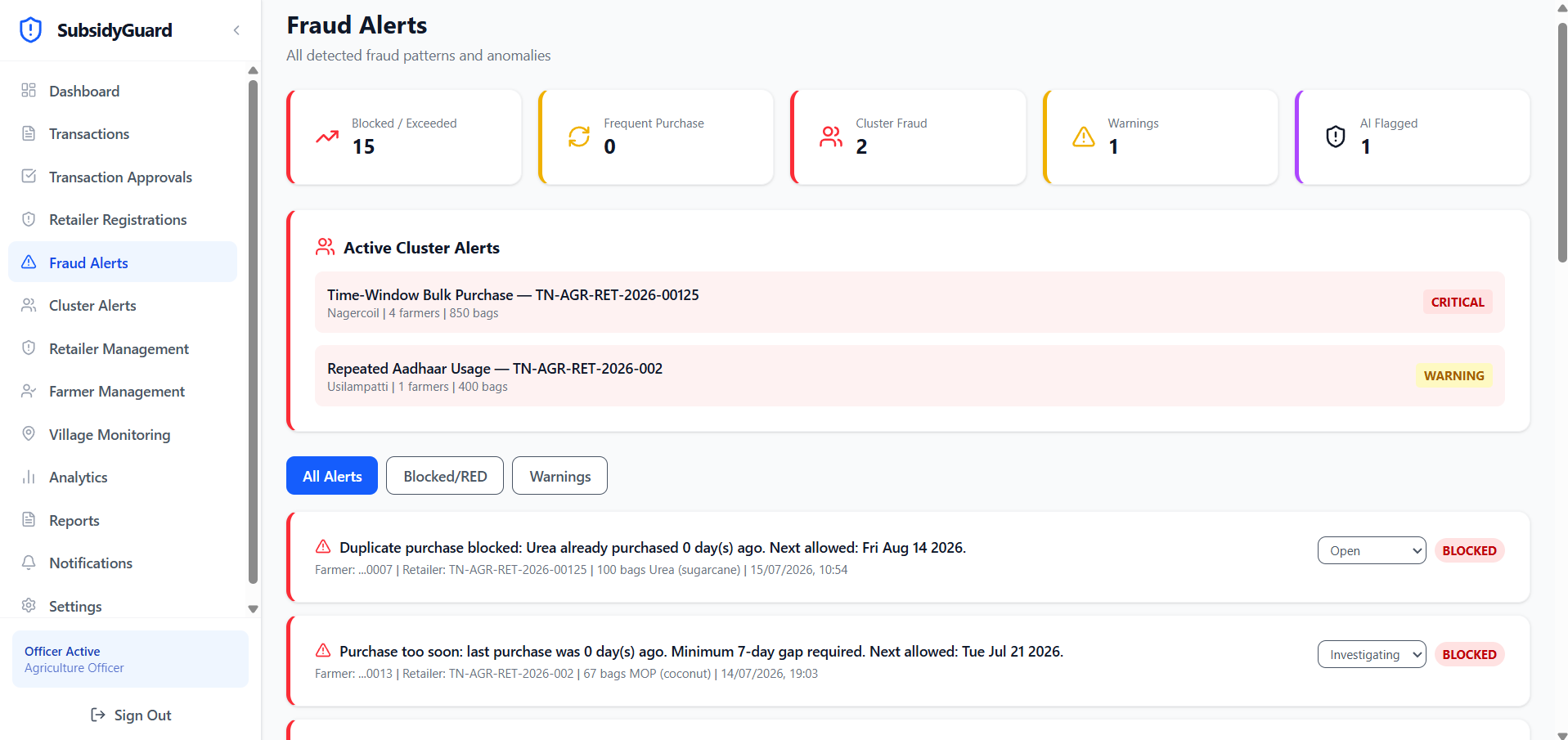
These are the fraud alerts where the officer can : investigate, close the case
-
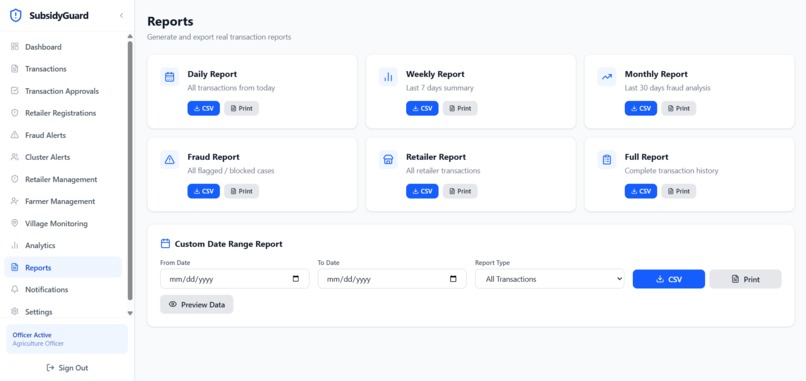
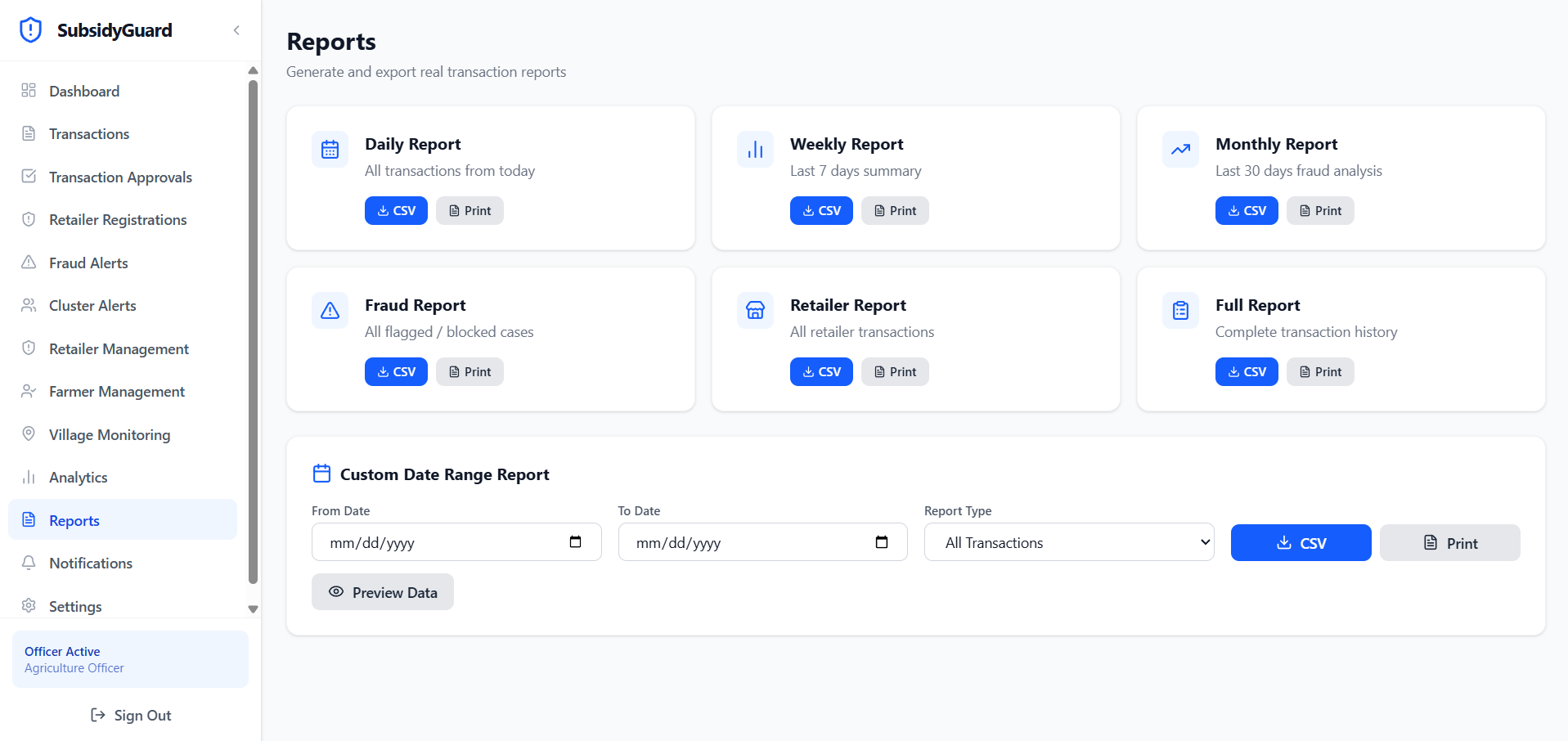
We can export the transactions by csv file
-
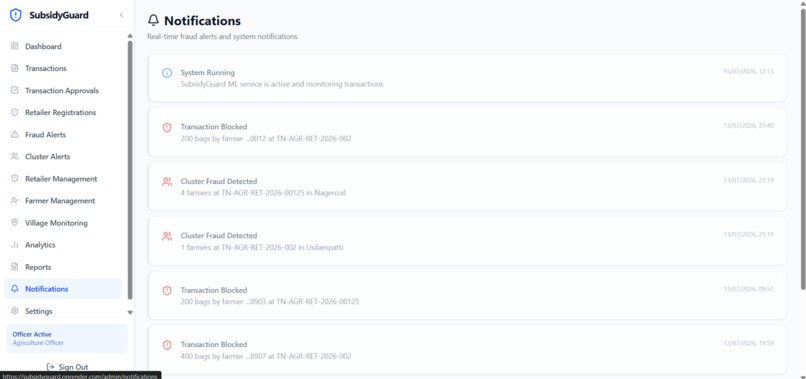
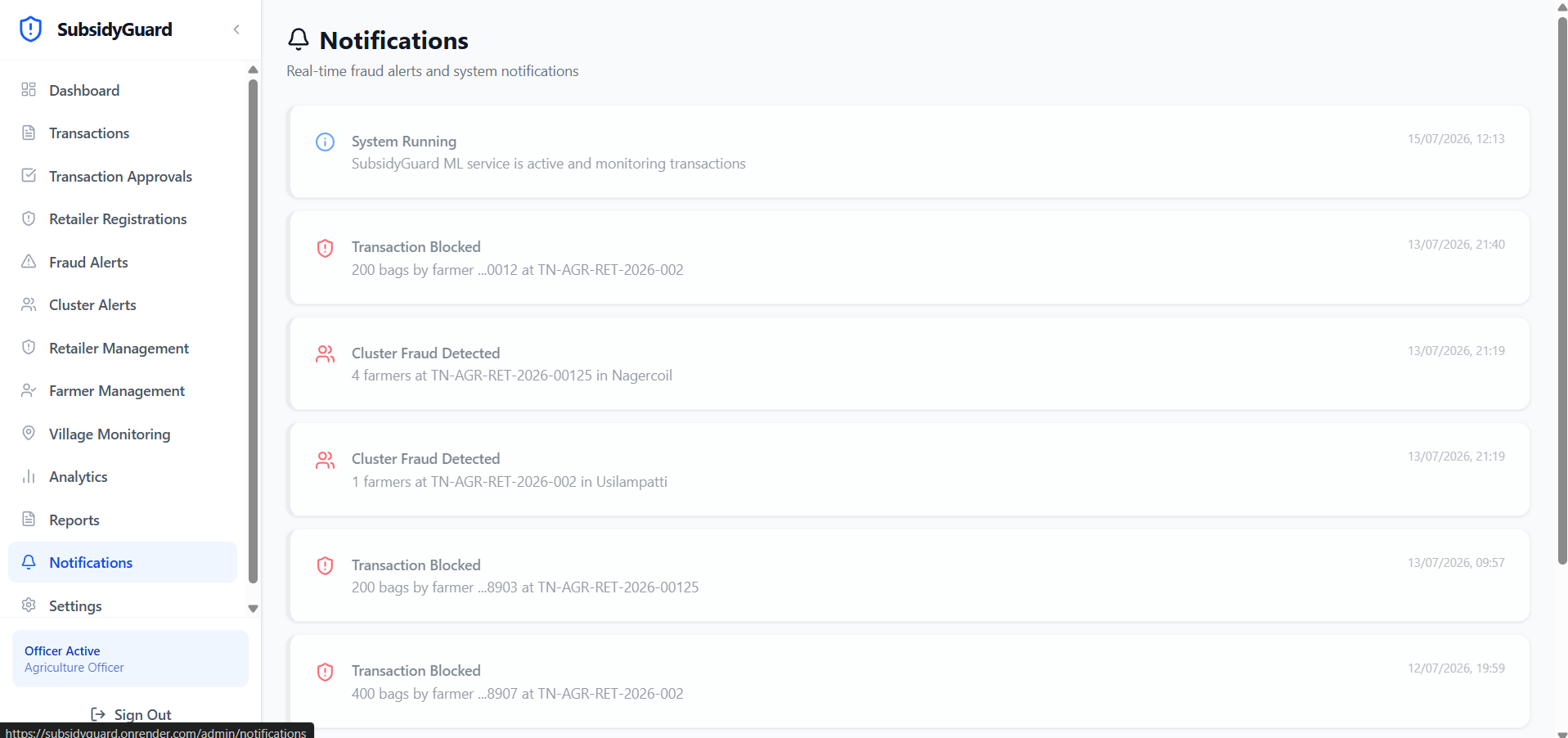
The notifications for agri officer
-
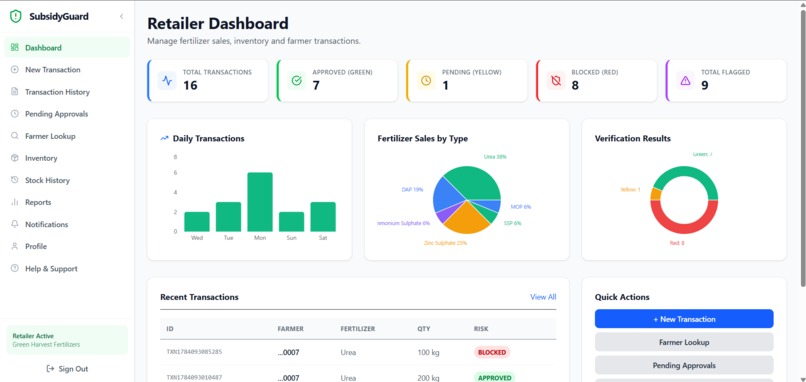
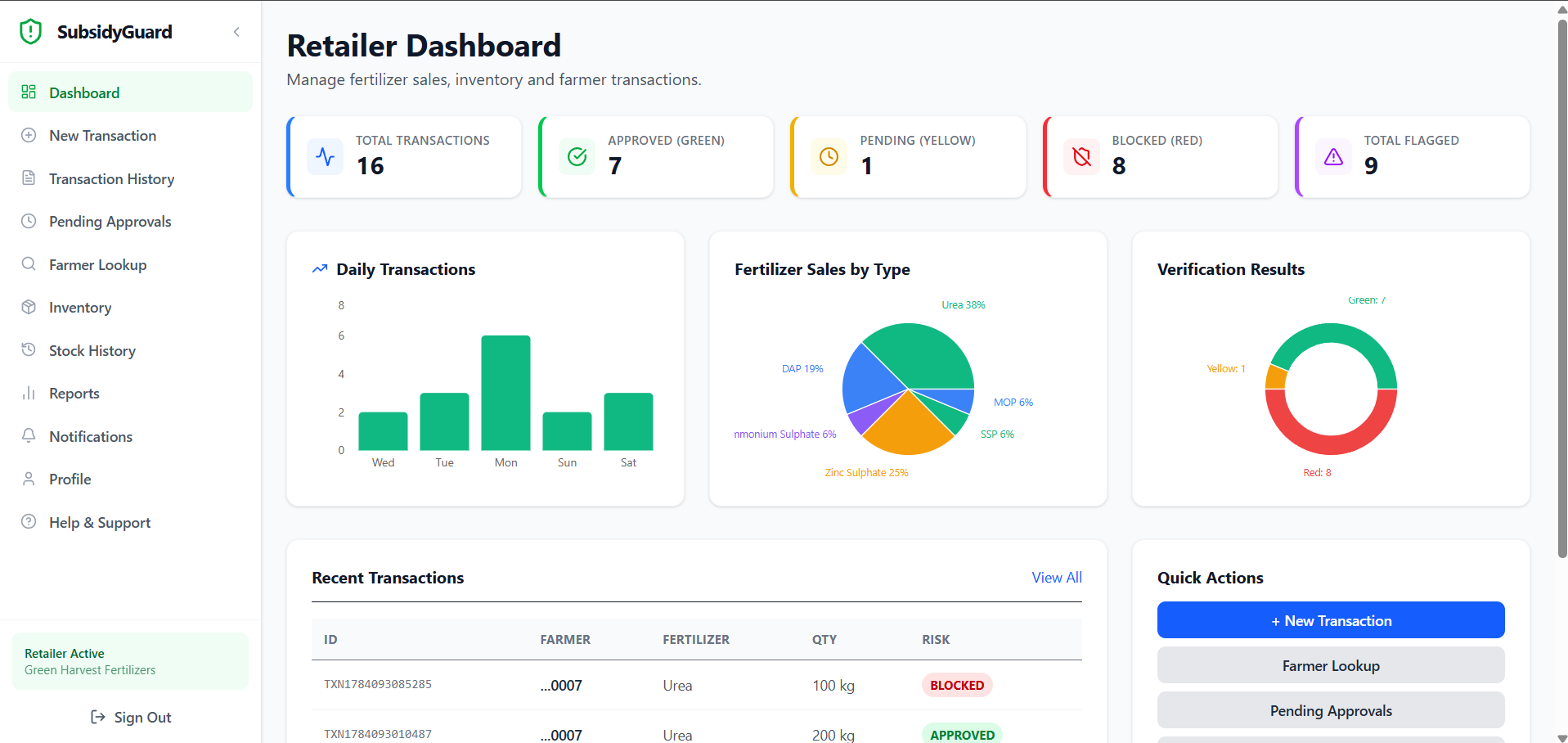
This is retailer dashboard where it shows their transactions, that are approved, blocked, warning
-
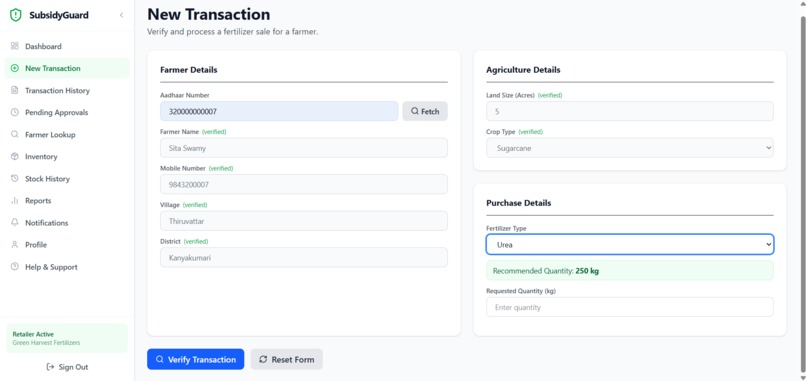
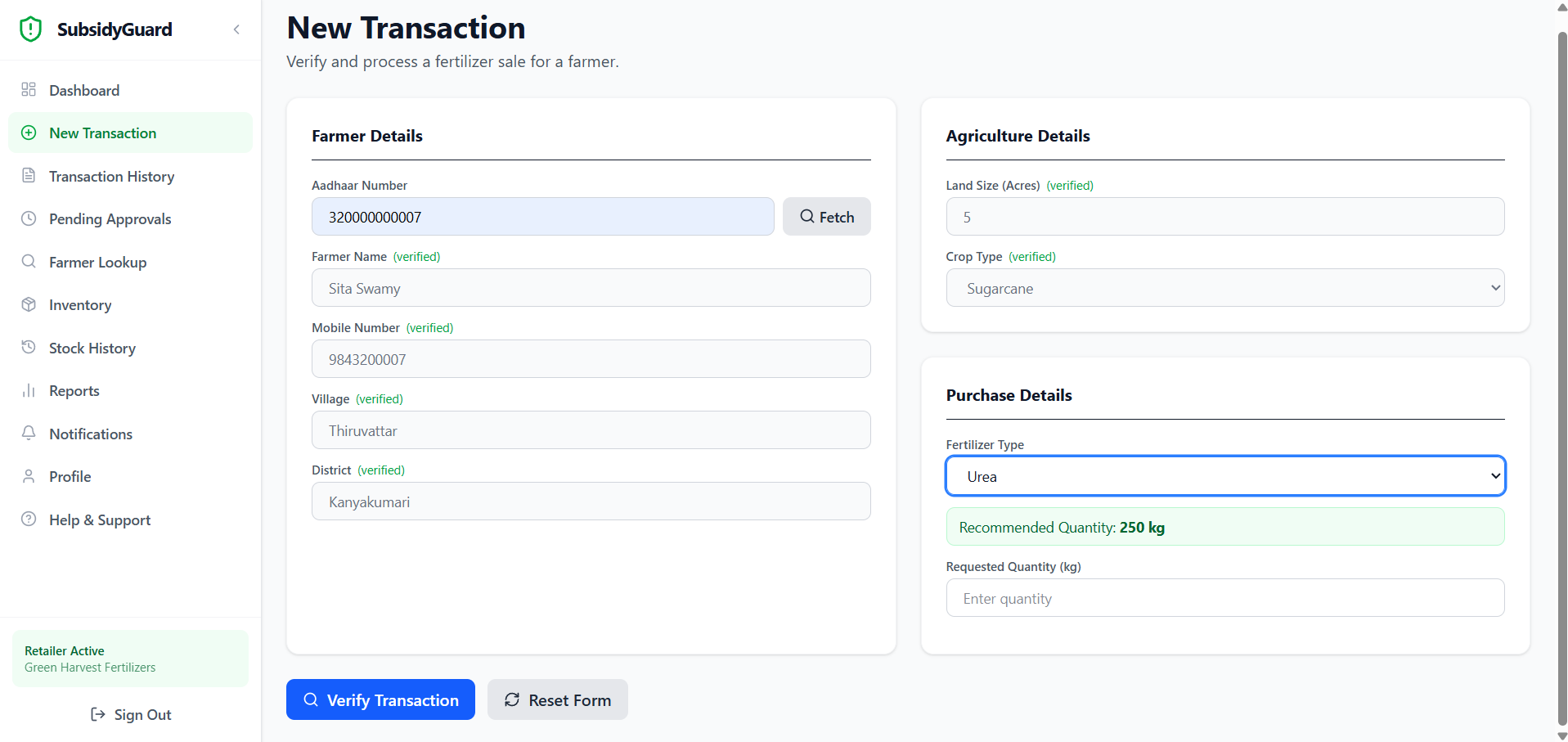
The retailer can make new transaction here by using the aadhar number, and the remaining details are filled itself
-
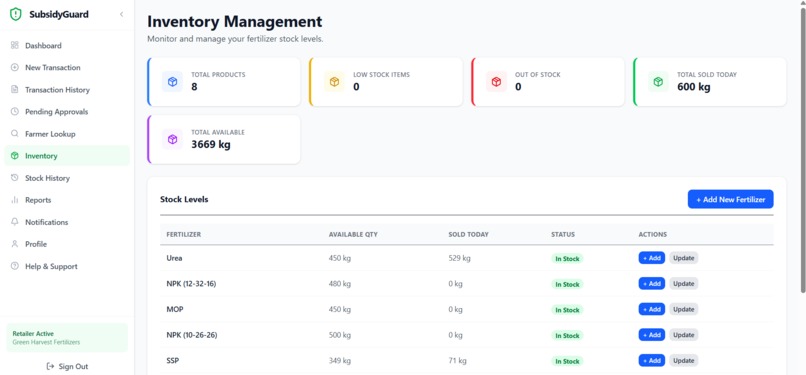
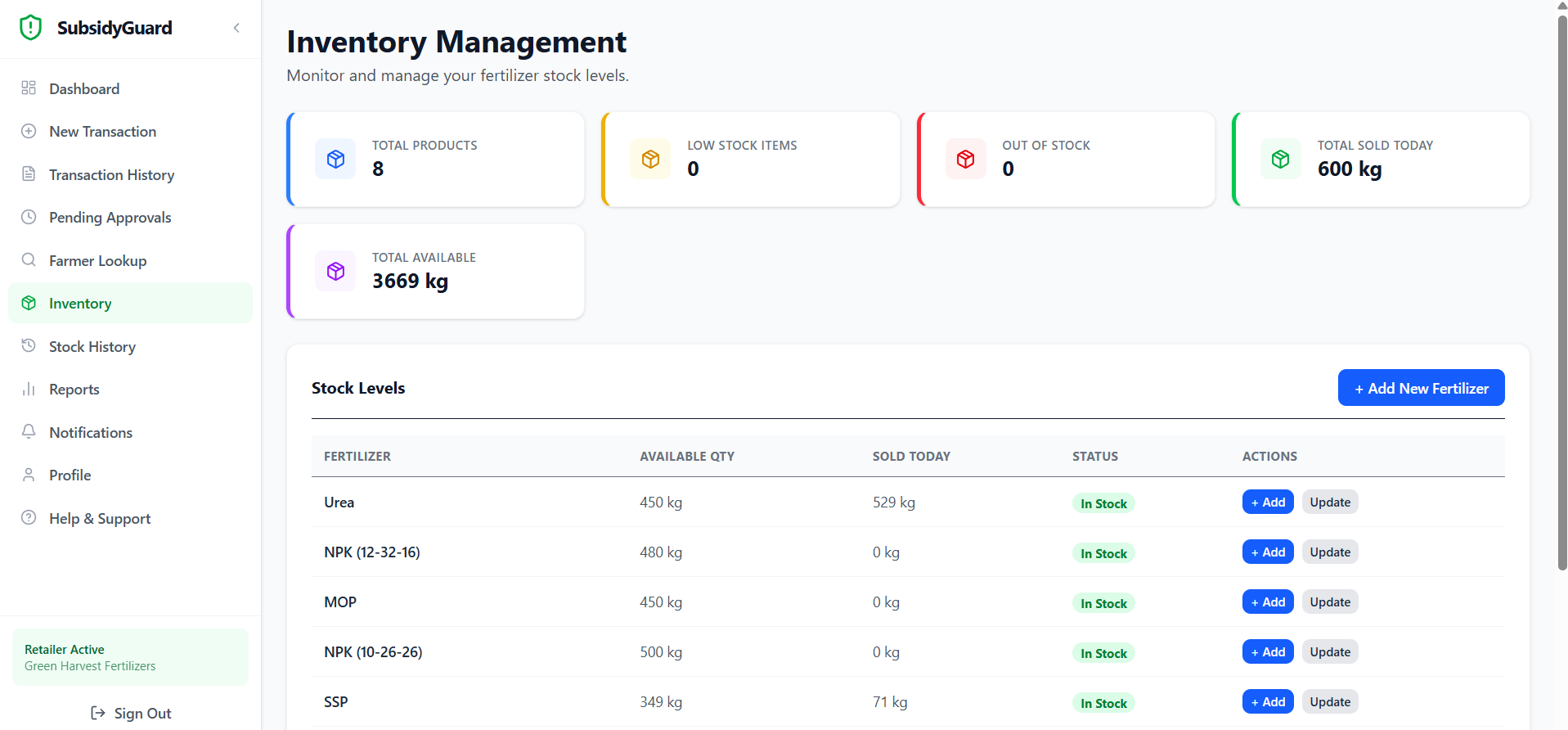
The inventory stock is shown here, where the retailer can update it, and it automatically decreases when farmers buy it
-
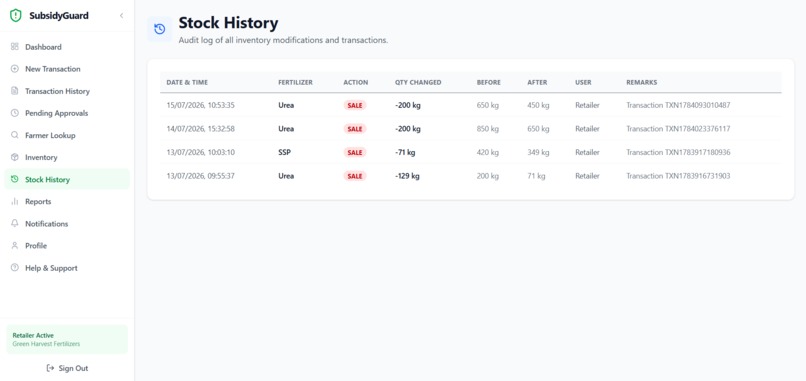
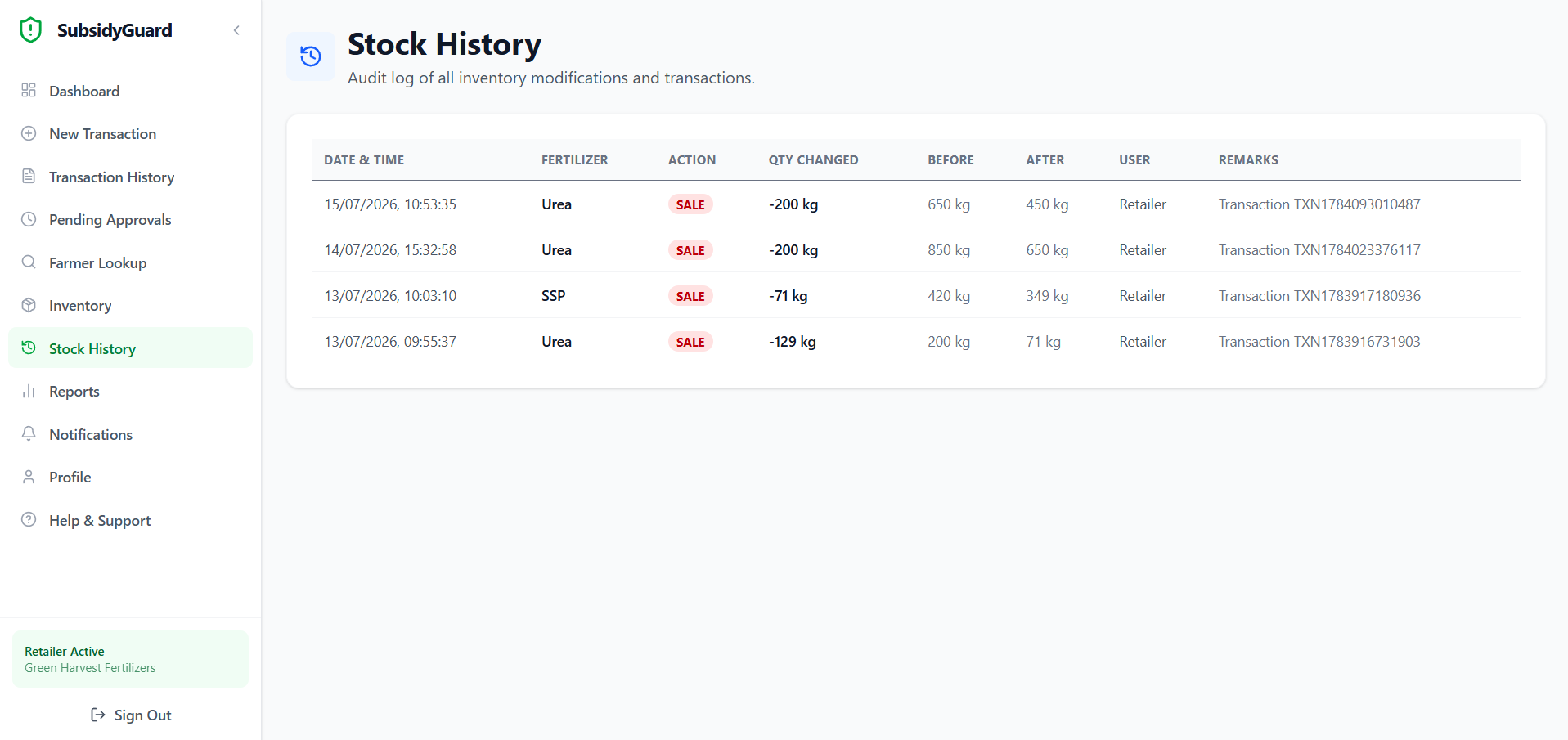
The stock history is shown here ( how much stock has been sold today)
-
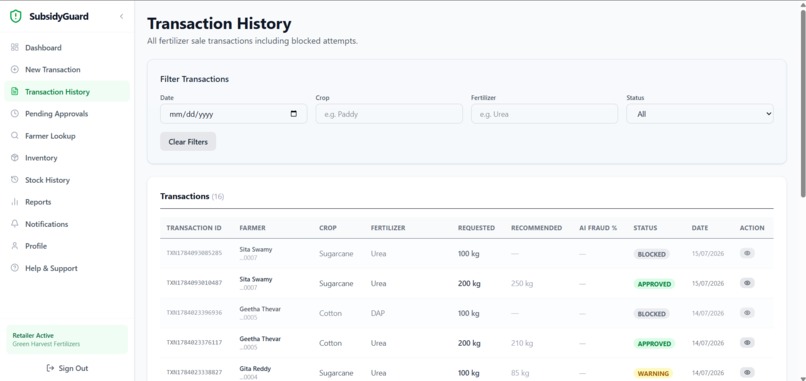
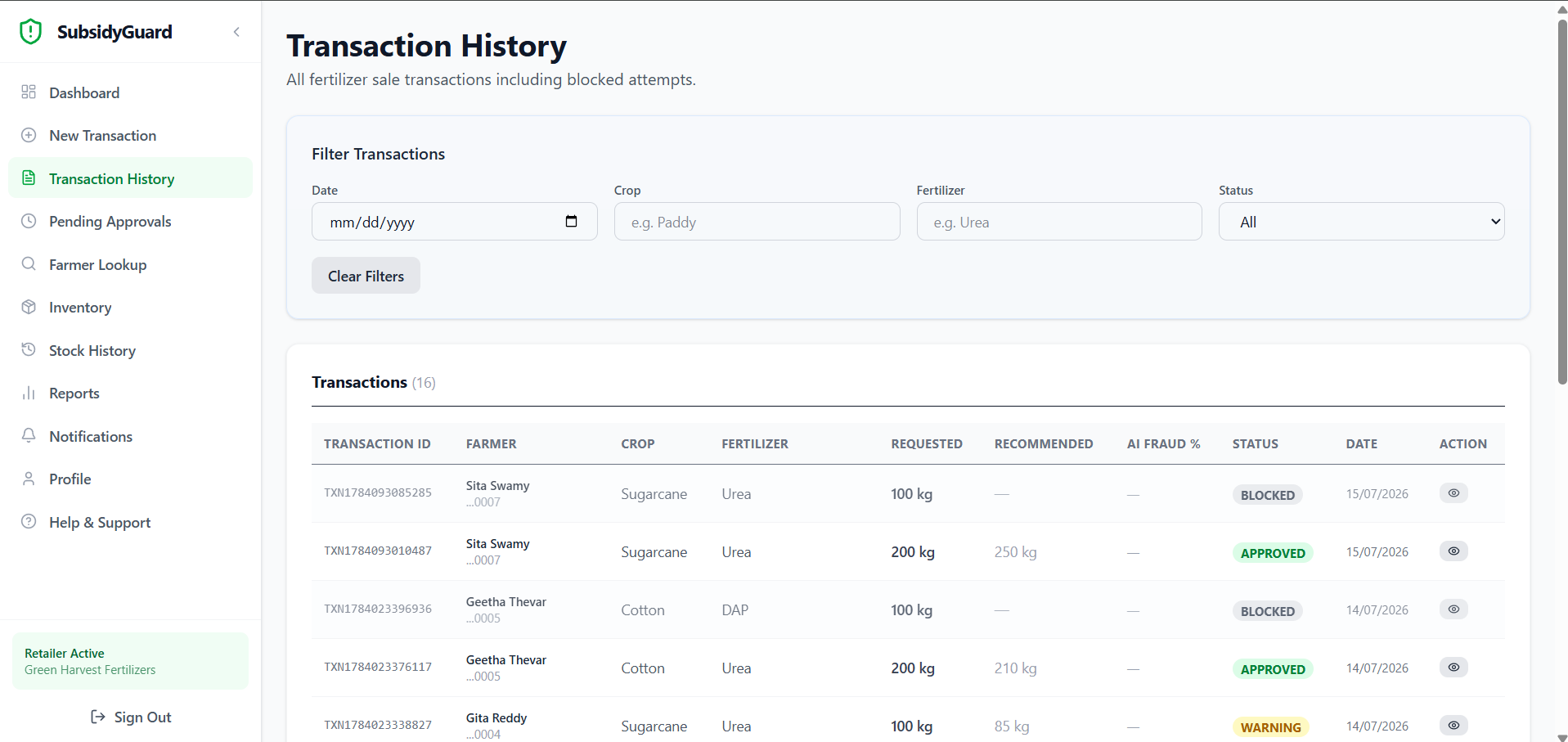
The transaction history where we can sort by date, district
-
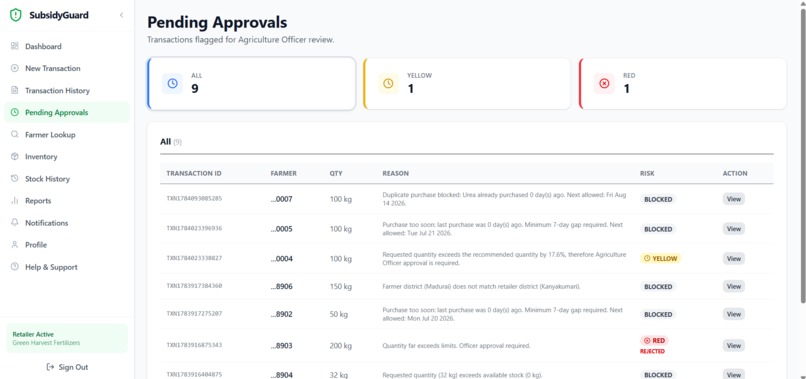
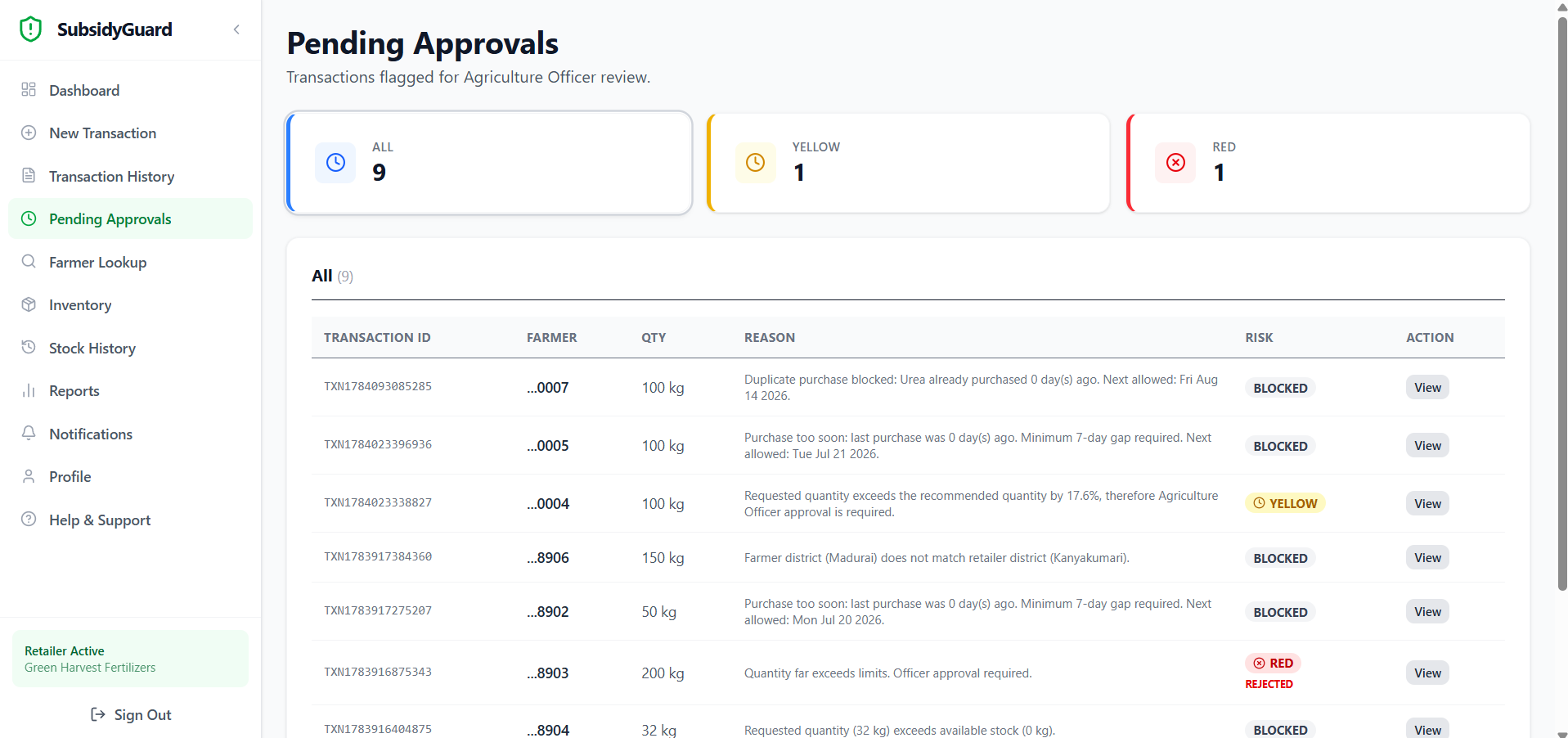
These are the transaction approvals that are given to agri officer
-
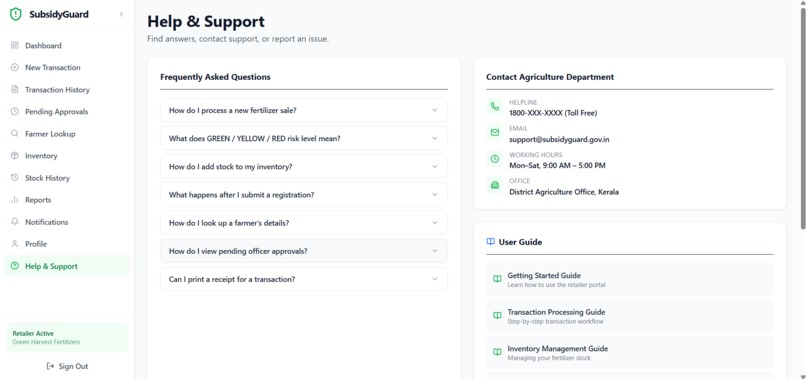
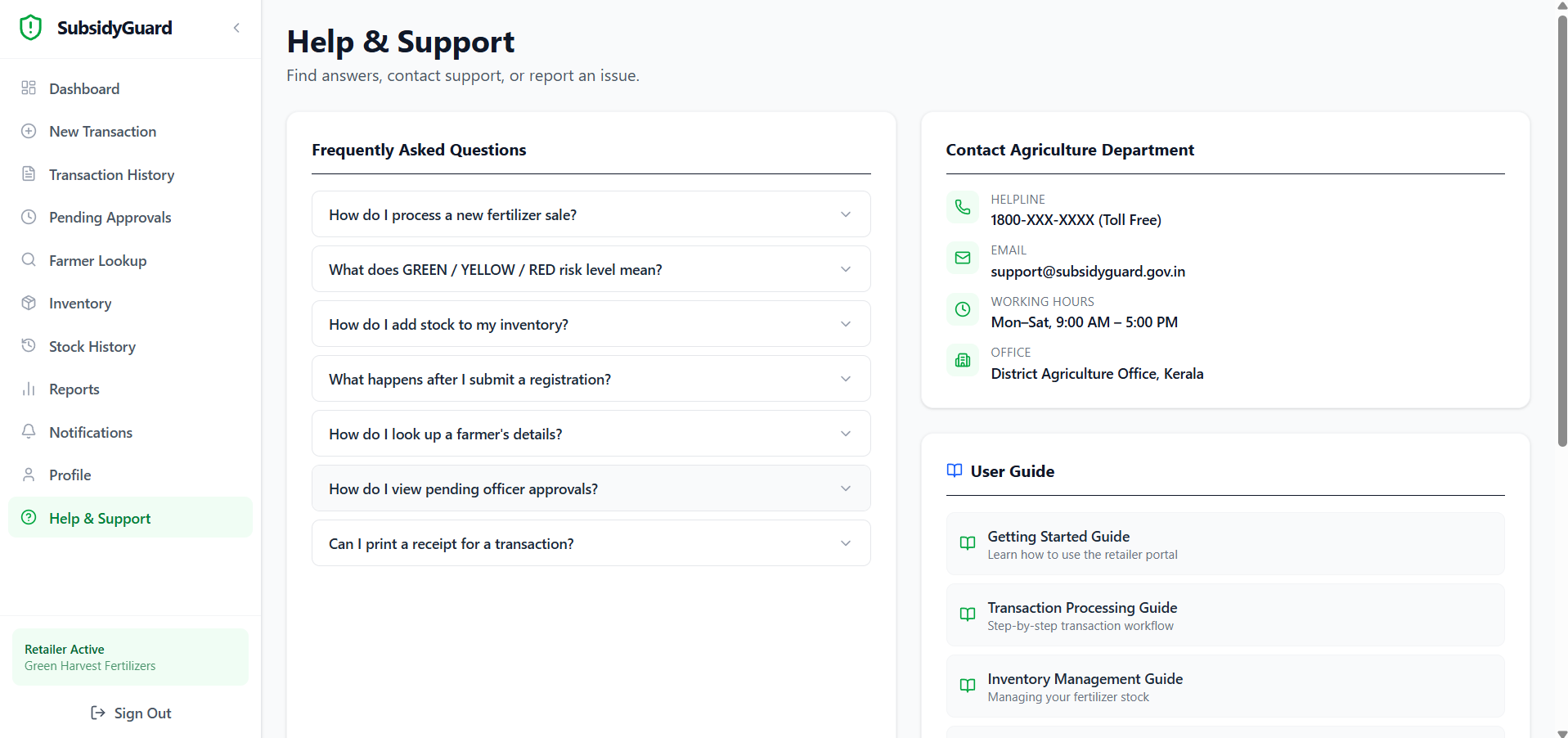
The help and support is shown here including frequently asked questions
Inspiration
We developed this idea for an agriculture-based hackathon. Initially, we brainstormed various problems related to the agricultural sector, especially the frauds and scams occurring in government subsidy distribution. While researching, we came across this problem statement on a website and realized that it has significant real-world impact. We found that there were no comprehensive existing solutions that combined AI-based fraud detection, real-time monitoring, and intelligent verification. So, we decided to build SubsidyGuard as a practical solution to help the government prevent fertilizer subsidy fraud and ensure that subsidies reach genuine farmers in a transparent and efficient manner.
What it does
The retailer first verifies a farmer using their Aadhaar number. The system automatically retrieves the farmer's details, including land size and crop type. Based on government fertilizer recommendations, it calculates the recommended quantity of fertilizer that the farmer is eligible to purchase.
When the retailer enters the requested quantity, our Machine Learning model and rule-based engine analyze the transaction by considering factors such as crop type, land size, purchase history, and transaction patterns. The system then classifies the transaction into three risk levels: Green, Yellow, or Red. Green transactions are approved automatically, Yellow transactions require Agriculture Officer approval, and Red transactions are blocked because they are considered highly suspicious.
At the same time, the retailer's inventory is updated in real time, and all transactions, fraud alerts, and analytics are instantly reflected on the Agriculture Officer dashboard. This enables authorities to monitor subsidy distribution, detect suspicious activities early, and make informed decisions to prevent fraud while ensuring transparency and accountability throughout the subsidy distribution process.
How we built it
We began by researching the challenges in the existing fertilizer subsidy distribution process and understanding how fraud occurs. After identifying the major issues, we designed a system that follows the real government workflow. We created separate portals for retailers and Agriculture Officers, added intelligent transaction verification, incorporated AI-based fraud detection, and enabled real-time monitoring of inventory and transactions. Throughout the project, our focus was on building a practical solution that could improve transparency, reduce subsidy misuse, and support better decision-making for government authorities.
Challenges we ran into
During development, we faced several challenges. The biggest was making the system realistic by researching government fertilizer recommendations and designing accurate fraud detection logic. We also had to integrate our AI model with the application while ensuring it worked correctly with the rule-based validation system. Another challenge was implementing real-time updates for inventory and transactions across multiple dashboards. Finally, deploying and connecting the frontend, backend, database, and machine learning service required careful configuration. These challenges helped us improve the overall quality and reliability of our solution.
Accomplishments that we're proud of
We're proud that we built a practical solution for a real-world government problem. We successfully integrated AI-based fraud detection, real-time monitoring, and intelligent verification into a single platform. We also designed the system to closely follow the actual fertilizer subsidy workflow, making it both realistic and scalable. Most importantly, we're proud that our project has the potential to improve transparency and help ensure that government subsidies reach the farmers who truly need them.
What we learned
This project taught us how to transform a real-world problem into a practical solution. We learned about government subsidy systems, AI integration, real-time application development, and end-to-end system design. More importantly, we strengthened our problem-solving and critical thinking skills, and realized how technology can be used to solve meaningful societal challenges.
What's next for SubsidyGuard
In the future, we plan to integrate SubsidyGuard with government databases for secure farmer verification, improve our AI model using real-world data, and develop a mobile application for easier access. We also aim to add GIS-based fraud mapping, multilingual support, and extend the platform to monitor other government subsidy schemes, making it a scalable solution for digital governance.
This version is consistent with team-based wording and is suitable for hackathon submissions such as Devpost.
Built With
- api
- axios
- bcrypt.js
- css
- css3
- express.js
- github
- html5
- javascript
- jwt
- machine-learning
- node.js
- postgresql
- python
- react
- recharts
- render
- rest
- scikit-learn
- sequelize
- tailwind
- vite

Log in or sign up for Devpost to join the conversation.