-
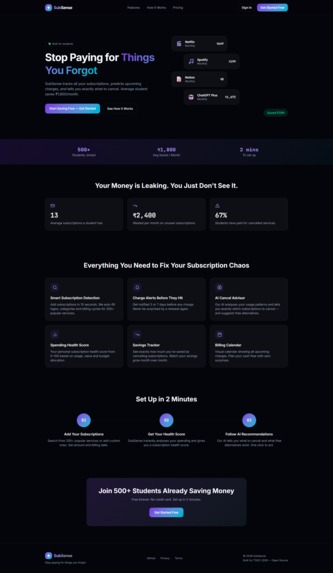
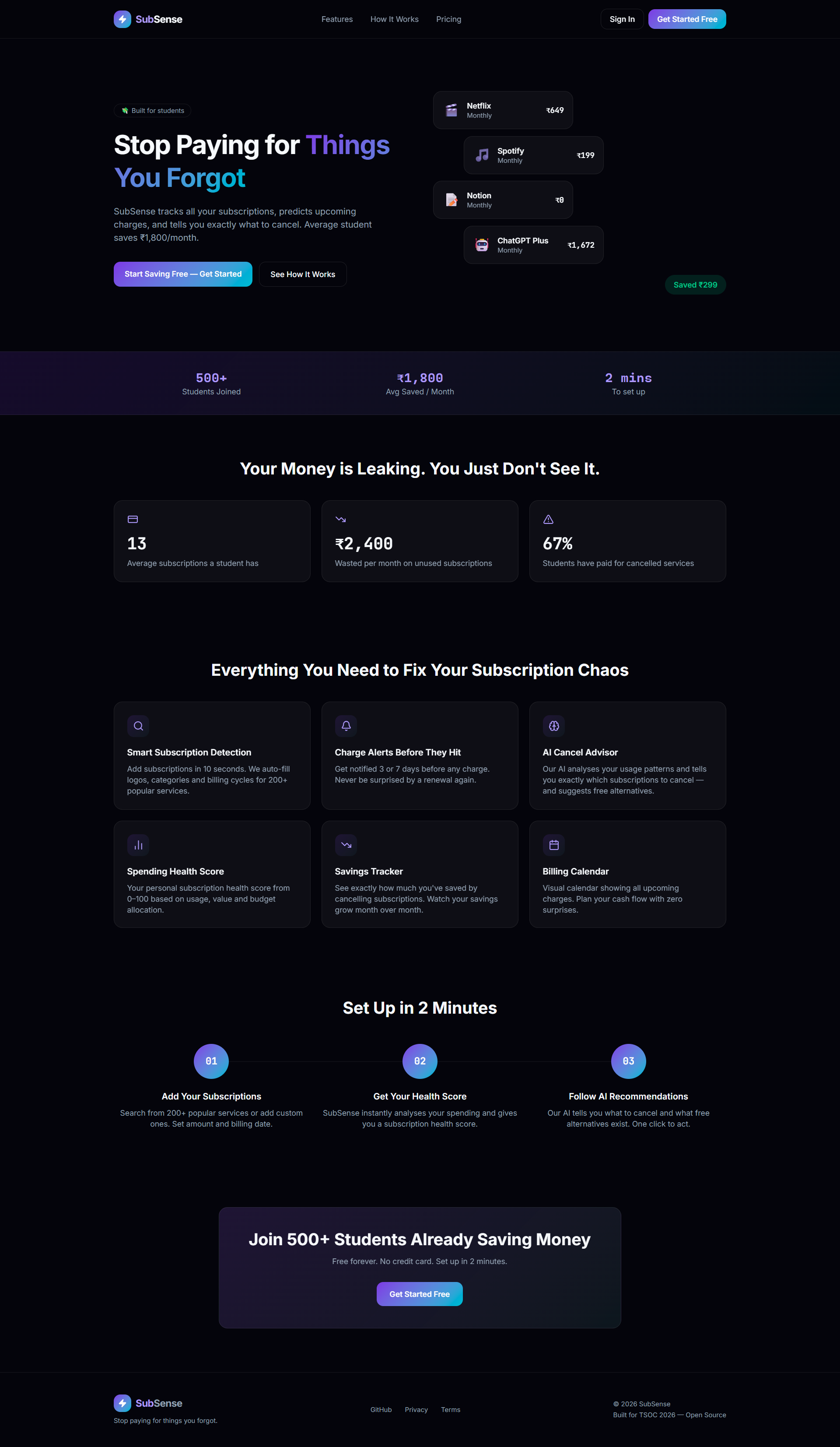
Full Website Pic
-
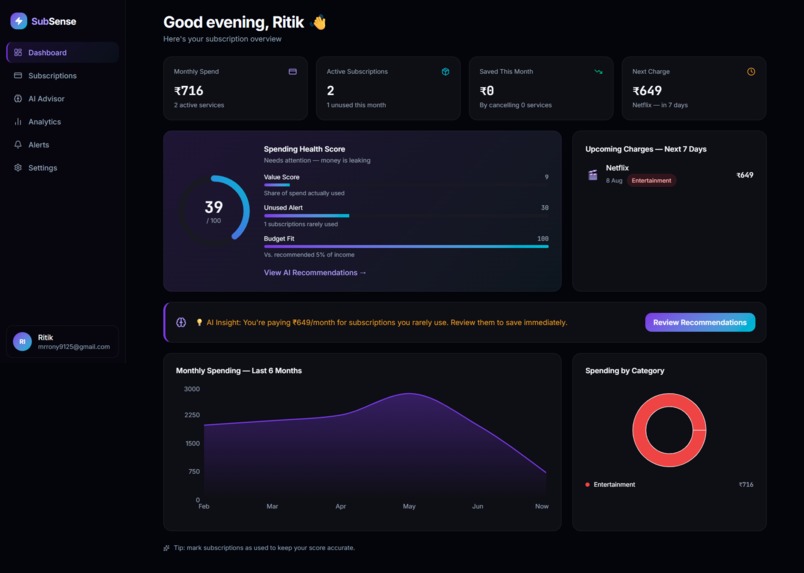
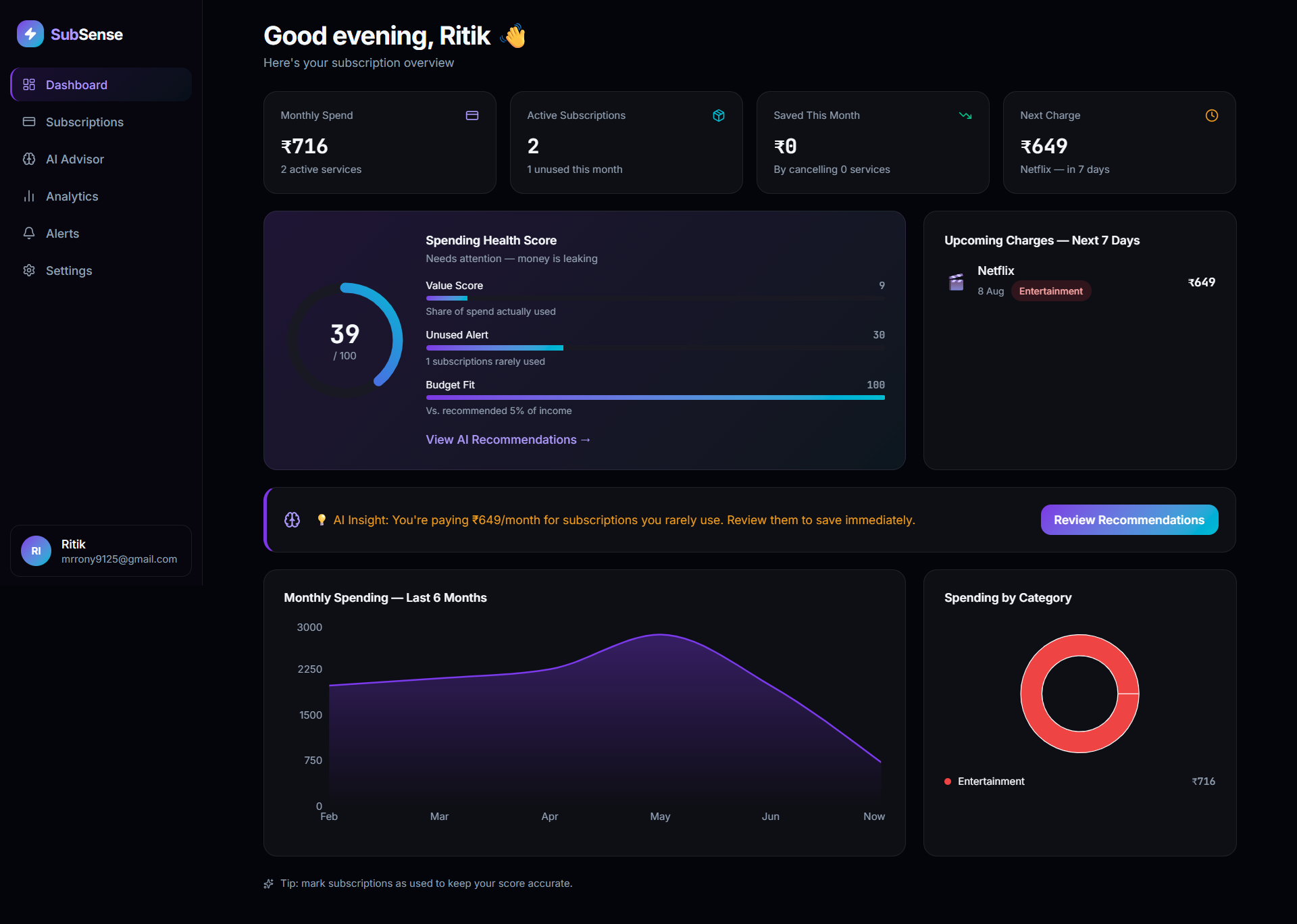
Dashboard
-

Account verification
-
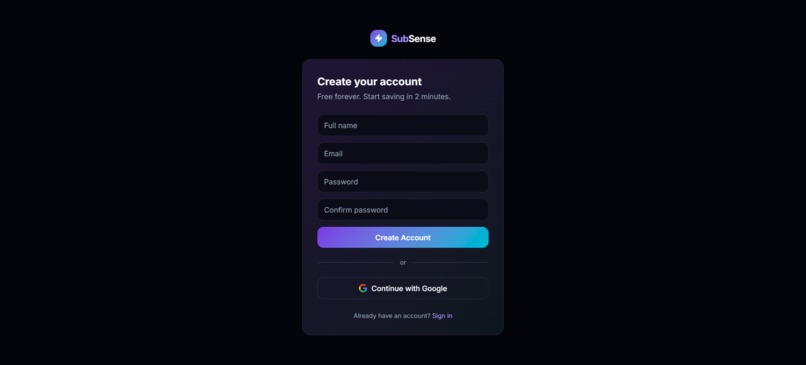
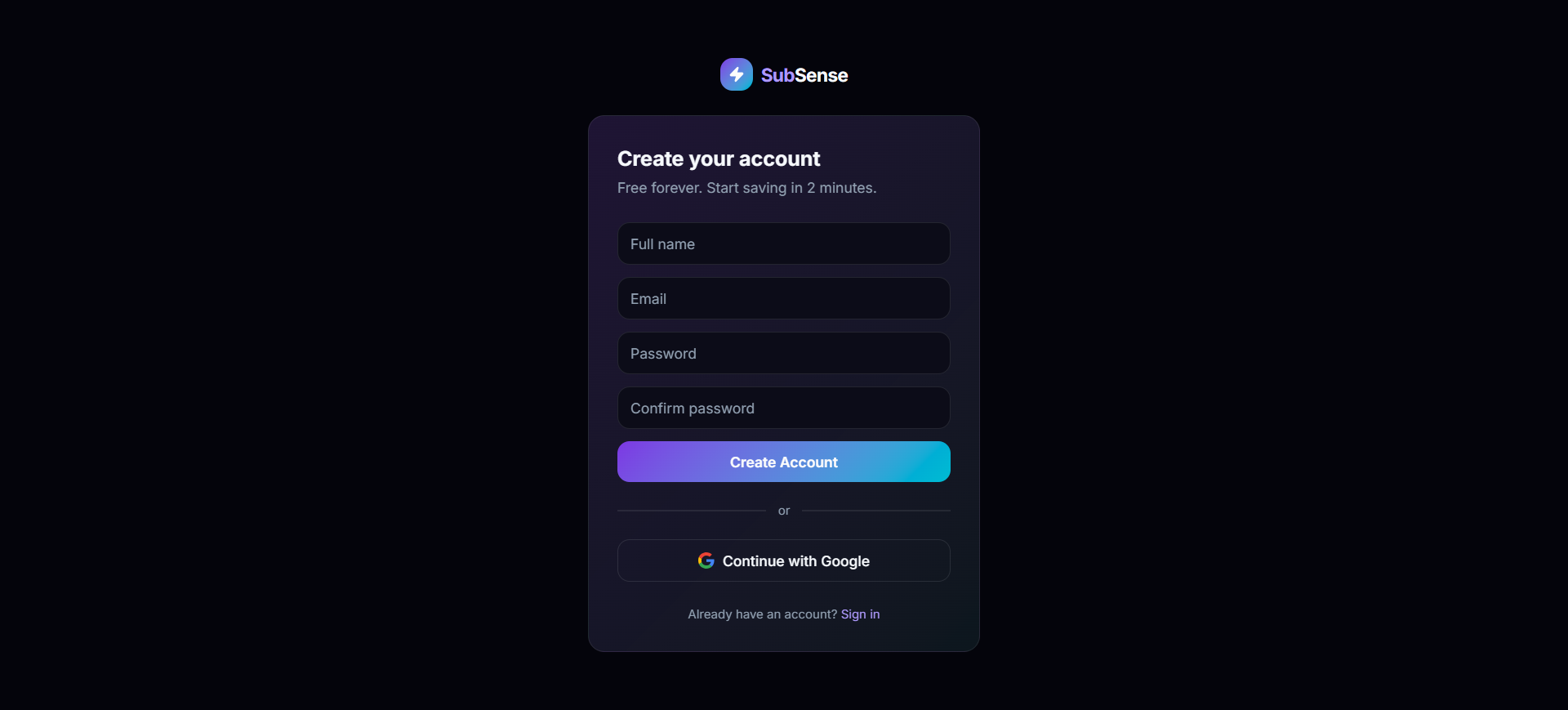
Sign Up
-
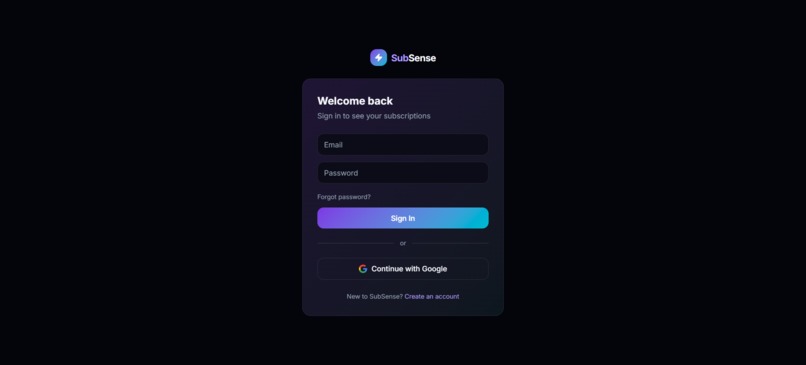
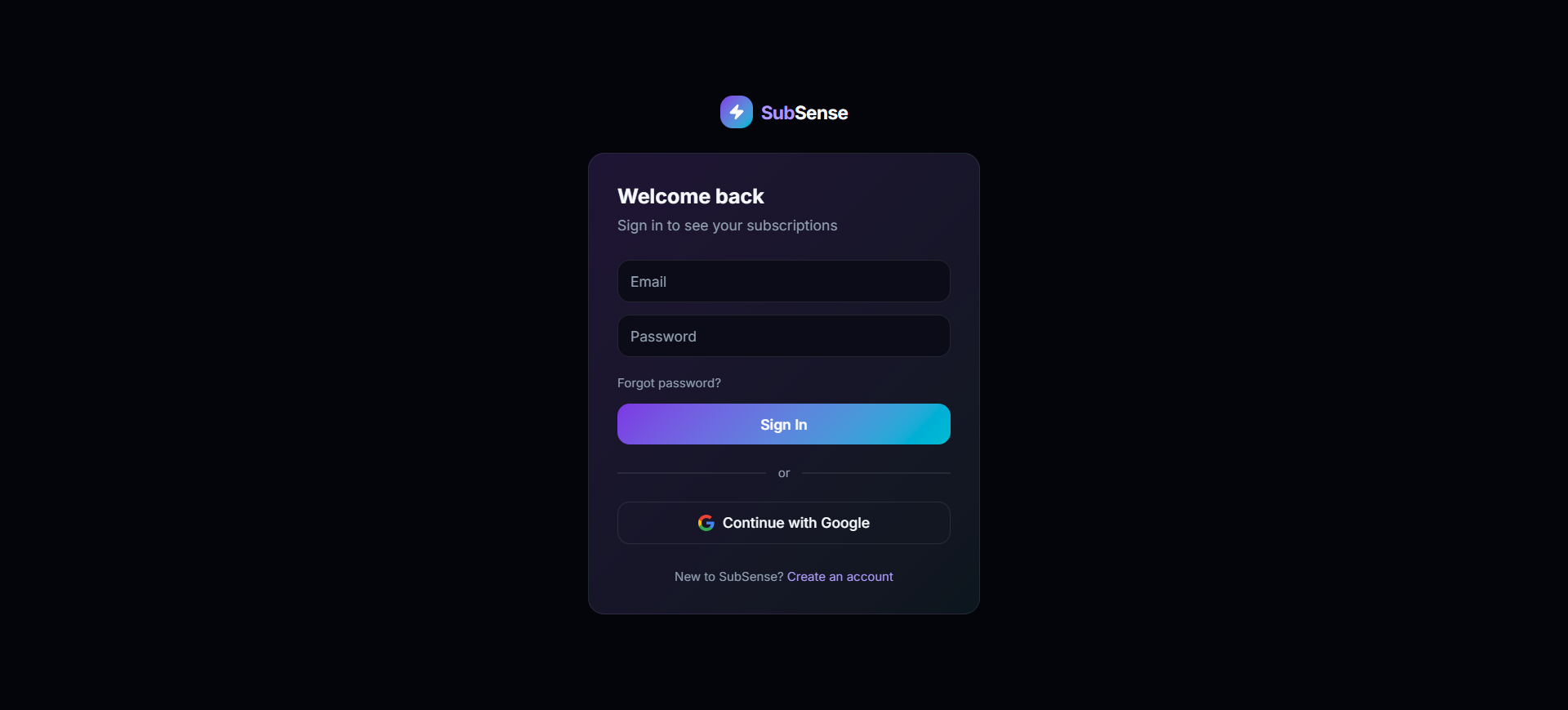
Sign In
-
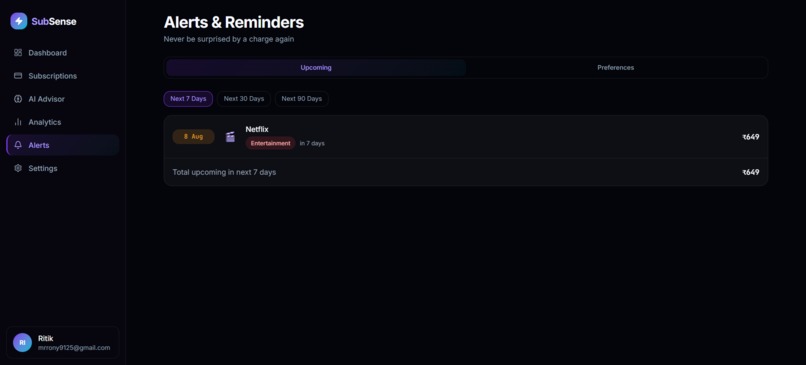
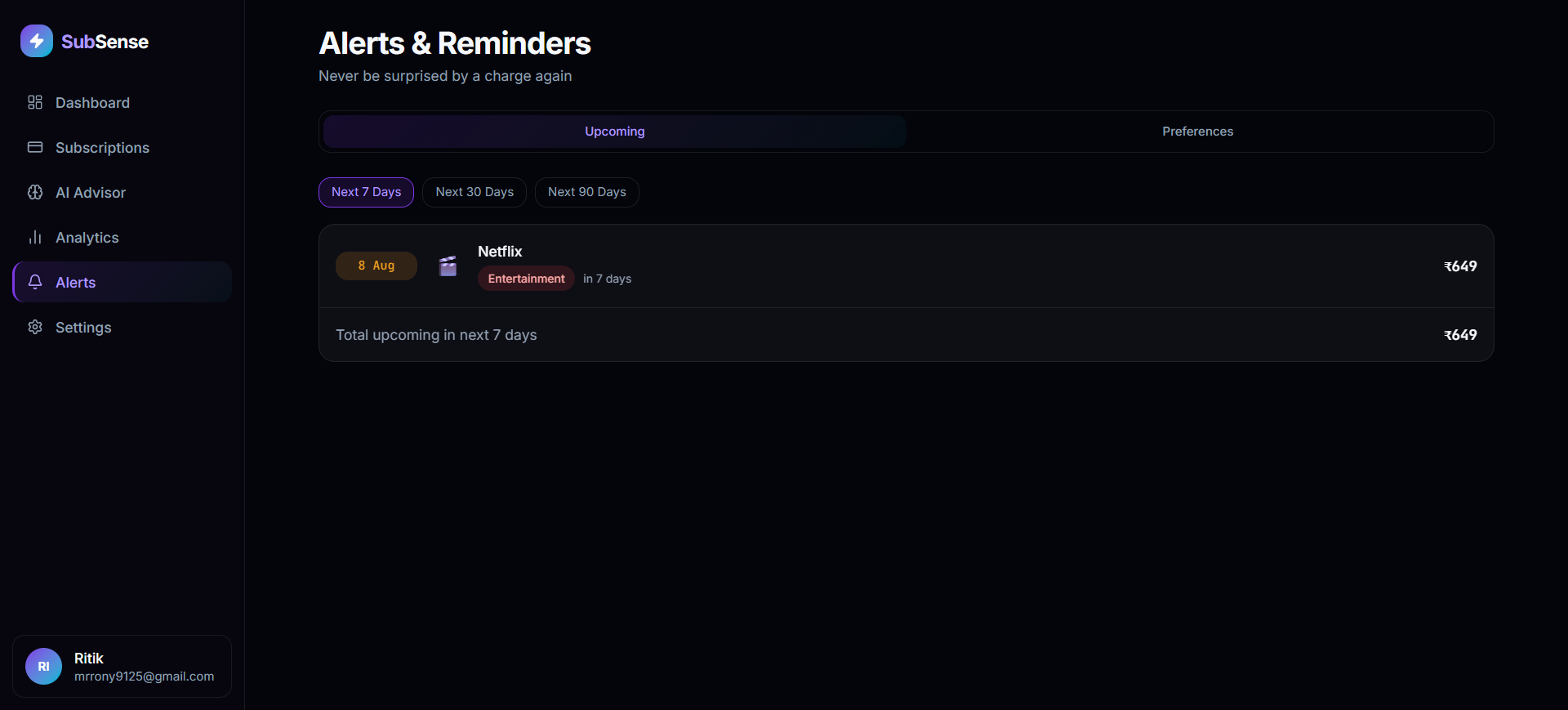
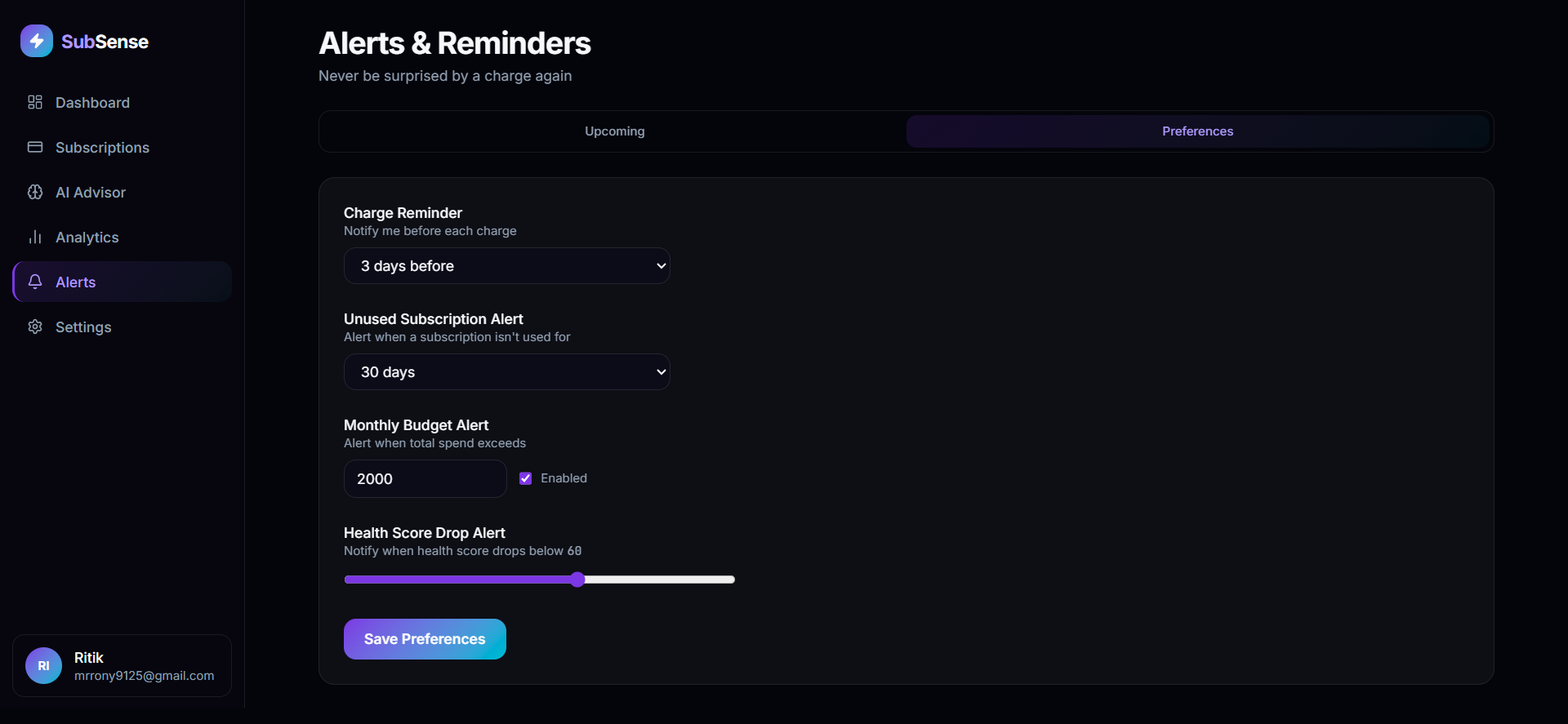
alerts
-
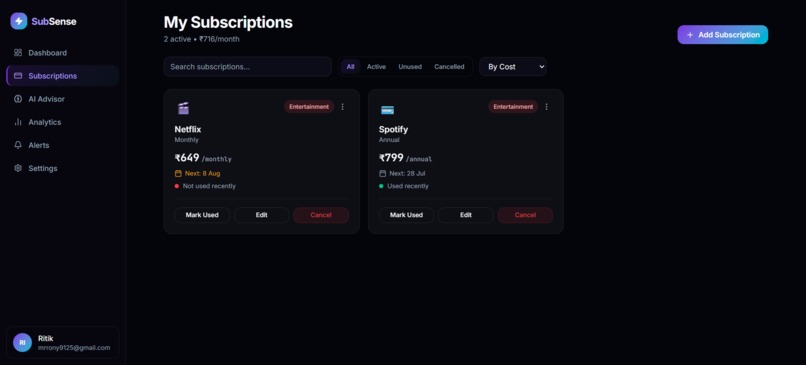
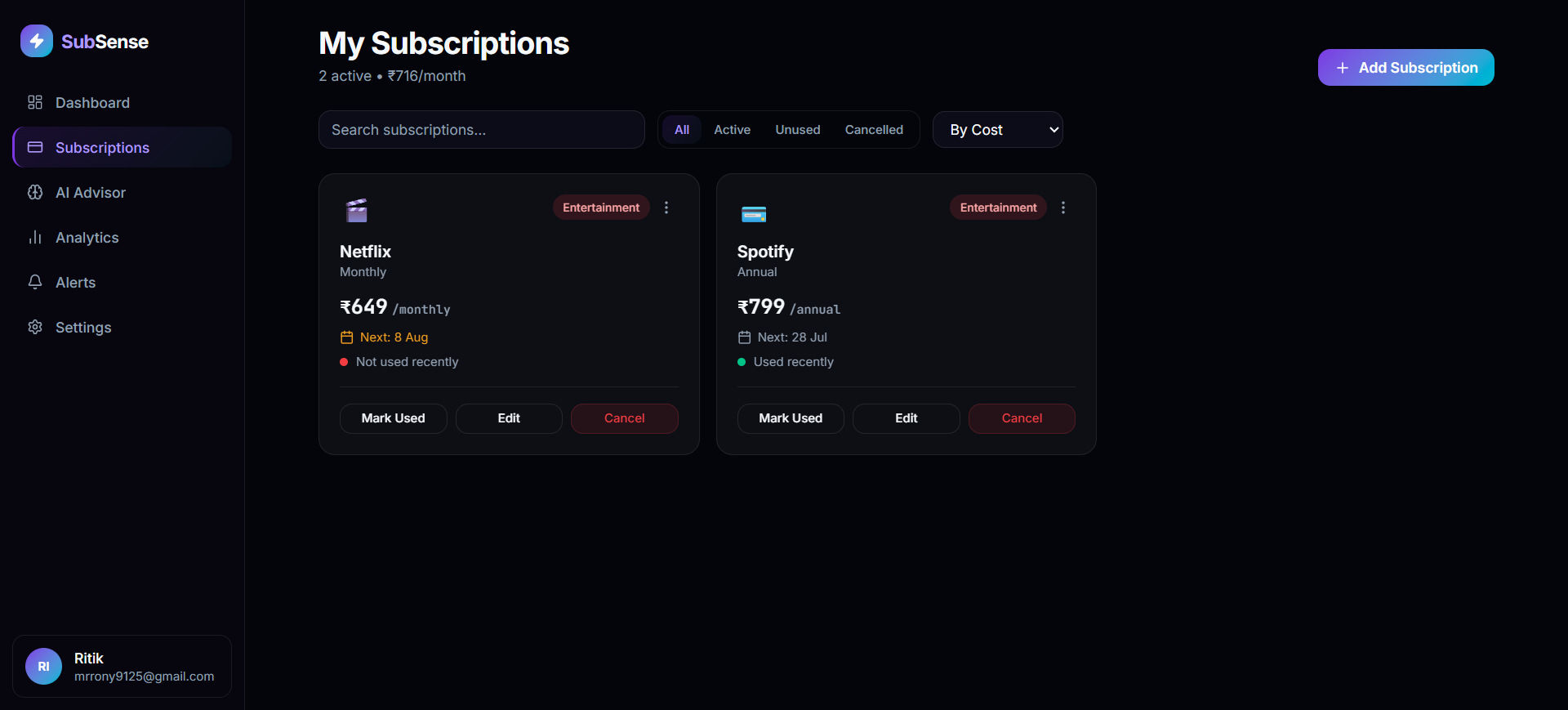
Subscriptions
-
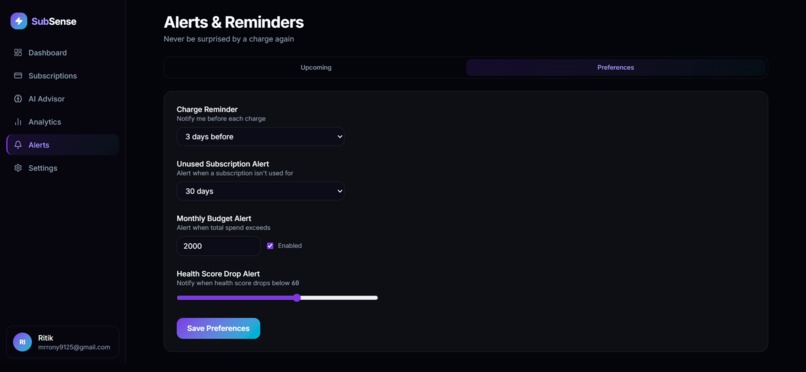
Alerts Preferances
-
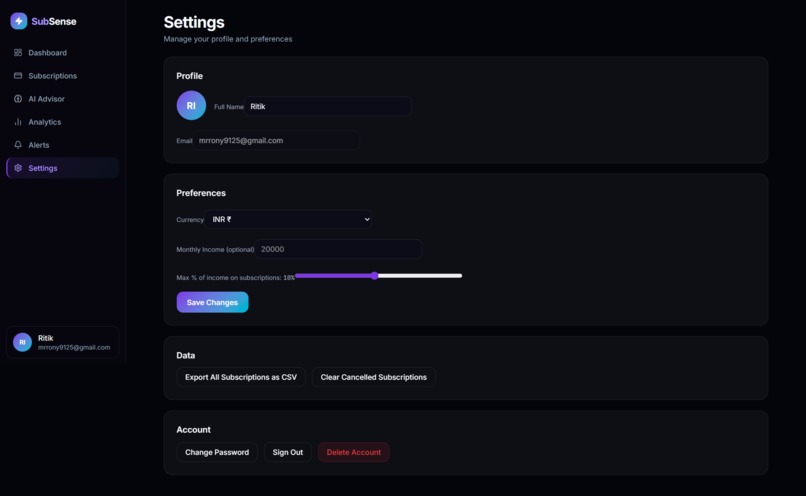
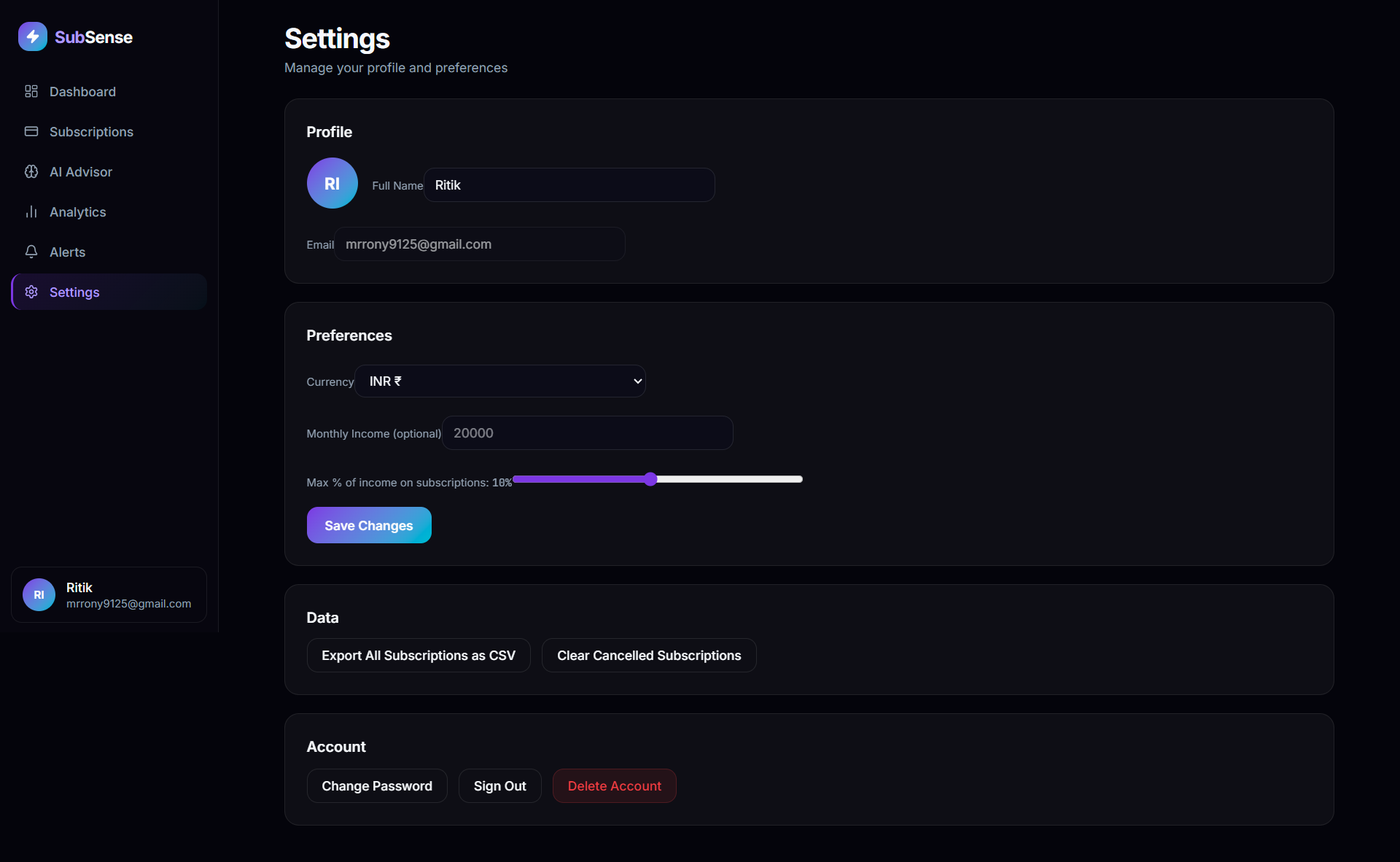
Settings
-
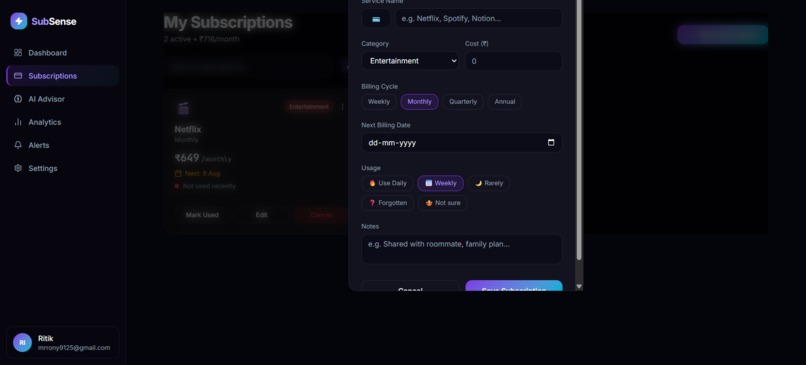
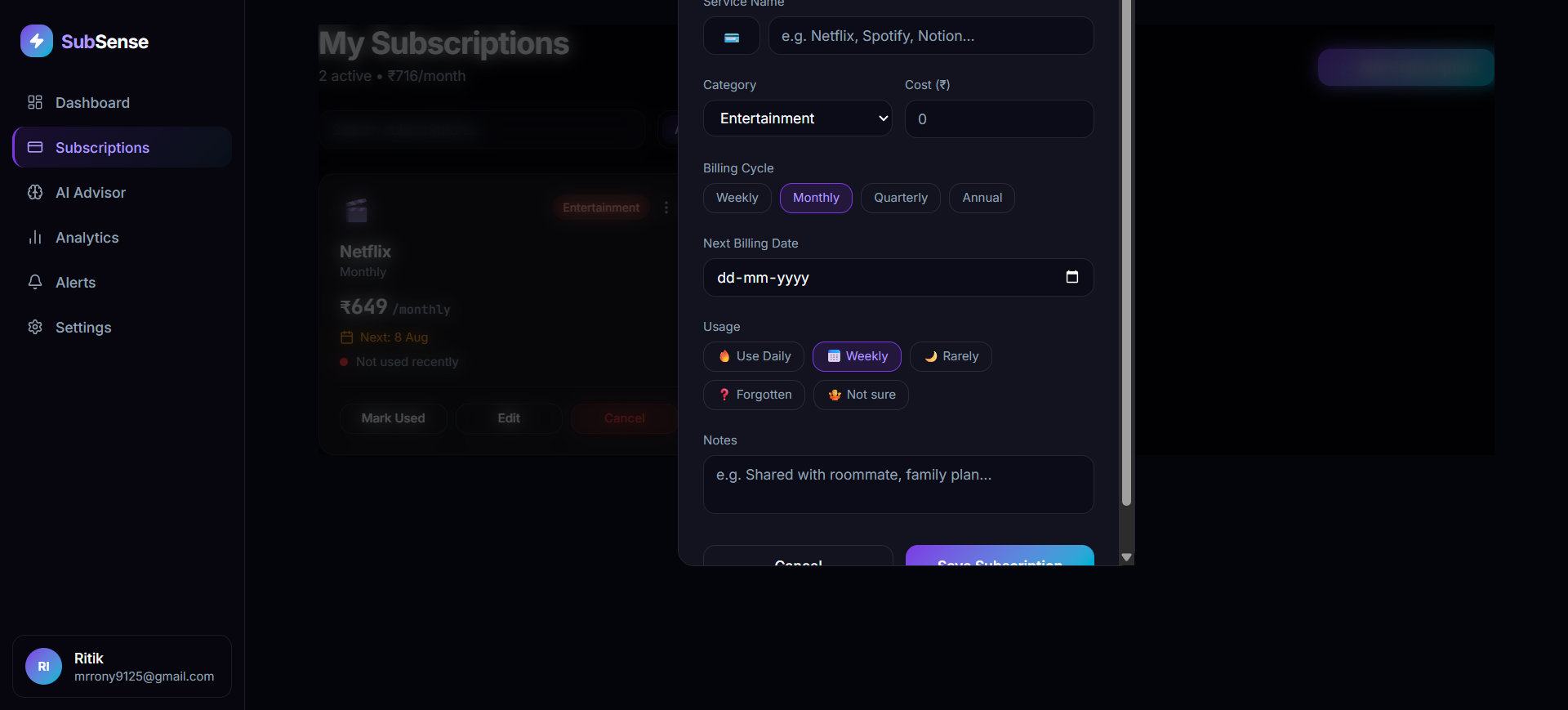
Add subscriptions
-
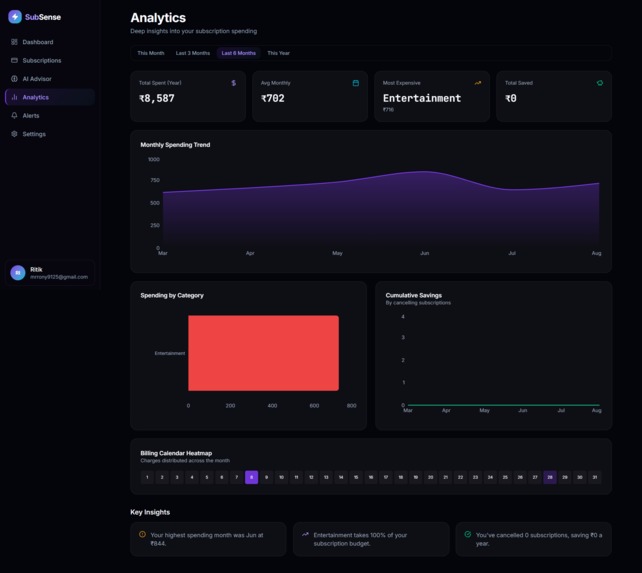
analytics
-
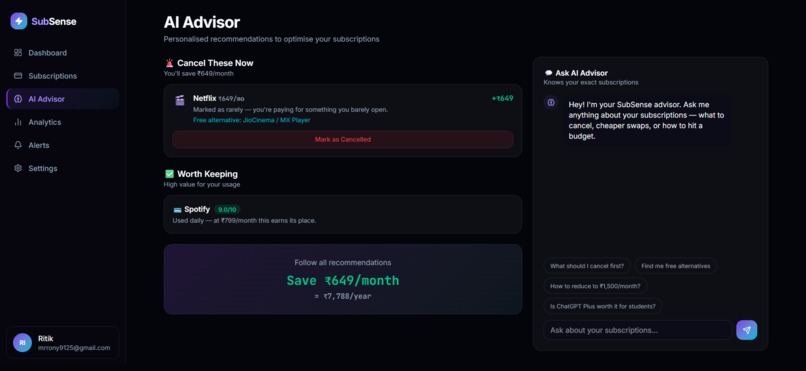
advisor

The Moment It Hit Me
Last semester, I was going through my bank statement trying to figure out why I was always broke by the 15th. That's when I saw it Headspace, ₹399. I hadn't opened that app in two months. Below it, Canva Pro, ₹499. I don't even remember upgrading. Amazon Prime, ₹299. I have Flipkart on my phone.
That one afternoon cost me ₹1,197 in subscriptions I'd completely forgotten about. And I'm a CS student I should know better.
I looked for an app to fix this. Everything I found was either built for American users, paywalled itself, or just... ugly. Nothing was made for someone like me a student in India juggling 12 subscriptions, a tight budget, and absolutely zero patience for complicated finance apps.
So I built SubSense.
What It Does
SubSense is a subscription intelligence dashboard for students. You add your subscriptions once, and it tracks billing dates, flags the ones you haven't touched in 30 days, and gives you a Subscription Health Score a single number that tells you how well you're managing your digital spending.
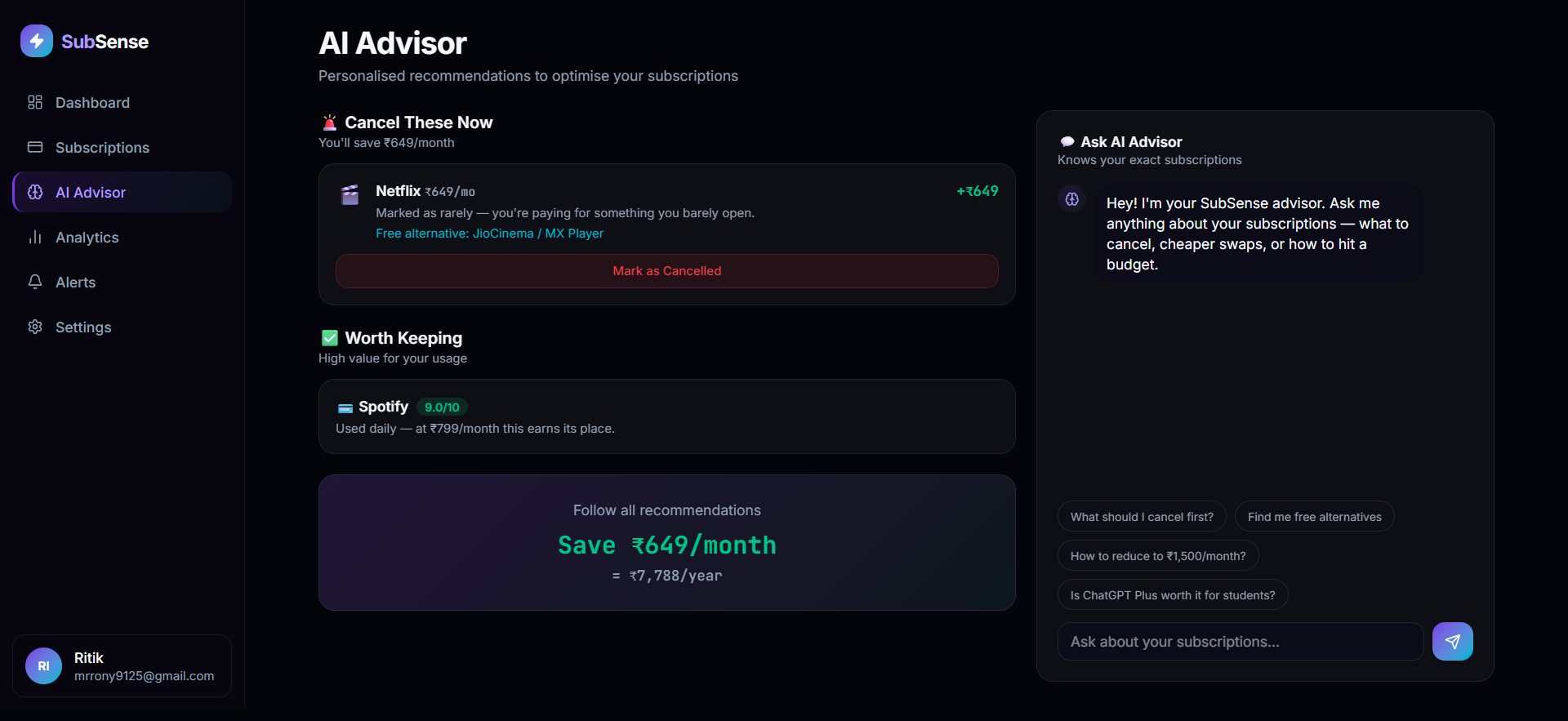
The part I'm most proud of is the AI Advisor. It looks at your actual subscriptions and tells you, specifically, what to cancel and what free alternatives exist. Not generic advice. Actual names, actual amounts, actual next steps.
How I Built It
I used Lovable to scaffold the frontend fast React + TypeScript + Tailwind and connected it to Supabase for auth and the database. Supabase Row Level Security meant I didn't have to write a single line of backend auth logic, which saved hours.
The AI Advisor runs on Claude (Anthropic API). I inject the user's live subscription data into the system prompt so the model has real context it's not giving generic financial tips, it knows you specifically have Headspace and haven't used it in 47 days.
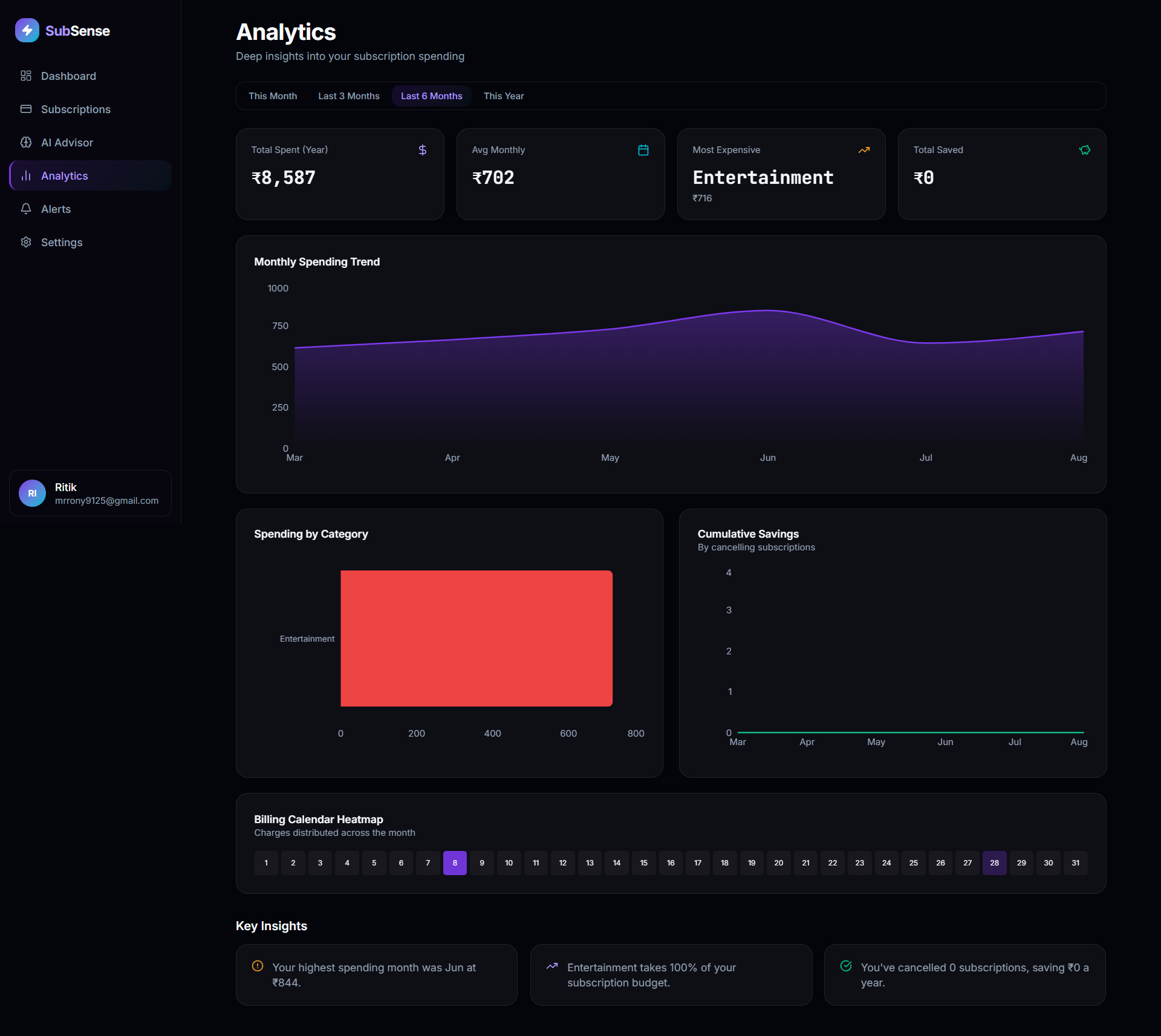
For the analytics, I used Recharts area charts, donut charts, a heatmap-style billing calendar. I wanted the data to feel visual and immediate, not buried in tables.
The health score formula ended up being something like:
$$\text{Health Score} = 0.4 \cdot V + 0.35 \cdot U + 0.25 \cdot B$$
Where \( V \) is value score (cost vs. usage), \( U \) is usage rate across subscriptions, and \( B \) is budget fit (spend as % of income). It's simple but it works and it gives users one number to improve instead of ten metrics to parse.
The Hard Parts
Getting the AI context right took longer than I expected. Early versions of the advisor were giving advice like "consider reducing entertainment spending" true but useless. The fix was injecting the full subscription list as structured JSON into the system prompt. After that, it started saying things like "Cancel Canva Pro you haven't used it in 39 days and Figma's free tier covers everything you're doing." That's actually useful.
The health score went through four or five iterations. My first version punished users for having too many subscriptions, which felt wrong someone with 15 subscriptions they all use daily shouldn't score lower than someone with 3. Usage rate and value mattered more than raw count.
Keeping it from looking like a finance app made by a robot was honestly the weirdest challenge. I kept second-guessing color choices, card layouts, empty states. I wanted it to feel like something a student would actually open every week, not dread.
What I Learned
I came in knowing React. I came out understanding why Supabase RLS exists, how to structure prompts for real context-aware AI responses, and how much a good empty state matters for user trust.
I also learned that the best product ideas aren't always the flashiest. SubSense doesn't do anything technically impossible. It just solves one specific, annoying problem really well and it turns out that's enough.
What's Next
- Bank SMS / UPI parsing to auto-detect subscriptions (no manual entry)
- Group subscription splitting (family plans, shared accounts)
- Annual spending forecast with savings goal projection
- Open API so other student finance apps can pull health scores
The GitHub repo is public and MIT licensed. If this is useful to you, contribute - I'd love to keep building it beyond TSOC.
Built With
- anthropic
- api
- apis
- auth
- claude
- css
- javascript
- lovable
- postgresql
- react
- recharts
- rest
- supabase
- tailwind
- typescript
- vercel


Log in or sign up for Devpost to join the conversation.