-
-

Su2ku app icon — original 1024 × 1024 image.
-
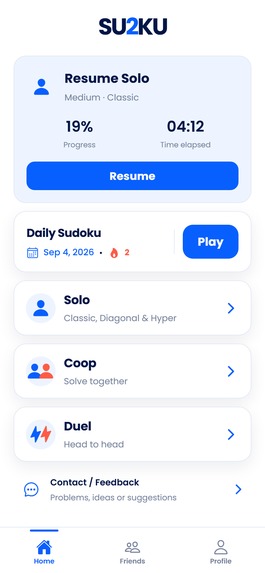
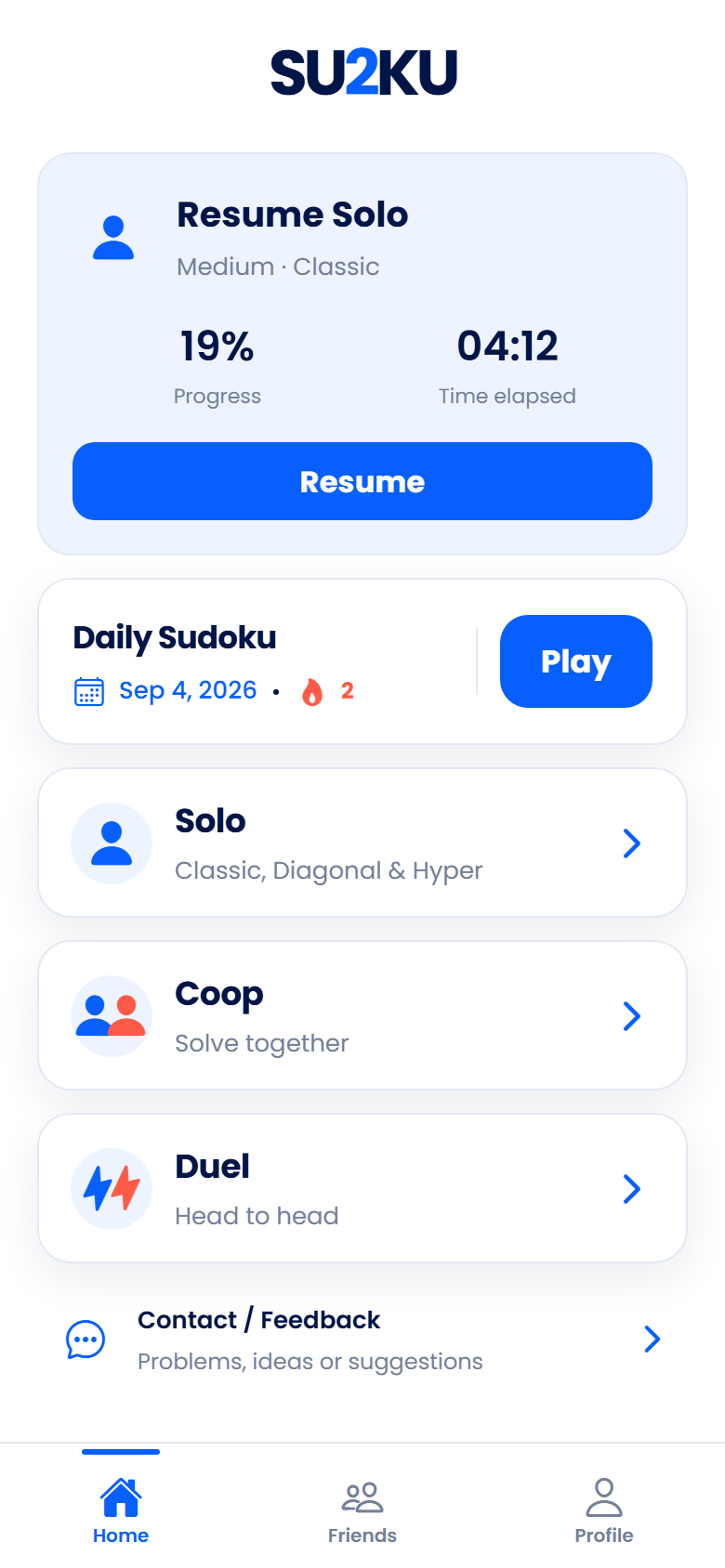
Earlier home-screen development preview (780 × 1688).
-
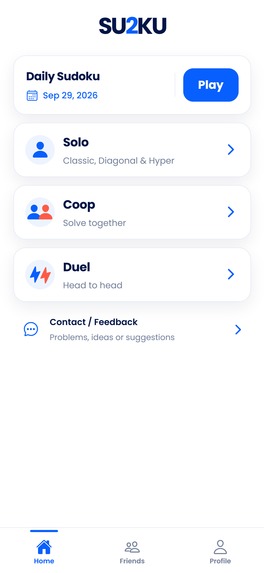
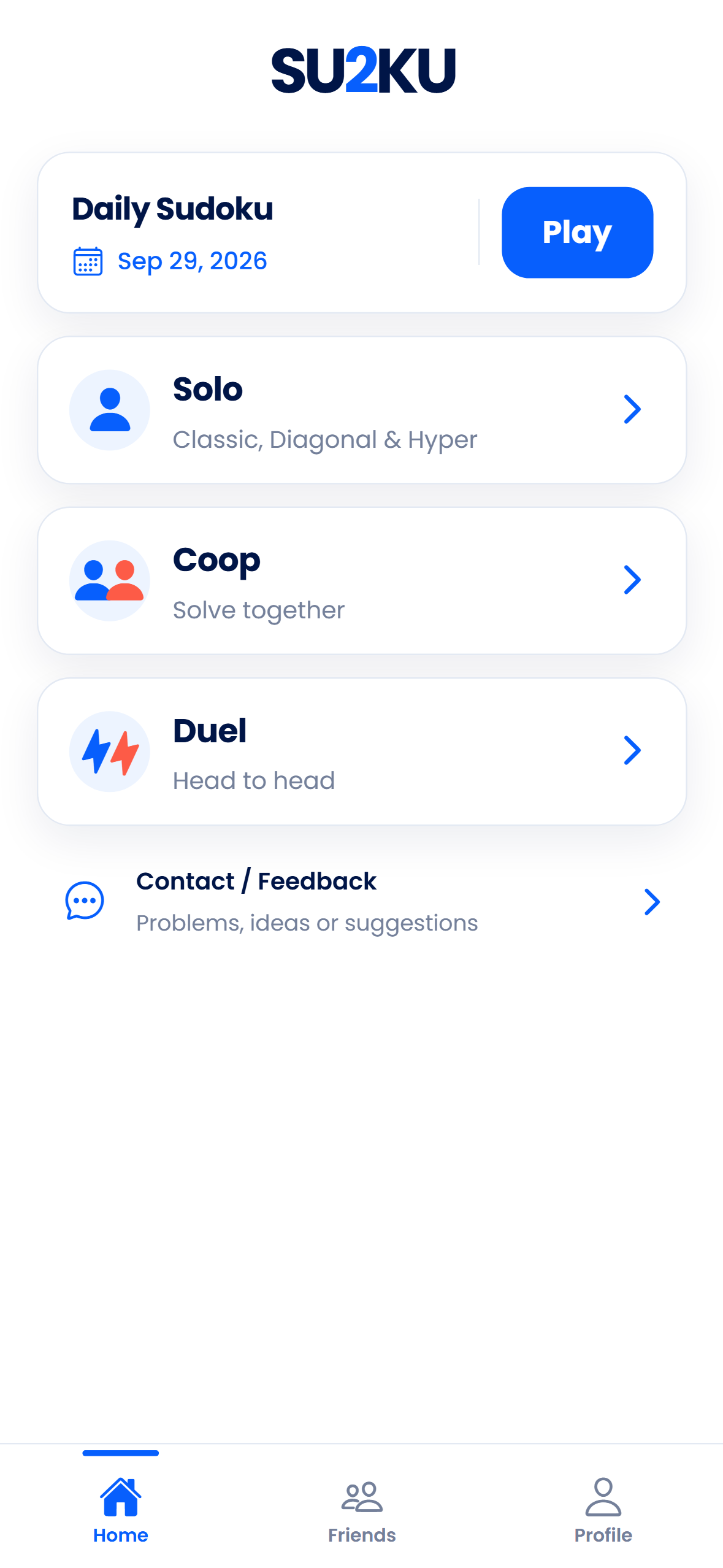
Su2ku home — 1179 × 2556, no device frame. Captured from the React Native web preview.
-
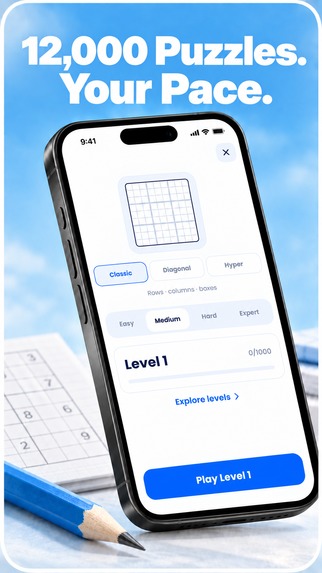
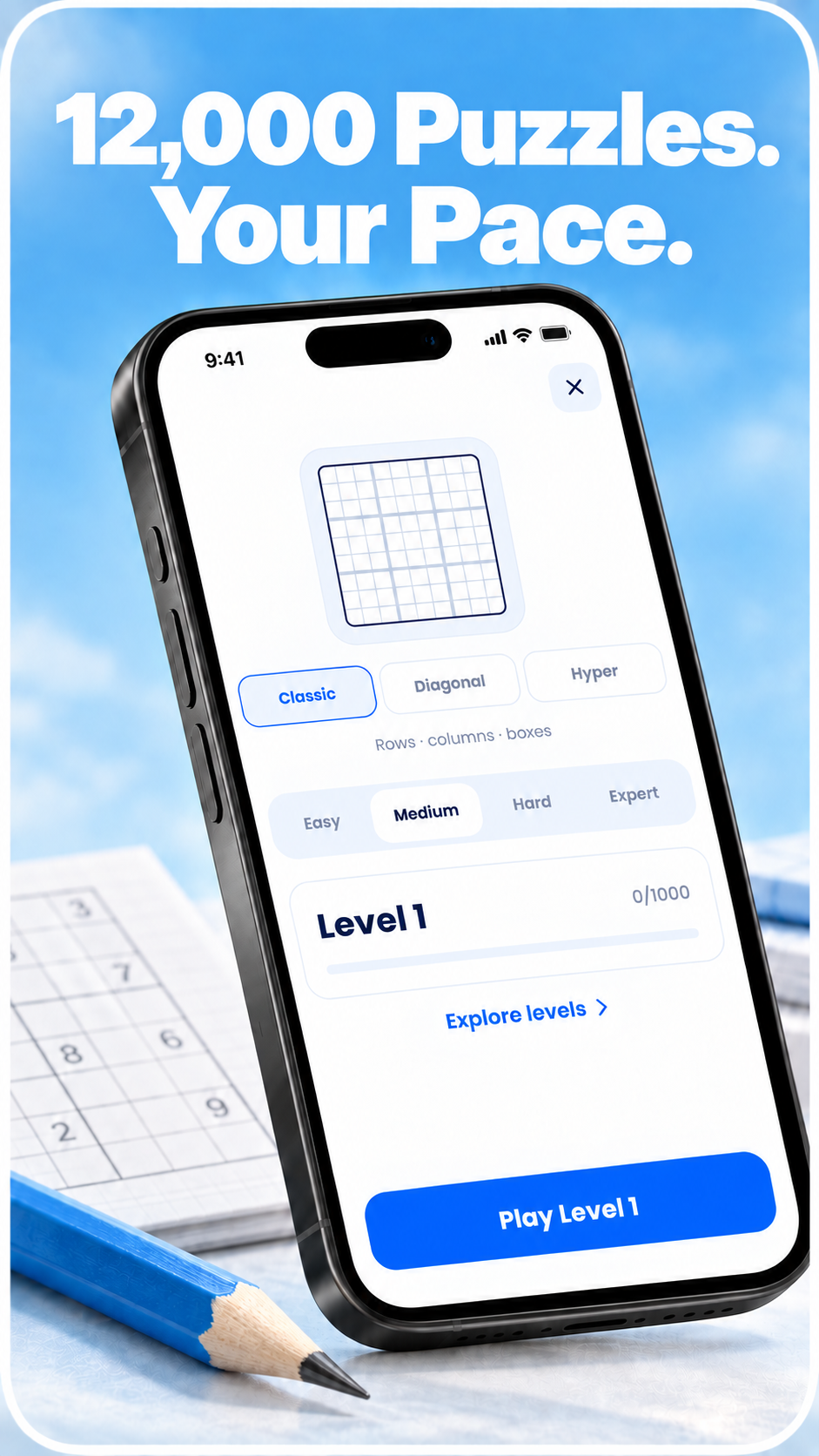
12,000 Puzzles. Your Pace. — Classic, Diagonal and Hyper.
-
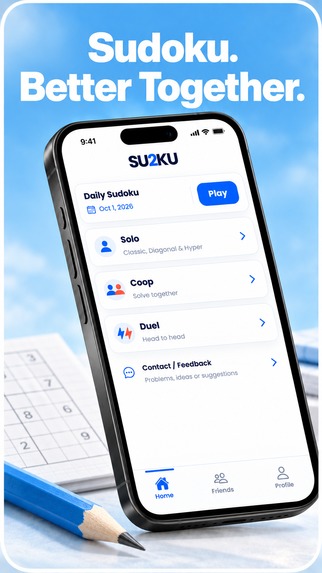
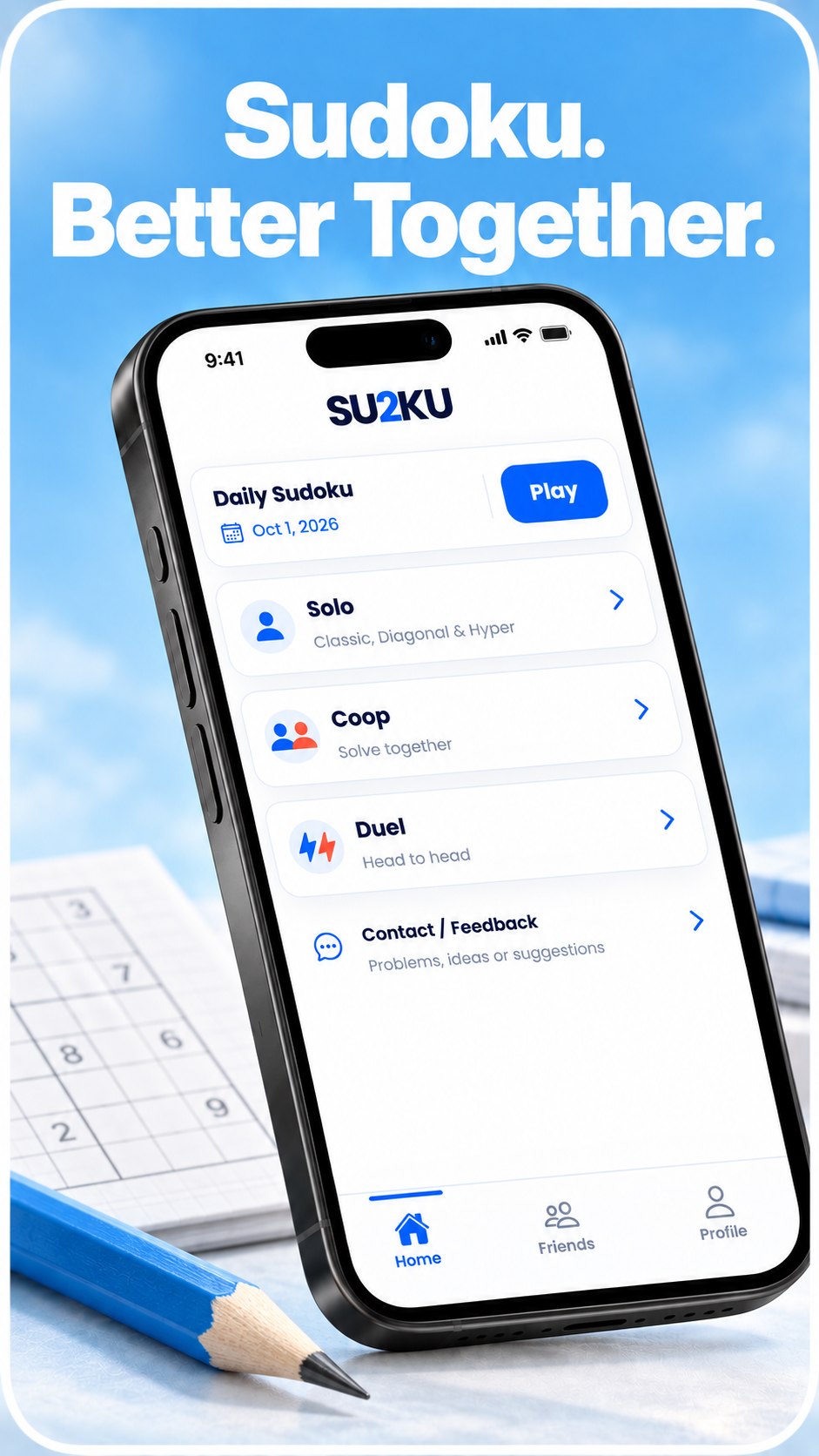
Sudoku. Better Together. — Solo, Coop and Duel.
-
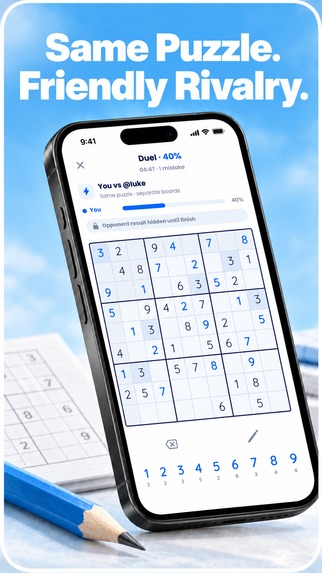
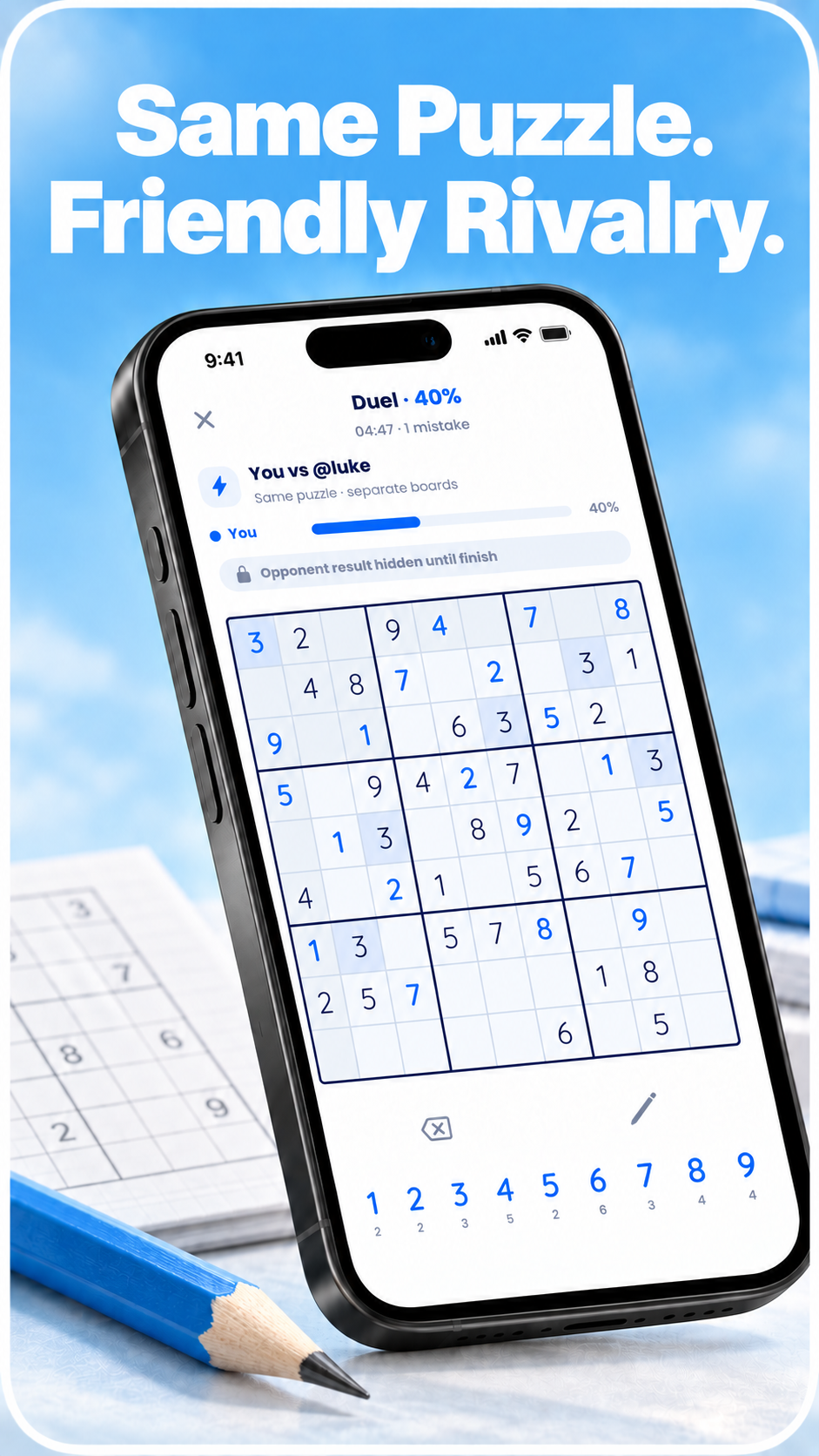
Same Puzzle. Friendly Rivalry. — Duel with separate boards.
-
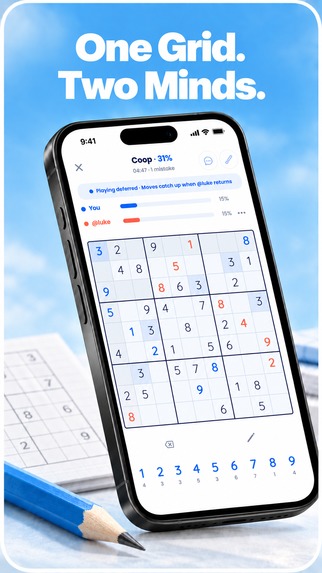
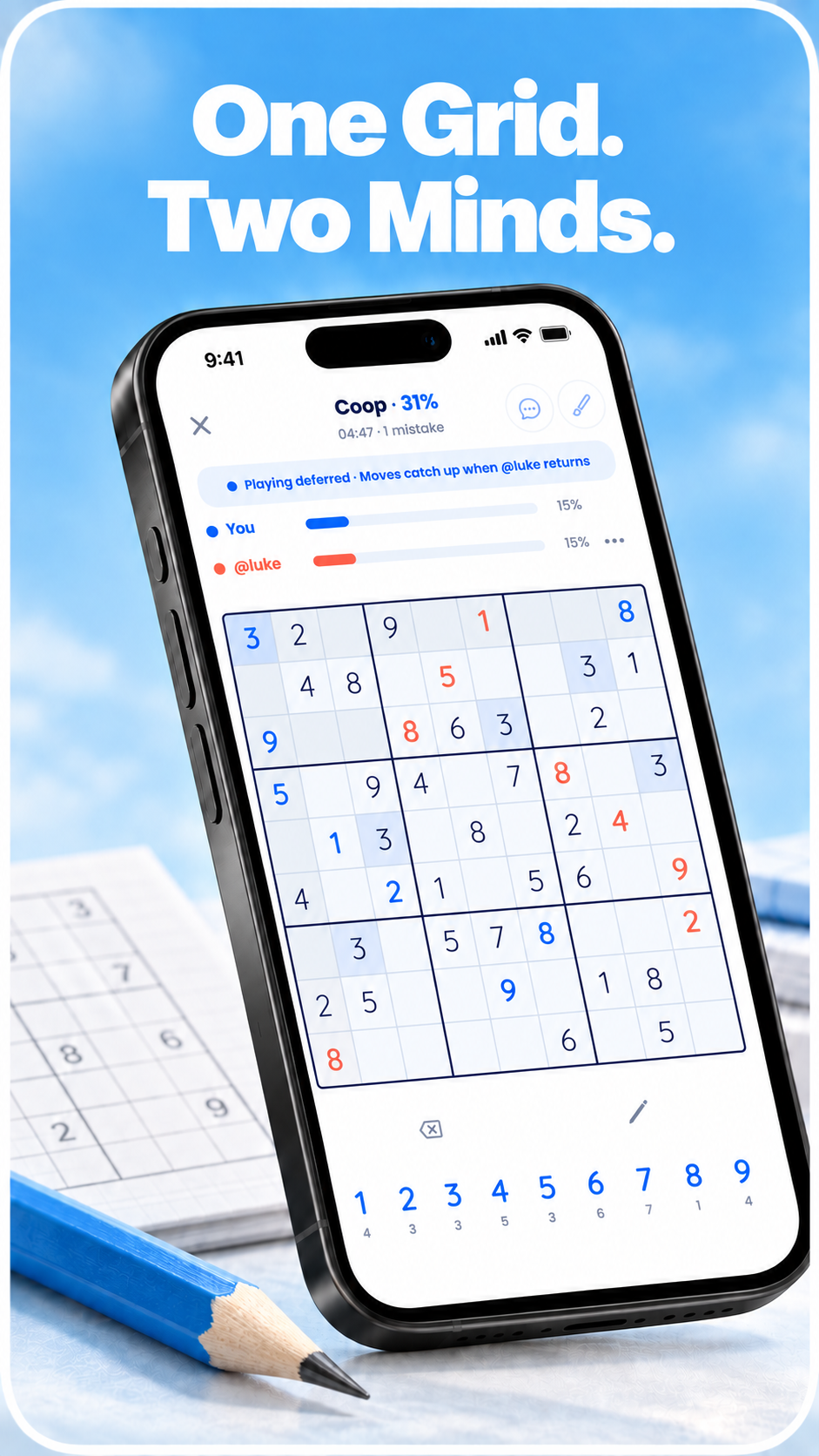
One Grid. Two Minds. — Solve a shared puzzle in Coop.

Inspiration
My gf and I solved sudoku together in physical books so i created this sudoku app where we can solve them even with distance. And we can communicate by drawing and asking why we put a number or if we think its wrong etc.
What it does
Pick how you want to play:
- Solo: take your time with a puzzle. Use notes, hints and mistake checks, then come back to your saved game later.
- Coop: solve one shared grid with a friend. You can see each other's moves and use chat, reactions and drawings while connected.
- Duel: both players get the same puzzle, but each solves their own private board. Your opponent's result stays hidden until the finish.
There are 12,000 puzzles across Classic, Diagonal and Hyper Sudoku, with four difficulty levels. You can add friends by username and invite them to play.
The app is available in English, Spanish and French. You can also change the number font to make the board more comfortable to read.
How I built it
The app uses Expo, React Native and TypeScript. Games are saved on the phone, so leaving the app does not mean losing your puzzle.
For connected Coop, the phones exchange moves through a WebRTC data channel. A Laravel backend handles accounts, friends, invitations and the connection setup. It also helps games recover when a connection drops.
On native devices, saved match data is encrypted with a key that stays on that device. Live Coop chat and drawings are not kept as a permanent chat history.
How I use RevenueCat
The puzzle catalog is free to play with ads. RevenueCat handles the optional upgrades, localized prices, purchases and restores.
There are two ways to remove ads:
- Individual: a lifetime upgrade for yourself.
- Duo: an annual or lifetime upgrade for you and one selected friend.
Duo fits the point of the app: if you regularly play together, one purchase can make the experience ad-free for both of you.
The backend verifies purchases and keeps the friend's benefit connected to the purchaser's access, including renewals and revocations.
Challenges I ran into
The hardest part was making shared play recover after a connection drops. Both phones need to agree on which moves have already arrived, without repeating moves or losing progress.
Duo brought a different problem: one purchase benefits two people. Purchases, restores, renewals and changes in access all need to update the right pair of accounts.
What I'm proud of
- Three ways to play that feel different: alone, together or against a friend.
- A catalog of 12,000 puzzles, including Diagonal and Hyper.
- Shared moves, chat and drawings inside a simple Sudoku game.
- An ad-free upgrade that includes the person you play with.
- Keeping the board readable and the controls straightforward.
What I learned
Shared play needs clear feedback. Players should understand whose move they are seeing and what happens when the connection changes.
A shared upgrade also needs a clear explanation: who gets the benefit, how you choose your friend and what happens when access changes.
Where it's at
Su2ku has been live on Google Play since August 8, 2026.
To try the full experience, use the native store build. Two phones are needed to test Coop and Duel together, and purchases and restores should be tested through the store.
What's next
- Keep improving connection recovery from player feedback.
- Make it easier for new players to start their first game together.
- Learn which puzzle types and social modes people return to.
- See whether Duo helps friends build a regular Sudoku habit.

Log in or sign up for Devpost to join the conversation.