-
-
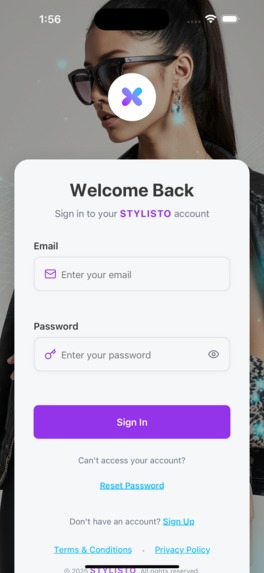
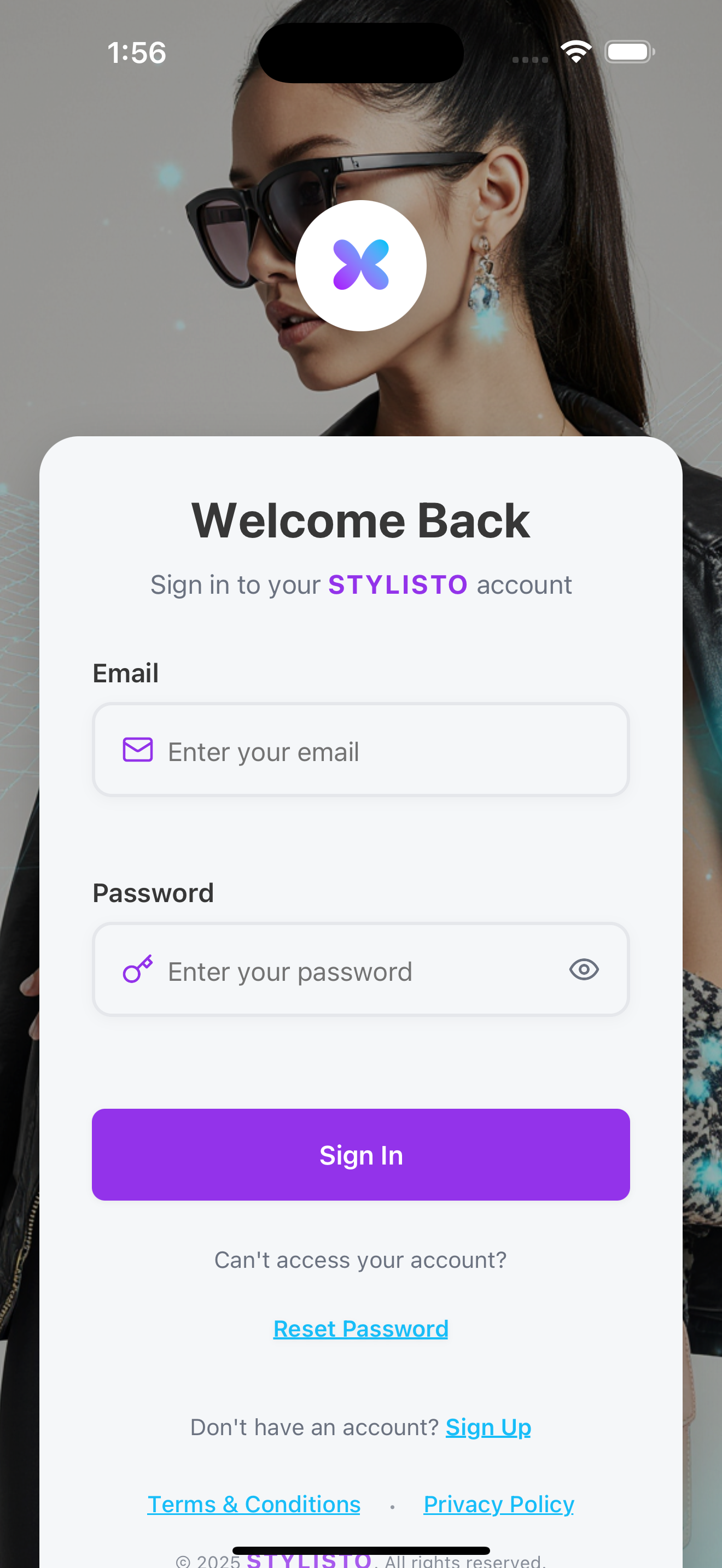
Sign-in page
-
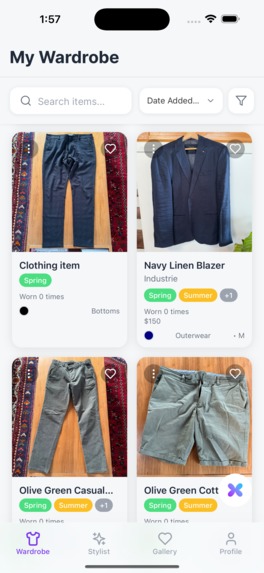
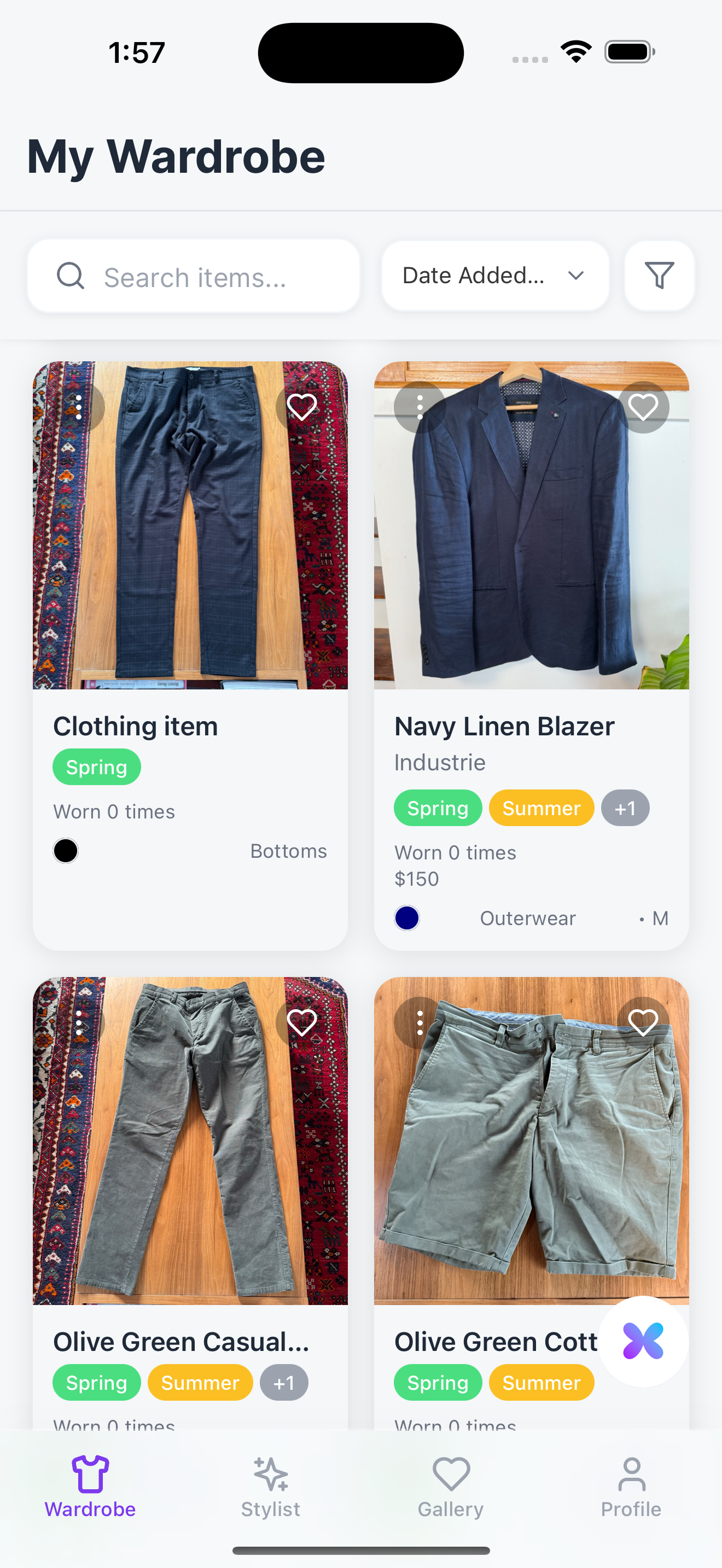
Home Page (My Wardrobe)
-
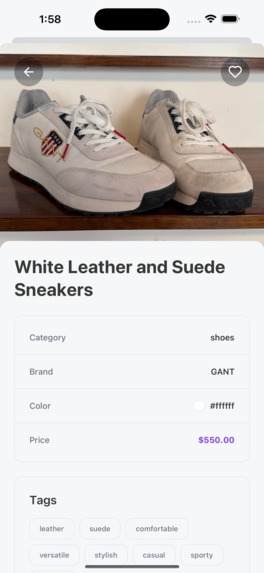
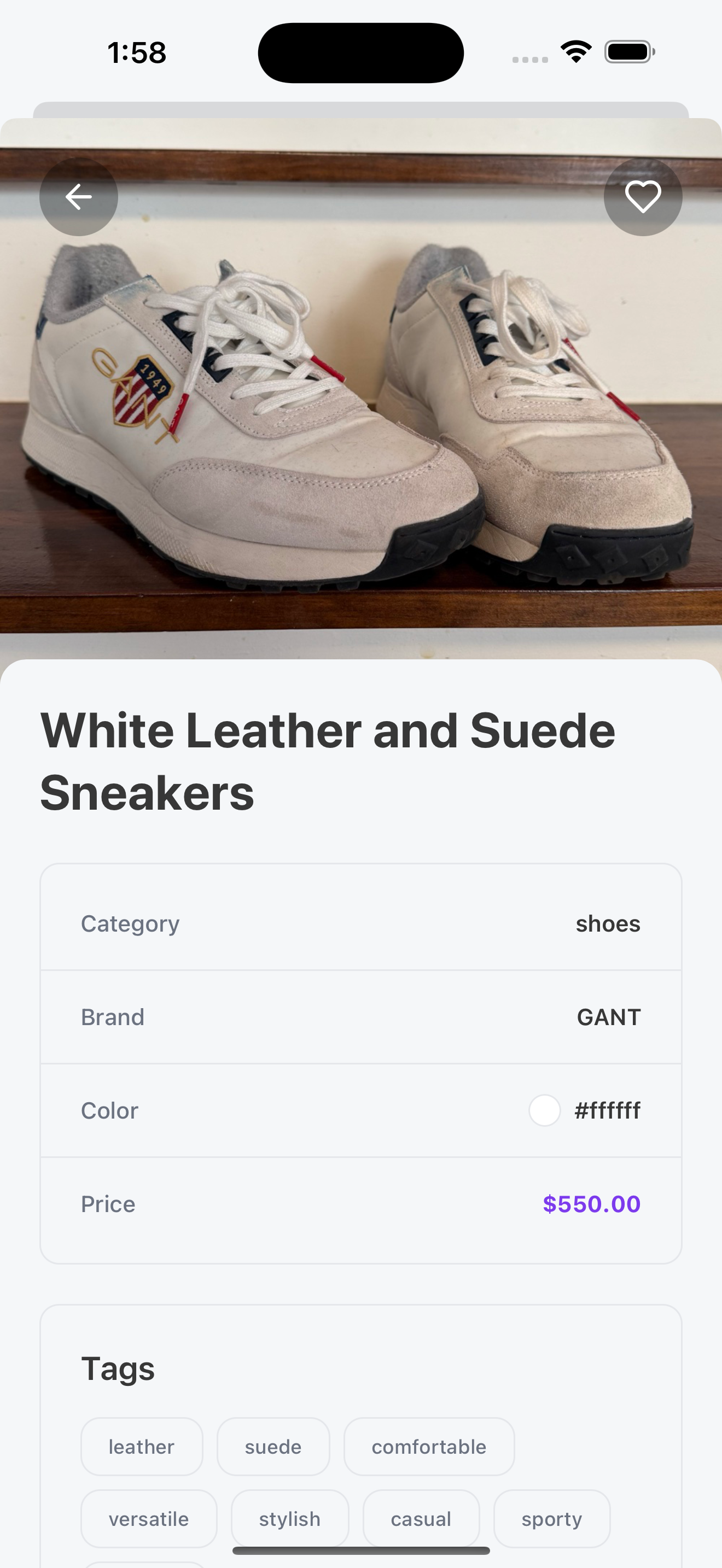
Item details
-
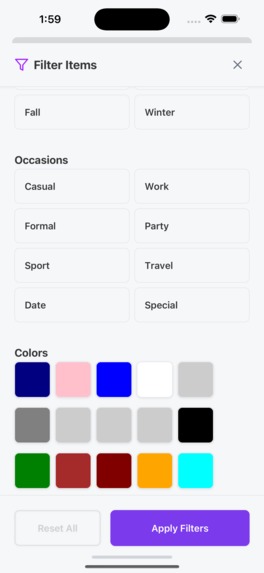
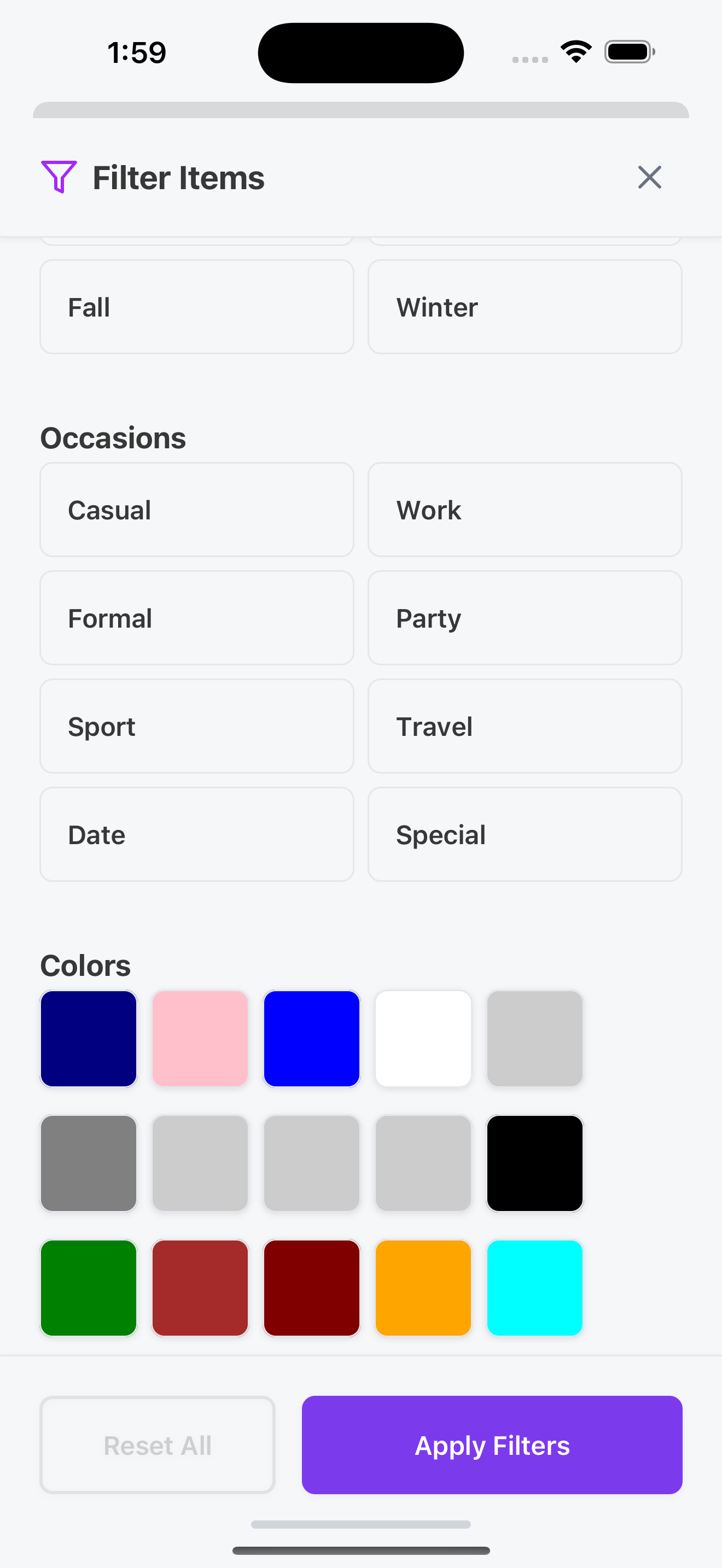
Filters
-
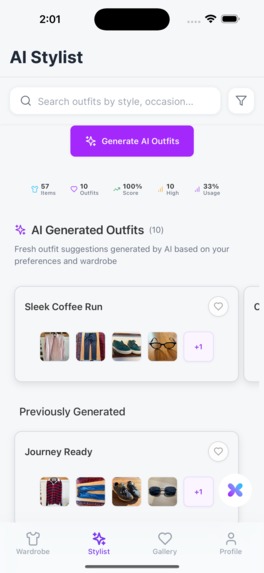
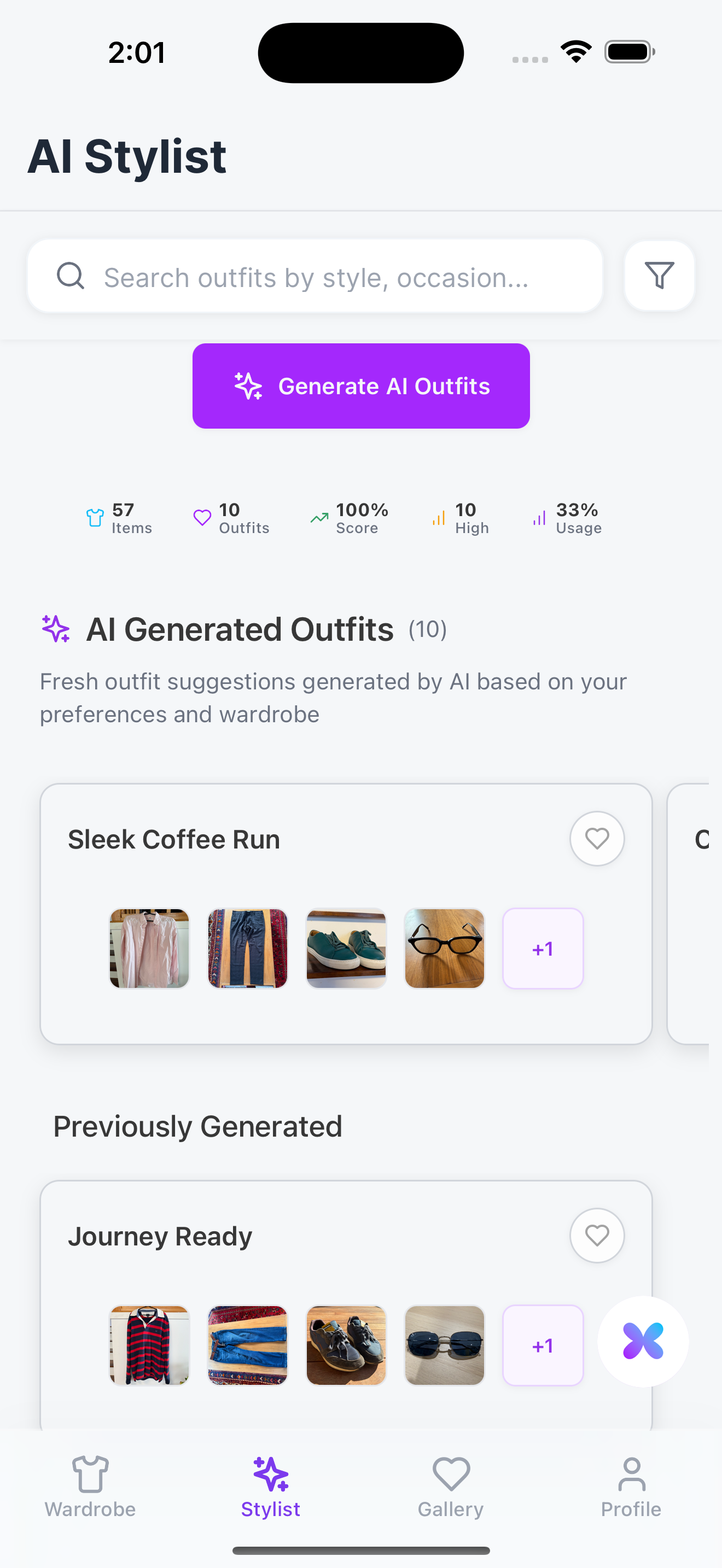
Stylist Page
-
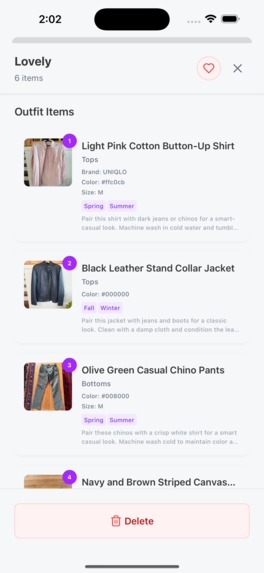
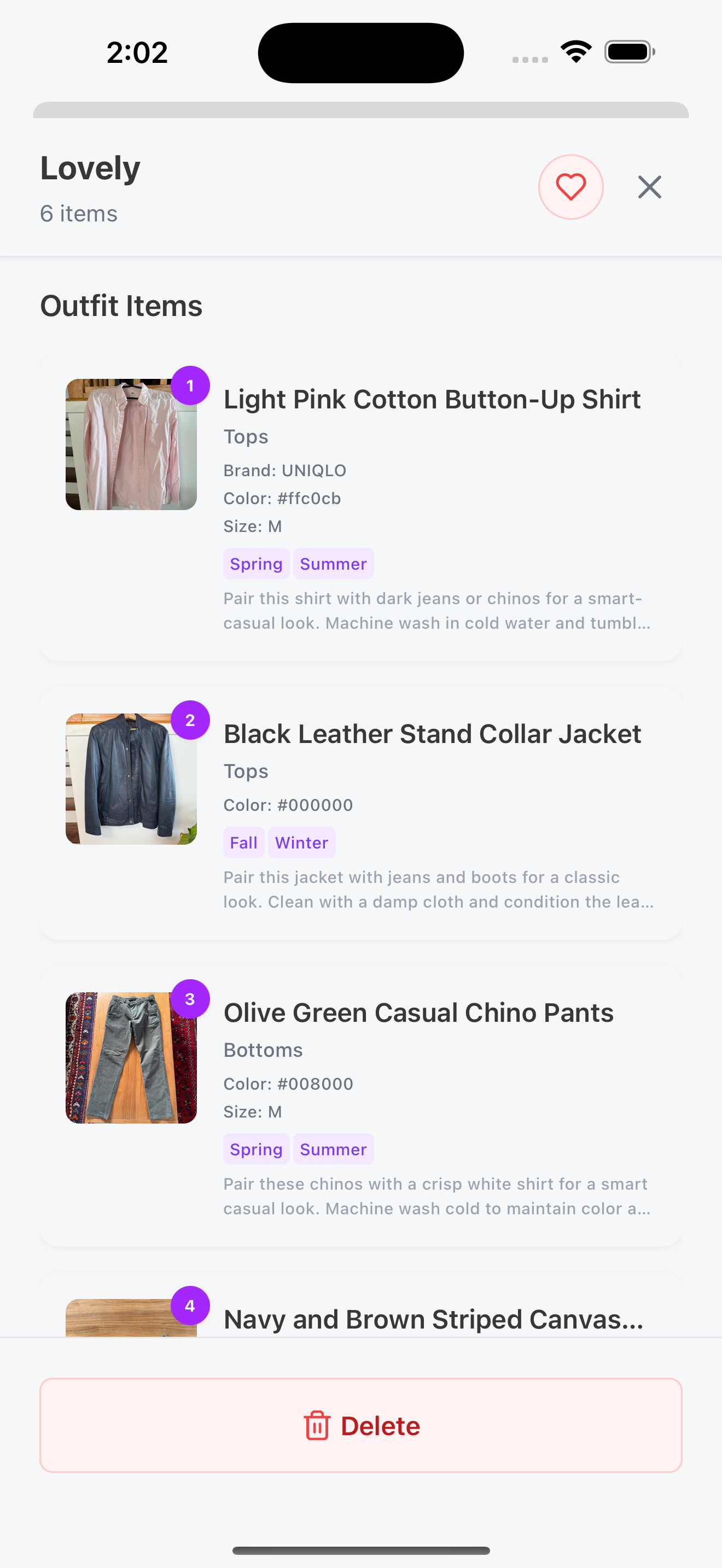
Outfit details
-
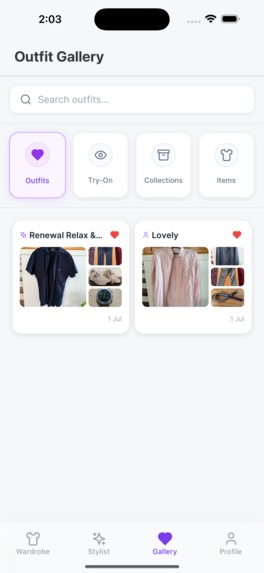
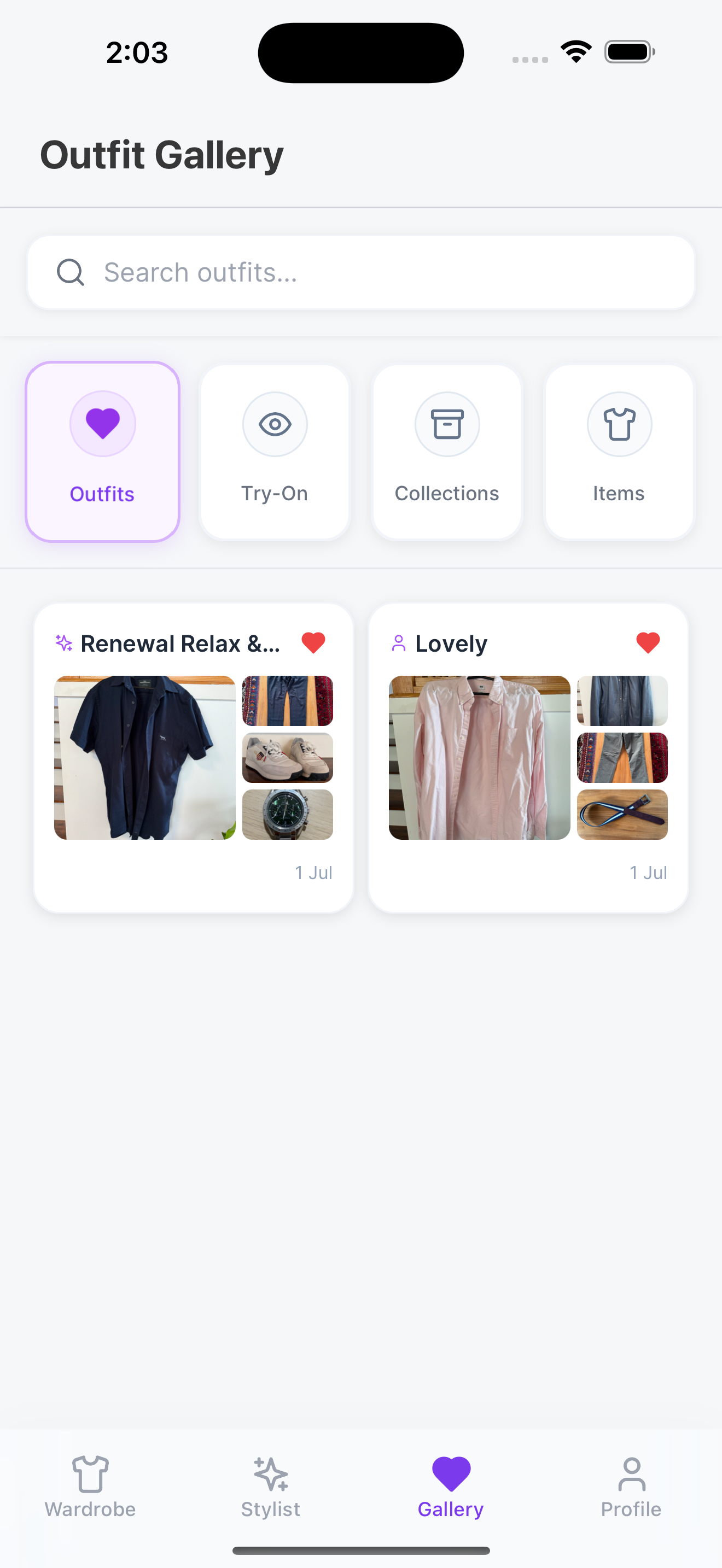
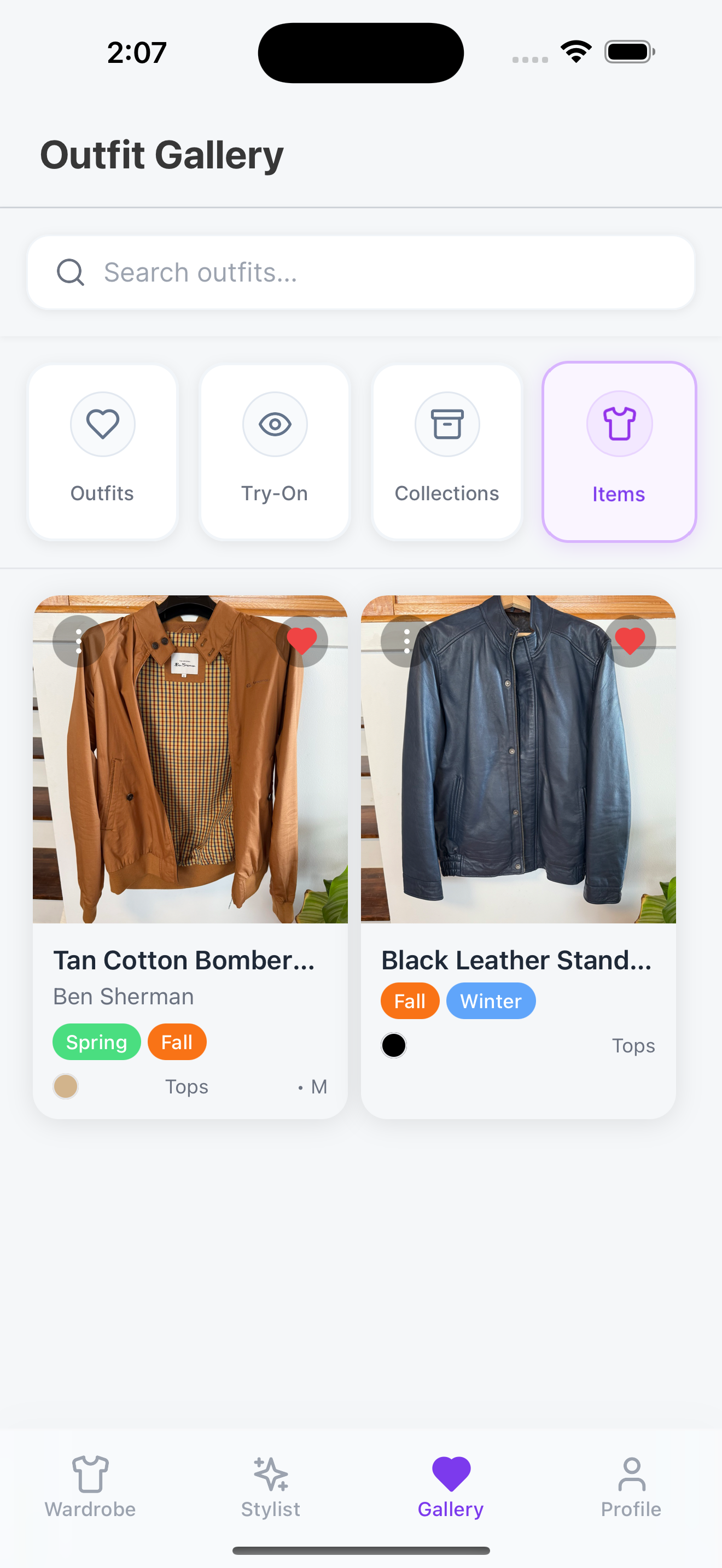
Gallery
-
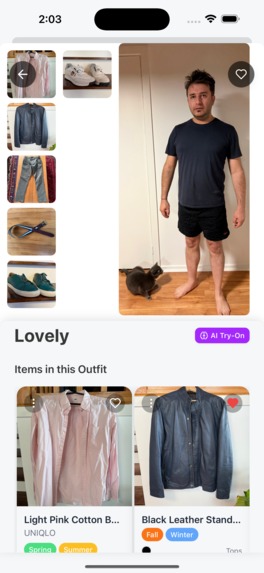
Outfit Set page
-
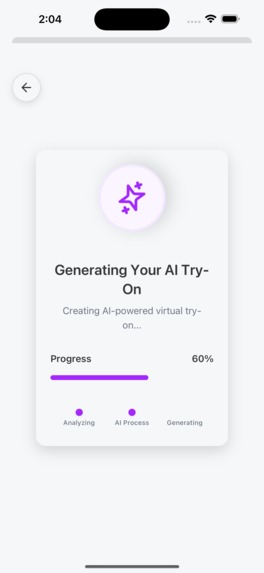
Try On Generate
-
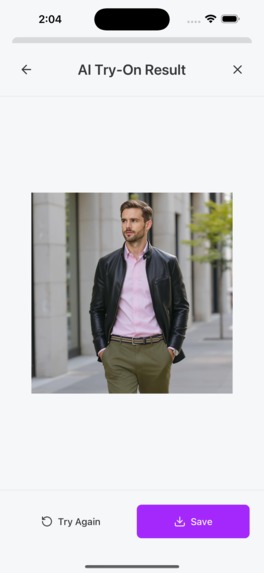
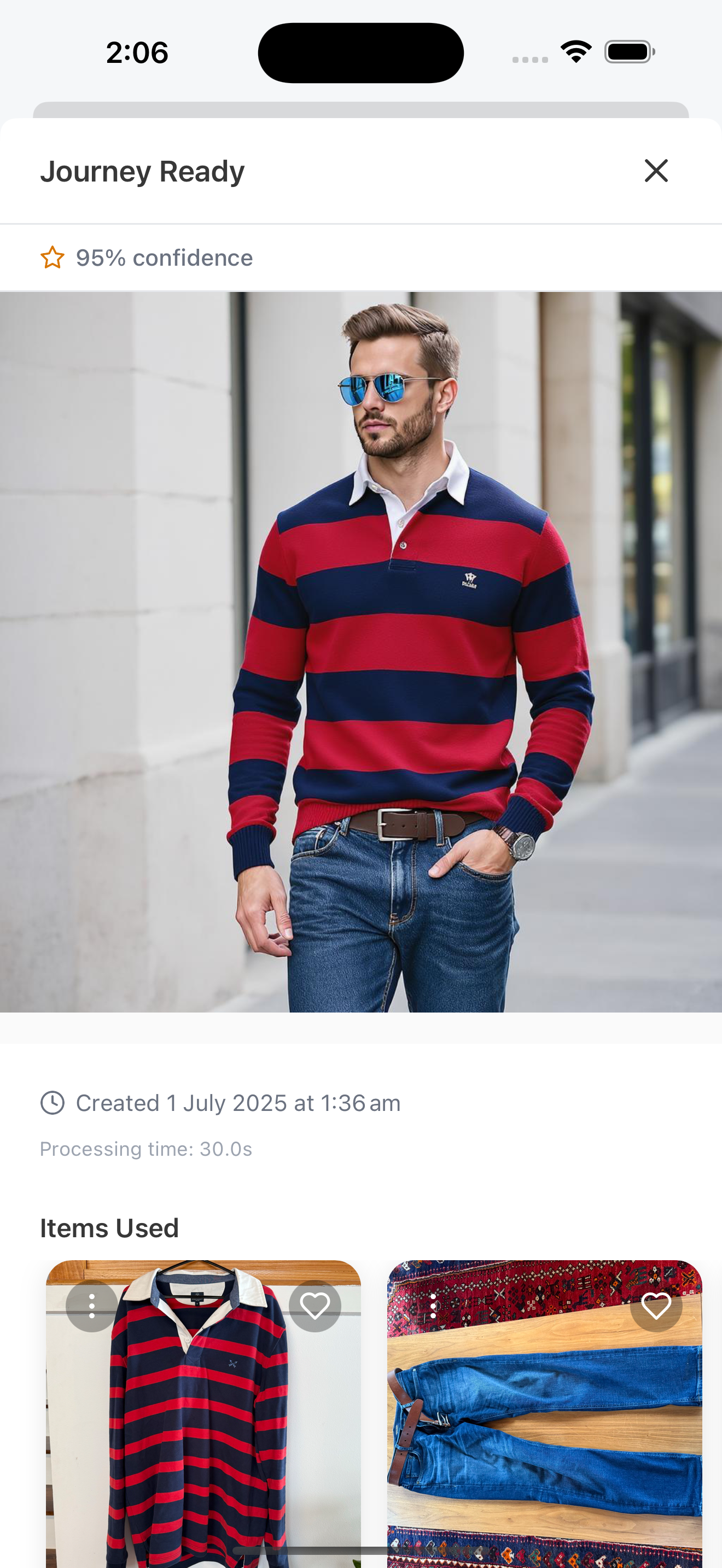
AI Try-On Result
-
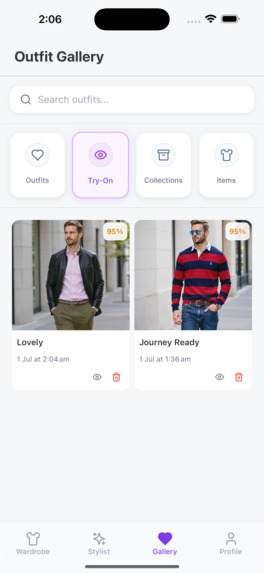
Try-On List
-
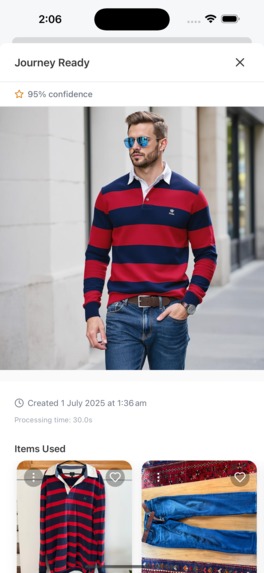
Try-On Details
-
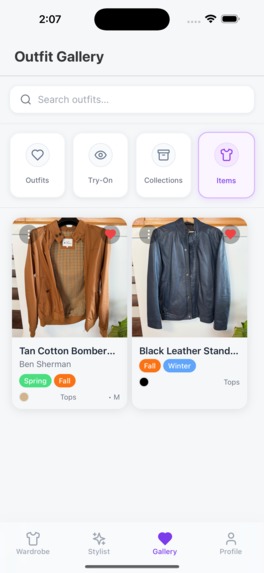
Favorite items
-
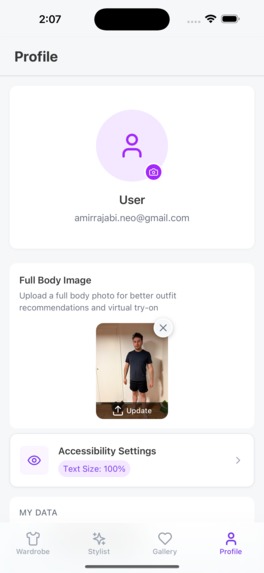
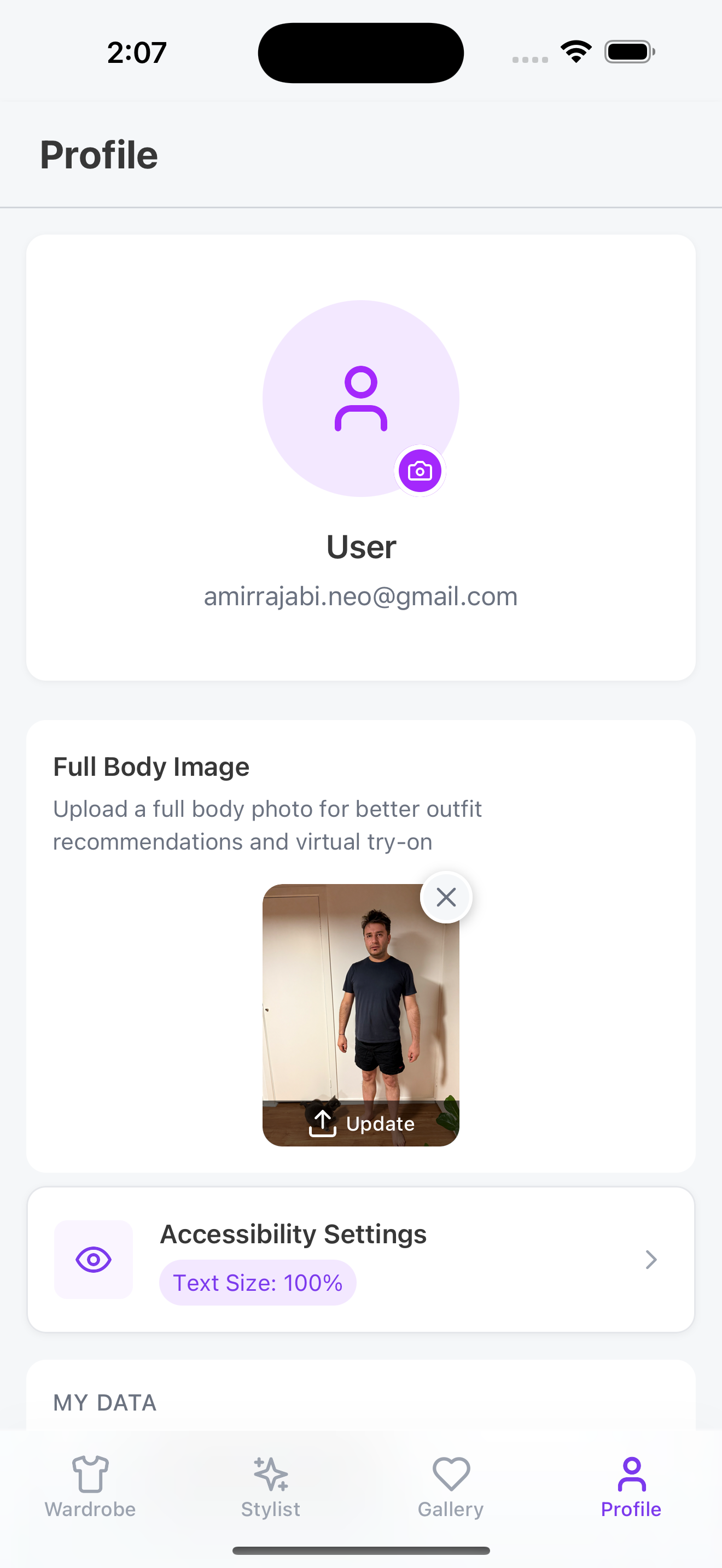
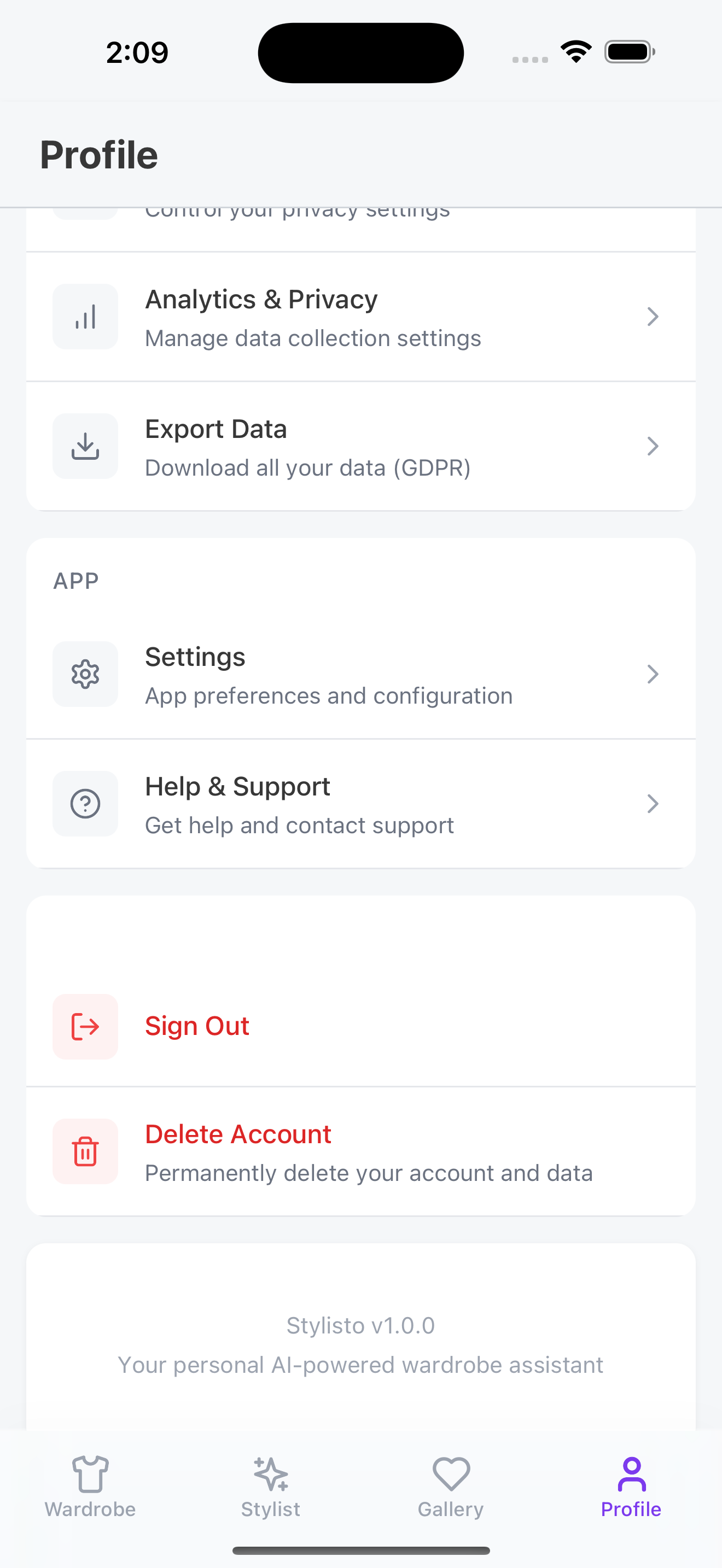
Profile
-
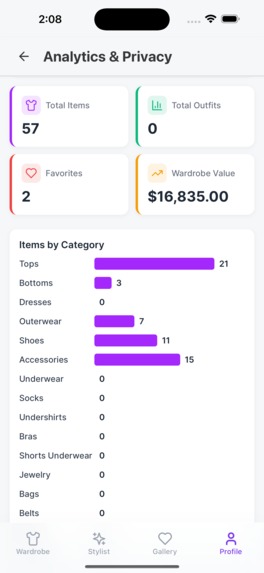
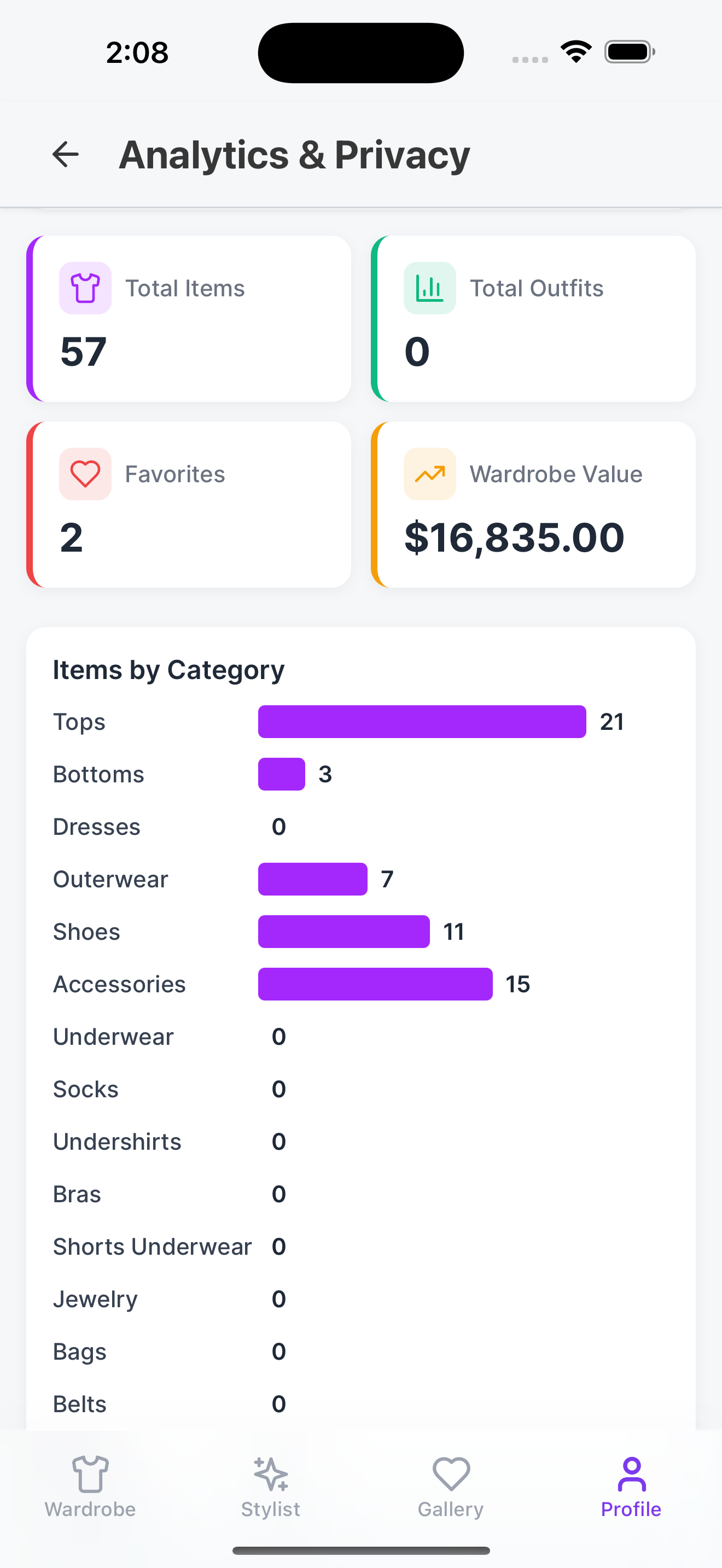
Analytics and Privacy
-
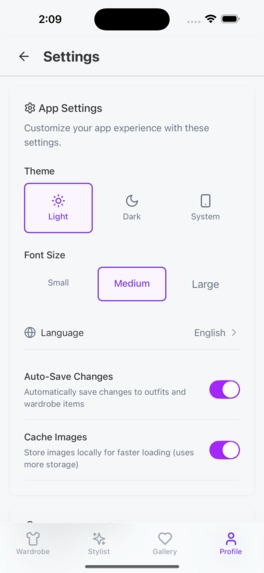
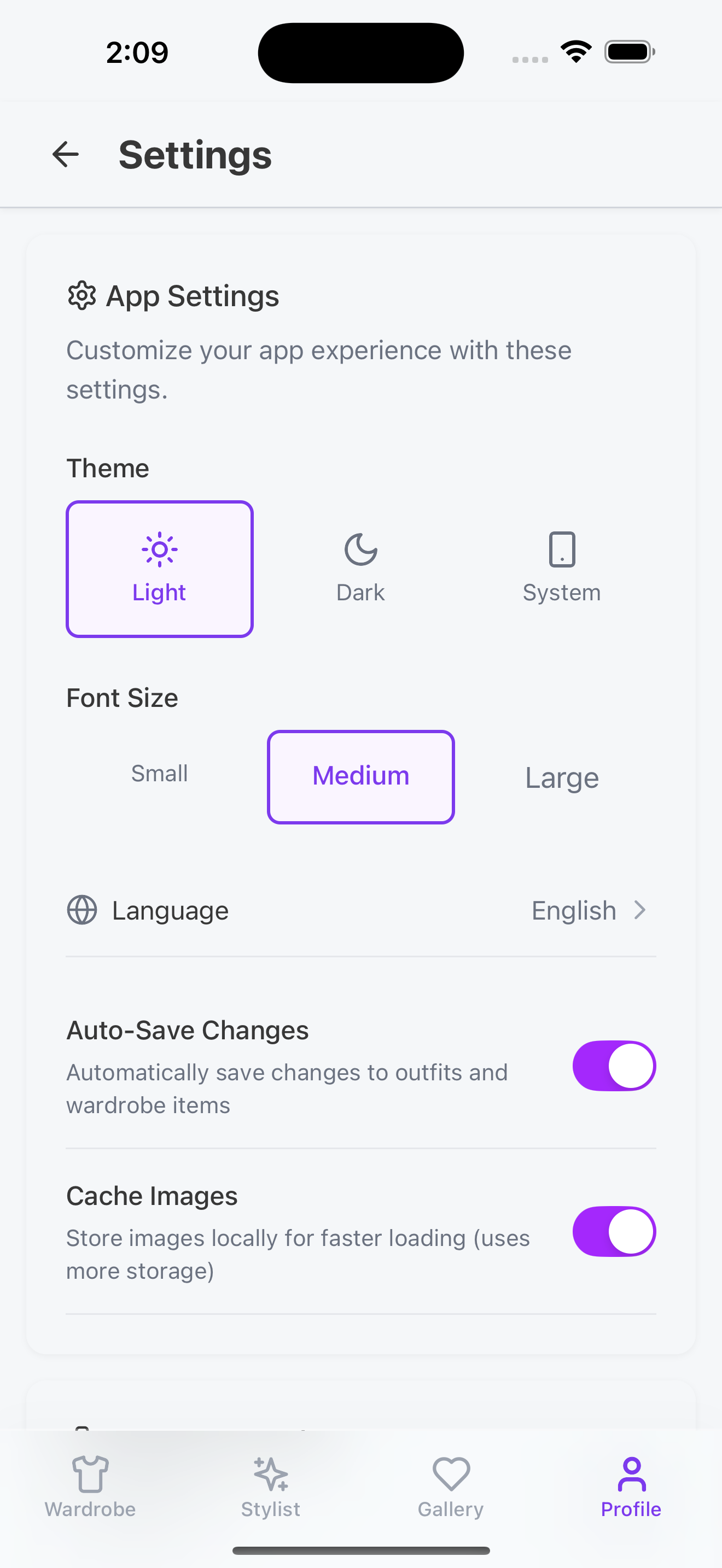
Settings
-
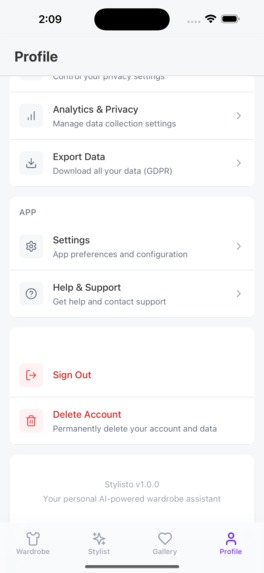
Logout and detail account
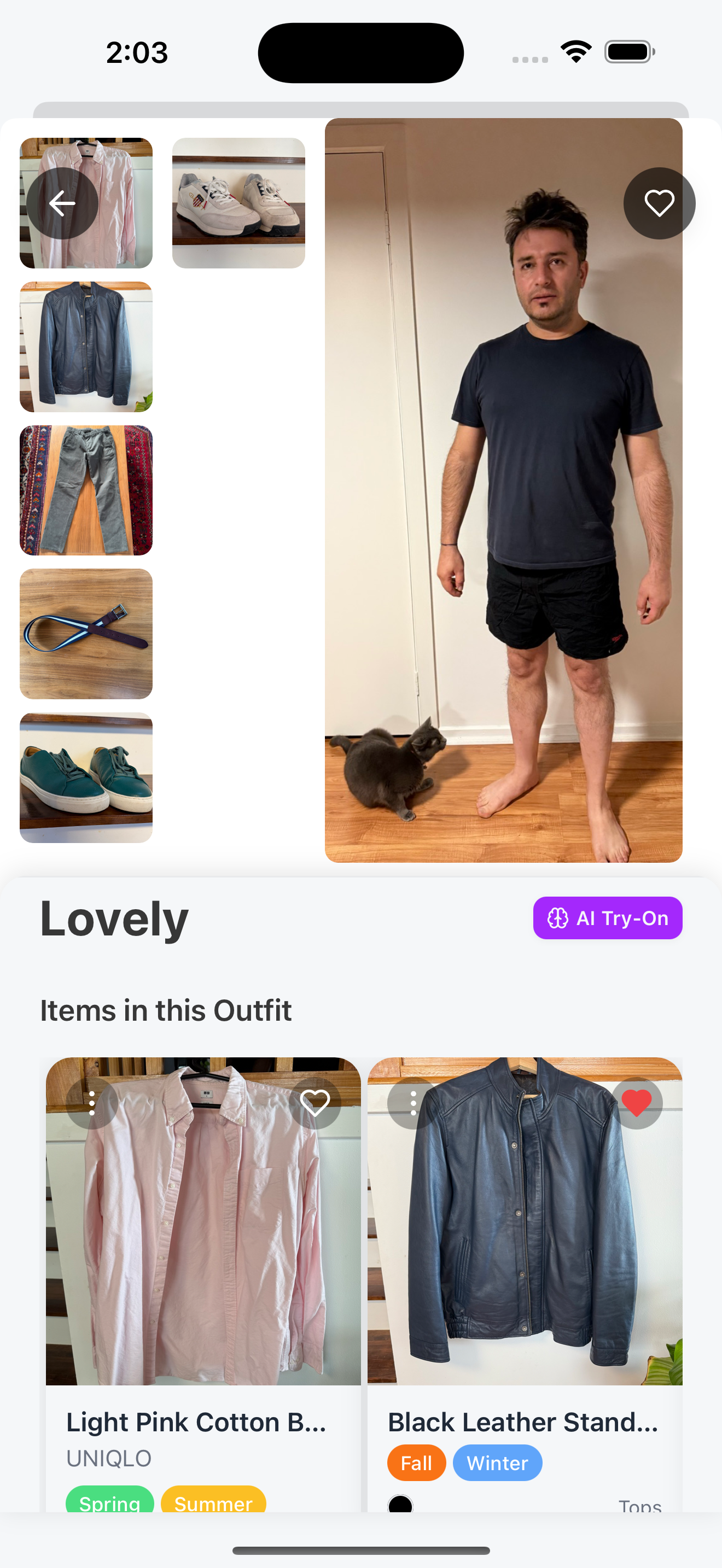
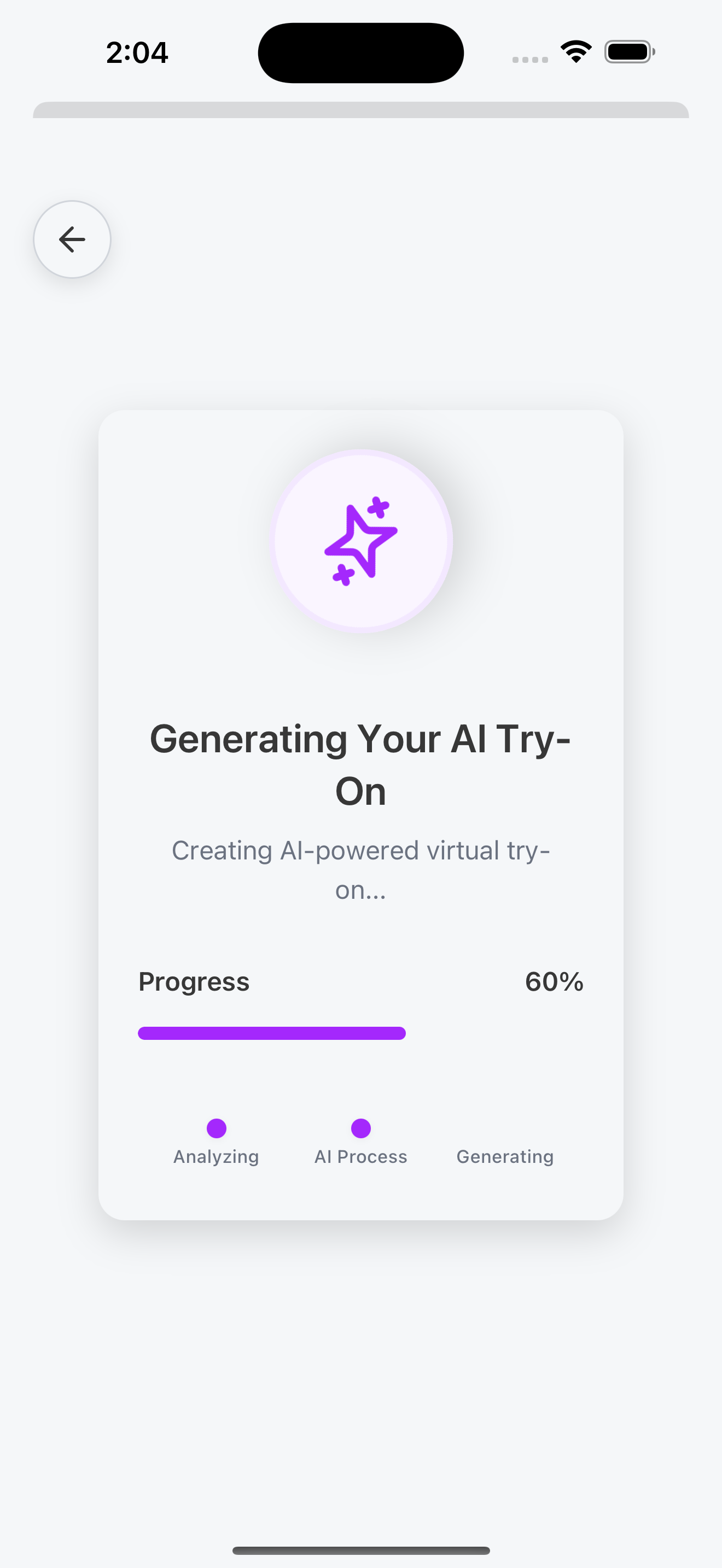
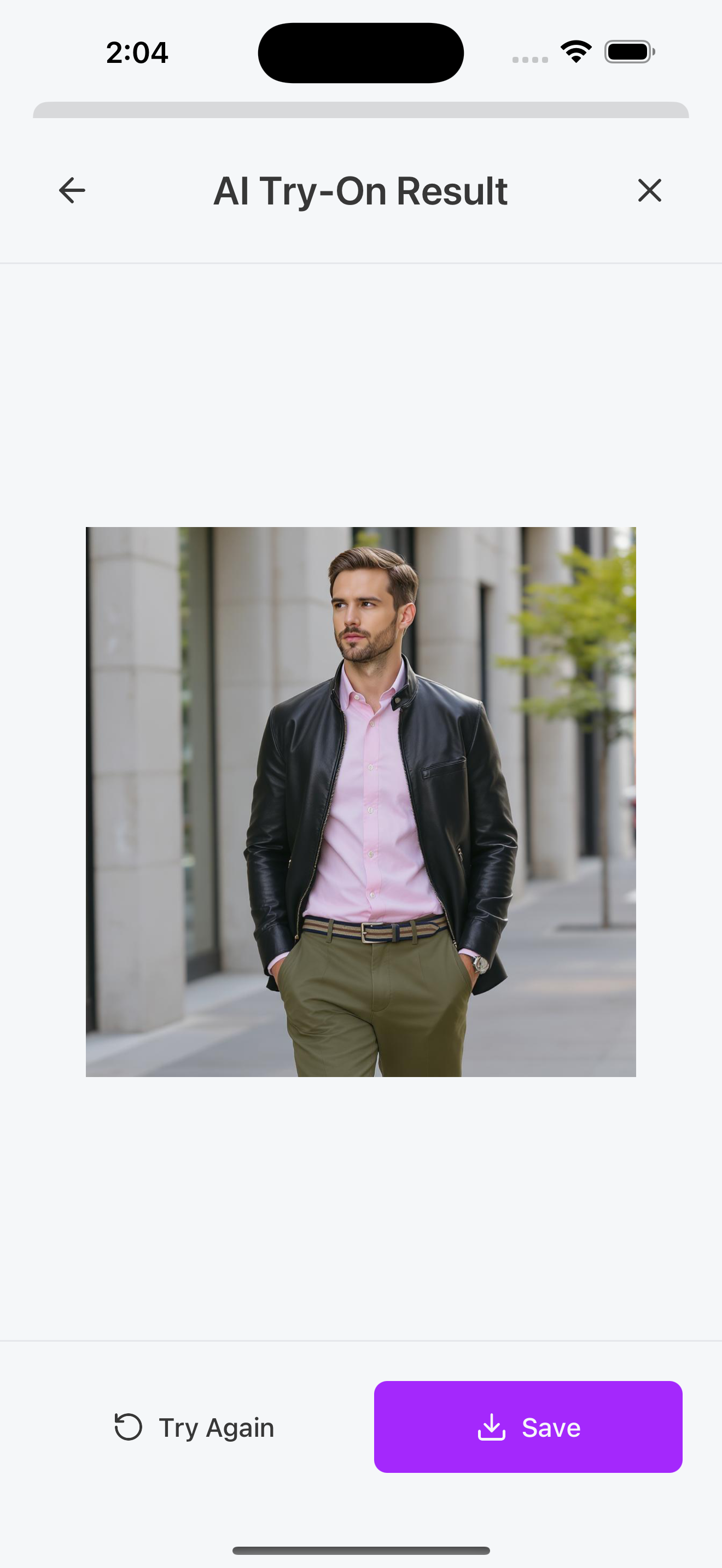
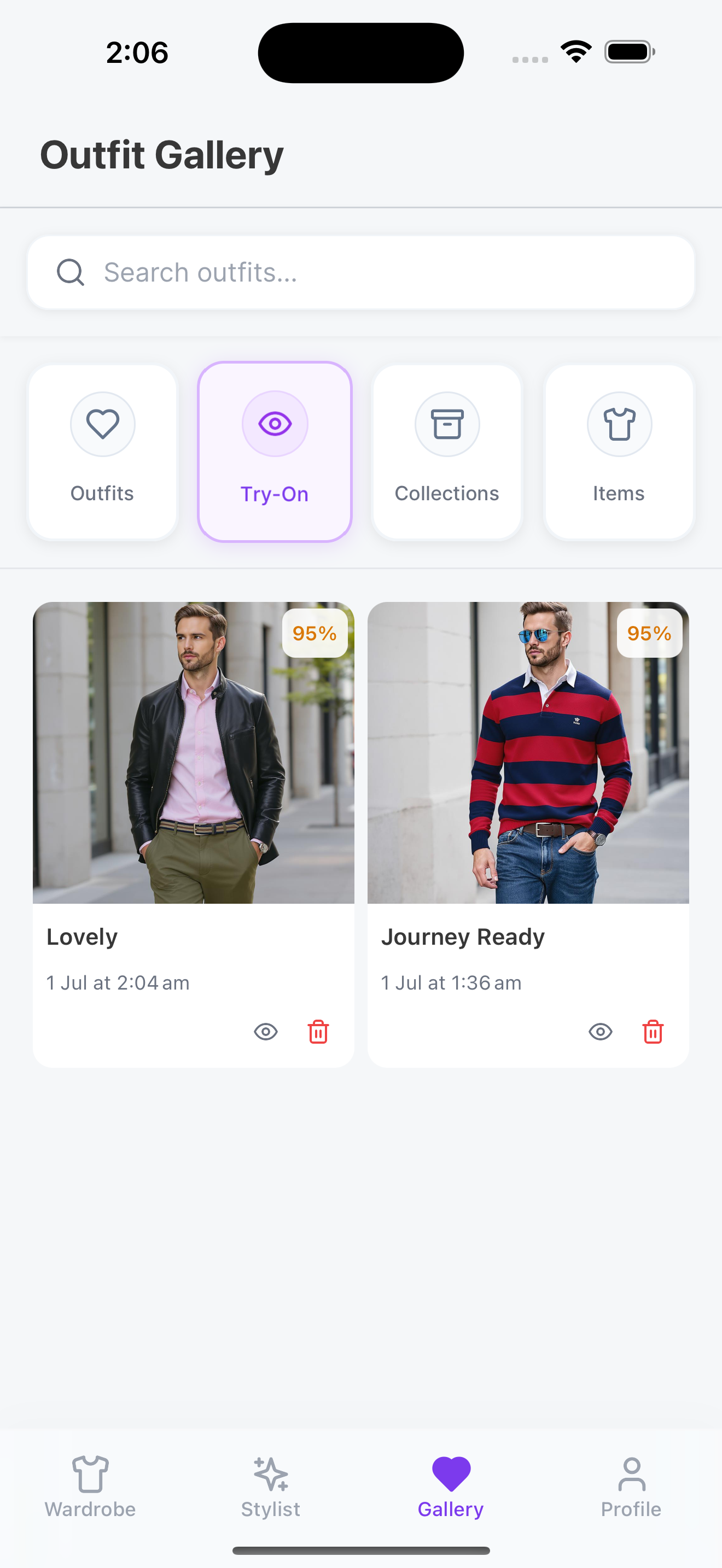
Inspiration
The idea for Stylisto originated from a personal frustration — owning plenty of clothes, yet feeling like there was nothing to wear. I wanted a solution that could look at my wardrobe, suggest stylish combinations, and show me how I’d look in them before stepping out or making a purchase.
With a growing interest in AI and personalisation, I envisioned an app that acts as a smart stylist, tailored to me, not a generic model. The goal: make fashion choices easier, smarter, and more personal.
What it does
Stylisto is a mobile app that uses AI to help users:
- Upload their existing wardrobe by adding photos of clothes they own.
- Add images of clothes they plan to buy.
- Generate personalised outfit ideas using AI based on style, occasion, and season.
- See how these outfits look on their own body using image rendering powered by AI.
Using OpenAI’s language models, the app explains clothing characteristics (colour, shape, fabric, etc.), and then passes those to Flux Kontext 1 to generate realistic outfit visuals directly on the user's photo.
How we built it
- Frontend: Built with React Native for cross-platform mobile support.
- Backend: Developed using Supabase to handle authentication, wardrobe storage, and user data.
AI Integration:
- OpenAI is used to analyse clothing images and describe their features.
- Flux Kontext 1 takes those descriptions to render lifelike images of the clothes on the user’s body.
Outfit Suggestion Engine: Matches clothes based on weather, occasion, and style logic.
Challenges we ran into
- Rendering clothes on the user’s body: Ensuring the generated images looked natural and accurate was technically challenging.
- Aligning visual and language models: Connecting OpenAI’s descriptions with Flux Kontext 1 rendering required fine-tuning to maintain realism.
- Data privacy: Handling user photos securely while maintaining a seamless experience was a top priority.
- Balancing performance and quality: We had to optimise image rendering for mobile devices without sacrificing detail.
Accomplishments that we're proud of
- Successfully combined image analysis, natural language processing, and AI image generation into a single, intuitive user flow.
- Built a beta version that already renders realistic outfit previews on users.
- Created a system that not only suggests styles but explains why the combinations work.
What we learned
- Working with multiple AI models in sync (OpenAI for explanation, Flux for visualisation) gave us deep insights into prompt engineering and model orchestration.
- User feedback highlighted the importance of trust, visual quality, and control when it comes to personal data and style choices.
- Real-world testing is essential to fine-tune both UX and AI behaviour.
What's next for Stylisto
Stylisto is currently in beta, and we’re actively refining the app based on tester feedback.
Next steps include:
- In-app shopping integration — let users buy recommended items directly.
- Smart matching engine — shows how new clothes will pair with what you already own.
- Style evolution tracking — helps users track and refine their style over time.
- More body types and fit previews — increasing inclusivity and accuracy.
The journey is just beginning, but the future of personalised fashion is here — and it’s intelligent.
Built With
- 1
- api
- bolt
- expo.io
- figma
- flux
- javascript
- kontext
- openai
- reactnative
- supabase
- typescript

Log in or sign up for Devpost to join the conversation.