Inspiration
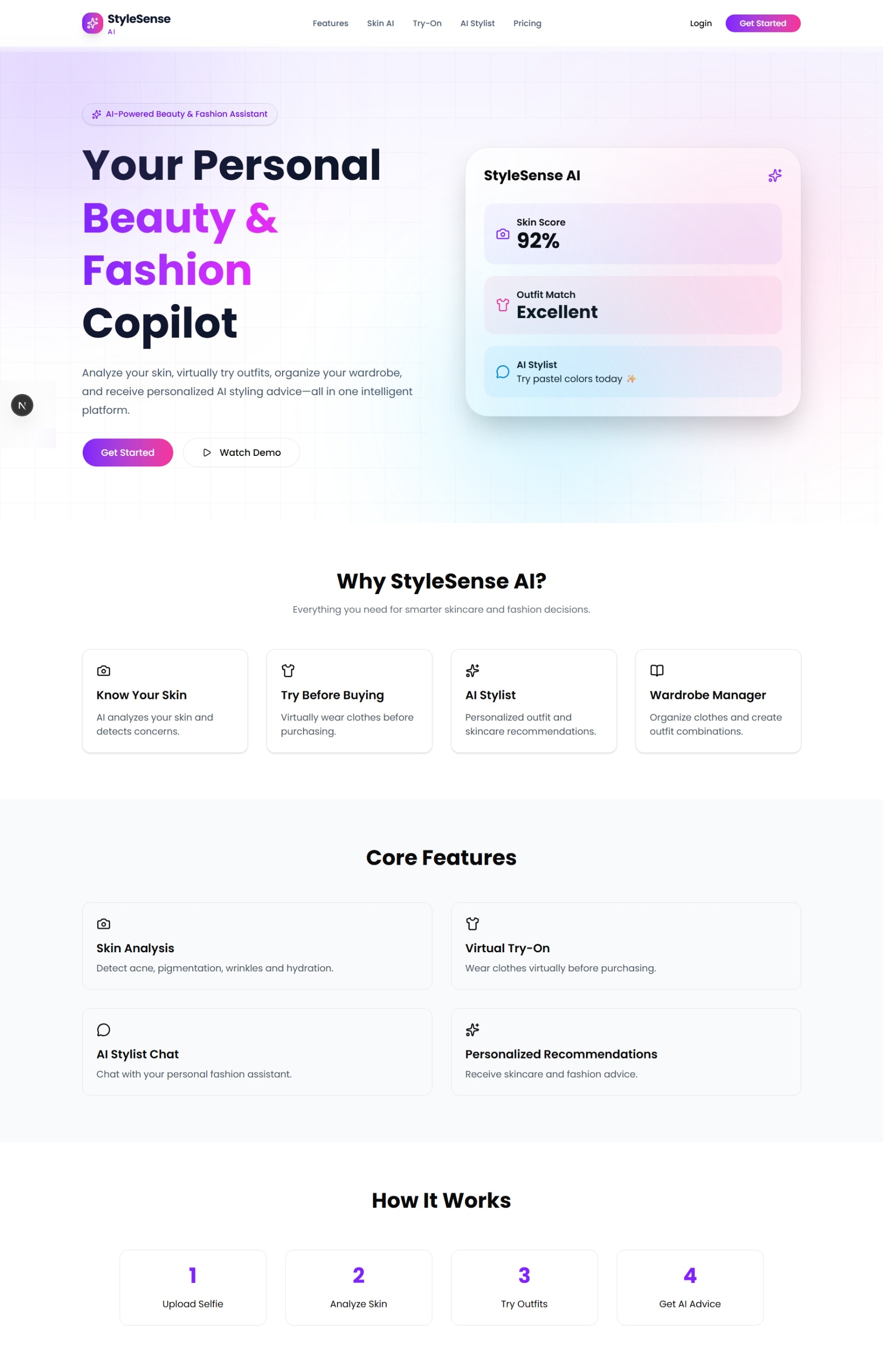
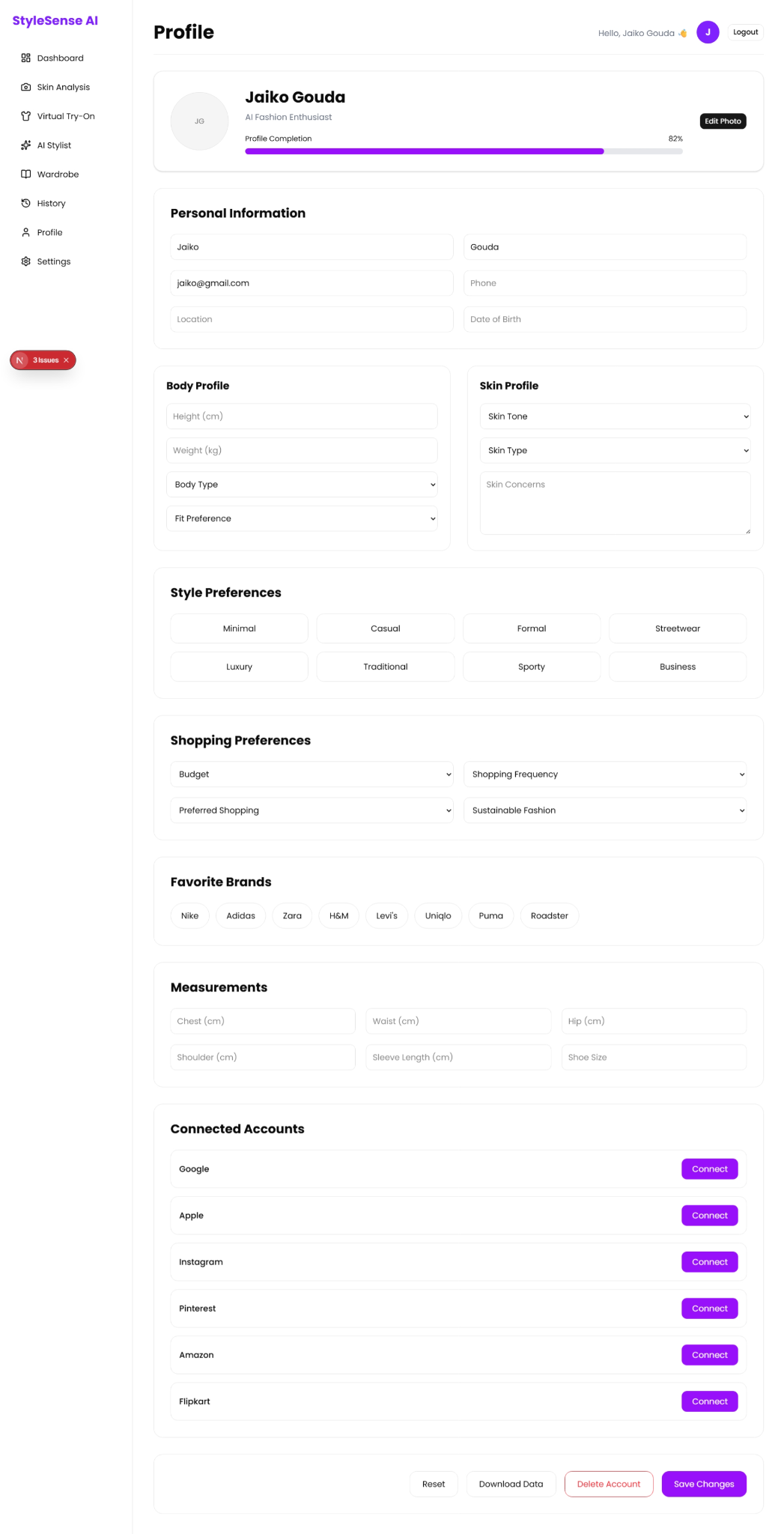
Shopping for fashion and skincare is often a fragmented experience. Users may know what they want to improve or wear, but they still have to figure out which products suit them, what fits their needs, whether something is available in their location, and how it might look on them. This inspired us to build StyleSense AI — a personalized fashion and beauty assistant that combines AI-powered skin analysis, personalized skincare recommendations, location-aware product recommendations, and virtual try-on into one experience. Instead of simply showing popular products, our goal was to make recommendations feel personal, contextual, and actionable.
What it does
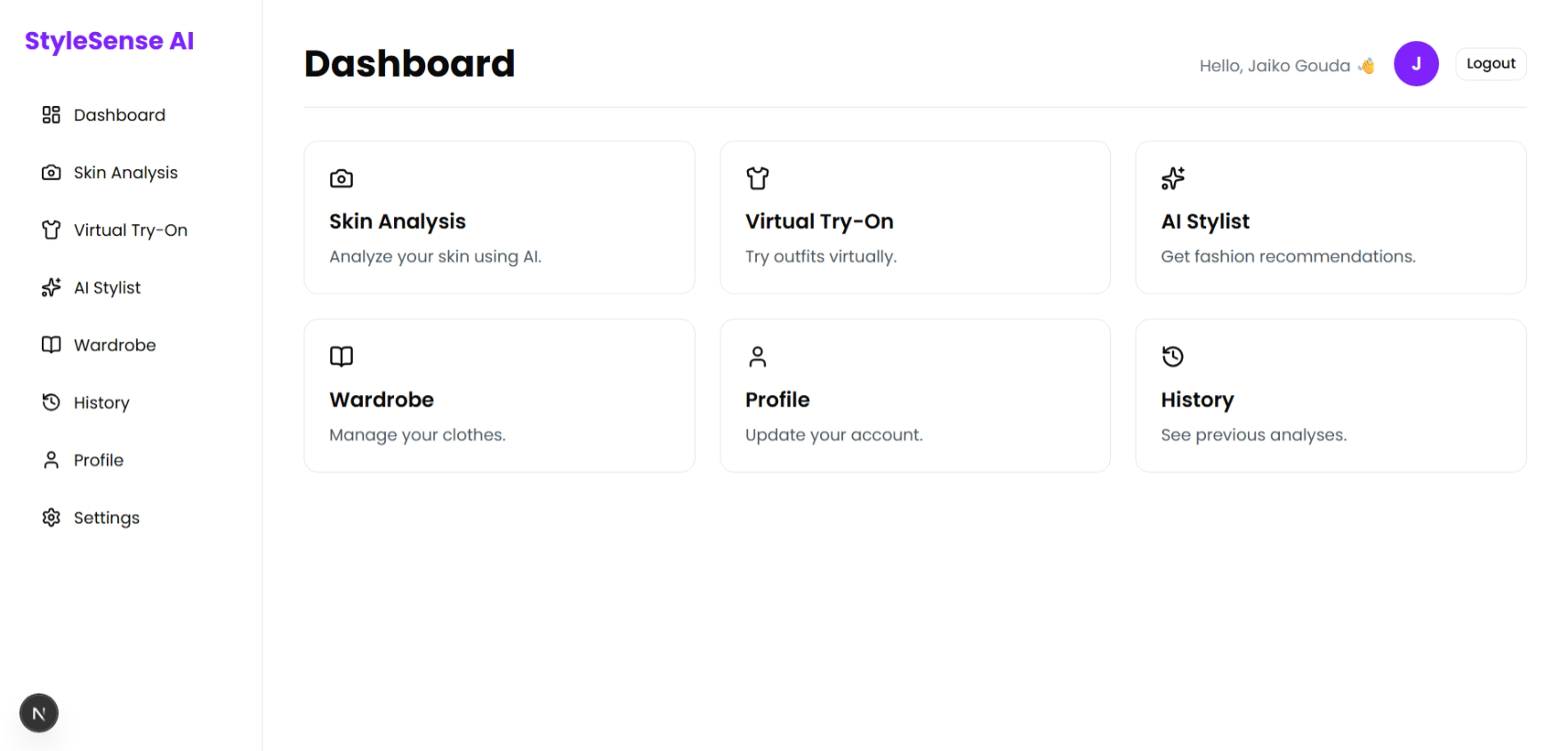
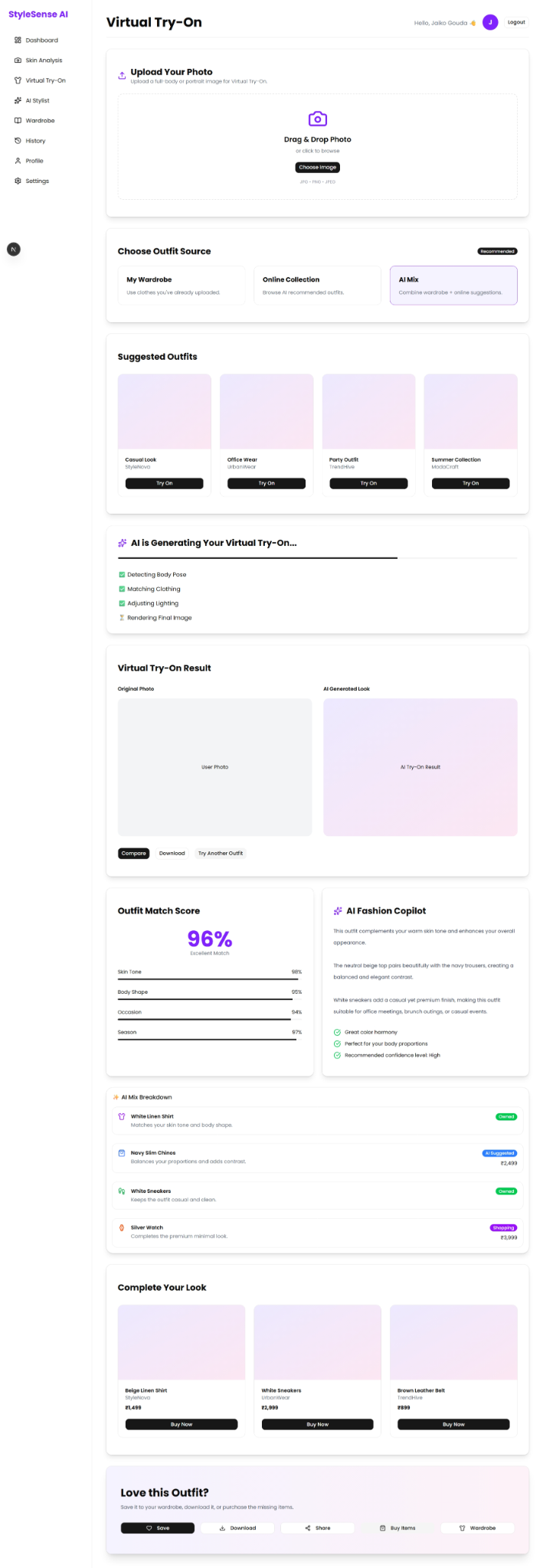
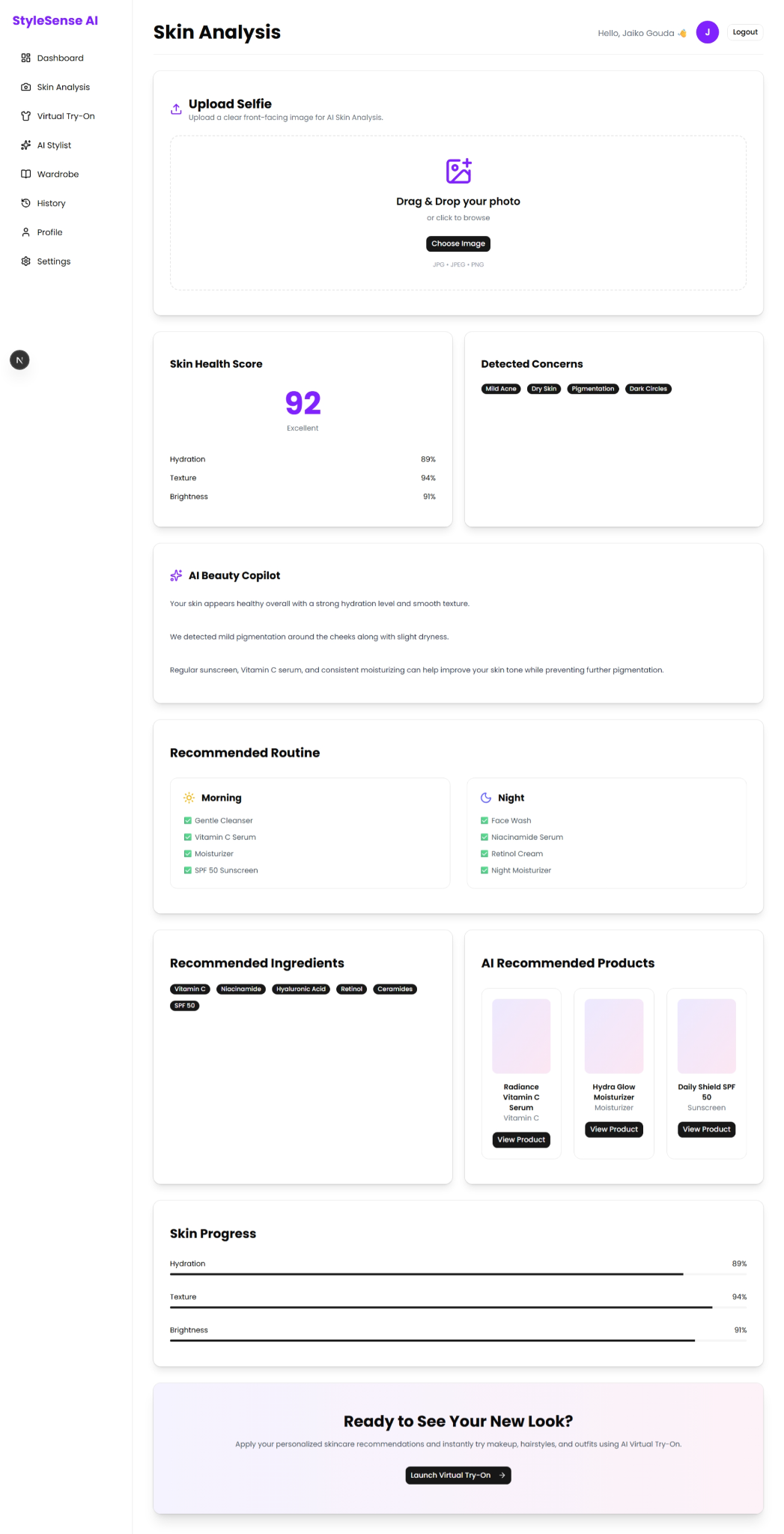
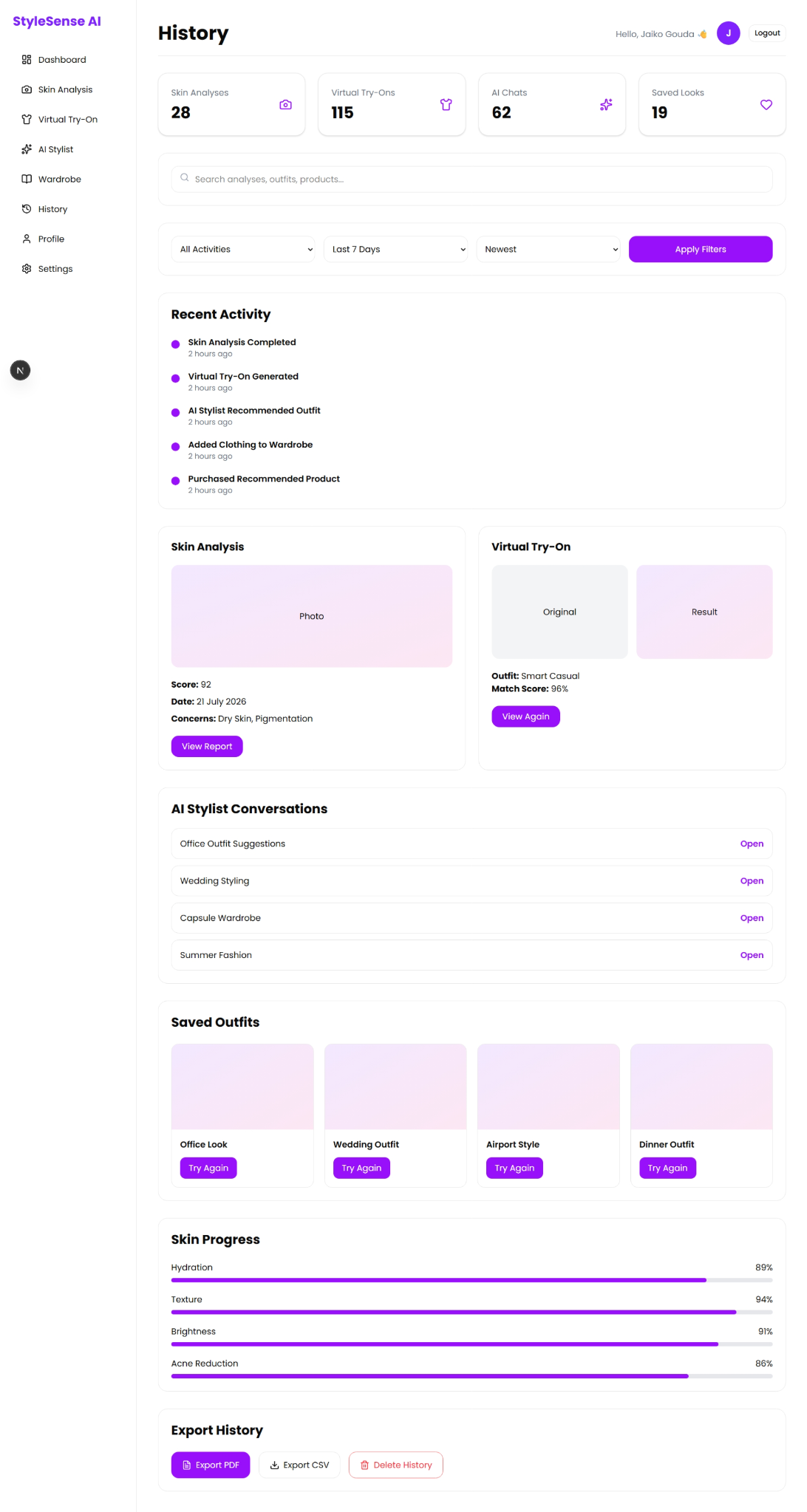
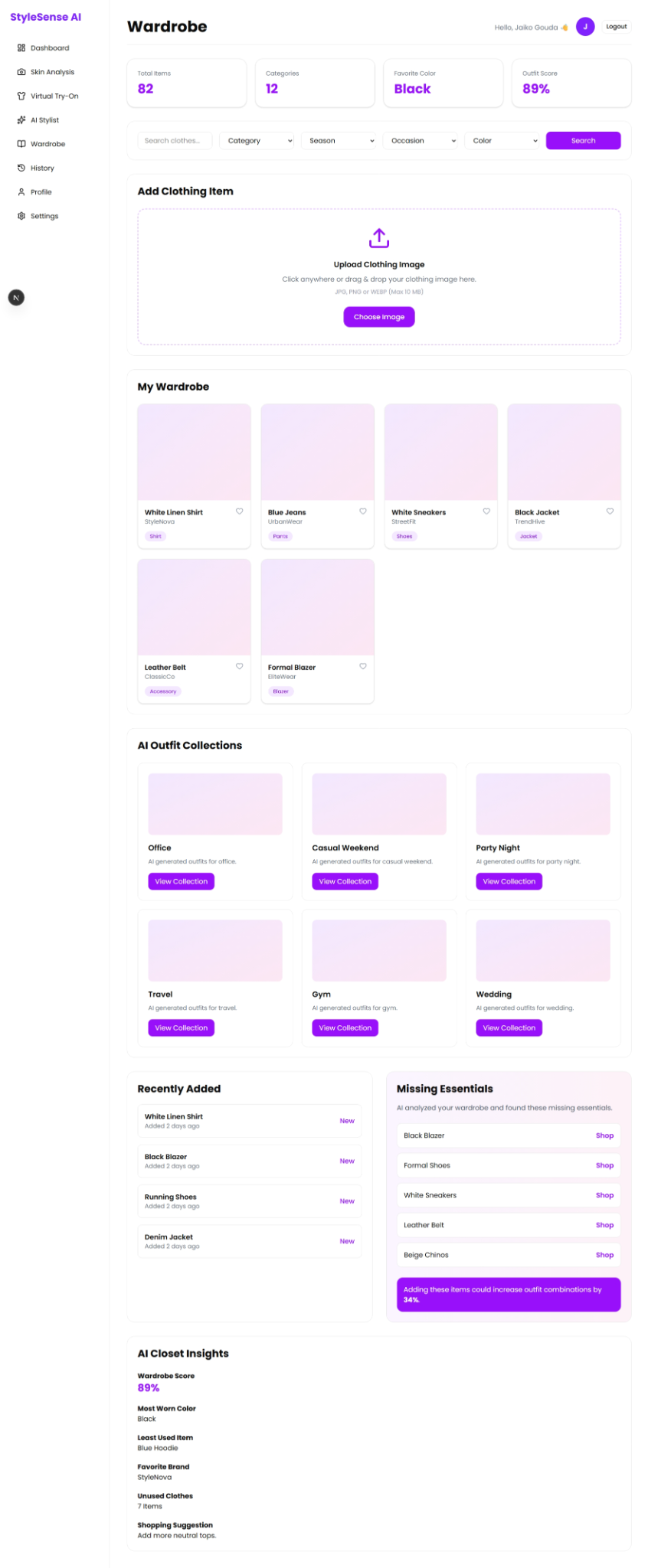
StyleSense AI analyzes a user's skin image and generates insights such as: Skin health score Hydration, texture, brightness, and acne scores Detected skin concerns Personalized skincare routine Recommended ingredients Personalized skincare products The system also uses the user's saved profile information, including their location, to make product recommendations more relevant. We are extending the experience with Virtual Try-On, allowing users to upload their photo, select clothing, and visualize how an outfit could look on them before making a purchase. Our larger vision is to create a single AI-powered platform where: Analyze → Understand → Recommend → Try → Decide
How we built it
The backend is built using FastAPI and SQLAlchemy, with PostgreSQL used for persistent user and analysis data. The skin-analysis pipeline works roughly as follows: User uploads image ↓ Image preprocessing ↓ YouCam Skin Analysis ↓ Skin metrics ↓ Concern Detection ↓ Ollama AI ↓ Personalized skincare plan ↓ Product Recommendation Engine ↓ Location-aware recommendations ↓ Frontend We designed the product recommendation system as a separate service so that the temporary product catalogue can eventually be replaced with real product databases, marketplace APIs, or retailer APIs. The user's location is retrieved directly from the existing user_profiles table instead of requiring the user to enter it repeatedly. For example: User Profile │ ├── Location ├── Budget ├── Body Profile └── Preferences │ ▼ Recommendation Engine │ ▼ Personalized Products The frontend consumes the FastAPI endpoints and presents the analysis, recommendations, routines, and products in a user-friendly interface.
Challenges we ran into
One of our biggest challenges was connecting multiple components into one reliable pipeline. The system involved several moving parts: Frontend ↓ FastAPI ↓ Database ↓ YouCam ↓ AI Recommendation ↓ Product Recommendation ↓ Frontend Small mismatches between these components could cause the entire request to fail. For example, while implementing location-aware product recommendations, we initially had inconsistencies between location, city, state, and pincode parameters across services. We had to redesign the flow so that the user's existing database profile became the source of truth. We also faced challenges around: Handling uploaded image formats and resolutions. Managing external API responses. Extracting reliable skin scores from nested analysis results. Persisting complex AI-generated JSON structures. Keeping recommendation logic separate from API routes. Designing the frontend API response so that all relevant AI results could be consumed easily. Planning Virtual Try-On as a modular component that can evolve independently from skin analysis. These challenges helped us move from a simple prototype toward a more structured and scalable architecture.
Accomplishments that we're proud of
Built an end-to-end AI-powered skincare analysis system using YouCam and Ollama. Created personalized skincare routines and ingredient recommendations based on AI-detected skin concerns. Implemented location-aware product recommendations using the user's saved profile data. Built a modular FastAPI + PostgreSQL backend connecting AI services, database, and frontend. Designed the platform to support Virtual Try-On, bringing skincare and fashion personalization into one experience. Successfully turned multiple AI components into a single personalized StyleSense AI journey.
What we learned
Building StyleSense AI taught us that creating an AI product is much more than connecting an AI model to an application. We learned how to: Integrate third-party AI APIs into a production-style backend. Process and normalize user-uploaded images. Combine deterministic business logic with generative AI. Build modular recommendation services. Store and retrieve AI-generated results using a relational database. Connect asynchronous analysis workflows with REST APIs. Use existing user-profile information to personalize AI recommendations. Design APIs that can evolve as the product grows. Think about AI as a complete user experience rather than just a model output. One of the most important lessons was that AI recommendations become much more useful when they are grounded in real user context such as location, budget, preferences, and profile information.
What's next for StyleSenseAI
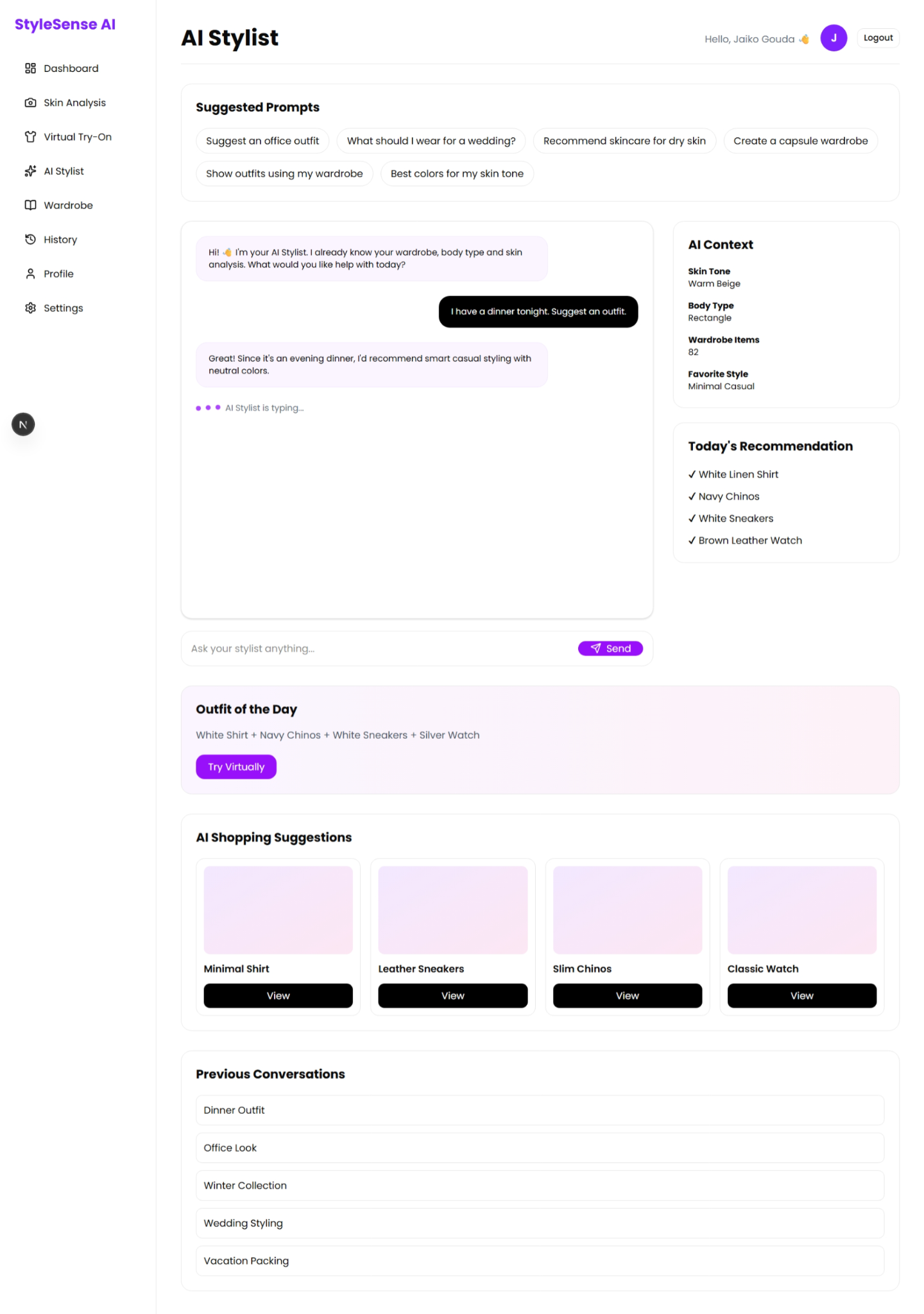
StyleSense AI is designed to grow beyond skincare recommendations. Our next major feature is Virtual Try-On, followed by deeper fashion personalization using the user's profile, body measurements, fit preferences, budget, and location. Ultimately, we envision StyleSense AI as an intelligent personal stylist and beauty assistant that doesn't just answer: "What should I buy?"
but helps users answer: "What is right for me, available where I live, and how will it look on me?"
That is the experience we are building with StyleSense AI.
Built With
- ai/ml
- api
- css
- fastapi
- generativeai
- html
- imageprocessing
- javascript
- locationbasedrecommendation
- ollama
- personalization
- postgresql
- python
- react
- recommendationsystem
- rest
- sqlalchemy
- virtualtryon
- youcam

Log in or sign up for Devpost to join the conversation.